If your German Shepherd’s hind legs start changing slowly, often around ages 8–9, take it seriously. Look for scuffed toes, knuckling, toe dragging, and a stiff, long-stride wobble that worsens over months. DM, “degenerative myelopathy,” is a T3–L3 spinal cord disease, usually non-painful, and many dogs turn non-ambulatory in about 6–12 months. Get a neuro exam and DM testing, plus strict home safety, harness support, and rehab/physio early—keep going and you’ll pick up more practical details.
Swift Summary
- DM causes slow, often non-painful hindlimb gait change, typically starting around age 8–9 and worsening over months.
- Common early signs include toe scuffing, knuckling, proprioceptive ataxia, and difficulty rising; reflexes may be normal early.
- Diagnosis uses a full neuro exam plus DM exclusion steps; MRI can be subtle, while CT helps rule out other spinal/bony causes.
- SOD1 genetic testing estimates risk but can’t diagnose current disease; penetrance is incomplete and symptoms confirm needed.
- Manage safety early with traction, rear-support harness/sling, ramps, and controlled exercise to reduce falls as strength declines.
DM Signs in German Shepherds (GSDs)
When you suspect degenerative myelopathy in your German Shepherd, the first thing you’ll often notice is a slow, non-painful change in how they walk—usually starting in the hind legs. You may see swaying ataxia, scuffing toes, and knuckling, along with a stiff, long-stride gait. As days and weeks pass, hind weakness builds, they struggle to rise, then may collapse during activity. In time, urinary incontinence can appear, then fecal control drops. Reflexes may shift too, from normal or brisk to reduced withdrawal. If you wonder, what’s dm testing in german shepherds, note it helps confirm, not guess. Also, why do german shepherds have seizures, and what causes german shepherds to have seizures, are separate concerns. DM is one of several uncommon neurological disorders that affect German Shepherds, making accurate identification especially important.
Notice a slow, non-painful change in your German Shepherd’s walk—often starting in the hind legs.
Because DM begins with axonal degeneration, it often first shows up as progressive neurologic deficits before imaging changes are seen.
DM Usually Starts Around Ages 8–9
Around ages 8–9, many German Shepherds start showing the first signs of degenerative myelopathy (DM), a slow spinal cord disease that gets worse over time. You’ll often notice it in large-breed dogs first at 8+ years. Across studies, the average onset sits near 9 years. The range can stretch from about 5–14, but most cases cluster as your dog ages. Because German Shepherds are also prone to hip dysplasia, a joint condition that can cause similar changes in gait, owners should not assume every change in movement is caused by DM.
German Shepherds typically develop clinical signs at older than 5 years (mean 9.6 years), so early watching matters. Because DM links to an SOD1 mutation, genetics can flag risk early, yet symptoms usually wait for adulthood. Plan ahead, ask your vet early, and watch changes with care.
Early Clues: Scuffed Toes and Weak Hind Legs
You might notice scuffed hind toenails before anything dramatic, because toe dragging wears the nails down during early walking. If you do see this, it can reflect early progression of degenerative myelopathy affecting hindlimb placement.
You’ll also see weak, unsteady hind legs, with an ataxic wobble—meaning shaky, off-balance stepping—and your dog may struggle to rise from sitting. If those signs show up around 8–9 years old, take them seriously and ask your vet to check for degenerative myelopathy. Because pain and frustration from mobility loss can make a dog irritable, watch for changes in temperament, as aggression in German Shepherds can sometimes stem from discomfort or stress.
Scuffed Toenails Signal Early DM
Start watching your German Shepherd’s hind feet every day, because early degenerative myelopathy (DM) often shows up as subtle scuffed toenails and raw spots.
You may notice toe dragging, and that can wear down the inner or middle nails first, especially the middle two weight-bearing toes.
In some dogs, you’ll hear nails scraping on hard floors, and you may see nails shorten or flatten even though trimming is infrequent.
Check for recurrent bleeding or dorsal paw skin rawness.
DM usually doesn’t hurt.
Take clear photos and notes weekly, so you can share patterns fast.
Hind-Limb Weakness And Ataxia Onset
With DM, your German Shepherd’s first hind-limb weakness and ataxia (wobbly walking from poor body-position sense) often show up quietly at about 8–9 years in large breeds.
You may notice scuffed toes, then weak, wobbly rear legs.
The change is insidious, not sudden, and often starts uneven, with one hind limb worse.
You’ll see drunken swaying, long strides with stiff tone, or hind feet crossing during turns.
Check for knuckling or delayed paw correction.
Still, it’s usually nonpainful, and spinal reflexes stay normal or even stronger.
Because DM begins around T3–L3, act early.
How DM Progresses From Wobble to Paralysis
Watch how degenerative myelopathy (DM) usually begins as a small problem you might miss at first—an early hind-limb wobble, sway, or mild ataxia (poor coordination).
You’ll see paw knuckling, scuffing, and nails wearing down, yet reflexes can still seem normal.
Over months, weakness climbs fast.
Hind legs buckle, your dog struggles to rise, and collapses happen when they try to stand or walk.
Muscle wasting shows too.
Pain usually stays absent.
In many dogs, worsening from first signs to non-ambulatory paraparesis takes 6–12 months, then hind-paralysis follows.
Practicing essential obedience commands during daily routines can help you notice subtle changes in your dog’s balance and coordination as they happen.
You’re not failing them—DM simply advances.
What the Typical DM Neuro Pattern Looks Like
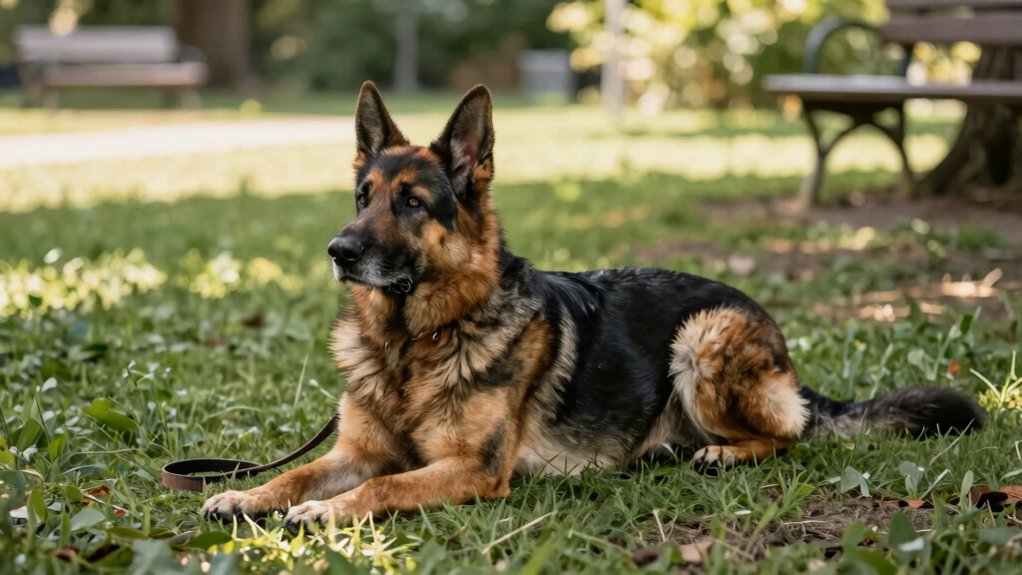
In most German Shepherds, DM shows up at about 8–9 years old, and you’ll often notice the first signs as a slow, sneaky change in the back legs—usually starting in one hind limb, then working its way to both.
In German Shepherds, DM often begins around ages 8–9, with a slow, subtle change in the hind legs, starting in one side.
You may see a wobbly, “wobbly” hind gait, with spastic paresis (stiff, weak walking) and poor balance.
As the spinal cord problem localizes to the mid-back (T3–L3), you’ll notice proprioceptive ataxia, meaning paws land wrong, knuckle, or don’t right themselves fast.
Reflexes can look normal or extra early.
Touch and pain often stay okay.
Often no back pain.
German Shepherds are also prone to exocrine pancreatic insufficiency, a digestive disorder that causes poor nutrient absorption and weight loss, so owners should not mistake these digestive changes for signs of DM.
DM vs IVDD: Key Differences
When you’re comparing DM to IVDD, start with the “pain clue.” DM usually progresses slowly and stays minimally painful or even non-painful, so you mostly see steady weakness and wobbly walking (ataxia), not yelping or strong back stiffness.
But IVDD often starts with back or neck pain, where your dog acts sore, won’t jump or move normally, and may show sudden flare-ups, especially around the time a disc compresses the spinal cord. Unlike these spinal conditions, German Shepherds are also prone to gastric dilatation-volvulus, a life-threatening stomach emergency that causes pain and restlessness but is unrelated to the spine.
Recognize Non-Painful Progression
Usually, with degenerative myelopathy (DM), you’ll see a slow, non-painful decline in how your German Shepherd uses her back legs, rather than a sudden “ouch” from a sore spine.
You may notice subtle dragging or scuffing of hind paws, then worse coordination over weeks to months.
And it often starts in one hind limb, then spreads.
You’ll see progressive weakness, knuckling (paw turns under), and eventually trouble standing.
You still shouldn’t expect pain as the main feature.
But with IVDD, you more often see episodes, and pain typically drives the change.
Differentiate From IVDD Symptoms
To tell degenerative myelopathy (DM) from intervertebral disc disease (IVDD), look at how the problem starts and how it behaves over time.
DM comes on slowly, usually in adult or senior German Shepherds, age 5–8+, with pelvic-limb ataxia that worsens over months.
IVDD often strikes suddenly, within hours to days, after disc extrusion.
Next, watch gait.
DM shows a spastic, long-stride walk with early proprioceptive ataxia and knuckling.
IVDD often looks stiff, short-strided, kyphotic, and very guarded.
Reflexes fit: DM usually has normal/exaggerated UMN reflexes, IVDD may show reduced reflexes at involved segments.
Imaging may reveal compression in IVDD.
Work Up Suspected DM Step-by-Step
Start by treating degenerative myelopathy (DM) like a serious “diagnosis of exclusion,” not a guess. German Shepherds are among the breeds most often affected by early warning signs such as hind-end weakness and toe dragging, so owners should report these changes promptly. You’ll begin with a full neuro exam, aiming to localize T3–L3 myelopathy.
Look for hindlimb ataxia, proprioceptive loss, and upper motor neuron signs, like normal or exaggerated patellar reflexes, with no deep spinal pain.
Next run baseline labs, plus thoracic/abdominal imaging if needed, to rule out systemic causes.
Then do survey spinal X‑rays to spot disc disease, spondylosis, or malformations.
If advanced tools are available, order cross-sectional spine imaging, then CSF tap.
Normal or non-specific results, plus a matching exam, support presumptive DM.
MRI vs CT for Suspected DM: What to Choose
When you’re checking for suspected degenerative myelopathy (DM), pick MRI first for better sensitivity, because it shows the spinal cord itself in high detail and can reveal subtle signal changes from myelopathy (spinal cord disease).
But remember, MRI still helps you mostly by ruling out other problems—like tumors or inflammation—since DM is confirmed with SOD1 genetic testing and your overall clinical picture.
If MRI isn’t an option, CT (or CT myelography when needed) can still be useful for excluding other causes, and it’s especially strong for viewing bony changes.
Because German Shepherds are known for a powerful bite strength, handlers should take care when restraining a painful dog during imaging preparation.

Size Instruction: This large dog harness fits chest girth: 27-37 in, neck girth: 19-25 in. Perfect for German Shepherds, Labradors for hiking, walking, or daily outdoor adventures. Breed suggestions are for reference; please measure your dog's chest, neck, and weight for the best fit.

Size Instruction: This large dog harness fits chest girth: 27-37 in, neck girth: 19-25 in. Perfect for German Shepherds, Labradors for hiking, walking, or daily outdoor adventures. Breed suggestions are for reference; please measure your dog's chest, neck, and weight for the best fit.

【Easy Adjustment - for Ultimate Comfort.】Slip into and out of our dog harness effortlessly with the help of 2 quick-release buckles. Experience Unmatched Mobility with 4 Fully Adjustable Meatl Rings, two on the shoulders and two on the chest, which ensure a snug fit that enables unrestricted movement.
MRI Sensitivity For Myelopathy
For suspected degenerative myelopathy (DM), you’ll usually want MRI first, because it’s the best way to *screen the spinal cord itself* for other causes of myelopathy.
MRI finds intramedullary problems, like compression, disc herniation, inflammation, or tumors, especially on T2 images that highlight swelling.
It shows the exact spot, and the type of compression, with better detail than CT.
But with DM, conventional MRI often looks normal.
DM affects tiny white-matter changes below MRI’s usual resolution.
CT Utility For Exclusion
CT can be a helpful sidekick when you’re trying to rule out other, treatable causes of degenerative myelopathy (DM), but it usually doesn’t “find DM” itself.
You use CT to spot bony problems that mimic DM, like chronic type II disc disease, tumors, and spinal cord compression from osteophytes or calcified discs.
CT measures the vertebral canal diameter, so you can exclude stenosis.
But CT can’t clearly confirm DM, because DM leaves no specific routine CT marks.
MRI still wins for soft tissue detail.
If MRI isn’t possible, CT myelography maps compression, but it’s more invasive.
SOD1 Genetic Testing: Proof and Limits
SOD1 genetic testing gives you a useful starting point for degenerative myelopathy (DM), but it doesn’t tell the whole story.
You’ll learn risk status from the SOD1 c.118G>A (p.E40K) variant.
A/A dogs carry high risk, because spinal cord antigen aggregates show up in affected A/A dogs.
Still, the mutation shows incomplete penetrance, about 60% of A/A develop DM versus ~5% for carrier or normal.
N/N means extremely low risk.
N/A or 1-2 means carrier status.
But a “positive” test can’t confirm disease now, and DM needs exclusion, imaging, and sometimes postmortem.
Since DM is a common health risk for aging German Shepherds, owners can support healthy aging through weight management, regular low-impact exercise, and prompt veterinary checkups when hind-leg weakness appears.
DM Inheritance in German Shepherds, Simplified
DM happens because of an autosomal recessive SOD1 mutation, so you only see the highest clinical risk when a dog has two mutant copies (A/A).
But carriers (G/A) may never develop signs, since they’re low-risk, yet they can still pass the mutation to puppies. Affected dogs often benefit from low-impact swimming, which many German Shepherds can learn with a gradual water introduction.
Autosomal Recessive SOD1 Mutation
Because the genetic risk in German Shepherds mostly comes from an autosomal recessive SOD1:c.118G>A mutation, you can think of it in a simple “two bad copies” way. If you carry one A allele, you’re usually low risk. If you carry two, AA, your odds rise sharply.
This change is called p.E40K, and it affects the SOD1 enzyme that helps clear harmful free radicals.
DM often starts in middle-aged to older dogs, not as a puppy problem. Since penetrance is incomplete, some AA dogs never show signs.
Carriers May Never Develop
Even though you’ll sometimes hear “carrier” and “disease” in the same breath, being a German Shepherd carrier for the SOD1 mutation usually means a much lower clinical risk—and many carriers never develop degenerative myelopathy.
A “carrier” has one copied disease allele. It doesn’t mean you’ll see symptoms.
Most carrier dogs stay healthy throughout life.
In studies, about 5% of carriers develop DM, compared with roughly 60% of at-risk homozygous dogs.
Yes, rare older cases happen, because genes don’t always fully “show.”
How Common Is DM in GSD Lines?
You’ll hear Degenerative Myelopathy (DM) described as “common” in German Shepherd circles, and the numbers back that up.
In major hospital data, about 2% of German Shepherds show DM.
In major hospital data, about 2% of German Shepherds develop degenerative myelopathy, highlighting the need for early awareness.
In U.S. university clinics, overall prevalence is roughly 0.19%, but German Shepherds top the list at about 2.01%.
Teaching hospital reviews also find around 2% affected.
Genetic testing shows why.
The DM-linked SOD1 A allele often appears at 0.12–0.38 worldwide, meaning many lines carry risk.
If you want to serve your future dog best, ask for SOD1 testing early.
Supportive Care That May Slow DM Disability
You can slow DM disability by making mobility safer and planning rehab smartly. Start with non-slip traction like rugs or yoga mats, and use a rear-end harness or sling for stability, so falls don’t set you back; if you see scuffing, add protective booties.
Then schedule short, controlled sessions most days, monitor for fatigue signs, and adjust week to week—think “steady reps,” not “big bursts.”

Harness Object: The Rear Legs support Harness is designed to help your elderly, disabled, or injured dog, who are unable to navigate the stairs, has a difficult time getting up and down, needs help walking and at any risk of falling

LIFT YOU DOG: Equipped with detachable rear leg straps and shoulder strap leash to give your dog support and help them to go up and down stairs, get in and out of the car or during walks. Designed for senior dogs, dogs with joint pain, arthritis or other mobility problems, dogs recovering from surgery, etc
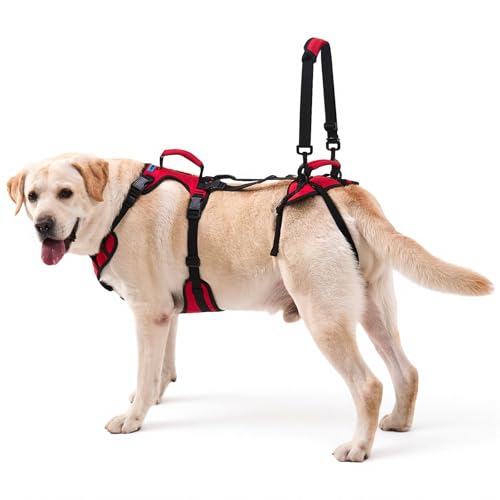
Lift & Walk with Confidence: Designed to support dogs with limited hind leg mobility, arthritis, or post-surgery recovery. Helps your dog stand, walk, and move safely with less strain.
Mobility Support And Injury Prevention
Support your German Shepherd’s mobility early, and you can often buy more safe, steady days as degenerative myelopathy (DM) progresses.
Use assistive tools: a rear-support harness first, then move to a full-body harness for extra balance.
When hind legs weaken, add a custom rear wheelchair; later, a four-wheel cart plus drag bags keeps your dog moving.
Next, change the home.
Add mats or rugs for grip, use ramps instead of stairs, and block unsafe steps.
Keep walks short, slow, and on soft ground.
Protect skin and paws with non-slip booties, and manage weight and other conditions.
Rehabilitation Scheduling And Monitoring
Start rehab early, and you’ll give your German Shepherd the best shot at staying steady and moving longer. You’ll usually follow a routine built around strength, balance, and safe repetition.
In-clinic sessions are most often weekly or twice weekly, while days at home matter too.
Plan assisted standing three times daily, with correct paw placement and solid footing.
Schedule leash walking three times daily, up to 15 minutes, using a sling if needed.
Do sit–stand, 10 reps twice daily.
Massage hind limbs and paravertebral muscles 5 minutes, 1–3 times daily.
Track ambulation and adjust with your vet team’s staging before weakness worsens.
Hydrotherapy and Exercise: Building a Rehab Plan
Once daily hydrotherapy and light exercise can become the backbone of your German Shepherd’s DM rehab plan, because physiotherapy is the only approach with evidence for helping dogs stay mobile longer.
Start early, before advanced hind-leg weakness.
In water, buoyancy (water lift) lowers joint stress, so your dog can move actively and keep muscle.
Try underwater treadmill or pool work daily at first, then build slowly, watching fatigue, coordination, and safety.
On land, do short, frequent leash walks, sit-stand reps, assisted standing, balance work, and passive range-of-motion 1–3 times daily.
If toe drag, crossing, or falls rise, back off.

【UPGRADED PIN-HINGED SLAT RUNNING SURFACE】 Addressing core safety features, our track uses an innovative pin-hinged linkage system instead of traditional screws. This structural design prevents the belt from detaching, providing a secure, non-slip running surface that ensures stable footing during intense physical activity.

【UPGRADED PIN-HINGED SLAT RUNNING SURFACE】 Addressing core safety features, our track uses an innovative pin-hinged linkage system instead of traditional screws. This structural design prevents the belt from detaching, providing a secure, non-slip running surface that ensures stable footing during intense physical activity.

【Wow, I love this so much, Master!】Tired of me being hyper and restless around the house all day? Annoyed by me destroying your sofa and home items out of boredom? Worried that insufficient exercise will make me gain weight and get sick easily? Dread taking me out for walks on rainy, snowy or extremely hot days? Too occupied with work to spare time for my daily outdoor activities? Don’t hesitate any longer! Get me this Simulated Nature Dog Treadmill right away!
Home Setup for DM: Rugs, Ramps, Harnesses
Set up your German Shepherd’s home so every step feels steady, not slippery or confusing. Lay non-slip rugs and runners along all main routes, use low-pile types with rubber backing so they don’t bunch or curl. Butt or overlap rugs tightly, so bare floor never shows.
Add yoga or foam mats to bridge big slick spots, and keep paths clutter-free for straight tracking. Next, block unsafe stairs with gates when you can’t guide safely.
Use ramps with gentle slopes and grip tape on porch or car access. For moving, fit rear support slings or harnesses, with broad padded straps and adjustable fit.

【CUTE WAVE DESIGN DOG MAT】:Bsicpro indoor dog mats designed with cute wave edges, irregular and dynamic shape is more decoratirve, combined with the ups and downs wave texture, making the the dog mat more vivid. Your pet will be reluctant to move away from this mud mat, enjoying the comfort and cuteness of the pet rug all day long.
【CUTE WAVE DESIGN DOG MAT】:Bsicpro indoor dog mats designed with cute wave edges, irregular and dynamic shape is more decoratirve, combined with the ups and downs wave texture, making the the dog mat more vivid. Your pet will be reluctant to move away from this mud mat, enjoying the comfort and cuteness of the pet rug all day long.

SUPER ABSORBENT MUDDY PAWS RESCUE MAT: Tired of soggy floors? Our thick chenille fibers with high-low pile trap moisture and surface dirt on contact; the fabric absorbs up to 5x its own weight in water. Place it at front door entrances, mudrooms, or patios to keep muddy paws, wet boots, and tracked-in water at bay. Completely machine washable for easy cleanup in any busy household.
Skin Care and Fall Prevention on Weak Legs
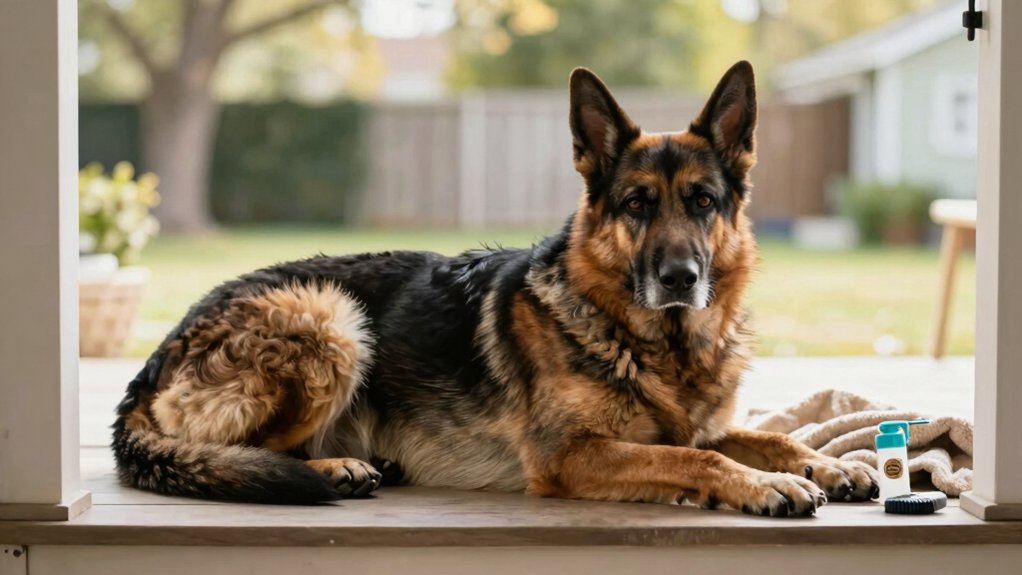
With home traction and safer routes in place, you’ll now protect the skin on those weak, dragging legs, because DM makes pressure points and tiny injuries add up fast.
Use high-density orthopedic bedding, like foam, and check it daily.
Every 2–4 hours when non-ambulatory, reposition your dog to prevent pressure sores on hips, hocks, elbows, and spine.
Reposition your non-ambulatory dog every 2–4 hours to prevent painful pressure sores on hips, hocks, elbows, and spine.
Do a full-body skin check each day for redness, warmth, firmness, hair loss, or early ulcers.
Wipe moisture, keep hair trimmed, and use barrier cream on clean, dry skin.
Add properly fitted protective boots or socks, and inspect paws after walks.
Managing Urinary and Fecal Incontinence
As DM progresses, you’ll often notice urinary and fecal control changes later in the disease—because the spinal cord loses the neurologic signals that control the bladder and bowel.
At first, bowel and bladder stay normal.
Then, as weakness grows, you’ll see lower motor neuron urinary and fecal incontinence, plus trouble reaching elimination spots.
Schedule more outdoor trips, every 2–3 hours.
Use a sling or harness for safe posture.
Put absorbent puppy pads down, and use waterproof bedding.
If your vet recommends it, express the bladder or do daily compression to prevent overflow.
For urine retention, use intermittent catheterization.
For stool, aim for regular formed poops, remove accidents fast, and cleanse gently.
Watch for UTIs and skin scald.
Timeline: From First Symptoms to Non-Ambulatory
From the first subtle wobble, your German Shepherd’s timeline often moves faster than you’d hope. You’ll usually see first hind-limb gait changes around 8–9 years old, though some dogs start as early as 5. At first, your dog stays ambulatory, but you notice scuffing, knuckling on uneven ground, and a “drunken” spastic walk.
Over weeks to months, coordination worsens, and mild muscle loss may appear. Most large-breed dogs reach non-ambulatory paraparesis or paraplegia in about 6–9 months after onset, and often within 6–12 months.
Be ready for falls, trouble rising, and loss of hind strength.
Treatments Studied for DM (And What Works)
When DM starts stealing your German Shepherd’s strength, you need a plan that actually matches what research can and can’t prove. Right now, no drug or supplement has proven to stop or reverse DM.
Studies looked at corticosteroids, aminocaproic acid, N-acetylcysteine, and vitamins B, C, E, plus cobalamin and tocopherol, but they didn’t show clear benefit.
That’s hard, but it frees you to focus on what works best: intensive rehab.
In a retrospective study, strong physiotherapy helped median survival reach ~255 days, versus 130 with moderate care, and 55 with none.
Do gait exercises 3–5 times daily, plus massage or hydrotherapy.
DM-Safe Breeding Choices Using SOD1 Results
To keep DM from spreading through your breeding plans, start with SOD1 testing before any mating decision.
SOD1 is the gene linked to degenerative myelopathy in German Shepherds.
You’ll see three results: clear/normal (extremely low risk), carrier (low clinical risk, but you may pass one mutant allele), and at-risk (high risk, and it transmits the mutation to all puppies).
Choose clear × clear for 100% clear pups.
If you use carrier dogs, pair them only with clear mates, then test every puppy before breeding.
Avoid carrier × carrier, carrier × at-risk, and at-risk × at-risk.
When Euthanasia May Be the Kindest Option
Even with good DM-safe breeding plans, some families still face a diagnosis, and that’s when you start planning for kindness as the disease advances.
DM worsens over time, with no treatment that stops it.
You’ll often see euthanasia considered within 6–12 months after signs start, and usually within 1–3 years of diagnosis.
Most owners wait until independence is truly gone.
When your dog becomes nonambulatory paraparetic, unable to walk but with some limb movement, you should seriously discuss it.
Then comes incontinence you can’t manage well, plus breathing trouble.
Then comes incontinence you can’t manage well, plus breathing trouble—making every day harder for both you and your German Shepherd.
Caring gets harder fast, especially in big German Shepherds.
Frequently Asked Questions
Can DM Affect Forelimbs, or Only the Hind Legs?
Yes, DM can affect forelimbs, but usually only later. You’ll often see hind-leg ataxia first; as degeneration ascends the spinal cord, front-leg weakness can appear, sometimes subtle, and in advanced cases can progress to tetraparesis.
Is a Painful Back Typical in DM, or Always Non-Painful?
A painful back isn’t typical in DM; DM usually causes non-painful, slowly progressive hind-limb weakness and incoordination. If your dog shows true back pain, tenderness, or sudden worsening, you should call your vet promptly to rule out other causes.
How Accurate Is SOD1 Testing for Predicting Future DM Symptoms?
SOD1 genotyping predicts the risk, not the outcome: in one study, 96% of affected dogs were A/A, yet only 34% of controls were too—so you can’t rely on it alone for future symptoms.
Should I Start Physical Therapy Immediately After Suspected DM Diagnosis?
Yes—start physical therapy right away after a veterinarian rules out other causes. Early, low-impact rehab can slow progression, preserve muscle, and support coordination. Keep sessions short and frequent, and avoid overexertion.
What Home Changes Best Prevent Pressure Sores and Falls During Progression?
Like a lifeboat’s padding, you prevent sores and falls by giving firm orthopedic beds, adding soft breathable covers, clearing non-slip paths, and repositioning every 2–4 hours; check bony spots daily and adjust immediately.