You’ve probably heard German Shepherds can struggle with joints, nerves, and eyes. From 3–8 months, watch for hip looseness like stiffness after rest, trouble rising, or reluctance to climb. Elbows can cause early forelimb stiffness, then cartilage wear and pain. After dysplasia, osteoarthritis can quietly start, then steadily worsen by 12–18 months. Around 8–10 years, look for nonpainful hind-limb weakness, scuffing, and stumbling from degenerative myelopathy. And eyes? Pannus and PRA can creep in—keep going to spot early warning signs.
Swift Summary
- German Shepherds are prone to hip and elbow dysplasia, progressing to osteoarthritis with stiffness, reduced motion, and chronic pain.
- Degenerative lumbosacral issues can cause activity-related back discomfort, worse stiffness after rest, and trouble rising or climbing stairs.
- Degenerative myelopathy may cause slow, nonpainful hind-limb weakness and coordination problems, often starting around 8–10 years.
- Bloat (GDV) is a time-critical emergency, with sudden restlessness, nonproductive retching, drooling, and a rapidly distended belly.
- Digestive disorders like EPI and megaesophagus can cause weight loss, greasy or abnormal stools, regurgitation, and aspiration pneumonia risk.
Hip Dysplasia: Early Signs and Progression in German Shepherds
How do you spot hip dysplasia early in your German Shepherd? Watch for health problems with german shepherds starting in puppyhood.
From 3–8 months, you may see pelvic limb lameness, stiffness after rest, and trouble rising, plus reluctance to jump or climb stairs.
From 3–8 months, watch for pelvic limb lameness, stiffness after rest, trouble rising, and reluctance to jump or climb stairs.
You might notice bunny-hopping, swaying hips, rolling gait, or nails scuffing on hard floors. Genetics, rapid growth, and excess body weight can all contribute to hip joint laxity in German Shepherds.
As the joint stays loose, pain grows, synovitis (joint lining swelling) can appear, then osteoarthritis arrives months to years later.
This is one of the most common problems with german shepherds, a problem with german shepherd dog.
OFA hip evaluations are typically done at 24 months or older, so earlier symptoms are best used to prompt a vet conversation and plan.
Talk to your vet early.
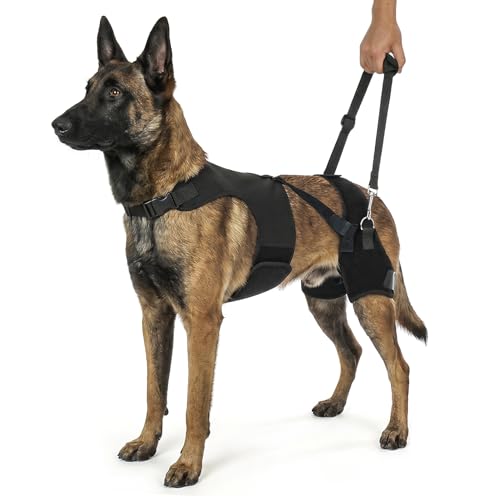
Targeted Hip Stabilization for Enhanced Mobility: Our dog hip dysplasia brace provides focused support to the hip joint, directly addressing instability and discomfort. This hip support for dogs is designed to aid in the treatment of hip dysplasia and degenerative conditions, helping your canine companion move with greater ease

Sizing Info: Size S - Neck Girth 19”, Chest Girth 20”-27”, Back Length 11”-14”,Weight Range:18 - 32lb, Leg Strap Maximum Length 19” Size M - Neck Girth 21”, Chest Girth 24”-32”, Back Length 14”-17”,Weight Range:30 - 60lb, Leg Strap Maximum Length 22” Size L - Neck Girth 23”, Chest Girth 27”-36”, Back Length 17”-20”,Weight Range:60 - 90lb, Leg Strap Maximum Length 25” Size XL - Neck Girth 25”, Chest Girth 31”-40”, Back Length 19”-24”,Weight Range:85 - 140lb, Leg Strap Maximum Length 29”

SIZE XL: Measure your dog before ordering. Fits neck circumference 19.3–24.8 in (49–63 cm), chest circumference 22.2–29.1 in (56.5–74 cm), with a back length of 14.0 in (35.5 cm). Compare all three measurements with the size chart; do not choose by weight or breed alone.
Elbow Dysplasia: Stiffness, Pain, and Cartilage Changes
Spot elbow dysplasia early in your German Shepherd, because it often starts with quiet stiffness that turns into chronic pain.
This inherited elbow disorder causes forelimb stiffness, chronic pain, and progressive cartilage damage. In young, fast-growing, large dogs, abnormal bone and cartilage development can create bad joint stress. German Shepherds are also susceptible to degenerative myelopathy, a progressive spinal cord disease whose early signs, such as hind-limb weakness, can be mistaken for joint pain.
You may notice front-limb lameness, often after rest following play, plus a reduced range of motion. Watch for reluctance to fully flex or extend, elbow warmth, and swelling.
Elbow dysplasia includes several primary conditions such as UAP is rare, and it can progress to irreversible degenerative joint disease. Ask your vet about elbow X-rays—cranio-caudal, medio-lateral, and flexed lateral views—plus CT if needed.
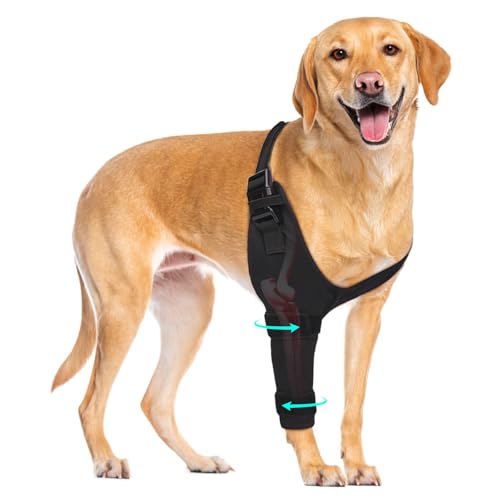
Trusted Canine Joint Support: This dog elbow protector for calluses and dog arthritis brace provides full joint compression, helping relieve pain from hygroma, calluses, and elbow pressure sores. Ideal for senior dogs or breeds prone to elbow issues, it supports mobility during daily walks and play

Neoally Dog Elbow Brace provides elbow joint support and improves mobility in dogs with elbow arthritis, hygroma, dysplasia, and shoulder dislocation, protects dogs from elbow calluses, pressure sores and helps in wound healing

Neoally Dog Elbow Brace provides elbow joint support and improves mobility in dogs and cats with elbow arthritis, hygroma, dysplasia, and shoulder dislocation, protects pets from elbow calluses, pressure sores and helps in wound healing. Combine with NeoAlly Organic Hip and Joint Supplement to speed up the recovery.
Osteoarthritis Timeline After Hip or Elbow Dysplasia
Some elbows affected by dysplasia develop clinical signs around ~5 months, and early recognition matters because prompt treatment offers the best chance of avoiding debilitating osteoarthritis.
For some dogs, X-rays can show OA as early as 5–9 months, while others look fine until about 2 years.
By 12–18 months, the hip may feel stable, yet OA keeps creeping forward.
After hip or elbow dysplasia, osteoarthritis (OA) often shows up in stages—quiet at first, then steadily more annoying.
After hip or elbow dysplasia, osteoarthritis often arrives in stages—quiet first, then steadily more annoying as it progresses.
You might first notice mild, off-and-on lameness before age 1. Some dogs also lick or chew at the sore limb, which can cause hair loss and is a sign to seek veterinary attention.
In many, signs calm around 1 year, then return between 2–4 years.
Up to 40% show joint lesions by 8 months–4 years, but most people notice symptoms at 5–13 years.

Joint Health Supplement for Dogs - Cosequin is the #1 vet recommended retail joint health supplement brand▼, supporting joint health in dogs for over 25 years.

Joint Health Supplement for Dogs: Cosequin is the #1 vet recommended retail joint health supplement brand, supporting joint health in dogs for over 25 years

CLINICALLY PROVEN UC-II: Using the patented UC-II type II collagen has been shown to be 59% more effective than glucosamine and chondroitin for effectively supporting joint health, helps with comfort, and promote better cartilage health.
Degenerative Myelopathy: Early Hind-Limb Weakness in German Shepherds
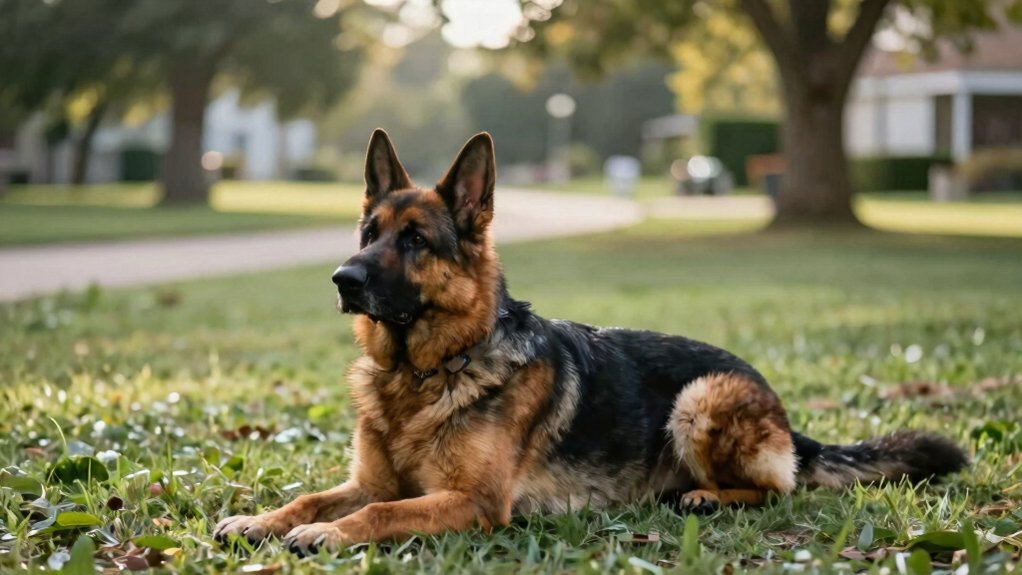
You’ll usually first notice degenerative myelopathy in German Shepherds when they’re about 8–10 years old, and it often starts quietly, with a slow, progressive weakness in the back legs.
It’s a neuro disease, meaning the spinal cord degenerates over time.
You may see nonpainful hind-limb incoordination, scuffing, or dragging paws, plus worn nails and a stumbling gait.
You’ll often notice trouble with jumps, stairs, entering vehicles, and long walks.
Usually, weakness and muscle wasting begin first, then paralysis can come later.
This usually develops over about 6–18 months.
Because German Shepherds are highly trainable and driven, owners can use consistent routines and assistive tools, such as ramps, to help their dogs stay comfortable and mobile as the condition progresses.
Degenerative Lumbosacral Stenosis Signs in German Shepherds
Degenerative lumbosacral stenosis (DLSS) in German Shepherds often starts quietly, so you’ll want to watch for early, activity-related back discomfort.
Degenerative lumbosacral stenosis in German Shepherds can begin quietly—watch for early, activity-related back discomfort.
You may see lumbosacral pain first, especially in mature, working GSDs around 3–7 years.
Expect stiffness after rest, and trouble rising, jumping, climbing stairs, or getting into vehicles.
During exam, pain may show up with palpation or hyperextension of the low back.
After intense play, watch for intermittent pelvic-limb lameness.
As it worsens over months to years, you’ll notice weak hind legs, toe scuffing, altered hock flexion, and reduced Achilles reflexes. Because these signs can overlap with neurological disorders that are also uncommon in German Shepherds, a veterinarian should confirm the cause.
Seek vet care early.
Epilepsy in German Shepherds: Seizure Types and Triggers
When your German Shepherd has epilepsy, the first thing to learn is how seizures can look, because “different” doesn’t always mean “different problem.” In idiopathic (inherited, with no clear cause on basic tests) epilepsy, many dogs have generalized tonic–clonic seizures, meaning both sides of the brain are involved and the whole body stiffens, then jerks. You may also see focal seizures, localized twitching of one side or face.
Watch for clusters—two or more seizures close together—reported in up to 41%. Triggers vary, but missed doses, stress, and illness can set them off, and prolonged seizures need urgent care. After a seizure, excessive panting can be a normal part of recovery, but panting that continues for a long time or appears alongside other symptoms may signal a problem that needs veterinary attention.
Bloat in German Shepherds: Early Signs and Emergency Action
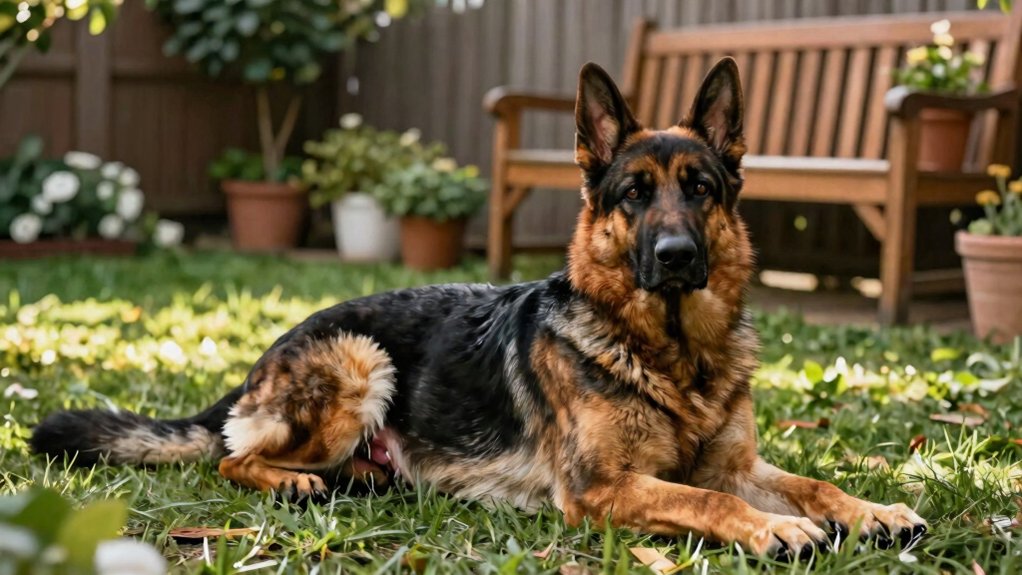
If you see your German Shepherd suddenly restless, pacing, or unable to settle after a meal, take it seriously. This can be early bloat (GDV), a fast, life-threatening stomach twist. German Shepherds are a deep-chested breed at higher risk for GDV, so knowing these signs early matters.
Watch for non-productive retching (dry heaving with only foam or mucus), stringy drool, and a tight drum-like belly, especially on the left side.
Call your vet emergency right now and head in immediately. Don’t wait and don’t try home fixes, because every minute counts.
Recognize Early Bloat Signs
Spot bloat/GDV early, because those first minutes really matter—GDV (gastric dilatation-volvulus) means your dog’s stomach fills with gas and can twist.
Then, watch for sudden restlessness, pacing, and repeated tries to lie down but can’t get comfortable.
You may notice anxious focus on the belly, praying pose, and quickly worsening pain.
Watch the gut signs too: nonproductive retching, gagging with white foam, drooling, and no food coming up.
Next, check for fast swelling, often more on the left.
Finally, note panting, pale gums, weak pulses, or collapse, especially within 1–2 hours.
Act Immediately: Call Vet Emergency
Bloat/GDV is a time-critical, life-threatening emergency for German Shepherds, and you shouldn’t wait to see “if it passes.” Once you suspect it, call an emergency vet or the nearest 24-hour hospital right away, and tell them you’re on the way with a possible bloat/GDV case—so they can triage you fast and prep the team.
Then transport fast. Without treatment, death can happen within hours. In 1–2 hours, shock signs like weak pulse, fast heart rate, and collapse can start. Keep your dog calm, limit movement, and load gently.
They may need large IV fluids, pain control, antibiotics, and quick decompression to save tissue.
Exocrine Pancreatic Insufficiency: Weight Loss in German Shepherds
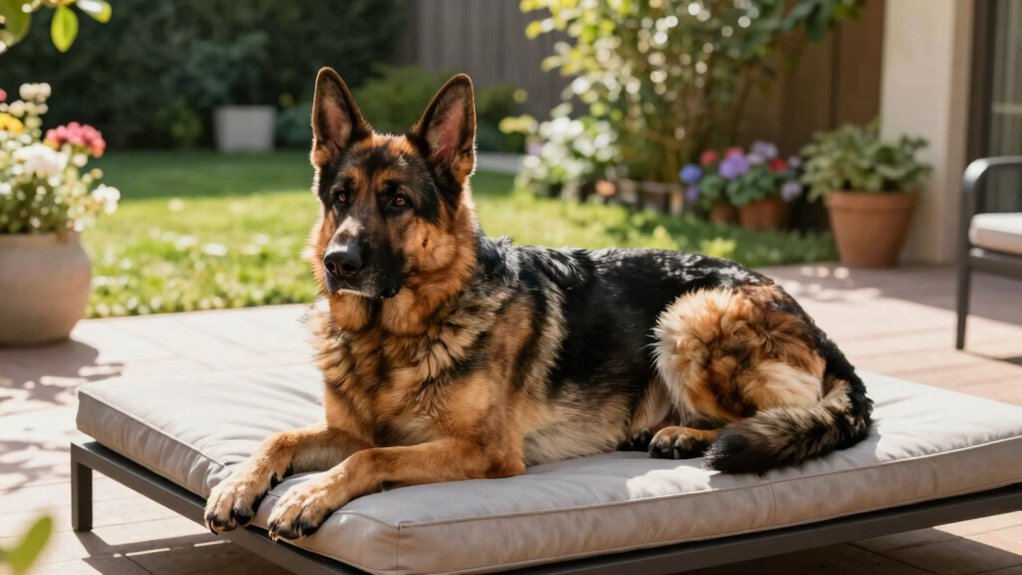
Exocrine pancreatic insufficiency (EPI) is one of the most important causes of weight loss you should think about in German Shepherds, especially when the weight drops even though your dog still eats.
German Shepherds are highly predisposed, and pancreatic acinar atrophy often begins in young adults.
You’ll see fat digestion fail, fat and nutrients won’t absorb well—malabsorption means fewer calories absorbed—so your dog becomes catabolic, losing body mass.
Typical signs include gradual weight loss over months, large-volume loose stools, yellow or grey bulky feces, and polyphagia.
EPI is usually managed for life with pancreatic enzyme supplements added to every meal, often alongside vitamin B12 injections to correct deficiencies.
Don’t delay.
If labs look “normal,” still ask your vet to test for EPI promptly.
Megaesophagus: Regurgitation and Aspiration Risk in German Shepherds
Megaesophagus can sneak up on you fast, and it’s one of the big reasons German Shepherds may regurgitate and then start coughing or breathing hard.
This functional problem weakens esophagus movement, so food can’t move to the stomach.
You may notice regurgitation soon after eating, often without gagging first.
Over time, your dog may lose weight, struggle to grow, and in severe congenital cases, face higher early mortality.
Worse, pooled food and saliva can “spill” into the lungs, raising aspiration pneumonia risk.
In one cohort, aspiration hit 35.7%, shortening survival.
Watch for fever, fast breathing, wheeze, or crackles.
Because health problems can change canine behavior, a German Shepherd that becomes unusually irritable or withdrawn during feeding may be signaling discomfort rather than aggression.
Chronic Diarrhea vs Food Intolerance in German Shepherds
You’ll often see chronic diarrhea or food intolerance look similar at first, but the triggers matter.
Food intolerance comes from non-immune reactions to specific diet ingredients—like beef, wheat gluten, added fats, or certain additives—so symptoms can pop up after meals and often improve fast when you switch diets for 2–3 weeks. Comparing sensitive stomachs food options can help you identify which ingredients are most likely causing the reaction.
But chronic diarrhea in German Shepherds usually points to underlying causes like inflammatory bowel disease, intestinal dysbiosis (an imbalance of gut bacteria), malabsorption, or exocrine pancreatic insufficiency, so you’ll need a structured workup instead of just a quick diet tweak.
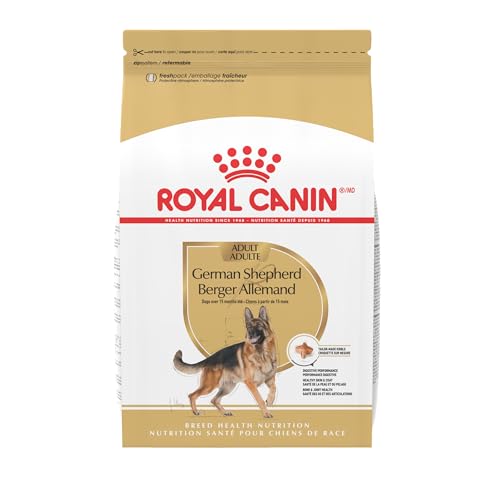
BREED HEALTH DOG FOOD: Royal Canin Breed Health Nutrition German Shepherd Adult Dog Food Dry Formula for purebred German Shepherds 15 months and older

Diamond Naturals Skin and Coat All Life Stages Salmon and Potato dry dog food; REAL SALMON is the #1 ingredient; from puppy to senior, this formula helps maintain healthy skin and coat

BREED HEALTH DOG FOOD: Royal Canin Breed Health Nutrition German Shepherd Adult Dog Food Dry Formula for purebred German Shepherds 15 months and older
Food Intolerance Triggers Explained
Food intolerance in German Shepherds can look a lot like other gut problems, but the pattern gives you real clues.
You’ll see chronic or recurrent diarrhea, gas, wind, and loose stools, often after one ingredient stays in the diet.
Food intolerance isn’t immune-based, so it’s usually about the food irritating digestion.
In German Shepherds, long guts and reactive sensitivity make this worse with low-quality ingredients, high starch, and additives.
Common triggers include beef, chicken, dairy proteins, wheat, soy, corn syrup, and even lactose.
Avoid vague by-products, preservatives like BHA/BHT, and swap slowly.
Chronic Diarrhea Common Causes
When diarrhea keeps coming back for weeks, you need to think bigger than food intolerance, even if diet still plays a role.
Food intolerance is only one subset of chronic enteropathy causes.
You’ll often see primary inflammatory enteropathies, intestinal dysbiosis (microbiome imbalance), or malabsorption.
For example, exocrine pancreatic insufficiency (EPI) happens when the pancreas can’t make enough digestive enzymes.
That can cause large-volume pale or grey, greasy stools, plus weight loss and polyphagia.
You may also notice antibiotic-responsive diarrhea, and sometimes idiopathic inflammatory bowel disease.
To help your vet decide, track timing, stool look, appetite, weight, then ask about enzyme testing and intestinal biopsies.
Allergies in German Shepherds: Itchy Skin and Ear Infections
Allergies in German Shepherds often show up as itchy skin that just won’t quit, and that itch can quickly spiral into recurrent ear infections.
Itchy, relentless skin is a common sign of allergies in German Shepherds—and it can quickly lead to recurrent ear infections.
You should know German Shepherds are high-risk for canine atopic dermatitis, a genetically predisposed, itchy skin allergy, about 3–15% overall.
Watch for patterns: scratching around face and ears, licking paws, chewing.
Often, pollen, mold, and climate triggers inflame skin, plus food allergies and flea-bite hypersensitivity.
Then, ear canals get inflamed, with more wax, redness, pain, and ongoing otitis externa.
Help by tracking flares, checking fleas, and asking your vet about allergy testing and safe treatments.
Pemphigus Foliaceus: Crusting Pustules and Immune Skin Disease
When you spot pemphigus foliaceus in your German Shepherd, you’re dealing with an immune-mediated skin problem, meaning the body attacks its own skin.
You’ll often see fragile, superficial pustules that pop fast, then turn into yellow-brown crusts, with itching that can range from mild to intense, plus possible soreness on the paws.
Treatment can be tricky, because steroids and other immune drugs may need careful dosing and long monitoring—so work closely with your vet, especially if crusting keeps coming in waves.
Immune-Mediated Skin Crusting
Pemphigus foliaceus (PF) is an autoimmune skin disease, and it can make your German Shepherd’s skin crust up in a way that looks dramatic but has a clear cause.
Their immune system mistakenly targets desmosomes, the “glue” between top skin cells, causing cell separation.
IgG antibodies bind desmocollin-1 in the upper epidermis, so keratinocytes lose cohesion.
You’ll often see yellow-brown, honey-colored crusts on the face, ears, and muzzle, then sometimes on footpad margins with cracks and erosions.
Early face lesions may spread to trunk, groin, and pads.
Middle-aged to older dogs seem more prone.
Pustules, Itching, Treatment Challenges
Those honey-brown crusts don’t appear out of nowhere—after the earlier skin-crusting phase, you can also see pustules (small, fluid-filled bumps) and itching that ranges from mild to intense, especially once bacteria move into the raw, eroded areas.
You’ll often notice new lesions in waves, getting better then worse, usually on ears and face, then spreading to the body.
But treatment is tricky.
You need a skin biopsy to confirm pemphigus foliaceus, since early cases can mimic infections.
Expect long-term immune-suppressing meds, plus antibiotics if pyoderma flares.
Anal Furunculosis: Painful Lesions and Long-Term Management
Anal furunculosis is a chronic, progressive inflammatory disease of the tissues around your dog’s anus, and it can look small at first but turn into a long-term problem fast.
In German Shepherds, this shows up often, especially in middle-aged and older dogs.
In German Shepherds, anal furunculosis is especially common in middle-aged and older dogs.
You may notice painful ulcers, erosions, and sinus tracts under the tail, sometimes with bad-smelling discharge.
Your dog might strain to poop, get constipated, itch, and lick or chew the area.
Because it’s multifactorial and immune-related, you can’t just “wait it out.”
See your vet promptly.
For diagnosis, expect exam, rectal check, cytology, and culture, then long-term care.
Von Willebrand Disease: Bleeding Risks in German Shepherds
When your German Shepherd has von Willebrand disease, you’re dealing with a hereditary clotting defect, meaning blood may not form stable clots like it should.
You’ll often notice prolonged bleeding after surgery, like oozing that lasts longer than about 24 hours, plus easy bruising, small red or purple spots (petechiae), and larger soft swellings (hematomas).
But don’t wait for obvious signs—ask your vet for vWF testing or screening before any dental work or procedures, because many dogs stay “normal” until they face a hemostatic challenge.
Hereditary Clotting Defects
Von Willebrand disease, or vWD, is an inherited clotting disorder that many German Shepherds are more likely to carry, and it can put you on alert for bleeding that shows up without warning.
You should know it’s common in the breed, with type 1 vWD most often, causing mild-to-moderate bleeding.
You may see gingival bleeding, nosebleeds, or blood in urine.
And if it hits the gut, you might notice vomiting blood, tarry stools, or visible blood.
Bruising can start after minor bumps, and some dogs develop joint bleeding.
About half, or more, of puppies may inherit it.
Prolonged Bleeding After Surgery
If your German Shepherd shows up with bleeding that just won’t quit after surgery, von Willebrand disease (vWD) is one of the first inherited causes to rule out. vWD is a defect in von Willebrand factor, a protein that helps platelets stick and forms the first clot.
So you may see diffuse, slow oozing at incision sites, even after spay, neuter, dental work, or ear/tail procedures.
German Shepherds carry higher risk, and autosomal inheritance can stay silent until a procedure triggers it.
Ask your vet about vWD screening, and act fast to prevent anemia.
Easy Bruising And Hemorrhage
Easy bruising and sudden bleeding can be a big clue for von Willebrand disease, and German Shepherds are among the breeds that need extra attention. You should notice easy bruises from tiny bumps, pinpoint dots (petechiae), or bigger purple patches (ecchymoses).
You may also see nosebleeds, sudden gum bleeding while teething, or blood-tinged diarrhea. Von Willebrand factor helps platelets stick to damaged vessel walls, so when it’s low, bleeding lasts longer.
With Type I, over 95% of cases, the defect is often mild to moderate, yet plug formation is delayed. After minor cuts or toenail trims, watch for prolonged bleeding and call your vet.
Pituitary Dwarfism: Growth Failure and Coat Changes
When your German Shepherd starts to look “stunted” early, pituitary dwarfism is one of the conditions you should know about.
It’s an autosomal recessive genetic disorder, often from carrier parents, so affected pups can appear in either sex.
After about 2 months, you may notice slower, proportionate dwarfism and delayed growth-plate closure.
You might also see delayed permanent teeth, retained puppy teeth, and underdeveloped reproductive organs.
Coat signs are big too.
You’ll often see a puppy-like coat that lacks guard hairs, then a symmetrical alopecia, dark skin, and tufts on the legs.
Ask your vet about LHX3 genetic testing and hormone checks.
Hypothyroidism in German Shepherds: Common Skin Signs
Hypothyroidism in German Shepherds often shows up on your dog’s skin before anything else grabs your attention. You may notice nonitchy, bilateral hair loss along the ventral and side trunk, tail base, hind thighs, ventral neck, and even the dorsal nose.
This “rat tail” look often starts at friction points, like the collar and lateral hind limbs, then spreads. You’ll see a dry, dull, brittle coat, more shedding, and slow regrowth after clipping.
Dry or oily seborrhea, scale, and sometimes oily, scaly, smelly skin can appear. Hyperpigmented, thickened skin and recurrent staph or Malassezia infections often follow.
Pannus in German Shepherds: Corneal Pain and Vision Loss
Pannus is a chronic eye disease in German Shepherds where your dog’s immune system slowly attacks the surface layer of the cornea, the clear “window” over the eye.
This usually starts near the corneal edge, then creeps inward, both eyes often, though one may look worse.
You’ll see pink, fleshy growths at first.
Later, blood vessels grow into the cornea, brown pigment builds up, and haze worsens.
Even without ulcers, your pup may squint, get red, and hate bright light.
Left uncontrolled, dense tissue can block the visual axis, causing major vision loss.
Progressive Retinal Atrophy: Night Blindness to Blindness
Ever notice how your German Shepherd seems fine in the daytime, but suddenly hesitates, bumps into things, or struggles to move confidently in dim light? That can be early Progressive Retinal Atrophy, or PRA.
It’s inherited, so you’re not “causing” it. PRA slowly destroys retinal photoreceptors, the light-sensing cells.
Rods fail first, so true night blindness shows up first.
Then cones weaken, and daytime vision drops too.
This degeneration progresses over months to years, not days.
In late stages, your dog reaches complete, permanent blindness, eyes open and non-painful.
Ask your vet about DNA testing and regular eye checks.
Cataracts and Retinal Dysplasia in German Shepherd Breeding Lines
When your German Shepherd’s eyes start to look cloudy or you notice strange “paper wrinkles” on the retina, think beyond PRA and consider cataracts and retinal dysplasia—two inherited, developmental eye problems seen in some breeding lines.
Hereditary cataracts can begin as early as 8 weeks, and they can progress to major vision loss by 2–3 years.
Lens opacity varies from small spots to near blindness, so you take each change seriously.
Retinal dysplasia forms from birth, showing folds or rosettes.
It’s usually non-progressive, but it can cause detachment.
You support safer breeding choices by staying alert.
Breeding Screening Tests: X-Rays, DNA, and Eye Exams to Reduce Risk
Start with screening, because good breeding starts with good data.
First, schedule hip and elbow X-rays at or after 24 months, using reputable schemes like OFA, BVA, SV, or FCI. You’ll get clear grades, like normal versus dysplastic, and those lower scores help you choose mates more wisely.
Since 2021, about 79% of hips and 81% of elbows test normal, so you’ll reduce risk by filtering out the remaining 21% and 19%.
Next, run DNA tests for degenerative myelopathy, using SOD1 mutation results: clear, carrier, or at-risk, before breeding.
Frequently Asked Questions
Which Genetic Tests Can Identify Degenerative Myelopathy Risk in Breeding Lines?
You can identify degenerative myelopathy risk with SOD1 gene DNA tests: SOD1:c.118G>A panels classify dogs as clear, carrier, or at-risk. Use reputable labs (e.g., OFA/UMC, UC Davis, Genomia, launch) on cheek swabs or blood.
How Soon Can Degenerative Lumbosacral Stenosis Symptoms Appear in German Shepherds?
Symptoms can show up like a slow-creeping storm as early as 15 months, but you’ll most often see first signs around 3–7 years, with diagnoses averaging about 5.5–6 years in many large studies.
What First-Aid Steps Should I Take if Bloat Is Suspected at Home?
Stop feeding and water, keep your dog calm and still, and call an emergency vet right away. Watch breathing, gum color, and weakness. Don’t try tubing, vomiting, or meds. Transport immediately, ready to lift safely.
Can Exocrine Pancreatic Insufficiency Be Confirmed With Simple Bloodwork?
No. Simple bloodwork can miss EPI—your CBC/chemistry often looks normal. Confirm EPI with a fasting serum TLI assay sent to a reference lab. If TLI is low, you’ll get the proof you need.
What Triggers Worsen Seizures in German Shepherds With Epilepsy?
You can worsen seizures in German Shepherds by disrupting routine, stressing them, denying sleep, overheating, introducing loud noises or flickering lights, overexerting them, and missing anti-seizure meds. Changes like visitors, travel, boarding, or clinics can also trigger events.