Normal panting for your German Shepherd happens after heat or play, then it should fade within 10–30 minutes once they’re in shade, cool air, and calm. But panting that stays heavy at rest is concerning, especially if you see hard effort like flared nostrils, nostril “sniffing,” belly muscle use, coughing/wheezing, or pale/blue gums. If heavy panting won’t ease after 10–20 minutes, cool them and get vet help fast, because more clues are coming.
Swift Summary
- Normal panting helps dogs cool via air flow, usually peaking after activity and easing within 10–30 minutes.
- Baseline at rest is often about 10–30 breaths/min; persistent heavy panting in a cool spot suggests trouble.
- Heat can cause excessive panting after exercise or warm air, but it should improve quickly with shade and water.
- Concerning signs include labored breathing, abdominal effort, nostril flare, noisy breathing, or pale/blue gums.
- If panting doesn’t steadily improve after cooling within 10–20 minutes, or reaches heatstroke levels, seek urgent veterinary care.
What Counts as Normal Panting in German Shepherds?
When you notice your German Shepherd panting, start by measuring what “normal” looks like. Regular home grooming checks, such as inspecting paw pads and coat, can also help you learn your dog’s baseline before problems arise.
Why do german shepherds pant so much? Many do it after exercise, excitement, or warm weather. Panting is normal because dogs don’t sweat like humans and cool themselves by moving air across their tongues and airways. Track resting breaths per minute, ideally 10–30 when fully relaxed; vets also note normal can run 15–35.
If why is my german shepherd always panting, check the cause.
Normal panting often peaks with the trigger, then eases, and your dog stops within minutes of cooling.
Look for relaxed face, normal gums, open-mouth breathing, no cough or wheeze.
If german shepherd overheating symptoms persist, ask how to tell if german shepherd has a fever and what’s a german shepherd normal temperature.
Heat Panting vs Breathing Trouble: How to Tell Fast?
In the moment you notice panting, you can usually tell heat from breathing trouble fast by looking at what sparked it and how your dog’s breathing behaves while it happens. If it started after exercise, play, excitement, or warm air, and it eases within 5–15 minutes after shade and water, that’s usually heat panting. You’ll often see quick, shallow open-mouth breaths, tongue out, minimal strain. At 4–5 months, a German Shepherd puppy is still working through growth spurts and teething, so short play sessions with rest breaks help keep heat-related panting from building up. air is warmed and humidified before it reaches the delicate airways, so panting from heat is often more consistent with normal “air conditioning” than with airway disease. But if your German Shepherd starts panting at rest, even in a cool spot, or breathes hard and persistently, that’s concerning. Watch rate—over 40–60 breaths per minute at rest. Also note nostril flare, abdominal effort, odd noises, blue or pale gums, and can’t get comfortable.
When to Worry: Heatstroke Symptoms in German Shepherds?
If your German Shepherd keeps doing heavy, rapid panting that won’t calm down after you’ve moved them to shade and started cooling, don’t wait—heatstroke can start damaging organs in minutes. Panting and restlessness can also signal gastric dilatation-volvulus, a life-threatening stomach condition that German Shepherds are prone to, so if your dog is also retching without producing anything, treat it as an emergency.
Because heatstroke occurs when a dog’s body temperature can’t be regulated and reaches 105°F or higher, don’t delay once symptoms escalate. Look for warning signs like gums that are bright red or very pale, vomiting or diarrhea, weakness, confusion, collapse, or a rectal temperature over 104°F (40°C) (measured in the ear/rectum with a thermometer), then act fast. Call your vet immediately while you cool them with cool—never icy—water and keep checking temp as you go.
Recognize Heatstroke Warning Signs
As the heat builds, your German Shepherd can slide from “just too warm” into heatstroke fast, so you need to watch their breathing and body signs closely.
Heavy panting that doesn’t ease after 5–10 minutes in shade is a red flag.
Look for rapid, noisy, or raspy breathing, bright hot skin, and stopping to lie down, or seeking cool spots.
Check gums: bright red early, but very pale or blue means shock.
Watch for dry, tacky mouths, thick sticky saliva, vomiting or diarrhea, and uncontrolled urination.
Then notice weakness, collapse, seizures, confusion, and temp at 104°F/40°C.
Act Quickly Before Damage
Once you notice heatstroke signs, you can’t “wait it out,” because delays let organs get damaged. Heatstroke is a medical emergency, and German Shepherds can worsen fast.
If your dog’s core hits about 104°F (40°C), or you see heavy panting plus weakness, vomiting, confusion, or collapse, act now. Seek emergency care immediately.
Don’t shop around or wait 30–60 minutes. Aim to lower temperature fast, then transport fast.
If you can’t get below 105°F quickly, call the vet or ER en route.
Watch for seizures, pale/blue gums, bloody diarrhea—shock and organ failure may be starting.
Why Does My German Shepherd Pant After Exercise?
After you stop running or playing, your German Shepherd pants to cool down, using fast breathing and evaporation from the tongue and airways to lower core temperature.
But if the panting stays heavy longer than about 10–30 minutes, or it ramps up fast early in the session, check for heat stress, pain, or overexertion—look at gum color (normal vs bright red), body stiffness, and how quickly heart and breathing settle.
If they won’t calm down, they seem weak, or you notice thick drool or a temperature over ~104°F (40°C), treat it as concerning and get help right away. Gradually building conditioning and keeping runs and hikes at a comfortable pace can help prevent overexertion and excessive panting.
Normal Cooling After Activity
When your German Shepherd pants right after exercise, that’s usually your pup’s smart way of cooling down, not a sign of danger. Panting boosts evaporative cooling, meaning it cools by moving air over moist surfaces in the mouth and nose.
You’ll often notice open-mouth, rapid, shallow breaths right after running or play. If it’s warm out, panting may get stronger, then gradually fades.
Once you offer rest and a cool, comfy spot, normal panting usually settles in 10–30 minutes. Well-conditioned dogs often return to a calmer breathing rate faster too.
When Panting Becomes Concerning
But if your German Shepherd keeps panting hard even after you stop the activity, give water, and move them into shade or an A/C room, that’s a red flag—not normal cooling.
And if the panting doesn’t slow down, or it keeps going into rest or sleep, contact your vet.
Heavy, fast panting that stays constant can mean heat buildup or stress that won’t ease.
Watch closely for drooling, reluctance to move, droopy or bright red gums, shaking, foaming, or collapse.
If breathing becomes labored, gums look pale/blue, or they seem confused, treat it like heatstroke.
Recovery In Minutes, Watch Closely
Right after your German Shepherd finishes a run or play session, you should see their breathing start to calm down fast, usually within about 5–10 minutes if the weather is cool and they can rest.
Panting should get less intense, not stay peak. It should look shallow and rhythmic.
If you notice heavy, open-mouthed panting lasting 10–20 minutes, move them into shade, offer small sips of cool water, and let them lie on a cool surface.
But if it drags past 30 minutes, or doesn’t steadily ease, call your vet.
Environmental Triggers That Make Panting Worse?
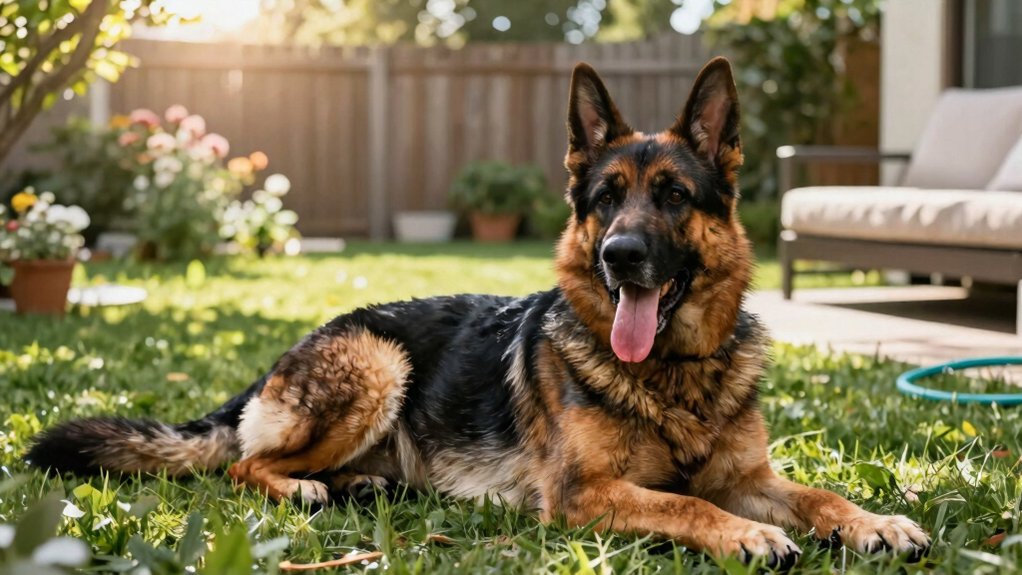
Environmental conditions can crank up your German Shepherd’s panting fast, so it helps to clock what’s happening around them.
High heat plus humidity makes panting harder, because moisture can’t evaporate well to cool your dog.
If you notice temps near 104°F (40°C), panting may become excessive and heatstroke signs can appear.
Early summer, before your dog acclimates, raises risk too.
Midday sun and little shade boost thermal load.
During vigorous play, panting rises to cool them, but overexertion in hot, humid weather can cause heavy, rapid breathing. German Shepherds are known for their high drive and eagerness to work, so they may keep playing or training long after they’ve started to overheat, which makes regular rest breaks in cool shade essential.
Confined spaces—cars or sun porches—trap heat.
And poor ventilation keeps it trapped longer.
Why Does Your German Shepherd Pant at Rest (Pain or Anxiety)?
If your German Shepherd pants while they’re just resting, don’t chalk it up to “they’re hot” too fast. Panting at rest in a cool, comfy home often points to pain or stress.
Pain ramps up heart rate and breathing, so you may see labored panting plus stiffness, limping, or trouble settling. Older dogs especially may do this, and it can look subtle.
With pain, you’ll also notice restlessness, low energy, lower appetite, or even growling from discomfort.
Anxiety can also drive panting, especially at night, with pinned-back ears, “whale eye,” pacing, trembling, drooling, or attempts to hide. Stress can also cause a German Shepherd to stop eating, so a dog that pants at rest and refuses meals needs a veterinary checkup.
Coughing or Noisy Breathing: Respiratory Red Flags?
If your German Shepherd is coughing or making noisy sounds when breathing—wheezing, snorting, whistling, or a loud raspy intake—don’t just chalk it up to panting.
Watch for red flags like labored breathing, breathing faster than about 40–60 breaths per minute at rest, and pale or blue/purple gums (cyanosis = low oxygen), because those mean your dog may not be getting enough air and needs a vet right away.
If the cough or noisy breathing is sudden, getting worse fast, or your dog looks unwell or can’t settle, contact an emergency clinic now. Because you may need to check your dog’s breathing and gums during evening outings, LED dog collars can improve visibility on dark walks.
Labored Breathing Versus Panting
When your German Shepherd is panting, don’t just assume it’s “normal heat.”
Start by watching their breathing pattern closely, because labored breathing (dyspnea, meaning trouble getting enough air) looks and feels very different from simple panting.
Normal panting is short, shallow, open-mouth breaths after exercise, then slows at rest and cool-down.
But labored breathing shows real effort.
You may see abdominal contraction to move air, flared nostrils, wide stance, elbows out, and an extended neck.
They may breathe fast even when resting.
If gums look blue, seek urgent care.
Evolution matters, too.
Noisy Sounds Need Vet
Noisy coughing or breathing isn’t something to “wait out,” because it often signals a problem in the airways or lungs, not just regular panting.
If your German Shepherd coughs for more than 3 days, won’t improve, or keeps getting worse, call a vet within 24–48 hours.
Night coughing, coughing after exercise, or frequent coughing in a senior dog also needs checking.
If coughing leads to collapse, extreme weakness, or fainting, treat it as an emergency.
Watch sounds too: low, snoring “stertor,” high-pitched “stridor,” or wheezing can mean obstruction or narrowing.
Sudden choking after treats? Go now.
Cyanotic Or Pale Gums
Cyanotic or pale gums are two big “stop and act” signs you don’t ignore in a German Shepherd, even if the coughing seems mild or there’s no cough at all.
Cyanotic gums look bluish, gray, or purple. That means poor oxygenation, a respiratory emergency.
Pale pink to white gums often point to anemia or shock, like blood loss or poor circulation.
Check gums fast, then check breathing. If your dog can’t settle, pants hard, struggles to rise, or has visible belly effort, rush to emergency care now—call immediately for oxygen and stabilization.
Your quick action can save lives.
Heart Problems That Can Mimic Panting in Dogs?
Heart issues can look exactly like “just panting,” so it helps to know what to watch for beyond heat or exercise. With congestive heart failure, you may see fast, labored breathing at rest, often with a moist cough and less stamina.
If your dog’s resting breathing rate stays high, especially over ~35 breaths/min with open-mouth panting in heat, take note. Dilated cardiomyopathy can cause “panting” even when relaxed, then cough, weight loss, or fainting.
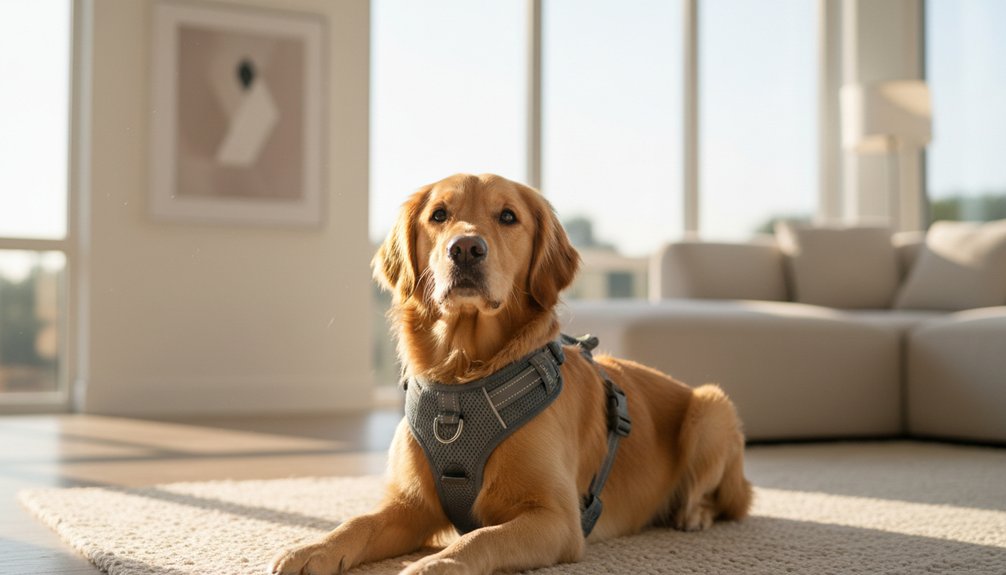
Pericardial effusion can bring sudden heavy breathing, weakness, pale gums, and even collapse. Also, arrhythmias may cause fast, irregular pulses plus rapid shallow breathing. If your dog has a heart condition, consider a well-fitted harness instead of a collar, since a harness applies less pressure to the throat and trachea during walks.
Cushing’s Disease: Chronic Panting Signs and Clues?
If your German Shepherd has been panting a lot for weeks or months, even when it isn’t hot or after only mild activity, Cushing’s disease is one possibility worth checking. This endocrine problem means the body makes too much cortisol, and that disrupts systems.
You may notice “excessive panting” along with many other clues: drinking and urinating more (polyuria/polydipsia), eating more (polyphagia), a pot-bellied look from abdominal distension, and weakness or low energy. Heat intolerance can also drive panting.
Many affected dogs show thin, fragile skin and poor hair growth too. Middle-aged or older dogs need priority. Consider a vet visit promptly. Owners who keep a steady house-training schedule for their dog are often better able to notice sudden changes in how much it drinks and urinates.
Obesity and Low Fitness: How They Affect Panting?
When your German Shepherd carries extra weight or isn’t very fit, you’ll often see panting show up sooner than you’d expect.
Extra body fat compresses the chest and lungs, so breathing takes more work. That means faster, heavier breathing, even at rest.
And if your dog is unfit, exercise tolerance drops, so they tire quickly, then pant during and after short walks.
But watch recovery: panting should ease within about 10 minutes.
Also, overweight dogs heat up faster, because fat insulates. Arthritis pain can reduce activity, which worsens low fitness, and the cycle continues. Feeding a life-stage-appropriate diet with controlled calories can help prevent the excess weight that leads to this kind of panting.
What Does a Vet Check First for Severe Panting?
Your vet starts severe panting with a quick “ABC” check—Airway, Breathing, and Circulation—because those issues can become life-threatening fast.
Next, you’ll see airway patency tested for blockage, swelling, or a foreign body.
Next, your vet checks airway patency for blockage, swelling, or a foreign body that could quickly become life-threatening.
Then breathing is assessed, with respiratory rate, depth, and effort, like abdominal muscle use, nasal flaring, and open-mouth breathing.
Your vet also listens for noises, stertor or stridor, and checks lung sounds for wheezes or crackles.
Finally, circulation gets checked: pulse quality, heart rate, perfusion, gum color, and capillary refill.
Blue gums, extreme lethargy, or collapse means emergency care right away.
How to Cool, Monitor, and Prevent Future Episodes?
During a panting episode, cool your German Shepherd right away, because heat can climb fast and stress the body in minutes.
Move them to shade, cool AC, or air flow, and stop play.
Offer small sips of cool or room-temperature water, don’t force it.
Wet the torso and inner thighs with cool (not icy) water, then aim a fan over the damp coat.
Use cool wet towels or natural grass.
But avoid ice baths, direct hose spraying, head-only pouring, or enclosed spaces.
Next, track panting vs activity, watch for drool, lethargy, vomiting, collapse.
If trained, check rectal temp.
For prevention, walk early/late, keep shade and water, never vehicles, use mats, manage weight.
Frequently Asked Questions
Can Stress Alone Cause Nonstop Panting in German Shepherds?
Yes—stress alone can trigger nonstop panting in German Shepherds, but don’t assume it’s harmless. If it lasts in cool, calm conditions or won’t stop, you should contact your vet to rule out medical causes.
How Long Should Panting Last After Play Before It’s Considered Excessive?
Panting should noticeably ease within 5–10 minutes of rest, water, and shade. If it stays heavy, worsens, or lasts beyond 15–30 minutes without improvement—especially at rest—call your vet promptly. Seek urgent care with breathing trouble.
Does Panting at Night Indicate Pain, Anxiety, or Illness?
Often, yes—panting at night can signal pain, anxiety, or illness. Start by noticing restlessness, pacing, or guarding for pain; check triggers for anxiety; consider illness if it’s heavy, new, persistent, or includes coughing, weakness, or vomiting.
Are There Specific Gum Colors That Always Require Urgent Vet Care?
Yes—pale/white, blue/purple/grey, or yellow gums always require urgent vet care. Check gums now: call your emergency clinic immediately if color isn’t healthy bubblegum pink, especially with weakness, breathing trouble, or collapse.
What Home Tests Can I Do Before Calling My Veterinarian?
Before you call, count breaths for 30–60 seconds—about 10–34/min is typical; if you hit much higher at rest, check gums color, capillary refill (1–2 seconds), and take rectal temp; cool if hot, but call vet fast.