You should aim for 60–120 minutes total walking each day, split into 2–4 brisk strolls, plus some “sniff time.” For hiking, keep it easy and joint-friendly: most pups do about 45–90 minutes total from 8–18 months, or 1–3 hours for adults. When running, start with a gentle 0.5–1 mile jog plus walking, then build toward about 3–5 miles total. Keep hard running on soft ground, avoid after meals, and don’t go too fast if form breaks—there’s more to learn as you fine-tune your plan.
Swift Summary
- Aim for 60–120 minutes daily walking, split into multiple sessions with extra sniff time.
- For hiking, keep outings age-appropriate: adults often manage 1–3 hours; puppies start shorter and build gradually.
- Avoid intense running right after meals; schedule longest runs at least a couple hours post-feeding for GDV/bloat risk reduction.
- Keep running joint-friendly: steady work often 4–6 mph, with longest runs about 30–60 minutes on softer ground.
- Choose forgiving surfaces (grass/dirt/sand), limit hard pavement, and watch heat and paw comfort using the back-of-hand test.
How Much Should You Walk Your German Shepherd Daily?
When you’re planning walks for your German Shepherd, think “daily exercise total,” not just one long outing. Most healthy adults need 60–120 minutes per day, and some guides recommend 1–2 hours, split up. So, how often should you walk a german shepherd? Aim for 2–4 walks daily, like two brisk 30–60 minute sessions, plus sniff time. Mental stimulation, such as puzzle toys and training games, also helps tire out a German Shepherd and complements physical exercise. Can you walk a german shepherd too much? Yes—avoid punishingly long, hard runs that risk joints, especially as they grow. Puppies get about 5 minutes per month of age. Can german shepherds run long distances? yes, gradually, and only after maturity. Also, can you run with a german shepherd? do short, safe intervals. For a healthy routine, plan for at least 2 hours of exercise daily.
How Long Can a German Shepherd Hike Safely?
So, how long can you hike with a German Shepherd and still keep it safe? For pups under 6 months, stick to totally flat, level ground, and keep it short. Around 8 months, try about a one-mile easy hike, then build slowly. From 8–18 months, aim for 45–90 minutes total, split into sessions, and choose soft footing, and fitness builds gradually with gradual progression rather than sudden jumps in duration. No hard roadwork or jogging until growth plates are closed. For adults, plan most outings at 1–3 hours, often 45–60 minutes, then rest. Fit dogs may manage 5–10 miles, or up to 10–15 on moderate trails, with water. Appropriate exercise also supports good canine behavior, since under-stimulated German Shepherds may become restless or reactive.
What Running Distance Fits Your German Shepherd’s Fitness?
If your German Shepherd loves to move, you’ll want to match the run distance to their fitness, not just your motivation.
For many fit adult dogs, a single run of about 3–5 miles can fit into a daily 90–180 minutes of total exercise. In general, German Shepherds are prone to GDV/bloat risk, so you should avoid intense running right after meals.
Aim for 30–60 minutes max for that longest run to protect joints. Because intense exercise after eating can contribute to gastric dilatation-volvulus, schedule the longest run at least a couple of hours after your dog’s last meal.
Start unconditioned dogs at 0.5–1 mile jog plus walking.
Start unconditioned dogs at a gentle 0.5–1 mile jog plus walking, building stamina gradually while protecting joints.
Increase mileage 10–20% per week, and watch gait quality and recovery.
But puppies, seniors, or joint-issue dogs need shorter, lower-impact segments.

Customizable Fit: The large dog harness has a chest girth of 22"-37" and a neck girth of 21.1"-30.3", with plenty of room for adjustment, making it suitable for breeds like Husky, Golden Retriever, German Shepherd, Bulldog, Rottie Puppy, Belgian Malinois, and more

[Refer to Size Chart]: Before buying a dog harness, spend a little time measuring your dog's size, which can help you avoid the hassle of returns. Please refer to the ICEFANG Brand size chart , Small(Neck:14"-18" ; Chest:22"-27"); Medium(Neck:16"-22" ; Chest:25"-31" );Large(Neck:18"-24" ; Chest:28"-35");X-Large(Neck:20"-28" ; Chest:32"-39")

Easy Adjustment - for Ultimate Comfort.Slip into and out of our dog harness effortlessly with the help of 2 quick-release buckles. Experience Unmatched Mobility with 4 Fully Adjustable Meatl Rings, two on the shoulders and two on the chest, which ensure a snug fit that enables unrestricted movement.
How Fast Is Too Fast for German Shepherd Running?
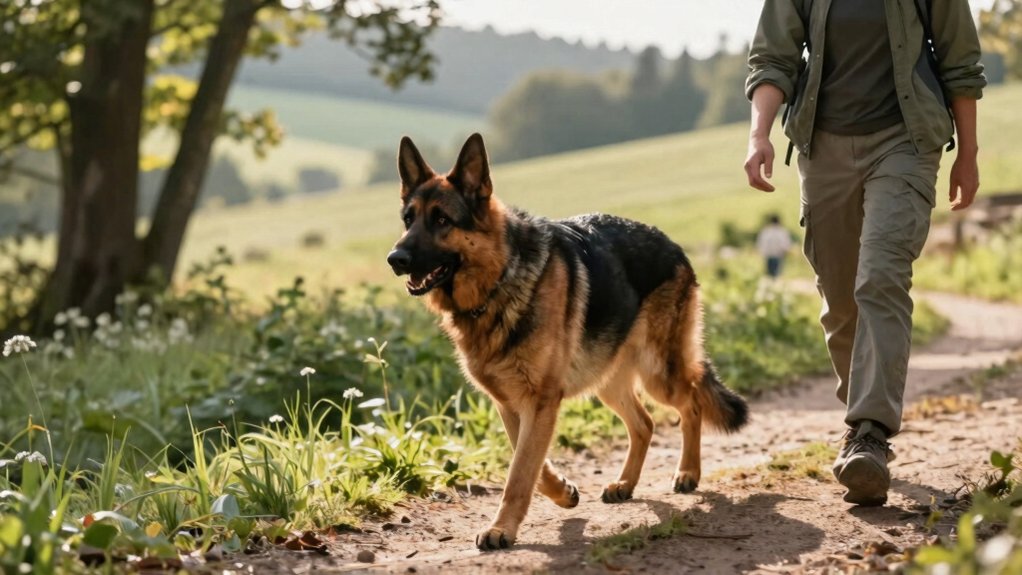
You should think of “too fast” for your German Shepherd as any pace that forces them into frequent heavy pounding and rough form, not just a fast number on a watch.
Many well-conditioned dogs can sprint 30–35 mph in short bursts, but that’s for quick efforts, not training.
For steady work, aim around 4–6 mph like a casual human jog.
Hard running at 9–15 mph fits only well-conditioned adults, and routine sessions above 10–15 mph raise fatigue and injury risk.
If your dog is under 18 months, skip high-speed reps, especially on pavement.
On hot days, cool them down. After outdoor runs, brushing your German Shepherd helps remove loose hair and dander, since the breed’s heavy shedding can spread allergens throughout the home.

Keep your dog cool this summer with the Swamp Cooler Vest; It provides sun protection and evaporative cooling for hot weather activities such as hiking, walking, camping, and more

Size Instruction: This large dog harness fits chest girth: 27-37 in, neck girth: 19-25 in. Perfect for German Shepherds, Labradors for hiking, walking, or daily outdoor adventures. Breed suggestions are for reference; please measure your dog's chest, neck, and weight for the best fit.

Stay Cool on Every Adventure: The Kurgo Dog Core Cooling Vest helps prevent overheating in warm weather using an evaporative cooling coat design and lightweight cooling gear construction
Set a Weekly Plan: Walks, Runs, Hikes, and Play
Start by mapping out your week on paper, because a simple plan keeps your German Shepherd balanced and happy.
Aim for 60–120 minutes or more purposeful activity per day, split into two to four sessions so you don’t overload one outing.
Use a steady morning 30–45 minute brisk walk or jog, then an evening 30–45 minute walk or hike.
Add 2–3 main run days, 30–45 minutes, plus lighter walks after.
Schedule 2–3 hike days, 40–60+ minutes, and one adventure day for 60–90 minutes.
Every day, include 15–30 minutes of mental play—fetch, tug, scent work, or puzzle feeding.
If your dog is a mix, such as a Kelpie cross, it may inherit high energy levels, so adjust this weekly plan to match its stamina.

【Easy Adjustment - for Ultimate Comfort.】Slip into and out of our dog harness effortlessly with the help of 2 quick-release buckles. Experience Unmatched Mobility with 4 Fully Adjustable Meatl Rings, two on the shoulders and two on the chest, which ensure a snug fit that enables unrestricted movement.

Size Instruction: This large dog harness fits chest girth: 27-37 in, neck girth: 19-25 in. Perfect for German Shepherds, Labradors for hiking, walking, or daily outdoor adventures. Breed suggestions are for reference; please measure your dog's chest, neck, and weight for the best fit.

【Easy Adjustment - for Ultimate Comfort.】Slip into and out of our dog harness effortlessly with the help of 2 quick-release buckles. Experience Unmatched Mobility with 4 Fully Adjustable Meatl Rings, two on the shoulders and two on the chest, which ensure a snug fit that enables unrestricted movement.
Use Age Rules: Puppy Exercise vs Adult Exercise
Use age rules so you protect growing joints while still building fitness. In large-breed puppies, growth plates (soft areas that let bones grow) often close around 12–18 months, so you keep structured exercise to the “5 minutes per month of age” guideline and avoid repeated jumping, stairs, and fast running until an adult-level vet check.
But once you’re at skeletal maturity, you can gradually increase distance and conditioning with more adult-style hikes and jogging, still in controlled bursts so you don’t stress hips, elbows, or long bones. A German Shepherd entering adolescence at around six months often goes through rapid growth spurts, so the same limits on structured exercise apply during this stage.
Puppy Growth Plate Limits
Because German Shepherd puppies have open growth plates—soft cartilage at the ends of bones that keep them growing—running, long hikes, and hard “adult-style” exercise need to wait.
Until about 12–18+ months, sometimes up to 24 months for larger pups, you protect vulnerable joints from impact and repeated pounding.
Use the “5-minute rule”: 5 minutes of structured, controlled walking per month of age, up to twice a day.
At 3 months, aim for ~15 minutes per session.
At 6 months, ~30 minutes.
Let self-play bursts happen, but skip stairs, jumps, and fetch marathons.
Adult Conditioning And Distance
Adult conditioning is where your German Shepherd starts to shine, and your job is to match the distance to their age and fitness.
Aim for healthy adults, about 2–7 years, at 60–120 minutes meaningful exercise daily.
Split it into 2 sessions, 60–90 minutes each, so you reduce fatigue and injury risk.
Add 15–30 minutes of mental work too, like training or scent games.
For conditioned runners, after 18–24 months, expect 3–5 miles at a moderate pace on grass or dirt, not concrete.
For hiking, grow distance slowly, using 60–90 minutes.
At 7+, shift to 60–90 minutes moderate, and 30–60 gentle.
Follow the 10% Rule for Increasing Distance Safely
When you’re trying to run, hike, or walk with your German Shepherd more often, the 10% rule can help you add distance without frying your joints. Aim to raise weekly distance by no more than 10%, especially over the first two weeks.
Research found lower injury rates with slower growth, but it’s a guideline, not magic. Also, watch sudden jumps.
If you make one run much longer than your longest in the past 30 days, risk rises sharply. Try keeping each “long run” within about 10% of that recent peak, and check soreness, sleep, and recovery.
On longer outings, bring along essential travel accessories like a collapsible water bowl and a well-fitted harness to keep your dog comfortable and hydrated.
You’re helping your dog, too.
Choose Joint-Friendly Surfaces for Running and Hiking
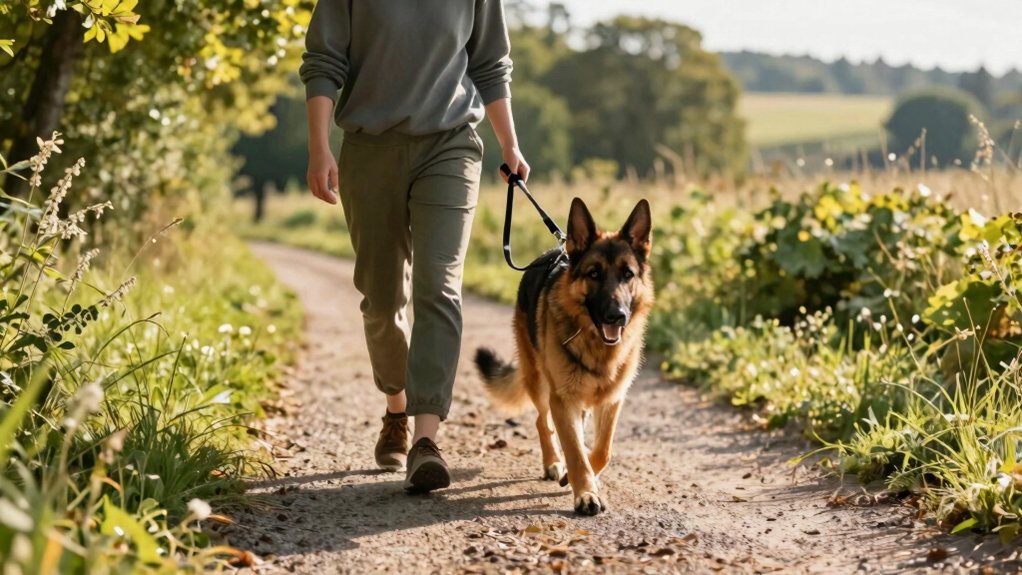
Choose your route like you’re protecting their “shock absorbers”—stick mostly to grass, dirt trails, and packed sand, where the ground gives a little and eases the hit to hip and elbow joints.
But skip hot concrete and hard pavement as much as you can, because they bounce force back through the paws, wrists, and spine, and that can add stress over time.
Aim for soft, level paths, then keep things joint-friendly by aiming for about 70% of your steps on forgiving ground, and only 30% on sidewalks. German Shepherds are prone to hip dysplasia, a hereditary condition in which the hip joint develops abnormally and can lead to arthritis, so softer surfaces are especially helpful for protecting their hips.

TARGETED TOE-LIFT SUPPORT – This dog drop foot brace helps dogs with dropped foot, knuckling, paw dragging, or hind leg weakness by gently lifting the front of the paw to encourage more natural placement during walks while helping reduce scuffing and uneven ground contact.
TARGETED TOE-LIFT SUPPORT – This dog drop foot brace helps dogs with dropped foot, knuckling, paw dragging, or hind leg weakness by gently lifting the front of the paw to encourage more natural placement during walks while helping reduce scuffing and uneven ground contact.
TARGETED TOE-LIFT SUPPORT – This dog drop foot brace helps dogs with dropped foot, knuckling, paw dragging, or hind leg weakness by gently lifting the front of the paw to encourage more natural placement during walks while helping reduce scuffing and uneven ground contact.
Prefer Grass And Dirt Trails
Go for grass and packed dirt trails, because they cushion each step and help protect your German Shepherd’s joints. Grass absorbs more shock than asphalt or concrete, so your dog feels less jarring impact.
Dirt trails follow the same pattern, and they also give varying footing that works stabilizing muscles.
But hard pavement doesn’t bend. It returns impact energy straight back into the limb, which can speed up cartilage wear.
For joint-friendly exercise, aim for easy hikes or slow runs on softer ground, especially if your dog is under 18–24 months, or has arthritis.
Serve them well, keep it gentle.
Avoid Hot Concrete the Joint
Skip the hot concrete and asphalt on workout days, because your German Shepherd’s paws and joints feel the heat fast.
When air sits near 77°F, pavement can hit about 125°F, enough to burn pads in as little as 60 seconds.
Asphalt can climb to 135–143°F on 86–87°F days, even faster harm.
On an 85°F day, grass may be ~88°F, but concrete ~105°F and asphalt ~130°F.
Do the back-of-hand test for 7–10 seconds.
If you can’t hold it 5–7 seconds, change routes, or wait.
Hot, hard ground also bounces impact into hips, elbows, spine.
Use Soft, Level Surfaces
When you move past hot pavement, you can still protect your German Shepherd by picking surfaces that don’t slam their joints with every step. Choose soft, shock-absorbing ground, like packed dirt, grass, level trails, or rubber tracks.
Asphalt and concrete don’t flex, so they bounce more impact back into their legs, and that can speed cartilage wear.
For arthritis, hip dysplasia risk, puppies, and seniors, keep it forgiving and predictable.
And remember traction matters, so avoid slippery tile or smooth sidewalks.
Aim for 15 minutes on grass, twice daily, then build up gently.
Watch for Signs of Hip Pain or Overtraining
Keep a close eye on your German Shepherd’s movement during and after runs, hikes, and longer walks, because hip pain and overtraining often show up before you “see” anything serious.
Watch for abnormal gait, like hind-limb lameness, bunny-hopping, or wobbly, rolling hind-end steps.
Notice shortened stride, reduced range of motion (less leg swing), and an arched back.
If your dog is stiff after rest, slow to rise, hesitates on stairs or jumping, or whines when moving, pause and reassess.
Track exercise intolerance, sudden stopping, and irritability.
Also note clicking/clunking, scuffing nails, and thigh muscle wasting.
Pay attention to excessive panting during or after activity, since it can be a normal response to heat or hard effort but may also point to pain or a health problem when it lasts well after rest.
Adjust Activity for Heat, Weather, and Paw Comfort
And when it’s hot, you should cut back fast—skip strenuous runs above 20°C, go slower, and switch to 10-minute bursts repeated a few times with shade breaks and water.
But don’t forget paw comfort, because hot pavement can hit 130–135°F and burn pads within minutes, so avoid rough, dark surfaces and use grassy or soil routes (or booties).
If you can’t hold your hand on the ground for 5–10 seconds, it’s too hot for your German Shepherd, and you should turn the walk into a quick, cooler-time potty stop.
Limit Exercise During Heat
On hot days, you should limit your German Shepherd’s exercise and adjust it to the heat, humidity, and even the ground.
For safety, schedule walks early morning or late evening, when surfaces cool. Avoid the hottest hours, especially on very humid days.
As temperature rises, cut intensity and time, swap long fast runs for shorter, slower bouts.
Split activity into about 10-minute chunks, several times daily.
If it’s over 26°C (79°F), or humidity tops 70%, postpone running.
Watch for heavy panting, drool, red gums, weakness, or collapse.
Stop, move to shade, cool with cool water.
Seek vet care fast.
Protect Paws On Rough Surfaces
Your German Shepherd’s paws take a beating on rough, hot, or icy ground, so plan for paw comfort before you head out. Boots help, especially on hot pavement, ice, and road salt.
Pick the right size, train them for short walks first, and choose grippy outsoles for uneven trails.
For winter, add a thick paw wax or balm as a barrier, and reapply before slippery routes.
Afterward, rinse with warm water to remove grit and de-icer, then dry well between toes.
Check for redness, cracks, or cuts.
You’ll prevent pain, and keep them serving you happily.
Train On-Leash Skills That Make Walks More Useful
Before you even step outside, set up your German Shepherd to succeed on-leash, because a calmer start makes the whole walk more useful.
Before you step outside, set your German Shepherd up for success with calm focus—because a smoother start makes every on-leash walk more effective.
Say “Yes,” then cue eye contact, reward calm standing beside you, and do a 2–3 minute focus warm-up.
Next, train loose-leash walking: slack leash only, “red light/green light” style—stop the moment tension appears, move again when slack returns.
Use “become a tree,” stand still instead of jerking.
Then practice formal heel for tight spots, head near your knee, for short bursts.
Use a flat collar or well-fitted harness, attach before treats, and reward check-ins every 1–3 steps. A no-pull harness can add extra control during these sessions by redirecting your dog’s pulling force toward your side instead of letting it strain against the neck.

No Pull, 2 Clips - With 2 sturdy metal hook loops for leash attachment. Use the front clip to create gentle redirection force, to reduce tugging during walks and training. While back clip is great for casual walks, jogging for well-behaved dogs

Easy Adjustment - for Ultimate Comfort.Slip into and out of our dog harness effortlessly with the help of 2 quick-release buckles. Experience Unmatched Mobility with 4 Fully Adjustable Meatl Rings, two on the shoulders and two on the chest, which ensure a snug fit that enables unrestricted movement.
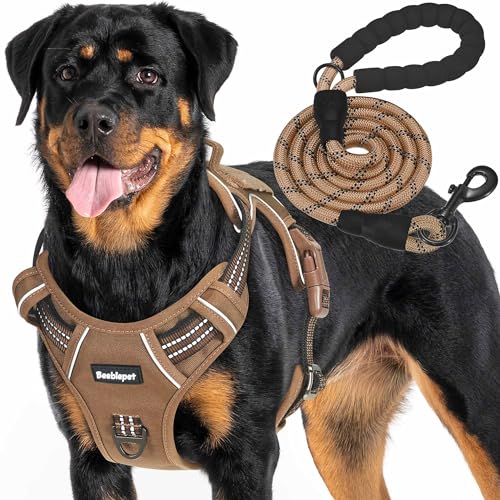
【Heavy-duty Dog Harness】 Specially designed for powerful robust dog. The heavy-duty harness is crafted from durable nylon, reinforced with sturdy stitching and equipped with two sturdy triangular rings
What to Do if Your German Shepherd Has Hip Dysplasia?
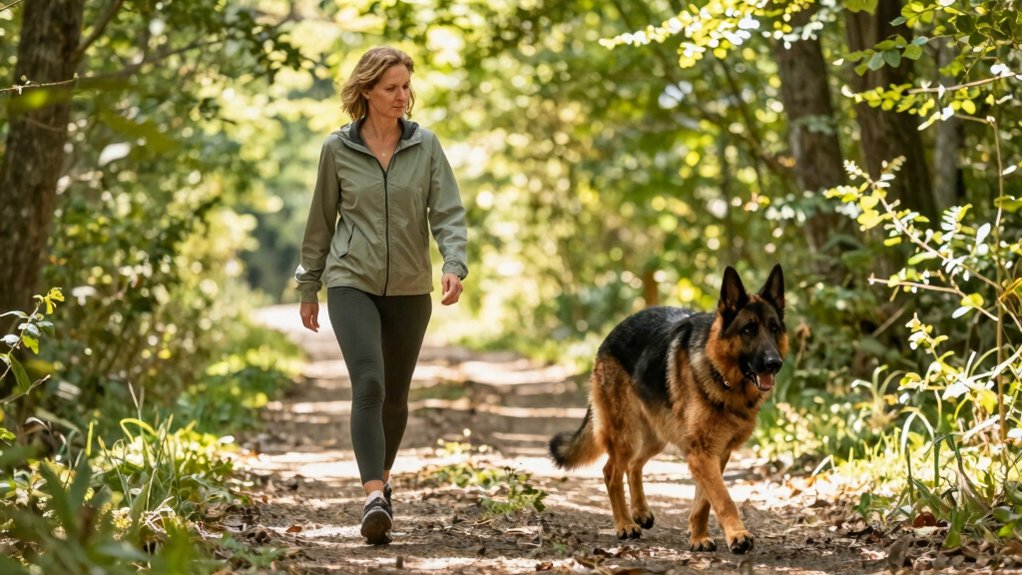
If your German Shepherd has hip dysplasia, your goal shifts from “just getting a good walk” to keeping the hips comfortable while you build strength safely.
First, schedule a vet exam, plus hip X-rays, to confirm laxity, subluxation, and arthritis severity.
Next, ask your vet to classify it mild, moderate, or severe, so you know whether medicine, therapy, or surgery fits best.
Keep serving your dog with lean weight.
Weigh monthly, aim for a visible waist, and use portion control.
Then exercise smart: short, frequent lead walks and swimming 3–4 days/week, avoid jumping and hard-surface sprinting.
Use pain meds as prescribed, and recheck often.
Frequently Asked Questions
Can My German Shepherd Run Beside a Bicycle Safely?
Yes, you can run your German Shepherd beside a bicycle safely if your dog’s skeletally mature, healthy, and vet-cleared. Use a secure harness, proper bike attachment, reliable commands, and start with short controlled trots on quiet routes. Stop immediately if limping or overheating starts.
How Much Off-Leash Chasing Is Too Much for Joint Health?
Too much off-leash chasing is any repeated, high-speed fetch that leaves limping, stiffness, reluctance, or pain. Stop before fatigue; limit hard stops and twisting daily, especially in hip-prone dogs. Keep sessions short, frequent, and joint-sparing.
What Distance Should I Start With for My First Hike?
Start with 1–2 miles (1.6–3.2 km) on easy, well-marked terrain, keeping elevation minimal. Aim for about 1–2 hours with plenty of breaks. You’ll support joint health while serving your hike safely.
Should I Use a Harness or Collar for Faster Walking?
Use a harness for faster walking. You’ll get better control with less neck strain, especially a non-restrictive front-clip or Y-front style. You’ll train with rewards for loose-leash behavior, not pressure, and you’ll keep your dog safer.
How Do I Prevent Paw Blisters During Summer Hikes?
Stop blistering before it starts—think “heat shields.” You choose cooler ground and early hours, test pavement by hand, use snug boots or paw balm, build endurance gradually, and inspect pads often so you adjust fast at first redness.