Keep your German Shepherd calm, use bright light, and fit a back-clip harness so the leash stays out of the way. Trim tiny amounts, about 1–2 mm per snip, and stop 2–3 mm before the quick (the living part). With dark nails, the quick can look black, so cut only the tip and check the cut surface each time. Next, wipe and dry paws, then check between toes for foxtails, pebbles, or cuts. For anal glands, don’t express unless your vet told you it’s safe—if scooting or fishy odor persists, call your vet now, and there’s more to cover.
Swift Summary
- Fit a back-clip harness, use bright lighting, and trim tiny 1–2 mm nail sections to avoid the quick.
- For dark nails, don’t rely on color—clip only the tip, check the cut surface, and stop at the first dark/chalky inner change.
- File rough nails with a grinder or file to smooth the tip and prevent snagging and scratching without risking quick cuts.
- Inspect paw pads after walks for debris, cuts, cracking, and foreign bits; separate toes and clean gently as needed.
- Do not express anal glands at home; contact a vet urgently if scooting, fishy odor, swelling, heat, or pain occurs.
German Shepherd Nail Care: Tools That Prevent Quicking
When you’re ready to trim your German Shepherd’s nails, start with the right tools, because they help you avoid quicking—the quick is the living part inside the nail with blood vessels and nerves. Before you begin, fit your dog with a comfortable back-clip harness so the leash stays out of your way and your German Shepherd stays calmer during the session.
Choose guarded clippers or quick-guard clippers, so each squeeze removes a small amount. Each cut needs small slices so you can avoid reaching the quick.
Choose guarded or quick-guard clippers, so each squeeze removes only a small amount and helps prevent cutting into the quick.
If your pup has dark nails, use a dog nail grinder instead, because it files little by little, and you can check the nail as you go.
Use strong lighting, too.
And remember, do german shepherds need their glands expressed? Only if a vet says so—while you also learn how to clean german shepherd paws.

LED light: Illuminates light-colored nail's quick or claws for easier and safer cutting experience! *Note that the LED light may not work well on dark nails.

Bright LED Light for Safer Trimming: Candure dog nail clippers with light uses a built-in LED to illuminate the quick, helping you trim more safely and avoid cutting too short. (Note: Visibility may be reduced on very dark nails)

Safe & Precise Trimming with LED Light: These FOKEDI dog nail clippers with light brighten the nail area for a clearer view and more controlled trimming. Use the dog nail trimmer for routine nail care at home, then smooth the edges with the dog nail grinder.
How to Cut German Shepherd Nails Safely
Choose clippers that match your German Shepherd’s nail size, and use bright lighting—especially a flashlight—so you can see the quick (the sensitive blood spot inside the nail). Trim in tiny steps, taking off just 1–2 mm at a time, and stop about 2–3 mm before the quick to avoid pain and bleeding. Aim for gradual trimming (to avoid the quick)—if the nail looks like it’s getting close to the sensitive area, pause and reassess before continuing. If you hit a darker center or start to see pulp, pause right away, then switch to small cuts only. Like good oral hygiene, consistent short grooming sessions help your German Shepherd stay comfortable and make each trim less stressful.

Grooming Hammock: The PatiencET dog grooming hammock can be used for grooming your dog easily at home, such as trimming nails, grooming, bathing, eye & ear health care

【 PERFECT PET GROOMING KIT 】It's a perfect invention for cat / dog owners. it includes a harness, a nail clipper kit, a comb, 2 adjustable strap and 6 sturdy large carabiner. This combination makes your work quick and easy.

New Design Dog Grooming Hammock with Thick Neck Support. Compared with others, the Kkiimatt new generation Dog Hammock for Grooming adopts a multi-layer thickened soft support design which makes the Dog Hanging Harness is more in line with the stress on the dog's neck when being hoisted. Dogs in our Dog Grooming Sling feels more comfortable and relaxed during Grooming/Nail Clipping.
Choose Proper Clippers And Lighting
Before you cut a single nail, set yourself up for safe, clean trims, and that starts with the right clippers plus solid lighting. Choose scissor-style (plier) clippers for thick nails and big German Shepherd paws, about 25+ pounds, with ~6.5-inch length for leverage. If you’re skilled, guillotine clippers can work on correctly sized nails, but they’re less helpful on very thick ones. For lower risk, use a nail grinder to reduce accidental nicks, especially for nervous dogs. Avoid human clippers. Ultra-sharp stainless steel blades help support clean, precise cuts. Then brighten your setup: groom in a well-lit room, next to a sunny window, or use a headlamp to cut shadows.
Trim Small, Avoiding The Quick
To cut German Shepherd nails safely, your goal is simple: take tiny bites and stop before you hit the quick. The quick is soft tissue inside the nail, with nerves and blood vessels, so cutting it causes pain and bleeding.
For light nails, clip about 2–3 mm before the pink quick shows. For dark nails, you can’t see it, so take 1–2 mm at a time.
Use the groove under the nail as a guide. Cut small, often, at the nail’s line or about 45°.
Stop when the cut surface turns gray/pink, gets “jellybean,” or shows a black dot.
Dark Nails: Trim a Little, Stop at the Quick
Trim a little at a time, and don’t trust the nail color. Dark German Shepherd nails can make the quick (the living blood-and-nerve core) look black or gray even when it’s not on the outside.
You cut into a living nail once, and it hurts and bleeds.
So you take 1–2 mm tip clips only, then stop and check the cut surface. Look for a darker center or chalky, softer inner area, and stop about 2–3 mm before the quick.
If you see it coming near the hooked tip, pause.
Use a flashlight through dark nails to confirm.
And if it bleeds, use styptic powder.
During heavy shedding seasons, loose fur from the double coat can cling between the toes and hide the nail tips you need to inspect.
File German Shepherd Nails to Stop Snagging
File your German Shepherd’s nails instead of clipping them when you want to stop snagging and scratching, because a smooth, rounded tip is less likely to catch on carpet, socks, and hardwood.
Then smooth rough edges with a dog nail file or a grinder.
Use about a 45-degree angle, follow the nail curve, and work in tiny sections.
Keep pressure light-to-medium, touch the abrasive for just a few seconds, and check often.
This gradual filing reduces snag risk, helps prevent discomfort, and keeps nails shorter between full trims.
Remove paw hair from spinning tools. Before filing, you can clear loose paw hair with an undercoat rake designed for a German Shepherd’s dense double coat.

Relieves Itchy, Irritated Paws; cleans and soothes paws after walks, hikes, wet grass, and outdoor play; ideal for dogs prone to redness, moisture buildup, and frequent licking

Large 8" x 9" Wipes for Complete Cleanup: Extra-large 8 × 9 inch dog wipes provide full coverage for muddy paws, dirty coats, and messy rears. Thick, durable fibers handle tough messes, while the rinse-free formula keeps floors and furniture clean.

PROMOTES SKIN COMFORT: Medicated wipes for dogs & cats with antifungal and antibacterial ingredients. Support routine coat care for pets with dry, flaky, rough-feeling, itchy-feeling or odor-prone skin, face, paws and ears.
Clean, Dry, and Trim Fur Between Paw Pads
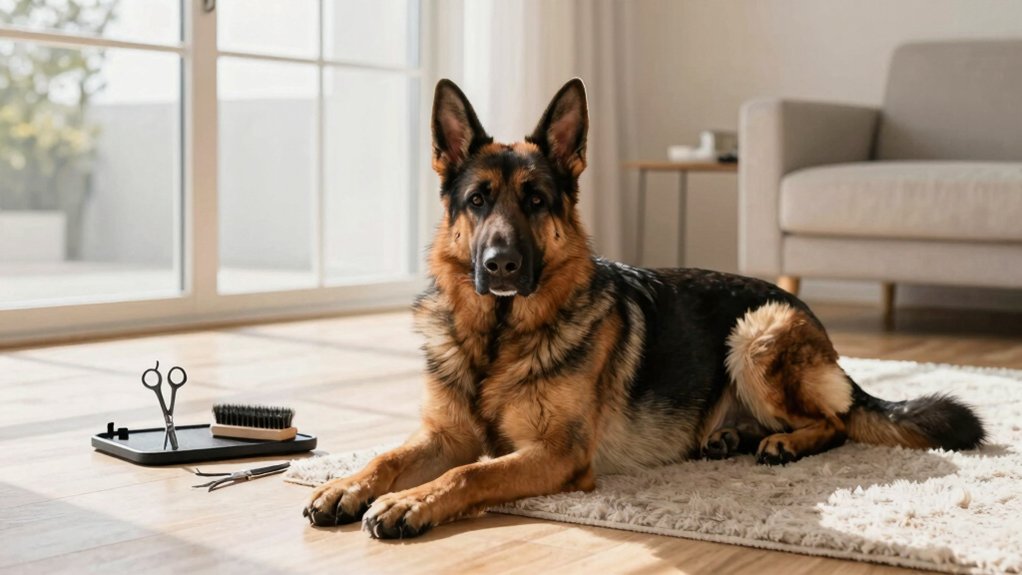
After walks or baths, take a moment to check the fur between your German Shepherd’s paw pads—because that area easily traps dirt, moisture, and tiny bits that can cause odor or irritation.
First, pick out any burrs or stones.
Then wipe with a damp, lukewarm cloth, and dry fast with soft towels, squeezing between toes until fully dry.
For trimming, use ball-tip safety scissors or a narrow clipper blade.
Keep your snips small, level the fur with the pad, and stop if you see skin.
Short, neat fur helps airflow, reduces slipping, and supports paw health. Making this check part of your home grooming routine helps you catch problems early, and a professional groomer can help when the fur becomes too difficult to manage at home.

MEDICATED RELIEF PLUS EVERYDAY ODOR CLEANUP, FOR DOGS AND CATS: Glandex Medicated Anal Gland Spray plus Glandex Rear End Hygienic Wipes team fast itch relief with fishy-odor cleanup. The spray uses Hydrocortisone 1% and Pramoxine 0.5% to calm the itch behind the scoot, while the DeoPlex deodorizing wipes break down the fishy odor and clean sensitive rear-end skin instead of masking it. From the original anal gland brand, trusted by 125,000 vets.

VET-FORMULATED DOG WIPES THAT CLEAN & DEODORIZE FISHY ANAL GLAND ODOR: For dogs and cats that scoot, drag, or come home with post-walk butt mess. DeoPlex enzyme eliminates fishy odor at the molecular level, with Aloe and Vitamin E to soothe the skin.

CLINICAL-STRENGTH ANAL GLAND RELIEF FOR DOGS & CATS: Vet-developed medicated spray and wipes with Hydrocortisone 1% and Pramoxine 0.5% to calm the itching, pain, and swelling behind scooting. From the original anal gland brand, trusted by 125,000 vets.*
Check German Shepherd Paw Pads for Debris or Cuts
Before you even wash or wipe your German Shepherd’s paws, take a quick look at the paw pads for debris or cuts, because small problems can turn into big pain fast. Check daily, especially after walks on rough, icy, or hot surfaces. Using outdoor dog gates to control access to yards and patios can help limit exposure to these hazardous surfaces.
Gently separate the toes to expose paw webbing and the spaces between them. Use bright light and calm hands, then scan the pad surface.
You’re looking for rips, tears, scrapes, dry cracking, and foreign bits like pebbles, glass, foxtails, or salt irritation.
If bleeding doesn’t stop after 10–15 minutes of gentle pressure, seek urgent vet care. Watch for limping or paw chewing.

ADJUSTABLE SAFE GUIDE FOR ALL SIZES: The 1mm-3mm adjustable transparent safe guide accommodates pets of all breeds and nail sizes, ensuring precise trimming without cutting into the quick. Customize it for your pet's needs and groom with confidence

WORLD'S 1ST ADJUSTABLE MAGNIFYING SAFETY GUARD: Meet the game-changer. Our patented sliding magnifier does two jobs: it zooms in on the quick for crystal-clear visibility, AND acts as a physical safety guard to position the nail perfectly. Simply slide it to set your desired cutting length, guaranteeing a safe, consistent, and perfectly straight cut every single time. No more guesswork, just confidence.

Dual-Function Grooming Tool for All Pets: This 2-in-1 nail clippers combines a powerful dog nail clippers trimmer and precision grinder — perfect for small, medium, and large dogs, as well as cats. Designed for multi-pet households, it works great as a cat nail clipper and dog nail grinder, ensuring fast, safe, and accurate trimming with one professional tool. Ideal dog nail trimmers for grooming comfort.
Express German Shepherd Anal Glands Only With Clear Signs
If you notice scooting, dragging the rear along the floor, or your German Shepherd keeps licking or biting near the tail base, take it seriously. That’s often a sign the anal glands are irritated or blocked. Because German Shepherds are prone to skin allergies, persistent licking in that area can also point to a skin problem such as a hot spot rather than the anal glands.
Watch for a foul, fishy odor, and check for swelling, redness, or heat near the anus, since those can mean infection.
But if you see pain when they poop, crying during defecation, or any swelling on one side, pause and get a vet’s input before you try to express anything at home.

🐶[for X-Large Dogs] ATESON dog sling for nail clipping is made of mesh textile material and the sling is designed with a special craft sewing technique, no need to worry about tearing and falling off.

New Design Dog Grooming Hammock with Thick Neck Support. Compared with others, the Kkiimatt new generation Dog Hammock for Grooming adopts a multi-layer thickened soft support design which makes the Dog Hanging Harness is more in line with the stress on the dog's neck when being hoisted. Dogs in our Dog Grooming Sling feels more comfortable and relaxed during Grooming/Nail Clipping.

New Design Dog Grooming Hammock with Thick Neck Support: Compared with others, the Kkiimatt new generation Dog Hammock for Grooming adopts a multi-layer thickened soft support design which makes the Dog Hanging Harness is more in line with the stress on the dog's neck when being hoisted. Dogs in our Dog Grooming Sling feels more comfortable and relaxed during Grooming/Nail Clipping.
Recognize Scooting And Licking
When your German Shepherd scoots—dragging the back end along the floor—it often points to anal sac discomfort, because those sacs can get full, irritated, or even impacted.
You should also watch for licking or biting around the anus and tail base.
Excessive licking is a core sign, especially after they poop.
If scooting comes with painful, hard, or difficult pooping, you’re seeing a stronger link to anal gland trouble.
But scooting alone isn’t proof.
They might also have worms, allergies, foreign material, or skin irritation.
Check their rear skin too.
Watch For Odor Or Swelling
Watch for odor or swelling near your German Shepherd’s anus, because this is where “maybe” becomes “check now.” A strong, persistent fishy smell from the hindquarters, especially one that you notice even without putting your face close, often means the anal sacs are too full and may be impacted.
Next, look for visible signs, too. Check for mild bulging at 4–5 or 7–8 o’clock, gentle external firmness, and no heat, redness, or pain.
But if you see heat, redness, pain, blood, pus, or rapid swelling, don’t express at home. Go to a vet same day.
Stop Gland Expression and Call Your Vet Urgently
Right now, don’t try to express your German Shepherd’s anal glands again. Stop immediately and call your veterinarian urgently.
If you see redness, swelling, or a hot, painful lump beside the anus, don’t push through.
If discharge has blood, pus, or thick chunky material, home expression can spread infection.
If the sac feels enlarged and won’t express, it may be impacted, so squeezing can rupture it.
And if your dog cries, growls, strains badly, can’t sit, or won’t let you touch the tail area, treat it as severe pain.
Also, any open sore, draining tract, or fever means same-day care.
Because pain can trigger defensive aggression in German Shepherds, keep your distance, never force handling, and ask your vet about professional help if your dog snaps or bites when the area is touched.
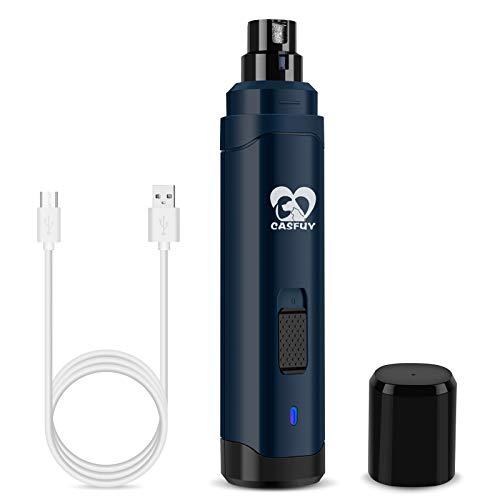
【Powerful 2-Speed Grinding up to 8000 RPM】Adjustable low and high speeds with a 7000–8000 RPM motor deliver precised, strong grinding. Start gentle for puppies or delicate nails, then switch to high speed for thicker nails. This Casfuy dog nail grinder is powerful enough to grind every nail efficiently.

𝐖𝐡𝐢𝐬𝐩𝐞𝐫 𝐐𝐮𝐢𝐞𝐭 & 𝐒𝐭𝐫𝐞𝐬𝐬-𝐅𝐫𝐞𝐞 𝐆𝐫𝐨𝐨𝐦𝐢𝐧𝐠: Ultra-quiet and low-vibration design keeps sensitive dogs Cats calm. No more fear, shaking, or struggling during nail care

Whisper-Quiet Operation Reduces Anxiety:Experience professional grooming with an advanced dog nail grinder featuring ultra-quiet motor (30-50 dB) and minimal vibration. The peaceful operation helps calm sensitive pets, transforming stressful trimming into comfortable bonding. Suitable for dogs and cats of all sizes
Frequently Asked Questions

Cleaning & Deodorizing: 2023 PET BUSINESS WINNER IN USA. Size: 10 × 9 inches. Effectively and quickly remove tough odor, dirt, dander, and excess oil. Leaves your pet's coat soft and shiny. A quick and easy bath alternative, great for quick cleanups after walks and outdoor playtime

[ULTRA-SOFT & TEAR RESISTANT] Designed to prevent mid-wipe tearing, our extra-thick pet wipes are soft yet durable, leaving no lint behind. Infused with a light white tea scent to neutralize odors—no more wasting three wipes for one paw!

MULTIPURPOSE PET CLEANING WIPES: Specially designed to gently clean paws, butt and support anal gland care; effectively remove dirt and neutralize unpleasant pet odors, ideal quick cleanup after walking and outdoor activities
How Do I Desensitize My German Shepherd to Paw Handling Before Nail Trims?
You desensitize paw handling by breaking it into tiny steps, rewarding calm each time. Start from distant tool presence, then touch paw briefly, cue a short hold, and gently add toe probing only after relaxed repetitions. Use short, frequent sessions.
What Nail Length Indicates Trimming Is Needed for Dogs Mainly on Grass?
🦶📏 Trim when nails click on hard floors, touch your palm on contact, curl under, or extend beyond the paw outline; on grass, aim for tips about 2mm before the quick, staying level—not splayed.
Can I Use a Dremel Grinder, and How Do I Prevent Nail Overheating?
Yes, you can use a Dremel-style grinder on German Shepherd nails. Use the lowest speed, keep contact to 1–3 seconds, move continuously, lift often, and check the nail stays cool to the touch. Avoid pressure and overheating.
How Can I Tell if a Pebble Is Trapped Under the Pad?
You can tell a pebble’s trapped if your dog suddenly limps, favors one paw, licks or chews a specific spot, and shows localized swelling or redness. Spread toes, shine light between pads, and feel a hard, tender spot.
What Symptoms Mean Anal Gland Issues Need Vet Care Instead of Home Expression?
Watch for severe pain, worsening scooting or straining, foul fishy discharge, swelling or hot red lumps, pus or blood, fever or lethargy, loss of appetite, and refusal to let you touch the anal area—these mean vet care, not home expression.