For your German Shepherd, pick a harness first, because it spreads pressure on the chest instead of the neck. Choose a wide Y-shape or back-clip for comfort, and a front-clip for pull control. Measure chest girth at the widest ribcage, use a two-finger clearance rule behind the armpits, and test rotation left-right. Use a 6 ft leash for everyday, 3–4 ft in busy areas. Use a flat collar for quick trips, martingale only for escape risks. And if you need support, check a service/tactical vest with a solid grab handle and quick-release buckles—keep going to learn more.
Swift Summary
- Choose a harness that controls “where the pull goes,” using wide chest coverage and a Y-shape or back-clip to spread pressure.
- Prefer a front-clip (non-tightening) setup to redirect lunges and support loose-leash training, then switch to back-clip for calmer guidance.
- Fit harnesses correctly with chest girth and a two-finger clearance rule behind the front armpits and over the widest thorax.
- Use collars only for tags/quick trips; collars can concentrate force on the trachea and neck, increasing choking or strain risk.
- Match leash length to context: ~6 ft for daily walks, 3–4 ft in traffic, longer lines for training; attach to harness D-ring, not tag ring.
How to Choose a German Shepherd Walking Harness
When you’re picking a German Shepherd walking harness, start by thinking about where the pull goes.
Choose the best harness for german shepherd that pulls, with wide chest coverage and a Y-shape or back-clip, so pressure spreads across shoulders, not the neck. Look for a front-clip leash setup, it redirects lunges toward you, helping loose-leash training. For comfortable everyday walks, a back-clip harness also offers easy leash attachment. Then learn how to put a harness on a German Shepherd, snug but not tight, and check for rubbing. Consider durability: 900D nylon, rustproof metal, reinforced stitching. Rustproof brass hardware is a key detail to prioritize in leather harnesses for German Shepherds. Skip questions like should german shepherds be muzzled or do german shepherds need a muzzle unless a trainer says so.

DUAL LEASH ATTACHMENT POINTS. Features an aluminum V-ring on the back and reinforced webbing at the chest. Gives you options for everyday walks or redirecting dogs that tend to pull, so you can enjoy more controlled and pleasant outings.

[Premium No Pull Dog Harness] The wider soft padded inner is comfortable and friendly for dog's neck without dog's fur hurting. The back strap and chest strap inner is made of soft and breathable material that is comfortable for the dogs. And the front strap is better to prevent the dog from rushing forward. This design is maintain a long-time comfortable for walking,jogging,running,training,etc.
](https://m.media-amazon.com/images/I/41ji4lsxEIL._SL500_.jpg)
[UPDATED VESION, EASY TO PUT ON & TAKE OFF] This dog harness has 3 buckles( One is on the neck with Lockable, two are on the chest), NO NEED go through dog’s head. This will let your dog loves to wear harness!
Measure Chest Girth and Get the Fit Right
After you’ve chosen the harness style, measure your German Shepherd’s chest girth so the fit sits right—not tight, not loose. Stand them with weight evenly distributed. Find the widest ribcage area, usually just behind the front legs, around the shoulder blades. Two-finger clearance helps confirm the chest measurement is comfortable when you’re checking fit. Place a soft cloth tape behind the front armpits, snug against the coat, and pull it level under the body. Bring it up over the shoulder blades, across the widest thorax. Keep the tape from compressing flesh. Measure twice, average it, record inches and centimeters. Most adults land 28–36 inches. Your dog’s age, current weight, sex, and growth patterns can help you estimate adult size before buying gear. Choose a size where it sits snug, with two-finger clearance. Ensure straps don’t dig into axilla.

【Martingale style collars 】 Martingale collars Recommended by vets and trainers as the best design for daily wear. To prevent escape and correct behavior, martingale is perfect for training, give you gentle control over your pet

1.5 Inches Wide & Thick Martingale Collars - Our large dog collar is heavy duty. Designed to withstand the wildest playtimes and exciting adventures during walks. It still looks great even with high energy Pitbulls, Dobermans, or German Shepherds. When your dog pulls, the Martingale collar tightens for better control.

【Martingale style collars 】 Martingale collars Recommended by vets and trainers as the best design for daily wear. To prevent escape and correct behavior, martingale is perfect for training, give you gentle control over your pet
Front-Clip vs Dual-Clip vs Y-Shape Harnesses
If you need steering control and strong pull reduction, pick a front-clip. The chest attachment turns your dog sideways, slowing forward drive, making loose-leash practice easier. A front-clip harness is designed to provide additional control during walks, especially for dogs that lunge or surge ahead.
And if you want flexibility, choose a dual-clip harness. Use the front ring for early “no-pull” training, then switch to the back ring for calmer guidance.
But for even pressure and shoulder freedom, go with a Y-shape harness. It spreads force across the chest, supports athletic movement, and helps reduce neck strain. Its straps sit between the neck and shoulder joints, creating a Y-shape that allows high freedom of movement.
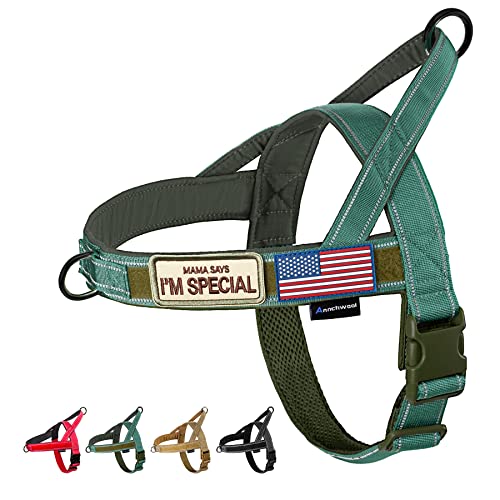
[Premium No Pull Dog Harness] The wider soft padded inner is comfortable and friendly for dog's neck without dog's fur hurting. The back strap and chest strap inner is made of soft and breathable material that is comfortable for the dogs. And the front strap is better to prevent the dog from rushing forward. This design is maintain a long-time comfortable for walking,jogging,running,training,etc.

Helps Stop Pulling: Patented Martingale loop design puts gradual pressure on your dog’s shoulders to safely and effectively stop pulling; a front leash attachment helps you guide your dog
](https://m.media-amazon.com/images/I/419XHWE0h0L._SL500_.jpg)
[UPDATED VESION, EASY TO PUT ON & TAKE OFF] This dog harness has 3 buckles( One is on the neck with Lockable, two are on the chest), NO NEED go through dog’s head. This will let your dog loves to wear harness!
German Shepherd Collar vs Harness: What to Use When
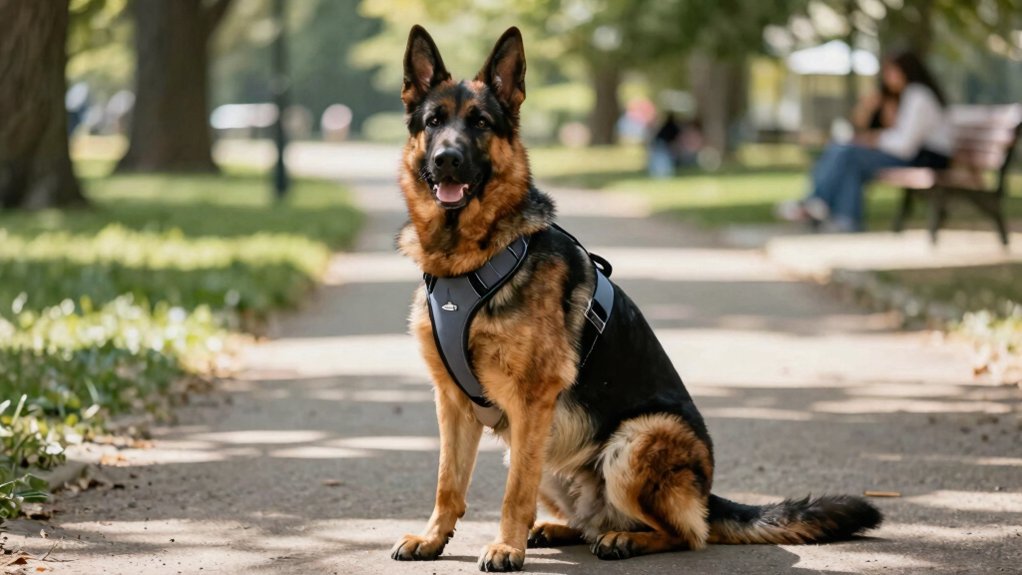
If you’re deciding between a collar and a harness for your German Shepherd, start with one simple goal: protect your dog’s neck while you get enough control to guide good leash behavior.
Collars concentrate force on the trachea, thyroid, and cervical spine, so pulling can trigger coughing, choking, or neck strain.
Harnesses spread load across the chest and ribcage, reducing cervical strain by about 70%, and they avoid direct windpipe pressure.
For daily walks in busy areas, pick a harness. No-pull harnesses are designed to provide better control for dogs that pull, which makes them a practical choice for strong walkers like German Shepherds.
Use a collar for tags and quick potty trips.
Choose a 1.5–2 inch wider collar if you must use one.
Keep it paired with training.

COMPATIBLE WITH EZYDOG HARNESSES: The UpFront dog leash attachment is designed to work with our award-winning harnesses. It transforms your EzyDog Convert or Express harness into a training harness to give you enhanced control over dogs that pull.

ENHANCED NIGHT VISIBILITY: Keep your dog safe during early morning or evening walks. The upgraded double-sided reflective stitching catches streetlights and car headlights brightly, ensuring you both remain highly visible to traffic in low-light conditions

ADJUSTABLE SECURE FIT. Two adjustment points at the neck and waist create a snug, comfortable fit for a wide range of cats—from small kittens to adults—so they stay controlled on walks.
Flat vs Martingale Collars for Daily Walking
When you walk your German Shepherd every day, your collar choice matters more than most people think. Pick a flat collar for loose-leash walkers, because it keeps constant neck size, it doesn’t tighten when you pull less.
Daily German Shepherd walks start with the right collar—choose a flat option to maintain steady neck fit and avoid tightening.
Use the two-finger rule, two fingers fit between collar and neck.
For narrow heads or escape history, choose a martingale collar. It has two loops and a sliding part, it tightens only under leash tension, then relaxes.
Its limited-slip stops at a preset size, so it won’t choke. Martingale collars provide added control without the choking action of a traditional choke collar.
But adjust carefully, and supervise during daily walks.

A Dog Harness Vest For Any Adventure - Suitable for hiking, walking, hunting, and k9 dog training. The service dog vest is available in S, M, L, and XL sizes and comes in black, blue, pink, and red.

[Refer to Size Chart]: Before buying a dog harness, spend a little time measuring your dog's size, which can help you avoid the hassle of returns. Please refer to the ICEFANG Brand size chart , X-Small(Neck:12"-17" ; Chest:17"-23") ;Small(Neck:14"-18" ; Chest:22"-27");Medium(Neck:16"-22" ; Chest:25"-31" );Large(Neck:18"-24" ; Chest:28"-35");X-Large(Neck:20"-28" ; Chest:32"-39")

[UPDATE D RING WITH DOULE SIDE STRONG STITCHING & PREVENT TORE OFF]: This military dog harness reinforce the D-ring leash clips stitching awl, enjoy more strength and durability at top D-ring double side. Not only avoid the D-ring ripped right out of fabric but help your dog not pull so much. Hooking the leash to the D hook definitely was more effective at reducing the pulling, and redirecting your dog to look to your during walking. Leash clip is suitable for daily dog walking or jogging
When (and When Not) to Use Training Collars
You can use a high-collar training tool only when your German Shepherd is old enough, healthy, and you’ve already tried positive training first, then you keep sessions short and supervised.
But don’t use correctors—like choke or pinch—if your dog shows fear, anxiety, injury risk, or aggression, and don’t put any training collar on for everyday walking; fit it so about two fingers slide under the neck, and for e-collars don’t exceed 8–12 hours total per day.
If your dog needs safer control for daily life, choose a harness instead, because it spreads pressure and helps you train calmly without turning the collar into a correction machine. Many dog training collars include features designed specifically for controlled training, so check each feature’s purpose before you buy.

Easy On & Off with Locking Neck Buckle: Perfect for big-headed and small-bodied dogs! PHOEPET harness features a secure locking buckle at the neck, eliminating the struggle of pulling it over your dog's head. It ensures a safe, snug, and comfortable fit for easy daily use.

【No-Pull & No-Choke Design – Front Clip Redirects Pulling, Triangle Prevents Choking】 – Attach leash to front chest D-ring to gently redirect direction and discourage mild to moderate pulling. Great for daily training and loose-leash walking. Switch to back O-ring for relaxed daily walks. Triangular design spreads force across the chest, helping avoid choking on sudden lunges.
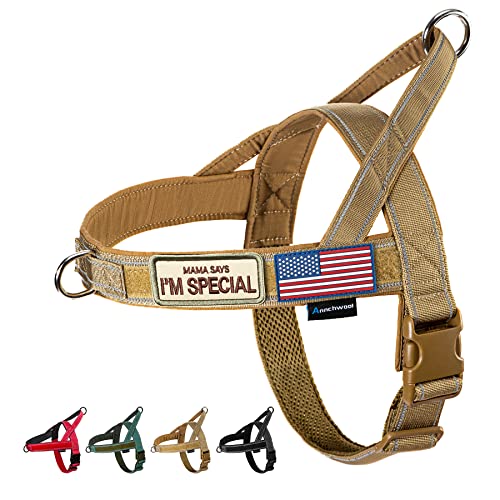
[Premium No Pull Dog Harness] The wider soft padded inner is comfortable and friendly for dog's neck without dog's fur hurting. The back strap and chest strap inner is made of soft and breathable material that is comfortable for the dogs. And the front strap is better to prevent the dog from rushing forward. This design is maintain a long-time comfortable for walking,jogging,running,training,etc.
When To Use High-Collar Training
Before you reach for a high-collar tool, use it only in situations where it truly improves control and safety.
Use a high-collar when your large, powerful German Shepherd can pull or lunge, and a flat collar can’t protect either of you.
You also may use it for structured heel work, quick pressure-and-release feedback, or field tasks in high-distraction settings.
If your dog already knows basic obedience, but struggles with recall, pair remote collar cues with rewards.
Do short, under-one-hour sessions only, remove the collar right after, and fit it just behind the ears, snug enough for one or two fingers.
When Not To Use Correctors
Instead of reaching for an aversive training collar, pause and ask one simple question: “Will this tool reduce risk and help my German Shepherd feel safe?”
Aversive correctors—like prong, choke, or shock collars—can cause real welfare problems, including puncture wounds, crushed tracheas, skin burns, and stressed-out body signals like a higher heart rate.
And don’t use them when your dog shows fear, anxiety, or aggression, or when reactivity happens around people or other dogs.
These tools can increase fear, trigger phobias, and erode trust.
They can also worsen stress markers, even with “short” sessions.
Choose humane, reward-based plans, and get help from a qualified behavior vet trainer.
Choosing Harness Over Collars
When you’re leash-training your German Shepherd, a harness is usually the safer first choice, especially for everyday walks. It spreads leash force across your dog’s chest and shoulders, so you avoid throat pressure that can cause irritation, coughing, and choking risk.
A well-fitted harness won’t rub the trachea. For big, strong pullers, a non-tightening front-clip harness helps too. The clip redirects your dog slightly sideways, it disrupts the pull, and it improves steering.
Use collars mainly for tags off-leash or at home. Consider training collars only if harness and coaching fail.
Pick the Best Leash Length and Material
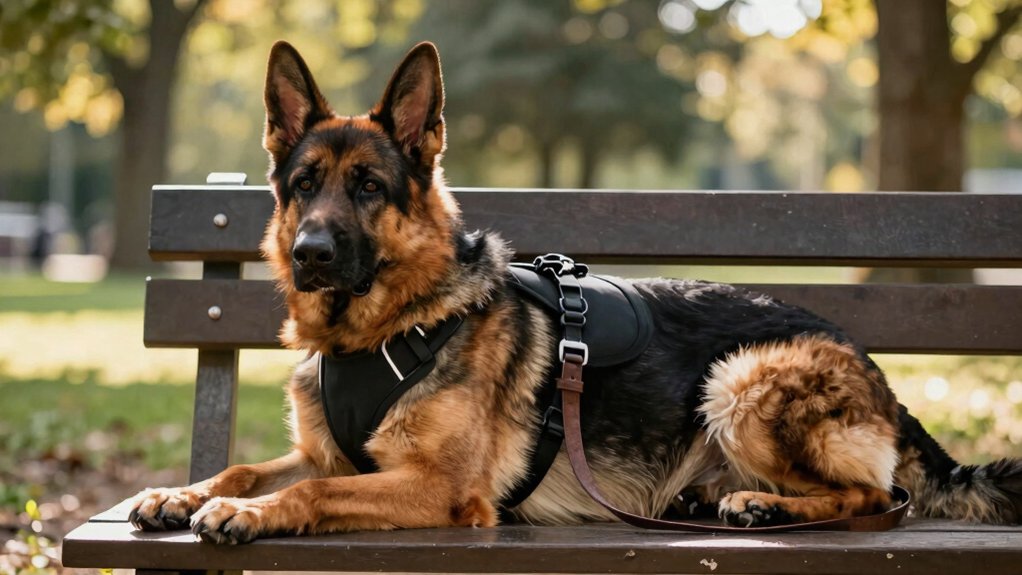
A good leash setup starts with matching the length to what you’re doing, because a German Shepherd’s power changes everything.
For everyday walks, choose 5–6 ft, commonly 6 ft, so you get control plus a bit of slack for loose-leash comfort.
If you walk in busy areas, go shorter with 3–4 ft “traffic” leashes, which help prevent tangles with people and obstacles.
For trails or low-traffic areas, use about 8 ft or more. For jogging or hiking, a hands-free dog leash keeps both of your hands free for balance while still giving your German Shepherd secure control.
For training and recall, pick 10–30 ft lines.
Now material: use sturdy rope or heavy-duty nylon—about 3/8–1/2 in thick—so it won’t snap.
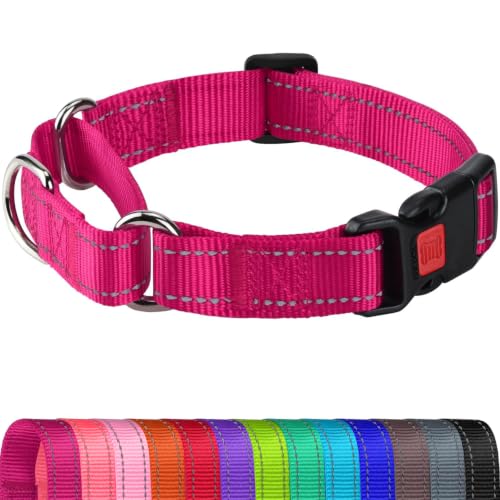
ESCAPE-PROOF SAFETY FOR HOUDINI DOGS: Tired of your dog backing out of their collar? Our nylon cinch mechanism ensures a secure fit that tightens only when needed, preventing the "slip off" during sudden startles. It’s the ultimate No Slip solution for sighthounds and escape artists during busy street walks
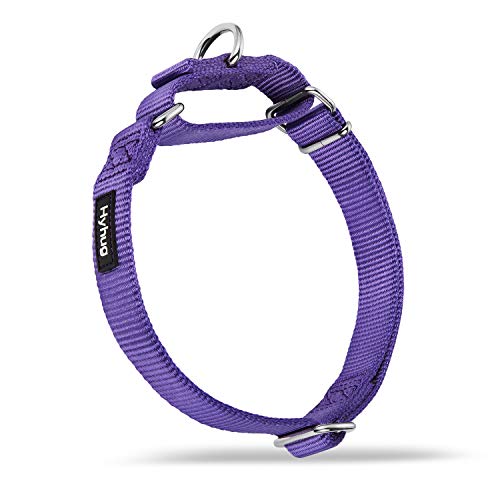
Size: L, adjustable length 16"-25" ( 1" width), for the proper fit when your dog wears it, please measure your dog's neck circumference and refer to the size chart picture we provided to choose the right size

【No Buckle】Martingale collar non buckle design is more secure and anti escape, ensure that dogs can safely and comfortably control and correct bad behavior during walking and training
How to Attach a Leash to a German Shepherd Harness
Once you’ve picked the right leash length and material, it’s time to hook it up the right way on your German Shepherd’s harness.
First, find the harness D-ring. Clip the leash to that ring, never to the identification tag ring, which can fail under pull.
Next, choose the attachment: back-clip D-rings sit above the shoulders for freer movement. Front-clip rings sit low on the chest to steer and reduce pulling power.
If you use a double-ended leash, connect one clip front, one clip back, or one to the harness and one to the head collar for backup.
Fully close every clip. Inspect often. For rugged outdoor work, a tactical dog harness built for durability and control gives the D-ring attachment points the strength they need.

Easy to Put on and Off with HASSLE-FREE and Comfortable
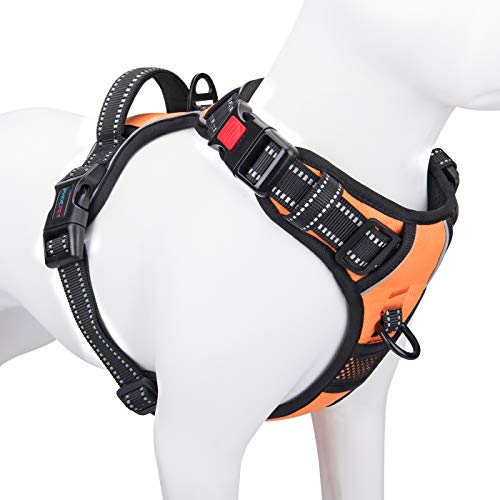
[UPDATED VESION, EASY TO PUT ON & TAKE OFF] This dog harness has 3 buckles( One is on the neck with Lockable, two are on the chest), NO NEED go through dog’s head. This will let your dog loves to wear harness!
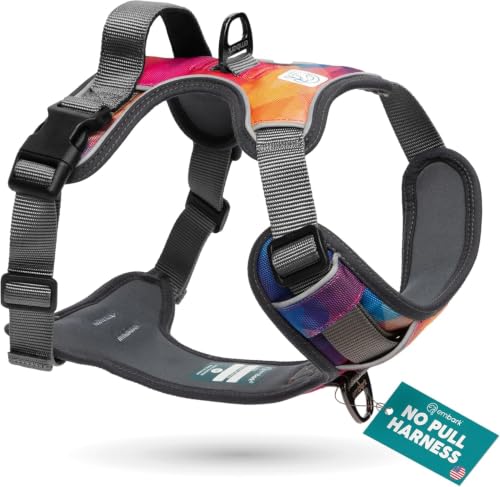
MEDIUM DOG HARNESS: Ideal for medium dogs such as Terriers, Heeler, Bulldog, Boxer, Puggle, Australian Shepherd and similar breeds, not for larger dogs. Before purchasing, please carefully measure your dog's chest girth to ensure the perfect fit.
Put It On Correctly: Check Rubbing and Rotation
Before every walk, put your German Shepherd’s harness on slowly, then check it for rubbing and rotation, because a “almost right” fit can still cause chafing and sliding. Clever dogs that learn to back out of standard harnesses may need an escape-proof harness built to stay secure, so a correct fit matters even more.
Use the two‑finger rule, slide 1–2 fingers flat between straps and ribcage. Snug, not tight.
For your large-breed chest, make sure there’s 1–2 inches of clearance behind the armpit area.
Next, check the neck strap sits low on the sternum, not on the throat.
Then test rotation: walk straight, then turn left-right. Watch for spinning, bunching, or drifting. Adjust evenly left and right.

【Strong & durable】This heavy duty dog leash is made of 1/2-inch diameter rock climbing rope which is reinforced with durable woven design, Remaining tough enough to hold back your pup.

Dual-Handle Comfort – Two padded neoprene handles give you a blister-free, secure grip for everything from neighborhood strolls to rugged trails. The traffic handle offers close control in crowds, while the main handle delivers all-day comfort. Whether you need a leash for medium dogs or a dog leash for large dogs, this design adapts to you and your dog.

Two handles for total control. Use the standard handle for casual walks, extended sniffing, and loose leash walking; Use the traffic handle for busy sidewalks, bike paths, and crowded areas that require that you have instant, up-close control of your dog.
German Shepherd Vests vs Harnesses: Service & Tactical
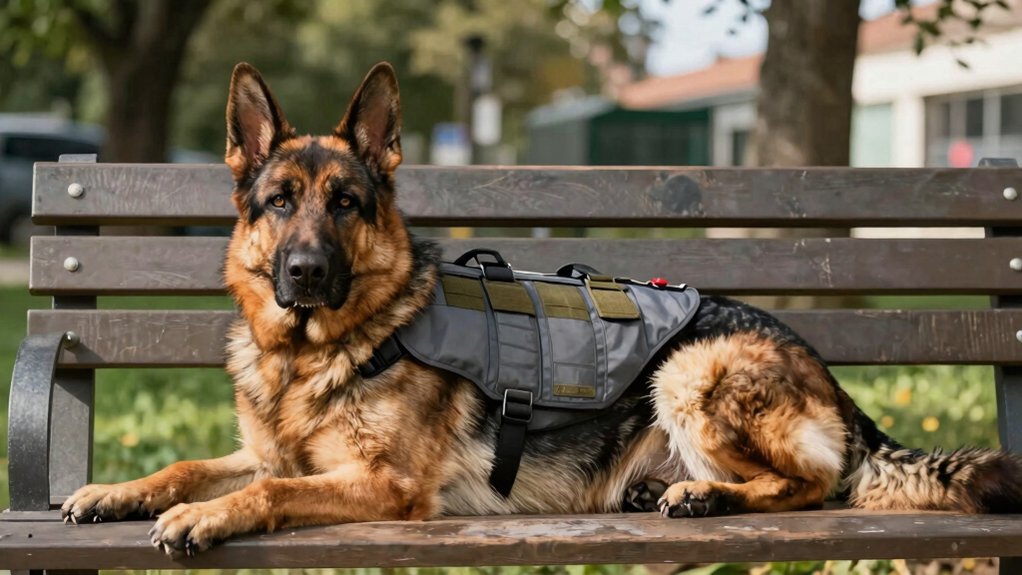
Next, look at the hardware and handles, because quick-release buckles, reinforced seams, and a top grab handle make control easier in tight spots.
But for mobility control, a harness spreads force across chest and shoulders, so your dog stays steadier while moving, especially if you’re doing pulling, lifting, or close-quarters work.
Service dog harnesses are designed for assistance work, making them a practical choice for handlers who need reliable support on the move.

[UPDATE D RING WITH DOULE SIDE STRONG STITCHING & PREVENT TORE OFF]: This military dog harness reinforce the D-ring leash clips stitching awl, enjoy more strength and durability at top D-ring double side. Not only avoid the D-ring ripped right out of fabric but help your dog not pull so much. Hooking the leash to the D hook definitely was more effective at reducing the pulling, and redirecting your dog to look to your during walking. Leash clip is suitable for daily dog walking or jogging

Working Dog Vest Harness is made with heavy-duty durable Nylon, comfy mesh, padded for no-chafing
A Dog Harness Vest For Any Adventure - Suitable for hiking, walking, hunting, and k9 dog training. The service dog vest is available in S, M, L, and XL sizes and comes in black, blue, pink, and red.
Service Vest Fit And Sizing
How do you get the fit right for a German Shepherd service vest or harness? Start with chest girth, measure around the largest chest part, just behind the front legs.
Then measure neck girth on the lower neck where the vest rests, not at the collar spot.
Put the tape on snug, not tight, so you don’t pick gear that ends up too small.
Next, aim for about two fingers of space between gear and body, to stop chafing but prevent slipping.
Use the brand chart for neck, chest, and back length.
Check shoulder movement, too.
Tactical Vests Hardware And Handles
Tactical vests for German Shepherds rise or fall on the hardware and handles you choose, because that’s what lets you control your dog fast, carry gear, and stay confident in busy real-world moments.
Look for a reinforced grab handle, stitched into load-bearing fabric, not just the outer shell.
That handle should sit near the shoulders for leverage, so your hand doesn’t slip.
Next, choose metal quick-release buckles, not plastic, for better cold-weather strength and corrosion resistance.
Check heavy-duty D-rings, tri-glide adjusters, and proof-load stitching, so your vest can lift, stabilize, and serve safely.
Harness Vs Vest Mobility Control
A German Shepherd’s mobility control starts with what you connect the leash to, because that choice changes how your dog braces, turns, and moves.
A service harness uses a more structured frame, so you get precise direction, pace, and balance. It wraps the torso, it spreads forces across chest and shoulders, and it supports weight-transfer tasks without neck strain.
A vest-only setup mainly boosts visibility and ID, it can guide gently, but it gives less leverage. Many teams use both.
Fit matters: keep shoulders free, aim snug, and adjust chest and belly so gait stays natural.
Frequently Asked Questions
How Often Should I Check Harness Fit for My Growing German Shepherd?
Check your growing German Shepherd’s harness fit every 3–4 days at 8–12 weeks, then weekly through 8–6 months, every 2–4 weeks from 6–12 months, and monthly after 12 months, plus before new activities or after growth.
Can Two Attachment Points on a Harness Help Manage Pulling Behavior Better?
Yes—two attachment points on your harness help you manage pulling better. Use the front ring for quick control during lunges, and switch to the back ring for relaxed walks once your dog learns loose-leash manners.
What Shoulder or Neck Signs Mean My Collar or Harness Fit Is Wrong?
If your collar or harness fit’s wrong, you’ll spot trouble fast: redness, bald patches, a collar groove, rough/scaly skin, swelling or sores, sliding straps, chafed shoulders, restricted stride, or noisy breathing. Fix the fit to serve both comfort.
Are Reflective Harnesses and Vests Worth It for Low-Light Walks?
Yes—reflective harnesses and vests are worth it for low-light walks. You boost your German Shepherd’s visibility to drivers and others, reducing near-road risks. Make sure a snug fit, pair with a bright leash or light, and stay alert.
Which Leash Features Reduce Tangling During Training and Daily Walks?
Choose 360° swivel snaps and rotating clips to prevent twisting, plus low-friction Biothane or stiff coated webbing to resist knots. Use a 6-foot leash for daily walks, or a longer training line with controlled slack.