Your German Shepherd’s thinning coat isn’t just normal shedding; it often signals parasites, allergies, or hormonal issues. Check for patchy, scaly or crusty spots on the trunk, elbows, or tail base. Notice intense itching, red papules, or a “rat‑tail” that could mean mange, flea‑allergy dermatitis, hypothyroidism, or Cushing’s disease. Take skin scrapings or a blood sample to your vet and add omega‑rich foods to the diet. The next sections explain careful diagnosis and treatment steps.
Swift Summary
- Identify whether hair loss follows normal seasonal shedding or appears as isolated, scaly patches; abnormal patches signal underlying disease.
- Rule out parasites (Demodex, Sarcoptic, fleas) with skin scrapings and flea‑control; treat promptly to prevent secondary infection.
- Perform allergy work‑up (flea, pollen, food elimination diet) and skin cytology/cultures to address dermatitis‑related alopecia.
- Screen for endocrine disorders (hypothyroidism, Cushing’s) using thyroid panel and ACTH‑stimulation or low‑dose dexamethasone tests; treat accordingly.
- Provide supportive care: medicated shampoos, omega‑3 supplements, proper nutrition, and keep the environment clean while pursuing definitive diagnosis.
Normal Shedding vs. Pathologic Hair Loss in German Shepherds
While a German Shepherd’s double coat naturally sheds throughout the year, normal shedding follows a predictable pattern that never creates patches. You’ll notice loss of undercoat and blows spring‑autumn, where it’s replaced.
In contrast, a hairless German Shepherd, a German Shepherd with no hair, and a German Shepherd without hair display alopecia that deviates from rhythm. Pathologic loss often stems from allergies, parasites, infection, hormonal imbalance, nutrition gaps, or chronic stress— that produce patches on a German Shepherd without fur. Food and environmental allergies, along with flea allergy dermatitis, are common triggers of intense itching that can rub away coat in patches.
When you ask, “will German Shepherd hair grow back?” or “does German Shepherd hair grow back,” the answer depends on cause; timely care can restore growth.
Understanding what causes German Shepherds to lose their hair guides routine monitoring German Shepherd hair growth after shaving. Responsible breeders perform hip and elbow screening, DM DNA testing, and eye examinations to reduce health risks.
Key Alopecia Signs Every Owner Should Notice
If you notice patchy hair loss along your German Shepherd’s trunk or limbs, it’s often the first clue that something isn’t right.
Pay close attention when the exposed skin becomes scaly or forms crusty patches, because these changes usually accompany inflammation or infection. Infected or crusty skin can also give off a noticeable odor, so a change in your dog’s smell is worth reporting to your veterinarian along with any visible skin changes.
Recognizing these signs early lets you seek veterinary care before the condition spreads.
Most cases in German Shepherds are acquired alopecia, which typically involves inflammation of the hair follicles.
Patchy Hair Loss
Ever wondered why your German Shepherd suddenly sports isolated bald spots? You may be seeing localized, moth‑eaten patches on the trunk, flanks, or neck that often stay well‑demarcated. Symmetric patches on both sides frequently hint at endocrine‑driven alopecia, while seasonal flank alopecia favors the tail base and nose bridge.
Watch the skin: hyperpigmentation, redness, or thickened texture signals active dermatitis or chronic disease. Adjacent coat may appear dry, dull, or brittle, and broken hairs or stubble often betray self‑trauma from scratching, biting, or licking.
Notice excessive shedding, restlessness, or a change in energy—these systemic clues can point to hypothyroidism, Cushing’s, or infection. Early recognition lets you seek veterinary evaluation and targeted treatment before the patches expand. If the cause remains unclear, consider performing a skin biopsy for definitive diagnosis.
Prompt care improves comfort and fur restoration markedly.
Scaly or Crusty Patches
Because scaly or crusty patches often signal an underlying skin disorder, you’ll want to examine your German Shepherd’s coat closely. Look for red, thick, hairless areas that feel scabby on the belly, elbows, face, ears, or feet. Scaling may appear as fine grey flakes or as golden‑brown, yellow crusts that cling tightly.
These lesions often accompany seborrhea, ichthyosis, or ASPRV1‑linked cornification defects, causing hypotrichosis and hyperkeratosis. Skin scrapings, cultures, and blood panels will pinpoint the cause.
Parasites like Demodex or ringworm create similar plaques, often with intense pruritus and secondary bacterial or yeast infection. Allergic or autoimmune dermatitis can add erythema, lichenification, and hyperpigmentation.
Prompt cytology and veterinary evaluation are to identify the cause and initiate therapy, preserving your dog’s comfort and coat health.
How to Spot Demodectic Mange Quickly?
When you first notice subtle changes in your German Shepherd’s coat, such as patchy alopecia or thinning on the face, fore‑legs, or paw pads, it’s an early sign of demodectic mange. Look for mild erythema, fine silvery‑gray scaling, and hyperpigmented, dilated follicular openings around these areas.
Small comedones or keratin casts adhering to hair shafts are strong visual clues. Examine the periorbital region, mouth commissures, and interdigital spaces for hair loss or slight swelling.
In juvenile dogs, lesions usually remain 1–4 sites and itch little; if they spread or involve paws, suspect progression to generalized disease.
Perform several deep skin scrapings with mineral oil from face, legs, and paws to confirm mites promptly, don’t delay.
Early treatment can prevent painful infections and preserve your dog’s healthy coat overall. Because diagnostic testing and extended treatment can add to a German Shepherd’s ongoing veterinary expenses, setting aside a dedicated care budget before problems arise makes early intervention easier to afford.
Recognizing Sarcoptic Mange Symptoms
How can you tell if your German Shepherd is suffering from sarcoptic mange? You’ll notice an extreme, nonstop itch that seems out of proportion to any visible rash, often beginning at the ear edges, elbows, hocks, chest, and belly.
Early lesions appear as red macules and papules, sometimes forming tiny crusts on thin skin around the ears and ventral abdomen.
Vigorous scratching soon creates patchy hair loss on legs, face, and torso, accompanied by thick yellow‑gray scales and crusts on pinnae margins.
Chronic cases develop hyperpigmentation, lichenification, and callused elbows.
Secondary bacterial or yeast infections may cause oozing, odor, and swollen lymph nodes.
Recognizing these patterns lets you seek prompt veterinary care, protecting your dog and others. Early intervention reduces spread to other pets. Isolating an affected dog with a tall dog gate can limit contact with other pets while treatment begins, since dogs that jump or climb standard barriers may otherwise still reach shared spaces.
Early Clues of Flea Allergy Dermatitis
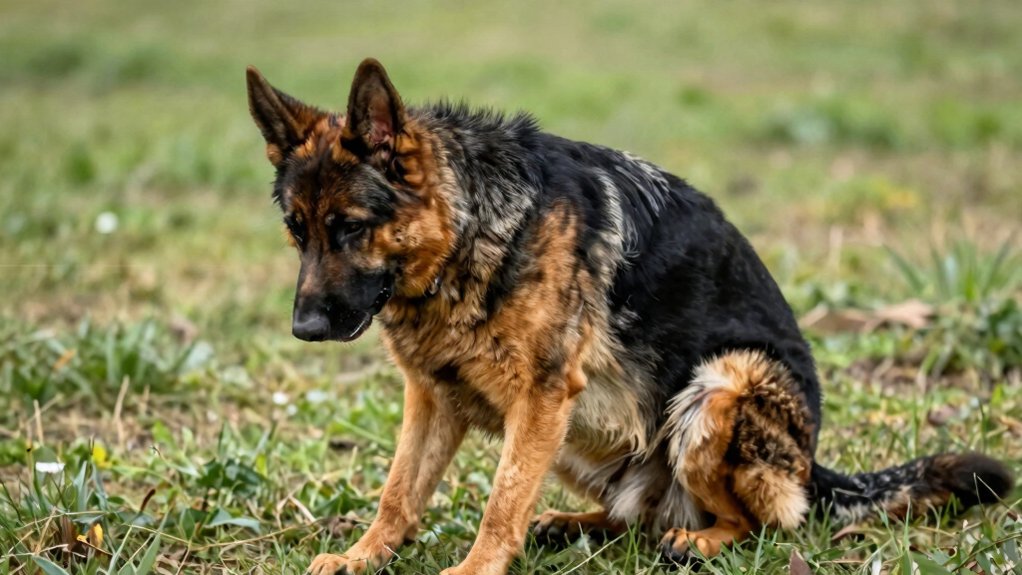
Although flea bites are common, the itch they provoke in a flea‑allergic German Shepherd serves as a clear early warning sign. You’ll first notice intense scratching focused on the caudal half of the body—dorsal lumbosacral region, tail‑base, perineum, and medial thighs.
Red macules and papules appear on the rump and tailhead, often progressing to crusted pimples or moist hot spots if you don’t intervene. Your dog may also groom excessively, lick the hindquarters, or scoot its rear, and night‑time restlessness can interrupt normal activity.
Epidemiologically, flea allergy dermatitis accounts for roughly 12% of allergic skin cases and rises to 16% when fleas are present, underscoring the diagnostic weight of these early signs. Prompt antiparasitic treatment and environmental control resolve itch and prevent hair loss. During trips, a washable portable dog bed keeps your dog off flea-prone outdoor ground and bedding, which helps limit new exposure.
Detecting Ringworm and Superficial Pyoderma
Where should you focus your eye when a German Shepherd starts showing bald, scaly patches? Look at the lesion edges: ringworm creates circular, flaky margins with broken stubby hairs, often on the face, ears, tail or feet.
While superficial pyoderma produces erythematous papules, pustules and crusted collarettes, especially in short‑coated areas. To confirm ringworm, collect hairs and scales for microscopy; a Wood’s lamp may fluoresce, and culture or PCR gives definitive ID.
For pyoderma, obtain cytology from pustules or crusts; spotting cocci and neutrophils supports bacterial infection, and a culture with sensitivity guides therapy. Always map lesions, note pruritus, odor, warmth and any regrowth centre, then prioritize the appropriate test to treat promptly and protect the whole pack, to guarantee success for all. Owners of a German Shepherd Great Pyrenees mix should also remember that the thick double coat inherited from the Great Pyrenees can conceal early lesions, so regular grooming makes spotting bald patches easier.
Common Allergens That Cause Bald Patches
You may notice your German Shepherd shedding hair in patches when seasonal pollens trigger atopic dermatitis.
When flea saliva provokes an intense, localized itch, or when a dietary protein elicits a hypersensitive reaction, each of these allergens can lead to rapid hair loss, redness, and secondary infection if the itching isn’t promptly managed.
Identifying the specific trigger lets you target flea control, environmental avoidance, or dietary modification to restore skin health. Just as routine dental care, such as daily tooth brushing, helps prevent tartar and bad breath, regular skin checks can catch allergic reactions before they cause widespread hair loss.
Seasonal Pollen Allergies
How does seasonal pollen exposure trigger bald patches in German Shepherds? When pollen lands on your dog’s skin, it penetrates the epidermis and activates IgE‑mediated inflammation. Inflammatory cells release itch mediators that compel your shepherd to lick, chew, and scratch.
Repeated self‑trauma damages hair shafts and follicles, producing focal alopecia. Tree pollens dominate early spring, grass pollens peak in late spring and summer, and weed pollens extend into autumn; mold spores often overlap, intensifying pruritus.
Approximately 40–75% of atopic cases follow this seasonal pattern, and repeated exposure can convert intermittent bald spots into chronic thinning. Recognizing the timing of each pollen type lets you intervene early, reducing inflammation and preserving your dog’s coat.
Consult your vet to choose antihistamines or immunotherapy for lasting relief.
Flea Allergy Dermatitis
Why does a single flea bite trigger such dramatic hair loss in German Shepherds? You’ll see that the bite injects protein antigens that provoke an IgE‑mediated hypersensitivity, sometimes followed by delayed‑type inflammation.
Sensitized skin erupts with intense pruritus, causing the dog to scratch, lick, and chew until hair is barbered away. The classic “flea triangle” appears from the mid‑back to the tail base, extending onto the caudomedial thighs, hips, abdomen, and flanks.
Lesions progress from erythema and crusted papules to thickened, hyperpigmented, lichenified skin with permanent alopecia. Diagnosis relies on recognizing this pattern, finding fleas or flea dirt, and confirming improvement after a strict, sustained flea‑control regimen.
Differentials such as atopic dermatitis, other ectoparasites, or endocrine alopecia must be ruled out before treatment now.
Food Ingredient Sensitivities
When a routine meal triggers relentless itching that turns into bald patches, the culprit is often a food‑ingredient sensitivity. You’ll notice non‑seasonal pruritus concentrating on the ears, feet, abdomen, and face, causing your German Shepherd to scratch, lick, or chew until hair loss appears.
Protein allergens—especially beef (34% of cases), dairy, chicken, wheat, and lamb—are the primary offenders, while corn, soy, and rice can also provoke reactions. Continuous exposure maintains inflammation, invites secondary bacterial or yeast dermatitis, and worsens alopecia.
Observe dull, thinning coat and excess shedding as warning signs. An elimination diet targeting these common proteins and grains, followed by systematic re‑challenge, helps identify the trigger and restore a healthy coat.
With proper nutrition, you’ll see regrowth and renewed confidence in your companion.
The “Rat Tail” Indicator of Thyroid Trouble
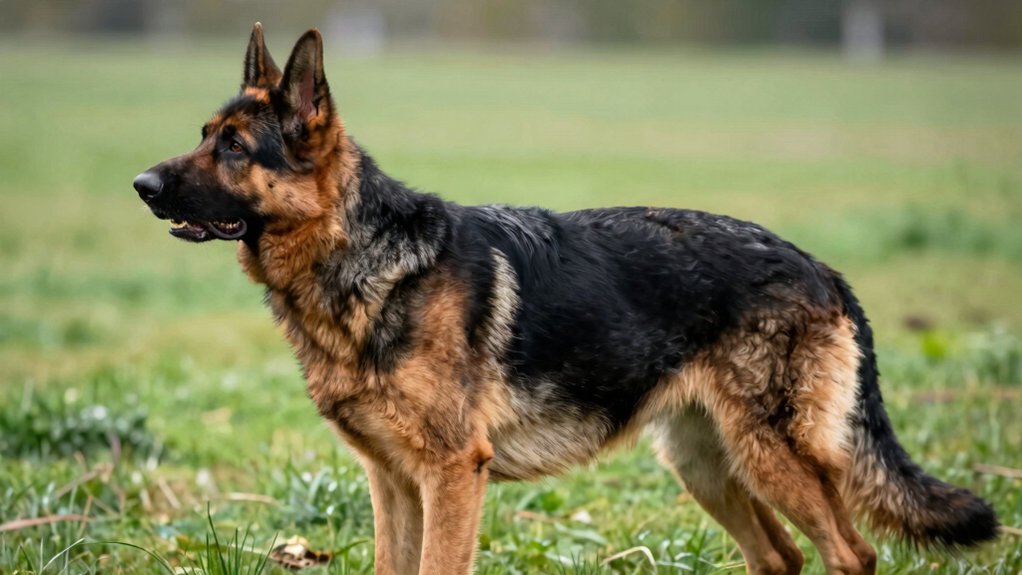
What does a thin, hair‑free tail reveal about your German Shepherd’s health? In hypothyroid dogs, the classic “rat tail” appears as a shaved‑looking, hair‑less segment beginning at the base and extending dorsally, often symmetrical and non‑inflamed. This pattern mirrors systemic thyroid hormone deficiency, which stalls hair‑follicle cycling and dries the coat.
You’ll also notice dull, brittle fur, truncal alopecia, hyperpigmented, waxy skin, and possibly weight gain or lethargy. While the rat‑tail sign strongly suggests endocrine dermatosis, it isn’t diagnostic alone.
Confirm the suspicion with basal total T4, free T4 (equilibrium dialysis), and TSH testing. Remember, some hypothyroid dogs lack a rat tail, so assess the whole clinical picture.
Prompt veterinary evaluation can restore coat health, improve comfort, and enhance your dog’s quality of life. For dogs that shed heavily during thyroid‑related coat changes, a protective tray can help keep a dog crate clean and functional.
Simple Thyroid Test Checklist for Your Dog
How can you guarantee reliable thyroid results for your dog? Begin with a pre‑test clinical checklist: document compatible signs (alopecia, weight gain, lethargy, cold intolerance), record signalment focusing on adult medium‑to‑large breeds, review drug history for glucocorticoids or other suppressors, and assess concurrent disease that could cause euthyroid sick syndrome.
Prioritize testing when the picture suggests hypothyroidism rather than incidental labs. Use serum total T4 as a screen; values in the upper half of the reference interval effectively exclude disease, while subnormal results trigger further testing.
Add free T4 by equilibrium dialysis and TSH to improve specificity; low TT4/fT4 with high TSH strongly supports hypothyroidism. For cases, request a comprehensive panel (TT4, TT3, fT4, TSH, TgAA, T3/T4 autoantibodies) to identify thyroiditis and establish a baseline in your dog. Keep your dog from stairs or rooms during testing and recovery by installing hardware-mounted dog gates for secure, permanent use.
When to Screen for Cushing’s Disease?
You should consider Cushing’s screening when you notice unexplained symmetric hair loss, especially if the coat thins or the skin bruises easily. Persistent skin infections that don’t resolve and a sudden increase in weight, thirst, or urination are additional red flags that warrant endocrine testing. Because German Shepherds are also prone to rare inherited abnormalities, your veterinarian may evaluate those possibilities alongside Cushing’s before confirming a diagnosis.
Early detection lets you and your veterinarian intervene before the disease progresses, improving your German Shepherd’s comfort and health.
Unexplained Symmetric Hair Loss
When you notice a dog with non‑pruritic, bilateral symmetric alopecia that spares the head and distal limbs, Cushing’s disease should jump to the top of your differential list. This pattern—thin hair loss on the trunk and ventral abdomen, often with abdominal distention or obesity—signals possible hyperadrenocorticism.
Look for polyuria, polydipsia, polyphagia, panting, muscle wasting, lethargy, and easy bruising. Middle‑aged to older dogs, especially those on chronic glucocorticoids, carry the risk.
If these systemic clues accompany the symmetric alopecia, order a complete blood count, serum chemistry, urinalysis, and an ACTH stimulation or low‑dose dexamethasone suppression test. A normal thyroid panel tips the balance toward Cushing’s evaluation.
Prompt screening lets you confirm or rule out cortisol excess early, sparing your German Shepherd suffering and guiding therapy.
Persistent Skin Infections
If your German Shepherd’s symmetric hair loss is accompanied by recurring bacterial skin infections, you’ve got a red flag for hyperadrenocorticism.
Chronic superficial pyoderma that returns after standard antibiotics is strongly linked to Cushing’s disease. You’ll notice lesions—erythema, papules, pustules, scaling, collarettes, and sometimes crusts—often on the trunk with concurrent alopecia and thin skin.
When infections clear with treatment but relapse quickly, immune suppression is likely. Even mild, non‑pruritic pyoderma without allergies or ectoparasites should raise suspicion.
In such cases, screen for Cushing’s with an ACTH stimulation test or low‑dose dexamethasone suppression test. Early endocrine evaluation lets you address the underlying cortisol excess, improve skin healing, and prevent further systemic infections.
Weight Gain & Thirst
How can you tell if your German Shepherd’s sudden weight gain and increased thirst signal Cushing’s disease? Look for polyuria, polydipsia, and a pot‑bellied abdomen together with panting, lethargy, and symmetric thinning hair or skin.
When these signs appear in an older dog without dietary, renal, or diabetic explanation, the pre‑test probability rises and screening is warranted.
Begin with a minimum database: physical exam, rectal palpation, CBC, chemistry with electrolytes, urinalysis, blood pressure, and abdominal ultrasound to assess adrenal size.
If results show elevated liver enzymes, dilute urine, or hypertension, proceed to an ACTH stimulation or low‑dose dexamethasone suppression test.
Early detection lets you intervene promptly, improving quality of life for your companion and give you confidence in managing his health responsibly together.
Managing Medullary Trichomalacia Effectively
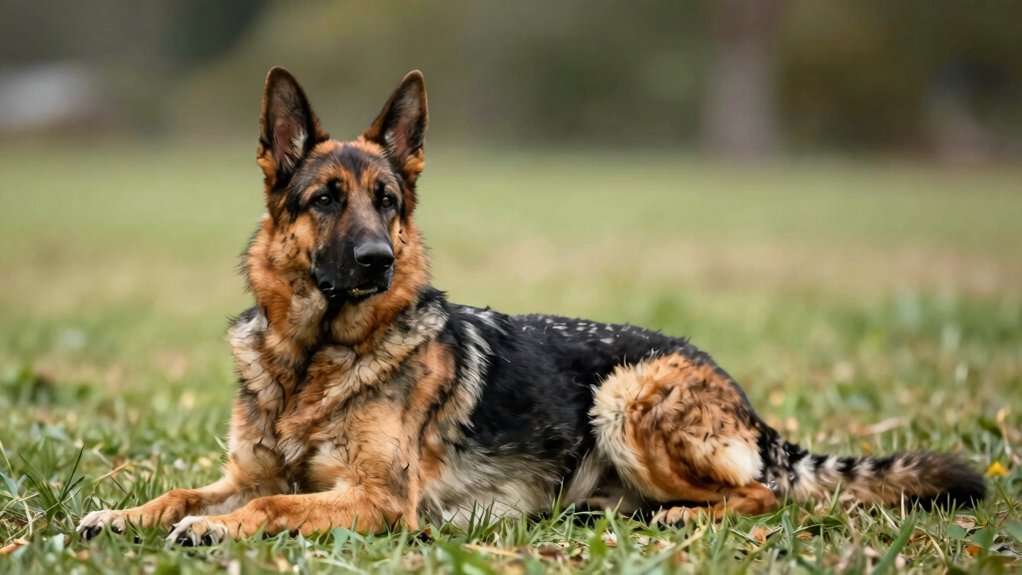
Although medullary trichomalacia is benign and typically resolves on its own, you should still manage each episode to protect the weakened hairs and track regrowth.
First, confirm the diagnosis with trichography; the images will show medullary swelling, depigmentation, and longitudinal splitting, ruling out trichorrhexis nodosa or pili torti.
Because the condition is self‑limiting, avoid systemic drugs; instead, handle the affected area gently to prevent additional mechanical breakage.
Monitor regrowth monthly, documenting hair density and any new tufts; expect visible improvement within three to six months.
If pruritus, pain, or generalized alopecia appears, re‑evaluate promptly to exclude concurrent dermatitis or endocrine disease.
When a secondary condition is identified, treat it according to current guidelines; resolution often accelerates hair shaft recovery.
Stay supportive and record changes.
Everyday Prevention Tips for a Healthy Coat
Since a German Shepherd’s coat reflects overall health, everyday prevention starts with solid nutrition, regular grooming, and a coat‑friendly environment.
Provide a vet‑approved complete diet rich in digestible protein and balanced omega‑3/omega‑6 fatty acids; this sustains skin integrity and adds shine.
Brush the double coat daily or every other day with a pin or slicker brush plus a deshedding tool for 5–10 minutes, especially during spring and fall blows, to distribute natural oils and prevent mats.
Bathe only every 2–3 months with a hypoallergenic, dog‑specific shampoo, rinsing thoroughly and optionally applying a conditioner.
Keep bedding clean, vacuum frequently, and dry your dog promptly after mud or rain to curb bacterial growth and maintain coat quality.
Consistent care will keep your German Shepherd thriving and confident.
Red‑Flag Vet Emergencies You Mustn’t Miss
When you spot sudden, symmetrical hair loss on your German Shepherd—especially if the coat is dry, brittle, or doesn’t regrow after clipping—and it’s accompanied by lethargy, loss of appetite, or behavioral shifts, consider it a red‑flag emergency.
This pattern often signals hypothyroidism or Cushing’s disease; blood panels, hormone assays, and imaging are required immediately to prevent systemic decline.
Equally urgent are rapidly spreading, wet, foul‑smelling lesions, deep bite wounds, or heavy bleeding that doesn’t cease within ten minutes.
Such signs indicate severe pyoderma, deep infection, or tissue trauma that can become life‑threatening without prompt veterinary intervention, including debridement, antibiotics, and possible surgery.
If you notice fever, pale gums, extreme lethargy, or pain, seek emergency care without delay for your beloved companion’s recovery today.
Frequently Asked Questions
Can Stress Cause Bald Patches in German Shepherds?
Yes, stress can cause bald patches in your German Shepherd; acute or chronic anxiety disrupts the hair cycle, leading to telogen effluvium or over‑grooming. Reducing stressors and seeking veterinary evaluation you’ll help restore healthy fur.
How Long Does Hair Regrow After Successful Treatment?
Within three to eight weeks, your shepherd’s fur will unfurl like fresh spring grass, and by three‑four months most hair’s fully restored. Expect fine, initial growth, then thicker, normal‑textured coat as you monitor progress patiently.
Are There Specific Foods That Improve Coat Health?
Yes, you’ll feed high‑quality animal protein, omega‑3/omega‑6 rich oils, and balanced vitamins/minerals—especially zinc, biotin, and vitamin E—to support skin barrier, reduce inflammation, and promote robust German Shepherd coat growth daily, as part of a complete diet.
Should I Use Medicated Shampoos for All Alopecia Cases?
While it’s tempting to adopt a blanket approach, you shouldn’t rely on medicated shampoos for every alopecia case; first secure a precise veterinary diagnosis, then tailor treatments accordingly, ensuring ideal care for your beloved companion.
Can Neutering Affect Hair Loss in German Shepherds?
Yes, neutering can contribute to hair loss; hormonal shifts may trigger alopecia, especially around the perineum, ventrum, or ears. Evaluate endocrine health promptly, and discuss supportive therapies with your vet; you’ll track shedding patterns closely.