You get a smart, protective dog that combines a German Shepherd’s intellect with a Great Pyrenees’ calm. This mix grows 24–30 inches tall, weighing up to 150 pounds. They need 60–90 minutes of daily activity plus mental challenges. Early training is essential for their strong-willed nature. You’ll find them loyal, patient with kids, and naturally protective. Keep grooming regular to manage heavy shedding. If you keep exploring, you’ll learn more about caring for this gentle giant.
Swift Summary
- The Shepnee combines a German Shepherd’s intelligence with a Great Pyrenees’ calm protective nature.
- Expect a large dog weighing 80 to 150 pounds with a double coat requiring frequent brushing.
- Ideal for spacious homes with secure yards due to high exercise needs and guardian instincts.
- Requires consistent positive reinforcement training to manage independent streaks and ensure safety with children.
- Thrives in cooler climates and needs protection from heat due to its thick, weather-resistant coat.
What Is a German Shepherd Great Pyrenees Mix?
A German Shepherd Great Pyrenees mix is a hybrid dog created by crossing a German Shepherd with a Great Pyrenees, producing a devoted, protective family guardian with strong working roots. You’ll find this cross, often called the Shepnees, offers incredible intelligence alongside calm watchfulness. Pairing this powerful dog with a well-fitted collar offers comfort and control during daily walks and outings.
When you consider German Shepherd Great Pyrenees traits, you see a blend designed to serve your family’s safety needs. Unlike purebreds, this mix prioritizes companionship and home protection over formal work.
You should understand the German Shepherd vs Great Pyrenees comparison helps reveal their combined stubbornness and drive. Their independent nature means you’ll need consistent training to channel their protective instincts properly.
These dogs bond deeply, offering unwavering loyalty to those they serve. Their powerful presence and weather-resistant coats make them ideal outdoor partners for dedicated owners seeking a true guardian.
Their lifespan typically ranges from 10 to 13 years with proper health management.
How Big Do These Mixes Get?
When you bring home a German Shepherd Great Pyrenees mix, expect a large-to-giant dog that stands 24 to 30 inches at the shoulder and weighs between 80 and 110 pounds on average.
Some grow taller or heavier, reaching up to 32 inches or 150 pounds, so you’ll need extra space and sturdy gear. You’ll also plan for more food, stronger leashes, and bigger carriers to support their needs.
They take 18 to 24 months to fully grow, with males often filling out more. As a service provider, you must evaluate their size early to match them with tasks they can safely perform. Early and consistent obedience training helps a large mix channel its size and energy safely.
Proper preparation ensures they stay healthy while serving others well. Because of their large size and build, they require ample space and resources throughout their life.
Temperament and Personality Traits
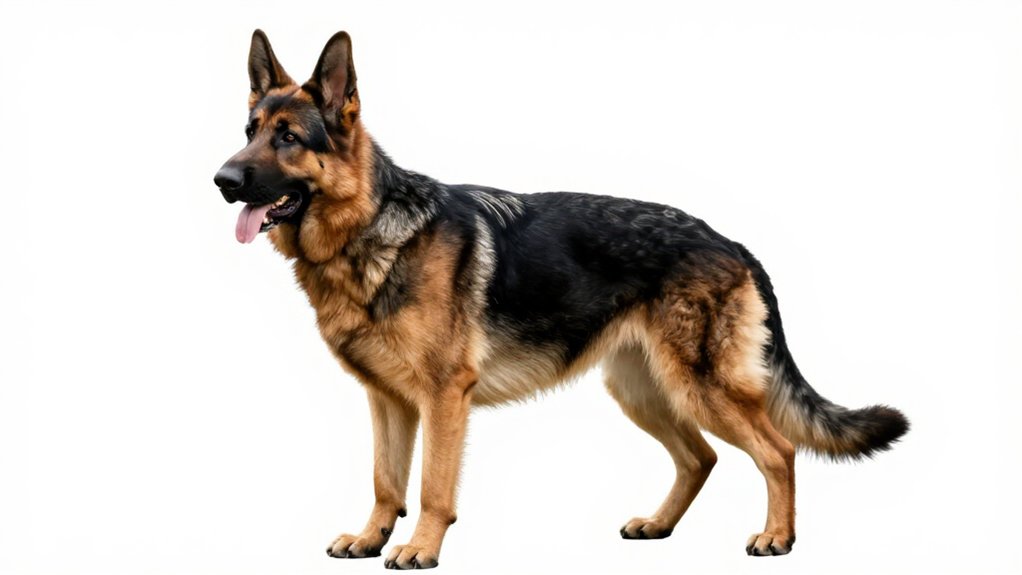
Beyond their impressive size, these mixes are known for a calm, loyal, and highly protective “gentle guardian” temperament. You’ll discover they serve your household with deep devotion, treating your family as their flock.
Their intelligence and sensitivity mean they respond best to calm, consistent leadership rather than harsh corrections. You’ll appreciate their gentle nature around children, but remember, their strong protective instinct requires early socialization to prevent overreaction to strangers.
They need a structured role or job to stay happy and avoid boredom-related issues. You’ll find them highly watchful, often alerting you to changes in their environment. Inheriting traits from their German Shepherd parent, they often form a strong loyal bond with their owners and tend to shadow the people they trust most.
Their independent streak makes them strong-willed learners, yet they crave emotional connection. By providing clear boundaries and affectionate guidance, you cultivate a balanced, nurturing companion who actively serves and protects your home. This commitment is reflected in the significant positive reinforcement training required over 12–18 months to channel their protective instincts effectively.
Exercise and Mental Needs
To keep your German Shepherd Great Pyrenees mix happy and healthy, aim for 60 to 90 minutes of daily activity split into two or three sessions. You’ll serve this guardian best by combining physical movement with mental jobs that satisfy their instinct to work for you.
Include scent games, puzzle toys, or short obedience drills alongside walks and secure yard patrols. Adjust intensity based on age—puppies need shorter, gentle bursts to protect joints, while seniors thrive on low-impact movement. Because German Shepherd lines often carry a strong prey drive, supervise yard time around cats and small animals to prevent chasing.
Consistency matters: predictable morning and evening routines help your dog feel secure and purposeful. Avoid high-impact jumps during growth periods. For large breeds like the Great Pyrenees, growth plates close later, so you must avoid repetitive impact activities until they are fully mature.
Training and Socialization Tips
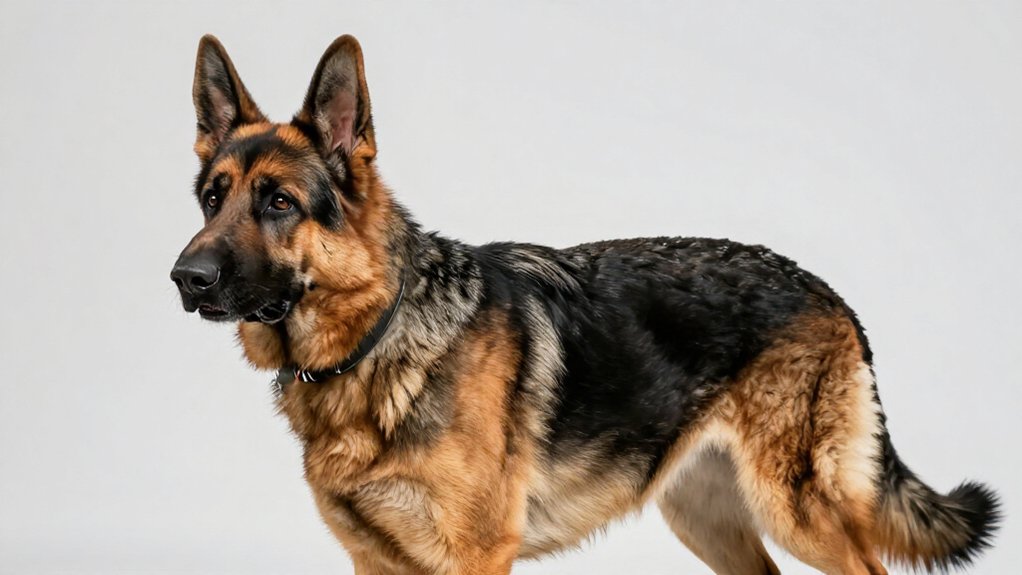
You’ll want to start essential early socialization between 3 and 16 weeks to build your mix’s confidence around diverse people and situations. Introducing a soft-sided dog carrier during this period also helps your puppy associate travel with comfort and security.
Setting firm boundaries from day one prevents boundary-testing behaviors common in these guardian breeds.
Finally, provide purposeful mental stimulation through short, reward-based training sessions to keep their intelligent minds engaged.
Consistent boundaries and rules should be followed by all family members for effective training.
Essential Early Socialization
While the primary socialization window for German Shepherd and Great Pyrenees puppies spans roughly 3 to 14 weeks, you should start daily structured sessions the day your puppy comes home.
You must expose your guardian mix to varied surfaces like grass and tile while introducing household sounds gradually.
Introduce your puppy to diverse people, including those using mobility aids or wearing hats, prioritizing variety over repetition.
During fear periods around eight weeks, maintain distance so they can eat and observe without pressure.
Reward calm behavior and voluntary check-ins instead of forcing greetings.
Handle their paws, mouth, and ears gently to prepare for grooming.
Pair brief exposure to loud appliances with food rewards to build positive associations.
Avoid overwhelming them, as pushing too hard risks long-term fear or defensive aggression.
Consistent, gentle exposure now builds a confident, helpful adult.
Establish Firm Boundaries
Since German Shepherd Great Pyrenees mixes are independent guardians with strong territorial instincts, you need to establish firm boundaries using consistent rules and clear physical containment. Install secure fencing and conduct regular perimeter walks to teach your dog where their territory ends.
Enforce house rules about furniture and doorways to prevent confusion. Use commands like “stay” and “leave it” to control impulses. Train a “quiet” cue to manage alert barking without stifling their protective nature.
Apply the “place” command during visitors to ensure they stay put. Reward compliance consistently so they understand you serve as the reliable leader. These structured limits help them channel their instincts appropriately, guaranteeing safety for everyone around them while supporting their role as a gentle guardian.
Provide Purposeful Mental Stimulation
Because German Shepherd Great Pyrenees mixes possess sharp intellects and guardian drives, you’ll need to channel that energy into purposeful mental work to keep them balanced. Dedicate 30 to 45 minutes daily to focused brain sessions. Split this into three short enrichment tasks like puzzle feeders or scent games to prevent boredom. Convert mealtimes into problem-solving work using food-dispensing toys. Integrate obedience cues into daily routines for constant low-level engagement.
Rotate puzzle toys weekly to sustain cognitive growth without causing frustration.
Train early between eight and ten weeks to build lifelong responsiveness. Use positive reinforcement to maintain motivation in independent guardian types. Organize controlled socialization exposures to varied people and environments to prevent suspicion. Pair social contact with rewards to foster stable responses to unfamiliar stimuli.
This holistic approach serves your dog’s deep need for meaningful work and connection.
Ideal Living Space and Yard
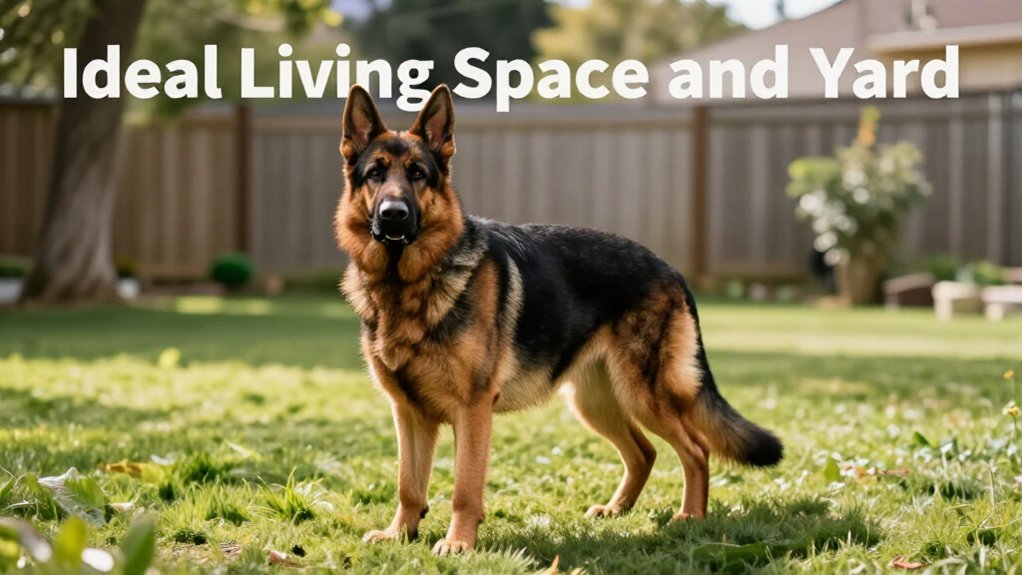
If you’re thinking about bringing home a German Shepherd Great Pyrenees mix, make sure you have a spacious home and a large, securely fenced yard ready for them. These gentle giants need room to move, so avoid compact living.
Opt for open floor plans and durable, non-slip flooring to support their powerful frame. A reinforced fence, ideally six feet high, prevents escape attempts and protects your dog from roaming.
This secure space allows them to patrol safely, fulfilling their guardian nature. Provide shaded areas and sheltered spots, as their thick coat handles cold but struggles with heat.
Daily exercise within this yard keeps them healthy and content. Remember, they thrive best when living indoors with you, ensuring they receive the love and care they deserve as loyal companions. If a muzzle is ever needed for training or vet visits, choose a comfortable, well-fitted design that lets your dog pant and drink freely.
Coat Care and Shedding Guide
Since your mix has a thick double coat, you’ll need to stay on top of regular grooming to keep shedding in check.
Expect heavy hair loss year-round, with intense seasonal blows that demand daily brushing to manage the volume.
Stick to a consistent routine with the right tools to avoid mats and keep their coat healthy.
Beyond home care, professional grooming can be useful when the coat needs a deeper cleaning or when mats become too difficult to remove at home.
Double Coat Maintenance Needs
To keep your German Shepherd Great Pyrenees mix healthy, you must understand how their double coat works. You must brush them weekly, ideally every other day, using slicker brushes and undercoat rakes. Work in thin bands from skin outward, brushing with the grain to protect guard hairs.
Pay extra attention to the neck ruff, tail, and feathering, as these areas trap loose hair and debris. Bathe them only when dirty, roughly every 8–12 weeks. Use gentle shampoo, rinse thoroughly until water runs clear, and dry completely with high-velocity airflow directed with coat growth.
Never shave their coat, as removing guard hairs disrupts natural insulation and alters regrowth. Limit trimming to sanitary areas and minor neatening. Consistent, coat-preserving grooming is essential for their skin health and comfort.
Heavy Shedding Management Tips
While managing heavy shedding in your German Shepherd Great Pyrenees mix requires a proactive approach, you can substantially reduce fur around your home by combining proper nutrition, strategic bathing, and consistent environmental controls.
Feed high-quality diets rich in animal protein and omega fatty acids to maintain skin integrity and coat gloss. Always guarantee your dog has consistent access to fresh water to prevent dry skin.
Schedule baths every four to six weeks using de-shedding shampoos to effectively loosen loose undercoat. Follow with high-velocity blow dryers to remove trapped fur before it spreads indoors.
Invest in frequent vacuuming, washable furniture covers, and air purifiers to manage stray hairs efficiently.
These strategies help you serve your companion and keep your living space clean without compromising their comfort or health.
Grooming Routine Essentials
You’ll need a dedicated grooming routine to manage the heavy shedding of your German Shepherd Great Pyrenees mix.
Brush your dog two to three times weekly using an undercoat rake and slicker brush to prevent tangles. Daily brushing helps maintain coat health during seasonal blows.
Bathe every two to three months with mild shampoo to avoid stripping natural oils. Thoroughly dry the coat afterward to prevent skin irritation.
Use a metal comb for detailing mats around paws, ears, and eyes. Trim excess hair for cleanliness and comfort, but never shave the double coat.
Check nails every three to four weeks and clean ears weekly. These efforts keep your gentle giant clean, comfortable, and ready to serve others with pride.
Heat Management and Climate Suitability
Because this German Shepherd Great Pyrenees mix inherits a double coat and mountain ancestry, you’ll find it naturally thrives in cooler climates between 50–70°F. Since it favors cold tolerance over heat, you must actively protect it from hot, humid environments.
You’ll find air-conditioned indoors essential for its safety during summer. You should prioritize early morning or evening outdoor time to avoid midday heat. Regularly brush its undercoat to boost airflow, but never shave the protective double layer.
Provide shaded rest zones, fresh water, and cool flooring to help it regulate body temperature. Watch closely when outdoor temperatures approach 72°F; shorten walks and avoid pavement at or above 79°F. Even in winter, this mix should be checked for frostbite risk on exposed paws and ears after long periods outside in freezing wind.
Lifespan and Health Issues
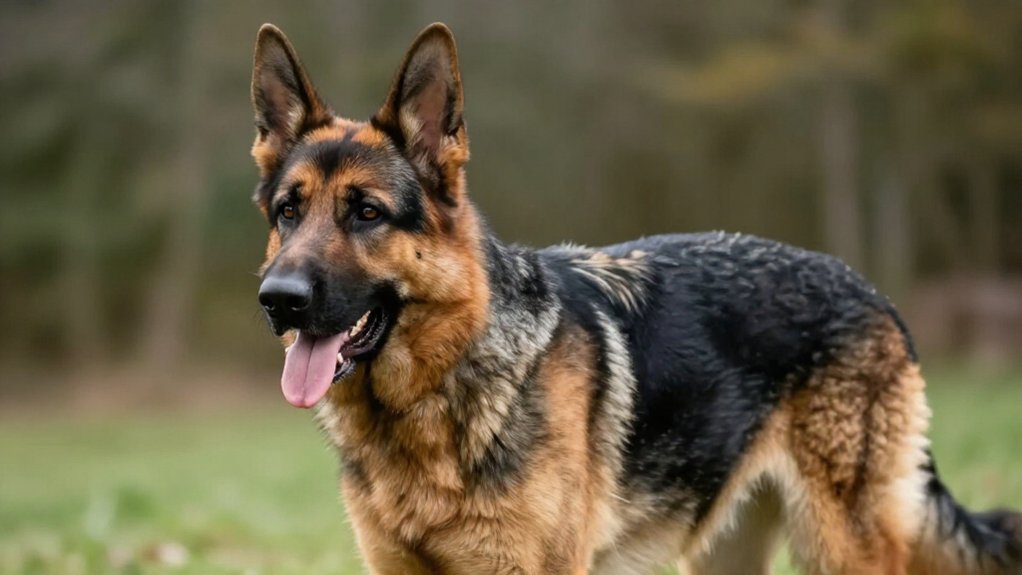
You can expect your German Shepherd Great Pyrenees mix to live around 9 to 12 years, though genetics may challenge this timeline.
You’ll need to watch for common issues like hip dysplasia and bloat that shorten lives in these breeds.
To help them thrive, you should schedule routine screenings for joints and heart health from an early age.
Owners should also watch for degenerative myelopathy, a spinal condition common in German Shepherds that causes gradual hind-leg weakness and loss of coordination.
Average Lifespan Range
The average lifespan of a German Shepherd Great Pyrenees mix ranges from 7 to 12 years, with many reaching 10 to 11 years under good care. You can help your giant companion live longer by managing their weight and preventing bloat through careful feeding practices.
Monitor their joints closely as heavy bodies stress hips and elbows, leading to arthritis in later life. Keep up with regular vet checkups to catch heart disease or cancers early.
You should also maintain their dental hygiene and clean their ears regularly to prevent infections. Providing balanced nutrition and moderate exercise helps reduce orthopedic decline.
When you prioritize these health factors, you give your loyal guardian the best chance to enjoy their full potential.
Common Genetic Concerns
To understand how genetics shape your mix’s lifespan, focus on the health issues you’re most likely to face. Your shepherd-pyrenees mix faces high risks for hip and elbow dysplasia, causing mobility impairment.
Patellar luxation, osteochondritis, and bone tumors like osteosarcoma threaten structural health. Neurologically, they inherit susceptibility to degenerative myelopathy, spinal stenosis, and epilepsy, leading to paralysis or seizures.
Megaesophagus can impair swallowing. Gastric dilatation–volvulus (bloat) poses life-threatening emergencies due to their deep chest. Obesity exacerbates joint strain.
Pancreatic insufficiency may cause chronic malabsorption. By understanding these genetic predispositions, you proactively manage their care.
Recognizing these risks allows you to prepare for specialized veterinary needs and lifestyle adjustments, ensuring your gentle giant guardian remains safe and well-supported throughout their life.
Routine Health Screening Needs
While your German Shepherd Great Pyrenees mix likely lives 9 to 12 years, proactive screening helps you manage their high risks for joint disease, bloat, and cancer. You must prioritize regular veterinary visits to catch conditions early, ensuring your guardian remains healthy for you and your family.
Schedule orthopedic assessments during puppyhood to detect hip or elbow issues before they worsen. Watch closely for signs of bloat, such as restlessness or a distended abdomen, since this deep-chested mix faces serious risks.
Maintain semiannual exams as they age, monitoring organ function through routine bloodwork. Early detection of cancer symptoms like lethargy or weight loss gives you the best chance to intervene.
Serve them well by staying vigilant and acting quickly when any health concerns arise.
Daily Grooming Routine
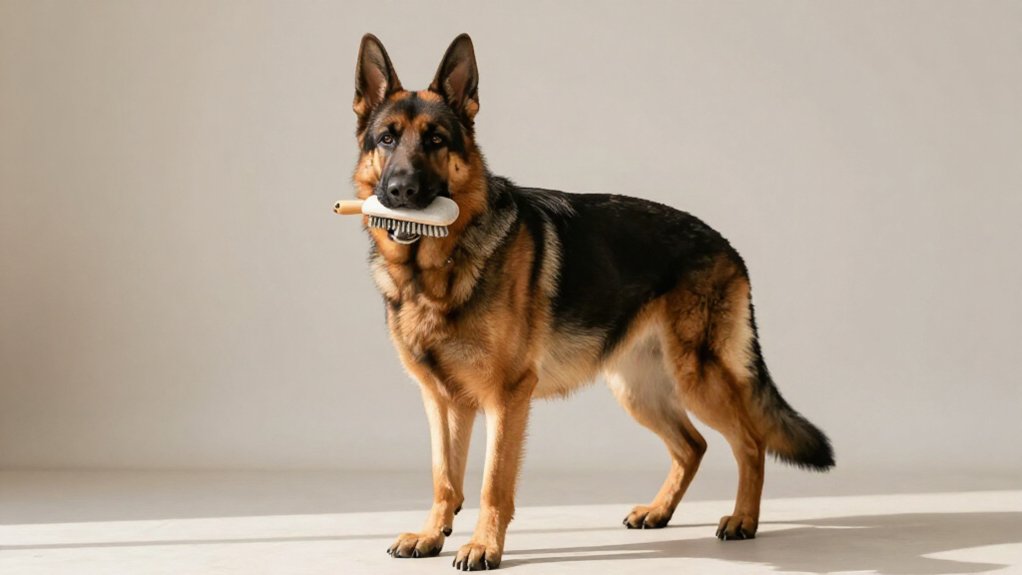
Because your German Shepherd Great Pyrenees mix carries dense double coat genetics, you must brush them at least four to seven times a week to manage high year-round shedding. During seasonal blows, commit to daily sessions.
Use line-brushing: part fur, brush outward from skin. Equip yourself with slicker, undercoat rake, and steel comb. Prioritize checking friction zones like behind ears and leg feathering.
Never shave their coat; it protects temperature regulation. Bath only every few months to preserve natural oils. When a bath is needed, follow proper bathing technique and choose a shampoo suited to thick double coats so their skin stays healthy.
When wet, dry thoroughly with a high-velocity dryer to remove loose undercoat. This disciplined care honors your role as a dedicated guardian. It keeps their skin healthy, reduces mats, and minimizes home hair.
Family Compatibility and Guardian Qualities
If you’re looking for a devoted family companion, this mix blends the gentle, calm demeanor of the Great Pyrenees with the loyal, affectionate character of the German Shepherd. You’ll find it outgoing, playful, and courageous, making it an ideal family pet when you provide structure and activity.
This dog often shows gentle, patient behavior with children, acting as a nurturing guardian. However, its giant size means you should supervise interactions with small kids to prevent accidental knocks.
Its strong protective instincts make it naturally watchful over your home. You’ll notice its wariness toward strangers and deep, commanding bark at night.
To channel these traits safely, guarantee you begin early socialization and consistent, positive reinforcement training. Providing a clear job like property patrol keeps it focused.
With your commitment to ongoing training and clear rules, you’ll raise a balanced, formidable protector for your household.
Finding a Reputable Breeder
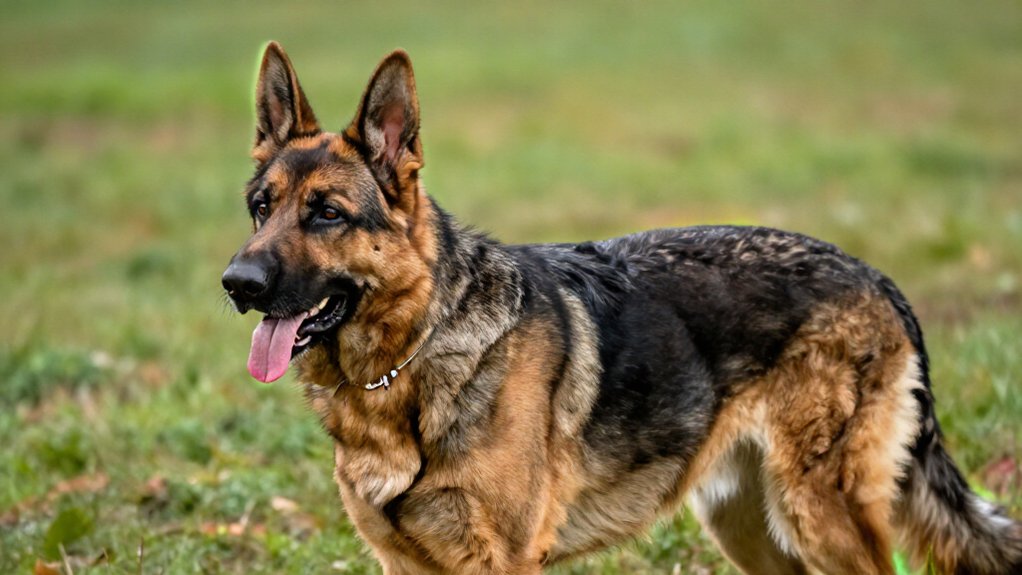
Finding a reputable breeder starts with doing your homework on their knowledge of German Shepherd and Great Pyrenees standards. Look for breeders committed to sound structure and stable guardian temperaments rather than appearance alone.
Guarantee they disclose hereditary issues like hip dysplasia and perform thorough health testing including OFA hips and genetic panels. Visit their clean facilities to see puppies raised in enriched environments with early socialization.
A good breeder screens buyers carefully, asking about your lifestyle and housing to ensure they match the breed needs. Require clear written contracts outlining health guarantees and lifetime take-back clauses.
They should offer ongoing guidance on training and nutrition, reflecting a genuine commitment to canine welfare throughout your dog’s life. Choose those who limit litters to prioritize quality over volume, ensuring every puppy enters a loving home with proper lifelong support.
Frequently Asked Questions
Do They Make Good Watchdogs for Small Homes?
Yes, they make great watchdogs for small homes. You train them to guard gently without excessive barking. With consistent care, their protective nature keeps your family safe while adapting well to compact living spaces.
Can They Swim or Enjoy Water-Based Activities?
Yes, they can swim, like enthusiastic explorers in cool rivers. You’ll find their enthusiasm varies, so start slow with safety gear. They’ll enjoy the splashes, building strength and joy while you guide them through the water with patience and care.
Are They Vocal With Frequent Barking?
Yes, they bark often. Expect frequent alert barking from this vocal guardian mix. Train early and exercise them daily to curb nuisance barking. Consistency helps, and their watchful nature remains a key trait for protecting others.
How Much Daily Exercise Do Puppies Need?
Your pups need short walks, about five minutes monthly, building like a steady drumbeat. Offer gentle play on soft ground and mental games to serve their growing joints while protecting them from overexertion risks.
Do They Get Along With Cats?
Yes, they can get along with cats if you provide early socialization and careful introductions. Your dedication to training and environment management guarantees safe, peaceful coexistence for the animals under your care.