You’ll feel German Shepherds’ confidence and “quiet radar” in real life, not just in stories. They bond deeply, often with one primary person, because daily proximity, steady leadership, and work like training, feeding, and calm routines create a secure “safe base.” Many won’t be instantly friendly to every stranger. Instead, they watch first, warm slowly, and stay near you. Their working drive shows as patrolling, chewing, or window barking, so give 1.5–2+ hours daily plus 15–30 minutes of mental play—and keep going to learn more.
Swift Summary
- German Shepherds often bond with one primary person through daily proximity, leadership, feeding, and consistent training.
- They show loyalty via “velcro” following and room-to-room shadowing, especially off-leash when tracking the handler.
- Their temperament is confident and steady, with calm, courageous nerves and quiet “radar” scanning of people, rooms, and routes.
- Stranger interactions are typically reserved at first, requiring early, positive socialization to prevent fear or overprotectiveness.
- Consistent routines and trust-building create a secure base, leading to whole-body greetings, leaning, nudging, and gift/toy bringing.
What German Shepherd Temperament Looks Like in Real Life
In real life, German Shepherd temperament usually shows up as a really strong bond with you and a “shadowing” kind of loyalty. You’ll notice traits of a German shepherd through daily proximity, because you become their main caregiver. So, do German shepherds pick one person? Often yes, they choose a person, and you’ll see them follow you room to room. trust and consistency You’ll also often see them keep tabs on your location off-leash or make a big effort to find you for play engagement. How do German shepherds show affection? They lean, nudge, and sometimes “velcro” snuggle, yet why don’t German shepherds like to cuddle? It’s not that they don’t care—it’s they prefer working and being near you. You also manage separation, and you make them happy with exercise, structure, and calm alone time. Families who provide consistent training and socialization help this breed fit comfortably into everyday life.
German Shepherd Personality Traits: Confidence, Alertness, Loyalty
German Shepherds feel confident in a calm, steady way, and that confidence shows up fast once you see how they carry themselves.
You’ll notice a self-assured, courageous core, with steady nerves at ease.
When breeding and socialization are sound, they don’t shy or panic.
And they stay alert.
German Shepherds are intelligent — their alertness runs like a quiet “radar,” scanning rooms, sounds, and routes, especially around possible threats or unfamiliar people.
That alertness makes them great watchdogs and reliable workers. Compared with the Belgian Malinois, German Shepherds often bring a calmer energy level to the same jobs, offering an even-tempered work drive that suits both families and working roles.
Most of all, you get deep loyalty.
Most of all, you get deep loyalty—your German Shepherd bonds closely with your family and sticks by its trusted handler.
They bond strongly with your family “pack,” often focusing on one primary person who trains, feeds, and leads daily.

【Military-Grade Durability】This combat-tested shock collar for dogs features military-grade reinforced casing that withstands 500lbs crush force and 100K+ bite cycles—engineered to survive extreme adventures, from muddy trails after heavy rain to stormy mountain hikes. IP67 waterproof rating (1m/30min) makes it ideal for lakes, storms, and outdoor expeditions.

Veteran-Designed Training System: The INVIROX Ultra K9 Dog Training Collar, an elite e collar for dogs training, provides a 3/4-mile remote range. Ideal for recall training, off-leash practice, and hunting preparation in expansive fall environments

Martingale Dog Training Collar for Pulling(Medium/Large, 17.75-21"Neck): Mayerzon no pull dog collar is designed to help train your dog and make daily walks more enjoyable. The dog pulling collar gently tightens when your dog pulls and loosens when relaxed, teaching your dog to walk calmly by your side instead of pulling, lunging, or chasing
Why They’re Not “Friendly to Everyone” as a Default
You might notice your German Shepherd isn’t “automatically friendly” to every stranger that walks by, and that’s normal, especially if you’re comparing them to breeds that greet everyone like a party. Research on canine behavior shows that aggression myths often ignore the genetic and environmental factors that actually shape how a dog responds to strangers.
The breed standard favors reserved aloofness , not instant, indiscriminate friendliness. Because they were bred to herd and guard, you’ll often see quiet watching, slow trust, and careful checks.
Their primary bond with you also narrows their focus, so they please and respond most to your cues. With solid socialization—meet 100+ people before 16 weeks—your pup stays safe, civil, and steady, while still skeptical of strangers.
How Working Drive Shows Up at Home and on Walks
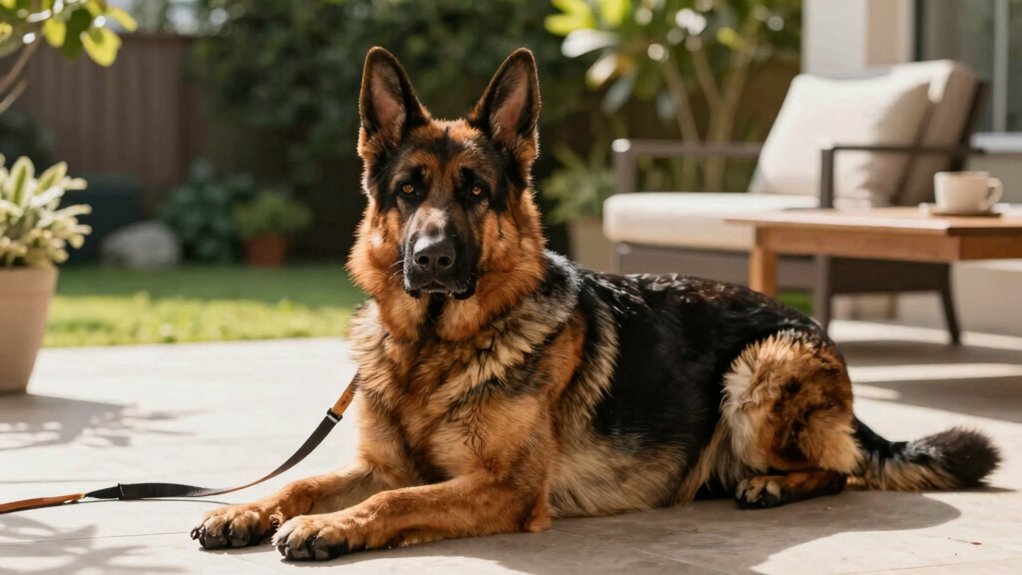
Working drive shows up at home and on walks the moment a German Shepherd feels “unassigned,” and that’s when their big energy turns into behavior you didn’t plan.
And at home, you’ll see them seek nonstop engagement, barking at windows, chewing furniture, digging, and patrolling fences.
If you ignore that drive, frustration sparks destructive chewing, obsessive focus on visitors, and circling or nudging like they’re “herding” family.
You’ll also hear lots of barking or whining from boredom.
On walks, you’ll need 1.5–2+ hours daily, with two long outings and safe off-lead running.
Without enough intensity, you’ll get restlessness and reactivity.
Plus chase drive makes squirrel pursuit likely, so plan secure control.
Pairing physical and mental activities with a consistent daily routine helps a German Shepherd use its energy and avoid boredom.
Trainability Tips That Match a German Shepherd’s Learning Style
When your German Shepherd’s drive has no “job,” their brain starts offering their own plans—so let’s point that focus straight into training.
Start structured, reward-based practice around 8 weeks.
Teach sit, stay, down, heel, and house rules early.
Teach sit, stay, down, heel, and house rules early—so your German Shepherd learns what to do, not just what to avoid.
Use high-value treats or toys, and mark the moment they do it right with a clicker or clear word.
Keep sessions 5–10 minutes, daily.
Training timelines vary, but consistent daily practice typically produces faster results than occasional long sessions.
Begin in quiet, low-distraction spaces, then move indoors→yard→public slowly.
Manage distractions with distance first.
End on wins.
Add puzzle feeders, scent games, and a quick obedience game for calm.

MANUAL AUDIBLE CLICKER: Produces an audible click when manually pressed. Contains no electronics, batteries, remote-control functions, or Electronic Stimulation features.

Can be used to train the dog basic obedience, small trick, and correct the bad behavior; Scientific method of training your pet safely and easily.

ONE MANUAL AUDIBLE CLICK SOUND: Produces one audible click when manually pressed. This clicker does NOT provide multiple selectable sounds, electronic volume controls, batteries, remote functions, or Electronic Stimulation.
German Shepherds and Protection: Watchdog vs. Aggression
Start with early, positive training and social time, with the goal of calm inspection rather than automatic confrontation. Then practice “look” and “quiet” for 30–60 seconds at a time, 2–3 times daily, so strangers become routine visitors in your dog’s mind.
But if your dog escalates at every unfamiliar person, you adjust the plan fast by lowering the distance, rewarding neutral focus, and tightening handler control, because repeated “every stranger is a threat” reactions are a stability issue, not a protection badge. Watch for sudden aggression toward owners, since it can signal pain, fear, or other triggers that need professional evaluation rather than more protection work.
Watchdog Instincts With Training
German Shepherds don’t need aggressive chaos to be effective watchdogs—so start by steering their natural alertness into calm, controlled awareness.
You teach “check-in” first: strong obedience like sit, stay, down, come, and heel, with near-instant responses.
Then you socialize early, daily if you can, so your dog spots friendly people fast.
Next, build impulse control through structured games, like tug with a soft bite pillow, 5 minutes at a time, ending while your dog stays focused.
A stable, neutral baseline matters most.
Watch for fear or extreme reactivity, and get help before training protection.
Preventing Aggressive Overreactions
To keep a German Shepherd from flipping into aggressive overreaction, aim for “watchdog behavior” instead of “protection mode.”
First, focus on prevention, because aggression usually shows up when the dog’s stress level crosses a hard line—called the aggression threshold, meaning the point where they feel they must act with force.
Early, broad socialization between 3–14 weeks helps.
Share many people, surfaces, and sounds, use reward-based puppy classes, and normalize crowds.
Then, identify triggers like doorbells, and record them.
Manage thresholds with barriers, locked doors, and a safe retreat.
Keep routine steady, then give ~90 minutes daily exercise plus puzzle or scent work.
The Role of Early Socialization in Preventing Fear or Overprotectiveness
Early socialization is one of the best tools you have to help a German Shepherd puppy grow up confident, not fearful or overly protective.
Early socialization is one of the best tools to help your German Shepherd puppy grow confident, not fearful or overly protective.
Aim for 3–12 weeks, peak at 6–8 weeks.
During 8–10 weeks, fear sensitivity rises, so act early.
You’ll give positive, controlled exposure.
Pair new sights with food, play, and calm rooms.
Do short, frequent sessions, and watch body language like trembling, hiding, or growling.
Use puppy classes for supervised meetings.
Include multiple caregivers and visitors, plus handling away from the littermates.
This builds trust, reduces lifelong fear, and lowers guarding.
Socialization should continue beyond puppyhood, since consistent training helps a German Shepherd stay confident as it matures into adulthood.
How Much Exercise and Mental Stimulation They Really Need
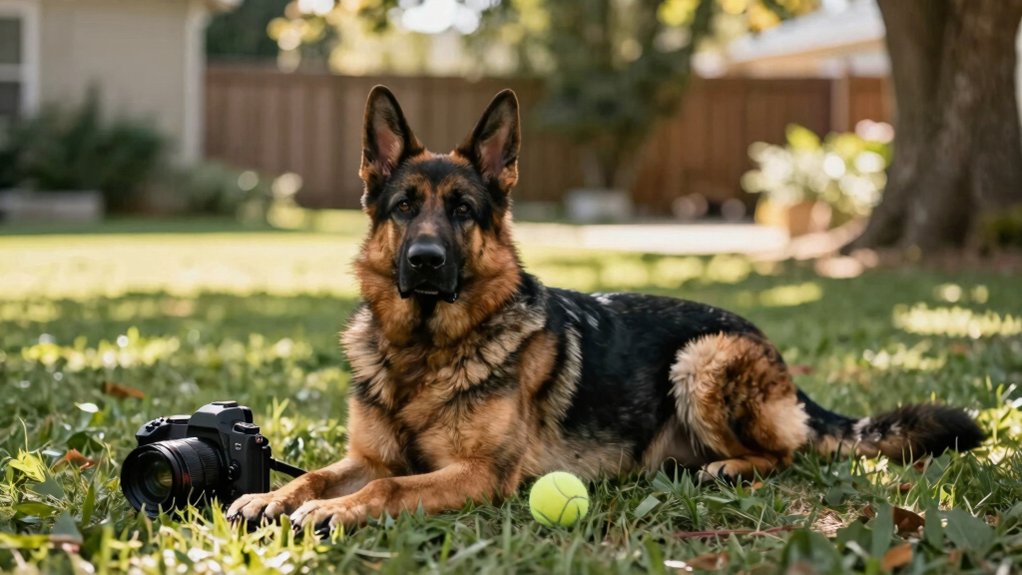
You’ll feel the difference fast: a healthy adult German Shepherd usually needs about 60–120 minutes of vigorous exercise every day, and you’ll get the best results when you split it into 2–4 sessions. Aim for brisk walks, jogging, fetch, agility, hiking, swimming, and structured play. Their age and activity level directly shape how much exercise they need, so adjust the routine as your dog grows and changes.
Then add mental work, too. Plan 15–30 minutes daily for training, scent games, puzzle feeders, or tracking.
While walking, mix in sniffing and short drills for focus.
Puppies need gentler, joint-safe activity, about 5 minutes of formal walking per month of age.
If you underdo it, boredom can turn into chewing and barking.

Four Challenges & Levels 1-3: Multiple games with a flip game and a linear track sliding game, all requiring dogs to learn steps and find treats. This puzzle is designed to be more fun and difficult, with more unique ways to play. It can enhance your dog's IQ and train their sense of smell

3 LEVELS, 4 WAYS TO PLAY — Open cups first, then spin the center to dispense, then add twist locks. Grows with your dog.

【Size】: L9.44" * W9.44"* H1.14" suitable for cats, puppies and small dogs.
Common Bonding Patterns: Why German Shepherds Choose One Person
This isn’t random.
In puppyhood, you become their secure base, the steady human who brings safety, food, and calm comfort.
When you provide consistent feeding, training, grooming, and leadership, your structure feels predictable.
And German Shepherds were built for handler work, so they learn to trust one leader. Because they are highly responsive to training, regular, structured sessions with you strengthen that leader-follower connection.
If caregiving shifts often, their bond may spread.
But if you stay involved daily, their vigilance and protection can focus on you.
One-Person Attachment: Signs Your Dog Has Picked You as Their Person
You’ll also notice they choose to rest near you for visual monitoring, picking doorways or your favorite seating spot, and they often sleep right beside you instead of using their own bed.
And when you move, they follow fast, leaning in and repositioning to stay close, so if you call them and they stay glued to you, you’re already seeing the signs. Practicing basic obedience commands and fun tricks together also strengthens this connection, since training provides mental stimulation and clear communication that help your German Shepherd feel secure with you.
Signs Of Primary Person Bond
So, if your German Shepherd has picked you as their person, you’ll usually see the bond show up in everyday “signals,” not just big moments.
When you return, expect bigger, joyful greetings, whole-body wiggles, and even right-biased tail wags.
Some dogs also wipe watery eyes after a separation.
During the day, you’ll notice them choose your spot to rest, sleep touching your legs, or even belly-up for safe rubs.
They’ll lean in, paw for petting, lick your hands, and “gift” toys.
In training, they respond fastest to your cues.
Following And Close Proximity
Following you around and staying close—often like “shadowing” you room to room—is one of the clearest signs your German Shepherd has picked you as their person.
You’ll notice anticipatory steps too, they move before you even stand.
Because herding and working lines were bred to work side-by-side with a human partner, they naturally track your cues.
Oxytocin-mediated bonding (a feel-good bonding chemical) plus your feeding, walks, and training rewards can reinforce this “stay near me” habit.
Still, watch for stress, like pacing or sudden clinginess.
If you’re worried, check health and adjust training.
How Selective Bonding Affects Strangers and New Visitors
How does selective bonding shape how your German Shepherd treats strangers and new visitors? If you’re their main person, you’ll notice quiet, watchful behavior around unfamiliar people, not instant greetings.
Your dog may stay near you, monitoring them closely, and stand between you and the visitor like a living “safety wall.” Expect slow warming.
During entry, they may bark until the stranger leaves or you give a clear calm cue.
But socialization helps a lot. Start varied, reward-based meet-and-greets from 3–16 weeks, then keep adding new faces. Without it, stranger-directed aggression can rise.
Use leash and gate for safety.
Separation Anxiety Risks and How to Reduce Them

Separation anxiety doesn’t just “happen”—it often builds when your German Shepherd gets too attached and learns that your leaving means something scary is coming.
You should watch for hyperattachment: constant following, anxiety at departure cues, and over-the-top greetings.
Single-owner homes raise risk about 2.5x, and losses like a caregiver, rehoming, or major household changes often come first.
Moving, schedule shifts, or traumatic events during absence can also trigger it.
Early stress, poor puppy socialization (ages 3–12 weeks), singleton status, and fearful genetics matter too.
Reduce risk by practicing gradual short alone time, using a calm safe space like a crate, and making arrivals/departures low-key.
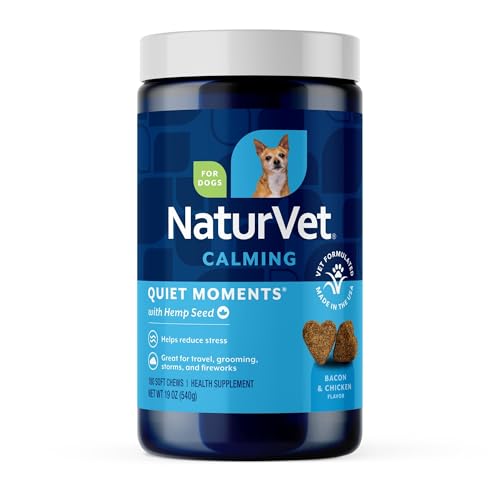
HIGH-QUALITY HEALTH SUPPLEMENT FOR DOGS: Bring your friendly pup the calm he needs during separation, storms, grooming or travel with tasty soft chew calming aid dog supplements that promote normal nervous system function.

Dog Calming Soft Chews: Our melatonin soft chews for dogs are formulated by trusted vets to help reduce stress and tension for your furry friends. Enjoy tail-wagging tranquility instead of those zoomie-induced jitters

Dog Calming Soft Chews: Our melatonin soft chews for dogs are formulated by trusted vets to help reduce stress and tension for your furry friends. Enjoy tail-wagging tranquility instead of those zoomie-induced jitters
Building Trust With Consistent Routines and Positive Training
Once you make your German Shepherd’s day feel predictable, you’ll usually see trust click into place fast. Feed at fixed times, plan walks, rest, and short training blocks, so stress drops.
Start the routine soon after arrival, and use hand-feeding for the first days, it links you with safety.
Keep rewards consistent, food or toys or praise, and give them right after the good choice.
Avoid pain or force, use positive reinforcement instead, meaning rewarding desired behavior.
Train around 8 weeks, 5–15 minutes, several times daily.
Teach “sit” and loose-leash walking, then increase difficulty slowly.
Managing Strong Following Behavior and Physical “Shadowing
When your German Shepherd keeps “shadowing” you, it usually means they feel bonded and safe with you nearby.
Still, you should watch for problematic velcro behavior, constant close following, and stress when you move or leave a room.
If you see pacing, whining, barking, salivating, or restlessness, think anxiety.
Separation anxiety brings distress before departures, then a peak right after you exit.
To manage, create brief, low-stress separations with a baby gate or tether.
Give a mat zone 3–6 feet away.
Scatter puzzle feeders, lick mats, or long chews for 5–10 minutes.
Add background sound, plan calm departures, and train “stay” and “settle” gradually.
Best Ways to Channel Loyalty Into Sport, Service, or Protection Work
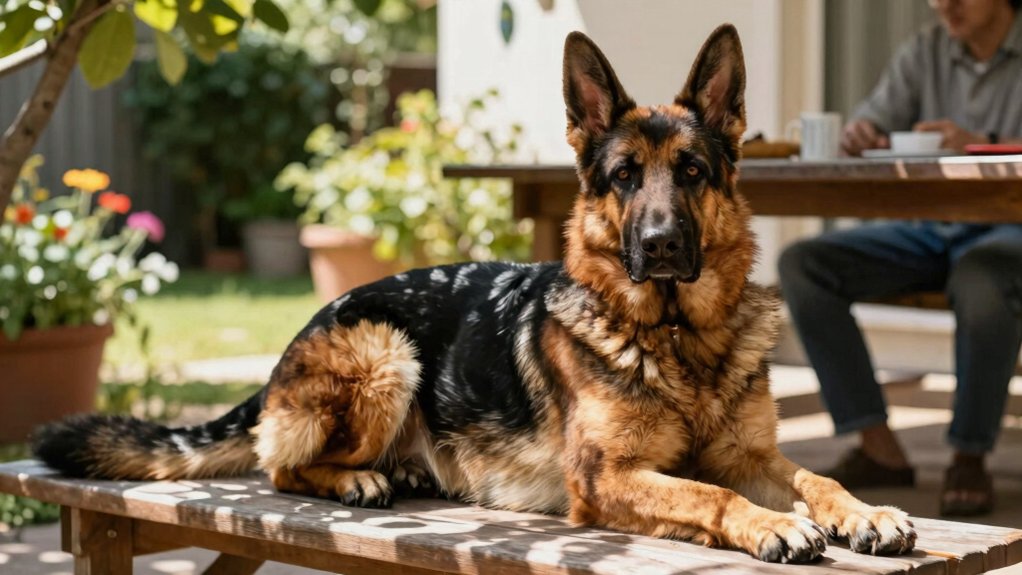
Channel your German Shepherd’s loyalty into work by giving it a clear job, not just a forever shadow role. That means daily structure, not random guarding.
Aim for 120 minutes guided exercise, plus short drills. Use reward-based, clear training to build impulse control, early obedience first.
Then choose a path.
Then choose a path—sport, service, or protection sport—and train accordingly for focused work, not constant guarding.
For sport, train 4–6 sessions weekly, 45–90 minutes, with daily 15–20 minute focus blocks. Try tracking, nose work, agility, or obedience.
For service, use scent routines, retrieving, and tracking for reliability.
For protection sport, work with trained clubs, blending courage and control.

COMPLETE 80-PIECE DOG AGILITY COURSE: Build a varied dog obstacle course with a hoop jump, hurdle, 68-inch tunnel, 6 weave poles, pause target and training accessories. This dog agility training equipment gives beginners multiple ways to create an obstacle course for dogs indoor/outdoor. It included an agility tunnel with 2 sandbag, 6 weave poles, adjustabel angility hurdle, jump rings, a pause box, 2 ball toys, 2 flying discs, 2 tracking clicker,1 whistle, 1 carrybag.

🦴BUILD BOND FOR PET OWNER & DOGS-Engage your dog’s brain with our interactive dog scent training kit. Perfect for mental exercise, confidence building, and stress relief, this scent work kit for dogs offers a calming effect and bonding experience with your dog.

Rich Complete Dog Agility Training Set: this all-in-one dog obstacle course kit comes with everything you need, 1 jump ring, 1 adjustable hurdle, 1 pause box, 10 training cones, 10 durable connecting poles, 3 interactive tennis balls and 1 portable storage bag; All accessories are fully matched to build a complete pet training playground, satisfying all kinds of dog agility exercise needs
German Shepherds With Kids and Seniors: What Good Looks Like
German Shepherds can make wonderful companions for kids and seniors, but only if you match the dog’s temperament and needs to your home.
You get confident, courageous loyalty, plus protection, but you also need calm training and steady rules.
Expect good family fit (often 4/5), yet manage carefully with children (often 3/5).
You must supervise every play moment.
Never leave a German Shepherd alone with a young child.
Their size can cause accidental bumps, and some guides note higher bite risk around children.
Start with older kids, respectful handling, and safe zones.
Provide daily structured exercise, then simple commands.
Addressing Barking Tendencies Without Losing Watchdog Instincts
To keep barking in check, train your German Shepherd’s silent commands consistently, so “quiet” (a cue to stop) means the same thing every time.
First, practice bark-on-command, then reward a single bark, and immediately follow with “quiet” and a treat if they pause for 2–5 seconds—short sessions, 5–10 minutes, a few times per day.
And when they’re alert but ready to settle, you’ll preserve that watchdog focus without letting excitement turn into nonstop noise.
Train Silent Commands Consistently
When your German Shepherd starts to bark, you can still keep that watchdog alertness while teaching a reliable “quiet” that doesn’t turn into silence for the wrong reasons.
Use one consistent hand signal, like an index finger to lips. Pair it with high-value food near their nose, right before barking, so you redirect fast.
Let 3–4 barks happen, then show the signal, deliver a treat the moment they stop. Keep calm posture, steady eye contact, and repeat 10–20 reps daily.
Combine the new hand cue with “quiet,” then fade the word.
Reward silence, ignore nuisance barking, and reinforce quiet with “down” or mat work.
Preserve Alert Watchdog Focus
Before you try to “fix” barking, you’ll get better results if you first protect what makes your German Shepherd a great watchdog, which is their alert focus.
Start by sorting barking types: alert/territorial, fear, frustration, demand, greeting, boredom.
Then log each episode with time, trigger, distance, and how it ends.
Tag it alert or non-alert, so you protect real guarding and target nuisance barking first.
Block easy sightlines with curtains, frosting, or opaque fencing.
Move the resting spot away from front windows and the main entrance.
During home-alone time, use a crate/quiet room with closed blinds.
Finally, allow 3–4 alert barks, then cue quiet fast and reward immediate silence.
When Temperament Concerns Arise: Reactivity, Nervousness, and Solutions
If you notice your German Shepherd getting stuck in “warning mode” at the sight of triggers—barking, lunging, growling, pacing, or never fully settling—that’s usually not random bad behavior.
It often comes from fear, anxiety, and intense protective instincts.
Reactivity means a dog overreacts to a cue instead of calmly evaluating.
Start managing risk first: create distance, use a harness, and interrupt escalation before it peaks.
Then use desensitization, pairing triggers at low intensity with treats to build calm, and counter-conditioning to change feelings.
Then use desensitization with low-intensity triggers, pairing them with treats to build calm and reshape the dog’s emotional response.
Add enrichment, consistent routines, and daily mental work.
If anxiety or guarding spreads, seek a professional trainer.
Responsible Breeding and Temperament Testing for Steadier German Shepherds
When you breed German Shepherds for steadier temperament, you start with proven temperament testing methods—like C-BARQ scores, DMA behavior traits, and service-dog style checks—so you can measure things such as affability (willingness to approach) and gun shyness (sound startle).
But don’t stop at behavior, you also screen health and stability, because pain, stress, and untreated issues can mimic “bad nerves,” and you should do testing on a consistent schedule as pups mature.
Finally, choose breeders who use heritability data for line-specific selection, and who can show you how their pairings target confidence, trainability, and stable sound reaction—not just looks.
Temperament Testing Methods Explained
To build a steadier German Shepherd, you need more than good looks—you need structured temperament testing that shows how a dog handles people, noise, and stress.
Start with puppy testing, like the Volhard Puppy Aptitude Test at 7 weeks, in a new 10‑foot square area, before feeding.
You’ll score 10 exercises, such as gentle 30‑second supine restraint, lifted “elevation” dominance, and short paper-toss retrieves.
Each score summarizes trainability and stress tolerance.
For adults, use the AKC Temperament Test, evaluating reactions to social, sound, touch, and surprise stimuli, then recovery under mild stress.
Choose friendly or neutral dogs, with appropriate caution.
Health And Stability Screening
Before you even talk about temperament, check health, because a shaky brain can come from a shaky body.
Start by screening hips and elbows, since dysplasia is common.
Use OFA or PennHIP for hips, and OFA for elbows.
Next, verify breeding rules: SV approvals need HD A–C, ED 0–1, plus dental and bite checks.
Then test for degenerative myelopathy with DNA, because it can cause hind leg weakness and paralysis.
Add spine checks for lumbosacral transitional vertebrae.
Don’t forget CHIC basics: heart, thyroid, and annual eye care.
Also, test MDR1 to protect their welfare.
Breeder Selection Best Practices
Pick your breeder like you’d pick a trainer—by looking at what they *test*, not just what they *say*. Choose breeders who use working goals and temperament checks, not just looks.
If you want steadier nerves, prioritize working-line or show-line plans with clear focus, and avoid random mixing.
Ask about Volhard Puppy Aptitude Tests around 7 weeks. Those tests measure touch, sound, and social traits, and certified evaluators help reduce bias.
Also look for GSDCA or SV-style evaluations, plus working titles like tracking and protection.
Titles show nerve strength, trainability, and stable effort.
That’s how you help a lifelong bond.
Frequently Asked Questions
Can German Shepherds Be Affectionate Without Becoming Overdependent?
Yes, you can enjoy a loving, close bond without raising overdependence. Give them daily exercise, structured alone-time training, and rewarding “safe” crates. Gradually lengthen departures so they settle calmly, while you stay consistent and kind.
Why Does My German Shepherd Test Boundaries With Their Primary Person?
Your German Shepherd tests boundaries with you because they’re smart, alert, and strongly bonded to your cues. When rules feel inconsistent or needs aren’t met, they probe limits, seeking clear leadership, structure, and predictable consequences.
How Do I Stop Intense Staring and “Guarding” the House Entrance?
Stop intense staring and guarding by picturing calm waves at the door: manage access, teach “place” with rewards, desensitize doorbell gradually, and reinforce brief looks. Remove attention for hard staring, then redirect to toys and calm cues.
What Behaviors Indicate Under-Stimulation Versus Anxiety or Fear?
You’ll see under-stimulation as pacing, restless chewing, repetitive nudging/barking, jumping, and hyper-reactivity without tense fear cues. You’ll see anxiety or fear as cowering, tail tucked, lip licking, whale eyes, freezing, avoidance, trembling, escape attempts, or drooling.
Are Male or Female German Shepherds More Likely to One-Person Bond?
You’ll often see males more likely to form a one-person bond, like a spotlight on the keeper, while females more often spread loyalty across the pack. Still, your training, environment, and temperament shape the outcome most.