Yes, German Shepherds can be great family dogs, but you need to treat temperament like a daily job. You’ll get loyalty, confidence, and a “watchful” vibe when they’re well bred and trained. Expect lots of energy, plan 2+ hours of exercise plus 20–30 minutes of training, and manage door greetings. Early socialization (3–16 weeks) helps with kids, cats, and visitors. Protective instincts can flip if you ignore triggers, so you’ll want rules and safety supervision—keep going to learn the plan.
Swift Summary
- German Shepherds are often loyal, confident, and gentle at home when raised with consistent structure and training.
- They’re high-drive and energetic, typically needing 2+ hours of daily exercise and 30–45 minutes of mental enrichment.
- Early socialization (especially with kids and visitors) is crucial for preventing fearfulness, reactivity, and guard-triggering behaviors.
- With supervision, clear rules, and bite-inhibition training, they can do well with toddlers and family routines.
- Their watchful, protective instincts can be helpful, but door greetings and visitor management are important for bite risk safety.
German Shepherd Temperament in Real Family Life
German Shepherds can be great family dogs, but their temperament shows up in real life in very specific ways.
If you ask, “is a german shepherd a good family dog,” the answer is “yes, with structure.”
You get loyalty, confidence, and gentle attention at home, so german shepherd as a pet can feel like real partnership.
But you manage two things: energy and bite risk. Early socialization shapes how well a German Shepherd gets along with children, cats, and other dogs.
Balance your German Shepherd’s high energy and bite risk with daily training, supervision, and consistent boundaries.
What’re the characteristics of a german shepherd?
Intelligent, people-focused, and high-drive.
Do german shepherds make good family pets?
They can, if you socialize early, train daily 20–30 minutes, supervise toddlers, and introduce visitors calmly—because a house isn’t a home without a german shepherd. (lifespan )
Are German Shepherds Protective Without Being Dangerous?
Yes—when you choose a well-bred German Shepherd and raise them with the right training, you often get a dog who’s protective without being out of control. Breed standards describe them as strong-nerved, confident, good-natured, and attentive, so they can guard, serve, and protect. Their intelligence and alertness help them stay focused on their environment—strongly linked to watchfulness.
You’ll notice watchfulness, territorial awareness, and wariness toward strangers. But in calm, stable homes, they usually stay neutral when there’s no real threat. Their work roles show controlled protection under structured training. Their guarding instincts are most reliable when they are channeled through structured protection training, which helps alertness turn into measured responses rather than reactive aggression.
To keep it safe, socialize early with many people, use consistent reward-based obedience, and get guidance from experienced handlers.
How German Shepherds Bond With Children Over Time?
When you bring a German Shepherd puppy into a child-filled home early on, you help them learn the “normal” of kids—loud noises, fast movement, and surprise hugs—so bonding grows calmly over months. As her herding-and-guardian instincts kick in, you’ll often see protective, watchful closeness, like staying near children during play and rest, but you should still guide that energy with structure and training. Start basic obedience from day one, set clear rules for kid interactions, and use positive reinforcement (rewarding calm, gentle behavior) while you supervise play like fetch or trick games—this keeps the bond strong, safe, and happy. Because these dogs are high-energy and love having a job, giving them daily exercise and mental games helps prevent boredom-related behavior and supports calmer interactions at home. Daily walks can also be made more manageable with a front-clip harness, which gives you extra control when your dog pulls or gets excited.
Early Socialization With Kids
Early socialization with children really sets the tone for how your German Shepherd bonds with kids over time. In the puppy window, about 3–16 weeks, you want calm, positive meetings.
Let your puppy hear children’s voices, see quick movements, and sniff child toys, at low stress. This helps prevent fear later, during adolescence and adulthood.
Plan supervised visits to homes and parks, start with respectful distance, then move closer. Keep sessions short, 5–10 minutes.
Teach kids: no climbing, no pulling ears or tail, and no chasing. Reward gentle behavior.
Also watch stress signals, like whale eye, yawning, or turning away.
Guarding Instinct As Bond
As your German Shepherd grows alongside your kids, their guarding instinct often turns into a real kind of bonding, the good kind.
You’ll see it as vigilant protection, close following, and gentle body placement.
And because they’re herding by nature, they’re wired to watch, monitor, and steer.
Over time, they may circle or position near play, then lie between your child and entry points like doors or stairs.
But this isn’t constant alarm.
It’s pack inclusion, with your whole family treated as “its people.”
You’ll also notice “shadowing,” following room to room, and barking to alert you when strangers get near.
Training Guides Safe Play
To help your German Shepherd bond with kids over time, you’ll want to make safe play a skill—not a hope.
Start with early, calm socialization, then add reward-based obedience for sit, stay, leave it, and come.
Practice with children in age-appropriate ways, for short 5-minute sessions, then build up.
Keep constant, active supervision; never leave them alone together.
Use baby gates or a closed room when you can’t watch closely.
Teach kids gentle back-and-shoulder petting only, and “freeze” if the dog jumps.
Watch body signs—stiff posture or growling means stop.
What Training Prevents Nipping, Jumping, and Guarding?
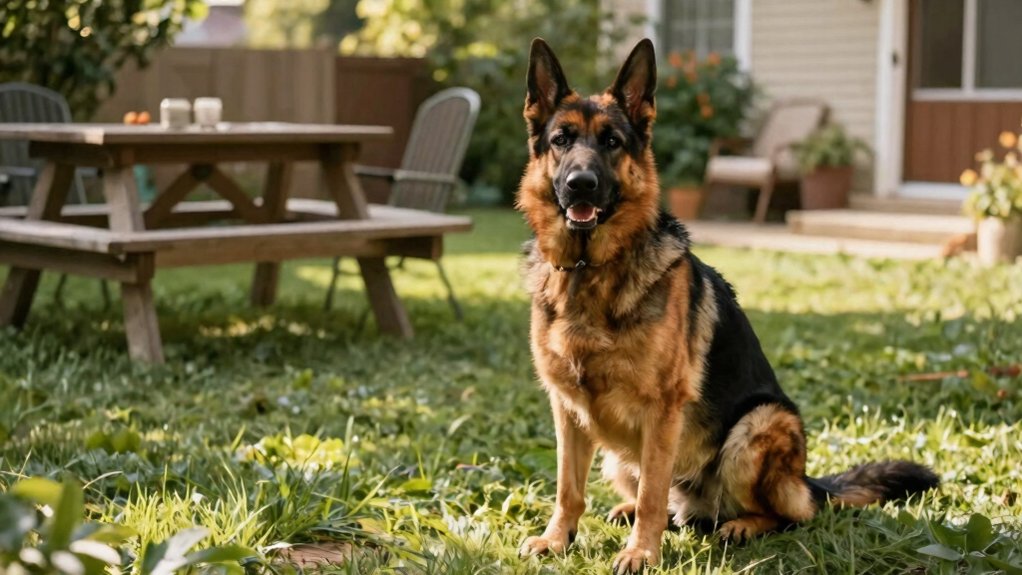
Teach bite inhibition early, because a gentle “soft mouth” and a quick “ouch” (hard bites only) followed by ending play for about 20 seconds helps your dog learn biting doesn’t pay.
But you’ll also prevent jumping and guarding by managing triggers, like using a gate at the door, giving a “sit” default greeting, and only rewarding when all four paws stay on the floor.
If you remove attention the moment jumping starts and redirect to a chew toy during high-arousal moments, you’ll reduce rehearsals and keep family life calm and safe.
Consistent redirection to chew toys and clear boundaries give your dog appropriate outlets for its mouthing urge.

[ 1. STRONG MEATY TASTE ] : Specially prepared beef taste that dogs are almost irresistible and will love to chew on it

Dog Chew Training Set: you will receive 1 piece of dog chew sleeve, 1 piece of dog training stick, 1 piece of dog chew rubber ball and 1 piece of dog chew tug toy, good combinations to meet your needs, suitable for training dogs

Glue‑free pineapple‑shaped chew toy with realistic textured surface, no paint applied. Measures 7.1" height × 4.2" diameter, weighs 320g, features a hollow cavity for stuffing treats. Suitable for adult dogs weighing over 40 pounds
Teach Bite Inhibition Early
Start bite-inhibition training on day one, because the easiest way to stop nipping, jumping, and future guarding is to teach your puppy exactly what “no teeth on people” means.
Set clear no-teeth rules from day one.
Make every family member agree, so hands, feet, and clothing never touch teeth.
Have a leash on during greetings, it helps you stop mouthing fast and guide calmer choices.
When your puppy bites hard, give a sharp yelp or “ouch,” then go still, and step back.
Afterward, use a 10–30 second ignore or brief time-out, then redirect to a chew toy.
Manage Jumping Guarding Triggers
Jumping, nipping, and guarding often flare up when your German Shepherd gets worked up by people, food, or “their” stuff.
First, manage the space: store bones and chews, use separate beds and bowls, and set feeding stations behind visual barriers.
When guests arrive, limit prize items.
Crate or gate them during eating.
Next, train anti-jumping: in low distractions, mark “sit” the instant paws touch down, reward fast, then withdraw attention if they jump, returning only when all four paws are down.
For guarding, desensitize from far away, then step closer, toss higher-value treats, and always trade objects using “drop it,” “leave it,” and recall.
Socialization Rules for Strangers and Other Pets
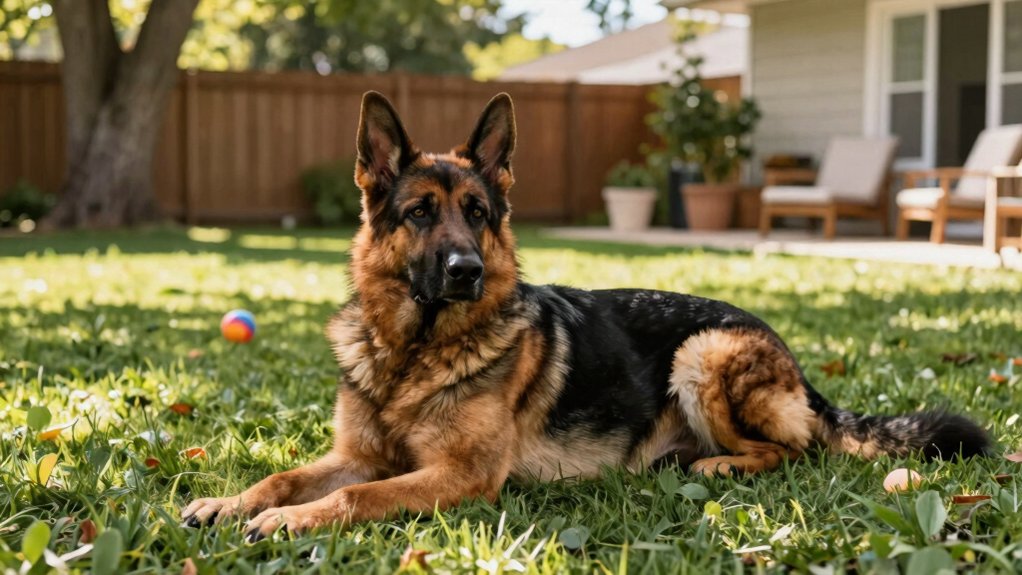
When you socialize your German Shepherd with strangers and other pets, you set the tone for how calm and safe they feel in real life. Start early, between 3–5 weeks to 14–16 weeks. Heavy panting during an introduction can signal excessive panting from stress, so increase the distance and end the session on a calm note.
During the first three months, plan one to two low-pressure new experiences daily.
For strangers, begin 20+ feet away, reward calm “sit” or looking away. Gradually close by 2–3 feet over sessions.
Ask strangers to avoid eye contact, move slowly, and toss treats first.
For other dogs, observe from distance, then meet one relaxed dog on neutral ground, leashed.
For cats, scent-swap, use barriers, then separate rooms.
Can German Shepherds Handle Busy Households and Visitors?
German Shepherds often do well in busy homes with kids and frequent visitors, especially when you’ve already put good socialization on the schedule for strangers and other pets.
With steady temperament, they stay loyal, confident, and less likely to panic when routines shift.
They may watch quietly at arrivals, then settle once guests feel accepted.
That said, you must manage protection.
Guarding can flare during loud, rough play, or when visitors enter your “territory,” like your home or car.
To keep everyone safe, set clear rules, prevent pushing, and supervise door greetings closely—especially during busy times.
If guarding ever escalates to snapping or biting, consult a professional behaviorist promptly, since aggression can stem from fear, pain, or poor socialization.
Daily Exercise and Mental Work They Need to Thrive
You’ll want to plan on more than two hours of daily exercise for your German Shepherd, with vigorous walks and play in 2–4 outings so they stay balanced at home. Their needs shift with age and activity level, so adjust these totals for a young puppy or an older dog.
And don’t forget mental work—aim for 30–45 minutes of enrichment games like puzzle feeders, scent searches (finding hidden smells), and short tracking sessions that keep their brain busy.
But make it structured: do 15–20 minutes of training with clear commands each day, because regular practice turns all that energy into calm, confident behavior.

Four Challenges & Levels 1-3: Multiple games with a flip game and a linear track sliding game, all requiring dogs to learn steps and find treats. This puzzle is designed to be more fun and difficult, with more unique ways to play. It can enhance your dog's IQ and train their sense of smell

The toy features differently sized spheres at both ends. As your dog pushes the toy, it moves within a fixed area, allowing continuous play and interaction. The food dispensing holes on both sides release treats or kibble as the toy rolls, providing your dog with food rewards and keeping them entertained while engaging both their mind and body.

【Size】: L9.44" * W9.44"* H1.14" suitable for cats, puppies and small dogs.
Daily Exercise Over Two Hours
If your German Shepherd is an adult, plan on more than just a quick stroll—most need at least 2+ hours of total daily exercise to match their energy and stamina.
And yes, that’s often 120–180 minutes of structured movement.
Don’t cram it into one session.
Instead, spread it across 2–4 outings.
Aim for brisk leash walks, jogging, hiking, or swimming, then add off-lead running in a secure area.
This way you meet their high working-dog baseline, and you help prevent restlessness.
If you’re their caregiver, you’ll feel the difference fast—calmer home, happier tail.
Consistent Mental Enrichment Games
And because a German Shepherd is a working breed, you’ll need more than walks to keep their brain happy—aim for three short mental enrichment sessions each day, about 10–15 minutes each.
Do this like you’re helping them “clock in” mentally. Mix puzzle, scent, interactive, and simple environmental games.
Treat-dispensing puzzles, muffin-tin searches, and shell games sharpen problem-solving, focus, and memory.
For scent, play “find it,” trail-following with a sock and smelly treats, and backyard searches.
Add hide-and-seek, toy-naming, or a tidy-up game.
Keep sessions varied to prevent boredom, pacing, and whining.
Training Sessions With Structure
To keep your German Shepherd calm, focused, and pleasant at home, you’ll want training that runs like a daily routine, not random bursts.
Start with 10–15 minutes of obedience each day, using the same commands and house rules from everyone.
Keep it positive, reward often, and use sparing, well-timed corrections.
And don’t skip the body work: plan 1.5–2 hours of brisk exercise for adults, split into multiple sessions—morning 30–45 minutes, evening 30 minutes for drills.
Add heeling, sit–stay, recall, and controlled leash walking.
When you’re consistent, you cut barking, chewing, and weight gain.
Common Behavioral Red Flags in Untrained German Shepherds
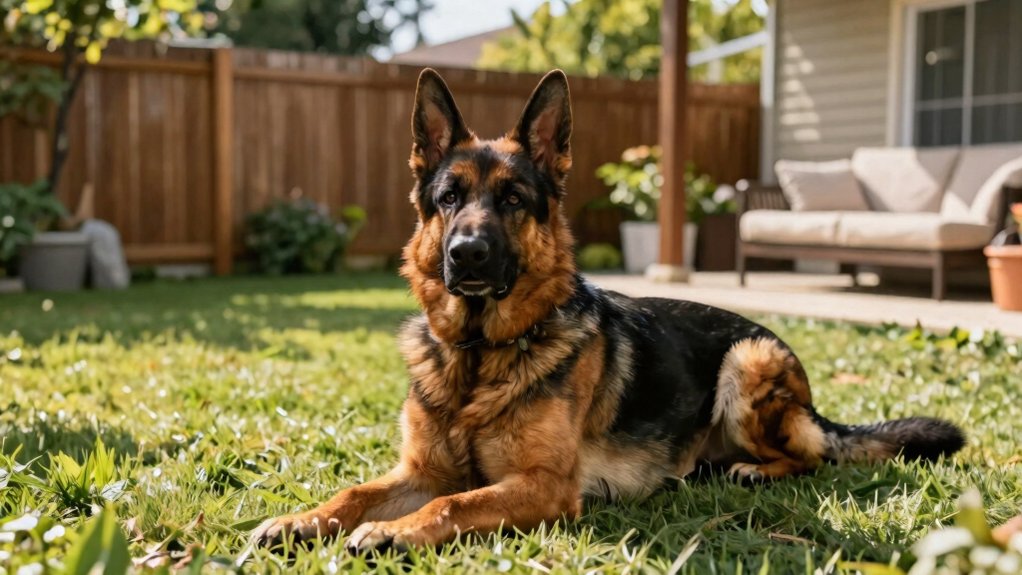
Many owners notice big “red flags” in untrained German Shepherds long before anything looks dangerous, and it usually starts with anxiety. You may see chronic hyper-vigilance, low confidence, and fear-based reactivity. And that can turn into machine-gun barking, lunging, whining, or biting when overstimulated.
But look closer. Barrier frustration at fences or doors often sparks aggressive displays when triggers get blocked.
Some dogs become territorial, guarding food or toys with growls and stiff posture, risking bites to visitors.
Others show separation anxiety, barking or destroying things after you leave.
Also watch herding drive—chasing, nipping, darting after animals—especially if they roam.
Recognizing what sets off sudden aggression toward owners is the first step, since triggers such as pain, fear, or being cornered often explain the behavior.
Choosing a Responsible Breeder for Stable Temperament
Before you commit to a German Shepherd puppy, you’ll want to shop the breeder like you’re hiring a long-term partner—because temperament starts with breeding choices.
Choose someone focused on stable temperament and health, not coat color or trends. Look for strong nerves, confidence in new places, and predictable behavior. Also ask whether the breeder’s dogs come from working lines, since bloodline can influence drive and energy level as well as temperament.
A responsible program rejects dogs with weak nerves, excessive shyness, uncontrolled aggression, or chronic suspicion.
Next, ask about structured puppy aptitude testing around 7–8 weeks, like Volhard.
Use outside evaluators, plus ENS and ESI, and then match results to your lifestyle.
That teamwork helps you welcome a steady, family-ready dog.
Best Age and Setup for Adopting With Kids at Home
Once you’ve picked a breeder who puts temperament and health first, the next step is timing and setup—because even a great German Shepherd can struggle if the fit isn’t right.
Choose the right breeder, then timing and setup—because even a great German Shepherd can struggle if the fit isn’t right.
Aim to adopt puppies at 8–12 weeks, during the 3–16 week socialization window, then schedule calm, positive, supervised kid time.
If your kids are school-age and follow rules reliably, you’ll see better success.
With toddlers, choose a calmer adult (not a high-drive adolescent).
Create a crate or gated retreat, set kid-only zones, use non-slip floors, and keep toys and food separate—so you can supervise, consistently, with confidence. If your German Shepherd is a jumper or climber, a tall dog gate will keep it contained where standard barriers fail.
Health Risks and Costs Every Family Should Plan For
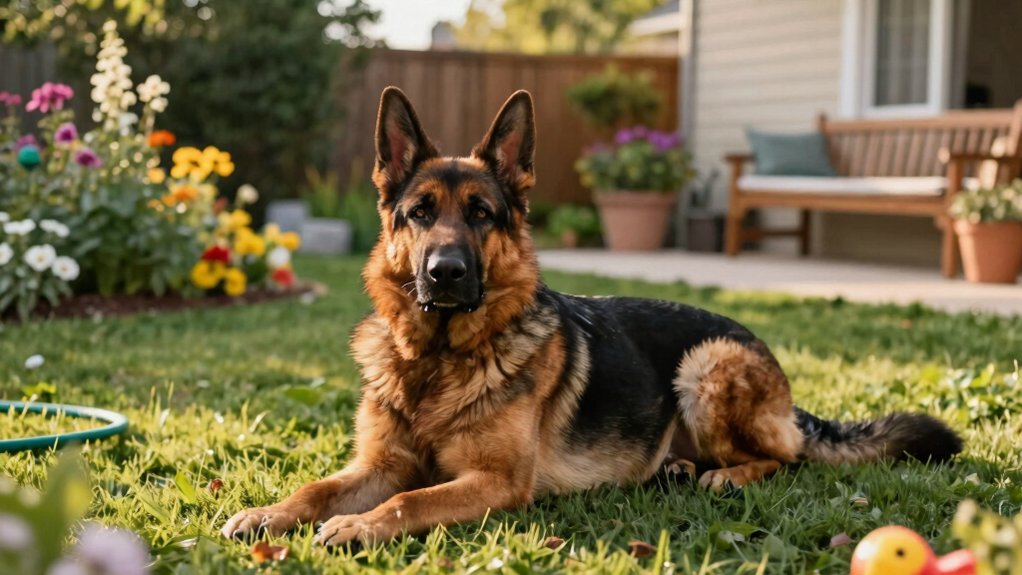
When you picture a German Shepherd in your home, don’t just plan for the fun days—plan for the medical ones too. In one UK study, 63.43% had at least one disorder in a year.
That means you’ll likely budget for repeat vet visits and long-term care. Hip and elbow dysplasia, plus spine issues, are common.
Think pain control, joint support, weight help, physical therapy, and sometimes surgery.
Degenerative myelopathy, a spinal nerve disease that can cause paralysis, affects about 14–15%. Epilepsy also may require daily meds and blood checks.
Set aside funds early, because costs add up fast.

Perfect tasty blend of Glucosamine, Chondroitin, Perna Canaliculus, and Omega-3 Fatty Acids. Dogs love the taste. They think it is treat time!

MADE FOR GERMAN SHEPHERDS: a hip and joint supplement dosed by weight for a breed built to work. Devoted German Shepherd parents get a simple daily routine, 1/2 to 2 soft chews a day, from active adult years to senior. One 60 count jar delivers a full month of daily joint support at the large-breed dose.

Health Supplement for Dogs: VetIQ hip and joint chews for dogs are soft and a great way to support mobility, whether they love running, jumping, playing, or resting; They suit senior pets or those who need extra support staying active & comfortable
Safety Tips for Supervising German Shepherds With Children
To keep everyone safe and happy, you need active supervision, not just “keeping an eye on things.”
That means you stay close enough to step in fast, and you watch both your German Shepherd and your child the whole time they’re together—indoors or outdoors, every single visit, even if your dog seems friendly.
Stay close and be ready to step in fast—watch your German Shepherd and child together on every visit, indoors or outdoors.
No solitary time for young kids with your dog, ever.
If you cook, talk on the phone, or leave the room, separate them with closed doors or barriers.
Watch for early stress signs, then interrupt.
Give your dog a child-free retreat.
Don’t disturb eating, treats, toys, or sleep.
Keep children away from mothers with puppies.
Frequently Asked Questions
Are German Shepherds Naturally Good With Strangers, or Wary by Default?
You’ll find German Shepherds are naturally wary with strangers by default: they’re aloof, not automatically hostile. Proper socialization helps them stay calm, observe first, and accept new people safely—so you can serve your family with confidence.
Do German Shepherds Bark Excessively, and How Can Families Reduce It?
Do German Shepherds bark excessively? Not always—but they can, especially with boredom or guarding triggers; like a vigilant alarm. You’ll reduce it by training “quiet,” rewarding silence, desensitizing triggers, and giving daily exercise and enrichment.
How Much Training Should a Busy Family Expect Weekly?
Expect 2–4 hours weekly of formal training plus daily 10–15 minutes obedience or tricks, and a weekly 30–60 minute class or focused session. You’ll also add 30–60 minutes micro-refreshers during walks. Consistency matters.
Can Two German Shepherds Coexist Peacefully in One Household?
Yes, two German Shepherds can coexist peacefully—research shows some bite-risk studies flag the breed, so vigilance matters. You’ll succeed with temperament matching, neutral-territory intros, separate resources, structured routines, and consistent positive training.
What Signs Suggest a German Shepherd Isn’T Suited for Homes With Kids?
You should watch for ongoing child-directed growling or nipping, tense staring, hiding or refusal, circling and “herding,” resource guarding over toys or food, pinning on contact, guarding spaces, and ignoring child-given cues—especially without calm, consistent training.