You get a German Shepherd Rottweiler mix known as a Shepweiler. You’ll see deep loyalty and strong guarding drives. They bond closely to you but need early socialization. Channel their watchful nature with consistent, reward-based training. You must manage alert barking and protectiveness using structured tasks and impulse control. Their powerful build demands 90–120 minutes of daily activity to stay calm. Keep training sessions short and positive for best results. Read on to discover more about their care needs.
Swift Summary
- Combines deep loyalty and protective instincts from both parent breeds to guard homes effectively.
- Requires early socialization during the first 16 weeks to prevent fear-based guarding.
- Needs structured, reward-based training to channel working drive into controlled tasks.
- Demands 90 to 120 minutes of daily physical and mental activity.
- Exhibits alert barking that must be managed through routine and positive reinforcement.
What Is a German Shepherd Rottweiler Mix?
When you combine a purebred German Shepherd with a purebred Rottweiler, you get a large mixed-breed working dog commonly known as a Shepweiler. This rottie shepherd blends herding and guarding drives, creating a loyal companion for those dedicated to serving others.
As you explore a rottweiler german shepherd mix puppy, you’ll find intelligence and protective instincts ready for training. The german shepherd x rottweiler cross offers a powerful partner, while a rottweiler cross german shepherd brings strength and devotion to your service work.
Many seek rottweiler x german shepherd puppies for sale to join their teams. You might wonder, can you breed a german shepherd with a rottweiler? Yes, this intentional pairing produces versatile dogs enthusiastic to work alongside you, combining stamina, obedience, and unwavering loyalty for meaningful service roles. Large breeding challenges arise when parent breeds differ greatly in size, so responsible breeders carefully match dogs of similar build.
These crosses first appeared in the late 1990s as dogs bred for protection work.
Is This Mix Right for Your Lifestyle?
Because this mix thrives only in active, experienced homes that commit to daily intensive exercise and structured training, it won’t fit a low-energy or low-commitment lifestyle. You must dedicate one to two hours daily for structured walks, off-leash play, and mental enrichment like obedience drills or puzzle feeders.
If you serve others through active community work or family sports, this energetic companion matches well. However, your household needs secure fencing and consistent routines. A well-fitted dog collar with current identification tags provides everyday control and comfort during the daily walks this breed requires.
Without experienced handling, you risk developing over-protective behaviors or reactivity toward strangers and other pets. Young children require supervised interactions due to the dog’s size and power.
Travelers must guarantee reliable caretakers maintain exercise schedules during absences. This demanding breed suits those committed to providing purposeful activity and clear boundaries for your loyal partner.
For safety, you must invest in daily exercise training due to the breed’s high energy levels.
Guardian Traits and Loyalty Explained
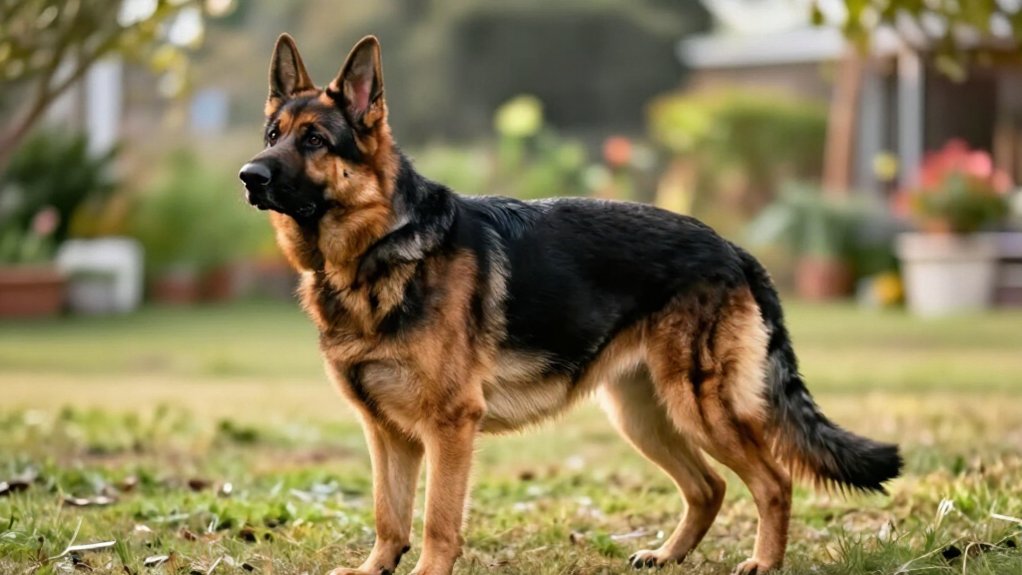
While these mixes combine intense loyalty with strong protective instincts, they create deeply bonded, highly watchful guardians in many homes. You’ll notice they often form a primary attachment to you while remaining devoted to your whole household.
Their working heritage drives them to follow family members closely, seeking constant physical proximity. Expect alert barking at strangers and a natural instinct to position themselves between you and perceived threats.
This wariness means they’ll carefully evaluate newcomers before warming up. While their muscular appearance deters intruders, proper socialization prevents unchecked vigilance from becoming reactive. Like their German Shepherd parent, this mix benefits from daily exercise that also supports calmer behavior around strangers.
You must guide them to distinguish balanced guarding from fear-based aggression. With clear boundaries, they channel their fierce devotion into reliable service, protecting your children and home without jealousy or resource guarding issues. Both parent breeds rank among the top 10 most popular breeds in the U.S. according to AKC data.
Physical Size and Strength Overview
You’ll notice this mix boasts a muscular large frame that combines the Shep’s agility with the Rottie’s bulk. Compared with Cane Corsos and Mastiffs, this mix generally falls into a lighter weight class while still carrying substantial guarding presence.
Their robust bite force reflects the powerful jaw structure inherited from both parent breeds.
Expect to manage this strength with consistent training as their size and power demand responsible handling. Their large stature requires supervision, especially around young children, due to their size and instincts.
Muscular Large Frame
When you look at a German Shepherd Rottweiler mix, you see a large, powerfully built dog that typically weighs between 70 and 115 pounds and stands 22 to 27 inches at the shoulder. You’ll notice broad chests, strong shoulders, and powerful hindquarters built for service and endurance.
This muscular frame isn’t just impressive—it’s functional, designed for pulling, guarding, and sustained work. You’ll see how the Rottweiler’s dense muscle meets the Shepherd’s elongated strength, creating a stable, resilient companion.
To serve well, you must support this build with proper nutrition, joint care, and fitted gear. Their size demands reinforced flooring and secure fencing, but their strength offers unmatched loyalty and capability when trained with purpose and care.
To support this build, owners should avoid rapid joint growth by ensuring gradual development through controlled nutrition.
Robust Bite Force
Because bite force directly reflects the dog’s physical power, you’ll find that your German Shepherd Rottweiler mix combines strong jaw pressure from both parents. Expect a working range between mid-200s and low-300s PSI, inheriting the Shepherd’s 238 PSI capability and the Rottweiler’s robust 328 PSI grip.
This structural advantage arises from blending the Shepherd’s mesocephalic muzzle with the Rottweiler’s broad, muscular cranial mass. Such power guarantees you can effectively serve others through protection tasks requiring sustained clamping pressure.
Unlike human jaws averaging 160 PSI, your dog exerts markedly higher force, sufficient to secure intruders or manage livestock confidently. This reliable strength empowers you to fulfill guardian duties while maintaining control.
Always channel this potential responsibly through consistent training to ensure safety for those you serve.
Temperament and Bonding With Families
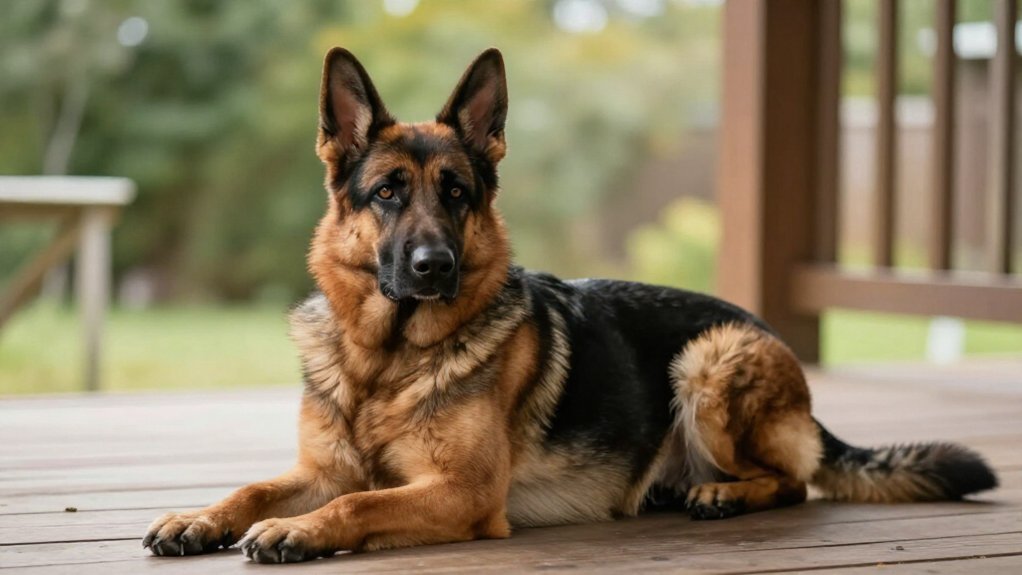
As you welcome a German Shepherd Rottweiler mix into your home, you’ll find a loyal, protective companion dedicated to guarding your family. This intelligent dog forms deep bonds, often attaching closely to you while remaining devoted to everyone. Inherited from its German Shepherd parent, this mix often displays strong protective instincts that make it watchful around unfamiliar people and surroundings.
You’ll notice their fun-loving warmth indoors, though they crave constant social interaction. Leave them alone too long, and separation anxiety might develop.
Protective instincts make them excellent guardians, but you must manage their potential jealousy toward favored humans. They generally get along with children raised together, yet their large size poses risks to toddlers. You may see herding nips requiring immediate guidance.
With proper early socialization, they can coexist peacefully with other pets. Strangers initially face a reserved stance, but consistent introductions help them relax.
Their energy demands active engagement, so prepare your home for an enthusiastic servant dedicated to protecting your household.
Essential Training Needs for Puppies
Before you bring your German Shepherd Rottweiler mix puppy home, prepare for a structured training plan that balances obedience, impulse control, and safe physical development. Keep sessions short and reward-based. Use early months for name recognition, sit, and leash basics.
Practice waiting at doors and leave-it cues to curb impulses. Limit exercise to five minutes per month of age twice daily to protect growing joints. Avoid forced running or repetitive jumping.
Dedicate time daily for puzzle feeders and scent work to channel their working drive. Teach bite inhibition through structured play early. Stick to positive, force-free methods.
Consistent household rules reduce confusion. Aim for ninety to one hundred twenty minutes total daily physical and mental activity. This approach builds a reliable companion ready to serve others safely. Mixing in varied physical and mental activities helps these dogs use their energy and avoid boredom.
Socialization Strategies for Success
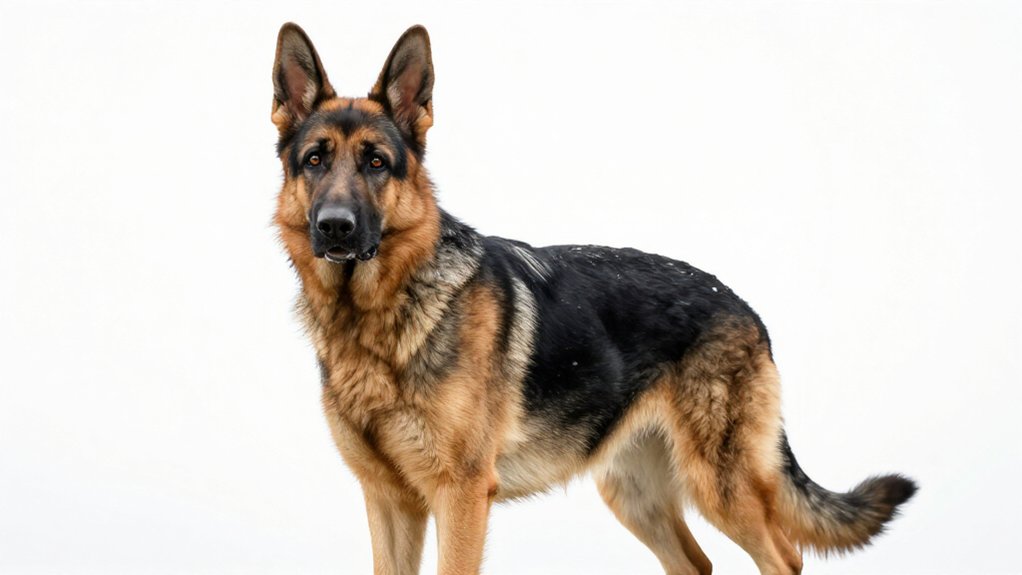
To set your German Shepherd Rottweiler mix up for success, capitalize on their critical socialization window between 3 and 16 weeks by planning structured, force-free exposures daily.
You’ll help your puppy serve others better by ensuring they meet dozens of people with different appearances and energies. Keep interactions short, around two to five minutes, to build confidence without causing overwhelm.
Arrange frequent visits from friends and family so visitors feel normal. When introducing other dogs, choose calm adults for supervised play to teach bite inhibition.
Expose your pup to cats or livestock early to prevent predatory chasing. Take them to varied environments weekly, from busy sidewalks to quiet trails. German Shepherd lines have diverged over the past century, so a puppy with working-line dogs in its ancestry may show stronger drive that calls for extra structured outlets.
This daily work lays the foundation for a calm, reliable companion who serves your community.
Managing Barking and Protectiveness
Although German Shepherd Rottweiler mixes bark loudly and deeply, their vocalizations usually stem from perceived threats or unusual sounds rather than random noise. You manage this by teaching a “quiet” cue using rewards after silence. Apply consistent, positive-reinforcement methods to set clear rules.
Use privacy film on windows to block visual triggers, and play white noise to mask outside sounds. Establish a predictable daily routine to reduce stress-driven barking.
Channel their protective instincts into structured tasks like obedience or scent work. Implement a “three-bark rule” followed by an “enough” cue to create predictable alert patterns. Reward calm behavior once threats pass.
Without structured training, unmanaged guarding often evolves into nuisance barking and destructive habits, undermining your service to the household. Excessive barking, howling, or whining often signals an underlying cause, such as boredom, anxiety, or territorial instinct, so identifying that cause is the first step toward lasting change.
Exercise Requirements for Active Homes
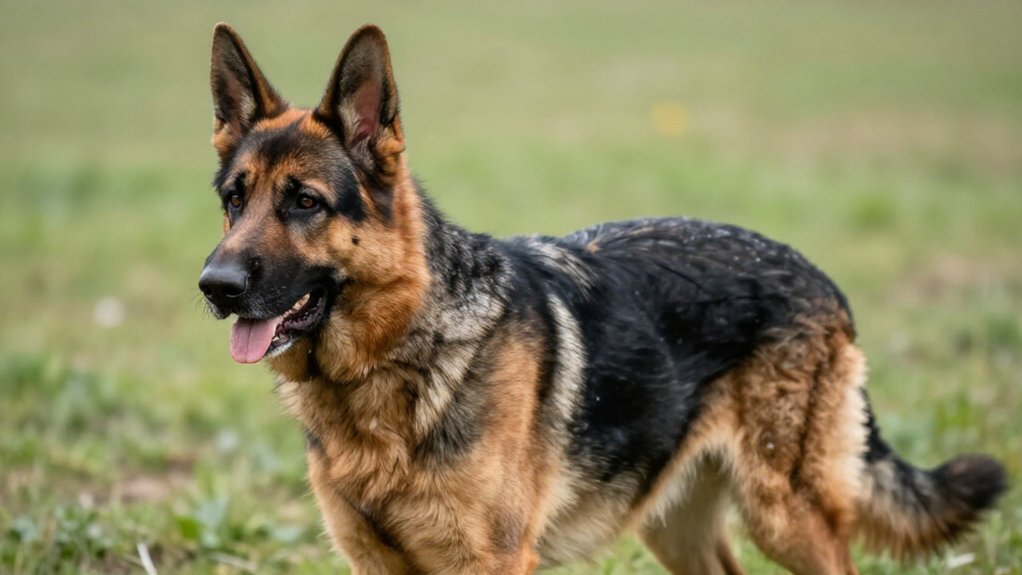
You need to commit to daily aerobic activities like brisk walking or running to meet your German Shepherd Rottweiler mix’s energy demands. Its exercise needs by age also change over time, so a young puppy requires shorter, gentler sessions than a fully grown adult.
Beyond just burning calories, you should incorporate structured task-based work such as agility or tracking to satisfy their drive.
This combination keeps your dog physically fit and mentally engaged in an active home.
Daily Aerobic Activities
Since your German Shepherd Rottweiler mix is a high-energy working cross, you’ll need to commit to 60–120 minutes of daily aerobic activity to keep them healthy and happy.
Prioritize brisk leash walking and hiking for foundational cardiovascular fitness. Supplement these sessions with jogging on suitable surfaces or vigorous play like fetch in secure, fenced areas.
Swimming offers a joint-friendly option for your large, heavy-boned companion.
Integrate dog sports like agility or flyball to sustain aerobic effort.
Aim for two outings daily, splitting your time between morning and evening sessions.
Avoid intense running until growth plates close around 18 to 24 months.
This commitment fulfills their physical needs while deepening your bond through shared movement and active service.
Structured Task-Based Work
To keep your high-drive German Shepherd Rottweiler mix engaged and well-balanced, pair daily aerobic exercise with structured task-based work that targets their natural drive for jobs and clear expectations.
You’ll see they thrive when channeling guarding instincts into predictable responses like heelwork, recall, and impulse control. Aim for 15–30 minute obedience sessions, 4–5 times weekly, plus 5–10 minute micro-sessions around daily routines to hit 30–60 minutes mental work.
Nosework and scent games provide calming focus while building problem-solving skills. Hide treats or oils in boxes for simple games, then increase difficulty as they grow. Puzzle feeders and snuffle mats offer lower-impact task-based work on lighter days.
Job-based activities like cart-pulling, herding trials, or advanced trick work should occur 2–3 times weekly. These structured “jobs” deliver substantial mental load through complex cues and varied environments.
Clear, predictable task schedules reduce boredom-driven behaviors like destructive chewing, digging, and excessive barking—common when high-drive dogs assign themselves jobs.
Common Health Risks to Watch
As a German Shepherd Rottweiler mix owner, you face a heightened risk for serious health issues like hip and elbow dysplasia, degenerative myelopathy, and gastric dilatation-volvulus.
You must screen your dogs early to prevent passing these conditions to puppies you hope to serve others with.
Watch for rear-limb weakness that signals spinal disease requiring immediate care.
Manage their weight and limit vigorous exercise after meals to reduce dangerous stomach twists.
These deep-chested guardians need proactive veterinary visits to detect arthritis before it disables them. Early signs of hip dysplasia include a bunny-hopping gait, reluctance to climb stairs, and stiffness after rest.
Understanding these risks helps you keep your loyal companion healthy so they can continue protecting families effectively.
Your dedication to preventive care ensures your dog lives longer and serves better.
Always consult experts to maintain their strength and mobility throughout their essential years.
Living in an Apartment
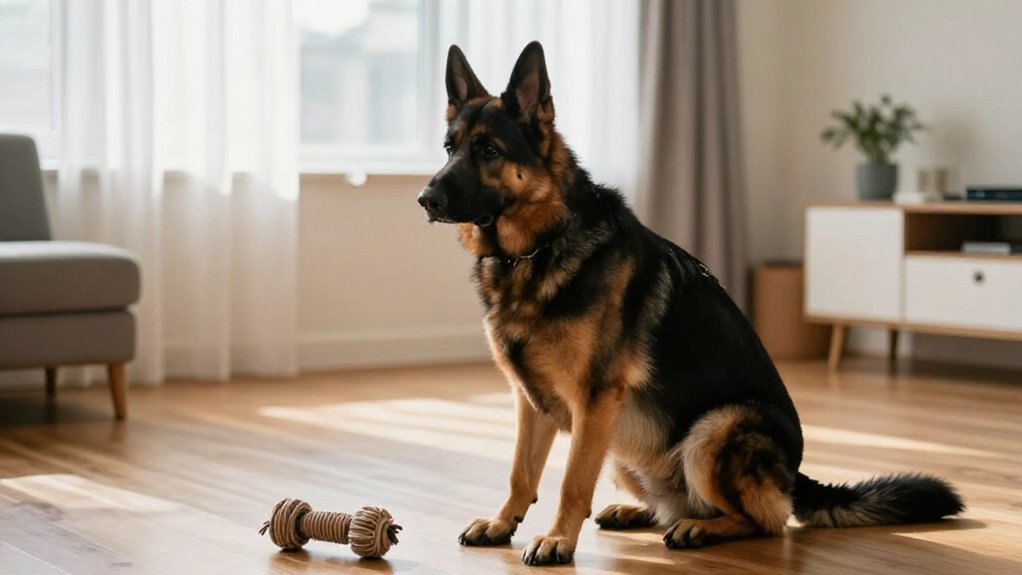
You must commit to at least two hours of daily exercise to keep your German Shepherd Rottweiler mix happy in an apartment.
You’ll also need to secure access to a fenced outdoor area since they require space to run and play vigorously.
Without these strict requirements, your dog may develop destructive behaviors from boredom and excess energy.
Exercise Needs For Apartments
If you live in an apartment, don’t underestimate the exercise needs of a German Shepherd Rottweiler mix. These high-energy guardians require 90–120 minutes of daily physical and mental activity to stay balanced.
Plan two brisk walks totaling 60–90 minutes, plus short indoor training sessions. Use nearby parks for off-leash running and incorporate agility or tracking work for strength.
On hard surfaces, keep jogging moderate to protect their joints. Add 15–30 minutes of mental enrichment using puzzle feeders, scent games, and obedience drills to prevent boredom.
For puppies under 18 months, break exercise into shorter bouts to safeguard developing bones.
With consistent, structured effort, you can meet their guardian instincts even in confined spaces.
Secure Space Requirements
Since your German Shepherd Rottweiler mix is a large guardian breed, you’ll need to secure every entry point and clear out cluttered areas. Cramped floors stress your dog, so maintain clear walkways and defined resting zones to reduce hypervigilance.
Designate a low-traffic spot away from the entry door to limit territorial arousal and continuous monitoring. Open layouts prevent accidental collisions for your eighty-pound companion.
You must reinforce doors against hallway noises and install lockable windows or balcony barriers, as your athletic dog can clear five-foot obstacles. Solid mesh prevents falls when reacting to outdoor stimuli.
Place interior gates near the entrance to stop charging during visitor arrivals. Use rugs and acoustic panels to dampen alert barking.
Finally, keep your dog away from shared walls and limit sightlines to the door to minimize confrontational stances.
Feeding and Nutrition Tips
Feeding your German Shepherd Rottweiler mix right means sticking to large-breed formulas that match their 80–100 lb frame and activity level. Choose high-protein, nutrient-dense diets to support their size and working-level energy.
For puppies, select food with roughly 22% protein and 8% fat to guide controlled growth. Adults typically need around 18% protein, though highly active dogs benefit from 26–30%. Look for AAFCO-approved formulas with controlled calcium-to-phosphorus ratios to protect developing joints.
Feed adults three to six cups daily, split into two meals to reduce bloat risk. Puppies need four small meals initially, tapering to three.
Always use feeding charts as a baseline, then adjust based on body condition. Regular monitoring guarantees steady growth without excessive weight gain.
Grooming Needs Overview
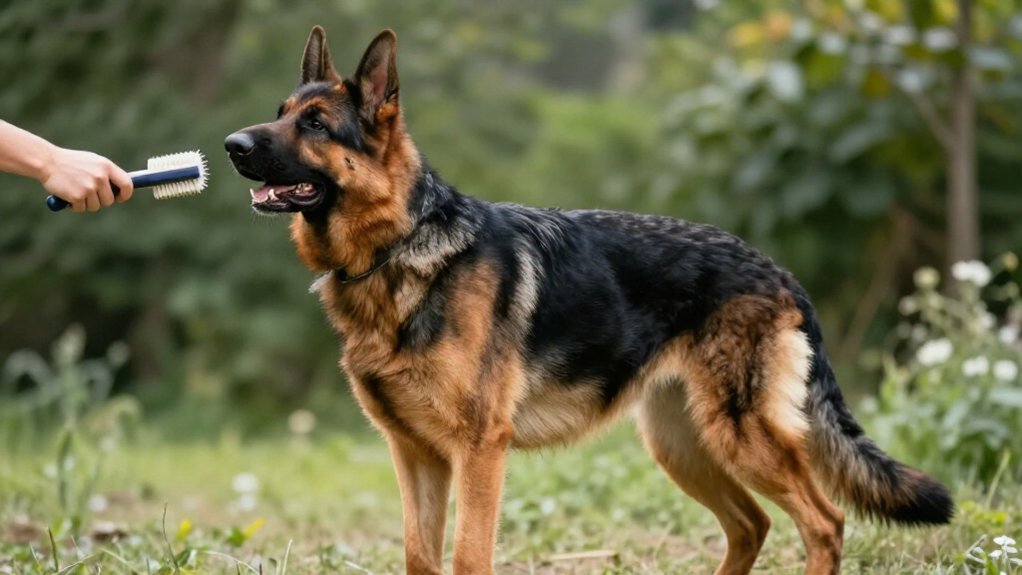
You’ll need to brush your mix several times a week to handle their thick double coat and manage shedding.
During spring and fall blows, you should switch to daily grooming with an undercoat rake to keep loose hair under control.
Keeping up with these basics will save you from a mess around the house and keep your dog comfortable.
Coat Care Basics
Because your German Shepherd Rottweiler mix inherits coat traits from both parents, its grooming needs vary by coat type. You’ll brush medium to long coats 2–3 times weekly to prevent matting and health, while short coats need rubber curry brushing 2–3 times weekly for skin health.
Balanced medium coats require 3–4 brushings weekly with an undercoat rake and slicker brush. Longer, feathered coats need daily pin brushing and combing behind ears and hindquarters. Always distribute natural oils during brushing.
Bathe double coats every 6–8 weeks, short coats every 8–12 weeks using pH 6.5–7.5 shampoos. Over-bathing damages skin. Use undercoat rakes for deep cleaning, slicker and pin brushes for tangles, and spot-clean when possible.
Grooming detects skin issues early and keeps your guardian looking and feeling their best.
Shedding Management Needs
Your German Shepherd Rottweiler mix sheds year-round with two intense seasonal blows in spring and fall, leaving moderate to heavy amounts of loose hair around your home.
To serve your guardian well, brush their coat two to three times weekly, increasing to daily during molting. Use an undercoat rake for double-coated Shepweilers or a rubber curry for shorter coats. This routine minimizes household hair and supports healthy skin by removing dead fur before it mats.
Avoid excessive bathing, as stripping natural oils worsens dryness. Instead, bathe every six to eight weeks with pH-balanced shampoo.
For deep maintenance, schedule professional grooming every eight to ten weeks.
Consistent care reduces cleaning demands, ensuring your companion remains comfortable while you confidently welcome guests into a tidy home.
Advanced Jobs and Tasks
While your German Shepherd Rottweiler mix thrives in complex working roles, you’ll need to match its high drive with specialized training to release its full potential in advanced jobs.
You can leverage its protective instincts for property guarding, but always use reward-based protocols to guarantee reliable, safe performance around visitors.
Its intelligence and endurance support law enforcement tasks like tracking or perimeter security, yet you must establish solid bite inhibition before any tactical work.
If you aim to serve others, its focus aids mobility assistance or medical-alert duties, requiring consistent daily practice.
You might also channel its powerful scenting ability into search and rescue missions, helping locate missing persons in rough terrain.
How to Prevent Aggression?
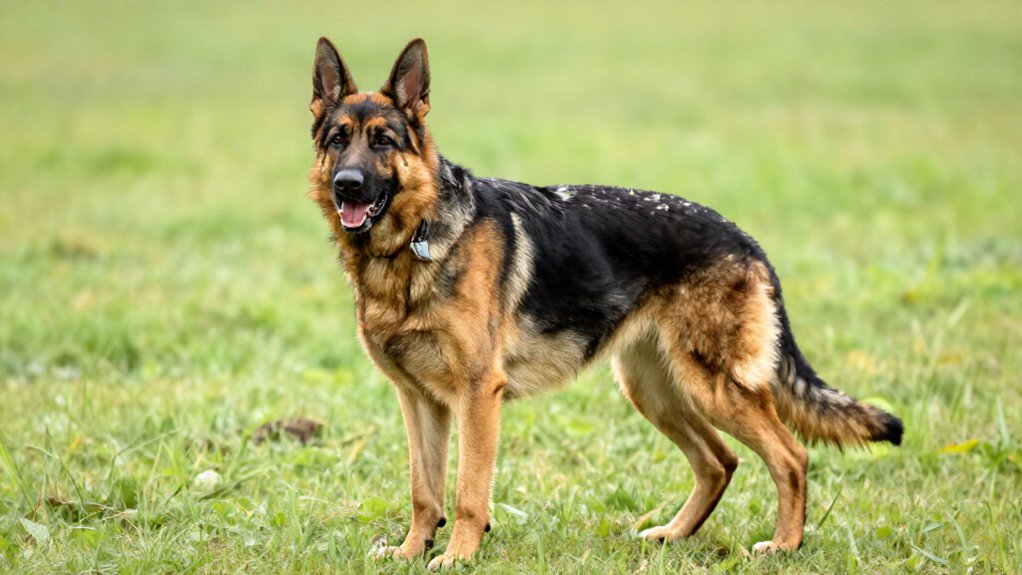
Unless you prioritize early socialization and force-free training, your German Shepherd Rottweiler mix may develop fear-based or territorial aggression.
Expose them to diverse people, surfaces, and sounds during the critical 8–16 week window. Aim for 50–100+ positive experiences, including controlled stranger introductions to normalize visitors. Enroll in puppy classes after initial vaccinations to guide these interactions safely.
Use positive reinforcement to build trust and impulse control. Teach foundation cues like “leave it” and “wait” to manage arousal effectively. Avoid dominance-based methods or aversive tools like shock collars, which increase aggression risks.
Provide daily vigorous exercise and mental work like nose work or agility. Boredom often drives reactive behavior in these working mixes. Direct their guarding instincts into constructive tasks.
Address adolescent challenges consistently with structured rules. Seek professional intervention early if you notice warning signs like growling or stiff body language.
Cost of Owning This Mix
If you plan to bring home a German Shepherd Rottweiler mix, you’ll need to budget roughly $3,000 to $9,600+ for the first year, covering acquisition, vet care, food, training, supplies, and insurance.
Your costs vary by source, with breeders ranging from $800 to $3,500 and shelters charging $150 to $600.
Expect $200 to $450 for initial vet exams plus $300 to $700 for spay or neuter.
Gear like crates and harnesses adds $400 to $800.
Ongoing annual expenses fall between $2,000 and $4,600 for food, routine care, and preventives.
Food alone may cost $600 to $1,400 yearly.
Invest in durable toys and replace worn equipment regularly.
Allocate $200 to $300 for boarding or walking while traveling.
Planning ahead ensures you serve your companion with care and financial stability.
Finding a Responsible Breeder
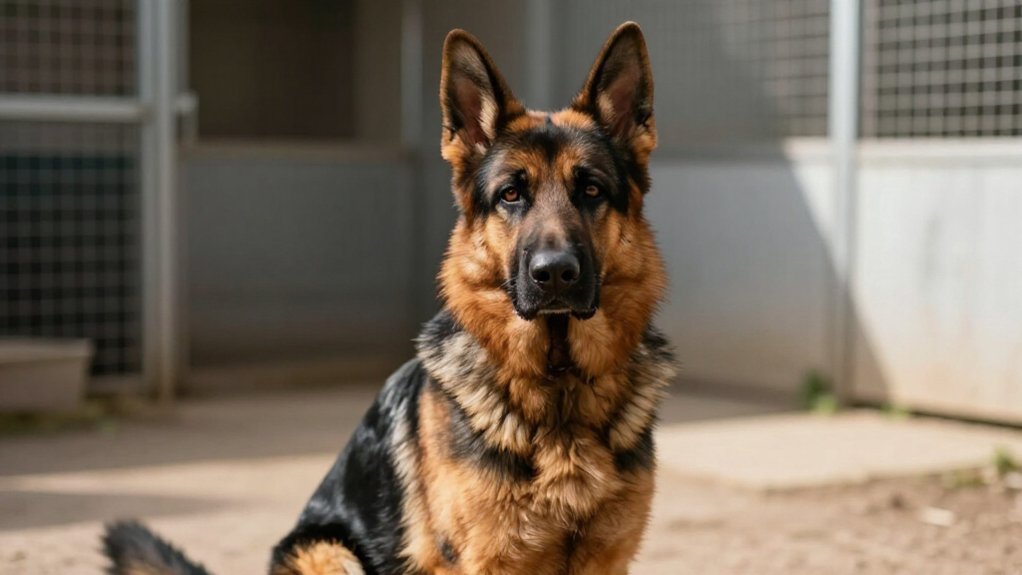
You’ll want to evaluate genetic health screenings to guarantee the breeder tests for common issues in both parent breeds. Check that they prioritize early socialization practices to raise confident, well-adjusted puppies.
Finally, verify responsible breeding standards by visiting the facility and reviewing their written contracts.
Evaluate Genetic Health Screenings
While evaluating genetic health screenings might seem intimidating, you can simplify the process by focusing on key indicators that responsible breeders prioritize.
Demand orthopedic results like OFA hip and elbow certifications for parents, especially since hip dysplasia affects roughly 20 percent of these mixes.
Request DNA tests proving degenerative myelopathy carriers aren’t bred together to prevent paralysis in puppies.
Ask about cardiac evaluations too, as Rottweiler lineage increases heart defect risks.
Look for written vet clearances confirming systemic health before breeding.
A trustworthy breeder will share verifiable registry numbers openly.
They’ll provide detailed genetic profiles covering inherited conditions specific to both breeds.
Choosing pups from thoroughly screened parents means you’re not just getting a pet; you’re ensuring a healthier companion for your community service work.
Review Early Socialization Practices
To guarantee your German Shepherd Rottweiler mix grows into a balanced guardian, prioritize breeders who actively plan socialization during the critical 3–16 week window. You need programs that begin daily handling at birth, normalizing touch through stroking and lifting.
Assure your puppy experiences household sounds like vacuums and varied surfaces like grass to build confidence early. Ask for exposure to diverse people wearing hats or uniforms, preventing reactivity to unusual appearances.
Look for controlled contact with calm adult dogs to teach appropriate communication. Breeders should introduce gentle stressors like brief separations to build resilience.
Verify that every new stimulus pairs with positive rewards like food or play. These structured experiences prepare your dog to distinguish friendly strangers from threats.
Verify Responsible Breeding Standards
If you want a healthy German Shepherd Rottweiler mix, start by verifying that breeders conduct OFA or PennHIP hip and elbow screenings, along with DNA tests for degenerative myelopathy, cardiac evaluations, and eye exams.
Confirm they screen for thyroid issues and confirm stable temperaments.
Look for breeders who avoid close inbreeding and prioritize puppies raised in loving home environments rather than large kennels.
They should provide thorough health records and detailed contracts outlining guarantees.
Check that their practices align with breed club ethics and regional welfare regulations.
By choosing a breeder committed to these standards, you help support ethical treatment of dogs.
This diligence ensures you bring home a physically sound companion ready to serve others effectively.
You can feel confident in your decision when all documentation is transparent and available for review.
Real Owner Experiences Shared
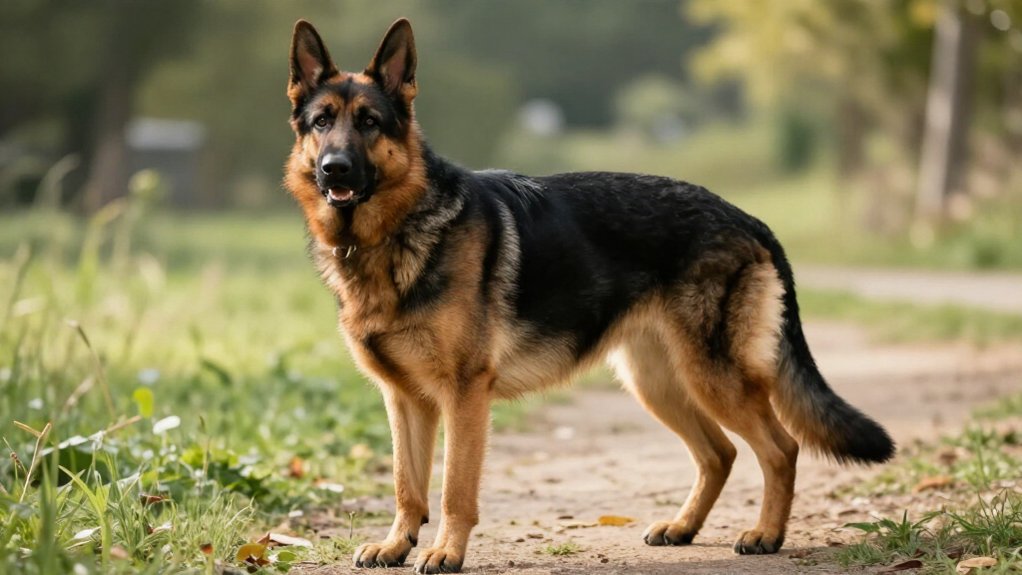
As you read real owner accounts, you’ll notice this mix often acts like a loyal shadow, sticking close to caregivers while watching the door. You’ll see them alert bark at strangers or position themselves between you and visitors.
Some owners report resource guarding around food or sleeping areas, while others share stories of the dog herding kids through heel-nipping during play.
You’ll find they thrive under consistent, positive training—short daily sessions work best. Harsh methods often backfire, triggering defensiveness.
Early socialization matters greatly; exposing your pup to varied people and places early reduces fear-based guarding.
When boundaries are clear and routine predictable, these dogs remain reliable companions. Many owners find this mix responds well when everyone in the home follows the same rules, making them easier to manage in busy households.
Frequently Asked Questions
Are German Shepherd Rottweiler Mixes Good for First-Time Owners?
No, they aren’t ideal. You’ll demand time, You, and patience. You’ll need to serve their needs with structure and love, not just keep them happy but guide them well every single day.
Do German Shepherd Rottweiler Mixes Shed Heavily Year-Round?
Yes, they shed heavily year-round. You must brush them often, vacuum frequently, and prepare for seasonal surges. Their double coats demand constant care to keep your home tidy and their skin healthy while you serve others.
What Is the Average Lifespan of a German Shepherd Rottweiler Mix?
You’ll find these mixes live 10 to 13 years on average. Your dedication to regular checkups, proper weight management, and quality care will help them thrive for the full lifespan. Your service to them brings lasting companionship.
How Much Does a German Shepherd Rottweiler Mix Puppy Cost?
You’ll pay $500 to $1,500 on average for a Shepweiler puppy, but adopt from a shelter for $150 to $500 if you want to serve others while finding your loyal companion.
Are German Shepherd Rottweiler Mixes Prone to Specific Genetic Diseases?
Yes, these guardians carry heavy genetic burdens like hip dysplasia and degenerative myelopathy. You must safeguard them through proactive testing, careful breeding, and vigilant health monitoring to ensure they serve your family with strength and longevity.