You’ll notice German Shepherds changed a lot in 100 years. Back then, you bred them as steady “moving fence” herders, and they worked close to the flock, keeping lines calm and safe. As industry grew, their jobs shifted toward police and K-9 work, so breeders leaned into nerve strength, endurance, and task focus. Later, show culture pushed a sloped-back look and more extreme angulation, while health testing and temperament screening became more strict—stick with this, and you’ll see how to spot better matches.
Swift Summary
- Early German Shepherd breeding emphasized real working performance and nerve stability over appearance, reflecting herding and police/military needs.
- Horand von Grafrath served as a historical foundation, but breeding later split into utility-first function and show-oriented conformation selection.
- Work roles shifted from “moving fence” herding to police/K-9 tracking, detection, sentry tasks, and modern service work.
- Show-ring selection pushed more hind angulation and a sloped-back topline, changing gait toward a more exaggerated, sweeping trot.
- Modern lines increasingly prioritize public-safe temperament—calm confidence, task focus, and social reliability—supported by standardized health screening.
How German Shepherds Were Bred For Work 100 Years Ago?
About a hundred years ago, you’d notice German Shepherds didn’t get bred for looks first, they got bred for real work—herding, police support, and even military duties. You’ll see the old fashioned german shepherd was a tool for service, not a fashion piece.
The traditional german shepherd model came from SV “working-dog breeding equals shepherd breeding,” where conformation stayed secondary. In german shepherd 1900 vs now terms, early SV records picked steady character and endurance.
German working-dog breeding kept the focus on performance traits such as herding ability and willingness to work rather than on appearance trends.
Breeders used proven herding types, like Thuringian speed and Württemberg strength. You follow german shepherd over time by tracking Horand von Grafrath, the original foundation, and the original german shepherd puppy type.
Even old german shepherd vs modern traits stayed function-led. Later, german shepherd 50 years ago vs now still echoes this “prove it at work” mindset. Today, this split persists between working-line German Shepherds bred for drive, training, and purpose and West German showline dogs bred mainly for structure and appearance.
What Was The Early “Moving Fence” Role?
You used your German Shepherd as a “moving fence,” so you walked that perimeter with precision—steady trotting along the invisible edge where grazing ended. You kept the flock safe and calm by pressing strays back in quietly, and you also guarded them from predators and hazards while you relocated them like fence posts on the move. Then, when you shift the flock to the next patch, you maintained the boundary on the move, so sheep didn’t spill into roads or crops that weren’t theirs. Handlers also judged a young dog’s adult size by its age, weight, and sex, much as modern owners estimate growth today.
Because it was bred for silent control, your dog could work steadily without constant noise (living fence).
Patrol Perimeter With Precision
Back when farms had big, open pastures, the German Shepherd’s job wasn’t just to “herd,” it to act like a moving fence.
You’d give steady direction, then let your dog patrol the edges of unfenced flocks, keeping a strict line around grazing land.
You should expect a continuous, energy-saving trot, often for hours, at a medium-fast pace.
And you’d plan routes along natural borders or fence lines, moving back and forth so the “barrier” advanced as the herd shifted.
This kind of precision later translated into modern police, military, and property patrol, still boundary-focused.
Guard Flock From Predators
That same “moving fence” energy you used for patrolling boundaries also showed up in an earlier duty: guarding the flock from predators.
In late 1800s Europe, wolves, bears, and coyotes threatened sheep, especially at night.
You kept watch near sleeping or enclosed flocks, staying alert for movement in low light.
You also gave early warning as predators neared camps or grazing grounds.
German Shepherd breeding favored speed, strength, trainability, and sharp senses—especially keen senses for detecting movement in the dark.
Sometimes light-colored dogs helped shepherds tell dogs from wolves at dawn.
When you stood firm, your calm presence deterred attackers.
Move Sheep As Fence
In Germany’s late-1800s sheep country, German Shepherds didn’t just “herd” like a classic crowd-control dog. You use them as a moving fence, because fixed boards weren’t always needed.
You keep big flocks—up to about 1,000—inside chosen grazing strips. You trot along the outer edge for hours, steadily, calmly, and with good stamina.
This boundary herding means you patrol the perimeter line, so sheep don’t wander into wheat or vegetable fields. When one slips toward trouble, you intervene fast, return it to the group, then keep walking.
That’s living fence work.
How Did German Shepherd Jobs Shift To Police?
German Shepherd work shifted to police duty because the breed was built for real-world control, not just farm chores. You see, as industrial life cut big sheep herding, breeders pushed intelligence, obedience, endurance, and courage.
And police needed those traits fast.
In 1899, Ghent, Belgium logged one of the earliest police dog programs. By 1910, Germany had hundreds of stations using dogs, with German Shepherds leading.
They excelled in obedience, tracking, and protection.
Then World War I proved their value for messages and sentry duty.
Afterward, many became steady K‑9 partners in daily patrols. Today, their intelligence and trainability make them a top choice for modern police and K9 units.
How Show Culture Changed German Shepherd Conformation?
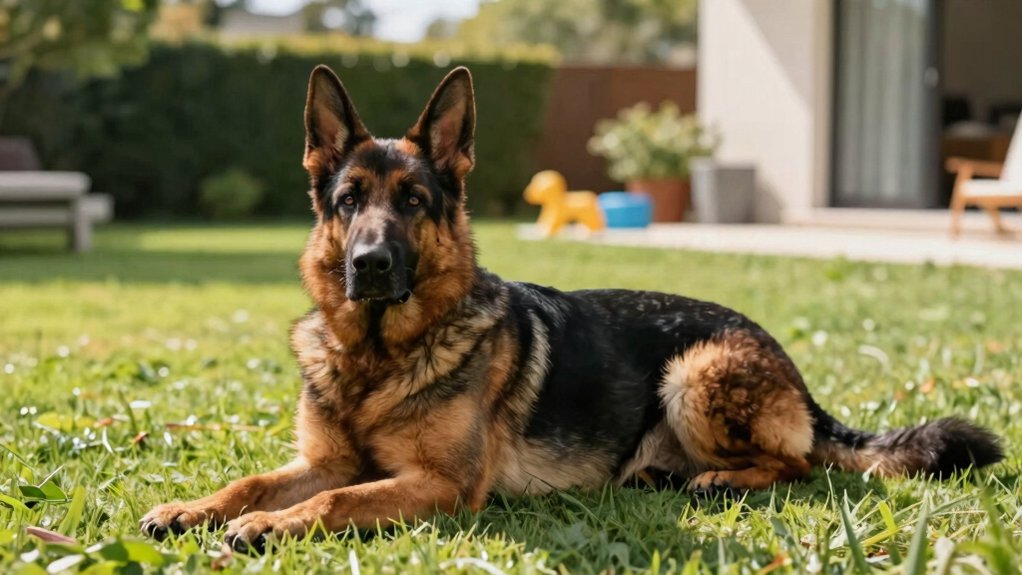
When you watch German Shepherd show culture change conformation, you see how the ring reward system pushed exaggeration step by step, not all at once.
You start choosing for longer, farther side gait and a more dramatic picture in motion, and over decades that means more extreme angulation and topline slopes.
Meanwhile, working standards fade gradually as breeders prioritize the show look, so you’ll often end up with show-line dogs that trend away from earlier, more rectangular, work-focused silhouettes. The breed’s early working foundation traces back to Max von Stephanitz, whose emphasis on herding ability set the standard that show breeding later moved away from.
Show Ring Prioritized Exaggeration
Over time, show-ring culture pushed German Shepherd conformation toward a more exaggerated look, and you can actually see the shift in the topline—the line from the withers to the croup.
You start seeing a steeper, sloped-back outline, because breeders selectively intensify hindquarter angulation for ring success, not practical work.
Judges in some regions reward smooth curves and striking silhouettes, even when older standards warn that over-angulation is undesirable.
And when you stack in show—one hind leg stretched back—you exaggerate the incline even more.
If pasterns hit the ground or you get a frog-leg stance, movement can suffer.
Working Standards Faded Gradually
As show conformation became more popular, working standards didn’t vanish overnight—they faded, piece by piece.
Early German Shepherd Dogs were bred to work, and you still see that utility-first mindset in strong bone, traction, courage, and real endurance.
SV and clubs once tied breeding permission to working tests and temperament under stress.
But show emphasis shifted toward outline, color, and gait, not stock work.
In many countries, especially the U.S., champions won mainly by ring success, with little required performance.
As pet demand grew, breeders stopped relying on herding, tracking, and patrol benchmarks, so structurally or temperamentally weak dogs slipped through.
How Do Working And Show Lines Differ?
What differences should you expect between working-line and show-line German Shepherds?
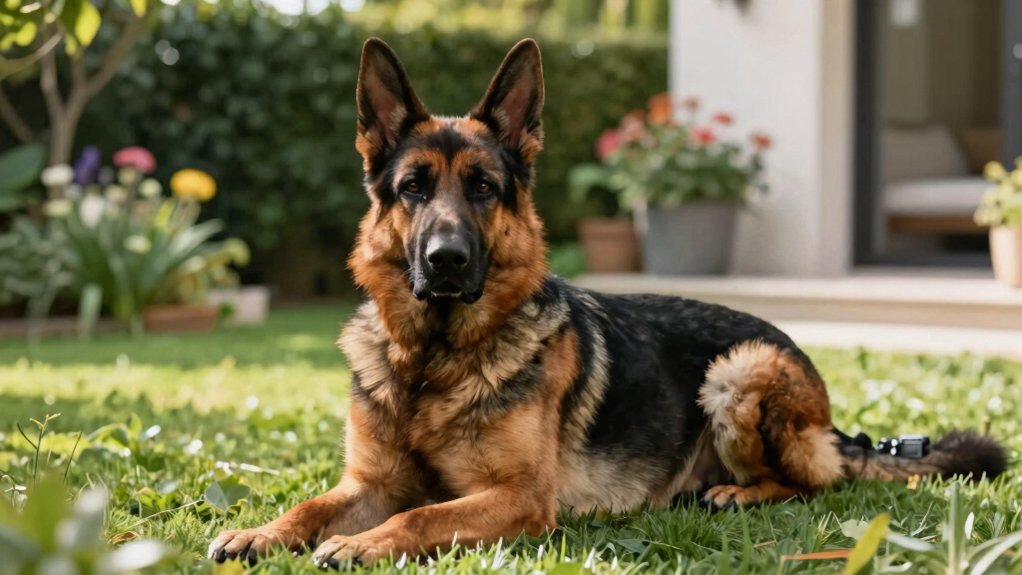
Working lines were bred for herding, police, military, and sport, so you’ll often see intense drive, strong nerve, and energy that keeps going. You’ll also notice straighter, more functional toplines and moderate angles, built for athletic durability.
Show lines focus on conformation, meaning appearance that matches breed standards, so you’ll see more hind angulation and a sloped back. Many show dogs look heavier in bone and broader in chest.
Temperament can differ too. Working dogs need structured outlets, like 30–60 minutes daily, while show dogs often settle more easily. Because the two lines differ in drive and energy, lifestyle suitability is an important factor when choosing between them.
What Changed In German Shepherd Gait And Movement?
German Shepherd gait has shifted a lot in the last century, and you can see it immediately when you watch them trot.
You’ll notice older dogs moved at a steady, moderate, work-focused rhythm, staying close to the ground. Their stride stayed efficient, so they could herd for hours.
Today, many you see in rings show a “flying trot,” with longer, sweeping steps. They push harder from the hindquarters, and stride length changes fast from step to step.
You’ll also spot more rear leg sweep and a stylized outline in motion.
Help by choosing breeding that values balanced endurance, not just flash. Breeding choices also shape temperament and aggression, which are influenced by genetics, early socialization, and training.
Can Sloping Backs Raise Orthopedic Risks?
Can a sloping back really raise orthopedic risks in a German Shepherd? Yes, it can. When your dog’s topline slopes hard from shoulders to hips, the front legs often take more load.
That can shift how weight lands, so stifle and hock joints may twist with less symmetry.
In modern show lines, over-angulated, cow‑hocked hindquarters and unstable hocks show up as key risk areas.
This setup also stresses the hips and the lumbosacral junction, a joint where the spine meets the pelvis.
Hip dysplasia—often about 19.8%—may rise in more sloped dogs.
Keep angulation moderate, for steadier work. Hip dysplasia in German Shepherds is a malformation of the hip joint that can cause pain, lameness, and arthritis over time.
Why Do Inherited Diseases Seem More Common Now?
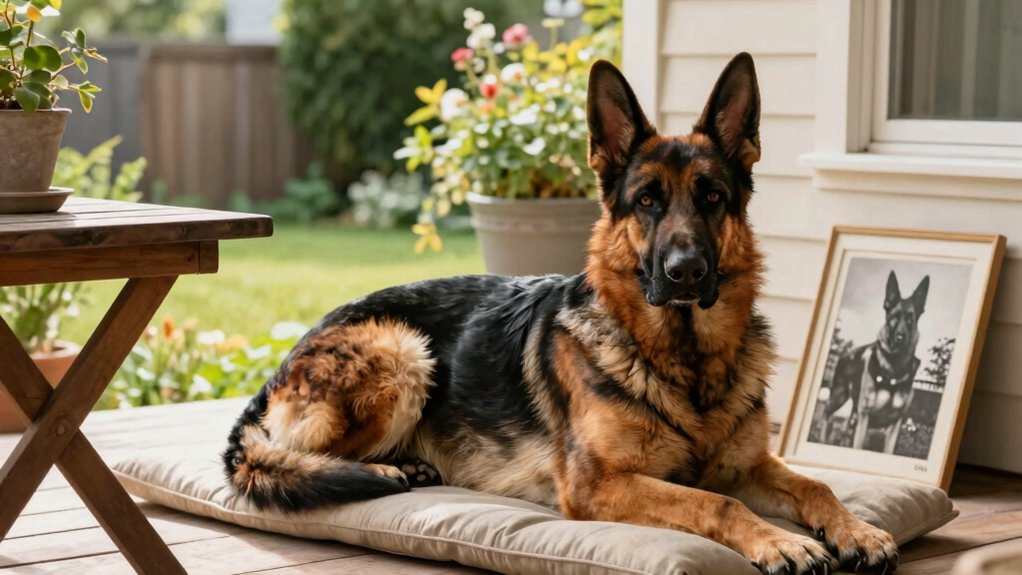
If you’ve noticed more health issues in German Shepherds and other purebreds lately, you’re not imagining it, and the reasons are pretty logical. Reduced genetic diversity shrinks the gene pool, so harmful gene variants show up more often.
More health issues in German Shepherds and other purebreds aren’t imagined—reduced genetic diversity lets harmful variants show up more often.
When breeders chase “popular” looks or use a few popular sires, you get a bottleneck, then inbreeding, which raises risk.
Next, modern tools help you see what’s been there. Today, large hospitals track tens of thousands of dogs, and genetic tests and better record-keeping reveal dozens of inherited disorders that were mostly unmeasured a century ago.
Serve your pup by screening early. Meeting your German Shepherd’s exercise requirements by age and activity level, along with mental stimulation, supports overall health, though it cannot undo inherited risks.
How Have Hip And Elbow Dysplasia Trends Changed?
When you compare old vs. new hip and elbow dysplasia rates in German Shepherd Dogs, you’ll notice the big picture first: many screened populations show clear declines, yet dysplasia still stays relatively common. Owners should also watch for signs of hip dysplasia, such as a bunny-hopping gait, reluctance to climb stairs, or stiffness after rest.
But you also have to watch what changed in the breeding world, because linebreeding can concentrate risk genes, and that means you can’t relax just because numbers improved overall.
To guide your next step, aim for early radiographic screening (often around 1–2 years for hips, and follow your vet’s schedule for elbows), and pair it with selective breeding based on those results, since early intervention is exactly what helped trend lines move in the first place.
Comparing Historical Prevalence Rates
Across the last several decades, screening results show German Shepherd hip and elbow dysplasia didn’t just stay high—it slowly shifted, with big differences from one region to the next.
You can see this when you compare old and newer numbers. In the mid–late 20th century, hip dysplasia hit about 35% overall, with Sweden at 49% in 1980. Other reviews even found up to ~40%.
Today, many screened populations land closer to 17–26%, like Italy 26.62% and UC Davis 17.4%.
But some places still report much higher rates, like Kenya 19.44% and 2023 Haryana 41.17%.
Modern Risk Factors In Linebreeding
Today, modern German Shepherd breeding pushes hip and elbow dysplasia trends in ways that don’t look random at all—especially under linebreeding. You see it because CHD and CED have moderate heritability (about 0.2–0.3), meaning genes matter.
With FCP higher (around 0.6), linebreeding can concentrate the risk fast. Add the hip–elbow link, too, since they share additive pressure (correlation ~0.3).
That’s why using a few “popular sires” narrows diversity, raises inbreeding, and can raise dysplasia scores as risk alleles become more likely to match. So, protect variety in your breeding plans.
Screening And Early Intervention Trends
As you tighten modern linebreeding risk, screening and early intervention start to matter more, because you can’t “select away” dysplasia if you don’t measure it early enough.
About a century ago, people rarely used standardized x‑rays, so the burden stayed mostly undocumented.
Then, late 20th‑century studies showed high rates, roughly 35–42% hip dysplasia.
Today, OFA records hover around 16–22% hips, and elbows drop only a bit, from 19.8% to 17.2%.
So you still see ~17% hip and ~17% elbow.
Use cert programs, but remember most scoring needs 12–24 months, not true infancy.
What Is Degenerative Myelopathy And Why Does It Matter?
Degenerative myelopathy (often called DM) is a progressive, adult-onset spinal cord disease in dogs, and it matters because it slowly steals a dog’s ability to walk.
It’s noninflammatory, and it damages axons and myelin in the spinal cord white matter, often starting around the thoracolumbar area.
The process climbs upward over time, so you may first notice nonpainful hind-limb ataxia, scuffed or worn nails, and trouble rising around 8–10 years old.
Often it begins in one pelvic leg, then becomes bilateral within months.
With no cure, progression usually takes 9–18 months, sometimes over 3 years. German Shepherds are among the breeds most often affected, and supportive care can help maintain mobility and quality of life for as long as possible.
Are Temperament Traits Different From Farm To Service?
Even if degenerative myelopathy steals mobility over time, you can still shape your German Shepherd’s day-to-day experience by choosing the right temperament fit from the start.
Yes, temperament differs from farm/herding to modern service.
Farm dogs first learned to guard and manage livestock, so they often show stronger suspicion of strangers and strong boundary instincts.
Modern breeding targets public-safe stability, task focus, and adaptable work drive.
You’ll see more approachable, confident, calm-yet-eager behavior for guide, police, search-and-rescue, therapy, and service work.
Breeders also test for nerve strength, soundness, and social reliability, so you get steadier traits.
Choose lines matched to your service goals.
How Do Aggression And High Drive Show Up Today?
How do aggression and high drive show up in German Shepherds today?
You’ll often see aggression show up as guarding that can tip into fear, especially toward strangers, and it spikes in the 6–12 month “adolescent” window.
You’ll often see aggression start as guarding, then shift toward fear—especially around strangers during the 6–12 month adolescent stage.
You may also notice incidents around doorways, yards, and access points, where they scan and react to perceived threats.
In clinics, aggression commonly pairs with anxiety, and pain and fear can stack together.
High drive shows as constant watchfulness, plus a real need for purpose.
Plan about 90 minutes to 2 hours daily.
If you don’t, you’ll get restlessness, chewing, digging, or barking.
What Training Needs Changed For Modern Households?
Now that you’ve seen how aggression and high drive can show up, let’s talk about what training changed for modern households, because your German Shepherd lives in a very different world than the old working kennels.
First, you shift from herding skills to manners, obedience, and safe co-living.
Next, you commit to early socialization, 3–16 weeks, so fear-based reactivity fades.
Then you train “city basics,” sit, wait, leave, curb potty habits, and controlled walks near traffic.
Now you prevent boredom with 60–90 minutes activity plus puzzle and scent games.
Finally, you use reward-based, force-free methods—food, toys, calm focus—not punishment—so your dog stays confident.

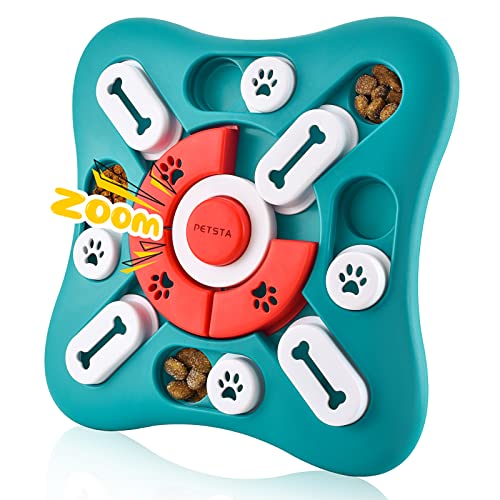
Four Challenges & Levels 1-3: Multiple games with a flip game and a linear track sliding game, all requiring dogs to learn steps and find treats. This puzzle is designed to be more fun and difficult, with more unique ways to play. It can enhance your dog's IQ and train their sense of smell

3 LEVELS, BEGINNER TO ADVANCED — Adjustable difficulty: mix discs, doors, cups, and maze paths. Your dog never outgrows it.
How Do Longevity And Health Care Expectations Differ?
What changes most with a German Shepherd’s longevity is what you expect to *manage*, not just what you hope to avoid. Today, many references put lifespan around 7–13 years, often 10–12.
You’ll plan for chronic issues like arthritis, nerve problems, and tumors, not only sudden infections or injuries. That’s a big mindset shift.
Early 1900s dogs faced harsher exposure, and fewer vets had imaging or advanced labs. Now you can catch problems earlier with X‑rays, ultrasound, and blood tests.
With orthopedic surgery, cancer care, and pet insurance, you can extend comfort and function—about a decade-long companionship.
What German Shepherd Roles Exist Today (Service, Sport, Home)?
German Shepherds didn’t just stay “working dogs” in the field, they’ve spread into a whole lineup of roles you can actually see today.
German Shepherds didn’t just stay working dogs in the field—they now take on diverse roles you can see every day.
In police and military work, you’ll find them tracking, patrolling, and apprehending suspects, plus detecting narcotics, explosives, and evidence.
In service roles, they guide blind handlers, help with balance and mobility, and alert deaf people to doorbells and alarms.
They also spot medical changes like seizures or blood-sugar swings using scent.
For search-and-rescue, you’ll rely on their nose, stamina, and agility to find missing people.
In sport, IGP tests tracking, obedience, and protection.
At home, you gain loyal companionship.

【Large Dog Molle Vest】: Neck Girth: 21-28 inch, Chest Girth: 24-39 inch, Belly Length: 24-39 inch, Back Length: 13.5 inch. Ideal for Large Breeds such as German Shepherds, Belgian Malinois, Golden Retrievers, Huskie, Labrador, Akita. A professional working dog vest for service, police, or military dogs, but also suitable for outdoor companion dogs. Please refer to our size chart, make sure match up your dog's measurement, Do not choose the size base on dog's weight or guess

【What Will U Get?】-The easy walk dog harness set include 1 dog vest harness,1 dog leash that can be a dog car harness,1 Transparent window with anti-lost name card and 5 pairs dog patches such as"BEST FRIEND""IN TRAINING"''SERVICE DOG""DO NOT PET""EMOTIOANL SUPPORT", you can attach any informations on molle system of this dog vest to express your dog's moods and personality.

【Large Dog Molle Vest】: Neck Girth: 21-28 inch, Chest Girth: 24-39 inch, Belly Length: 24-39 inch, Back Length: 13.5 inch. Ideal for Large Breeds such as German Shepherds, Belgian Malinois, Golden Retrievers, Huskie, Labrador, Akita. A professional working dog vest for service, police, or military dogs, but also suitable for outdoor companion dogs. Please refer to our size chart, make sure match up your dog's measurement, Do not choose the size base on dog's weight or guess
How Did Popularity Change In The US And Worldwide?
As you look across the timeline, German Shepherds keep bouncing back—first surging in popularity, then dipping, and then climbing again as more families and organizations discover what they can do.
In the US, you see early breakthroughs: the AKC registered its first one in 1908, then clubs formed in 1913.
In 1925, they beat Boston Terriers and topped AKC registrations in the 1920s.
But by 1935, they slipped to 18th.
After Sieger Pfeffer won in 1937–38, momentum returned, then dipped after WWII.
Later, they hit third in 1993, second in 2009, and stayed top five.
Worldwide, they lead in many European countries; in 2013, they ranked second globally by registrations.
Which Sports And Disciplines Best Reveal The Breed’s Traits?
If you want to see the German Shepherd’s “real superpowers,” start with sports that test both mind and body. In IGP/Schutzhund, you run three phases: tracking, obedience, and protection.
Tracking shows scenting ability, focus, and endurance as your dog follows human scent over mixed terrain.
Then obedience and Rally sharpen control, precision, and calm responsiveness.
Finally, protection reveals courage, protective instinct, and stability under pressure.
Finally, protection reveals courage, protective instinct, and stability under pressure—proof your German Shepherd can think clearly and act confidently.
For even more work ethic, try dedicated tracking or search-and-rescue, using calm, patient guidance.
When you choose herding or Farm Dog tests, you reward steady control around livestock.
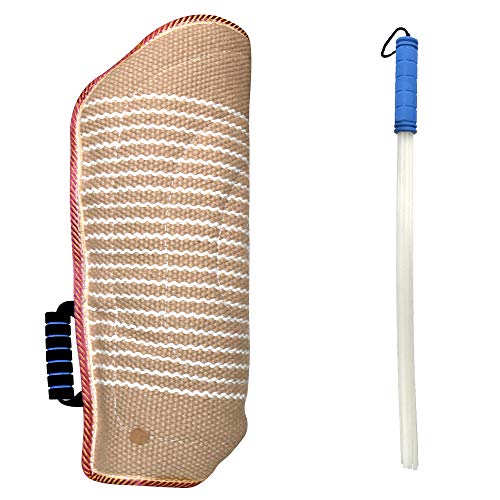
★ DURABLE & STRONG Dog Bite Sleeve: Crafted with a sturdy jute outer layer, thick foam inner layer, and an interior foam-covered handle, ensuring essential support and protection against forceful bites.

Build Your Dog's Agility Course: Includes 12 cones & 6 durable rods. Mix and match to create endless training layouts!

Dog Chew Training Set: you will receive 1 piece of dog chew sleeve, 1 piece of dog training stick, 1 piece of dog chew rubber ball and 1 piece of dog chew tug toy, good combinations to meet your needs, suitable for training dogs
How Did Kennel Standards Shape Modern German Shepherds?
Over the last century, kennel and breed standards didn’t just “describe” German Shepherds—they actively trained breeders’ choices, sentence by sentence, and they reshaped the dog in the process.
You saw this start in 1899 with the SV standard, built from central and southern herding dogs, aiming for a high-achievement working partner.
It required a strong, secure, even-tempered character first.
Even “appearance” clauses warned it can’t beat working ability.
Later, SV, WUSV, and FCI revisions tightened structure, gait, and temperament, while registration rules controlled matings.
That pressure shifted backs, movement, and hindquarter build, creating distinct line types you still recognize today.
Utility-First Breeding Vs Ring Success: What Changed?
You can see the split almost immediately, because utility-first breeding and ring-focused breeding reward different “proof.”
In the utility-first world, breeders hunt for dogs that can actually work for hours—using real tests of nerve stability, tracking ability, and obedience—then they build structure to support that job.
And you can see it in policing, military, and farm readiness.
But ring success today often elevates conformation style, gait looks, and sport trial scores, sometimes treating titles like a resume.
That shift creates working and show/competition lines, with different structures, temperament fit, and risk profiles.

【Medium Dog Molle Vest】: Neck Girth: 17-24 inch, Chest Girth: 22-34 inch, Belly Length: 22-34 inch, Back Length: 12 inch. Ideal for Medium Breeds such as Boston Terriers, Dachshunds, Heelers, Bulldogs, Boxers, Puggles, Australian Shepherds. A professional working dog vest for service, police, or military dogs, but also suitable for outdoor companion dogs. Please refer to our size chart, make sure match up your dog's measurement, Do not choose the size base on dog's weight or guess

【EASY TO GET ON/OFF】WINSEE tactical dog harness features four quick-release buckles for easy on and off, and four adjustable points to ensure a sung fit for dogs of all sizes.
【Large Dog Molle Vest】: Neck Girth: 21-28 inch, Chest Girth: 24-39 inch, Belly Length: 24-39 inch, Back Length: 13.5 inch. Ideal for Large Breeds such as German Shepherds, Belgian Malinois, Golden Retrievers, Huskie, Labrador, Akita. A professional working dog vest for service, police, or military dogs, but also suitable for outdoor companion dogs. Please refer to our size chart, make sure match up your dog's measurement, Do not choose the size base on dog's weight or guess
How To Choose A Healthier German Shepherd Line?
When you’re picking a German Shepherd line, start with real hip and elbow screening, not promises.
Look for OFA/PennHIP or similar X-ray results, and choose lines that breed from the lowest accepted grades—think hips like A–C and elbows around 0–1—so you lower the odds of painful dysplasia.
And don’t ignore conformation: aim for a balanced, level (or only mildly sloped) back and sound movement, because better structure often means better long-term joint health.

MADE FOR GERMAN SHEPHERDS: a hip and joint supplement dosed by weight for a breed built to work. Devoted German Shepherd parents get a simple daily routine, 1/2 to 2 soft chews a day, from active adult years to senior. One 60 count jar delivers a full month of daily joint support at the large-breed dose.

Perfect tasty blend of Glucosamine, Chondroitin, Perna Canaliculus, and Omega-3 Fatty Acids. Dogs love the taste. They think it is treat time!

Perfect tasty blend of Glucosamine, Chondroitin, Perna Canaliculus, and Omega-3 Fatty Acids. Dogs love the taste. They think it is treat time!
Evaluate Hip And Elbow Screening
To choose a healthier German Shepherd line, start by evaluating how hip and elbow screening works, not just the final result.
Look for standardized X-ray schemes like OFA, BVA/KC, PennHIP, SV, or FCI, and strict club rules that record results on pedigrees.
Check the age too.
Many certifications need at least 12 months, while OFA often waits until 24.
PennHIP can assess hip laxity from about 4 months.
Confirm the radiographs used correct positioning, often with sedation.
Finally, review score thresholds—like GSDCA’s “A” max total 16, and SV’s no breeding for medium or severe dysplasia.
Prioritize Line With Lower Disease
Once you’ve looked at screening methods, start prioritizing the lines that consistently show a lower overall disease burden.
Then ask, who breeds for lifetime health, not just looks?
Working lines from strict, function-first kennels often report lower hip, elbow, and spinal trouble, and they live more often into the early teens.
But even they carry breed-wide risks, so you still need broad testing.
Seek breeders who test for SOD1 degenerative myelopathy, heart, and autoimmune issues, plus DNA.
Also watch inbreeding.
Aim for a coefficient near or below 6.25%, not above 10%.
You’re helping yourself, and you’re helping them, too.
Choose Balanced Conformation For Soundness
Balanced conformation goes hand in hand with health, because it supports sound joints and steady movement for years, not just a pretty picture.
Aim for proportions where body length is about 10–12% longer than height at the withers, and keep your dog’s back straight and firm.
You want an unbroken topline, gently sloping at the croup.
Choose breeders whose lines build length through correct shoulder and croup angles, not an overly long spine.
Next, check front and rear angulation: about a 90° forequarter, moderate rear.
During the trot, watch for a level back and smooth, ground-covering diagonals.
Avoid roach, “flying trot,” and squatting extremes.
Frequently Asked Questions
Do Modern German Shepherds Still Herd Livestock Effectively Today?
Yes, modern German Shepherds can still herd livestock effectively. You’ll find stronger results in working-line dogs trained with structured stock work and trials. Many retain strong herding drive, and you can channel it through proper instinct and course training.
How Have Breeding Standards Affected German Shepherd Fertility and Litter Size?
Modern breeding standards protect fertility and litter size by enforcing mature ages, limiting litter frequency, spacing coverings, capping stud use, and banning close relatives; they improve conception, reduce stillbirth, and raise consistently viable puppy counts.
What Genetic Tests Meaningfully Reduce Hereditary Disease Risk?
Like a safety net, you reduce hereditary disease risk by using breed-specific panels (DM, MDR1, dwarfism, vWD) plus broad multi-disorder screening and genetic diversity review to avoid carrier-to-carrier matings. You serve puppies better.
Why Do Some German Shepherds Develop Chronic Allergies and Skin Issues?
Some German Shepherds develop chronic allergies and skin issues because their genetics raise atopic dermatitis risk, and immune dysfunction plus barrier defects let allergens and microbes trigger ongoing inflammation. You’ll often see pruritus, infections, and seasonal flares.
How Can Families Safely Manage High Drive Without Professional Training?
Settle, structure, supervise: you’ll manage high-drive German Shepherds with scheduled exercise, daily training games, and secure confinement. You’ll separate during kid time, enforce calm rest zones, control entrances, and prevent rehearsal of lunging to reduce bite risk.