You’ll thrive with a working‑line German Shepherd if you can give 90–180 minutes of exercise, training, and a fenced yard; these dogs have drive, strong prey instinct, and need mental challenges to stay. A show‑line fits homes, needs walks, and offers a calmer temperament with lower activity demands. Health data show working lines have 8–12% hip dysplasia versus about 35% in many show lines. Match your lifestyle and you’ll see which bloodline fits you.
Swift Summary
- Working lines need 90‑180 min vigorous exercise daily; show lines thrive with moderate walks.
- Working lines excel in high‑drive tasks (protection, tracking); show lines suit companion/appearance‑focused households.
- Working lines favor functional conformation, reducing joint stress; show lines have higher hip/elbow dysplasia risk.
- Working lines require experienced owners and secure fencing; show lines adapt well to apartments and less‑experienced owners.
- Both need early socialization, but working lines need more structured mental stimulation to channel drive.
How to Choose the Right German Shepherd Line
Because your daily routine determines how a German Shepherd will thrive, the first step in picking a line is matching the breed’s innate drive to your lifestyle. Assess whether you can provide 60–120 minutes of exercise and mental tasks; a working German Shepherd thrives on that, while a show‑type may be satisfied with moderate walks. For trips to the vet or travel between home and training, a soft-sided dog carrier offers portability and comfort.
Ask breeders how to tell if a German Shepherd is a working line—look for strong prey instinct and nerve stability. Prioritize working line German Shepherd breeders who document health clearances, especially for neurological issues German Shepherd inherit.
Health-wise, working line German Shepherds are typically more robust, showing fewer hip and elbow problems than their show‑line counterparts.
Compare working line German Shepherd for sale listings with working German Shepherd puppies profiles, and verify breeders conduct temperament testing. Your choice should align with your goals and capacity to maintain consistent daily training.
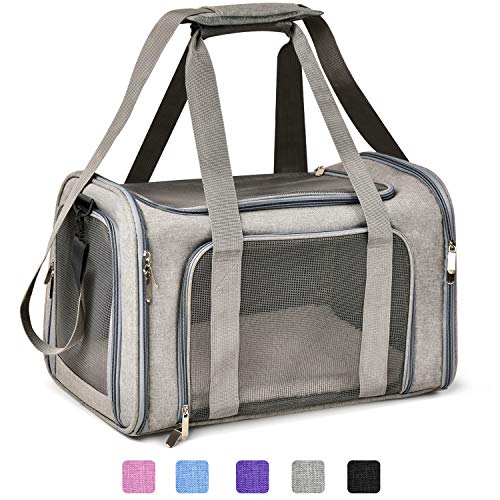
AIRLINE APPROVED CARRIER - With airline-approved design, you can take your pet to go to everywhere. This pet carrier provides two connecting loop handles for balanced carrying as a dual seat belt or luggage strap to secure transport

High Quality Design:Sturdy steel cage structure and wooden support board maintain good spatial stability and shape. Breathable mesh windows on four sides,which can ensure good air circulation and views,make pets have a comfortable and safe travel.It can also be easy for you to check on your pets.There is a front pocket to store pet toys,treats,etc.
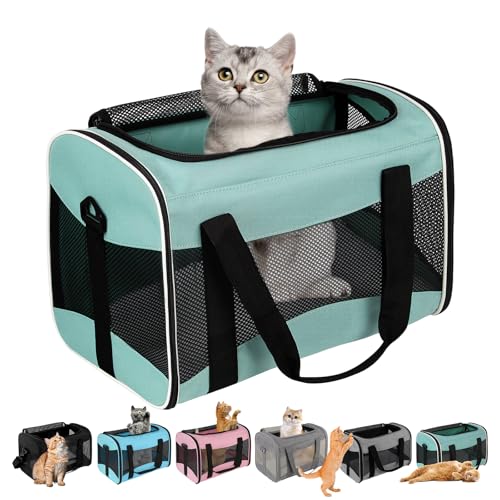
[PRODUCT DIMENSIONS] Pet travel carrier size : 17x11x11 inches, recommended up to 15 lb pets, it is suitable for large, medium cats and small dogs. Please don't choose your airline cat carrying case based on weight, please refer to your pet's length and height when choosing a pet carrier size.
Core Structural & Functional Differences (Working vs Show)
When you compare working‑line and show‑line German Shepherds, the most striking differences appear in their topline, angulation, and gait, each reflecting distinct breeding goals.
Working‑line dogs have a straight, level topline and a shorter back that distributes weight evenly for agility. Their rear angulation is moderate, providing stability and power for quick directional changes, while bone is medium with dense muscle. This structure yields an efficient gait that covers ground with minimal wasted motion, ideal for patrol, tracking, or search tasks. This functional focus also preserves a stronger working drive and stamina compared to their show counterparts.
In contrast, show‑line dogs often display a sloping topline with a longer, dramatic back, heavier bone, and pronounced rear angulation that creates an exaggerated stacked pose. Their gait emphasizes a sweeping “flying trot” with extended reach, suited to ring presentation rather than endurance. Show‑line dogs are typically bred for conformation judging, whereas working‑line dogs are selected for drive, trainability, and performance work.

【Large Dog Molle Vest】: Neck Girth: 21-28 inch, Chest Girth: 24-39 inch, Belly Length: 24-39 inch, Back Length: 13.5 inch. Ideal for Large Breeds such as German Shepherds, Belgian Malinois, Golden Retrievers, Huskie, Labrador, Akita. A professional working dog vest for service, police, or military dogs, but also suitable for hunting and outdoor companion dogs. Please refer to our size chart, make sure match up your dog's measurement, Do not choose the size base on dog's weight or guess

MILITARY-GRADE DURABILITY & CONSTRUCTION - Heavy duty tactical vest made from 1050D nylon with reinforced stitching for maximum durability and wearability in all field conditions, featuring two metal shoulder buckles that withstand strong pulling force and two POM belly buckles for easy on-and-off, making this harness suitable for training, hunting, working, and everyday activities with powerful breeds like German Shepherds and Belgian Malinois.
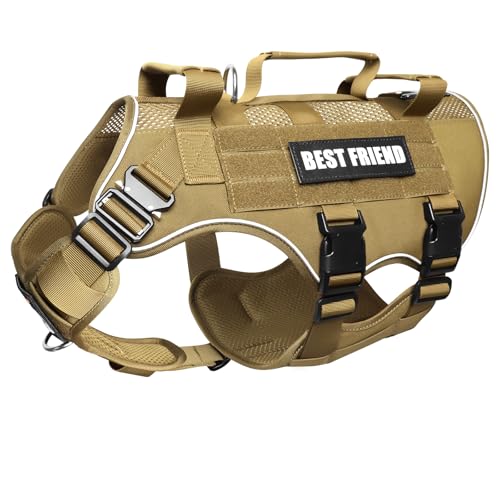
Design for Medium&Large Breed Dogs:Heavy duty dog harness is made of 1000D nylon materials,provide durability and comfort,with 2 shoulder metal buckles(Proof-load test:up to 1100 lbs),fits for medium and large dogs such as:German Shepherd, Belgian Malinois, Golden Retriever, Huskie, Labrador, Akita, etc. A professional working dog vest for service, police or military dogs.
Health Comparison: Which Line Has Fewer Orthopedic Issues?
While the overall hip‑dysplasia rate in German Shepherds sits near 19‑20%, American show lines push that figure to roughly 35%, almost double the breed average. Hip dysplasia is a developmental disorder in which the ball and socket of the hip joint do not fit together properly, which can lead to pain, lameness, and osteoarthritis over time.
In contrast, European working lines, screened with SV testing, report hip dysplasia between 8‑12% and consistently lower elbow dysplasia. Their straighter topline and moderate rear angulation reduce joint loading, supporting longer‑term stability.
Show lines often exhibit sloping backs and exaggerated croup angles, which increase mechanical stress on hips, stifles, and the lumbosacral region, leading to earlier arthritis and lumbosacral stenosis.
Early hip laxity screening such as PennHIP screening from 16 weeks can identify at‑risk puppies before symptoms appear.
When you select a dog for service work or therapy, the working‑line’s functional conformation generally translates to fewer orthopedic setbacks, lower veterinary costs, and a more reliable partner.
Choosing a working line helps preserve your mission’s longevity and wellbeing.
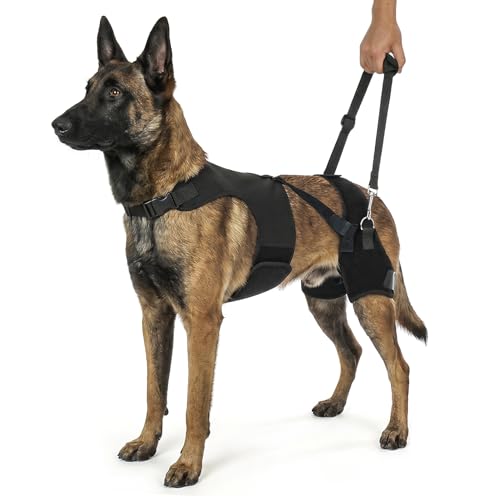
Targeted Hip Stabilization for Enhanced Mobility: Our dog hip dysplasia brace provides focused support to the hip joint, directly addressing instability and discomfort. This hip support for dogs is designed to aid in the treatment of hip dysplasia and degenerative conditions, helping your canine companion move with greater ease

Sizing Info: Size S - Neck Girth 19”, Chest Girth 20”-27”, Back Length 11”-14”,Weight Range:18 - 32lb, Leg Strap Maximum Length 19” Size M - Neck Girth 21”, Chest Girth 24”-32”, Back Length 14”-17”,Weight Range:30 - 60lb, Leg Strap Maximum Length 22” Size L - Neck Girth 23”, Chest Girth 27”-36”, Back Length 17”-20”,Weight Range:60 - 90lb, Leg Strap Maximum Length 25” Size XL - Neck Girth 25”, Chest Girth 31”-40”, Back Length 19”-24”,Weight Range:85 - 140lb, Leg Strap Maximum Length 29”

SIZE XL: Measure your dog before ordering. Fits neck circumference 19.3–24.8 in (49–63 cm), chest circumference 22.2–29.1 in (56.5–74 cm), with a back length of 14.0 in (35.5 cm). Compare all three measurements with the size chart; do not choose by weight or breed alone.
Temperament Match: Which Line Fits Your Household?
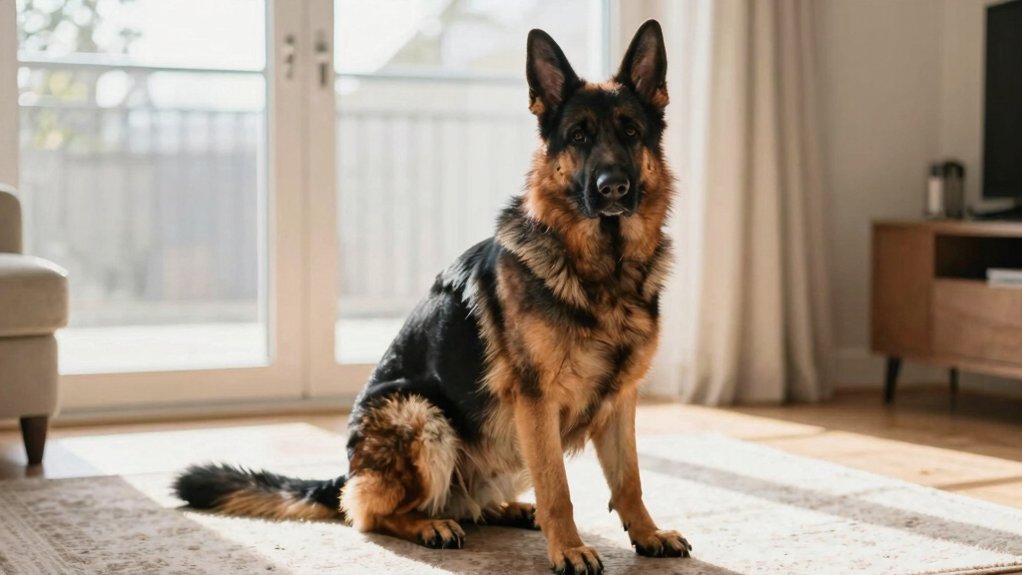
If you’ve got the capacity to provide 120 minutes of structured activity each day, a working‑line German Shepherd’s high drive and energy will likely match your lifestyle.
If you prefer a calmer companion who feels comfortable with strangers and enjoys moderate walks, a show‑line dog’s lower energy and balanced sociability may suit your family better.
Aligning the dog’s drive level, social comfort, and need for goal‑oriented training with your household routine reduces frustration and supports a healthy, compassionate partnership. Prospective owners should also weigh the breed’s exercise needs and ongoing costs before deciding between the two lines.
Drive Level and Energy
Although working‑line German Shepherds usually score higher on standardized drive assessments than show‑line dogs, they also require far more structured physical and mental outlets to stay balanced. If you thrive on daily, job‑level activity—long hikes, agility, scent work—you’ll likely match a working line’s high‑to‑very‑high energy.
These dogs need sustained exercise and problem‑solving tasks several times weekly; without them, anxiety, destructiveness, or obsessive play can emerge.
Show lines, by contrast, settle more readily after moderate walks and obedience drills, offering medium to high energy that’s easier to manage in families with limited time. Their drive scores are lower, so they tolerate less intensive schedules while still benefiting from regular enrichment.
Align your service‑oriented lifestyle with the bloodline whose drive and stamina complement your routine.
Social Comfort With Strangers
Your dog’s energy level influences how it reacts to unfamiliar people, so after gauging stamina you’ll want to evaluate stranger comfort next.
Both lines inherit the breed’s baseline aloofness, yet show-lines tend toward socially confident, steady responses, while working-lines often display neutral‑to‑suspicious attitudes that support protective instincts.
In a calm household with frequent visitors, a show-line German Shepherd usually settles quickly, tolerates children, and adapts to variable routines.
Conversely, a working-line may keep a watchful distance, needing deliberate, calm exposure to avoid over‑arousal.
Research cites 50+ positive encounters by 16 weeks to shape stable stranger reactions.
Consistent, low‑stress socialization mitigates fear or undue suspicion, ensuring any German Shepherd remains steady, not indiscriminately friendly, while serving your family responsibly and protecting your loved ones daily.
Need For Structured Work
Because German Shepherds were bred for demanding tasks, they thrive when they’ve a clear, structured job each day. If you serve your community or pursue sport, a working‑line dog will need 60–90 minutes of focused physical work plus 15–30 minutes of mental tasks such as scent drills, advanced obedience, or protection exercises.
This intensity matches their high prey and defense drive and safeguards against frustration, anxiety, and destructive habits. A show‑line companion tolerates two 30‑minute walks and basic obedience, handling irregular schedules and novice handlers without heightened stress.
Both lines benefit from splitting activity into two sessions and incorporating puzzle feeders or brief agility runs, but only the working line sustains health and stability when you provide daily, purpose‑driven training for your mission.
Exercise Requirements: Can You Meet a Working‑Line’s Energy Needs?
You’ll need to provide 90–180 minutes of vigorous activity each day, split into multiple sessions, to match a working‑line German Shepherd’s physiological energy demands.
In addition, you must incorporate 60–120 minutes of focused mental tasks—such as scent work, obedience drills, or sport‑specific training—to prevent frustration and behavioral issues.
If your schedule can’t reliably accommodate this combined workload, a working‑line may exceed your capacity and compromise its welfare. Because working‑line German Shepherds often have a strong prey drive, unmanaged exercise can lead to chasing cats or small animals, so structured outlets like scent work and controlled play help channel that instinct.
Daily High‑Intensity Workouts
When you evaluate a working‑line German Shepherd’s daily routine, the first clue is the amount of vigorous activity it actually needs: most of these dogs require 90–180 minutes of structured, high‑intensity exercise split into two or more sessions.
Plan two or three purposeful outings each day. A morning 30‑45‑minute run, fast‑fetch, or agility drill raises heart rate and engages muscle groups, while an evening 30‑45‑minute hike or conditioned jog consolidates stamina.
If you don’t have a safe, fenced yard, substitute yard time with off‑lead work in a park or trail. Aim for at least one anaerobic burst—sprints or high‑energy retrieve—each session to satisfy the breed’s drive.
Consistent timing reduces excess arousal, curbs destructive tendencies, and supports the dog’s role as a reliable service companion partner.
Structured Mental Stimulation
Although physical endurance is essential, a working‑line German Shepherd’s wellbeing hinges equally on structured mental stimulation. You’re expected to provide 30–60 minutes of brain work, split into three focused sessions, each lasting at least 10‑15 minutes.
Incorporate 15‑30 minutes of obedience, recall, or trick training to satisfy the breed’s problem‑solving drive without excessive running. Add a scent‑work drill—hide treats or lay a simple trail—once a day; this delivers deep mental fatigue with modest physical output.
Rotate puzzle feeders or DIY enrichment toys to prevent routine stagnation. For puppies, follow the guideline of five minutes of age‑appropriate mental tasks per month of age, twice daily.
Consistent, varied cognition tasks keep energy balanced and support your service‑oriented lifestyle. They also enhance your canine’s reliability in emergency response scenarios daily.
Ideal Owner Profile: Who Thrives With Each Line?
If you lead a highly active lifestyle that includes daily hikes, structured training, or work‑related tasks, a working‑line German Shepherd is likely the better match. You’ll thrive if you have 2+ hours of physical and mental work daily, possess prior handling experience, and reside in a home with ample space or access to training fields.
This line favors adult‑only or older‑child households that can manage high arousal and powerful play. Conversely, if you seek a companion for moderate exercise (60‑90 minutes), prefer basic obedience goals, and have a suburban home with a fenced yard, a show‑line fits.
Novice guardians, families with young children, or service‑oriented volunteers often find the show‑line’s calmer temperament and adaptable schedule more suitable. They’ll appreciate the breed’s loyal, service‑ready disposition. Many people first came to know the breed through Rin Tin Tin, the silent‑film star who was rescued from a World War I battlefield and became one of Hollywood’s most famous German Shepherds.
How to Vet a German Shepherd Breeder for Health & Temperament
Your choice of a working‑line or show‑line German Shepherd shapes the kind of breeder you should seek, and the first step is to evaluate how the breeder safeguards health and temperament.
Ask for OFA or BVA/KC hip and elbow scores; only dogs with clear or excellent ratings should breed. Verify CHIC certification and DM DNA results, and request eye exam reports.
Observe the breeding stock’s behavior—confident, friendly, and steady around people and other animals.
Confirm puppies remain with their dam until at least eight weeks and that the breeder follows a structured 3‑to‑13‑week socialization plan with varied stimuli.
Finally, verify clean facilities, regular vet checks, limited litters, and transparent health records. Once your puppy comes home, a sturdy stairway gate helps prevent falls while its joints and coordination are still developing.
These steps protect your future partner’s welfare and your mission’s success in service.

Auto-Close Baby Gate: Designed with an intelligent self-closing system, this dog gate automatically swings shut at angle under 90°, providing reliable protection against accidental openings

【Height-Adjustable Pet Gate】Adjustable from 10" to 15.8" in height, this dog gate offers four precise settings. Unlike fixed-height gate (only 10" or 14"), our adjustable design ensures a perfect fit for your pet’s size—whether they’re a jumper or a crawler(Patent Pending)

UNIVERSALLY FITS — Expands to fit openings between 29-48" wide. Whether it is a bathroom door, toilet door, wide doorway, or stair, it is suitable. Standing an impressive 28" tall, which is ideal for use with toddlers and small pets. Please measure your opening prior to purchase to ensure proper fit.
Lifestyle Checklist: Aligning Your Life With the Best German Shepherd Line
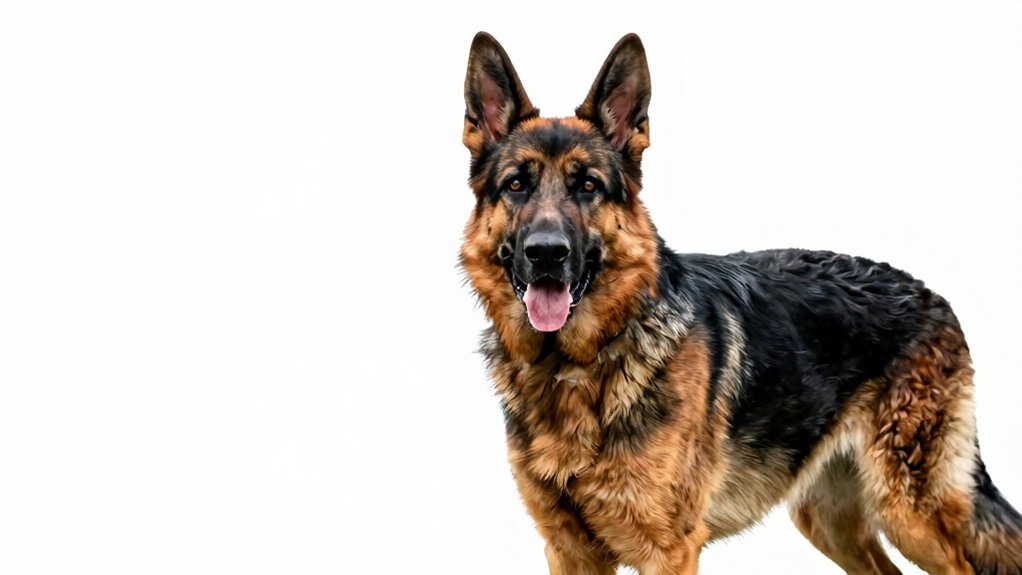
When you assess your daily schedule, home environment, training experience, and family dynamics, you’ll quickly see whether a working‑line or show‑line German Shepherd aligns with your life.
If you can devote 90 to 180 minutes of structured daily activity plus mental tasks, a working line matches; 60 to 120 minutes of walks and low‑intensity play suit a show line.
A securely fenced yard of one thousand to two thousand square feet allows off‑leash work for high‑drive dogs, while an apartment works for calmer show dogs with regular outings.
Choose a working line when you aim for advanced protection, tracking, or IGP tasks; select a show line for basic obedience, companion enrichment, and gentle temperament.
Match rhythm: show lines suit homes; working lines require quiet. If you frequently travel with your German Shepherd for training camps or dog shows, a travel bag keeps food, bowls, and grooming supplies organized and easy to carry.
Frequently Asked Questions
Do Working-Lines Shed More Than Show-Lines?
You’re not seeing a big difference—working-line German Shepherds shed just as heavily as show-lines. Evidence shows both possess dense double coats, producing year‑round shedding and seasonal blows, so preparation matters equally for your home and.
Can a Show-Line Successfully Compete in Protection Sports?
When Max, a show‑line GSD from a balanced SV line, earned his first protection test score, you’ve seen he can compete. Show‑lines succeed if you choose driven bloodlines, train steadily, and manage expectations safely responsibly.
How Does Diet Differ Between Working and Show German Shepherds?
Your working German Shepherd needs 28‑33% protein, 18‑22% fat, 500‑600 kcal per cup, one post‑work meal; your show dog thrives on 22‑26% protein, 12‑17% fat, 300‑400 kcal, two daily meals to maintain ideal condition and performance safely.
Are There Insurance Differences for Each Line’s Perceived Risk?
Balanced billing, broad-based breed assessment shows you won’t see insurance splits between working and show German Shepherds; insurers price solely on overall breed risk, so your coverage decisions remain uniformly guided for your beloved companion.
Will a German Shepherd’s Line Affect Its Suitability for Therapy Work?
Yes, a German Shepherd’s line can affect its therapy suitability; show‑line dogs usually present calmer temperaments and lower prey drive, making them more reliably stable for therapeutic environments you’ll manage and easier to integrate smoothly.