You can manage your German Shepherd’s prey drive around cats by catching it early—look for scanning, stiff body, raised hackles, and hard “eye” focus, then redirect fast. Use a barrier or secure gate, keep a 6‑ft leash, or a 5–10 m long line on a back-clip harness. Teach “Leave it” and recall timed to eye contact, reward calm only. Practice 2–5 minute stay games in low distractions. Then prevent backyard wildlife with tight supervision, and start cat introductions step-by-step—there’s more you can do next.
Swift Summary
- Identify prey-drive triggers like movement, stalking posture, and fixating eye contact to intervene before sudden chase-and-grab.
- Train disengagement using “Leave it” and fast recall, rewarding only after attention shifts away from cats or prey-like cues.
- Use escalation management: minimal blinking, stiff body, raised hackles, dilated pupils, and slow “slinking” signal an impending burst.
- Rely on management first: secure tall gates, closed-door cat zones, and prevent yard access with properly anchored, solid fencing.
- Control outdoor risk with non-retractable leash/long-line protocols, loose line handling, and supervision during dawn/dusk and low-light periods.
Understand German Shepherd Prey Drive Around Cats
Understanding German Shepherd prey drive around cats starts with one key idea: your dog may see a running, fast-moving cat as something worth chasing, not as a roommate. German Shepherds were bred for herding and working, so moving targets can trigger chase drive fast. Movement is a major trigger for the instinctive predatory sequence that can go from orienting and stalking to sudden chase and grab. Cats often “sound” like prey, with quick darts, fluffy bodies, and high-pitched yelps. You’ll notice it as staring, barking, circling, or nipping. The stronger your dog’s individual prey drive, the harder relaxed living can feel. Early, positive cat exposure helps a lot, while past wildlife chasing and stress raise risk. Ongoing stress from constant chasing and frustration can also contribute to excessive shedding, so calmer management may help keep your dog’s coat healthier.
Spot Stalking, Fixating, and Escalation Before a Chase
Once you know your German Shepherd might see a cat as prey, you can start reading the warning signs before a chase ever happens.
First, watch for scanning, then an intense, unwavering stare—“eye”—with minimal blinking, stiff body, raised hackles, and dilated pupils.
And when you see the dog move in a slinking, low-to-the-ground stalk, notice the slow, deliberate steps and creeping posture.
Next, expect early escalation: ears tipping forward, shoulders and hindquarters tensing, sometimes even trembling.
Finally, freeze plus hard focus, silence, and a sudden explosive burst can signal escalation.
When the dog spots a moving target, a massive dopamine surge can start the “chase reward” loop ( dopamine surge ) that makes the behavior feel increasingly rewarding and harder to stop once it’s underway.
Protect everyone: separate early with gates or crates. Heightened arousal during a chase can sometimes spill over into sudden aggression toward people who try to intervene, so avoid reaching into the situation mid-pursuit.
Teach “Leave It” and Reliable Recall for Prey Moments
Next, place a treat on the floor, cover it if they reach, then release when attention shifts away. Time the cue when eyes lock on the target.
Next, place a treat on the floor, cover it if they reach, and release only when attention shifts away—cue timed to eye contact.
Now generalize to cats and toys, using a lead outdoors. Work through each stage gradually, following a week-by-week training plan, so your dog masters basic commands before facing real distractions.
For come, use a 15–20 foot long line in parks, and reward fast returns with jackpot treats.
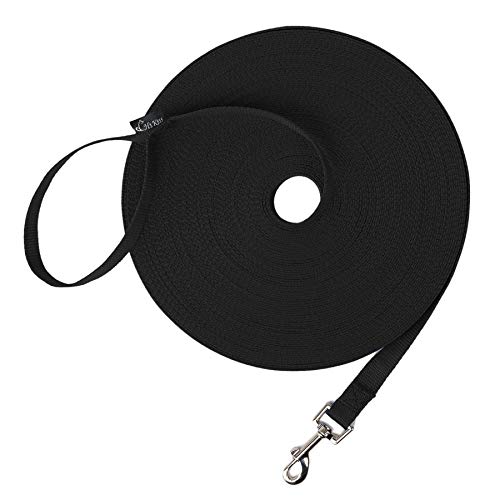
DIMENSIONS - This dog leash measures 3/4in wide by 30 feet long. Great for hiking, camping, training, hunting, backyard, beach, recall training, outdoor play with tennis balls, and swimming!
Dimensions - This dog leash measures 3/4in wide by 20 feet long. Great for hiking, camping, training, hunting, backyard, beach, recall training, outdoor play with tennis balls, and swimming!

Dog Leash Dimensions: training leash measures 3/4 inch width by 20 feet length, offering you dog for more wandering area and freedom.
Train Impulse Control With Stay Games and Real Distance
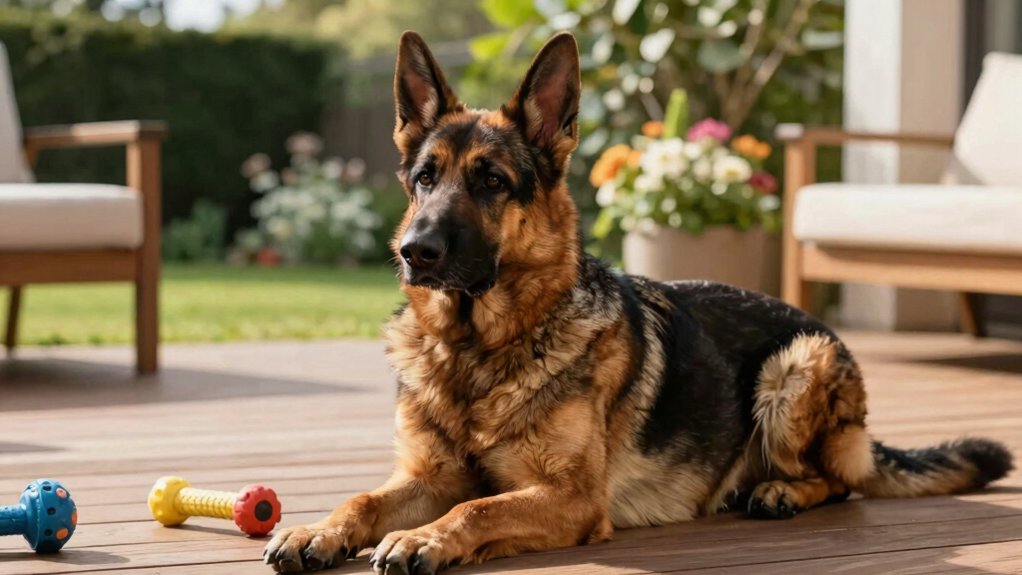
Stay training is one of the fastest ways to help your German Shepherd pause instead of pounce during prey moments. Mastering essential commands and tricks also gives your dog valuable mental stimulation while strengthening obedience and communication.
Start in a low-distraction room, with short sit or down stays, 2–5 minutes total.
Give a clear stay cue plus a hand signal.
Reward calm posture and soft eyes.
Begin with you standing close, then take one step back and return.
Add impulse games, like flying cookie or treat-on-paws, while the dog stays.
Next, build real distance gradually: step back, side step, arc around in a “clock” pattern, then briefly exit the room.
Mark focus on the stay spot, and release only when calm.

FREEZE DRIED RAW BEEF LIVER DOG TREATS – BITE SIZED FOR TRAINING, 2.1 OZ BAG: High protein dog treats made with beef liver. Perfect as high value dog training treats, puppy training treats, and everyday rewards

Wild-Sourced Protein: Our treats are made from all-wild roaming elk and deer protein, sustainably harvested from the Rocky Mountains, offering your dog a unique and premium nutritional experience Wild-Sourced Protein: Our treats are made from all-wild roaming elk and deer protein, sustainably harvested from the Rocky Mountains, offering your dog a unique and premium nutritional experience

PACKED with REAL DUCK: Made with more of the delicious duck your dog loves BLUE Wilderness Wild Bits are the soft and chewy treat made to satisfy their wild side
Proof Commands for Wildlife Triggers on Walks
When you start seeing wildlife triggers on walks, you’ve got to proof your commands where they matter, not just where they’re easy.
First, build recall reliability in quiet, low-distraction spots, then use one clear cue, like a whistle.
Reward instantly—within a second—when your dog moves back. Use small, soft training treats that your German Shepherd can swallow quickly so the reward doesn’t interrupt the moment.
Next, increase distance slowly, first a few feet, then more, keeping distraction mild.
Practice Leave It with the dog in leash control, then add mild wildlife from a safe distance.
Finally, teach Emergency Stop: freeze, sit, or down, cue when the dog is a few feet away.
Use a long line, adjust one thing at a time.
Use Management and Barriers to Prevent Cat Contact
Use sturdy gates and barriers to keep your dog from getting to the cat when you’re not watching—closed doors, pet gates, and secure pens work best. Freestanding or hardware-mounted dog gates can restrict your dog’s access to specific rooms, areas, or parts of the home.
When you can’t supervise, crate or confine the dog right away, and use a house leash (an indoor lead) so you can control their position near the cat.
But do this consistently—each unsupervised moment is a chance for a chase, so set the separation schedule and stick to it.

ADJUSTABLE: Our extra wide gate with included extensions can be expanded to fit 67-71.5 inches wide openings. This walk thru gate with 19.6 inches swing door makes mothers easier to walk through while holding a baby. Stands 30 inches tall. Reminder: Please measure before purchasing to ensure proper fit
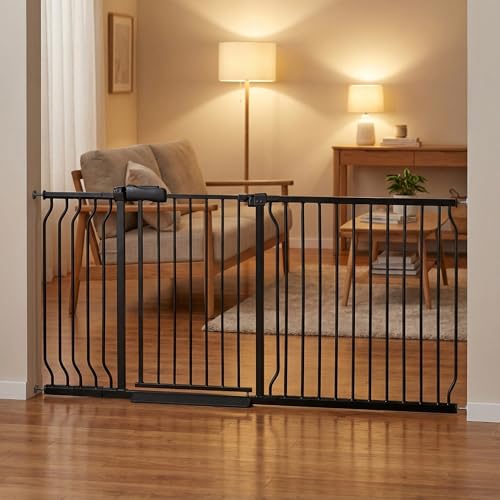
【Customizable Width】Vothco baby gates extra wide fit 67 to 71.5 inches wide openings for doorways stairs. Also this large baby gate with 2.16 inches narrow spacing and 30 inches high for better child or pet safety

【ADJUSTABLE WIDE】Adjustable pet gate can be expanded to fit 67-71.5 inches wide openings spaces. This stair gate with 19.3 inches swing door makes mothers easier to walk through while holding a baby. Stands 30 inches tall. Whether your dooway is wide or narrow, you can find the suitable baby gate or pet gate. Reminder: Please measure before purchasing to ensure proper fit.
Secure Gates And Barriers
Secure gates and barriers are one of the fastest ways to manage your German Shepherd’s prey drive around cats, because they control the situation before the chase even starts.
Use extra-tall pet gates about 180 cm high, with narrow gaps near 3.5 cm.
Choose solid metal or hardwood, so the gate won’t bend or get chewed.
Hardware-mounted gates fit high-impact spots like stair tops, while pressure-mounted gates work for quieter doorways.
Create cat-only zones behind gates, then set cat trees and elevated shelves as escape routes.
Check fittings weekly, and keep latches locked.
You’ll protect cats, and you’ll reduce chase chances.
Prevent Unsupervised Cat Access
First, don’t let your cat rely on luck—set up strict “no dog access” rules using closed-door cat-safe zones, with everything your cat needs inside (food, water, litter, and a comfy rest spot). Keep at least one room dog-free long term.
During the first 3–7 days, fully separate them, with zero unsupervised dog access using closed doors or solid barriers.
Then use room rotation, confining the dog in a crate, kennel, or separate room during cat free-roam.
When you must pass periods, keep the dog leashed or tethered, reward calm focus, and avoid off-leash access for at least a month.
Prevent Backyard Wildlife Incidents With Secure Outdoor Rules
To prevent backyard wildlife incidents, you need secure outdoor rules that keep your prey-driven German Shepherd contained, so you stop the chase before it starts. Start with 6-ft+ perimeter fencing plus a digging barrier (add a fence skirt or bury the base about 1 ft), then follow wildlife time windows by keeping supervision during dawn and dusk when animals are most active.
When you do let them out, use a fixed 6-ft non-retractable leash or long line, and do a quick yard scan before any door opens. Installing outdoor dog gates at patio entrances or side yard access points can also limit your German Shepherd’s movement while you supervise.

TWO STYLES:We have two different styles of dog leash for you to choose from,High Brightness Reflective dog Leashs would be reflective when lights shine on it at night. Can keep your doggie safe during evening walks or runs ,And There is another style available,Our basic nylon dog leashe without reflective effect,Soft and lightweight, hand washable add durability,suitable for daily dog walking.

【LEASH & COLLAR COMBINATION】This slip leash acts as a leash and a collar in one. simply slip the loop over your dogs neck and use the handle end as a leash. leash and collar in one combination that is great for walking, running. give enough freedom to your dog and everything absolutely under your control.

【Professional Retractable Dog Leash】 The ultimate combination: 16 ft strong nylon reflective tape, impact-resistant ABS housing, and a stainless steel anti-chew cable. This design greatly reduces the risk of being bitten through, extending the leash’s lifespan. Augwind’s retractable leash is specifically designed for small to medium dogs under 50 lbs, offering the best value on the market
Secure Fencing And Dig Barriers
When prey drive kicks in, you’ve got to make your fence tougher than your dog’s “chase plan.”
Start with a minimum 6 ft fence for a German Shepherd, and go 7–8 ft if your dog is athletic and likes to clear things during wildlife moments.
Use solid panels, like steel or wood privacy, so there are fewer footholds and less climbing.
Anchor posts so nothing flexes.
Then block digging: bury wire mesh 12–18 inches deep, or add 6 inches concrete footers or L-footers.
Finish with a 12–18 inch rock strip to stop tunnels, keeping wildlife and cats away.
Leash And Long-Line Protocols
For backyard freedom that doesn’t turn into a wildlife chase, set strict leash and long-line rules for your German Shepherd every single time you go outside. Use a 6-ft non-retractable leash for close control, and a 5–10 m long line for anti-hunting management.
Attach the line to a well-fitted back-clip harness, not a collar. Keep the long line loose, then shorten as arousal builds. Never wrap it around your hand.
If it tightens, you stop and stand still. Start in low-distraction spots, then build. Repeat recall, “leave it,” and impulse cues 10–15 times, 3 short sessions daily.
Wildlife Time Windows Management
You’ll prevent a lot of backyard wildlife incidents just by managing *when* your German Shepherd gets to roam. During dawn and dusk, most mammals and birds move in low light, so supervise outdoor time.
Keep free-roaming out of yards for the first 1–2 hours after sunset, and before sunrise.
For bathroom breaks, aim for bright mid-day.
Then, shift your main play and exercise to mid-morning and mid-afternoon.
Before you open the door, do a quick visual perimeter check.
Turn on outdoor lights at night, and add brief noise—clap, call, stomp—to help wildlife leave.
Introduce German Shepherds to Cats With Step-By-Step Separation
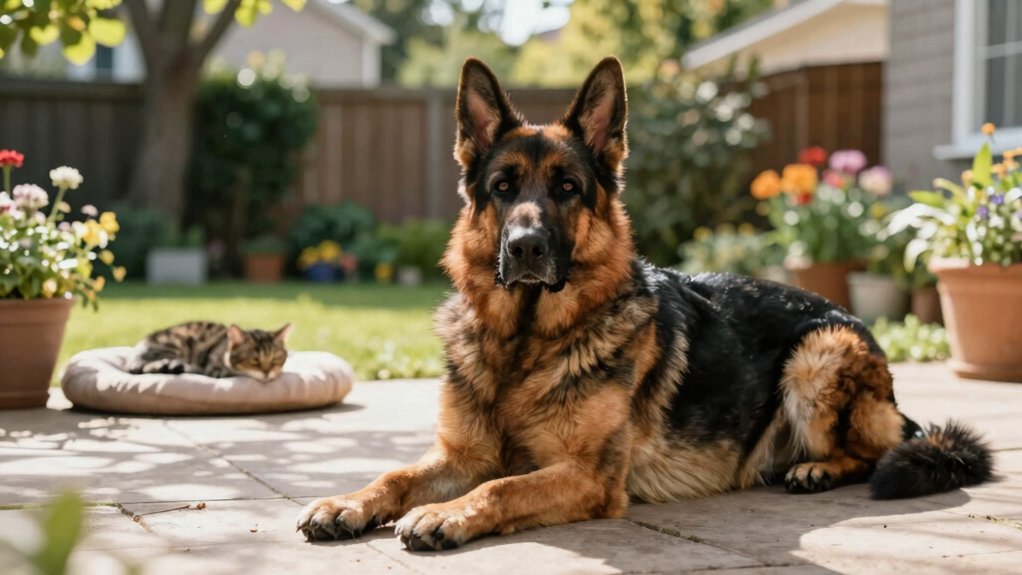
First, keep them fully separated, because that calm foundation makes every later meeting safer. Confine your cat to a single safe room, food, water, litter, hides, and comfort spots included. Block your German Shepherd from that room with a closed door or gate, so unsupervised access never happens.
Let them investigate calmly at the door, then swap to opposite-side feeding through the barrier. Do scent-only exchange for several days, using cloths from cheeks and coats, plus bedding swaps daily. Only then, use a tall gate, leash the dog, and give 3–10 minute visual sessions with clear escape routes. Your German Shepherd’s success with cats depends heavily on socialization and supervision throughout every stage of this process.
Build Enrichment Outlets That Channel Prey Drive Safely
You can channel your German Shepherd’s prey drive safely with structured fetch and tug, plus scent work and tracking. For fetch, use toys that move unpredictably, and keep sessions to about 10–15 minutes with clear start-and-stop rules; for tug, start when you cue it, then stop and reset before arousal runs wild.
Then switch to 30–45 minutes daily of nosework—hide treats, run short scent trails, or try “sniffari” walks that let them search slowly—so their hunting brain gets a job it can finish. Shepradors, a mix of German Shepherd and Labrador Retriever, often inherit high energy, so their daily exercise needs should include both physical activity and mental work.

TUG & FETCH: The Fauxtastic PowerBall Bungee merges the magic of "tug" with "fetch" in one all-weather, bright, and dynamic tug ball. Designed for high-energy dogs, it features an enticing, fluffy bite zone and a textured, weighted PowerBall.

Tug of War Dog Toy: One Chuckit! Ultra Ball is attached to the end of a durable two-ply nylon cord handle to specifically designed to take fetch and tug of war to the next level. Not a chew toy; always supervise your dog when playing with this toy

HIGH QUALITY DOG TOY: Crafted from tough materials, this dog toy, like the Ultra Ball, makes for long-lasting interactive play for energetic fetch games with your dog.
Structured Fetch And Tug
Structured fetch and tug give your German Shepherd a safe, fun way to use prey drive, without training them to chase wildlife or target small pets.
You’ll channel the chase through balls, gripping, and quick tug bites—no live-animal targets needed.
Start with a clear start and stop cue.
Tug rules matter.
You begin the game, and pause fast if teeth touch skin or clothing.
Use a long tug toy, keep motion side-to-side at head height, avoid hard yanks, match intensity to fitness.
Run 10–20 second tug bursts, then ask “sit,” “take it,” “drop,” or “trade.”
End on a calm drop.
Scent Work And Tracking
Scent work and tracking give your German Shepherd a safe, job-like way to “hunt” without chasing cats or small pets.
You redirect prey drive into controlled sniffing and searching, so less anxiety, reactivity, and chase urges show up.
Odor work activates the seeking system.
That often boosts mood, supports impulse control, and makes compulsive patterns soften.
Try a 10–20 minute “Sniffari” walk, giving ground scent time, not fast pace.
In your yard, hide scented toys or food, then let them search.
For tracking, lay a short food trail and follow it.
Do short, frequent sessions, not marathons.
When to Hire a Trainer for Ongoing Chasing Risk
Start by watching closely: if the chase ever causes injury to cats, small dogs, or wildlife, or if it flips into redirected aggression (snapping at people, other dogs, or the leash), you shouldn’t rely on willpower or basic lessons. redirected aggression often develops when a dog’s high arousal from chasing is blocked by a barrier or leash and is displaced onto whatever is closest.
Hire a reward-based certified trainer only if chasing is predictable and no serious harm happened, and you can practice recall and “leave it.”
Call a veterinary or clinical behaviorist if you see biting history, sudden worsening, fixated stalking, or persistent failure to disengage, even with barriers.
Frequently Asked Questions
Can I Train Prey Drive Out of My German Shepherd Completely?
No, you can’t train prey drive completely out of your German Shepherd. You should manage it instead: practice “leave it” and reliable recall, use secure leashes, redirect to tug or games, and avoid high-risk situations around cats.
Why Does My Dog Chase Cats Indoors, Not Just Outdoors?
You notice indoor cat chasing because home layouts trigger your dog’s prey instincts: cats pass close by, escape routes are limited, hallways repeat the “chase track,” and constant, high-frequency movement rehearses and reinforces the behavior.
What Body Language Shows My German Shepherd Is About to Fixate?
A spotlight clicks on: watch for wide “whale eye,” locked stare with unbroken gaze, closed mouth, stiff upright body, sharply forward ears/head extension, rapid scanning, then a freeze and slow crouched stalk.
How Long Does It Take to See Improvement With “Leave It” Training?
You’ll often see improvement in your first week: some dogs learn “leave it” in 1–3 sessions, others in 3–5 days indoors. With daily 10–15 minute practice, expect stronger reliability within 2–6 weeks.
Are Certain German Shepherd Lines More Dangerous for Cat-Chasing Than Others?
Yes—some lines run higher risk: working-line German Shepherds often show stronger prey drive and quicker arousal, like a spark; show lines usually stay calmer. You can protect cats best by choosing temperament, training, and consistent management.