Week 1 starts strong: take your 8-week German Shepherd outside the instant you enter, carry to the potty spot, wait, then reward calm fast. Use a single safe room, leash indoors, and keep trips every 30–60 minutes while awake. Prevent biting by redirecting to toys and using a quick “ouch” + brief time-out for too-hard nips. Book a vet check in 24–72 hours. Teach name and sit in 2–3 minute sessions, crate-sit 5–10 minutes, and start tiny “stay.” When you keep going, you’ll build toward stay and long recalls for the 3–6 month phases.
Swift Summary
- Use a week-by-week plan starting at 8 weeks: potty timing, name recognition, “sit,” crate comfort, and short, frequent training sessions.
- Train potty skills with a consistent cue, immediate outdoor rewards, and trips every 30–60 minutes while awake.
- Prevent early biting by redirecting nipping to chew toys and using quick “ouch”/time-out plus immediate redirection.
- Build marker/reward timing: load the marker first, reward instantly on completed behaviors, and keep sessions to 2–5 minutes.
- Set structure with indoors leash work for loose-leash manners, plus safe-room management using puppy-proofing and a consistent schedule.
Week 1 Checklist (What To Do Day 1)
When your German Shepherd puppy walks through the door, start right away—because the first few hours set the tone for everything. This week-1 checklist is your guide to training a german shepherd puppy. Do the best way to train german shepherd puppy: take them outside immediately, carry them to the potty spot, wait until they eliminate, then reward calm praise fast. Keep toileting timing consistent by taking the puppy out immediately after getting home and again after meals, drinking, sleeping, or play. Keep a single safe room, puppy-proof it, and use a leash indoors day 1. Address puppy biting and nipping early by redirecting mouthing onto chew toys and setting clear boundaries. Feed the breeder diet, schedule meals 3–4 times, and plan potty trips every 45 minutes awake. Book a vet check in 24–72 hours. When can you start training? Right now—see your german shepherd puppy training manual. Steps to train a german shepherd puppy begin here.

Stop Wasting Money on 2-Minute Toys: Engineered for the crushing jaw pressure of 20-80 lb breeds like Labs and German Shepherds, this dual-material bone features a rock-solid nylon core reinforced with a dense rubber sleeve to outlast standard plush toys. A thoughtful pick among durable dog gifts, it saves you from the hassle of constant toy replacements.

Comfort Your Teething Puppy: This Dental Chew is designed to soothe and aid in teething

Puppy Toys for Teething Small Dogs: There are 25 pack, including various rope toys, squeaky plush toys, rubber chew toys, a treat ball, dog bag rolls and a bag holder. Great size for small puppy and just pay less to get more than others
Teach Your German Shepherd Puppy First Cues At 8 Weeks
At 8 weeks, start by teaching your puppy to respond to their name, say it once, then reward the moment they look at you—quick, playful, and in a low-distraction room. Next, teach “sit” using a small food lure, mark the instant their rear hits the floor, and give a treat right away, in 2–3 minute sessions, a few times per day. While you’re doing that, build a positive crate association too, so your puppy learns to relax in there with praise, treats, and short breaks—no punishment, ever. By this age, your puppy has already moved through the first four weeks of rapid sensory and motor development, so its brain is ready to absorb simple cues. Because training can start as soon as the puppy comes home from the breeder, you can begin these foundations immediately after pickup.
Start With Name Recognition
Your first cue can start simple, and it pays off fast: teach your 8-week-old German Shepherd puppy to recognize their name.
Start in a quiet room. Say your puppy’s name once, in a bright, upbeat voice, then wait for a head turn or eye contact. When they orient to you, mark it instantly with “yes” or a click, then deliver a high-value treat right to their mouth or nose. In most German Shepherds, name→look at me is typically learned within a few days with consistent practice.
Do 5–10 repetitions per session, 1–3 minutes total, with short breaks.
Aim for 10–20 micro-reps daily.
In 3–7 days, you’ll see progress, and in weeks, reliability grows.
Teach Sit And Reward
Now that your pup can catch their name and glance toward you, you’re ready for the first real “manners” cue: sit.
Do 2–5 minute sessions, 2–4 times daily.
First, offer a high-value treat near their nose, then slowly move it up and slightly back over their head, so hips lower naturally. When their bottom touches the floor, say “Yes!” (a marker word meaning “right!”), then pay within 1 second with a small soft treat.
Repeat 5–8 clean sits, reward while they stay seated briefly, and end on a win.
In a few days, add “sit” just before the lure.
Build Crate Positive Association
Before you ask for any first cues, help your German Shepherd puppy fall in love with the crate—because a calm crate makes training way easier later. Put the crate in the living area near daily activity, then move it to your bedroom at night for security.
Choose the right size, about 30–36 inches long with a divider. Keep the door fully open at first. Add soft bedding and safe chew toys.
Offer tiny treats just inside, then farther back. Reward every voluntary entry.
Feed meals in or next to the crate. Use high-value stuffed chews only here.
For 8 weeks, close the door briefly during meals, then build to 1–2 minutes and short, 5-minute supervised chew naps.
Never punish with the crate.
Build A German Shepherd Potty Routine (8–10 Weeks)
Set a simple potty cue, like “go potty,” and say it the moment your puppy starts to eliminate, then reward right away.
Keep your schedule tight at 8–10 weeks, taking them outside every 30–60 minutes while awake, after naps, after meals (5–20 minutes after eating), after play, and last thing at night.
But when they pee or poop outdoors, give praise and a high-value treat within a few seconds, so your puppy learns fast that outside is the place to go.
Once potty habits are reliable, you can start introducing essential commands that build obedience and communication with your German Shepherd.
Set Potty Cue Phrase
Pick a simple, clear potty cue phrase—two words is perfect, like “go potty” or “busy busy”—and stick to it every single time. You choose one phrase, calm and neutral, so your German Shepherd puppy learns faster.
Start by saying the cue only as elimination begins, when you see the first squat or posture change. Repeat it every time during successful peeing or pooping, using the same quiet tone.
After a few days to a week, shift the cue slightly earlier, right as your puppy enters the toilet area. Reward immediately with praise or a small, high-value treat, after finishing.
Schedule Outdoor Trips
To build a solid potty routine at 8–10 weeks, you’ll want to take your German Shepherd puppy outside often—about every 30–60 minutes while she’s awake, because her bladder can only hold it roughly 1–2 hours during the day.
Schedule trips right after she wakes, after naps too, and within 15 minutes of meals or big drinks.
Add a potty break after play, running, or crate time, since excitement and freedom trigger elimination.
Use the same outdoor spot each time, and keep her on-leash there.
For nights, expect one to two outings, like bedtime plus around 2 a.m. or 5 a.m.
Reward Instant Elimination
Reward your German Shepherd puppy right away after she finishes peeing or pooping outside—aim for within about 3 seconds—so she actually connects the treat with “toileting in the right spot.”
Wait until she’s done the full squat or posture, then calmly praise her and hand over a high-value, small, soft treat she only gets for successful outdoor elimination.
Keep the leash on, so you stay close and deliver the reward near the potty spot, not when she trots back inside.
Then repeat. But don’t rush, timing matters most.
Use Crate Training To Prevent Separation Stress
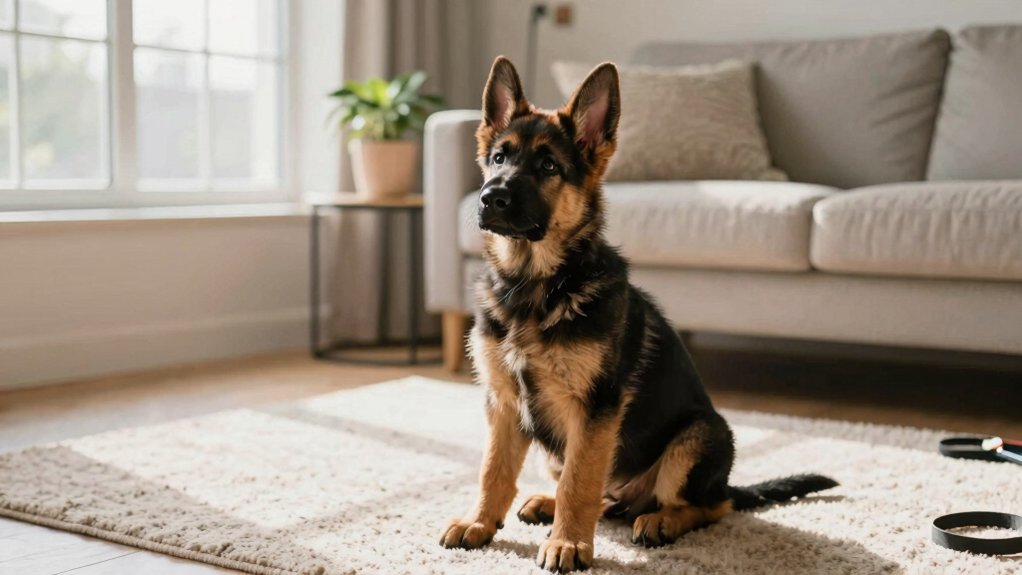
Crate training can help you prevent separation stress, and it works best when you start early.
Set up a comfy “den” with soft bedding, far from busy foot traffic. Add a crate mat designed to give your puppy a comfortable resting surface.
Start with the door open, toss high-value treats near and inside, and let your puppy choose it.
Feed regular meals in the crate, add chew or a food puzzle toy, and say “kennel up” when you reward entry.
Practice short crate sessions—5 to 10 minutes—several times daily, then briefly out of sight.
Schedule crate time 5–20 minutes before you leave.
If you see heavy panting, nonstop howling, or frantic escape, adjust fast.

【Multiple Size Option】Each small/medium/large pack includes 3 identical covers. Small (23"x16") for cats/kittens/tiny pups; Medium (30"x20") for medium dogs/adult cats; Large (41"x31") for larger breeds. Stock up for home, crate, and travel—3 blankets mean you always have a clean, cozy option handy. This value pack of pet essentials beats single-blanket buys by far!

ULTRA SOFT FLUFFY PLUSH SURFACE - EHEYCIGA dog bed made of fluffy and smooth faux fur fabric, which is very soft and comfortable. This fluffy dog bed will provide dogs with soft touch and make them feel secure.

Dual-Sided for All-Season Comfort: This dog bed mat features a reversible design tailored for year-round use. One side is crafted with soft, warming plush—ideal for keeping your pets cozy during colder months. The other side is made from breathable canvas, offering a cool and comfortable surface perfect for warmer days.
Keep Obedience Sessions To 3–5 Minutes
Once your puppy feels comfy in the crate, you’ll get better results by keeping obedience practice short.
Aim for 3–5 minutes per session, because puppies’ attention (focused listening) fades fast.
At 8–12 weeks, your German Shepherd may focus only 30–60 seconds, so do quick, fun repeats.
At 8–12 weeks, focus may last just 30–60 seconds—so keep sessions quick, fun, and repeat often.
At 12–16 weeks, try 1–2 minutes, then stop while they’re still thinking.
Several tiny sessions beat one long drill.
Plan 4–5 blocks daily, no more than 5 minutes each.
If you push longer, you raise frustration, and responses drop.
Keep training success high, and you help them learn faster.
Between sessions, add physical and mental activities to help your German Shepherd use its energy and avoid boredom.
Socialize Safely: 10–12 Week Confidence-Building
Socializing your German Shepherd puppy at 10–12 weeks is your chance to build real confidence—safely.
Keep outings in a carrier, so you show streets, shops, parks, and scents without risky ground contact or unknown dog contact. Once your puppy is ready for short leashed moments, use a comfortable back-clip harness so leash attachment stays quick and easy.
Do short, calm car rides and elevator trips with food rewards, so travel feels normal, not scary.
Practice from a safe distance, watching bicycles, skateboards, strollers, and traffic, while you stay relaxed.
For dog play, choose only healthy, friendly, fully vaccinated dogs in private settings.
Skip dog parks until about 7 days after the final DHPP booster.
Introduce different people gently, including kids, hats, and mobility aids, plus quiet handling.
Teach Marker Rewards And Start Leash Manners
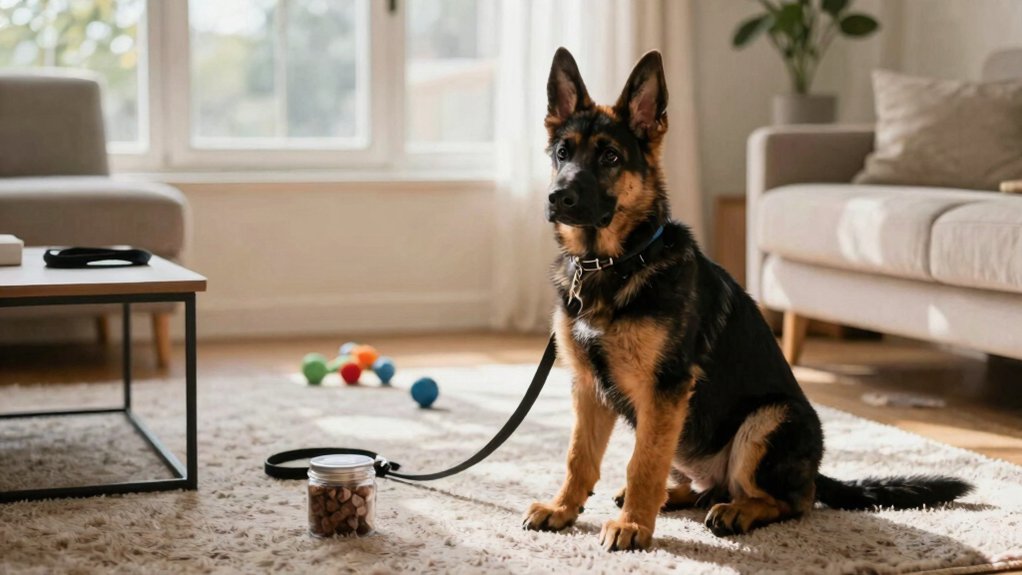
First, load your marker. Pick one signal, like a clicker or a “yes” word. Do 10–20 reps in a quiet room, click then treat immediately, every time—no exceptions. Use the marker at the exact moment your pup finishes the action, like a full sit. Keep sessions to a few minutes, small rewards only.
Next, add a well-fitted harness or flat collar. Start indoors with short, relaxed walks. Aim for loose leash, no tension. If your puppy starts to pull, a no-pull harness can give you better control during these early walks.

Size Instruction: This large dog harness fits chest girth: 27-37 in, neck girth: 19-25 in. Perfect for German Shepherds, Labradors for hiking, walking, or daily outdoor adventures. Breed suggestions are for reference; please measure your dog's chest, neck, and weight for the best fit.

Easy Adjustment - for Ultimate Comfort.Slip into and out of our dog harness effortlessly with the help of 2 quick-release buckles. Experience Unmatched Mobility with 4 Fully Adjustable Meatl Rings, two on the shoulders and two on the chest, which ensure a snug fit that enables unrestricted movement.

【Easy Adjustment - for Ultimate Comfort.】Slip into and out of our dog harness effortlessly with the help of 2 quick-release buckles. Experience Unmatched Mobility with 4 Fully Adjustable Meatl Rings, two on the shoulders and two on the chest, which ensure a snug fit that enables unrestricted movement.
Add Down, Stay, Come, And Impulse Control
Now add “down,” “stay,” “come,” and impulse control to your routine, and keep every session short—about 5–10 minutes, a few times a day.
First, teach down with a gentle lure, mark the exact second they hit the floor with a reward, then repeat 3–5 times before a break; once it’s consistent, add the word “down.”
Next, build stay by stepping back just one pace and holding for 1–2 seconds at first, then practice come indoors at 2–5 feet with light distractions, and always reward calm waiting to boost impulse control. Use the same cue words and hand signals with every family member, since consistency is one of the strongest predictors of how quickly a German Shepherd puppy learns.

GRAIN-FREE PUPPY TREATS: These bite-sized, soft puppy training treats are the perfect reward during training sessions or any time you want to thank your dog for good behavior. Puppy bites contain 6 calories per individual treat!

High Value, Irresistible Flavor: Pups love the taste and aroma, making training sessions more effective and enjoyable

REAL CHICKEN FIRST: Baby BLUE Training Treats are made with delicious real chicken as the first ingredient, plus DHA for cognitive development, making them the ideal reward for your puppy’s best behavior
Teach Down With Lure
Teaching “Down” with a lure is one of the fastest ways to get your German Shepherd puppy into a clear, repeatable position.
Start in Sit, place a small, high-value treat at nose level, then move it straight down between the front paws.
Slide it slightly along the ground in an “L,” so elbows touch first, then reward the instant they do.
If your pup stands to grab, adjust the lure closer to the chest, or pull it back so weight shifts down, not forward.
Next, pair a marker like “Yes” with each Down.
Then keep practicing short Down-and-release moments to build impulse control in daily routines.
Build Stay Duration
Once your German Shepherd puppy can land a solid Down, you’ll build stay duration by stacking tiny wins, not by asking for a long time right away.
Start indoors, low distraction, in sit or down. Add a clear “stay” cue plus a stop-sign hand signal. Reward calmly after 1–2 seconds.
Then add 1–2 seconds per repeat, until you hit consistent 10 seconds.
For longer stays, give multiple small rewards after 10 seconds, so your puppy stays relaxed.
Next, increase distance one step at a time, up to 10 feet, using a long line to prevent breaks.
Practice Come Under Distraction
Great stays set you up for the next skill: when distractions show up, you still want your puppy to respond calmly and fast.
Start indoors, then your fenced garden.
Use short leash or long-line recalls, add down, do a brief stay, and say “come.”
Mark the moment the full down–stay–come chain finishes with a clicker or marker, then reward a high-value treat.
Don’t call if distraction makes success unlikely.
Then proof gradually: toys, distant people, light sniffing.
Make your voice and movement exciting.
Use long line for safety.
Merge “leave it” and “wait,” require ignore, then release to come with big rewards.
Build Bite Inhibition With Structured Play
When you start structured play, you set your puppy up to succeed, not to practice hard biting.
Schedule short sessions, stay in one calm training spot, and keep play brief, stopping at the first signs of escalating mouthiness. Keeping play on a consistent daily schedule, as recommended in house-training routines, helps your puppy learn when play ends.
Use toys—tug ropes, soft toys, food toys, and fetch objects—as the main outlet.
Say “gentle” or “no bite” to teach acceptable mouth use.
If your puppy bites too hard, give a quick “ouch” or yelp, then freeze the bitten body part.
Calmly interrupt: stand up, turn away, or leave, then do a 20–60 second time-out.
Redirect to toys, and tighten bite rules weekly until no teeth touch skin.
Prioritize The 12–16 Week Socialization Window
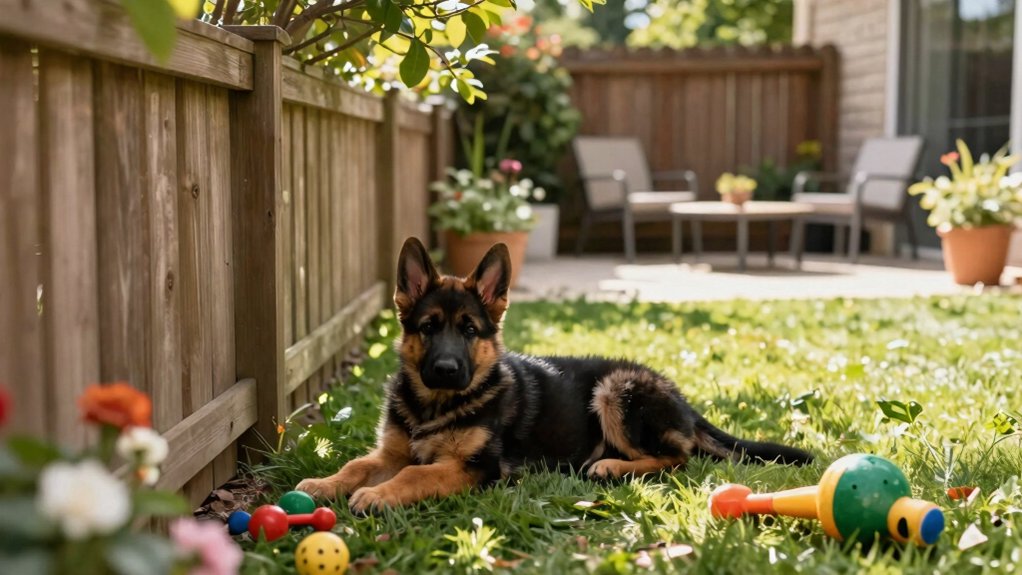
Your bite work goes best when your puppy also learns to stay relaxed and curious around the world, because social confidence lowers the odds of fear later.
The 12–16 week window is the sensitive socialization period.
It starts around 3 weeks, then narrows, usually ending at 12–16.
After 8–12 weeks, fear can rise and beat natural friendliness.
So, offer many short, positive contacts, pair each new thing with treats.
Aim for about 100 different people by 14 weeks.
Use safe, well-run puppy classes before 16–20 weeks.
For German Shepherds, add varied dog body types too.
If you bring home a puppy or young dog from a rescue, ask the foster or shelter what early exposures it already had, since adoption preparation should fill any gaps in its socialization.
Strengthen Loose-Lead Walking And Door Manners
Once you’ve nailed social confidence, you can tighten the basics that make daily life smoother: loose-lead walking and calm door manners.
Start indoors or a quiet garden.
Start indoors or a quiet garden, so your dog can practice loose-leash basics without distractions or overwhelm.
Put on a well-fitted harness, then do 30–60 seconds on leash, rewarding slack immediately.
Use a stop-and-go rule: walk forward, freeze the moment leash tension appears, then wait for slack before you move.
Mark slack with “yes” or a click, and treat by your leg.
Add step counts: 3, 5, 10, 20.
At every door and gate, teach a structured “wait,” letting you open calmly before the first step.
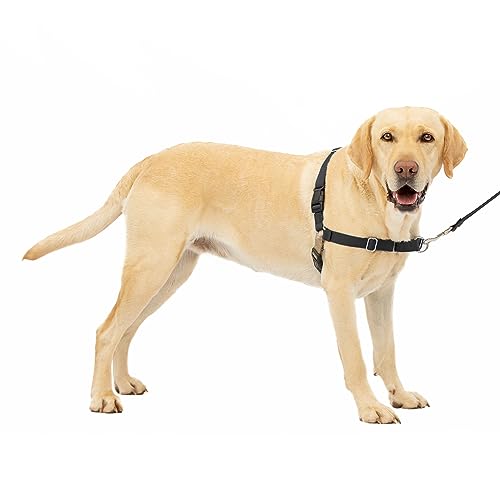
Helps Stop Pulling: Patented Martingale loop design puts gradual pressure on your dog's shoulders to safely and effectively stop pulling; a front leash attachment helps you guide your dog
](https://m.media-amazon.com/images/I/417efD1LaXL._SL500_.jpg)
[UPDATED VESION, EASY TO PUT ON & TAKE OFF] This dog harness has 3 buckles( One is on the neck with Lockable, two are on the chest), NO NEED go through dog’s head. This will let your dog loves to wear harness!

NEW DESIGN! Circular black insert allows the lead to loosen up quickly after tightening, for a more comfortable fit for the dog. It also prevents wear and tear. However if you prefer the original design, the insert is fully removable. Just twist and work free.
Train Stay And Longer Recalls (3–6 Months)
From 3–6 months, you’ll build a real stay by starting with 1–3 second holds, then slowly adding duration up to 10–15 seconds before you add even one step away, all with a calm “stay” cue and an open palm at your side.
Then you’ll strengthen long-distance recall by training “come/here” indoors first, about 5 high-value repeats a day for weeks 3–4, and keeping the puppy’s name out of the recall word.
But as second fear phase hits, you’ll manage it by reducing distance and distractions when your puppy hesitates, then rewarding any brave try fast so recall and stay stay confident, not scary.
Build Reliable Stay Duration
Build a rock-solid stay by teaching timing first, then length, and only then adding distance.
Start at 3–4 months, with sit or down already solid.
Say “stay” and show a flat palm “stop sign” every time.
Teach a release word like “OK” so you end the stay on cue, not your puppy walking off.
Begin with 1–2 seconds, reward, release, repeat in 5–10 minute sessions, 2–3 times daily.
Increase only a few seconds at a time, toward 10 seconds.
Strengthen Long-Distance Recall
Great job on getting your stay dependable—now you’ll use that same calm control to help your German Shepherd come to you from farther away.
Choose one clear recall cue, like “come,” and never swap it with your pup’s name.
First, practice name response: you say the name, your pup looks, then you reward.
Then add the recall cue, once per try.
Start indoors at 2–3 m with minimal distractions.
Move to 5–10 m in a quiet yard.
Use a 10–20 m long line on a harness, holding it first.
Pay every success for at least four weeks, and give jackpot treats.
Manage Second Fear Phase
During the second fear phase, your job is to keep training safe, calm, and successful—especially when your German Shepherd (often around 4–6 months) starts noticing more scary or unfamiliar things.
Start stay training in a low-distraction room.
Do a 1–2 second sit-stay, you stand close, then reward fast.
Add duration by seconds, distance by single steps, daily in short sessions.
Work toward a reliable 1–2 minute stay near 10 feet, then longer holds—15 minutes later.
Use a clear release cue.
For recall, keep it gentle and predictable; avoid forced meetings during this sensitive time.
Handle The 4–6 Month Fear Phase Calmly
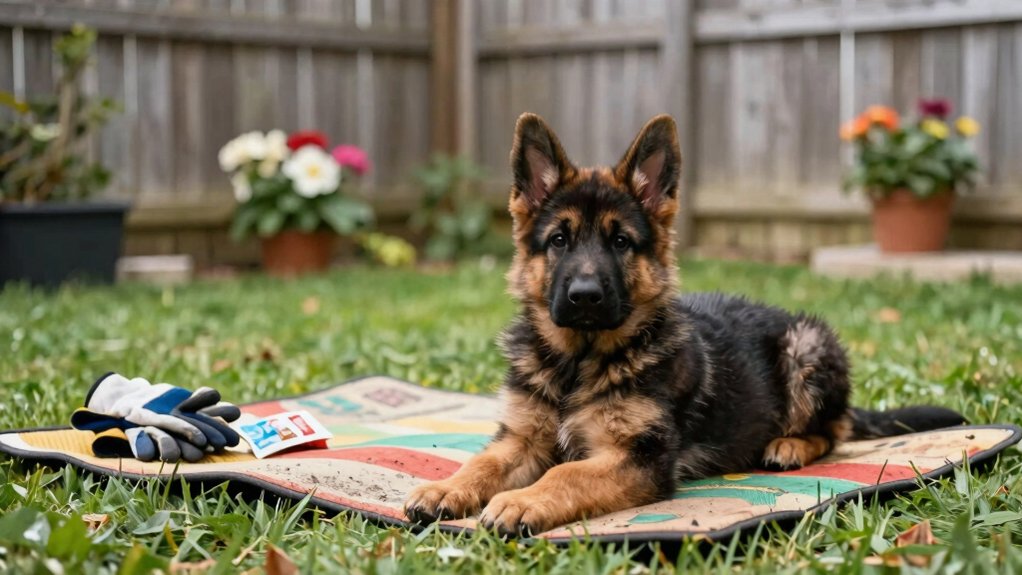
As your German Shepherd hits the 4–6 month fear phase, you’ll probably notice some behaviors swing back—suddenly your pup may get wary of people, dogs, odd objects, or everyday noises that used to be “no big deal.” That’s normal.
Stay calm and neutral. Keep your body relaxed, use a steady voice, and don’t act panicked.
When something startles your puppy, wait 2–3 seconds, then offer low-key praise.
Avoid dramatic reactions, because they can signal danger.
During peak weeks, swap busy outings for quiet routes, keeping distance so your pup can still take food.
Pair triggers with high-value treats, reward voluntary looking, and reduce exposure when withdrawal appears.
Avoid Overexertion With Age-Appropriate Exercise
So, before you crank up the adventure, you need to protect your German Shepherd’s growing joints.
Aim for the guideline: 5 minutes of structured exercise per month of age, up to twice daily.
Keep it in short bouts, not one long session, especially under 6 months.
Growth plates stay open until about 12–18 months, so avoid impact—jumping off furniture, stair sprints, and repetitive ball chasing.
Skip long hikes, distance runs, and forced pacing.
Prefer grass or dirt for “sniffy” walks.
Choose mental games, puzzle feeders, and micro-training.
Watch for limping—then stop and rest.
Follow A Daily German Shepherd Puppy Schedule
Once you’ve set the right limits on exercise for joint safety, you can lock in a daily rhythm that your German Shepherd puppy can count on. Wake, potty, measured meal, potty, brief training or calm play, then nap—repeat several times.
After waking, check water, then breakfast, then a 5–10 minute session, before settling.
Mid-morning, potty and handling, then an uninterrupted nap.
Midday, feed, potty, play or train, then sleep.
For evening, do dinner, potty, gentle family time, final potty, bedtime.
Schedule meals 3–4 times (young) or 3 times (4–15 months). Consistency helps housetraining.
Frequently Asked Questions
How Do I Stop My German Shepherd Puppy From Biting During Play?
Stop play biting by watching for teeth: I once saw a pup freeze—then yelp, stop, and redirect to tug or chew; if he bites again, stand up and pause 30 seconds. Your calm consistency builds bite inhibition fast.
When Should I Start Leash Training, and What Gear Is Safest?
Start leash training at home right after you bring your puppy home, about 8 weeks, in calm indoor sessions. Use a lightweight, well-fitted front-clip harness with a 6-foot leash; avoid collars for walking and never use choke or prong gear.
What Crate Setup Prevents Crying and Separation Distress at Night?
Prevent crying by placing a right-sized crate beside your bed, partly covered for a den feel with airflow, quiet room, familiar scent, and soft bedding. Open the door briefly only for potty, close calmly, and reinforce silence.
How Can I Tell Normal Fear From Unhealthy Aggression in Adolescence?
You’ll tell normal fear by crouching, tail tucking, avoiding eye contact, trembling, yawning, lip licking, and backing away. Unhealthy aggression looks stiff and forward, with hard stare, deep growls, lunging, repeated snaps, and little disengagement.
How Often Should I Practice Obedience Between Socialization Outings?
Practice obedience daily between outings—think “little and often.” Aim for 3–5 short sessions (5–10 minutes) in the morning, midday, and evening, spaced by 1–2 hours, focusing on 1–2 cues to keep learning steady.