Yes, you should treat rabbits as strict herbivores. Their bodies are built to process plants and high-fiber hay, not meat. Meat protein and fat don’t match their gut, which relies on hindgut fermentation to keep digestion moving. If you let a rabbit chew a tiny bit of meat by accident, remove it right away and watch closely for 24–48 hours. Don’t wait—no poop for 8–12 hours is urgent, and you’ll learn more here.
Swift Summary
- Rabbits are herbivores (obligate herbivores), relying on plant-based food for proper digestion.
- Their digestive system is built for hindgut fermentation of fiber in the cecum and colon.
- Meat isn’t nutritionally matched to rabbit gut microbes and can disrupt digestion balance.
- Feeding meat can increase risks like GI stasis, diarrhea, and potentially enterotoxemia.
- Provide unlimited grass hay and leafy greens; if rabbits eat meat, monitor closely for 24–48 hours and contact a rabbit-savvy vet for symptoms.
Are Rabbits Herbivores by Nature?
Yes—rabbits are herbivores by nature, meaning their bodies and diets are built for eating plants, not meat.
Rabbits are herbivores by nature—their bodies and diets are built to eat plants, not meat.
So, are rabbits herbivores? Absolutely.
Are rabbits omnivores? No.
You help your rabbit thrive by sticking to high-fiber plants like grass hay, plus leafy greens and a few pellets.
Their digestive system ferments fibrous food with helpful gut microbes, and they re-eat nutrient-rich cecal pellets to support digestion.
Their teeth keep growing, and fibrous hay wears them down naturally.
This is why you ask “why can’t rabbits eat meat?”—their bodies simply aren’t made for it.
Because rabbits are herbivores, they eat mainly grasses and forbs rather than meat.
Can Rabbits Eat Meat (And Why Not)?
Meat isn’t part of a rabbit’s normal diet, and you really don’t want to test their system with it.
Rabbits are obligate herbivores, meaning their gut is built for high-fiber plants, plus cecal fermentation—fermenting fiber in the cecum—not for meat protein and fat.
Meat digests poorly, and it can throw off the gut bacteria that keep things stable.
That imbalance can trigger GI stasis (food stops moving), diarrhea, and even enterotoxemia.
If they nibble a tiny accidental scrap, watch closely, but don’t “try it.”
For their safety, stick to hay, pellets, and greens.
What Do Wild Rabbits Eat All Day?
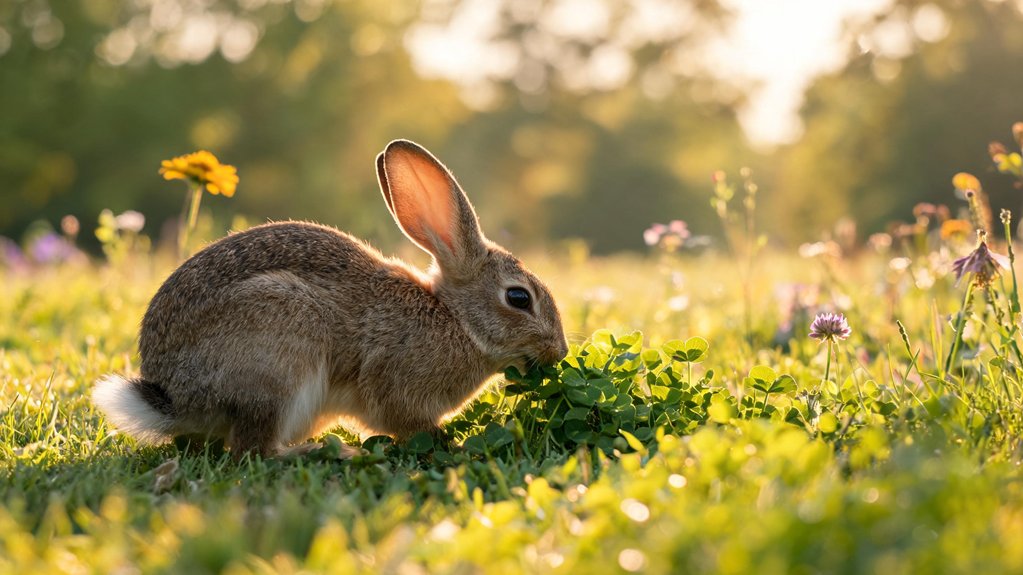
Wild rabbits spend their day grazing, and you can almost picture their “all-day workday” starting at dawn.
If you’re helping a pet rabbit, imagine that steady routine: they nibble, then pause, then nibble again.
Typically, they graze at dawn and dusk, and they often feed again late afternoon.
First, they do about 30 minutes of heavy, fast eating.
Then they slow down for more careful, selective bites.
They stick close to warrens and cover, choosing grass stems, clover, dandelion, chickweed, and other leafy plants.
In fall and winter, they switch to buds, twigs, bark, and evergreen needles.
How Rabbit Digestion Works (Hindgut + Cecotropes)
You’ve probably heard rabbits are herbivores, and their gut is the real reason.
As a hindgut fermenter, you break down tough, high-fiber food mostly in your cecum and colon using gut microbes, which turn fiber into useful volatile fatty acids (VFAs) for energy—think “fuel from fermentation.”
Then you make cecotropes at least once a day, soft, grape-like nutrient-rich droppings you eat to recycle vitamins, protein, and partially digested fiber, so your body can use what dry pellets can’t.
Hindgut Fermentation Breaks Fiber
Rabbit digestion is built around hindgut fermentation, and that’s the key reason rabbits don’t thrive on meat.
You start with plant food, then undigested fiber reaches the cecum, an enlarged fermentation “chamber” in the hindgut.
There, helpful microbes break down digestible fiber into volatile fatty acids, which you can think of as a main energy supply.
But fiber sorting matters.
Large, tough particles move fast to form hard pellets, while smaller, softer fiber stays longer—often hours—so microbes can ferment it.
Meat lacks the right fiber, so you miss this system entirely.
Cecotropes Recycle Nutrients Daily
Behind every healthy rabbit meal, cecotropes quietly recycle nutrients right on schedule, usually in the morning and evening.
You’ll notice soft, mucus-coated clusters, called “soft feces,” “night feces,” or cecal pellets.
Your rabbit makes them as part of digestion, after material moves from the cecum into the colon in every 24 hours.
Then your rabbit eats them right away, a normal habit called cecotrophy.
The mucus coat protects gut bacteria, so they survive the trip through the stomach.
Next, re-digested cecotropes deliver amino acids, B vitamins, and energy from short-chain fats.
That’s why your rabbit thrives on plants.
What Rabbits Should Eat Daily: Hay and Greens
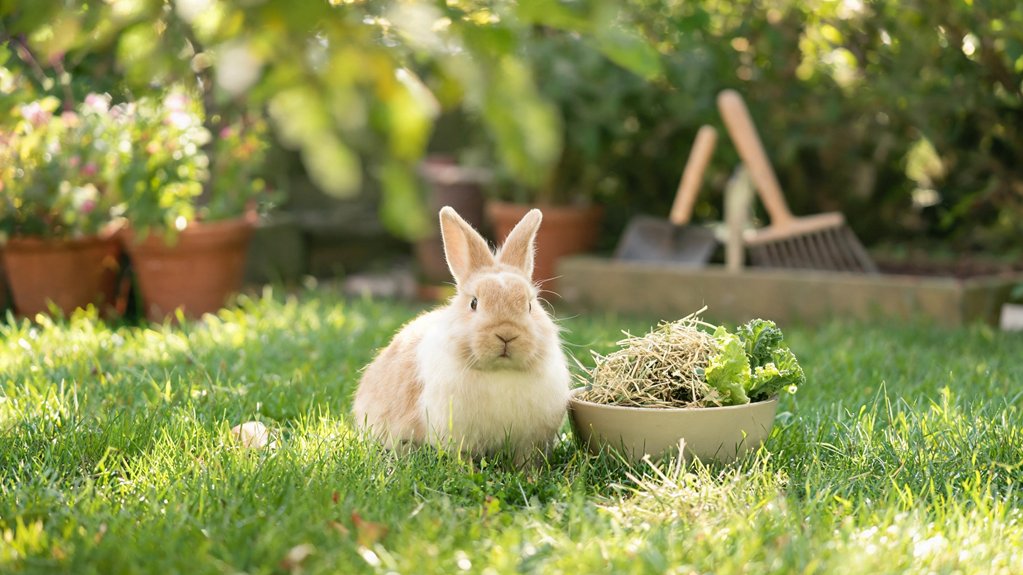
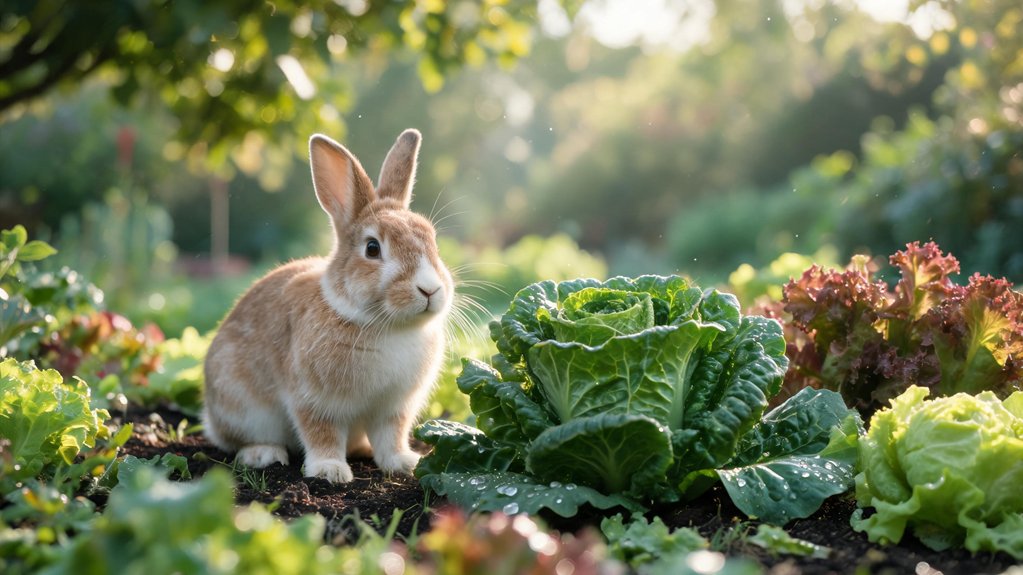
A rabbit’s daily menu should feel simple, because it’s built around two basics: hay and leafy greens.
Give unlimited, good-quality grass hay, aiming for about 80–90% of what your rabbit eats.
Good hays include timothy, orchard grass, or oat hay.
Skip alfalfa for most adults.
Hay’s high fiber keeps digestion moving, and the chewing helps wear down teeth.
Hay and grass are the core of a rabbit’s diet and should be the majority of daily food intake.
Then add leafy greens for about 10–15% daily, roughly 1–2 cups for an average adult, about 1 cup per 2 pounds body weight.
Serve once or split meals, and rotate 3+ types.
Wash greens first.
What Happens If Rabbits Eat Meat?
If you think, “My rabbit just ate a tiny bit of meat—what’s the worst that could happen?”, you’re probably picturing nothing more than an upset stomach.
But rabbit guts are built for nonstop fiber. Meat has none, so it can slow gut movement and upset the helpful cecum microbes. high-fiber diets help support normal digestion and protect against severe intestinal disease.
You might see soft stools, diarrhea, or foul-smelling, misshapen droppings within hours.
And too much protein and fat can trigger “gastrointestinal stasis,” where appetite drops and poop output slows.
That’s an emergency.
If your rabbit acts dull, stops eating, or has fewer droppings, call a rabbit-savvy vet now.
When Might Rabbits Sample Bugs or Meat?
Ever notice your rabbit nosing at a bug or taking a tiny “taste” of something that isn’t plant food?
Ever notice your rabbit nosing at a bug or tasting something beyond greens? It’s usually curiosity—or accidental foraging, not true omnivory.
That’s usually not because they’re omnivores.
You might see it during normal foraging, when insects hide in hay, leafy greens, or grass, and a rabbit accidentally swallows one.
Or your rabbit may do a quick, curiosity nibble when a spider, worm, or beetle moves through the hutch.
If diet quality drops, stress rises, or fiber runs low, they may mouth odd items more often.
In extreme scarcity, some wild rabbits scavenge carrion, but that’s emergency behavior.
What Should You Feed a Rabbit Instead?
Instead of worrying about whether rabbits can eat meat, focus on what keeps their guts happy and their teeth wearing down normally.
Feed your rabbit mainly grass hay, offer unlimited good-quality grass hay daily. This high-fiber plant food supports digestion (your rabbit’s “gut movement”) and steady chewing.
Next, add fresh leafy greens as about 10–15% of the diet, roughly 1–2 cups mixed greens per 2–6 pounds body weight daily.
Offer pellets made for rabbits, high in fiber, about 5% total—around 1/4 cup per 5–6 pounds adult.
Always add fresh water.
When to Call a Vet After Meat Exposure?
After a rabbit eats meat, don’t just shrug and wait. Watch closely for at least 24–48 hours, because gut upset and stasis can start fast.
After a rabbit eats meat, watch closely for 24–48 hours—gut upset and stasis can start fast.
Remove any leftover food right away.
Give unlimited grass or timothy hay, and fresh water, to keep the digestive system moving.
Then call a rabbit-savvy vet if you see warning signs.
Same-day contact if appetite drops, soft stool or diarrhea appears within hours, feces get fewer or misshapen in 12–24 hours, or the belly looks bloated.
Emergencies: no appetite, no poop for 8–12 hours, hunched posture, teeth grinding, cold ears, collapse, or labored breathing.
Also call immediately for big or repeated meat doses.
Frequently Asked Questions
Are Rabbits Omnivores, or Are They Strictly Herbivores?
You’re not feeding a “little scavenger”; rabbits are strictly herbivores, not omnivores. They thrive on hay, grass, and leafy greens. Skip meat—digestion struggles, gut balance goes sideways, and health risks rise.
Why Can’T Rabbits Eat Meat Safely?
You can’t safely feed rabbits meat because their hindgut ferments fiber, not animal protein or fat. Meat disrupts cecum microbes, upsets digestion, and can trigger serious GI problems like stasis, diarrhea, and enterotoxemia. Stick to hay-based diets.
Do Wild Rabbits Ever Eat Anything Besides Plants?
Yes—wild rabbits mostly eat grasses, leaves, and weeds, but sometimes they nibble bark, twigs, stems, and occasional flowers. True meat intake is rare and usually only happens during extreme starvation or unusual conditions.
Can Meat Cause Gut Problems or GI Stasis in Rabbits?
Yes—meat can cause gut problems and GI stasis in rabbits. It’s low fiber and high protein/fat, so it slows digestion, disrupts gut microbes, reduces normal stooling, and can lead to painful stasis. Stick to hay, pellets, and greens.
What Should I Feed Instead of Meat for Good Health?
Feed your rabbit unlimited grass hay daily, plus a small, consistent portion of timothy-based pellets and fresh leafy greens. Offer veggies in rotation and keep fruit occasional. Skip meat completely; it doesn’t support healthy digestion.