You’ll love Florida White rabbits because they’re compact (about 4–6 lb adults) with a pure white, ruby-eyed coat, and their calm, beginner-friendly temperament makes daily care easier. To care well, start with unlimited hay, add pellets (about 1/8–1/4 cup daily), then leafy greens 10–15%. Watch closely for GI stasis—4–12 hours without eating can be urgent. For bright ruby eyes, use moderate, indirect light and shade. Want the full care checklist and show-type tips?
Swift Summary
- ARBA recognition & origin: Developed in 1960s Florida from Dutch/Polish/New Zealand White; accepted in 1967 for the Standard of Perfection.
- Breed appearance standard: Compact 4–6 lb adult, pure white albino coat, ruby-red/pink eyes, and dense flyback fur that snaps back after stroking.
- Type-focused judging: Correct, balanced body shape and smooth topline are prioritized (about 65 points type, 35 condition).
- Care essentials for health: Provide unlimited grass hay, measured pellets, and watch closely for GI stasis—an emergency if not eating 4–12 hours.
- Grooming & housing notes: Groom weekly, improve visibility around reduced vision, and keep bright light out of housing areas.
Quick Facts: Florida White Rabbits
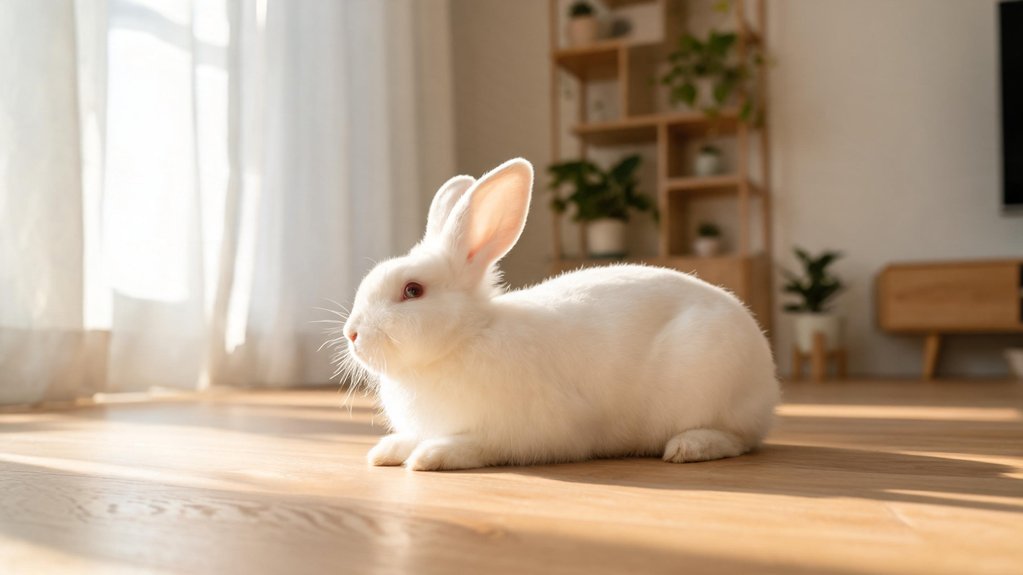
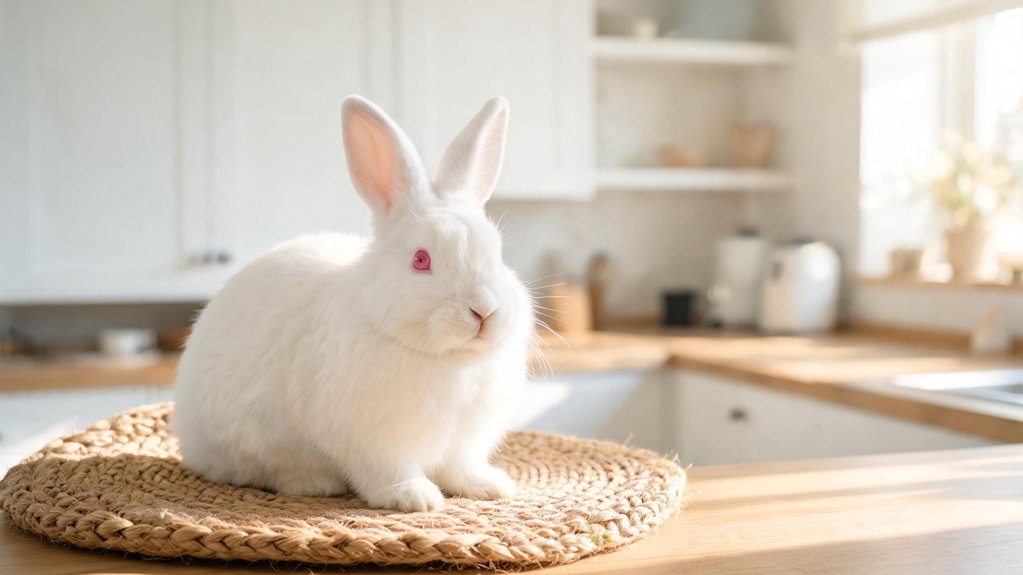
Getting to know the Florida White rabbit starts with its basics, and you’ll be glad you learned them fast. This Florida White rabbit is compact, with adult weight about 4–6 lb, and seniors near 5 lb by ARBA standards. With stable, distinct ARBA recognition achieved in 1967, the Florida White breed is bred to hold type and color consistently across generations. Juveniles typically run around 2.25–4.5 lb. You’ll notice a pure white coat, ruby-red or pink eyes, and short, dense flyback fur that springs back after stroking. With a short neck, small rounded head, and upright ears, it also has fine-boned features and strong hindquarters. Expect calm, gentle, beginner-friendly temperament. Weekly grooming usually works well.
Florida White Origin: Florida Breeding History
While the Florida White looks simple—an all-white rabbit with bright ruby eyes—its story starts with focused work in the Sunshine State.
In the 1960s, ARBA judge Orville Miliken led a Florida breeding project to build a small, all-white rabbit.
You can think of it as a “new strain” created from Dutch, Polish, and New Zealand White stock.
Breeders used selection and linebreeding, meaning they kept the best matches generation after generation, culling misses.
They aimed for a nearly 65% meat-to-bone ratio to support efficient home processing.
By late 1960s, they stabilized type, color, and calm temperament.
Early on, you’ll see it valued for lab work and efficient meat, before it moved into shows.
ARBA Recognition & Breed Standard Overview
You’ll want to start with ARBA’s official acceptance of Florida White since 1967, and then match your rabbit to the Standard of Perfection basics. ARBA recognition was granted by ARBA in 1967, confirming it as a recognized breed. Next, aim for the right size—its senior exhibition weight tops out at 6 lb, and the standard notes 4–6 lb as the acceptable senior range, with ideal senior weight at 5 lb.
For coat and scoring, keep it uniformly white with red or pink eyes (albino), and remember judging centers on body type at 65 points and condition—firm flesh and good fur quality—at 35 points.
ARBA Acceptance Since 1967
When ARBA accepted the Florida White as an official breed in 1967, it didn’t just add a new rabbit to the show lists—it also locked in a clear Standard of Perfection, the rulebook judges use to evaluate what “type” looks like.
You’ll notice the standard favors a compact, well-rounded body, plus pure white fur and ruby eyes, with balance across head, body, and limbs.
And because recognition required multiple generations breeding true, the breed separated from Dutch, Polish, and New Zealand White through consistent coat and type.
Since then, ARBA keeps it prominent on recognized lists, and major shows follow the same key priorities.
Key Body Weight Range
Florida Whites stay delightfully small, with an ARBA adult standard weight range of 4–6 lb, and a strict maximum of 6 lb.
That means as you help your rabbit thrive, you aim for steady growth into a compact, manageable body.
For juniors, plan for about 2.25–4.5 lb, then watch the weight climb as maturity nears.
Many guides suggest an ideal senior show weight around 5 lb, still within 4–6 lb.
But if a senior goes over 6 lb, you’ll be past the ARBA maximum, so adjust feeding and consult a vet.
Coat, Eye, Body Scoring
Now that you’ve got the weight range on your radar, focus on how a Florida White should look at a show-ready level—coat, eyes, and body type all work together.
For coat, aim for short, dense normal fur with smooth texture, lying close to the body, flyback meaning it “snaps back” when stroked.
You want a soft, resilient coat, with a healthy sheen, and thick, well-furred ears.
Next, check eyes: pink or red, bright and healthy.
Wrong eye color can disqualify.
Finally, build compact, short, well-rounded body depth.
See a gradual curve from shoulders to hindquarters.
And keep color pure white, no staining.
Size & Weight Ranges
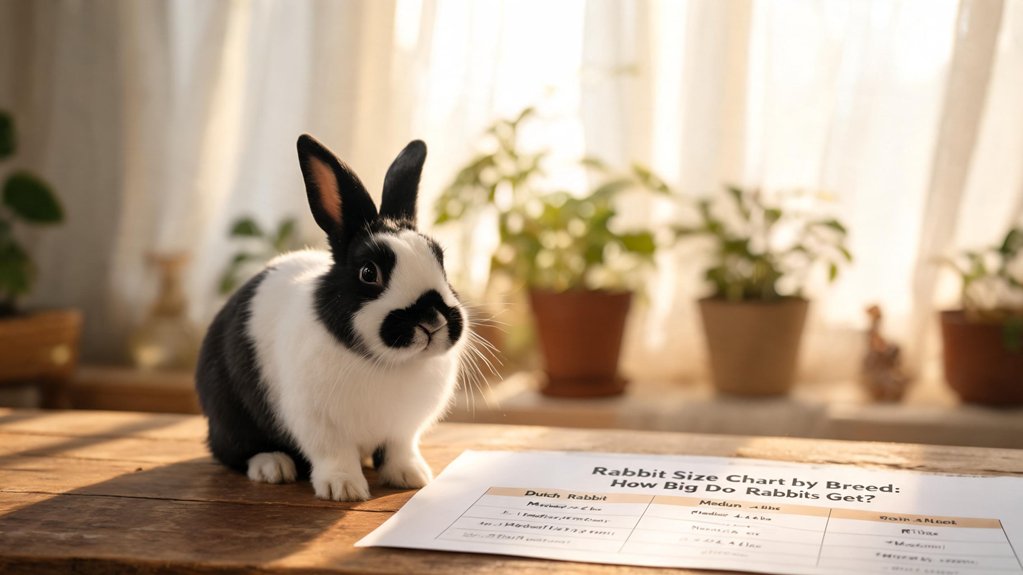
For Florida White rabbits, size and weight run small and compact, so you can plan your setup around an adult body that’s typically 4–6 lb (1.8–2.7 kg).
Aim a little lower with seniors, because the ideal senior weight lands at about 5 lb.
Newborn kits start tiny, around 1–1.5 oz in the first day.
Juniors usually reach about 2.25–4.5 lb before they’re considered senior.
When you handle your rabbit, choose a hutch that fits a compact 4–6 lb adult, and monitor weight as they grow.
Body Type Traits That Win Shows
To win with a Florida White, you focus on that compact, well-rounded body, with balance across shoulders, loins, and hindquarters—not an elongated look.
Next, you build for deep, broad hindquarters and a smooth, even topline, because pinched hips, flat spots at the shoulders, or an uneven back cost you big in type and condition.
But don’t forget the “flyback” fur texture—dense, fine, and springy (meaning it snaps back smoothly)—so your rabbit looks dense, meaty, and healthy right on the table.
Compact Round Body Proportions
When you’re aiming for a Florida White that wins on body type, you focus first on that compact, round outline. Keep the body short, well-filled, and finely boned. You want a solid, meaty shape, not an elongated or narrow look. Aim for the ARBA-typical adult range of 4–6 lb, and keep condition tight, firm, and healthy.
Next, check width and depth through the midsection. The back and shoulders should feel well muscled, with smooth curves across the top line.
Choose a small to moderate head, with a short neck and thick, erect ears—no thin, long ones.
Deep Hindquarters And Balance
Think about your Florida White like a compact “rear-engine” first, because that’s what judges reward most.
You want deep, muscular hindquarters, with the loin and rump feeling firm, not flat or underfilled.
Ideally, the hind part looks wider and deeper than the shoulders, and it blends smoothly into the compact midsection.
Watch the balance, too.
From the front, rear, and side, you should see smooth width progression, no sudden taper, and no “reverse wedge” look.
Pose gently, so the topline rises in a gentle curve, then rounds over hips.
Check straight hind legs and healthy feet.
Dense Flyback Fur Texture
Dial in your Florida White’s coat texture first, because “flyback” fur is a big part of what wins in the show ring.
Short, dense, smooth normal fur should cover your rabbit’s back, sides, chest, and flanks, with high-density underfur.
When you stroke from behind toward the head, the fur should snap back quickly and evenly. That’s flyback: fur that returns to place.
Ideally, it stands up during and after the reaction, not lying flat.
Soft, resilient texture matters too.
Keep it bright white, no yellow tint, and avoid thin patches.
Coat, Color, and Ruby-Eye Details
With the Florida White, your rabbit’s coat and eyes give you the “instant tell,” and you’ll want to check both closely from day one.
With the Florida White, its coat and eyes reveal the “instant tell”—check both closely from day one.
You should see a short, dense, smooth, flyback coat, lying flat and snapping back when you stroke against the grain.
Look for a clean pure white coat, with no yellow tint, no staining, and no stray colored guard hairs.
Any markings can disqualify showing.
Then check the eyes: ruby-eyed white means bright pink or ruby-red, caused by a lack of pigment.
Because vision is reduced, place the hutch away from harsh bright light.
Groom weekly.
Florida White Temperament: Calm & Beginner-Friendly
Florida White rabbits are known for being calm, docile, and beginner-friendly, so if you want a rabbit that’s usually easy to handle, this is a great place to start. You’ll often see a gentle, relaxed nature, not hyperactive, not overly timid. They tend to rest or calmly watch what’s going on.
You’ll also appreciate their high handling tolerance. During grooming, vet checks, and routine petting, they usually stay composed, with minimal nervousness or aggression.
That makes them safer for kids and for first-time handlers. Start with short, positive sessions every day, especially in the first six months. Then trust grows.
Lifespan: Florida Whites With Great Care
A Florida White can live about 5–8 years in most home-care situations, and many owners see the best results when you treat your rabbit like a long-term family member, not a short-term pet.
With great care, some reach beyond 8 years, even into the early teens in exceptional cases.
Aim for dependable basics: feed high-quality hay, about 70% of intake, so their gut stays strong, and teeth wear down naturally.
Give the rest as pellets plus leafy greens and veggies.
Provide constant fresh water, bright indoor light, and stable, protected housing.
Health Issues & Warning Signs
If your Florida White stops eating or you notice fewer droppings, get worried right away—GI stasis (gut slowdown where food and gas can’t move) is the big emergency.
Watch for hunched posture, audible tummy gurgling, and especially reduced or absent fecal pellets, because early signs can look “small” before things get serious.
Also check for dental trouble: if you see drooling, food dropping, or your rabbit won’t chew harder hay, schedule a vet exam soon, since overgrown teeth and sharp molar spurs can quickly lead to weight loss.
Common GI Stasis Symptoms
When your rabbit starts feeling “off,” GI stasis can sneak in fast—and it often starts with food refusal and pain signals you can catch early.
Watch for gradual appetite drop over 2–7 days, then complete anorexia.
If your rabbit won’t eat for 4–12 hours, treat it as an emergency.
You may also see less water drinking.
Check droppings next: fewer, small, dry dark pellets, or none for 6–12 hours.
Stools may look runny, or come with mucus.
Notice hunched posture, lethargy, teeth grinding, bloated firm belly, gas sounds changes, cold ears, pale gums, and fast breathing.
Dental Disease Warning Signs
Dental disease in your Florida White rabbit can start quietly, and then it suddenly makes chewing feel awful—so your rabbit stops eating the way they normally do.
Watch for overgrown incisors, sharp cheek-tooth spikes, uneven wear, or teeth you can’t close over.
And note drooling or wet, matted chin, plus bad breath.
If you see weepy eyes, watery discharge, nasal mucus, or one eye looking pushed out, call a rabbit vet fast.
Also check for quidding, dropping food, pawing at the mouth, jaw swelling, and weight loss from not eating hay.
Early care prevents abscesses and severe weight loss.
Grooming Plan: Weekly Care for Florida Whites
A simple weekly grooming routine keeps your Florida White looking bright and feeling great. Grab a soft or bristled brush, and brush at least 15 minutes, split into 2–3 short sessions so you help skin health and reduce loose fur. These short, dense coats need less work than long-haired breeds.
During seasonal molts, brush every few days, even daily, and consider quick outdoor grooming to keep hair out of your home. Choose a brush suited for loose-fur removal to make shedding sessions faster and more effective.
Check nails weekly, and trim about every 4–6 weeks to prevent overgrowth.
Gently inspect ears, eyes, and skin weekly, wiping dirt with a slightly damp cloth if needed. Spot-clean stained fur, not full baths.
Housing: Space, Flooring & Ventilation
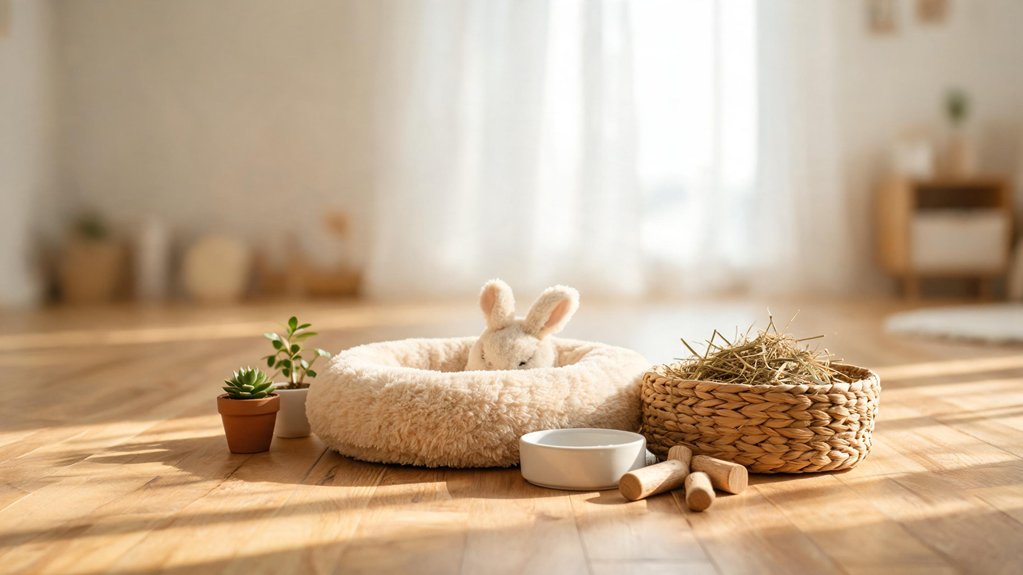
Start with space that lets your Florida White live like a rabbit, not like a statue.
Aim for at least a 30 by 30 inch minimum footprint, and make it tall enough for full hind-leg stand without ears bumping the roof.
You also want room to do at least three relaxed hops across.
Pair the main home with a rabbit-proofed run, so your buddy gets hours of movement, daily.
Next, skip bare wire floors.
Use solid, non-slip surfaces with soft bedding to help prevent sore hocks.
Finally, keep air fresh with good ventilation, but avoid drafts, heat, and stuffiness.
Diet for Florida White Rabbits: Daily Breakdown
Start with hay and grass first, because fiber keeps your Florida White’s gut moving, and you’ll want it available every day as the main staple, about 75–85% of their total food. Choose high-quality hay for daily feeding, since its freshness and texture determine how much fiber your rabbit actually gets.
Then measure pellets, not free-feed—aim for roughly 15–25 g of high-fiber pellets per kilogram of body weight each day, and keep leafy greens to about 10–15%, offered once or twice daily as a handful per adult.
Rotate your greens and veggies, so you cover different safe options without boring their taste buds, and always keep fresh water available and changed daily.
Hay As Main Staple
Because hay keeps your Florida White rabbit healthy from morning to night, you should treat it like the main job of their diet. You want unlimited grass hay available all day, and all night too.
Aim for timothy as your go-to, since it’s fiber-rich and helps digestion. You’ll support gut “motility,” meaning smooth movement through the intestines. And you’ll protect teeth.
Rabbits’ teeth keep growing, and chewing hay helps wear them down. Offer a pile at least as big as your rabbit’s body.
But skip alfalfa for healthy adults. Its extra calcium can be a problem.
Pellets Measured Daily Amount
To keep your Florida White feeling great, measure pellets every day, and don’t “eyeball” them.
As a small breed, your adult Florida White usually weighs about 4.5–5 lb, and maintenance pellets run roughly 1/8–1/4 cup plain timothy-based pellets daily.
A simple plan: 1/4 cup per 4–5 lb body weight, or about 1/8 cup for 2–4 lb, and 1/4 cup for 5–7 lb.
Keep pellets to 10–20% of total diet volume, and offer hay as the main bulk.
This helps prevent obesity.
Greens and Veggies Rotated
Every day, plan your Florida White’s fresh foods like a rotation, not a single “perfect” green you stick with forever.
Keep leafy greens plus veggies at about 10–15% of the diet, with grass hay doing most of the work.
Aim for roughly 1–2 cups total fresh greens and veggies daily for a 4–6 lb rabbit, then adjust for body condition and poop.
Offer 1 adult handful of leafy greens twice daily, plus a small mix.
Use 3–6 plant types, 75% leafy, like romaine, leaf lettuces, endive, arugula, and dandelion greens.
Rotate brassicas like kale or Brussels sprouts, and limit “sweet” carrots to tiny pieces.
Exercise & Bunny-Proofing Tips
Set up your Florida White’s exercise space like you’re planning a mini playground, not like a cage.
Aim for a secure run-plus-resting zone, about 3m x 2m x 1m (enclosure plus run), and give daily out-of-enclosure time for running and binky jumps. Pair the run with a flexible exercise pen so you can expand or reshape the play area as your rabbit grows more confident.
For indoors, set up a home-base at least 10 ft x 6 ft x 3 ft, with separate sleep, toilet, and play spots.
Skip slick tile; paws lack pads, so falls can hurt.
Cover slippery floors with towels or mats.
And bunny-proof fast: block gates, remove cords, hide chemicals, fence plants, and block cabinets.
Lighting & Heat Rules for Ruby-Eyed Rabbits
When you bring home a Florida White (ruby-eyed albino), you’re basically managing light like it’s medicine—use it gently, and protect their eyes from glare. Place their enclosure in moderate, indirect light. Avoid harsh sun and strong overhead fluorescents or LEDs.
Use a steady light–dark schedule, about 12 hours light and 12 hours dark, so their body clock stays calm. Give them at least one shaded hide, inside the room, every day. And don’t blast from darkness to bright all at once; ease in with low night lighting.
Outdoors, require shade all sun hours, especially if UV index hits 3 or higher. Watch for squinting.
Breeding: Nest Box Setup Basics
A good nest box makes breeding for your Florida White go smoother, because it gives the doe a safe, warm spot to pull fur and keep kits clustered close.
Use about 14×8×8 in., so her body fits, she can turn, and kits stay snug.
Add a 4–5 in. front lip to hold bedding and fur.
Make the bottom solid, removable, and easy to disinfect.
Choose an open-top style to reduce trapped humidity.
Place it in a corner away from food and water.
Set the box 1–2 days before kindling, around day 28.
Line with cardboard insulation, shavings, straw cavity, then fur.
Disinfect, dry fully.
Replace bedding 3–7 days after.
Ready-made rabbit nesting boxes are also available in designs built specifically for breeding does, which can save time compared with building your own.
Florida White Rabbit Cost: Purchase vs Monthly Care
Buying a Florida White rabbit can feel like the “easy” part, but your real budget starts right after you bring your new bunny home.
You’ll often find adoption fees around $20–$100, while breeder prices for common pet rabbits run $50–$250, with show-quality higher.
Florida Whites can be pricey at the top end, like a $3,000 listing, but many rescues and classified ads land around $40–$300.
Monthly, you’ll plan for hay ($15–$40), pellets ($5–$20), greens ($15–$50), litter ($15–$50), plus routine vet and an emergency fund.
Many owners budget $60–$180 monthly.
How to Adopt or Buy Safely
First, choose the right source—rescue or breeder—because that decision affects both health and personality.
If you buy, look for an ARBA-recognized breeder, with transparent health history, pedigrees, and references.
ARBA standards support consistent traits and typical maximum weight around 6 lb.
If you adopt, use non-profit or municipal shelters, and trust listings on Adopt-a-Pet or Petfinder, where screening often happens.
Next, check the rabbit: a healthy adult should fit the 4–6 lb range, have a dense pure white coat, and red/pink albino eyes.
Observe calm handling, request a vet check plus parasite screening, and confirm spay/neuter plans.
Also avoid lab or meat-focused lines.
Frequently Asked Questions
Are Florida Whites Fully Albino, and Can Their Eyes Ever Change Color?
Yes—you’ll find Florida Whites are fully albino, with a consistent homozygous albino genotype. Their eyes stay ruby or pink for life. If you ever see changing or pigmented coloring, it usually means the rabbit isn’t true standard.
How Much Daily Exercise Is Safest for Florida Whites in Hot Florida Weather?
In hot Florida weather, you should aim for about 3–4 hours of supervised out-of-enclosure exercise, split into short sessions. Schedule it early morning and late evening, and cut intensity when temps near 27–28°C, especially during heatwaves.
What Grooming Schedule Helps Prevent Hair Ingestion During Seasonal Molts?
Brush your Florida White weekly, then step up to two or three times weekly during shedding peaks—sometimes daily in heavy molts. Use gentle soft-brush strokes, or a comb/mit, and clean up loose fur daily to reduce ingestion.
Can Florida Whites Live Indoors Year-Round, and What Ventilation Is Required?
Florida Whites can live indoors year-round; about 60–70°F keeps them comfortable. You provide steady cross-ventilation, avoid stale air and ammonia buildup, and keep enclosures airflow-friendly. Aim for draft-free, well-aired spaces with reliable airflow.
What Health Signs Mean a Florida White Should See a Vet Immediately?
See a vet immediately if your Florida White stops eating or pooping, has hunched posture with grinding, bloats or looks painful, collapses or seems weak, breathes hard or with discharge, shows head tilt/rolling, has severe diarrhea, bleeding, or trauma.