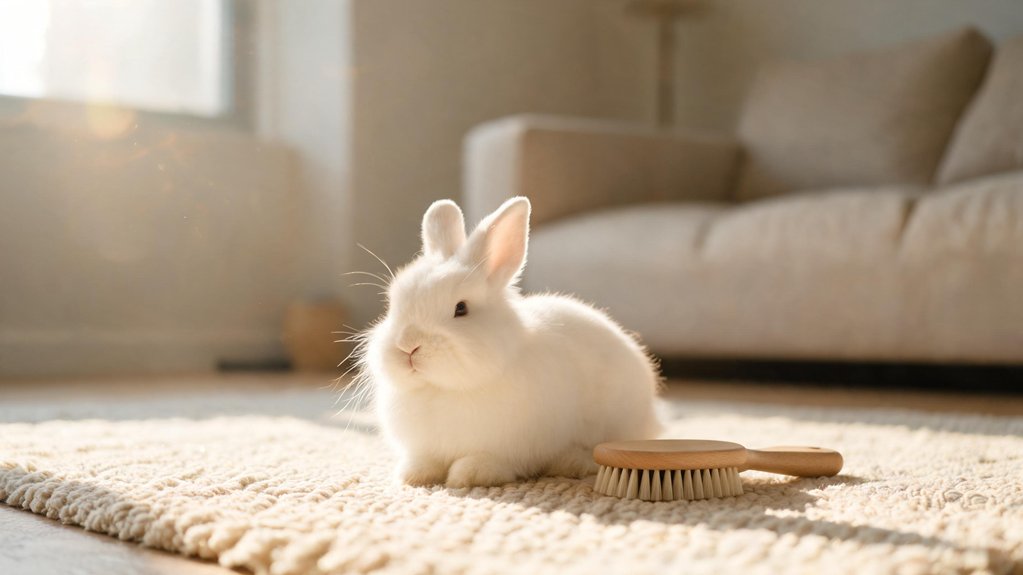
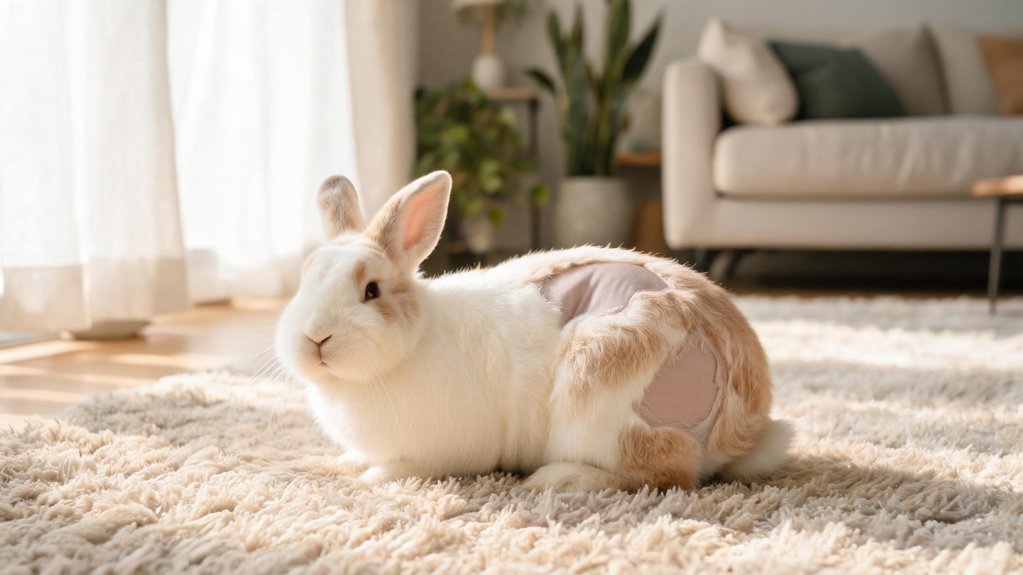
Choose a kit that’s sized for your rabbit as an adult, not a tiny “starter” cage. Look for 14–18 in height, roomy floor space, and two litter boxes—one in the main pen plus one in the exercise area with 4 in+ sides. Get Timothy grass hay free-choice, plain timothy-based pellets, and chew-safe toys. Use dust-free bedding and paper or recycled pelleted litter, skip cedar/pine and clumping cat litter. Compare kits, set up zones, and you’ll get it right faster. Stick around to learn more.
Swift Summary
- Choose kits that include hay racks, stable dishes, and a rabbit-safe litter box with appropriate, non-toxic litter.
- Match kit size to your rabbit’s adult weight; “small” becomes cramped, aiming for at least ~4x body length in floor space.
- Prioritize zoning: separate rest, litter, feeding areas plus an exercise pen for 4+ hours daily.
- Stock day-one supplies: timothy grass hay unlimited, 2 litter boxes, scooper/bags, pellet diet, and a backup water option.
- Use safe bedding and litter (paper/organic pellets) and avoid cedar/pine, clumping cat litter, scented/treated materials, and seed-heavy treats.
Best Rabbit Starter Kits (What to Look For)
Next, make sure you get stable pellet and water dishes, plus a hay rack if included.
Pick a rabbit-sized litter box, safe litter, comfy bedding, and chew toys from untreated wood, willow, sisal, or cardboard. Owners of big or multiple rabbits should look for roomy litter boxes that give their rabbits enough space to use the litter area comfortably.
Choose the Right Kit Size and Setup for Your Rabbit
Before you buy a rabbit starter kit, you’ll want to match the kit’s size to your rabbit’s *adult* weight and movement—because “small” today can turn into cramped tomorrow. Aim for floor space that supports full stretch, turning, and short hops.
As a rule, choose an enclosure with floor area at least about four times your rabbit’s body length, with width for a full stretch-out. Small rabbits often need roughly 6 sq ft, mediums about 8 sq ft, and larger types closer to 9–15 sq ft.
And make sure the height is at least 14–18 inches so they can stand fully without ear/ceiling contact. But prioritize zoning: rest, litter, feeding, plus a connected exercise pen for 4+ hours daily.
Use chew-safe, solid floors. secure retreat helps rabbits feel safe and reduces stress, since they’re prey animals that need a reliable place to hide.
What Day-One Supplies Should Your Rabbit Kit Include
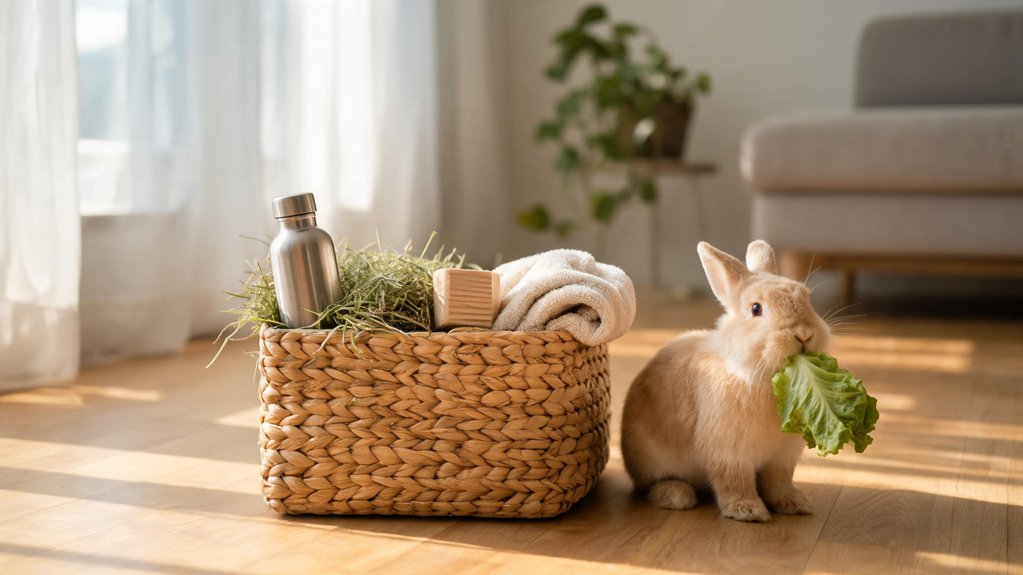
Day one is all about setting your rabbit up for comfort, clean habits, and safe chewing, not about buying a bunch of fancy extras. Start with two rabbit-safe litter boxes, one in the main habitat and one in the exercise area, with deep 4″+ sides. Use paper-based or organic small-animal litter, avoid clumping cat litter and soft-wood shavings like cedar or pine. Add a litter scooper and bags for daily spot-cleaning, and place some hay in the box. Make sure you provide unlimited access to timothy hay (or another grass hay) so your rabbit can graze naturally and keep digestion on track.
Next, set heavy ceramic food bowls, 16 oz+ water, separate stations, a hay rack, and a backup water bottle. Provide bedding, a hideaway, grooming tools, nail clippers, flea comb, and cleaning supplies. Since litter trays need frequent cleaning, pick ones with easy-to-clean designs and sides that are simple to scrub.
Rabbit Feeding: Hay, Pellets, Treat Rules for Kits
Once you’ve got your litter and setup ready, focus your rabbit starter kit on food rules that keep digestion steady and teeth wearing down naturally.
Start with grass hay free-choice, about 80–90% of daily intake. Offer timothy, orchard, or meadow hay. For everyday feeding, timothy hay is a suitable grass hay choice that supplies the long-fiber roughage rabbits need. For under 6 months, you can include alfalfa hay.
Next, add plain, timothy-based pellets, measuring about 1/4 cup per 5 lb body weight daily, roughly 5%. Choose pellets with fiber 18%+ and fat 2% or less.
Finally, keep treats to 5–10% max: leafy greens first, fruit 1–2 tsp, 1–2x weekly. Avoid seed, nut, corn, cereal, yogurt mixes.
Safe Bedding & Litter: What to Use (and Avoid)
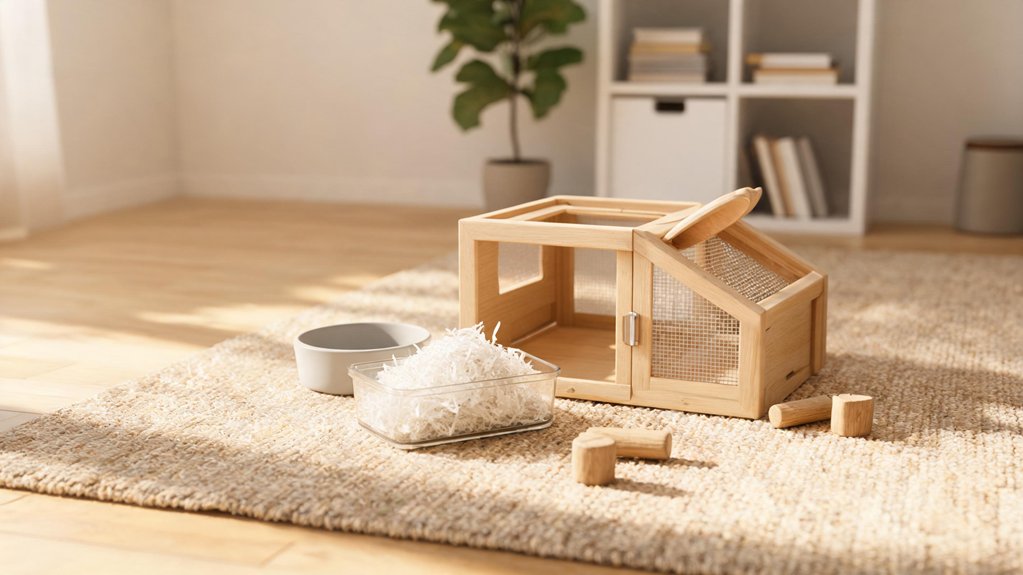
When you pick bedding and litter, you’re choosing what your rabbit touches all day, and what they might nibble a little at night. Choose non-toxic, dust-free, absorbent, low-scent materials.
For floors, use dry dust-free hay or straw for warmth and comfort, plus shredded paper or natural paper bedding for soft, digestible coverage. Add 1–2 inches depth so feet stay cushioned, and so you can clean easily.
For litter boxes, use recycled paper pellets, cellulose, or wood pellets.
Avoid cedar and pine shavings, clay clumping cat litter, corn cob litter, and anything scented or chemically treated.
Maintain dry, clean layers daily.
Rabbit Starter Kit Reviews (Pros, Cons, Who It’s For)
Kaytee My First Home: pros include quick start items, but reviewers say the cage is “way too small,” so plan daily out-of-cage time, and avoid giant breeds.
Ware Sunseed kit: good for dwarf/small rabbits, with a powder-coated wire cage and deeper base, plus easier access doors.
Ware Sunseed kit is ideal for dwarf/small rabbits, featuring a powder-coated wire cage, deeper base, and easier access doors.
Still, latches may fail, so check fit.
Ware 30in: handy bundle, yet ratings near 2/5 suggest durability issues.
Choose kits with chew-safe hay and manageable square footage.
Compare Top Rabbit Starter Kits Side by Side
Here’s a side-by-side way to judge the best rabbit starter kits, so you can skip the guesswork and pick a home that actually fits a beginner rabbit’s needs.
Start with floor space. Kaytee is 42 x 18 x 20 in, with 1-in bar spacing.
MidWest basic is ~37 x 19 in.
MidWest Deluxe is 39.5 x 23.75 x 19.75 in, with a 5.5-in deep base.
Ferplast XXL jumps to 63.8 x 23.62 x 19.68 in, plus wire extension (extra 18.5 x 23.75 x 19.75 in).
Next, check chew-safe latches, detachable bases, and easy-clean doors.
Then match included water bottles, hay feeders, and bedding.
How Much Should You Spend on a Rabbit Starter Kit?
A rabbit beginner kit doesn’t have to cost a fortune, but you shouldn’t try to “win” on the cheapest option either. For most first-time setups, plan to spend about $110–$300 total.
Commercial kits usually run $70–$220, depending on brand and what’s included. If you want a simple, safe start, aim near $110–$150, covering a pen, litter box, bowls, hay, and a chew-safe hideout.
A solid mid-range kit is often $150–$250, with a better enclosure and extra enrichment. Either way, leave room for vet care, since you’ll need it.
Which Rabbit Starter Kit Fits Your Rabbit’s Age & Size?
Choosing the right rabbit starter kit comes down to one big thing, your rabbit’s age and projected adult size, because the enclosure and accessories must let them move normally.
For neonatal kits (under ~8 weeks), skip typical commercial sets, and plan with your vet instead.
For weaned (8–12 weeks), choose safe flooring, shallow litter trays, and easy food/water access.
For juvenile (3–6 months), go bigger, and pick chew-safe toys plus roomy hides for length and zoomies.
For adults, match weight-based adult housing, not “small pet” cages.
For seniors, use non-slip flooring and low-entry litter, so joints stay comfortable.
Frequently Asked Questions
Can I Use a Kit With Wire Flooring Without Sore Hocks?
You can, but you shouldn’t count on it. Use a kit only if at least half the floor is solid, cushioned (untreated wood/plastic) and keep bedding clean and dry. Minimize exposed wire, use smooth bars, and watch for sore hocks early.
Do Starter Kits Include Enough Hay and the Right Hay Type?
About 85–90% of your rabbit’s intake should come from grass hay, so most starter kits don’t offer enough ongoing supply. They usually include timothy, but you’ll still need dust-free refills in proper sizes.
Are All Chew Toys in Kits Rabbit-Safe for Toothwear?
No, not all kit chew toys are rabbit-safe for toothwear. You should check labels and materials—avoid softwoods, painted or plastic toys, and wired parts. Prefer hay cubes, untreated apple/willow sticks, or plain cardboard without staples.
How Often Should I Change Paper Bedding and Litter?
Change paper bedding and litter daily by spot-cleaning damp spots and removing droppings/urine clumps. Do a full litter-box refresh and bedding change about weekly; replace sooner if it smells, feels wet, or you house more than one rabbit.
What’s the First Vet Visit Timeline After Getting a Starter Kit?
Book your rabbit’s first vet wellness exam within 1–2 weeks, ideally within 7 days. Imagine it like opening a travel suitcase: you spot hidden bugs early. Bring food list and fresh droppings; ask about spay/neuter.