Yes, you can feed rabbits lettuce, but treat it like a daily supplement, not a main food. Keep unlimited grass hay as the base. Choose romaine, green leaf, or red leaf, and aim for about 1 large handful per rabbit per day. Skip iceberg lettuce—it’s mostly water and low fiber, so it can cause watery, loose droppings fast. Introduce slowly, try one small leaf once daily for 2–3 days, then build if stools stay firm. If poops get soft, stop greens and keep hay—there’s more to learn.
Swift Summary
- Yes, rabbits can eat lettuce, but it should be a daily supplement, not a main food.
- Safe choices include romaine, green leaf, red leaf, and other darker leafy types like butterhead or cos.
- Avoid iceberg lettuce due to high water content and low fiber, which can cause soft or watery droppings.
- Use small portions, starting slowly, aiming around a large handful daily per rabbit.
- If droppings become soft or watery, stop lettuce, offer unlimited hay, and contact a rabbit-savvy vet if symptoms persist.
Can Rabbits Eat Lettuce Safely?
Yes, you can feed your rabbit lettuce safely—just don’t treat it like a main food. If you’re wondering should rabbits eat lettuce, the answer is yes, but only as a daily leafy-green supplement beside unlimited grass hay. 10% of diet Leafy greens should make up about 10% of a rabbit’s daily intake, while hay and fresh grass make up the majority. Choose what lettuce rabbits can eat: romaine, green leaf, red leaf, butterhead, Boston bibb, cos, frisée, and mache. You can serve about a large handful per rabbit each day, and offer variety. But why can’t rabbits eat iceberg lettuce? It’s pale and high in water, and guides warn pale lettuces can worsen loose stools when overfed. Always wash, keep it crisp, and introduce new types slowly.
Avoid Iceberg Lettuce (Diarrhea Risk)
Avoid iceberg lettuce, because its super high water content can leave rabbits with watery stool and an upset tummy, especially if you overfeed it. When you give too much, it dilutes the food in their gut, and the low fiber can’t keep digestion moving smoothly—think soft droppings that can turn into diarrhea. Iceberg lettuce isn’t toxic, but it offers much less nutrition than darker lettuces, so it’s better to skip it and choose romaine, red leaf, or green/butter lettuce instead. If you want leafy greens, stick to darker options and offer a daily small handful, not iceberg, so you keep things steady and comfortable.
Iceberg High Water Content
Iceberg lettuce looks crisp and invigorating, but it’s mostly water, and that watery mix can really upset your rabbit’s digestion.
So, why can’t rabbits have iceberg lettuce? Because it’s mostly water, over 95–96% water, so it gives little fiber and almost no nutrition.
With less solid material, your rabbit’s gut may fill too fast, leading to soft stools or loose droppings.
If you’re wondering what lettuce rabbits eat, choose greener, leafy options instead.
For what greens rabbits can eat, stick with romaine, red leaf, and green leaf—offer a small daily portion, with unlimited grass hay and pellets kept small.
Diarrhea Risk With Overfeeding
Overfeeding lettuce can put your rabbit’s gut into trouble fast, especially with iceberg.
When you offer big portions, you replace the hay-based fiber your bunny needs. That low-fiber swap can disturb cecal flora, the bacteria in the cecum that help digest food, and it can tip stools from normal to soft, then watery.
And if you increase lettuce suddenly, you raise the odds of gas, bloating, and appetite changes.
Stick to small, daily leafy greens, and keep them as a supplement.
If your rabbit gets runny droppings, stop lettuce, and call your vet.
Avoid iceberg.
Safe Lettuce Types: Romaine, Leaf, Red
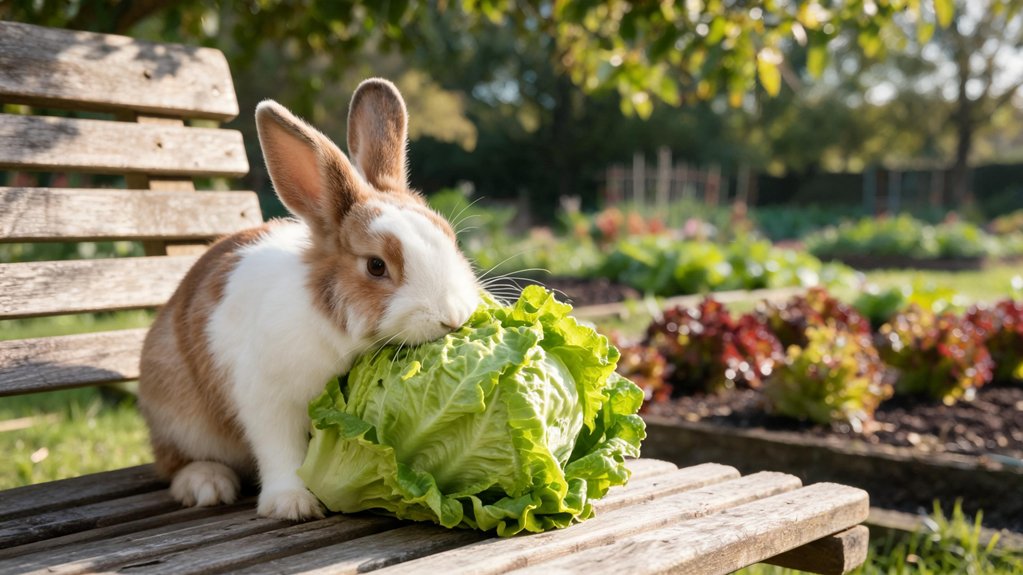
You can feed rabbits romaine lettuce every day as part of their daily leafy greens, just keep portions moderate and never skip unlimited grass hay.
Choose green leaf when you want a milder option for everyday eating, and think of red leaf as your “variety boost,” since its deeper color often brings extra plant compounds along with vitamins A and K.
Aim for at least a couple different leafy greens each day, so your rabbit gets balanced nutrition without overdoing lettuce.
Romaine For Daily Greens
Romaine lettuce can be a great, daily leafy green for pet rabbits, so long as you keep it as part of a balanced routine. You’ll pair it with unlimited grass hay, since that’s their main food.
Then, you offer fresh greens like romaine each day, aiming for about 2 cups chopped vegetables per 6 lb body weight, mostly leafy.
Romaine’s dark leaves provide vitamin A and vitamin K, supporting vision and normal clotting. But don’t overdo it.
Serve it plain, washed, and mixed with at least two other greens.
Add new romaine gradually, and watch stool.
Green Leaf Low Calcium
Green leaf lettuce is a smart, everyday option when you’re building your rabbit’s leafy green routine, especially if you’re watching calcium.
It’s very low in calcium and also very low in oxalates, which helps lower stone risk for some rabbits.
You can serve it often, but still pair it with unlimited grass hay and a small amount of pellets.
For best digestion, feed a small handful daily, then add more only if your rabbit stays normal and comfy.
Skip iceberg, too.
Green leaf offers crunch, hydration, and fiber that supports gut movement.
Red Leaf For Variety
With the basics already covered, red leaf lettuce is a great way to add variety to your rabbit’s daily greens without turning it into a “too much of a good thing” situation.
It’s a safe, low-oxalate, low-calcium leafy option, and it fits well beside unlimited grass hay.
You can serve it fresh, 1–2 cups of leafy greens per 4 pounds of body weight each day, depending on your rabbit’s size and appetite.
Aim for 3 different greens daily, like romaine, leaf, and red.
And yes, hydration matters—red leaf is water-rich, too.
Rotate it, don’t replace hay.
How Much Lettuce per Day (per Kg/Body Weight)
You can, but you still need to measure, because lettuce counts as a leafy green, not an “unlimited” food.
Aim for about 1–2 cups packed mixed leafy greens per 2 lb (≈0.9 kg) body weight daily, which is roughly 50–100 g per kg.
Lettuce is only part of that.
Keep total fresh greens at about 5–10% of the rabbit’s overall daily food, with hay staying unlimited.
For a 1 kg rabbit, offer ~1–2 cups mixed greens, then make lettuce just one slice of the mix.
Watch droppings, adjust gently.
What Benefits Lettuce Brings to Rabbits
Lettuce can be a helpful part of your rabbit’s daily leafy greens, mainly because it brings plenty of water and gentle fiber to the mix. With romaine or red leaf, you boost hydration, which supports smooth digestion and helps the gut keep things moving.
And the fiber helps prevent gut stasis, a dangerous slowdown of the rabbit’s digestive tract. Plus, dark lettuces like romaine supply beta-carotene for vitamin A, vitamin K for normal blood clotting, and antioxidants like anthocyanins.
Choose romaine, red leaf, or green leaf often, but still keep hay as the everyday base. Since hay should make up the bulk of the diet, selecting high-quality grass hay for daily feeding matters just as much as the greens you add.
How to Introduce Lettuce Without Diarrhea
Before you add lettuce to your rabbit’s day, go slow—this keeps their gut (the digestive system) steady and helps you avoid the messy diarrhea that fresh greens can sometimes trigger.
Offer one small leaf of romaine or green/red leaf once daily for 2–3 days. Don’t add any other new foods during that test.
If droppings stay firm, increase slowly over 5–7 days, aiming for about 1 cup chopped leafy greens per 2 lb body weight.
Check droppings every day. Keeping your rabbit in a calm, quiet area with a comfortable resting spot makes it easier to notice changes in their stool.
If stools get soft or watery, remove lettuce right away and call a vet if it lasts over 24 hours.
When to Stop Greens and Go Back to Hay
When greens start taking over, it’s time to switch back to hay and give your rabbit’s gut a break.
If you notice soft, unformed poops or more cecotropes (night droppings), after greens went up, cut greens back right away and offer unlimited grass hay.
If you see diarrhea or very wet feces after a sudden change, stop greens and prioritize hay, then call a vet.
Reduced appetite, scant poop, or signs of stasis (gut slowing) means urgent vet care, keep hay going.
Also stop if greens replace hay—aim for hay to be about 80–90% of total food.
Then reintroduce slowly.
Can Rabbits Eat Stems and Seeds?
Can rabbits safely munch on stems and seeds? Yes, with smart limits.
You can offer dark lettuce stems (romaine, green leaf, red leaf) as part of your daily leafy greens, not the main food.
Iceberg stems and leaves aren’t for rabbits, because they contain lactucarium and may cause harmful, sedative effects.
Broccoli and other fibrous, dark leafy stems can work in moderation, since tough texture helps chewing and gut function.
Now seeds: avoid seeds in pellets, mixes, treats, and birdseed. They’re high-energy, can cause choking, and may trigger serious gut problems.
Stick to hay, daily greens, and a small pellet portion.
Frequently Asked Questions
Can Rabbits Eat Lettuce Every Day Safely?
Yes, but you shouldn’t feed lettuce every day as the only green. Offer safe dark lettuces like romaine/green leaf in small mixed daily servings, alongside unlimited hay and other greens, and skip iceberg entirely to prevent diarrhea.
Why Is Iceberg Lettuce Riskier for Rabbits Than Romaine or Leaf Lettuce?
Ironically, iceberg’s “crisp” appeal hides risk: it’s mostly watery and low-fiber, so it can upset digestion. It also contains lactucarium, which may slow things down. Feed romaine/leaf instead for daily roughage.
What Other Greens Besides Lettuce Can Rabbits Eat?
You can feed rabbits many leafy greens besides lettuce: rocket/arugula, spring greens, watercress, carrot tops, basil, coriander, dill, mint, and dandelion greens. Rotate options, offer daily leafy greens, plus hay and a small pellet portion.
How Much Leafy Lettuce Should I Feed My Rabbit Daily?
Like a steady lamp, feed your rabbit about 1 cup mixed leafy greens per 2 lb (0.9 kg) body weight daily, with lettuce making up only part of that. Keep hay unlimited, and add pellets sparingly.
What Should I Do if My Rabbit Gets Soft Stools After Lettuce?
If your rabbit gets soft stools after lettuce, pull lettuce and fruit right away, keep unlimited grass hay and fresh water, and monitor stools closely. Reintroduce greens slowly later. Call a rabbit-savvy vet if stools stay loose or your rabbit acts sick.