You’ll keep your rabbit clean and comfy with a 5–10 minute routine. Start on a towel on a non-slip surface, brush lightly with hair growth, and stop once only loose fur comes out. Weekly is great for short coats, but medium needs 1–2x, and long-wool (Angora/Lionhead) needs daily to prevent mats. Check armpits, groin, belly, feet, and tail base, especially in warm months for damp spots, eggs, or odor. Avoid baths and cutting mats; learn safer fixes next.
Swift Summary
- Groom 5 minutes weekly for short coats, and more often for medium/long coats, especially during heavy shedding.
- Brush in the direction of hair growth, using appropriate tools (soft brush for loose fur, wide-toothed comb for tangles).
- Check mat-prone zones—armpits, groin, belly, feet, tail, and underchin—during each grooming session.
- Prevent mats by keeping fur dry and clean; spot-clean soiled areas and change bedding frequently.
- Avoid baths and cutting tight mats on sensitive skin; loosen gently in small sections or seek professional help.
Your 10-Minute Rabbit Grooming Routine
Do this 10-minute grooming routine once a day, so you can keep your rabbit’s coat healthy and catch problems early, without turning it into a big stressful event.
In your rabbit grooming, start by placing them on a towel, in a quiet spot.
Gather what to brush rabbit with: a soft-bristled brush, a wide-toothed comb, a fine-toothed comb, pet-safe wipes, and a grooming glove.
Gather a soft-bristled brush, wide- and fine-toothed combs, pet-safe wipes, and a grooming glove to groom your rabbit safely.
Why is it important to groom rabbits? You remove loose fur, check for mats, and do a quick health look. Regular grooming helps prevent *(mats)* from getting worse.
Brush with light pressure, always with hair growth. A soft-bristled brush or grooming glove is effective for loose fur removal during daily sessions.
Then spot-clean small spots, and check behind ears and around the tail.
Avoid full baths.
How Often Should You Brush a Rabbit?
When you finish your 10-minute routine, the next question is simple: how often should you brush your rabbit?
Aim for at least once a week. Short-haired rabbits usually need weekly brushing. Medium coats do better once or twice per week. Long-haired, Angora, and wool breeds need daily brushing to prevent mats—those painful fur clumps. During heavy molts, which can hit two to four times yearly, brush daily, sometimes multiple sessions. Older rabbits and those with arthritis, or dental issues, need more help too. And yes, can you get a rabbit groomed, can you take rabbits to the groomers—often, for mats that are hard to manage.
When brushing, remember that rabbits have delicate skin and can develop irritation or infection when mats trap urine and feces against the body (mats).
Pick the Right Brush and Comb
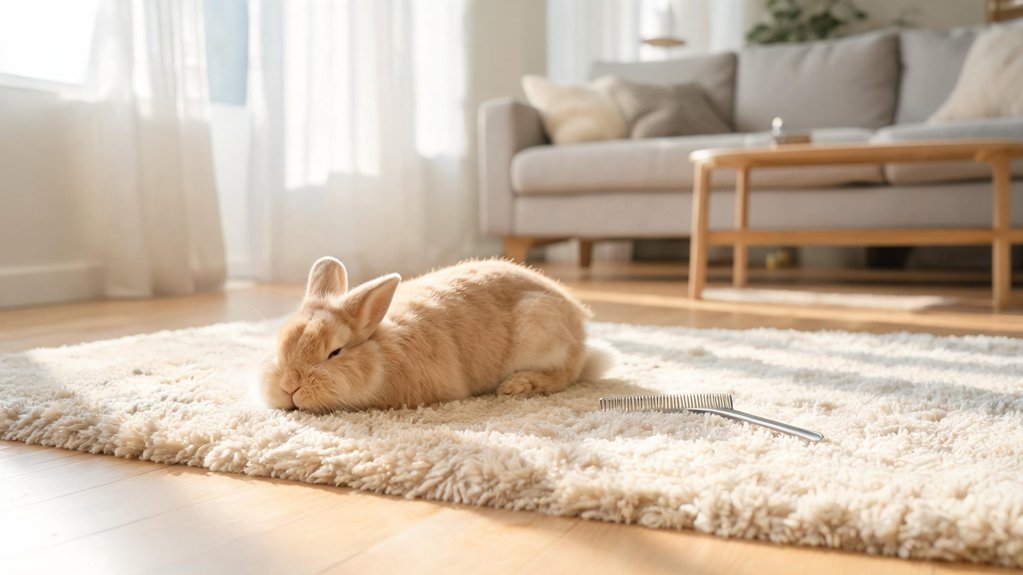
Pick your tools based on your rabbit’s coat, because your rabbit’s skin is super delicate, so go gentle. Matching the brush to your rabbit’s shedding needs and coat type makes grooming easier, since different tools suit different fur textures.
Use a soft-bristle or rubber brush for everyday loose hair removal, and switch to a wide-toothed comb to loosen tangles before you try to tackle anything matted.
If you find mats, use a mat splitter carefully, work slowly in small sections, and never force—full baths are risky for rabbits, so stick to brushing and spot-cleaning instead.
Soft Brushes For Sensitive Skin
Soft brushes and gentle combs can make rabbit grooming feel safe instead of scary, because rabbit skin is delicate.
When you choose tools, pick soft-bristled brushes made for rabbits or small animals, not generic cat or dog ones.
Wide, flexible bristles lift loose hair with less chance of scratching.
For extra sensitive, older, or easily annoyed rabbits, use a rubber grooming brush or silicone massage brush, they feel comforting.
Brush with short, calm strokes, follow the fur’s growth direction, and use gentle pressure.
Keep sessions brief.
Most rabbits need weekly brushing, while long-haired ones need more during shedding.
Leave hindfeet unbrushed.
Combs For Tangles And Mats
Combs work best for tangles and mats when you match the tool to your rabbit’s coat length and how sensitive her skin is.
Use a wide-toothed comb for long-coat tangles, especially Lionhead and Angora types.
Its wide spacing pulls less on thick fur, use it gently on mild mats, and stick with blunt-ended combs to avoid scratching.
For daily loose-hair control, try a slicker brush or a metal combination comb.
They lift dead undercoat, smooth the topcoat, and help prevent knots.
For stubborn undercoat mats, choose a fine-toothed flea comb or deshedding comb, but comb only the ends, stop if she tenses.
Mat Splitters For Safe Removal
Before you reach for scissors, grab a mat splitter—the safer tool that breaks up clumped fur without cutting your rabbit’s thin skin.
Choose a dual-sided splitter with 12+23 or 6+11 teeth, and use finer blades for bunny fur.
Go slow, use low pressure, and work in small sections.
First, gently pull the mat fibers apart by hand.
Then slide the tool in from the mat’s outer edge, moving gradually toward the center.
Hold nearby fur close to the skin so it won’t tug.
But don’t split tight mats on skin, especially behind ears or genital areas—use a vet or groomer instead.
Groom Short-Coated Rabbits Without Irritating Skin
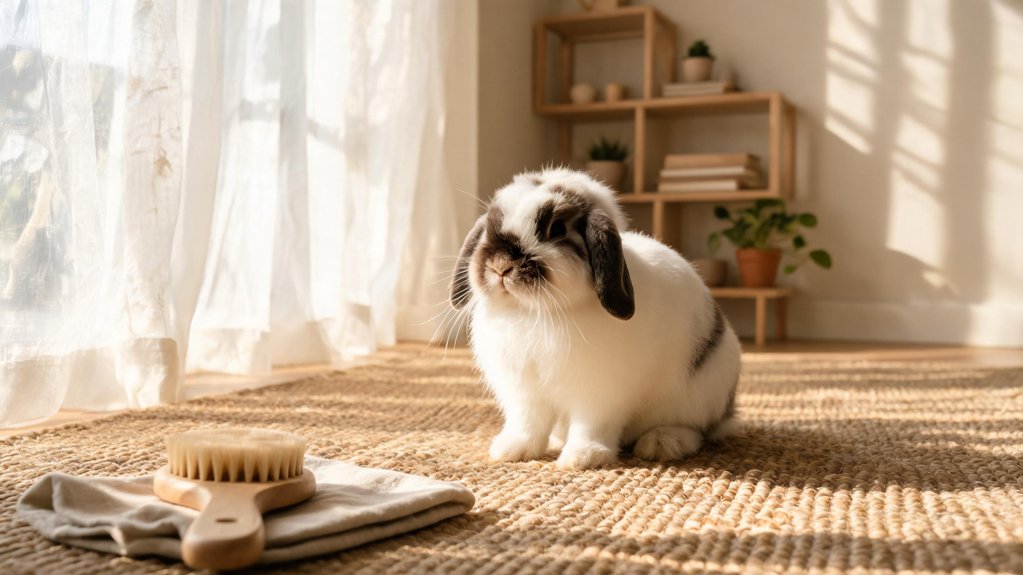
When you groom a short-coated rabbit, use a soft bristle brush, and work with the fur’s natural direction using short, gentle strokes.
Keep sessions brief, about 5 minutes, and stop once you’re pulling only loose fur—don’t keep going over one spot, because friction can irritate sensitive skin.
After each pass, watch for redness, flaky or scratchy patches, bald spots, or scabs; if you see those signs or your rabbit won’t settle, it’s time to pause and check for mites or other skin problems.
Gentle Bristle Brush Technique
A gentle bristle brush is your go-to for short-coated rabbits, because it lifts loose fur without scraping the skin.
Set a small, soft-bristle brush on a towel or non-slip floor.
Keep noise low, and support your rabbit’s body parallel to you.
Start on the back and sides, then do chest, belly edges, and hindquarters last.
Move in the same direction as hair growth, using short, light strokes.
Skim the outer coat first, then, only if needed, slightly angle to catch undercoat.
Use mostly the tool’s weight, no extra pressing.
Aim for 2–5 minutes, once weekly, or daily during heavy molt.
Watch For Skin Irritation
As you brush your short-coated rabbit, watch their skin like it matters—because it does.
Stop, and look closely during every weekly session. You’re checking for redness, scratches, or abrasions. Those can mean your tool is too rough, or you’re pressing too hard.
Use soft-bristled brushes or rubber grooming gloves, not hard metal or stiff slicker brushes, which can scratch.
Keep sessions short and calm, so you don’t trigger extra scratching or overgrooming.
If you see dry flaky skin, bald patches, scabs, crusting, or itchiness, don’t “fix” it by brushing more.
Call a vet.
Manage Long-Haired Coats With Daily Brushing
To keep a long-haired rabbit’s coat smooth, you should brush it every day—especially if you have an Angora or Lionhead.
Daily brushing prevents tangles and mats, and it helps reduce loose hair you’ll otherwise risk them ingesting. During heavy shedding, a Hair Buster-style rabbit comb can quickly remove loose undercoat fur before it tangles or gets swallowed.
Use a soft grooming brush for routine passes, plus a wide-tooth steel comb to catch early mats.
Groom on a stable surface, and work in small sections, in the direction of hair growth.
Part fur, then gently work down toward the skin.
Check high-risk spots, base of tail, behind ears, belly, legs, and underside.
Use very light pressure; rabbit skin is thin and paper-like.
Handle Heavy Shedding and Moult Season Safely
During moult, you’ll need to brush daily, sometimes even more often if your rabbit’s coat is getting “fluffy-full” with loose fur.
Use gentle strokes in the direction the fur grows, and if the coat is packed, try lifting ready-to-shed hair with your fingers or slightly damp hands to prevent pulling and limit fur ingestion.
But don’t forget the goal—less swallowed fur means less risk of gastrointestinal stasis (when digestion slows), so keep sessions short, steady, and check under the chin, belly, and legs where mats like to hide.
Brush Daily During Moults
When your rabbit hits moult season, you’ll want to brush daily, because that’s when shedding can get really heavy and mats can sneak in fast. Aim for at least once a day, often twice during peak shed.
Try a 5-minute morning pass, then a 10–15-minute evening session.
Use a rabbit-safe tool: a rubber mitt or silicone brush first, then a slicker brush or cat moulting comb, especially for short coats.
Brush down to the skin, gently parting fur, and use short strokes in the direction of hair growth.
Cover armpits, groin, tummy, feet, flanks, and tail.
Keep it on the floor to reduce stress.
Prevent Fur Ingestion Safely
Heavy shedding is a double win for brushing—because it’s also a prime time for fur to end up in your rabbit’s belly. You can prevent that safely.
Feed unlimited grass hay, about 80% of the diet, plus leafy greens and a small pellet amount, to support steady gut “motility” (movement that keeps food moving).
Provide constant fresh water, then give 3–4 hours of gentle exercise daily outside the enclosure to reduce gut stasis.
Tidy the area often, and remove loose fur from bedding. Avoid letting your rabbit chew towels or rugs.
If you notice smaller poops or low appetite, call your vet fast.
Prevent Mats in Armpits, Groin, and Underchin
To keep mats from forming in your rabbit’s armpits, groin, and underchin, you’ve got to stay one step ahead, not react after a tangle has set in.
Brush woolly coats several times weekly or daily, and short coats at least once weekly, then daily or every other day during heavy molts.
During each grooming, check the underchin, sides, hindquarters, and tail area for about two minutes.
Use a soft slicker brush or wide-toothed comb, and part fur to brush down close to the skin.
Damp fur and soiled bedding raise mat risk—spot-clean, change litter often, and keep areas dry.
Healthy weight helps reach too.
Remove Rabbit Mats Without Cutting
If you find a mat, don’t reach for scissors or a bath. Keep your rabbit calm, then place them on a stable, non-slip surface.
Hold the mat base close to the skin. Use fingertips to loosen it, starting at the outer edges, working in small sections. Stop every 30–60 seconds for a breather.
Lightly pluck loose hairs where the coat releases naturally. If the mat is dense but still mild, slide a wide-toothed comb or mat rake between mat and skin, then comb from tips toward skin.
Use short, gentle sessions, not long ones. If it feels felted and won’t budge, get professional help.
When Clipping Helps (and When It Doesn’t)
Clipping can be helpful for some rabbits, especially long-haired and wool breeds, but it isn’t a quick fix for everything.
You’ll clip when mats, dense felt, or long fur limits movement, or during heavy molt to cut down shedding and fur ingestion.
Keep coat length about 1 inch (2.5 cm) or less, and trim more often during spring and early summer.
Shorter coats also help heat dissipation, especially for Angoras.
But don’t clip yourself with electric or human hair clippers. They can clog, snag, or burn fragile skin.
Brushing and spot-cleaning are safer when you can.
Check Coat and Skin for Flystrike Signs
When you groom, inspect for flystrike by checking the rear end, tail base, and genital area first, then the underside and inner back legs.
Part the fur and look for damp or discolored patches, wet spots, matted fur, and any red, swollen, or broken skin—these can mean moisture or eggs are already moving in.
If you notice foul odor, strong staining, small white eggs, whitish-yellow larvae, or any wounds with crust, act right away and contact an experienced rabbit vet.
Inspect For Flystrike Signs
Start your flystrike check with a close look at your rabbit’s rear and skin, because this is where flies most often lay eggs.
Scan the tail, genitals, and skin folds.
Look for tiny white or yellow egg clusters, like grains of rice or sesame.
Then check fur close to the skin for pale maggots, especially in damp, soiled, or clumped areas.
Part the fur to inspect for redness, swelling, raw sores, or wounds.
Watch for darker stained patches, wet fur, or sudden bad smell.
If you see eggs, maggots, or larvae, treat it like an emergency and call your vet now.
Check Skin For Moisture
Regularly, take a close look at your rabbit’s coat and skin for moisture, because dampness is one of the fastest ways to turn a small problem into a big one.
During grooming, part the fur down to the skin, use your hands to feel along tummy, head, between legs, and the back end.
Check the hindquarters and toilet area daily, especially in warm weather, and weekly when it’s cold.
Look for wet or smelly skin, redness, crusts, scabs, or oozing. Watch for urine-soaked fur, drool, damp bedding, or dirty litter.
If you spot sores or weeping, call a vet.
Avoid full baths; spot-clean instead.
Keep Hindquarters Clean and Dry
Keeping your rabbit’s hindquarters clean and dry should be part of your daily routine, because damp, dirty fur can quickly turn into real skin problems.
You should check the perineum, bottom, and lower belly at least once each day, and twice daily in hot weather.
Look for red skin, wet patches, faecal stuck on fur, mats, and any eggs or maggots.
Dirt and urine can cause urine scald—irritated skin from contact with urine.
Soiled fur also attracts flies, raising flystrike risk.
If you find persistent mess, diarrhoea, or leaks, call an experienced rabbit vet fast.
Spot-clean with warm water, then dry thoroughly.
Avoid Painful Grooming Mistakes
Before you pick up a brush, slow down for a second—one wrong move can hurt your rabbit and make grooming harder for both of you.
Before you pick up a brush, slow down—one wrong move can hurt your rabbit and make grooming harder for both of you.
Use medium-soft brushes or a soft rubber grooming glove, and keep light pressure.
Brush in the direction of coat growth, in calm, short sessions, especially during heavy molts.
Avoid generic dog/cat brushes, and never yank mats.
Tugging hurts, and it can tear skin.
If you feel a mat, separate it gently with your fingers or a small comb at the edges.
Skip lifting by ears or back legs.
Support chest and hindquarters in a relaxed C-shape, and stop if your rabbit panics.
Groom Seniors and Special-Needs Rabbits Extra Gently
Senior and special-needs rabbits need grooming that’s extra gentle, not extra rushed.
Set up a non-slip surface, warm and dry room, and a padded spot so you don’t strain arthritic joints.
Use a low-entry litter tray, then guide your rabbit with slow, calm movements.
When you lift, support chest and hindquarters together, and never twist or force bent legs.
Choose side-lying or slightly upright positions on padded, non-slip areas.
Groom in short sessions, 2–5 minutes, stopping if your rabbit shows pain or fast breathing.
Check the rear daily, spot-clean with a damp cloth, and dry well.
Rabbit Grooming FAQs: Brushing, Mats, Flystrike
Brushing, mats, and flystrike checks are the big three rabbit-grooming topics you’ll rely on most.
Stay on top of brushing, prevent mats, and do regular flystrike checks—your rabbit’s coat and health depend on it.
For short coats, brush at least weekly, then switch to daily during heavy moults to pull loose fur before they swallow it.
For long or wool breeds, brush daily, and comb the whole coat, armpits, groin, tummy, and feet.
Use a suitable detangling comb, gently separating wool to prevent mats.
Clip long coats every 4–6 weeks, and comb regrowth daily.
In warm months, do rear-end and tail checks twice daily.
Watch for egg clusters, damp soiling, or maggots.
Also keep bedding dry, and feed lots of fiber hay.
Frequently Asked Questions
Can You Take a Rabbit to a Groomer, and What Should You Ask First?
Yes, you can take your rabbit to a groomer. Ask first if they’re experienced with rabbits, how they handle mats safely without tugging, and whether they avoid full baths. Confirm pricing for brush-outs and nail trims, plus their emergency plan.
What Brush Is Safest for Rabbits if They’Re Sensitive or Easily Irritated?
If you worry about scratching, start with a soft silicone or rubber grooming glove. It lifts loose fur gently on sensitive skin. For a brush, choose a soft bristle or small slicker with rounded, flexible pins and use very light pressure.
Why Shouldn’T You Bathe Rabbits, and How Do You Spot-Clean Instead?
You shouldn’t bathe rabbits because water panics them, risks injury, shock, and hypothermia, and damp fur can trigger respiratory issues. Instead, spot-clean with a damp cloth or baby wipes, or use dry cornstarch, then gently brush.
How Do You Know if Grooming Is Causing Pain or Skin Irritation?
You’ll notice grooming pain or irritation if your rabbit flinches or hides, grinds teeth, scratches the brushed spot, shows redness or scaly patches, or acts differently afterward. If it seems painful, stop and call an exotics vet promptly.
What Should You Do if You Find Burrs, Urine Stains, or Poop Stuck in Fur?
If you find burrs, urine stains, or poop stuck in fur, check skin for redness, swelling, or dampness, then gently brush loose debris. For burrs, use a comb or a little cornstarch. Spot-clean urine; trim mats. Contact a vet if skin’s irritated.