You’ll find the Blue Bay Shepherd to be a large, wolf-like breed developed in Florida during the 1990s. Owners must guarantee proper socialization and daily exercise to manage its protective instincts and high energy. Health screening is essential to prevent orthopedic issues common in deep-chested dogs. Prospective owners should verify authenticity through certified breeders before purchase. Explore the guide below for full details on temperament, care, and ownership costs.
Swift Summary
- Developed in Florida in the 1990s, this breed mimics wolf aesthetics with a stable temperament.
- Adults reach 24–30 inches tall with a dense double coat featuring unique blue-gray pigmentation.
- They possess high intelligence and playful nature, requiring experienced owners for structured exercise and training.
- Lifespan ranges from 9 to 15 years with common risks including hip dysplasia and degenerative myelopathy.
- Rare and exclusive, legitimate puppies often require a deposit and range from $10,000 to $50,000.
What Is a Blue Bay Shepherd?
How did the Blue Bay Shepherd emerge? You seek a rare, mixed-breed dog offering large companion size, wolf-like aesthetics, and stable temperament. This American Blue Bay Shepherd emphasizes loyalty and intelligence, suitable for experienced owners. Its wolf-like look also places it among German Shepherd lookalikes, though its coat, size, and temperament may differ considerably.
As an informal, experimental breed, it lacks universal recognition. You find Blue Bay Shepherd for sale through specific channels. The Blue Bay Shepherd price varies by source.
Consider Blue Bay Shepherd puppies for sale carefully, ensuring health checks. Selecting a reputable Blue Bay Shepherd breeder ensures welfare.
Vicki Spencer’s Blue Bay Shepherd work aims to balance appearance with gentle disposition. You prioritize responsible acquisition, training, and welfare needs, aligning with this unique breed’s specific requirements and characteristics.
The breed’s DNA background is secretive, involving breeds like Huskies and Malamutes.
Blue Bay Shepherd Origins and History
You encounter the Blue Bay Shepherd’s Florida breeding origins, where Vicki Spencer initiated a program in Palm Bay to develop a stable, wolf-like companion.
The project prioritized a closed bloodline program to guarantee temperament stability while achieving the desired wolf-like appearance and blue coat.
You note that this restricted approach aimed to prevent behavioral issues common in high-content wolfdogs while maintaining consistent physical traits. Owners of female Blue Bay Shepherds who want a name that suits the breed’s elegant look can browse female German Shepherd names that are strong, elegant, and meaningful.
Vicki Spencer developed the breed in the 1990s to combine wolf-like beauty with dog-like temperament.
Florida Breeding Origins
As the Blue Bay Shepherd breed emerged from Southern Breeze Ranch in Palm Bay, Florida, you can trace its development to a controlled, multi-decade breeding program led by Vicki Spencer. You’ll find that Spencer recognized welfare and consistency as priorities, working exclusively within this Florida facility since the mid-1990s.
She imported specific German Shepherd lines and developed foundation wolfdogs to create a stable, health-focused lineage. You should note that she maintains single-breeder status to preserve these careful standards.
The program officially launched in 2011, producing small, carefully managed litters to ensure genetic health. She began working with wolfdogs as foundation animals in 1994. Began in 1994
You can rely on this Florida-based project for its strict adherence to breeding ethics and its commitment to producing sound, well-bred companion animals for responsible owners everywhere.
Wolf-Like Appearance Goals
While the Blue Bay Shepherd was bred to capture a wolf-like silhouette, the primary objective centers on guaranteeing a safe, trainable, and healthy companion. You see the focus on merging wolf aesthetics with domestic temperament.
Spencer began this work in the 1990s, crossing East Timber Wolf ancestry with rare blue Old German Shepherds. By 2011, first litters appeared after extensive planning.
You aim to eliminate wild aggression while preserving physical traits like a striking profile and calm disposition. The goal involves creating loyal family companions that meet welfare standards.
Breeders manage genetic distance, selecting roughly six generations removed from direct ancestors to stabilize behavior. This approach prioritizes service suitability, sound health, and predictable temperament over mere appearance.
You guarantee the breed remains approachable for everyday environments while maintaining its distinctive look.
Closed Bloodline Program
The closed bloodline program at Southern Breeze Ranch establishes a controlled breeding environment to guarantee Blue Bay Shepherd welfare. You observe Vicki Spencer’s twenty-year initiative, beginning formally in 2011. This singular program prevents uncontrolled outcrossing, preserving specific genetic profiles.
Foundation stock mixes eastern timber wolves with blue German Shepherds, maintaining low wolf content. You learn pedigrees remain secret to protect lineage integrity. Spencer remains the sole confirmed breeder, warning against outside scams.
The breed stays “in progress,” refining temperament while managing ancestry. You serve potential owners by directing them exclusively to this verified source. Authentic puppies emerge only here, ensuring structural and behavioral consistency.
This exclusivity restricts availability but prioritizes animal health and breed standards above profit. You uphold these standards when guiding seekers toward responsible acquisition. The program began after Spencer developed a fondness for wolfdogs through prior work, leading to the first litters in 2011.
Physical Traits and Distinctive Features
You’ll see that this breed’s size and proportions create a large, athletic frame suitable for varied environments.
Observe how its wolf-like physique, including light eyes and upright ears, reflects both aesthetic and functional breeding goals.
These distinctive features support welfare by enabling natural movement and weather protection through a dense double coat.
Coat color can also vary widely in related breeds, with sable coats offering a blend of light and dark hair that differs from solid black or white coats.

【2-IN-1 DUAL-HEAD GROOMING TOOL】 Designed to simplify your pet care routine. This versatile grooming tool features a dual-sided design to provide a larger grooming surface, allowing you to cover more area in less time. It effectively helps you manage stubborn mats, tangles, and loose undercoat for professional-grade results at home

1-CLICK SELF-CLEANING — NO MORE MANUAL HAIR PULLING: This undercoat rake solves the grooming frustration. Just press the button and the release plate pushes out all trapped fur between the tines instantly. No tugging hair by hand, no mess, no interruption. Perfect for heavy shedding season when your deshedding tool fills up fast.

Double-Sided Pet Brush: Expertly crafted with electroplated round-ended steel pins positioned into a flexible cushion on one side and high-quality nylon bristles on the other, Fuller’s Double-Sided Pet Brush is a great tool for grooming all dogs and cats.
Appearance And Size
How tall does a Blue Bay Shepherd get? You’ll find adults typically stand 24–30 inches at the shoulder, with males reaching 26–30 and females 24–28. Some lines hit 32 inches.
Weighing 70–110 pounds, males average 85–105, females 70–85. This large, muscular breed demands ample space and proper joint care as welfare.
You must note their lean, athletic build supports active service roles. Their dense, blue-gray coat protects against elements but needs regular grooming to prevent skin issues.
You should monitor weight closely since oversized dogs face orthopedic stress. Their robust frame offers stability for work yet requires balanced nutrition.
Always tailor exercise to individual capacity—overworking growing dogs causes lasting harm. Proper nutrition, space, and attentive care guarantee their physical well-being.
Distinctive Features
While the Blue Bay Shepherd‘s athletic build and coat density support functional welfare, its distinctive physical traits set it apart from other shepherd types. You observe a unique bluish-gray coat resulting from D locus dilution, ranging from silvery tones to charcoal with a blue tint.
This plush double coat offers weather resistance but requires regular grooming to prevent matting and maintain healthy texture. The dog’s penetrating, light-colored eyes—often amber, yellow, or pale green—create an intense expression contrasted against the slate coat.
You’ll note compact, triangular ears in some lines, while others display larger upright points. A long, bushy tail curves gracefully, complementing a pronounced muzzle and straight back.
Dark nose pigmentation provides strong contrast, ensuring visual cohesion across the animal’s distinctive silhouette.
Wolf Like Look
Although the Blue Bay Shepherd shares genetic heritage with German Shepherds, its phenotype closely mimics the grey wolf through specific physical adaptations.
You observe a large, tall frame with an imposing stature and athletic body mass. Its elongated proportions create a sleek, lupine silhouette that reinforces the wild impression.
The head features a pronounced muzzle and angular lines, echoing the grey wolf profile. Dark nose pigmentation and blue-toned skin intensify the wolf-like mask.
Upright, triangular ears and almond-shaped eyes with pale, piercing gazes contribute to the authentic expression.
A dense, plush double coat displays signature blue or slate-gray pigmentation, matching wild canid pelage.
Finally, the straight back and bushy tail carriage support a confident, fluid movement, ensuring the animal presents a balanced, natural appearance.
Temperament and Family Suitability
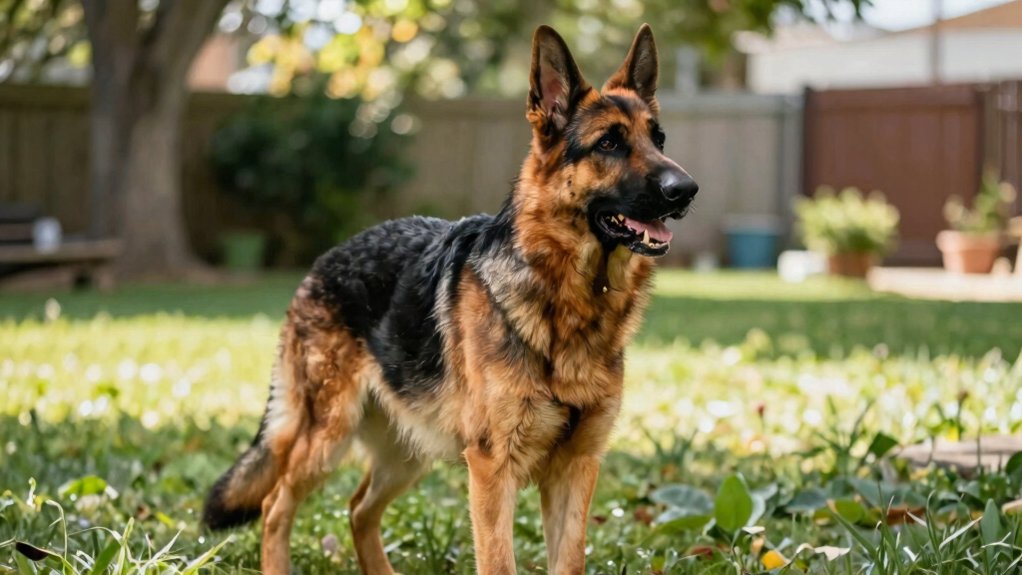
Because the Blue Bay Shepherd possesses a gentle, friendly, and playful temperament, you must recognize that aggression is highly undesirable in its breeding. You’ll observe high intelligence and enthusiasm to please, though some lines show stubbornness. Aim for an even-tempered, calm companion who forms deep loyal bonds.
Guarantee proper socialization so your dog remains patient and child-friendly. Note that size and strength pose risks around toddlers, requiring constant supervision and structured rules.
Provide ample mental and physical stimulation through daily exercise, training, and problem-solving tasks. This breed thrives with active families, not sedentary households.
Early socialization ensures compatibility with other pets, but manage prey drive around small animals. Expect protective yet tolerant behavior toward strangers. Like the German Shepherd, this dog may display natural protective instincts that make it attentive to its household and watchful of unfamiliar visitors.
After sufficient activity, the dog relaxes at home. You serve the animal best by respecting its needs and limits.
Blue Bay Shepherd Health and Lifespan
This developing breed exhibits generally robust health, with lifespans ranging from nine to fifteen years based on lineage and management.
However, you should monitor for typical large-breed orthopedic issues, including hip and elbow dysplasia, patellar luxation, and degenerative myelopathy. Because German Shepherds share several of these conditions, owners should learn to recognize early symptoms such as limping, reluctance to climb stairs, or hind-limb weakness so that problems can be addressed promptly.
Additionally, you need to remain vigilant against gastric torsion, a life-threatening emergency for deep-chested dogs.
You should also screen for potential neurological conditions like epilepsy, ocular disorders, and endocrine imbalances.
While breeding programs utilize carefully selected parents to minimize inherited defects, the limited genetic pool introduces uncertainty.
You serve these dogs best by prioritizing preventative veterinary care, maintaining healthy weights to reduce joint stress, and staying informed about emerging breed-specific health data to ensure their long-term welfare.
Daily Care, Grooming, and Diet Needs
To support the Blue Bay Shepherd’s physical and behavioral welfare, you must provide a structured daily routine that includes secure outdoor containment, 60 to 120 minutes of moderate to vigorous exercise, and regular mental enrichment to prevent boredom-driven behaviors.
You should brush their thick double coat one to three times weekly, increasing frequency during seasonal blowouts to manage shedding. Avoid shaving, as their natural guard hairs and undercoat provide essential insulation.
Bathing should be done monthly or only when soiled to preserve protective oils. When bathing, select a mild pH-balanced dog shampoo and rinse thoroughly, since leftover residue can irritate the skin. Post-bath drying requires thorough moisture removal to prevent fungal skin issues.
Trim nails monthly to maintain comfortable movement. Inspect and clean ears and eyes routinely to lower infection risks.
Brush their teeth several times weekly using canine-formulated toothpaste to limit plaque accumulation and support overall oral health.

NOURISHED COAT – Our veterinarian-approved formula combines moisturizing botanicals, pH-balanced cleansing, probiotic conditioners, and lab-tested care to soften fur while deodorizing deeply. Engineered as a deodorizing dog shampoo, it enhances shine, boosts coat resilience, and keeps fur fresh for weeks.

Deep Clean – Removes dirt, odor, & loose fur with a rich lather designed for double coats.

NOURISHED COAT – Our veterinarian-approved formula combines moisturizing botanicals, pH-balanced cleansing, probiotic conditioners, and lab-tested care to soften fur while deodorizing deeply. Engineered as a dog shampoo for smelly dogs, it enhances shine, boosts coat resilience, and keeps fur fresh for weeks.
Training and Socialization Requirements
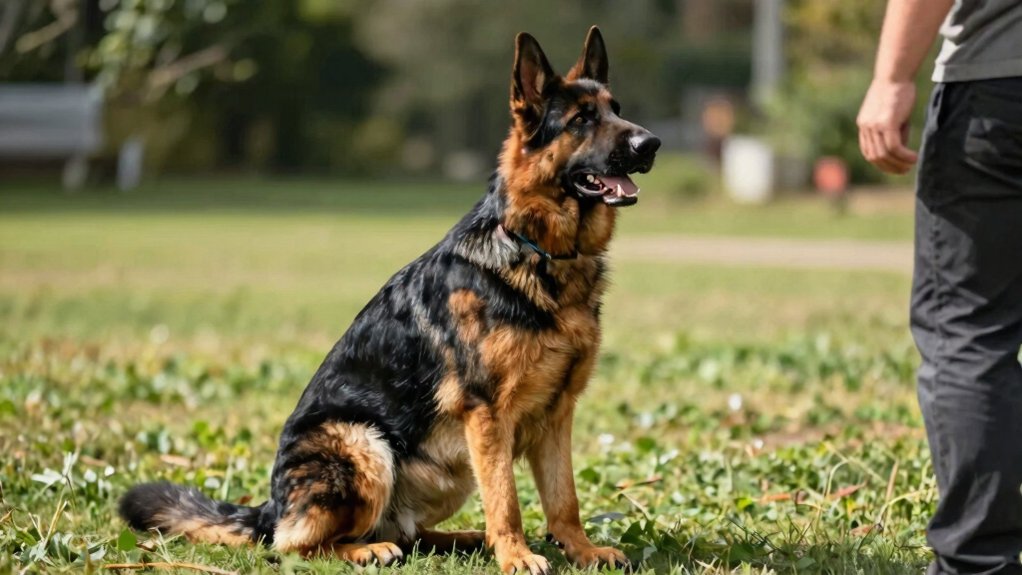
While daily care maintains physical health, training and socialization shape the Blue Bay Shepherd’s behavioral welfare. Begin early socialization to reduce fearfulness and build confidence around strangers and other animals. Expose your pup to varied people, environments, and dogs under supervision to prevent anxiety.
Introduce household pets gradually to foster stable interspecies relationships. Maintain consistent socialization through adolescence to preserve a steady temperament.
Train using positive reinforcement like food, praise, and play for faster learning. Avoid harsh methods that damage trust or increase stress. Provide clear, consistent commands and routines for reliable obedience. A puppy training plan that progresses week by week, covering basic commands and house training, helps new owners build reliable habits from the start.
Channel energy with basic obedience skills early on. Offer regular mental challenges through puzzle toys, scent games, and new tricks. Combine obedience drills with physical exercise to strengthen responsiveness.
Manage strong prey drive with reliable recall training. Monitor interactions with smaller dogs. Establish clear boundaries.
Teaching calm handling to support balanced behavior in this powerful breed.

REAL CHICKEN FIRST: Baby BLUE Training Treats are made with delicious real chicken as the first ingredient, plus DHA for cognitive development, making them the ideal reward for your puppy’s best behavior

The information below is per-pack only

REAL BEEF FIRST: Blue Buffalo Bits dog training treats feature high-quality, real beef as the first ingredient to deliver essential nutrition and the savory beef flavor dogs crave
Is a Blue Bay Shepherd Right for You?
If you’re considering this breed, understand that the Blue Bay Shepherd requires an active household capable of meeting its high physical and mental needs. You must commit to providing one to two hours of daily exercise. This dog thrives with interactive play and structured activities. Without consistent engagement, behavioral issues may emerge. Its strong prey drive can lead it to chase cats and small animals, so supervised introductions and secure management are essential.
Its gentle nature suits families, but it often remains reserved around strangers. You should anticipate significant health monitoring requirements. Regular veterinary screenings address predispositions to hip dysplasia and gastrointestinal risks.
The dog’s substantial size necessitates careful management. You must account for its physical strength around children. Transportation and boarding present logistical challenges.
Grooming demands moderate maintenance for coat care. Ultimately, you’ll care welfare. welfare a commitment to active living and structured support systems. Only then will you ensure a stable, healthy environment.

【3 Modes Interactive Dog Toy – Fast, Slow & Interactive】This automatic rolling dog toy offers 3 selectable modes: fast running (blue light) for high‑energy dogs, slow meandering (purple light) for gentle play, and interactive mode (green light) that reacts to your dog’s movement. Perfect as a smart interactive dog toy to keep your pup entertained on carpet, hardwood, or tile.

ORIGINAL WOBBLE WAG GIGGLE BALL: Wobble Wag Giggle is designed to peak curiosity with tubes inside that emit sounds & giggles when rolled or shaken for enriching motion play for dogs; Pets cannot resist the play-with-me giggle keeping them engaged.

Durable and Soft: Complying with the exact same standard as children's toys, the dog ball is made of premium PU that is the material of standard soccer ball so that it can be kicked and bounces as well. Note, our dog soccer medium balls is suitable for 20-40 lbs dogs. HEAVY DOG PET needs to choose our Large one(Large size, fits 30-90 lbs)
Blue Bay Shepherd Cost and Availability
Blue Bay Shepherd cost and availability hinge on a single founding program. You encounter typical puppy prices between $1,500 and $3,500, with some reaching $4,000 for superior traits. Authentic animals originate exclusively from Vicki Spencer’s Southern Breeze Ranch in Florida.
You must submit an application and a non-refundable $500 deposit to join the waitlist. The program produces few litters annually, maintaining continuous demand. Costs reflect health screening, certifications, and lineage quality. Darker coats often command higher fees.
Additional expenses include transport from Florida. Beware secondary markets listing dogs for $10,000 to $50,000; these are unrecognized. Verify certificates and registration numbers before purchasing. Myths about German Shepherd wolfdog hybrids often blur facts about genetics, behavior, and legal status, so buyers should confirm claims carefully.
Prioritize ethical sourcing to support welfare. This exclusive breed remains rare. You guarantee responsible ownership by confirming authenticity.

Durable all steel construction

[Certified Orthopedic Support] Experience professional-grade comfort with our unique "egg crate" foam core, designed to evenly distribute weight and provide crucial support for your dog's hips and joints. This certified CertiPUR-US foam free from harmful chemicals, offering dual safety assurance when combined with our OEKO-TEX certified fabric.
[Certified Orthopedic Support] Experience professional-grade comfort with our unique "egg crate" foam core, designed to evenly distribute weight and provide crucial support for your dog's hips and joints. This certified CertiPUR-US foam free from harmful chemicals, offering dual safety assurance when combined with our OEKO-TEX certified fabric.
Frequently Asked Questions
What Is the Typical Price Range for a Blue Bay Shepherd Puppy?
You can expect to pay between two thousand and three thousand five hundred dollars for a Blue Bay Shepherd puppy. This cost reflects the breed’s rarity and the responsible breeding practices ensuring their long-term health and welfare for future owners.
Do Blue Bay Shepherds Have Any Official Recognition From Major Kennel Clubs?
No, the Blue Bay Shepherd lacks official recognition from major kennel clubs. You’ll find it unregistered like a stray in a crowd. This means no standardized health or welfare protocols exist for the breed, limiting your ability to guarantee ethical breeding practices.
Can a Blue Bay Shepherd Live Comfortably in a City Apartment?
Yes, you can keep a Blue Bay Shepherd in a city apartment, but you must commit to extensive daily exercise and structured mental stimulation to guarantee the dog’s welfare and prevent behavioral issues.
What Specific Health Screenings Do Reputable Blue Bay Shepherd Breeders Perform?
Reputable Blue Bay Shepherd breeders perform orthopedic hip/elbow evaluations, genetic testing for degenerative myelopathy and epilepsy, ophthalmologic exams, cardiac auscultation, and complete blood panels to guarantee breeding stock welfare before mating.
How Rare Is the Blue Bay Shepherd Breed Globally Today?
You encounter roughly 200 authentic Blue Bay Shepherds worldwide, as strict single-breeder control limits annual litters. This extreme scarcity demands careful welfare-focused stewardship to preserve genetic health while meeting limited global demand responsibly.