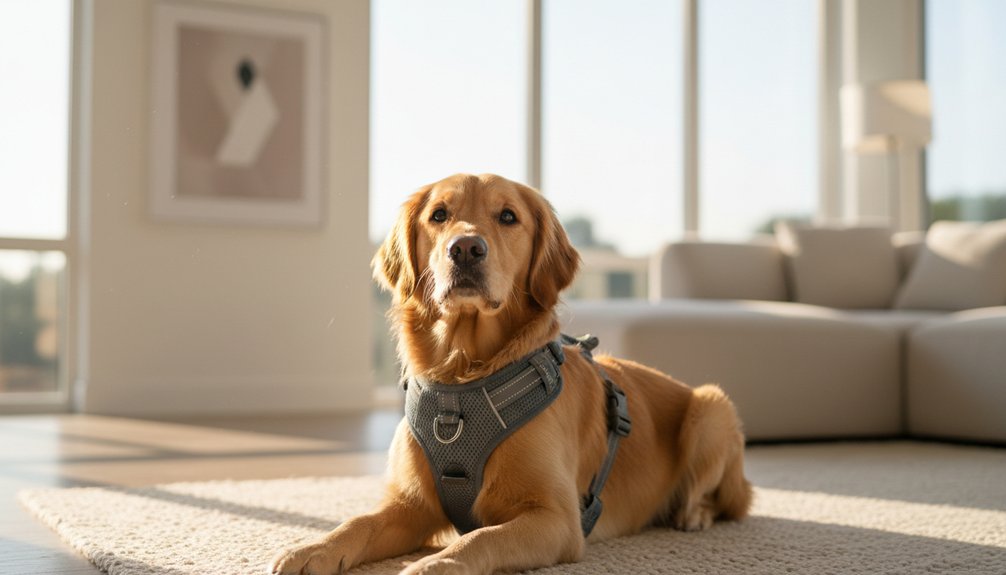
You’ll find German Shepherds and Australian Shepherds share 19th‑century herding origins, yet selective breeding created forms. German Shepherds are larger, rectangular, and excel at perimeter tending with a low‑eye‑contact style. Australian Shepherds are smaller, compact, and specialize in gathering and driving, using eye contact and crouching pressure. Their coat types, exercise requirements, and health profiles also differ markedly. Understanding divergences helps you match the breed to your work environment; the next sections detail each factor.
Swift Summary
- German Shepherds originated in 19th‑century Germany as perimeter‑tending fences, while Australian Shepherds evolved in the U.S. West from mixed ranch collies.
- German Shepherds use a steady‑trot, low‑eye‑contact tending style; Australian Shepherds employ circling, crouching, high‑eye‑contact driving and gathering tactics.
- German Shepherds are larger, rectangular, and shed heavily; Australian Shepherds are slightly smaller, more compact, with medium‑length wavy coats and moderate shedding.
- German Shepherds excel at protection and focused guarding; Australian Shepherds are lively, vocal workers suited for open‑range herding and service tasks.
- Both need ample daily exercise, but German Shepherds require 2+ hours of high‑intensity work, whereas Australian Shepherds thrive on 1–2 hours with mental challenges.
German Shepherd vs Australian Shepherd: Origin & Early Work
While the German Shepherd was systematically engineered in late‑19th‑century Germany, the Australian Shepherd evolved from a loosely organized pool of collie‑type ranch dogs in the American West. You recognize that the difference between german shepherd and australian shepherd begins with their breeding programs: Max von Stephanitz selected a Thuringian stud in 1899, registering Horand von Grafrath, while Australian stock emerged from diverse ranch collies without a single founder.
You note that german shepherd versus australian shepherd reflects distinct geographic origins—central European pastoral systems versus American frontier ranches. Early duties required the German Shepherd to act as a moving fence for sheep, whereas the Australian Shepherd performed broad herd‑management across cattle and sheep. Max von Stephanitz, the breed’s founder, prioritized working ability over looks, keeping the German Shepherd tied to its sheep-herding roots.
This historical context informs service‑oriented training today. You apply these lessons to assist communities. Their versatility as a working dog has made them a staple in police and military roles worldwide.
German Shepherd vs Australian Shepherd: Size, Build & Coat
You’ll see that German Shepherds stand 22–26 inches tall and weigh 50–90 lb, while Australian Shepherds range 18–23 inches and 35–70 lb. Weight varies by age and sex, with adult males usually heavier than females, and you can check body condition by feeling the ribs without seeing them.
You’ll also observe that the German Shepherd’s longer trunk and higher weight‑to‑height ratio produce a more massive, rectangular frame compared with the Australian Shepherd’s compact, balanced build.
You’ll need to manage the German Shepherd’s dense double coat, available in medium or long variants, versus the Australian Shepherd’s medium‑length, slightly wavy, weather‑resistant coat that typically requires moderate grooming.
German Shepherds are capable of sprinting up to 30 mph when needed.
Height And Weight Comparison
Since German Shepherds are classified as a large breed and Australian Shepherds as medium, you’ll see a clear size gap.
Male German Shepherds stand 24–26 inches at the withers, whereas male Australian Shepherds measure 20–23 inches, yielding a 1–6 inch advantage for the Shepherd. Females follow a similar pattern: German Shepherds reach 22–24 inches, Australian Shepherds 18–21 inches.
Weight-wise, adult males range 65–90 lb for German Shepherds versus 50–65 lb for Australian Shepherds, a 10–25 lb disparity. Females weigh 50–70 lb compared with 35–55 lb, respectively.
Overall, German Shepherds occupy the upper end of both height and mass spectra, confirming their large-breed classification. When you assess a specific dog, expect its measurements to fall within these breed standards, allowing accurate health monitoring and appropriate equipment sizing.
Always verify with a vet first. Australian Shepherds typically enjoy a median lifespan of about 13.7 years, contributing to their reputation for longevity.
Body Structure Differences
Although German Shepherds and Australian Shepherds share a medium‑sized classification, their body proportions diverge markedly. You’ll notice the German Shepherd’s elongated silhouette: a 10:8½–10:9 length‑to‑height ratio, high, long withers, a straight back that slopes into a subtly sloping croup, and a deep chest occupying 45–48% of wither height.
Its ribs extend rearward, producing a broad, muscular loin. In contrast, the Australian Shepherd presents a slightly longer‑than‑tall, rectangular outline with a level back, moderate croup slope, and a deep yet narrower chest that reaches the elbow. Its ribs are well‑sprung, the torso is compact, and the low center of gravity enhances stability.
Both heads are proportionate, but the German Shepherd’s is more angular, while the Australian’s is softer. These distinctions guide your task‑specific selection today.
Coat Type And Maintenance
When you compare the German Shepherd’s thick, dense double coat to the Australian Shepherd’s medium‑length double coat, distinct maintenance demands emerge. You’ll find the German’s outer hair is harsh, especially on the back‑leg trousers and tail base, requiring a slicker brush after a pin brush to smooth those zones. Its undercoat is thick; daily or every‑other‑day brushing with an undercoat rake or Furminator‑type tool prevents mats and minimizes the heavy spring/fall shed.
Baths are limited to every two to three months to preserve natural oils. In contrast, the Australian’s longer guard hairs and feathering on limbs, belly, and chest need weekly slicker or metal‑comb work; increase to every two days during peak shedding. A bi‑monthly bath suffices, provided you use a mild canine shampoo.
German Shepherd vs Australian Shepherd: Temperament & Guarding
While the German Shepherd presents as a sober, duty‑focused guardian, the Australian Shepherd behaves as a lively, easy‑going worker.
You’ll notice the German Shepherd’s confidence and courage translate into vigilant, protective behavior; it remains reserved with strangers, monitors territory, and escalates to defense when threat perception exceeds its socialization threshold. Its intelligence enables assessment and decisive intervention, making it suitable for guarding, police, or rescue tasks. Prospective owners should also plan for the daily exercise needs this intelligent, high‑energy breed requires to stay balanced and well‑behaved.
In contrast, the Australian Shepherd exhibits playful interaction, quick learning, and even‑keeled disposition; it alerts you with bark and posture, maintains a watchful but stance, and prefers vocal or visual warnings over physical confrontation.
Both breeds demonstrate loyalty, but the German Shepherd’s intensity yields higher‑risk mitigation, whereas the Australian Shepherd provides moderate threat detection with a cooperative, service‑oriented demeanor.
German Shepherd vs Australian Shepherd: Herding Styles Compared
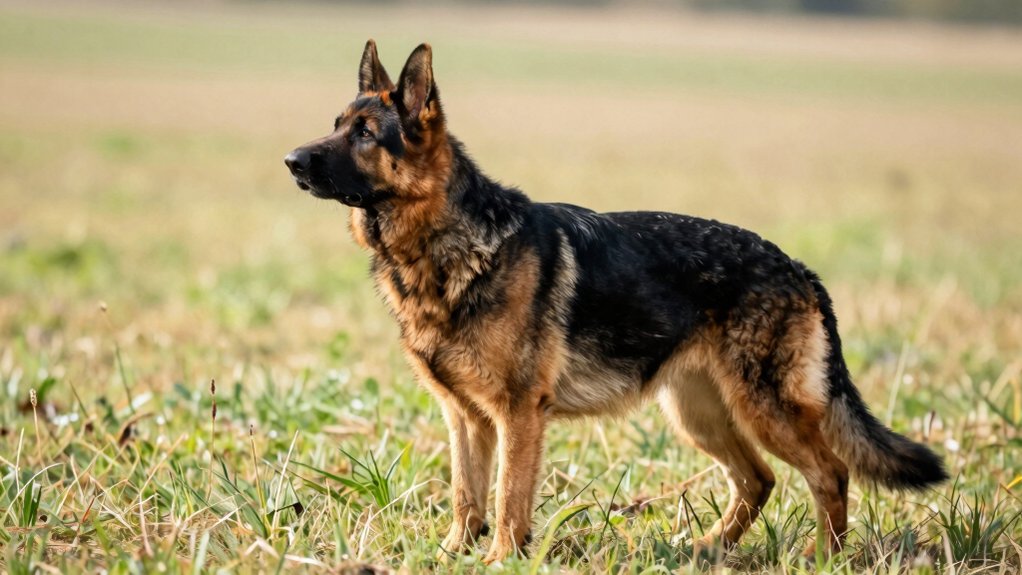
Beyond their guarding roles, the German Shepherd and Australian Shepherd exhibit fundamentally different herding styles. You’ll notice the German Shepherd employs a tending approach: it patrols the flock’s perimeter, maintaining a steady trot parallel to the edge and using its presence to deter strays. Minimal eye contact and rare outruns characterize its control; occasional gentle gripping of wool may reinforce boundaries.
In contrast, the Australian Shepherd uses a gathering and driving method. You’ll see it circle, crouch, and employ a strong eye to bunch animals, then position itself behind or alongside the group to apply forward pressure. Heel-nipping and close contact help it drive stubborn stock.
These divergent patterns reflect their historic roles—German Shepherds for unfenced European pastures, Australian Shepherds for expansive ranches. Understanding these instincts enhances your training effectiveness. Handlers who take their herding dogs to trials or ranch work often pack a travel bag stocked with water, leashes, and training treats so their dogs stay comfortable and focused on the go.
German Shepherd vs Australian Shepherd: Daily Exercise Needs
Although both breeds demand substantial daily activity, you’ll find that a healthy adult German Shepherd typically requires at least two hours of high‑intensity exercise.
An adult Australian Shepherd usually thrives on one to two plus hours.
You should partition the regimen into two to three sessions, lasting 30‑45 minutes each, mixing endurance (jogging, brisk hikes, off‑lead trail work) with intense bouts (fetch sprints, agility circuits).
Incorporate mental tasks—15‑30 minutes of puzzle toys or scent drills for German Shepherds, and integrate training games or herding‑style exercises for Australian Shepherds.
Adjust volume for individuals; they may need 2½‑3 hours total.
Reduce intensity for seniors or dogs with orthopedic concerns, joint health while maintaining cognitive engagement. Matching the workload to a dog’s age and activity level helps prevent excess energy, boredom, and joint strain in both breeds.
Avoid neighborhood strolls as activity; they fail to meet physiological and thresholds.
German Shepherd vs Australian Shepherd: Training Methods That Work
You’ll apply positive‑reinforcement basics by delivering immediate treats or praise to strengthen cue‑response links in both breeds. German Shepherds are generally responsive to training thanks to their high intelligence and drive, which helps them form these links quickly.
Then you’ll conduct structured obedience drills, using short, repeatable sessions that progress from high treat frequency to reduced reinforcement as reliability increases.
Finally, you’ll channel the herding instinct through targeted games and obstacle work, providing mental stimulation while preserving the breeds’ natural drive.
Positive Reinforcement Basics
When you apply positive‑reinforcement principles to German Shepherds and Australian Shepherds, you’ve got to tailor rewards, markers, and session structure to each breed’s herding drive.
Select high‑value treats, praise, or work‑oriented play for German Shepherds, and prioritize food treats, tug toys, or ball play for Australian Shepherds, adding real‑life rewards such as sniffing or movement to sustain motivation.
Use a consistent marker word or clicker, delivering the reward within two to three seconds to cement the behavior‑reward association.
Keep sessions brief—five to ten minutes—and repeat times daily in low‑distraction settings before gradual exposure to distance, sound, and activity.
Avoid punitive measures; instead, ignore or redirect undesirable actions, preserving trust and reinforcing service‑oriented reliability.
Document progress to adjust reinforcement parameters for ideal service outcomes effectively.
Structured Obedience Drills
Since German Shepherds excel at disciplined heel work and Australian Shepherds thrive on attention‑focused recall, structured obedience drills must be customized to each breed’s drive.
You begin by teaching the standard command set: sit, stay, come, down, and heel for G‑Shepherds; sit, down, stand, come, and loose‑leash walking for A‑Shepherds.
Implement eye‑contact games and a focus cue for G‑Shepherds, pairing them with clicker markers to reinforce attention under movement.
For A‑Shepherds, introduce auto‑watch behavior and multi‑treat focus sequences, then layer distractions while maintaining position.
Progress to impulse‑control modules—sit‑stay before stimuli, wait at doors, leave‑it—using 5‑minute sessions to avoid fatigue.
Conclude each block with a long‑line recall drill, evaluating reliability before granting off‑leash freedom.
You’ll thereby increase service reliability and strengthen handler‑dog partnership for community.
Herding Instinct Channeling
Although both breeds possess innate herding drives, the German Shepherd’s instinct is typically measured with formal livestock tests, whereas the Australian Shepherd’s talent is refined through structured herding clinics.
You’re channeling the German Shepherd’s drive by introducing chase‑toy games paired with a clear stop cue, then immediately rewarding calm movement around livestock pens. Early exposure to stock reinforces controlled approach and reinforces the handler’s command hierarchy.
For the Australian Shepherd, schedule regular herding clinic sessions or simulated livestock setups; use treibball or herding balls to convert chase impulses into task‑oriented fetch. Apply immediate “leave it” or “no bite” cues to interrupt heel‑nipping before contact.
Supplement both breeds with sport outlets—agility for the Shepherd, flyball for the Australian—to satisfy job‑like energy while preserving service‑oriented focus.
German Shepherd vs Australian Shepherd: Intelligence Comparison
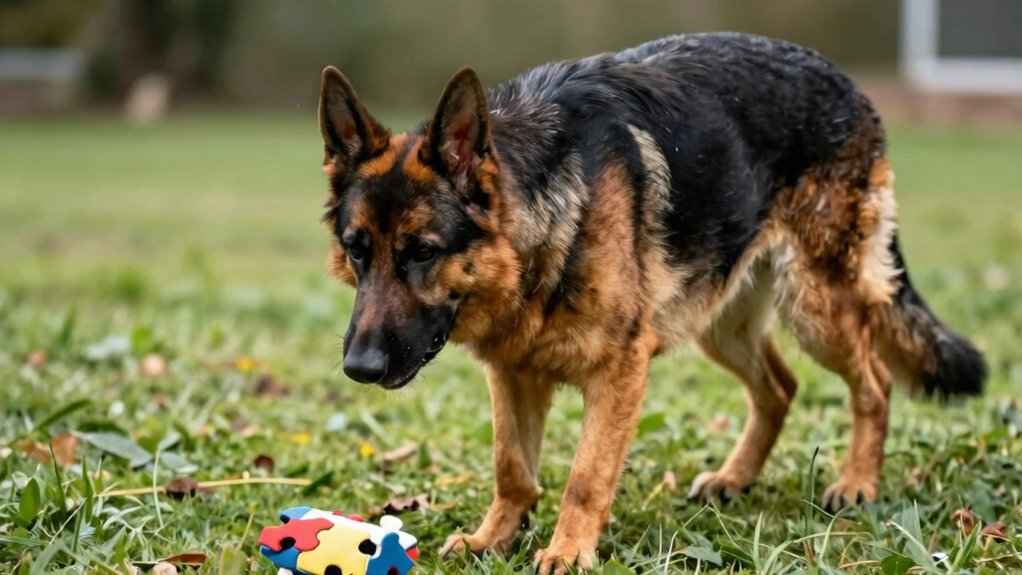
While German Shepherds usually place higher on formal working‑and‑obedience scales—ranking third overall and second among herding breeds in Stanley Coren’s list—Australian Shepherds still sit in the “very intelligent” tier despite a lower nominal position (around 42nd). You’ll notice both breeds score 5/5 for trainability, yet the Shepherd learns new commands in 5–15 repetitions with 85–90% first‑command compliance, while the Australian Shepherd matches that speed when training remains clear and rewarding.
Their problem‑solving styles diverge: German Shepherds generalize analytically, applying learned rules across contexts; Australian Shepherds exhibit agile, creative adaptation, excelling in multi‑step sport tasks. Consequently, selection should depend on your management style rather than raw cognitive ranking. Owners of German Shepherds should also account for their strong prey drive, which often shows up as chasing behavior toward cats and other small animals and calls for structured supervision and consistent redirection.
German Shepherd vs Australian Shepherd: Typical Working Roles
You’ll notice that German Shepherds dominate police and protection tasks, performing tracking, apprehension, and sentinel duties.
Australian Shepherds contribute only limited detection work.
In ranch environments, Australian Shepherds excel at gathering and driving livestock across uneven terrain.
German Shepherds focus on tending and boundary patrol in controlled grazing areas.
Both breeds serve in service and therapy roles, but German Shepherds are favored for guide and assistance work due to their structured control and protection capability.
A German Shepherd Great Pyrenees mix combines the protective drive of both parent breeds and is known for its guarding ability, making it a capable livestock and property guardian.
Police And Protection
German Shepherds dominate formal law‑enforcement deployments—serving as patrol, tracking, and detection dogs in agencies worldwide—because their size, strength, and decades‑long training protocols align with the rigorous demands of police work. When you assign a canine unit, you’ll rely on the breed’s established tracking accuracy, suspect apprehension reliability, and explosive‑detection sensitivity.
German Shepherds also excel as protection dogs, guarding facilities, controlling crowds, and defending officers under fire. Australian Shepherds can assist in specialized detection or support roles, yet they lack the standardized K‑9 curricula and mass‑deployment data that make German Shepherds the default choice.
Their protective instincts suit family or ranch environments, but for formal security operations you’ll prioritize the German Shepherd’s documented performance metrics and institutional endorsement. You can ensure compliance with safety protocols efficiently.
Ranch Herding And Driving
Because ranch environments demand distinct herding strategies, the German Shepherd functions as a tending dog that patrols flock perimeters, while the Australian Shepherd serves as a gathering and driving dog that pushes stock forward.
You’ll notice the German’s upstanding style, balanced power, and perimeter‑watching patrol when you need a living fence for sheep, goats, or poultry on mixed‑livestock farms. Its heavier frame limits steep‑terrain efficiency, yet it sustains 4–6 hours of focused tending under moderate predator pressure.
Conversely, the Australian’s loose‑eyed, upright drive applies controlled pressure from behind, enabling you to gather scattered cattle and move herds across rough rangeland for 5–7 hours daily. Its lighter build and rapid adaptation make it ideal for open‑range driving, gate navigation, and multi‑species rotations.
You’ll rely on them for consistent results.
Service And Therapy Work
While early guide‑dog programs relied almost exclusively on German Shepherds, today the two breeds diverge sharply in service assignments. You’ll find German Shepherds dominate as guide dogs for the visually impaired, providing steady balance support and wheel‑chair assistance, and they excel in medical‑alert tasks such as seizure or diabetic detection.
Australian Shepherds, by contrast, are preferred for psychiatric and light‑mobility assistance, leveraging their medium size and agility in active households. In public‑sector roles, German Shepherds serve as police, military, and customs detection units, combining tracking, protection, and explosive‑sniffing capabilities.
Australian Shepherds appear rarely, mostly in civilian therapy or volunteer rescue teams. For therapeutic work, both breeds can be trained for hospital and community outreach, yet German Shepherds are more frequently selected for structured interventions.
German Shepherd vs Australian Shepherd: Health Risks Overview
How do the health challenges of German Shepherds and Australian Shepherds compare? You’ll find both breeds prone to musculoskeletal disorders; German Shepherds frequently exhibit hip dysplasia and elbow dysplasia, while Australian Shepherds also develop hip dysplasia and share elbow issues.
Osteoarthritis often follows these joint abnormalities, especially in individuals. Neurologically, German Shepherds are at risk for degenerative myelopathy and lumbosacral stenosis, whereas Australian Shepherds commonly suffer epilepsy and carry the MDR1 mutation that heightens drug sensitivity.
Ocularly, German Shepherds may develop cataracts, retinal dysplasia, and pannus; Australian Shepherds show cataracts, progressive retinal atrophy, collie eye anomaly, and pannus.
Autoimmune thyroiditis predominates in Australian Shepherds, while German Shepherds show fewer endocrine disorders. Rare German Shepherd endocrine problems include pituitary dwarfism, a hereditary condition that stunts growth and can alter coat and body proportions.
Implement ophthalmologic screening, testing, and management to mitigate these risks for service‑dog populations.
German Shepherd vs Australian Shepherd: Expected Lifespan
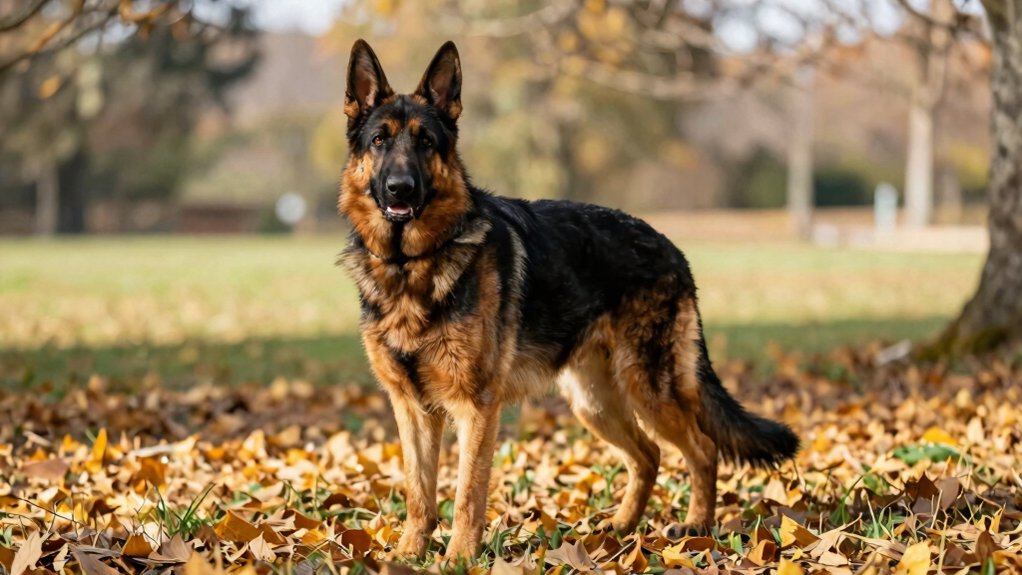
You’ll notice that German Shepherds typically live 9–13 years while Australian Shepherds reach 12–15 years, reflecting a 2–3‑year advantage for the latter. German Shepherds are prone to common health risks such as hip dysplasia and degenerative myelopathy, which owners can help manage through regular exercise, weight control, and veterinary care to support healthy aging.
You’re advised to factor sex, size, genetics, and health‑management practices as the primary variables that modify longevity within each breed.
Consequently, when you compare the two, the Australian Shepherd consistently exceeds the German Shepherd’s expected lifespan and often meets or surpasses overall canine averages.
Average Lifespan Range
Because lifespan varies by breed, German Shepherds typically live 9–11 years, while Australian Shepherds reach 12–15 years. You should note that German Shepherd data cluster around a mean of 10.1 years, with veterinary guides listing 7–10 or 9–13 as possible bounds.
Female German Shepherds average roughly 11.1 years versus 9.7 years for males, a 1.4-year difference. Australian Shepherds consistently fall within a 12–15 year window across veterinary, insurance, and breed-care sources; sex-based variation isn’t emphasized.
Compared to the general canine expectancy of 10–13 years, German Shepherds sit at the lower-middle range, whereas Australian Shepherds occupy the upper segment. Use these ranges to plan long-term health monitoring and service-oriented care.
Longevity Influencing Factors
While both breeds confront distinct health challenges, the factors that shape their longevity differ markedly. You’ve got to evaluate inherited disease burden: German Shepherds carry high risk for hip and elbow dysplasia, degenerative myelopathy, haemophilia, and ocular disorders. Australian Shepherds often harbor the MDR1 mutation, cobalamin malabsorption, and progressive retinal atrophy.
Orthopedic load also varies; the larger mass of German Shepherds amplifies joint stress, accelerating arthritis. Conversely, Australian Shepherds face osteochondrosis and overuse injuries from agility work.
Neurological and sensory conditions—epilepsy in both, myelopathy in Shepherds, cataracts in Aussies—add chronic morbidity.
Finally, breeding quality, preventive screening, and lifestyle management critically modulate each dog’s health trajectory and ultimate lifespan. Veterinary assessments, weight control, and tailored exercise programs further extend functional years and improve quality outcomes.
Breed Lifespan Comparison
Three to four years typically separate the expected lifespans of German Shepherds and Australian Shepherds. German Shepherds average 9–13 years, with veterinary surveys reporting means of 10–11.3 years and median around 10.3; females reach approximately 11.1 years, males around 9.7.
Australian Shepherds consistently reach 12–15 years, with median and mean aligning near the upper canine range. Large-breed mortality data place German Shepherds slightly below the overall dog average (10–13 years), whereas Australian Shepherds sit at or above it.
Sex doesn’t differentiate Australian Shepherd longevity; both sexes share the 12–15-year band. Consequently, the Australian Shepherd offers an approximate three-year advantage, informing health-maintenance planning and long-term caretaker commitments.
When advising prospective owners, emphasize regular screenings, weight control, and breed-specific joint monitoring to extend functional years and improve quality.
German Shepherd vs Australian Shepherd: Grooming Requirements
Although the German Shepherd and Australian Shepherd both have double coats, their grooming requirements differ markedly. You must brush a German Shepherd a few times weekly, increasing to daily during spring and autumn blow‑outs, using a pin brush, slicker, and undercoat rake.
For an Australian Shepherd you brush once to several times per week, shifting to daily during peak shedding, employing a slicker and long‑tooth rake to reach the skin and remove debris.
Bathe each dog only when necessary—German Shepherds every few months to monthly, Australian Shepherds roughly every six to eight weeks or after muddy activity—using a pH‑balanced canine shampoo to preserve oils.
Schedule professional grooming for German Shepherds every 8–12 weeks; never shave either breed, as the double coat provides essential insulation.
German Shepherd vs Australian Shepherd: Family Fit & Kid Compatibility
Grooming aside, the family compatibility of German Shepherds and Australian Shepherds hinges on temperament, size, and herding drive. You’ll find Australian Shepherds rate 5/5 for child tolerance, excelling in active households where older, coordinated kids can match their high‑energy, herding play.
Their instinct to chase, circle, and occasionally heel‑nip requires proactive training and clear boundaries to protect sensitive toddlers. German Shepherds typically score 3/5; their larger frame and protective instincts demand early socialization, impulse‑control drills, and strict rule enforcement, especially with younger children.
Both breeds thrive when you implement structured interaction protocols, supervise play, and reinforce calm obedience. With consistent guidance, each dog can become a reliable, service‑oriented family member. They’ll also respond well to community‑service training, enhancing their role as dependable helpers.
German Shepherd vs Australian Shepherd: Home Space & Activity Needs
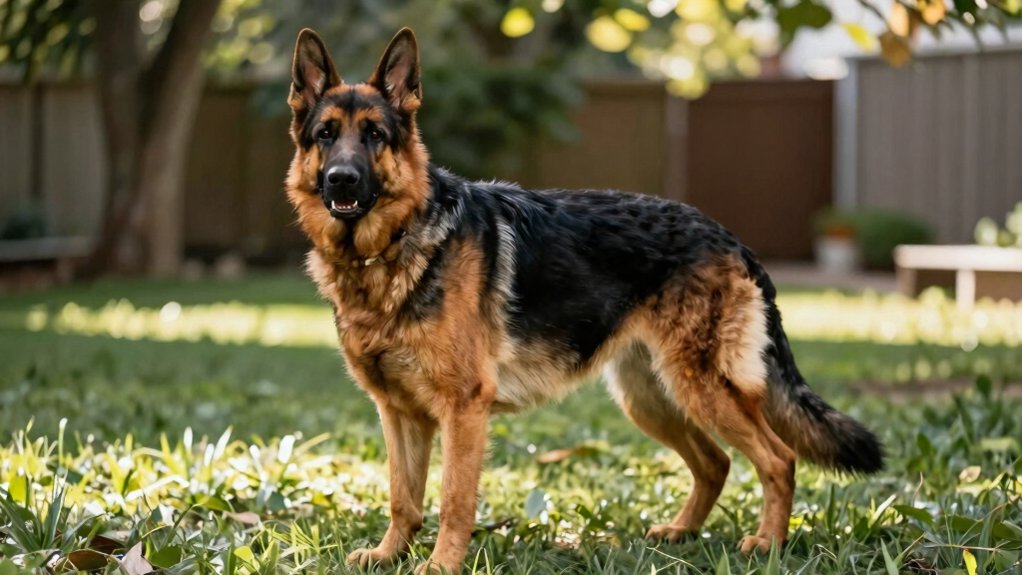
Because both the German Shepherd and the Australian Shepherd are high‑energy herding breeds, they demand substantial daily physical and mental activity to stay healthy. You must evaluate your residence’s footage and outdoor access before adopting.
A German Shepherd thrives in a fenced yard but can adapt to an apartment if you supply 1.5–2 hours of vigorous exercise plus structured mental tasks each day.
An Australian Shepherd requires a fenced garden or immediate proximity to parks; apartment living without reliable outdoor space isn’t advisable.
Both breeds need indoor room for a 22–43 kg dog to move freely, so consider open‑plan layouts or corridors.
Integrate puzzle games, scent work, or obedience drills to satisfy their cognitive load.
Insufficient activity precipitates destructive behavior, increasing caretaker workload and compromising welfare.
German Shepherd vs Australian Shepherd: Quick Decision Checklist
If you’re weighing a German Shepherd against an Australian Shepherd, evaluate temperament, trainability, family compatibility, and coat management using the criteria below.
Temperament: choose German Shepherd for alert, protective guardianship; choose Australian Shepherd for bright, energetic, work‑oriented disposition.
Trainability: select German Shepherd if you can provide structured leadership, clear boundaries, and obedience focus; select Australian Shepherd if you prefer sport‑oriented, problem‑solving challenges and varied mental enrichment.
Family Fit: opt German Shepherd for households needing a single‑caretaker bond and controlled guest introductions; opt Australian Shepherd for families that can supervise herding instincts and enjoy an active, affectionate pack member.
Grooming: favor German Shepherd when occasional brushing suffices and bathing must be minimal; favor Australian Shepherd when brushing of feathered undercoat aligns with your grooming routine.
Frequently Asked Questions
Which Breed Typically Has a Higher Purchase or Adoption Price?
You’ll find German Shepherds generally command higher purchase prices than Australian Shepherds, while adoption fees remain comparable; therefore, if you’re budgeting for a breeder‑sourced puppy, expect greater cost for German Shepherds and related overall expenses.
Can Either Breed Serve Effectively as a Therapy Dog?
Yes, you’ll train either breed as a therapy dog, provided you conduct rigorous screening, extensive socialization, consistent obedience training, and maintain controlled environments to manage their high energy and herding drive through ongoing careful assessment.
What Are the Average Monthly Food Expenses for Each Breed?
You’ll spend roughly $55‑$75 per month on standard kibble for a German Shepherd, while an Australian Shepherd typically costs $50‑$100 monthly, depending on premium versus budget formulas, and you should monitor nutrient balance carefully regularly.
Do German Shepherds or Australian Shepherds Have Notable Drooling Tendencies?
You’ll notice neither German Shepherds nor Australian Shepherds exhibit notable drooling; both maintain low salivation under normal conditions, with occasional increases only during meals, heat, excitement, or health issues, or dental discomfort, requiring veterinary evaluation.
Which Breed Displays a Stronger Prey Drive Toward Small Animals?
Picture a sleek German Shepherd lunging after a darting rabbit; you’ll notice its high‑intensity prey drive eclipses the Australian Shepherd’s, demanding vigilant training and careful supervision to protect small‑animal companions in household settings daily routines.