Yes, German Shepherds can get cancer, and it’s not rare—about 1 in 4 develop some type in a lifetime. Genetics and inherited gene changes play a big role, plus aging and body size. Watch for clues you might miss: pale gums, sudden belly swelling or collapse, longer than 2–3 weeks of coughing, new firm lumps or non-healing sores, weight loss over 10%, limping, or vomiting/diarrhea lasting over 3–4 weeks—then ask your vet fast. Keep going, you’ll spot more signs.
Swift Summary
- Yes—German Shepherds have increased cancer risk, with widely cited estimates around 1 in 4 developing cancer.
- Genetics and breed-linked variants contribute, including tumor-suppressor gene changes such as TP53.
- Owners may miss early signs like gradual stamina loss, more resting, or “blah” mood shifts that follow anemia from internal bleeding.
- Hemangiosarcoma can cause pale gums, heavy panting, weak pulse, or collapse episodes, often from spleen/liver/heart bleeding.
- Watch for urgent patterns: sudden collapse with rapidly enlarged belly, persistent nonproductive cough 2–3+ weeks, or non-healing lumps/sores.
Why Cancer Is More Common in German Shepherds
Cancer shows up more often in German Shepherds for a mix of reasons, and genetics usually sits right at the top of the list. Breed-specific gene changes can raise risk, including variants tied to tumor-suppressor genes like TP53, so when you ask can german shepherds detect cancer, remember: early detection helps, but prevention starts with awareness. Watch for unexplained lumps, persistent limping, and sores that will not heal, and report them to your veterinarian promptly.
Cancer risk in German Shepherds is often genetics—breed-linked gene variants, including TP53 changes, can increase likelihood.
A widely cited statistic is that 1 in 4 German Shepherds will develop some form of cancer in their lifetime.
You also face body-size factors, since fast growth and larger tissue volume mean more cells that could become cancer. Add aging, too. With a median lifespan around 10.3 years, many reach peak cancer years. You can serve your dog best by watching early signs and scheduling regular checkups.
The Cancers Most Often Seen in German Shepherds
Hemangiosarcoma is a malignant cancer of blood vessel lining cells, prone to bleeding; it often shows up in the spleen, right heart side, or liver. Osteosarcoma, bone cancer, destroys bone near long-bone growth areas and can spread to lungs. Lymphoma is a cancer of lymph cells, often causing swollen lymph nodes, then involving spleen, liver, and bone marrow. And mast cell tumors, the most common malignant skin tumor, can look like itchy lumps. As these cancers advance, owners can track appetite, mobility, and comfort using a quality of life assessment to help guide decisions about treatment and end-of-life care.
Because hemangiosarcoma, osteosarcoma, lymphoma, and mast cell tumors are among the cancers frequently monitored in German Shepherds, recognizing early warning signs can help owners seek care sooner.
German Shepherd Hemangiosarcoma Signs Mistaken for Aging
How often do you chalk up your German Shepherd’s “off days” to just getting older, even when they happen more than once? Hemangiosarcoma, an internal blood-vessel cancer, can start with vague fatigue that looks like normal senior slowing. You may notice longer naps, less play, weaker walks, or mild “blah” mood shifts. Owners should also know that German Shepherds can develop rare neurological disorders and other uncommon conditions that may also cause changes in energy and mobility.
Sometimes your dog wobbles or briefly collapses, then seems better after rest—because blood loss can be temporary, then returns. Check gums for paleness, and watch for heavy panting, faster heartbeats, or skipped meals. If this repeats, call your vet promptly.
German Shepherds are more commonly affected by hemangiosarcoma than many other breeds.
German Shepherd Lumps and Skin Changes You Shouldn’t Ignore
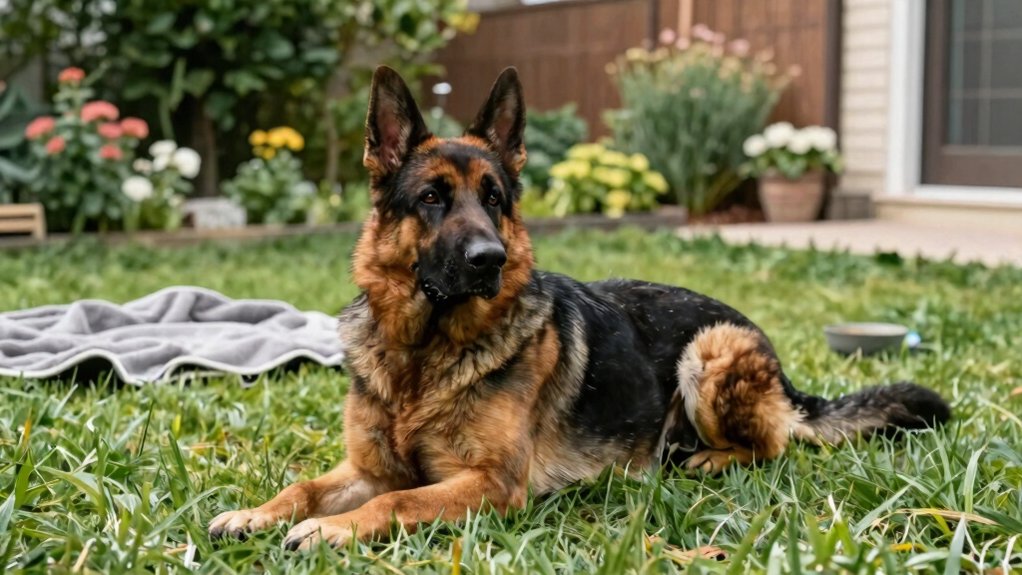
Your dog’s skin can hide trouble, including tumors, and early signs often show up as a changing spot, a hairless patch, a rash that won’t settle, or a sore that won’t heal.
Your German Shepherd’s skin can hide trouble—watch for changing spots, hairless patches, stubborn rashes, or sores that won’t heal.
Measure it.
A pea-size lump or bigger, or anything that’s growing, deserves a vet check soon.
Watch for irregular shape, mixed soft and firm feel, fixed to deeper tissue, bleeding, oozing, odor, black color, redness, swelling, and fast growth.
Skin lumps are separate from problems like degenerative myelopathy, a progressive spinal condition in German Shepherds that causes weakness and poor coordination in the hind legs, so a new skin change should be evaluated on its own.
Non-Healing Sores and Wounds on a German Shepherd That Linger
Sometimes a wound on your German Shepherd just won’t quit—and that’s exactly when you should take it seriously. If a sore shows little improvement after a few days of basic care, don’t wait. Skin allergies and hot spots are common in German Shepherds, and constant licking or scratching can keep a sore from healing, so a vet should check any wound that stalls.
Watch for redness that stays, swelling at the edges, crusting or bleeding that keeps coming back, and tissue that never forms healthy pink “granulation” (new healing tissue). It may ooze, smell bad, or produce pus-like discharge.
Chronic ulcers can re-open or stall despite antibiotics, even topical ones. This pattern can signal infection or cancer, including skin cancer, lymphoma, or oral tumors—so book a vet visit.
Subtle Internal Bleeding Clues for German Shepherd Cancer
Start paying attention if you notice weak spells or fatigue during routine activities, especially when your dog seems to bounce back for a few hours or a day.
And if they suddenly struggle to jump into vehicles, treat it like an anemia (low red blood cells) clue.
You may also see decreased appetite, slowing down, restlessness, or mild fast breathing at rest. A German Shepherd that stops eating may be dealing with stomach problems, illness, or stress, so a sudden loss of appetite deserves a veterinary visit.
Watch for a fast heart rate, weak pulses, delayed capillary refill, or dark tarry stools, melena, without GI illness.
Abdominal Swelling, Pale Gums, and Collapse in German Shepherds
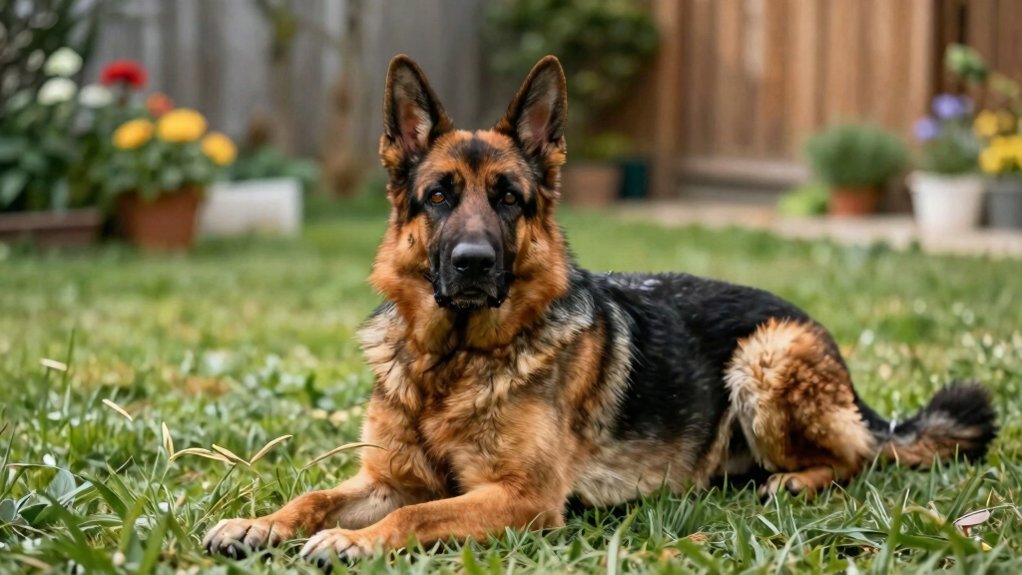
If you notice your German Shepherd’s belly suddenly looks bigger, or feels tight, check for abdominal swelling fast—especially if it comes with weakness. A swollen, tight belly can also signal gastric dilatation-volvulus, a life-threatening condition in which the stomach fills with gas and twists, and German Shepherds are among the breeds at higher risk.
Then look at the gums: pale or grey gums, plus a racing heart, can mean anemia from splenic bleeding, and that’s not a “wait and see” situation.
But when collapse hits—often within minutes after bleeding starts—get to a vet or emergency clinic immediately, because shock (when blood flow drops) can turn deadly quickly.
Splenic Bleeding Signs
When a German Shepherd is dealing with splenic bleeding, the early clues often look “ordinary,” even though they’re serious.
You may notice a swollen, distended belly, from free blood or serosanguinous fluid, called hemoabdomen.
It can start suddenly after a rupture, or build up gradually.
Watch closely for episodes that seem to “come and go.”
Then, if your dog collapses, you’re likely seeing hypovolemic shock, due to rapid internal blood loss.
In that moment, you’ll often see fast heart rate, fast breathing, weak pulses, and weakness.
German Shepherds especially need urgent vet care.
Pale Gums, Weakness Onset
Pale gums are one of those warning signs you shouldn’t brush off. If your German Shepherd’s gums look white or gray, you may be seeing anemia, meaning too few healthy red blood cells, often from internal bleeding.
Add new weakness, lower stamina, or a slightly round belly, and don’t wait.
Slight pallor can hint at low-grade bleeding before bigger trouble hits. Keep an eye on pale gums plus abdominal swelling, like distension, and lethargy.
This combo can fit hemangiosarcoma in large-breed dogs, especially with tumors in the spleen, liver, or near the heart.
Call your vet urgently.
Sudden Collapse Warning
Sudden collapse in a German Shepherd—especially when you also notice a belly that looks suddenly bigger, tight, or bloated, plus pale or gray gums—can signal a fast-moving emergency. Act like you’re helping a life on a timer.
First, watch for restlessness, non-productive retching, and drooling, then quick belly enlargement. This can be GDV (gas bloat with stomach twisting) or splenic bleeding from tumor rupture.
A distended stomach or blood pooling raises pressure, hurts breathing, and cuts blood flow. Expect weak, racing pulses, and worsening weakness.
Call an emergency vet now, then go immediately.
Weight Loss and Appetite Shifts That Worry in German Shepherds
If your German Shepherd is losing weight without a planned diet change, especially more than 10% of their usual body weight, you should take it seriously.
And if their appetite keeps fading over weeks, or they start being picky/selective and won’t finish meals they used to love, track it and call your vet promptly, since cancer and other serious illnesses can show up this way early. German Shepherds are also prone to exocrine pancreatic insufficiency, a digestive disorder that can cause weight loss and poor appetite even when a dog is still eating.
But don’t assume it’s “just age” or a preference shift. Write down when eating drops, how many meals they miss, and any vomiting or diarrhea, then get a checkup.
Unexplained Weight Loss
Unexplained weight loss is a big early warning sign in German Shepherds, and you shouldn’t ignore it, even when your dog still seems “mostly normal.”
If your German Shepherd is losing weight without a diet change, or their appetite shifts—like eating a little less, taking longer to finish meals, or seeming less excited about food—that can mean something serious is going on beneath the surface.
And because German Shepherds face higher risk for internal cancers, subtle weight loss matters fast.
Weigh them weekly, track appetite, and call your vet if loss continues 2–3 weeks.
Ask about muscle wasting, loose stools, vomiting, low energy, or enlarged belly.
Early checks help you serve them sooner.
Appetite Decline Over Time
Over the next few weeks, keep a close eye on any slow drop in your German Shepherd’s appetite—because “just eating a little less” can turn into a real warning sign.
If you notice their meal volume shrinking over several weeks, don’t wait.
And if appetite loss lasts more than two days without a rebound, contact your vet promptly.
Combined with progressive weight reduction, it often shows up in cancer cases.
Watch too for weakness or lethargy.
If it comes with vomiting, diarrhea, loose stools, or belly swelling, get checked fast.
Selective Eating Changes
Selective eating changes can be a big clue that something more than “picky appetite” is going on in your German Shepherd, especially when weight starts slipping.
You may see your dog suddenly prefer wet food, home-cooked meals, or treats over kibble, and it lasts more than a few days.
You might notice he skips main meals but still takes snacks.
And if he avoids hard kibble, bones, or chews, oral pain or tumors could be involved.
But the most worrying sign is weight loss without diet changes, with ribs or a shrinking waist.
Track meals daily, then call your vet promptly.
Lethargy and Reduced Stamina Beyond Normal in German Shepherds
Notice a dip in energy, and take it seriously—especially if your German Shepherd is suddenly slower than their usual “normal.” If your dog stays lethargic for more than a few days, or gets tired much faster during walks, play, or training, that can be an early, easy-to-miss warning sign in dogs with internal cancer.
And watch the details. You may see sluggish, sleepy behavior all day, plus early stopping or lying down. This can come from anemia, meaning fewer red blood cells to carry oxygen, or from tumor-related weakness and inflammation.
Track appetite, weight, and belly changes too, and call your vet promptly. Pain from chronic ear infections can also leave a dog feeling run down, so have your vet check the ears during a visit to help rule out other causes of low energy.
Lingering Breathing Issues and Coughing in German Shepherds

If your German Shepherd has a persistent dry, non-productive cough that hangs on for weeks, don’t just call it “a little infection.”
And if you notice heavier breathing at rest, a higher respiratory rate, or clear trouble catching their breath, that’s a red flag for lung or airway problems, including tumors or serious cardiopulmonary disease.
But because simple treatments often won’t fix cancer-related coughing, you should book a vet visit promptly—especially if the breathing looks labored or it gets worse after activity or when they lie down.
Persistent Dry Cough
When your German Shepherd keeps making a dry, non-productive cough—especially if it lingers for more than 2 to 3 weeks—you shouldn’t chalk it up to “just allergies” or a mild cold. Persistent cough can be an early cancer sign, like lung tumors or some lymphomas. Lung tumors often start mildly, with occasional dry coughing that grows frequent over weeks or months.
And if you notice mucus, trace blood, low energy, reduced appetite, or mild weight loss, act fast.
Step one: call your vet and ask about chest X-rays, especially if your dog is over 7.
Unexplained Breathing Difficulty
Unexplained breathing difficulty in your German Shepherd—especially when it lingers alongside coughing—deserves a vet visit sooner rather than later.
If your dog breathes fast at rest, can’t find a comfy spot, or you notice shallow breaths with heaving flanks, don’t wait.
Tumors in the throat, lungs, or airways can cause chronic cough and labored breathing, and sometimes early signs are mild.
About 25% of lung-tumor dogs show no clear tumor signs, so breathing changes may be the first clue.
Also, lung metastases from cancers can appear as new distress.
Pleural effusion, fluid around the lungs, adds even worse breathing.
Unexplained Limping That Could Mean Bone Cancer in German Shepherds
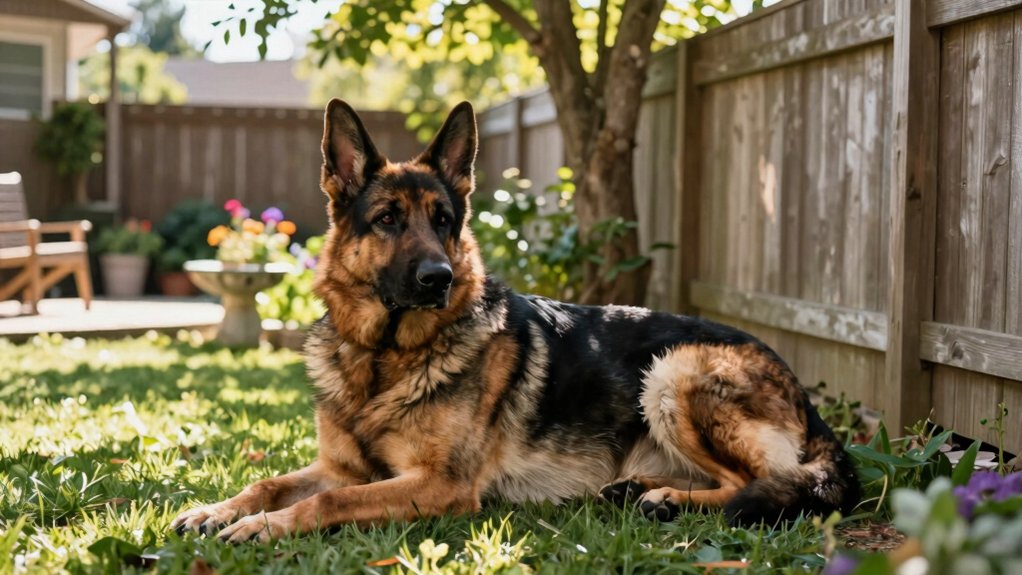
Pay attention, because an unexplained limp in your German Shepherd can sometimes be an early sign of bone cancer (osteosarcoma).
Watch for mild, weight-bearing lameness in one limb that slowly worsens over weeks to months.
Notice mild, weight-bearing lameness in one limb that gradually worsens over weeks to months—especially in large, middle-aged or older dogs.
It may start after exercise, then improve with rest, so you miss it.
Check for firm, localized swelling that feels hot or hurts when you press the leg bones.
You may also see guarded stance, shorter steps, or muscle loss.
In large-breed dogs, especially middle-aged or older, this pattern deserves a vet visit.
Because German Shepherds are prone to hip dysplasia, a common inherited joint condition that can also cause limping, your vet should rule out joint problems as well as cancer.
If it suddenly worsens and won’t bear weight, seek urgent care.
Persistent Vomiting and Diarrhea (Tummy Upsets) in German Shepherds
If your German Shepherd keeps throwing up or having diarrhea for more than 3–4 weeks, don’t chalk it up to “just a sensitive tummy.” You need to treat it like an early warning sign, not a minor setback.
And yes, chronic “tummy upsets” can link to serious GI cancers, including lymphoma.
In one study of intestinal lymphoma, 70% had vomiting, 49% had diarrhea, often for 2–3 months before diagnosis.
So track it.
Note frequency, stool color, appetite, and weight loss.
Offer small bland meals only if advised, then contact your vet promptly.
Persistent signs deserve fast investigation.
When to See a Vet for Possible German Shepherd Cancer
So, don’t play the waiting game with possible cancer—schedule a vet visit as soon as you notice anything new or clearly changing in your German Shepherd.
New lumps or bumps always need an exam, even if they seem small.
Go sooner if they grow fast in days or weeks, change shape or firmness, or ulcerate, bleed, or smell.
Dark red, purple, bruise-like masses, especially on sparsely haired belly or legs, deserve urgent care.
Also act fast for unexplained weight loss, appetite shifts, or low energy, especially over a few days.
And if your dog collapses, has pale gums, a swollen belly, or breathing trouble, seek emergency help right away.
Frequently Asked Questions
At What Age Should I Start Screening My German Shepherd for Cancer?
Start cancer screening when your German Shepherd hits 4 years old. For most, do annual bloodwork and exams each year through life. If your vet flags higher risk or symptoms, begin earlier and increase follow-ups.
What Blood Tests Can Detect Cancer Early in German Shepherds?
You can use routine CBC and serum chemistry first, then add-on cancer blood tests like Nu.Q (nucleosome ELISA) or liquid biopsies such as OncoK9 to flag early signals, then confirm with imaging and diagnostics.
How Often Should Lumps or Skin Spots Be Checked by a Veterinarian?
Have your vet check new or changing lumps or spots immediately, and recheck any growth within a month. Otherwise, schedule at least annual wellness exams (often twice yearly for seniors); studies show cancers often go unnoticed for weeks. Keep records.
Are Certain Cancers Inherited in German Shepherds, and Should I Avoid Breeding?
Yes—German Shepherds inherit cancer risks. Hemangiosarcoma and RCND link to genetics; RCND follows autosomal dominant inheritance. You shouldn’t “avoid breeding” blindly, but test/assess relatives and screen, and discuss breeding decisions with your vet.
When Is a Biopsy or Imaging Necessary After Suspicious Signs Appear?
When suspicion hits, act fast: biopsy accessible masses, hemangiosarcoma clues, and imaging solid tumors or visceral signs. Get thoracic X‑rays, abdominal ultrasound, then CT/MRI when invasion or unclear spread remains.