German Shepherd ear infections often start with trapped moisture, wax, and allergy-driven itching that turns into otitis externa. But don’t clean first if the ear’s very red, swollen, hot, very painful, has pus or a foul smell, or if you see head tilt or wobbling—call your vet. When the canal needs it, use a vet-approved cleaner, gently massage 20–30 seconds, then wipe only what you can reach. Apply the prescribed drops right after—often 4–8 drops—and massage again 10–20 seconds. Then you’ll want to prevent recurrences, too.
Swift Summary
- Check for redness, swelling, discharge, bad odor, and pain; severe symptoms or head-tilt signs mean see a vet first.
- Clean only when needed using a veterinary otitis externa ear cleaner; avoid alcohol, hydrogen peroxide, peroxide, and harsh home mixes.
- Pre-soak debris at the canal entrance, massage 20–30 seconds, let the dog shake, then wipe only what’s reachable.
- Apply otic medication right after cleaning per label timing; massage 10–20 seconds, then remove excess at the entrance.
- For recurrent cases, investigate allergies and parasites, dry ears after baths, and avoid over-cleaning or cotton-tipped swabs.
Why German Shepherds Get Otitis Externa Often
Because German Shepherds have a built-in “setup” that makes ear inflammation easier to start, they often end up with otitis externa. German Shepherds are also prone to hip dysplasia, a condition in which the hip joint develops abnormally and can cause pain and lameness.
breed predisposition can contribute to higher incidence in particular dog breeds, including German Shepherd Dogs, due to factors that make otitis externa more likely to develop.
You’ll see higher rates because their ear canals trap moisture, produce more cerumen (wax), and may get narrower.
Erect ears can boost apocrine gland activity, so moisture and wax build up.
Many also suffer allergies and atopic dermatitis, so itching starts inflammation, then infection follows.
In predisposed cases, germs like Pseudomonas can take over.
That’s why you’ll ask, should you clean german shepherd ears, and how to prevent german shepherd ear infection.
If you suspect an ear infection on German Shepherd, learn how to tell if german shepherd has ear infection.
Vet First: Signs You Shouldn’t Clean Yet
If you’re wondering whether you should clean your German Shepherd’s ears at home, pause for a moment: vet first when you see signs that the ear is actively inflamed or could involve deeper structures.
You should NOT clean if you notice severe redness, swelling, or warmth, or if your dog seems painful when you touch the ear.
And don’t delay if there’s thick pus or yellow crust, blood, or a strong foul smell.
Watch for head tilt, wobbling, circling, nystagmus (rapid eye darting), or face droop.
These can mean middle/inner ear problems. German Shepherds are also prone to degenerative myelopathy, a progressive spinal disease whose early signs, such as hind-leg wobbliness, can sometimes be confused with the balance problems listed above.
Get help, then clean afterward.
Cleaning should be avoided unless a problem is noticed.
Pick a Vet-Approved Cleaner for Infected Ears
Pick a veterinary ear cleaner made for otitis externa, and look for non-irritant, pH-balanced ingredients that match what’s going on in the canal, like ceruminolytics to loosen debris or antiseptics such as chlorhexidine to cut down microbes.
But don’t wing it: check that it’s safe with your dog’s prescription ear meds, and follow your vet’s timing so you don’t wash the medicine out (often you clean first, then apply meds right after).
If you notice strong redness or your German Shepherd seems extra sore, stop and call your vet, because overcleaning can make the ear skin worse. If your dog also shows redness or cloudiness in the eyes, contact your vet promptly, since eye symptoms can point to a separate problem that needs its own evaluation.
Choose Veterinary Ear Cleaner
When your German Shepherd’s ears look infected, you’ll get the best results by choosing a vet-approved ear cleaner that matches what you’re seeing inside the ear canal.
If you see thick, dry wax, pick a ceruminolytic (wax-softening) cleaner like carbamide peroxide or DSS, use 2–3 times weekly.
If you see lots of pus, clean 1–2 times daily with a veterinary cleaner.
Foaming carbamide products help lift debris before flushing.
If you see dirty, excess wax, choose salicylic acid with non-ionic surfactants, which also dry the canal.
But avoid hydrogen peroxide or alcohol, especially if inflamed or ulcerated.
Prefer Non-Irritant Ingredients
Prefer a vet-approved ear cleaner that uses a neutral pH, non-irritating ingredients, so your German Shepherd doesn’t feel that sharp burning or extra sting.
Neutral pH means the solution matches the ear’s natural balance, it’s less likely to irritate.
Choose alcohol-free, dye-free, fragrance-free formulas, because alcohol can burn inflamed canals and trigger more soreness.
Avoid acidic mixes and hydrogen peroxide, they can increase irritation.
Look for soothing add-ons like aloe or chamomile, and consider hypoallergenic wipes for waxy, smelly ears.
Use it gently, apply, then wipe—stop if your dog pulls away.
Confirm Safe With Meds
Before you use any ear cleaner on an infected ear, confirm it’s safe with your vet’s diagnosis and your specific meds.
First, ask whether the ear drum is intact. If it’s ruptured, skip harsh detergents, and use milder flushes like saline or tris-EDTA to reduce ototoxic risk.
Choose a vet-approved cleaner, often medicated with ingredients like ketoconazole or hydrocortisone, when infection and inflammation are present.
If your vet suspects yeast or bacteria, culture guidance helps pick the right antimicrobial.
Next, clean, then wait 15–30 minutes before giving your otic drops, so meds aren’t diluted.
Step-By-Step Ear Cleaning for German Shepherds
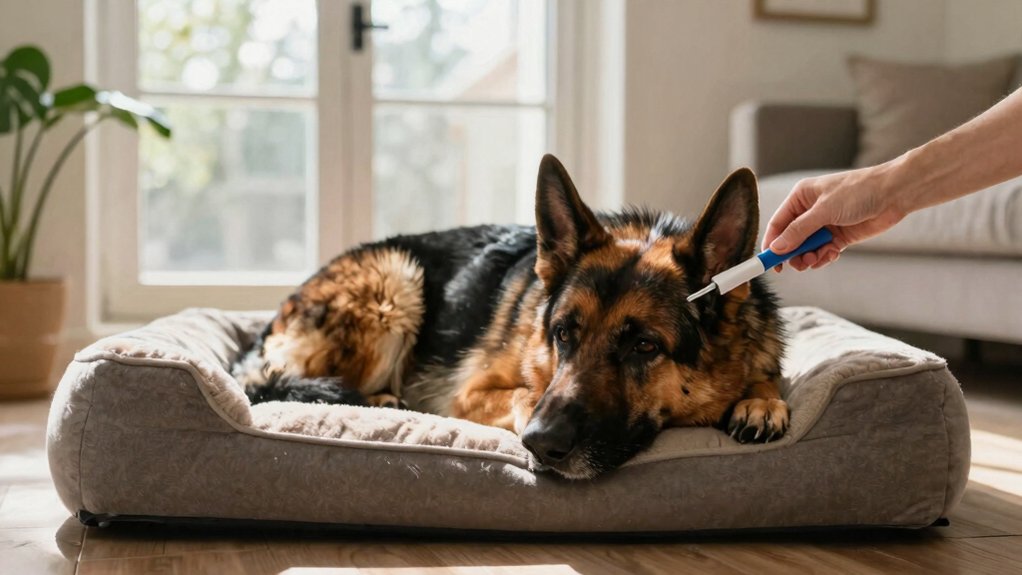
Start by getting everything ready, because a calm, organized setup makes ear cleaning safer and way less stressful for you and your German Shepherd.
Gather a veterinary-approved ear solution, cotton balls or gauze pads, soft cloth, and an optional towel. Pick a stable, non-slip spot.
Then check first: look for redness, swelling, bad odor, or discharge. If you see severe pain, pause and call your vet.
Lift the ear flap straight up.
Instill solution at the canal entrance, no deep tip.
Massage the base 20–30 seconds, then let them shake.
Wipe only what you can reach with gauze.
Ear cleaning is one part of a broader routine, and the grooming needs of a Golden Shepherd, a German Shepherd and Golden Retriever mix, are also worth planning for.
How to Apply Otitis Meds After Cleaning
After you clean and dry your German Shepherd’s ears, apply the otitis meds right away so they don’t get diluted or lose strength.
Give the exact dose your vet prescribed, often about 0.5–1 mL, roughly 10–20 drops, or sometimes 3–4 drops once daily or 5–10 drops twice daily, then hold the head still and let the drops flow into the vertical ear canal for full contact.
And after you instill them, gently massage the base of the ear for several seconds so the medicine coats the lining from entrance to deeper canal. If you are traveling, keep the ear medication and dropper in a travel organizer so the bottle stays upright, sealed, and protected from leaks and heat.
Match Cleaning And Dosing Timing
Once you’ve cleaned the ear canal and patted or let it dry, you’ll want to give the medicine soon—usually wait just a few minutes, about 2–5.
You’re aiming for a canal that looks free of extra cleaner, so the drug isn’t diluted.
Next, match your schedule to your product.
If your vet said twice-daily drops, you clean first, then dose, and you don’t go back in right after.
If there’s thick wax or pus, you may clean more often, even 1–3 times weekly.
For wicks, add drops every 3–4 hours while awake.
Allow Medication Full Canal Contact
Now that the ear cleaner’s out and the canal looks clear, you can help the medicine reach the full depth—because otitis drops work best when they actually coat the vertical and lower parts of the canal. First, confirm the eardrum is intact, and clear the canal of debris or masses. Use only vet-prescribed otic meds for dogs.
Lift and fold the pinna, point the nozzle into the vertical canal, and give the labeled dose (often 4–8 drops, or 1 mL). Administer slowly.
Then massage the ear base 10–20 seconds.
Let your German Shepherd shake, wipe the entrance, and remove discharged excess. Wear gloves.
Avoid These German Shepherd Ear-Cleaning Mistakes
Before you grab a bottle and start cleaning, pause for a second and double-check your “why.” Many German Shepherd ear problems get worse when you clean on a strict schedule even when the ear looks normal, because repeated rubbing and chemical contact can irritate the canal lining.
And then, don’t overdo it. Only clean when you see wax, debris, or odor.
But avoid cotton-tipped swabs, and never push objects deep, that can hurt the eardrum.
Skip alcohol, hydrogen peroxide, essential oils, and home mixes.
If you notice redness, head shaking, or pain after cleaning, take a break for weeks, and consult your vet. Ear pain can also make a German Shepherd irritable during handling, and a dog in discomfort may growl, snap, or display sudden aggression toward owners, so never force the ear open if your dog pulls away or reacts defensively.
Stop Recurrent Otitis: Allergies and Parasites
You can stop recurring ear trouble sooner by catching allergy triggers early, because allergies cause ongoing swelling and extra wax that lets yeast and bacteria take over.
And don’t forget to screen for parasites, since ear mites (like *Otodectes*) can be a direct cause, especially in younger dogs—check with your vet using an ear exam, and act quickly if you see lots of dark debris or head shaking.
But here’s the key: manage the allergy and rule out mites at the same time, so you don’t keep treating the “secondary” infection again and again. Because German Shepherds have a powerful bite strength, it is wise to have a helper hold the dog calmly during ear checks and cleaning.
Identify Allergy Triggers Early
1 in 3 German Shepherds with repeat ear problems gets stuck in a loop because the real driver isn’t the yeast or bacteria—it’s usually allergy or parasites that keep inflaming the ear canal.
Start by watching for clues. Note itchiness on skin, paws, or belly, and any season pattern.
Track diet, new treats, and chew proteins, since meat or dairy can trigger food allergy.
Also flag flea allergy dermatitis, even if you don’t see fleas, because allergy still inflames ears.
Be alert to contact irritation from certain cleaners or otic meds.
Catching the trigger early helps stop repeats fast.
Screen For Ear Mites
If allergies keep flaring your German Shepherd’s ears, don’t stop there—also screen for ear mites, because they can kick off the same “recurrent otitis” loop even when nothing looks dramatic.
Ear mites like Otodectes cynotis cause primary otitis externa, and they’re found in about 5–10% of cases, up to 50% in some studies.
Check for dry, dark “coffee-ground” wax, intense itch, head shaking, and ear canal irritation.
Next, do bilateral otoscopic or video-otoscopic checks.
Then run ear cytology: swab debris, add mineral oil, view under a microscope for mites or eggs.
Sample deeper, horizontal canals too.
When to Culture: Severe or Non-Healing Cases
When an ear infection keeps coming back, or when it just won’t clear after you’ve done proper treatment, culture can be your next best step.
You should culture only in severe, chronic, or non-healing cases, not routinely.
First, confirm bacteria are truly present with cytology, a microscope check of ear material, before you culture.
Culture helps when bacteria persist on cytology, when rods appear, when discharge is copious and purulent, or when you suspect resistant germs.
Also culture if your dog needs systemic antibiotics, or if you see a ruptured eardrum, possible otitis media, or pyogranulomatous inflammation.
Keep in mind that German Shepherds are prone to gastric dilatation-volvulus, so if a dog that needs systemic antibiotics also shows a swollen abdomen or unproductive retching, seek veterinary care immediately.
How Pseudomonas Otitis Externa Changes Treatment
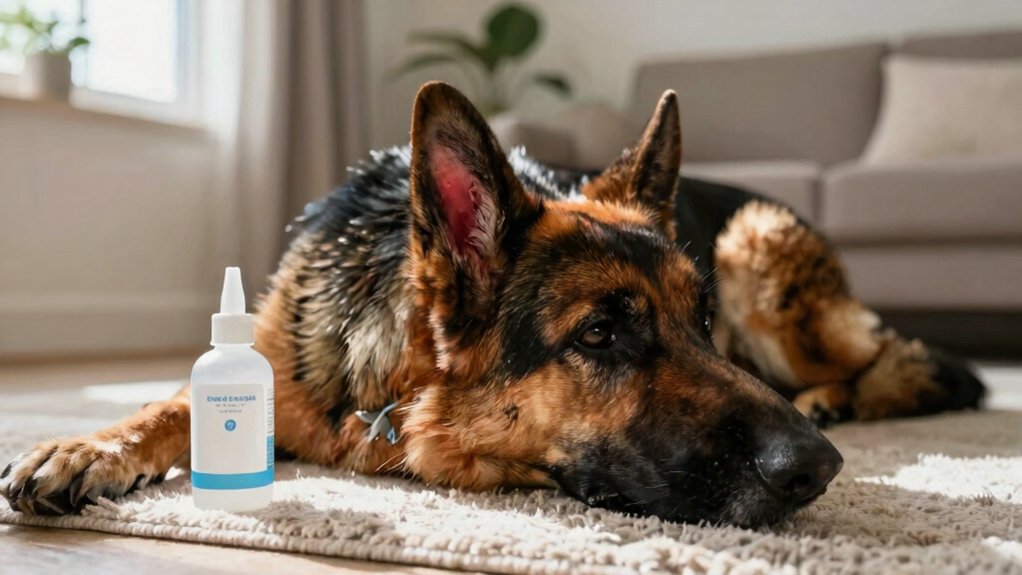
Expect more chronic flare-ups, more tissue irritation, and a faster move toward “complicated, refractory” plans.
You’ll choose anti-pseudomonal drops like fluoroquinolones or aminoglycosides, sometimes combo therapy to fight resistance.
And you should flush the canal often for better penetration, using low-ototoxic, low-residue cleansers.
Add tris-EDTA pre-treatment, then debride thick debris, if your vet approves.
Also treat allergies causing the cycle.
German Shepherds are also predisposed to exocrine pancreatic insufficiency, a digestive disorder that can cause weight loss and chronic diarrhea, so dogs with recurring infections and poor condition should be checked for it too.
Prevent Otitis by Drying Ears After Bathing
After a bath or swim, you can dramatically lower your German Shepherd’s otitis risk just by drying the ear canals well.
After baths or swims, dry your German Shepherd’s ear canals thoroughly—moisture breeds bacteria and yeast that cause otitis.
Excess moisture leaves warm, humid conditions, and bacteria and yeast love that. Dogs with thick double coats that go through seasonal blowouts can also hold water in the fur around the head, so dry that fur thoroughly as well.
So, after you towel-dry the outside, use cotton balls to wick water from the canal opening.
Skip cotton swabs, they push debris deeper.
Then, use a veterinary-approved ear cleaner if advised.
Fill, massage the base, let loosened debris rise, and wipe out fluid.
Do this every time water gets in.
Keep ears dry and well ventilated, and prevent water entry during grooming.
Frequently Asked Questions
How Quickly Should I See Improvement After Starting Ear Infection Treatment?
You should see reduced scratching, shaking, redness, and odor within 48–72 hours, often within a day or two once drops start working. Full recovery usually takes 1–2 weeks; if there’s no improvement after several days, contact your vet.
Can Ear Mites Cause Adult-Onset Otitis Externa in German Shepherds?
Yes—like a spark in dry grass, ear mites (Otodectes cynotis) can contribute to adult-onset otitis externa in German Shepherds, though it’s less common than allergies. You should confirm with otoscopy or cytology before treating.
Is It Safe to Use Wipes or Baby Wipes to Clean Ears?
Don’t use baby wipes; they can irritate and leave residue, and wipes usually can’t reach the ear canal safely. Use vet-formulated dog ear wipes on the visible outer ear only, and use a vet-approved liquid for deeper cleaning.
Why Do Ears Smell Worse After Baths or Swimming?
After baths or swimming, trapped warm moisture sits in the ear canal and fuels bacteria and yeast growth. You’ll notice stronger foul odor because infection and rehydrated debris release more smell while the canal stays damp.
What Causes Otitis Externa to Become Chronic Despite Regular Cleaning?
Otitis externa turns chronic because you keep missing underlying triggers like allergies, hormones, parasites, and canal anatomy. Moisture and poor drainage sustain inflammation, while bacteria, yeast, and biofilms persist, so cleaning alone can’t stop recurrent infection.