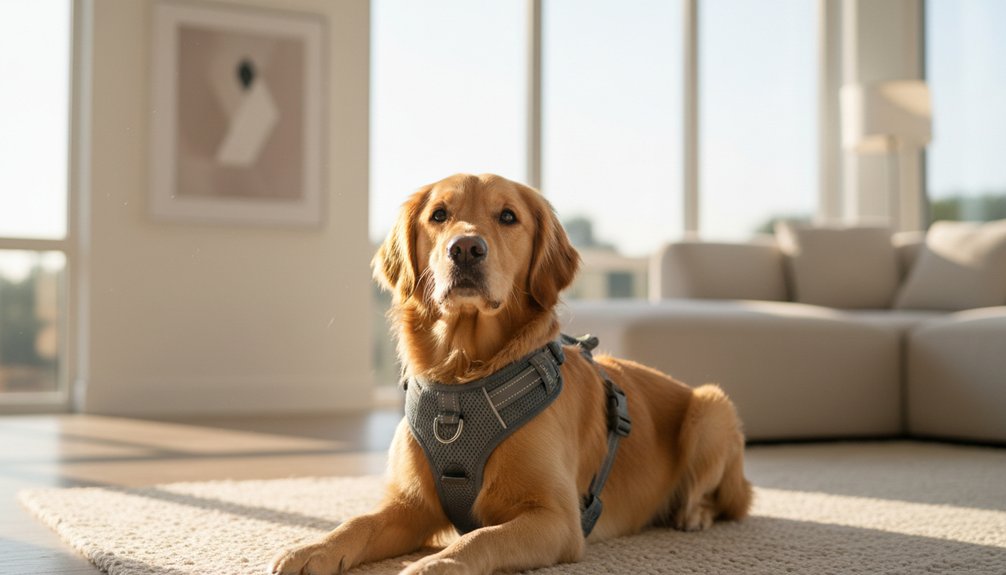
You assess the Golden Shepherd as a hybrid with predictable orthopedic risks like dysplasia and seasonal shedding patterns. Monitor their dense double coat, manage 60–120 minutes of daily exercise, and enforce structured socialization to mitigate anxiety. Screen for gastric dilatation-volvulus and cardiac anomalies while adhering to large-breed nutritional protocols for joint health. Explore detailed clinical guidelines to optimize their lifelong welfare and management.
Swift Summary
- The Golden Shepherd combines the loyalty of a German Shepherd with the sociability of a Golden Retriever.
- Adults stand 20 to 27 inches tall and weigh between 55 and 95 pounds.
- Owners must provide 60 to 120 minutes of vigorous daily exercise and mental stimulation.
- Regular brushing is essential to manage year-round shedding from their dense double coat.
- Health screenings for hip dysplasia and other inherited conditions are recommended when acquiring these dogs.
What Is a Golden Shepherd Mix?
You encounter a canine hybrid originating from the controlled breeding of two distinct purebred lines: the Golden Retriever and the German Shepherd. As a service provider, understand this mix golden retriever and german shepherd yields a robust companion. Prospective owners should also review grooming and training considerations before bringing one home, as these needs shape daily life with any German Shepherd cross.
When sourcing a golden shepherd for sale, verify genetic screening. A golden shepherd breeder should document health clearances for the german shepherd golden retriever cross.
Consider a golden german shepherd puppy or golden shepherd puppies for adoption to minimize hereditary risks. Evaluate golden shepherd price against medical history.
Can you breed a german shepherd with a golden retriever? Yes, but monitor for joint dysplasia in the german shepherd x golden retriever offspring.
The black golden shepherd requires specific dermal care. Guarantee golden retriever german shepherd puppies receive early immunizations for the best physiological stability.
The breed has been recognized as a designer dog by the International Designer Canine Registry since 2009.
Golden Shepherd vs. Parent Breed Differences
Having reviewed the health considerations for Golden Shepherd offspring, compare the clinical profiles of this mix against its parent breeds. You’ll observe temperament phenotypes blending Golden Retriever sociability with German Shepherd vigilance, producing a canine patient with variable behavioral expressivity.
Exercise physiology typically demands moderate-to-high metabolic expenditure, necessitating 60 minutes of vigorous activity to prevent behavioral dysregulation. Owners who take their dog swimming, hiking in the rain, or through muddy trails should fit a durable waterproof dog collars designed for those conditions.
Cognitive function exhibits high trainability, leveraging dual-parent neuroplasticity for therapeutic and assistance roles.
You should consider that individual variability may manifest as either Retriever-like affiliative behaviors or Shepherd-like protective instincts.
This clinical profile supports active household integration but contraindicates sedentary environments.
Optimize welfare by matching exercise regimes to the patient’s working-drive phenotype. Such precision guarantees physiological homeostasis and mitigates stress-related sequelae, ultimately enhancing the dog’s capacity to serve in therapeutic or assistance capacities within your care protocol.
For families, this mix is an ideal family companion.
Golden Shepherd Appearance and Size
You observe a medium-to-large canine phenotype with a muscular, athletic build and a deep, broad thorax.
Your assessment should note a dense, double-layered coat exhibiting seasonal alopecia patterns and variable pigmentation.
Finally, evaluate the skeletal proportions to confirm a rectangular outline consistent with the breed’s physical standards. Appropriate puppy feeding during the 9 to 12 week stage supports healthy skeletal development, so these proportions take shape gradually as the dog matures.
The breed typically reaches a weight of 23 to 39 kg.
Physical Characteristics And Size
While the German Shepherd Golden Retriever mix exhibits a variable somatic presentation, it consistently manifests as a medium-to-large canine with substantial musculoskeletal mass. You should expect adult heights ranging from 20 to 27 inches and weights between 55 to 95 pounds. Males typically occupy the upper limits of these anthropometric ranges.
Their body structure displays a deep thoracic cavity and a sturdy, athletic frame. You’ll observe a solid topline without exaggerated spinal sloping.
The cranial structure features a broad skull with a medium-length muzzle. Almond-shaped, brown eyes contribute to an alert facial expression.
Limbs are well-muscled with solid joints supporting agility. You’ll note large paws providing stable footing during activity.
Sexual dimorphism influences final height and weight outcomes notably. Monitor joint health due to the substantial skeletal mass. This breed benefits from hybrid vigor, contributing to its generally healthy status and longer lifespan compared to purebreds.
Coat Colors And Texture
Although coat characteristics vary, Golden Shepherds manifest a dense, medium-to-long double coat with textures ranging from rough to soft and straight to slightly wavy. Observe the dense undercoat combined with guard hairs, forming a protective barrier against environmental elements.
You’ll encounter variations from German Shepherd-like coarseness to Retriever smoothness, with feathering commonly on ears and tail. Coloration spans gold, cream, tan, black, white, red, blue, gray, sable, and yellow in solid or mixed patterns, displaying no standardized shade.
Recognize moderate-to-heavy shedding occurs year-round, intensifying seasonally. To maintain ideal skin health and prevent matting, implement regular de-shedding routines.
You must address coat density through consistent grooming to prevent follicular irritation. Monitor for seasonal blowouts requiring increased intervention. This protocol ensures structural integrity and comfort.
Regular brushing is necessary, especially during seasonal coat changes.
Body Type And Build
Beyond coat characteristics, you must evaluate the Golden Shepherd’s somatic structure, which typically presents as a medium-to-large, athletic build.
You’ll observe a sturdy, thick-bodied frame with a deep chest and strong bone structure.
Typical adult height ranges from 21 to 26 inches at the shoulder, with weight between 55 and 85 pounds.
Some individuals may reach 100 pounds due to crossbreed variability.
The body is often slightly longer than tall, featuring a balanced topline without pronounced sloping.
Musculature reflects working-dog heritage, with powerful muscles along shoulders and hindquarters.
Limbs remain well-muscled, supporting efficient gait.
Sexual dimorphism exists, with males occupying upper size ranges.
Variability remains significant without formal breed standards.
Assess each dog individually for ideal health and service suitability.
Golden Shepherd Temperament and Personality

If you assess the Golden Shepherd’s temperament, you’ll find a clinically distinct profile marked by high sociability and functional alertness. You observe an affectionate, people-focused disposition that thrives on familial bonding. Inheriting the German Shepherd’s loyal and protective nature, this mix often bonds closely with its owners and watches over the family it considers its own.
This breed displays an even-tempered, obedient character suitable for active households. You must guarantee adequate socialization, as wariness toward strangers correlates with insufficient early exposure.
These dogs possess high-energy working-dog heritage requiring structured physical and mental stimulation. You’ll encounter strong responsiveness to positive reinforcement, though they remain sensitive to inconsistent handling.
Behavioral manifestations like resource guarding or leash reactivity emerge without proper routine. Their vocalizations often indicate unmet neurological needs.
You serve them best by providing consistent cues, vigorous exercise, and clear boundaries to manage their functional alertness and high drive.
Golden Shepherd Health Issues and Lifespan
While the Golden Shepherd inherits a substantial health risk profile from its parent breeds, you must prioritize proactive veterinary screening to manage these clinical concerns.
This deep-chested hybrid presents significant orthopedic risks, including hip and elbow dysplasia, which often lead to progressive osteoarthritis and mobility impairment. Because German Shepherds are highly predisposed to hip dysplasia, a malformed hip joint that causes instability and arthritis, Golden Shepherds should undergo radiographic hip screening through agencies like OFA or PennHIP to identify affected dogs early. You should monitor for neurologic signs like hind-limb weakness indicative of degenerative myelopathy, alongside potential epileptic episodes.
Gastrointestinal concerns include gastric dilatation-volvulus, requiring immediate attention to prevent fatal torsion. You must remain vigilant for neoplastic conditions such as hemangiosarcoma and lymphoma, which are prevalent in the lineage.
Cardiac anomalies and coagulation disorders like Von Willebrand disease further complicate the clinical picture. To mitigate these inherited pathologies, you should enforce strict weight control, ensure early diagnostic imaging, and select breeders utilizing extensive genetic testing to reduce disease incidence effectively.
Golden Shepherd Exercise and Mental Needs
You must prescribe 60–120 minutes of high-intensity cardiovascular activity daily to mitigate behavioral dysfunction.
You should implement structured cognitive enrichment to regulate neural excitability and prevent stereotypic behaviors.
You need to integrate controlled socialization and obedience training to establish proper impulse control and stress management.
Combining physical and mental activities helps Golden Shepherds use their energy and avoid boredom.
Daily Physical Activity Requirements
To sustain ideal physiological function, you must provide 60–90 minutes of structured physical activity daily. Implement vigorous aerobic regimes like jogging, hiking, and retrieving drills to satisfy metabolic demands. Split sessions into morning and evening bouts to prevent sedentary accumulation.
Prioritize low-impact modalities such as swimming for joints predisposed to dysplasia. Guarantee secure, enclosed environments for off-leash locomotion. Monitor developmental stages; adolescents require moderated intensity until skeletal maturity at two years.
Avoid excessive pavement impact to mitigate orthopedic trauma risks. Consistent cardiovascular engagement reduces anxiety and obesity-related comorbidities. Inadequate exertion correlates with behavioral dysregulation and destructive pathology.
Adapt intensity based on individual energy baselines. Maintain baseline movement patterns like short walks to support systemic homeostasis. Optimize your service by meeting these rigorous physical benchmarks for your companion’s holistic well-being.
Mental Stimulation Strategies
Although mental engagement is often overlooked, you must allocate at least 60 minutes daily to structured cognitive workload for your Shepherd to prevent stress-induced behavioral dysregulation. Divide sessions into 15–20 minute blocks to mitigate cognitive fatigue.
Utilize puzzle feeders and snuffle mats to engage foraging instincts, rotating toys biweekly to prevent habituation. Implement scent work, as olfactory processing provides substantial mental fatigue without physical strain.
Incorporate name-object association tasks and advanced trick training to satisfy problem-solving drives inherited from parent breeds. Guarantee progressive difficulty in multi-step tasks to avoid engagement plateaus.
Regular cognitive intervention mitigates boredom-induced neurochemical imbalances. Tailor intensity to age; adolescents require 30–45 minutes, seniors benefit from 20–30 minutes of low-intensity exploration.
Consistent mental enrichment preserves neural plasticity and promotes ideal behavioral health outcomes for this high-drive hybrid.
Socialization And Training Focus
Building on cognitive engagement, address the behavioral management needs of this high-drive hybrid through structured socialization and training protocols.
You must administer daily vigorous exercise totaling 60–90 minutes to two hours, focusing on brisk walks, running, hiking, swimming, and high-intensity fetch.
Guarantee exposure to at least 30 varied people between 8–16 weeks to mitigate inherited wariness.
Enroll your dog in supervised puppy socialization classes and arrange regular playdates with five vaccinated, friendly canines to foster communication skills and resilience.
Prioritize joint health by delaying strenuous physical work or organized sports until 12–18 months.
Consistent physical activity supports ideal weight management and markedly reduces cardiovascular and musculoskeletal health risks inherent to this mix.
Golden Shepherd Training and Socialization
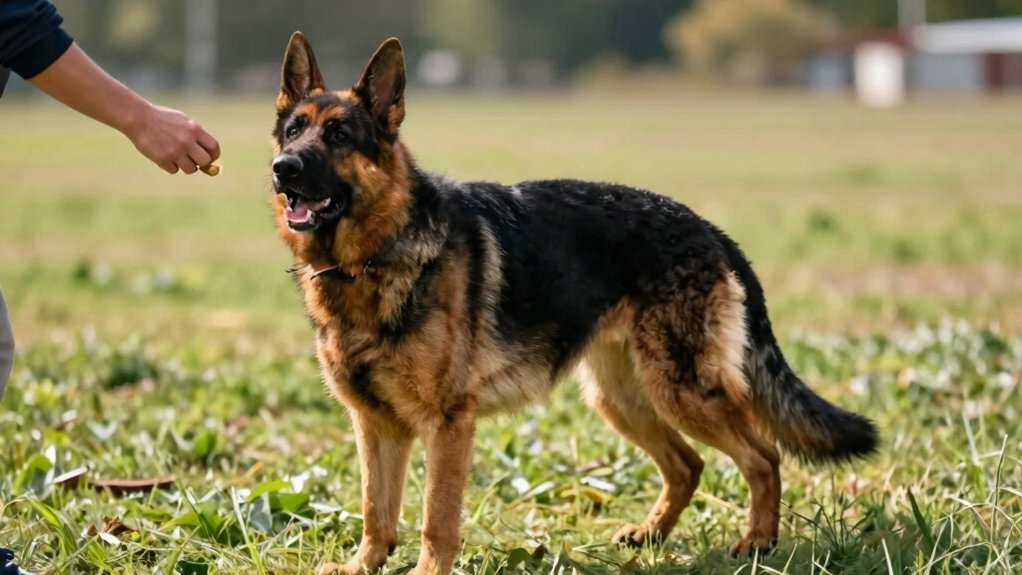
While Golden Shepherds exhibit high cognitive capacity and metabolic output, early structured conditioning is required to normalize behavior and prevent maladaptive stress reactivity. You must implement reward-based protocols to leverage their high reinforcement sensitivity and rapid command acquisition. Many Golden Shepherds also inherit the German Shepherd tendency to shadow their handlers from room to room and to stare intently while waiting for cues, behaviors that can be redirected into productive training.
Establish firm, consistent household rules to mitigate dominant or pushy behavioral phenotypes during adolescence.
During the critical socialization window of three to fourteen weeks, expose your canine subject to diverse human demographics, environmental stimuli, and conspecifics. This systematic desensitization reduces future stranger wariness and dog-dog reactivity.
Design short, varied training blocks to prevent boredom and maintain focus for this high-energy temperament.
Incorporate impulse-control exercises such as door waits and mat settles to refine behavioral regulation.
Ongoing mental stimulation supports stable, family-friendly temperament across the animal’s lifespan.
Golden Shepherd Coat Care and Grooming
Your patient possesses a double-layered epidermal covering, requiring systematic removal of loose pilary units to prevent matting and reduce allergen load. Brush daily during seasonal epilation events, utilizing slicker brushes and undercoat rakes to access the dense sub-layer. For tool selection, reviews of undercoat rakes and deshedding tools can help you find options suited to a dense double coat.
Limit hydrotherapy to bi-monthly intervals; over-bathing strips essential sebum, compromising the skin barrier. Use only mild, pH-neutral detergents to avoid irritant dermatitis.
Avoid shaving the coat, as the fur provides critical thermoregulatory and UV protection.
Schedule professional dermatological grooming every 4–8 weeks for deep de-shedding.
Regular care ensures best cutaneous health while minimizing environmental hair accumulation for your household.
Golden Shepherd Living Environment Needs
Beyond maintaining dermal integrity through rigorous grooming, you must align your living environment with the breed’s physiological and behavioral requirements to prevent stress-induced pathology. Guarantee ample indoor floor space to minimize obstructive gait patterns. Secure six-foot perimeter fencing prevents egress attempts. For a contained indoor area, an indoor dog playpen offers a safe, flexible way to create a designated space when floor space is limited.
Apartments correlate with increased restlessness and vocalization behaviors. Mandate 60–90 minutes of daily vigorous activity to mitigate anxiety. Divide sessions into two daily intervals for sustained neuromuscular stimulation.
Provide structured mental enrichment via agility or scent work to prevent boredom-driven dermatological lesions. Maintain climate-controlled indoor temperatures; thick coats predispose to hyperthermia in warm conditions. Install slip-resistant flooring to prevent orthopedic trauma.
Designate specific zones for rest and feeding to reduce cortisol spikes. An active household reduces separation anxiety. Avoid isolated living conditions. These measures support ideal somatic and psychological health outcomes.
Golden Shepherd Food and Feeding Guide
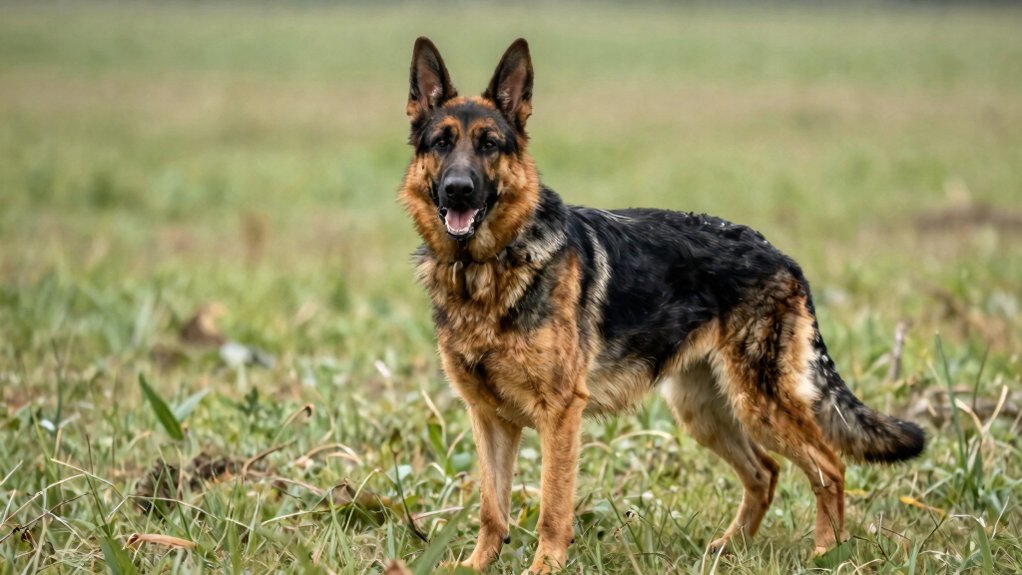
Since nutritional requirements dictate physiological health outcomes, you must align the Golden Shepherd’s caloric intake with their large-breed metabolic parameters to prevent obesity-related pathology.
Feed adults 40–50 kcal per pound daily, adjusting for activity levels.
Provide two to three smaller meals daily to mitigate gastric dilatation-volvulus risk.
Select large-breed formulas with at least 18% protein and 5% fat on a dry-matter basis.
Confirm calcium-to-phosphorus ratios remain between 1.1:1 and 1.4:1 for puppies to support proper skeletal development.
Use manufacturer charts as baseline, then adjust portions based on body condition scoring and weight trends.
Avoid high-fat diets and free-feeding practices.
Monitor muscle mass and joint health closely, especially in seniors requiring controlled caloric intake for lean tissue maintenance and orthopedic support.
Choose a food formulated for the dog’s age, since puppy, adult, and senior formulas are designed to meet each life stage nutritional needs.
Golden Shepherd Adoption and Rescue Options
You locate available Golden Shepherd subjects through regional veterinary networks and breed-specific rescue registries.
You anticipate an adoption fee ranging from $150 to $550, which typically covers sterilization, core vaccinations, and initial medical screening.
You undergo a standardized clinical intake protocol, including housing verification, behavioral assessment, and a mandatory meet-and-greet to confirm placement stability.
Finding Rescues Near You
Identify two primary categories of breed-specific rescue organizations that may accept Golden Shepherd mixes.
First, target Golden Retriever specialists like Adopt a Golden Atlanta or Homeward Bound, which assess behavioral health including fear or aggression.
Second, consult German Shepherd networks such as Greater California German Shepherd Rescue or Thulani Senior, which manage complex medical cases or geriatric patients.
Utilize online platforms like Adopt a Pet to filter by canine characteristics for targeted discovery.
You might leverage national directories like the American Kennel Club Rescue Network to locate state-specific contacts.
By systematically evaluating these resources, you facilitate precise matches between canine needs and your volunteer capacity.
This approach guarantees ideal health outcomes and supports systemic shelter overpopulation prevention strategies within your community.
Adoption Fees Explained
How do adoption fees for Golden Shepherd mixes reflect the clinical scope of care provided? You observe fees ranging $100 to $750 based on age and organization type. These amounts bundle essential veterinary interventions: spay/neuter, core vaccinations, microchipping, and preventive parasiticides. You pay less than if procuring these services separately.
Municipal shelters often charge $50–$150, whereas breed-focused rescues demand $275–$600 for extensive care. Puppies incur higher costs; seniors receive discounts.
Your fee covers diagnostics like heartworm testing and fecal exams, plus supplies such as collars and leashes.
What to Expect When Adopting
Although Golden Shepherds are often categorized as mixed-breed dogs, you’ll typically find them at local animal shelters or all-breed rescue organizations rather than dedicated breed-specific rescues.
Expect orthopedic screening for hip and elbow dysplasia prior to adoption.
Evaluate behavioral phenotypes: assess alertness, sociability, and stress reactivity.
Require daily aerobic exercise exceeding sixty minutes to prevent neuromuscular restlessness and destructive behaviors.
Guarantee early socialization protocols mitigate territorial barking and anxiety.
Verify geographic service area eligibility.
Monitor sensitivity to harsh handling; implement consistent, calm leadership to maintain psychological stability.
Prioritize households capable of sustaining structured physical and mental stimulation routines.
This clinical approach ensures ideal welfare outcomes for the dog and serving family.
Adopt with informed expectations regarding temperament variance, health risks, and maintenance needs.
Golden Shepherd Puppy Prices and Buying
In most cases, you’ll encounter a price range of $450 to $1,500 for Golden Shepherd puppies, though this figure reflects significant variation in breeder practices and health screening protocols.
You should prioritize breeders who conduct genetic testing to mitigate heritable pathologies like hip dysplasia. Expect responsible breeders to charge between $800 and $2,500, ensuring thorough pediatric veterinary care including deworming and vaccinations.
Avoid lower-priced options under $500, as they often indicate absent health protocols.
Alternatively, you might pursue municipal shelter or breed-specific rescue adoption, typically costing $50 to $500. These pathways provide bundled medical services like spay/neuter and microchipping.
Ultimately, your selection should reflect a commitment to minimizing congenital health risks while facilitating compassionate service for the animal.
Golden Shepherd Pros and Cons Summary
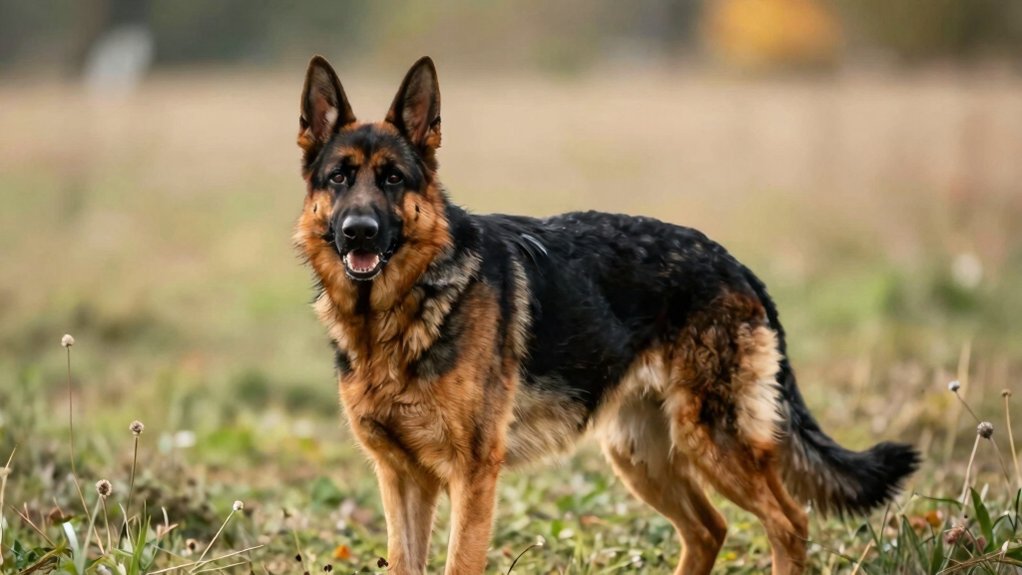
You gain three major benefits—high intelligence, loyal temperament, and family suitability—but face three key burdens: heavy shedding, demanding exercise, and significant inherited health risks.
As a servant of others, you must manage their metabolic and musculoskeletal needs. Their neurocognitive acuity demands structured training to prevent behavioral pathology.
Daily, activity prevents destructive conduct, yet their deep-chested anatomy predisposes them to gastric dilatation-volvulus. Genetic monitoring for dysplasia and degenerative myelopathy is essential for their longevity.
The breed’s heavy epidermal turnover requires rigorous grooming protocols. Their psychological welfare hinges on continuous social interaction; isolation precipitates separation distress.
When properly socialized, they exhibit therapeutic potential as service animals. However, their varied stranger responses necessitate vigilant supervision.
Their physiological profile aligns with active households committed to preventative veterinary care and enrichment.
Frequently Asked Questions
Can Golden Shepherds Adapt Well to Apartment Living?
Can Golden Shepherds adapt to apartment living? Not ideally; they’re like overstuffed furniture, their muscular frames and high-energy needs clashing with confined spaces, risking anxiety and destructive behaviors unless owners provide extensive exercise and mental stimulation.
Are Golden Shepherds Suitable for First-Time Dog Owners?
First-time owners face high risk. Their complex temperament demands consistent training and socialization. They need extensive daily exercise and mental stimulation. Heavy shedding requires frequent grooming. Their strong attachment causes separation anxiety. Inexperienced handling often leads to behavioral problems and poor welfare outcomes for both dog and owner.
Do Golden Shepherds Get Along With Small Pets?
Yes, they can coexist with small pets when you provide early socialization, controlled introductions, and constant supervision to mitigate instinctual prey drive and herding behaviors during critical developmental periods.
What Is the Average Price Range for a Golden Shepherd Puppy?
Average puppy prices range from five hundred to two thousand dollars, reflecting health-testing protocols, genetic screening, and breeder reputation affecting offspring viability and long-term wellness outcomes for service or companionship placements.
Are Golden Shepherds Good Watchdogs for Protecting Property?
Yes, you provide vigilant protection. While pure shepherds exhibit aggressive guarding, this hybrid presents a tempered alert system. You deploy their acute auditory vigilance to deter threats, ensuring community safety through early warning vocalizations.