You shouldn’t treat a raw diet as “automatically safe” for your German Shepherd. Raw meat can carry germs like Salmonella or Listeria, and your best hygiene won’t erase that risk. It can also mess up nutrients, especially calcium-to-phosphorus, so bones don’t get what they need. If you still choose raw, pick an AAFCO “complete and balanced” product, shift over 7–14 days, and thaw safely in the fridge. Follow strict bleach cleaning after meals—keep going, and you’ll learn the steps.
Swift Summary
- Most major vet groups discourage raw or undercooked animal protein due to contamination risk and unproven benefits for German Shepherds.
- Raw meat can carry Salmonella, Listeria, and antibiotic-resistant bacteria, creating zoonosis risk; strict hygiene and kitchen separation are essential.
- Nutritional imbalance is common in homemade raw diets; verify calcium-to-phosphorus ratio (~1:1 to 2:1) and use a complete, tested formulation.
- Transition slowly over 7–14+ days (start ~20–25% raw, increase gradually) and hold the ratio if stools loosen.
- Avoid raw feeding for puppies, pregnant/lactating dogs, kids-at-home, seniors, and dogs with immune, kidney, or liver issues.
Is a Raw Diet Safe for German Shepherds?
You might be tempted to believe that a raw diet is “natural” and for that reason automatically safe, but the truth is more cautious. Major vet groups discourage raw or undercooked animal protein.
You also need to know that CDC does not recommend feeding raw pet food or treats to dogs and cats, because contaminated germs in raw meat can make pets and people sick. So, should German shepherds eat raw meat? You shouldn’t treat it as the default.
If you can you feed german shepherds raw meat, only consider it after a vet review, because benefits stay unproven. Is it ok to feed a German shepherd raw meat? For puppies, pregnant or lactating dogs, and kids-at-home households, it’s usually a no. Raw meat can also harbor parasites, so pair any diet decision with consistent flea and tick prevention for your German Shepherd.
German Shepherds with digestion issues or ortho problems also need safer plans. Instead of diy German shepherd food, use balanced cooked or complete diets.

GOAT'S MILK: Provides natural probiotics, enzymes, and essential nutrients that support digestion, gut health, and immune function. Rich in calcium, potassium, and vitamins, goat's milk helps promote strong bones, a healthy coat, and overall vitality

BREED HEALTH DOG FOOD: Royal Canin Breed Health Nutrition German Shepherd Adult Dog Food Dry Formula for purebred German Shepherds 15 months and older
What Risks Come With Raw Meat Feeding?
When you feed raw meat, you’re taking on two big risks, and both matter. Pathogens like Salmonella or Listeria can contaminate the meat, and zoonosis means those germs can also spread to people in your home, so you need strict hand and surface hygiene. Puppies that nip at hands during feeding can also spread germs, so redirection and clear boundaries help limit that contact. On top of that, an unbalanced raw recipe can cause nutritional imbalance and malnutrition—think calcium‑phosphorus problems or too much fat—especially if you don’t measure and rotate ingredients carefully. Ingredient types vary widely in commercial raw frozen preparations, so the “right” balance may be hard to replicate without more information.
Pathogen Contamination And Zoonosis
Even if your German Shepherd seems healthy, raw meat feeding can bring serious pathogen contamination and zoonosis risks—that means germs pass between pets and people. Studies find frequent contamination in commercial raw diets, including Salmonella, Listeria, STEC “shiga toxin–producing” E. coli, and antibiotic-resistant bacteria. In the FDA CVM Pet Food Study (October 2010–July 2012), raw pet food was more likely to be contaminated with disease-causing bacteria (more likely to be contaminated); up to 32 raw samples tested positive for *Listeria monocytogenes* and 15 tested positive for Salmonella. Up to 30% of dogs can shed pathogens in stool, even without symptoms, and those germs contaminate bowls, floors, and outdoor areas. Humans then get infected through cross-contamination when you prep or clean. And if you defrost, then wait too long, bacterial counts can jump fast. Choose safe handling, or skip raw.
Nutritional Imbalance And Malnutrition
Raw meat feeding doesn’t just raise germ worries, it can also throw your German Shepherd’s nutrition way off balance.
And that imbalance can turn into malnutrition over time.
Studies of many raw diets show frequent low calcium and phosphorus, plus shaky vitamins and minerals.
In fact, about 60% of tested adult bone-and-raw rations had at least one nutritional mismatch.
You also risk fat and protein excess, while missing potassium, zinc, magnesium, and vitamin D.
Home recipes often fail to meet needs, even when labeled “complete.”
Long-term, this can harm bones, skin, nerves, and blood.
How Can You Spot Nutritional Imbalance in Raw Recipes?
When you’re mixing raw meals, check the calcium-to-phosphorus ratio first, because errors can cause weak bones, stunted growth, or pain when your German Shepherd tries to play.
Also, if your recipe doesn’t include a dedicated calcium source plus a complete vitamin/mineral supplement, you’re likely missing nutrients and your dog may show dull coat, poor skin, diarrhea, or slow healing within weeks to months.
Finally, don’t guess on portion size. If you overdo or underdo the amount for your pup’s age, weight, and activity level, growth and energy levels can swing fast. Have your vet confirm the puppy’s physical condition at each checkup so you can adjust portions before problems develop.
Calcium Phosphorus Ratio Errors
How can you tell if your raw recipe is throwing off the calcium-to-phosphorus balance? Start by checking the math, because a correct Ca:P ratio should land around 1:1 to 2:1. If it’s below 1:1, you’re likely giving too little calcium or too much phosphorus. That can harm bone growth, causing osteodystrophy—soft, weak bones.
If it’s above 2:1, you may overload calcium, which can raise orthopedic risk in some dogs. Be extra careful with all-meat diets or boneless-only meals. Bones too can tip the scale. Aim for balance before you serve.
Missing Vitamin Mineral Supplements
Once you’ve checked the calcium-to-phosphorus math, you also want to look at what’s missing from the “vitamin and mineral” side—because bones aren’t the only part that can suffer.
If you skip a mineral premix, your German Shepherd may quietly slide into gaps.
Watch for dull coat, scaling, or patchy alopecia, zinc can play a role.
And if you include raw egg whites often, biotin can drop, since avidin blocks it.
You can also see loose stools, poor wound healing, or lethargy.
Check ingredient variety, and confirm any commercial food has a nutritional adequacy statement.
Growth And Activity Miscalculation
Even if your calcium numbers look great, growth and activity mistakes can still throw your German Shepherd off, and you’ll often spot it before anything looks “scary.” If you feed adult amounts to a fast-growing puppy, or you treat a working, high-drive dog like they’re mostly couch-side, you can create chronic nutrient and energy imbalance—meaning your dog either won’t get enough fuel to grow strong or gets extra that their body can’t use well.
Watch body condition, growth rate, and stamina.
Use RER = 70 × BW(kg)^0.75, then DER ≈ 2–3× RER for pups, higher for active days.
Low feed + high work = weight loss, muscle drop.
Adult/boneless meat without growth calcium = risk of metabolic bone disease.
Which German Shepherd Life Stages Need Extra Caution?
Because German Shepherds grow fast and then stay active for years, you need extra caution at specific life stages when you feed raw.
For large-breed puppies, from birth to 12–18 months, raw often risks nutrient imbalance, like wrong calcium and phosphorus, leading to weak bones and crooked growth.
Also, don’t overfeed calories, because extra weight harms hips and elbows.
Vet sources often discourage raw for young pups due to missing nutrients and higher food-borne illness risk.
And between about 6–18 months, late growth and joint development continue.
Finally, for seniors, you must cut calories to prevent obesity and joint stress. Switching to raw food too quickly can also upset a German Shepherd’s stomach, and a dog that suddenly refuses meals may be showing stomach problems or other signs of illness that warrant a vet visit.
Can Raw Diets Worsen Kidney or Liver Conditions?
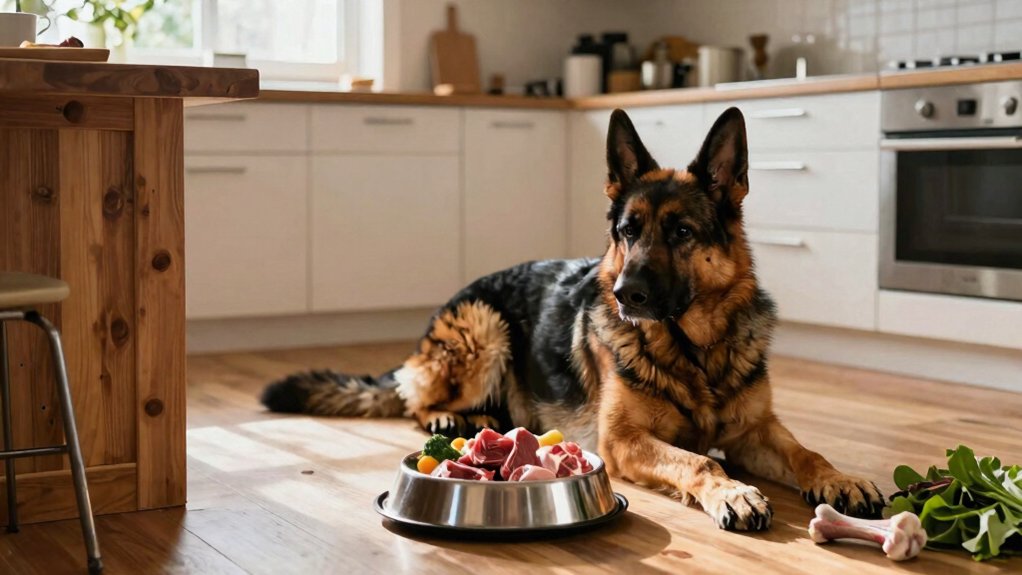
If your German Shepherd already has kidney disease or liver problems, you should pause before switching to a raw diet.
If your German Shepherd has kidney or liver problems, pause before raw feeding—protein and nutrients may worsen symptoms.
Raw diets often run high in protein and phosphorus. That matters, because CKD dogs usually need phosphorus restricted, about 0.4–1.1 g per 1000 kcal, but raw meat and bone can push far higher.
You also risk worsening uremia, a buildup of waste in blood. For moderate or late kidney, or severe liver failure, high-protein raw feeding is often inappropriate.
Unbalanced homemade raw meals may add too much liver, risking vitamin A toxicity, and extra strain. Choose renal or liver therapeutic diets instead. German Shepherds are also prone to exocrine pancreatic insufficiency, so owners should watch for weight loss and greasy, foul-smelling stools when considering any diet change.
How Do You Transition to Raw Without GI Upset?
To help you move over to raw without a rough stomach, start slow and let your dog’s gut adjust. Mix raw with your dog’s current food for 7–10+ days.
Start at 20–25% raw for days 1–3, then 40–50%, then 60–75%, reaching 100% after ~10–14 days.
If stools get loose, hold that ratio a few extra days. For sensitive pups, stretch to 2–4 weeks.
Start with one mild protein, like chicken or turkey, for several days. German Shepherds with sensitive stomachs often tolerate easily digestible proteins best, so compare your options before choosing the first protein for the transition.
Keep meals on your usual schedule, 1–2 times daily, and skip new treats, chews, and table scraps.
What Does “Complete” Raw Nutrition Include?
A truly “complete” raw diet covers your German Shepherd’s *full* nutrient needs—not just a pile of meat—and it should match a specific life stage, like puppy, adult, or all life stages. Look for an AAFCO “complete and balanced” nutrition adequacy statement.
“Complete” means all required nutrients are included, and “balanced” means they’re in safe ratios, not too little or too much. Many homemade or unverified raw diets skip this paperwork and end up incomplete.
A complete plan typically uses ~90% meat, bone, and organs, plus ~10% fruit, veg, and added vitamins/minerals. Often, liver is about half the organs.
How Do You Balance Calcium, Phosphorus, and Protein?
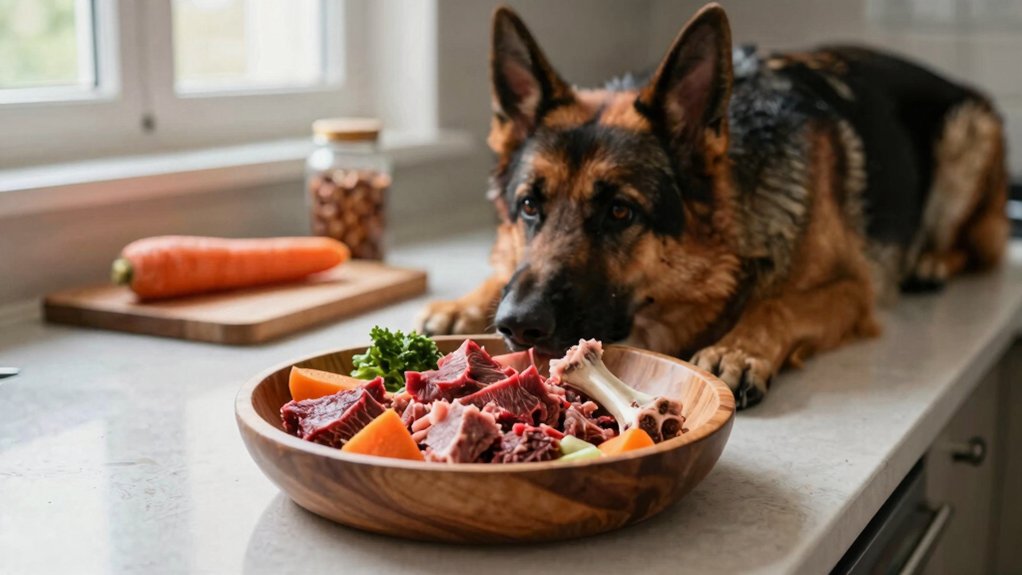
Aim to meet AAFCO’s calcium needs, keep the calcium-to-phosphorus (Ca:Ph) ratio around 1.2–1.4:1, and don’t let it drift into risky territory like below 1:1.
Then control protein for growth—at least 18% crude protein on a dry-matter basis for adult German Shepherds, with higher targets for puppies—because low protein plus a bad Ca:Ph combo can raise skeletal and kidney risks.
But to get the numbers right, calculate calcium and phosphorus per kilogram of food (or use lab/nutrient references), and adjust with bone or a calcium source starting with small changes, then recheck. German Shepherds are widely chosen for police and K9 work because their intelligence, trainability, and physical stamina make them well suited to demanding working roles.

A COMPLETE CANINE SUPPLEMENT - A multivitamin (Vitamins A, B, C, D, E, K & other minerals) PLUS Essential Fatty-Acids for Skin & Coat Support, Glucosamine for Hip & Joint Support AND Probiotics to promote the absorbtion of nutrients for Digestion and Gut Health.

Treat your German Shepherd to a nutrient-rich supplement they deserve. Formulation meets the nutritional needs of German Shepherds, supporting joint health, muscle recovery, and overall well-being.

Balanced diet support: Perfect for DIY raw, BARF or home-cooked dog food; provides the precise ratios of calcium and phosphorus often missing in meat-only diets to prevent skeletal issues and support long-term metabolic health.
Meet AAFCO Calcium Targets
When you feed raw, you can meet AAFCO calcium targets, but only if you balance calcium, phosphorus, and protein as a team—not as separate scoops.
For adult maintenance, aim roughly 0.5–2.5% calcium on a dry-matter basis.
For growth and reproduction, target about 1.2% calcium, with large-size pups sometimes closer to 0.9%—still within AAFCO growth limits, not over.
And don’t exceed about 1.8% calcium in large-breed growth formulas; high calcium above 3% DM raises joint risk.
Serve complete, balanced mixes.
Skip extra calcium or vitamin D unless your plan needs it.
Balance Ca:Phosphorus Ratios
Balancing calcium and phosphorus right in a raw diet can feel like a juggling act, but your German Shepherd’s bones depend on that exact balance. Aim for a Ca:P ratio about 1.1–1.4:1 for large-breed growth, roughly 1:1 to 2:1 at most.
If you feed mostly boneless meat, you often get too much phosphorus and too little calcium, which can trigger nutritional secondary hyperparathyroidism. That means chronic hormone stress, weaker bone, deformities, and even compression fractures.
Control Protein For Growth
To keep your German Shepherd growing strong, you’ve got to control protein and make sure calcium and phosphorus stay in sync, not just hit some random “high protein” target.
In early growth (0–4 months), aim about 28–32% protein (dry matter).
From 4–12 months, drop to 25–28% to support controlled growth.
Higher protein often means more phosphorus, because meat and bone are phosphorus-rich.
That makes calcium demand rise too.
So, pair roughly 1.5% calcium with 0.8–1% phosphorus (dry matter), plus about 30% protein and 9% fat.
Serve a complete, balanced raw plan.
Recheck with your vet.
Where Can You Source Safer Ingredients for Raw Diets?
So, where can you source safer ingredients for raw diets? First, choose USDA-inspected, human-grade meat. Look for vendors using USDA/Food Safety and Inspection Service facilities, and avoid 4D material, meaning meat from animals that were dying, disabled, diseased, or dead.
Next, prefer state-licensed pet food slaughterhouses, especially for fresh or frozen batches. Check that imports into regulated states get permits, and that shipments are inspected and approved for animal food.
Also, buy commercial raw brands with clear quality controls. Search for hazard analysis, batch testing, and nutritionist oversight, plus AAFCO nutrient profiles. You’re helping your dog eat confidently, not guess. Mealtime can also double as training practice, since teaching essential commands and simple tricks gives German Shepherds valuable mental stimulation alongside their diet.

REAL HUMAN-GRADE QUALITY BEEF - Imagine a bowl filled with air dried dog food made with real human grade quality beefy goodness. This high protein dog food will have your pup's tail thumping with joy. It's not just real meat air dried dog food; it's a meaty party for their taste buds, crafted with care

Human Grade: Prepared in a human food facility to the same standards as food on your own table.

Human-Grade Ingredients: Proudly made in the USA with ethical standards and on-site USDA inspection. Achieves the highest food safety scores for premium, trustworthy quality.
How Should You Handle and Store Raw Food Safely at Home?
How should you handle and store raw dog food at home without stressing out every time you open the freezer? Start by keeping it frozen until you’re ready to feed, because freezing stops bacteria from multiplying.
Use sealed bags or containers, so nothing leaks, smells, or gets freezer-burn. Plan ahead, move next day’s portion to the bottom shelf of the fridge the night before, and thaw there.
Use sealed bags or containers to prevent leaks, odors, and freezer burn—then thaw next day’s portion on the fridge’s bottom shelf.
Thawed food usually stays good 24–48 hours, then discard any leftovers. If you must thaw in cold water, keep it sealed and change the water every 30 minutes.
Follow the package timing too, for best safety. When preparing meals, keep toxic foods such as onions and garlic out of the bowl, since they can damage a German Shepherd’s red blood cells.
What Hygiene Rules Prevent Cross-Contamination?
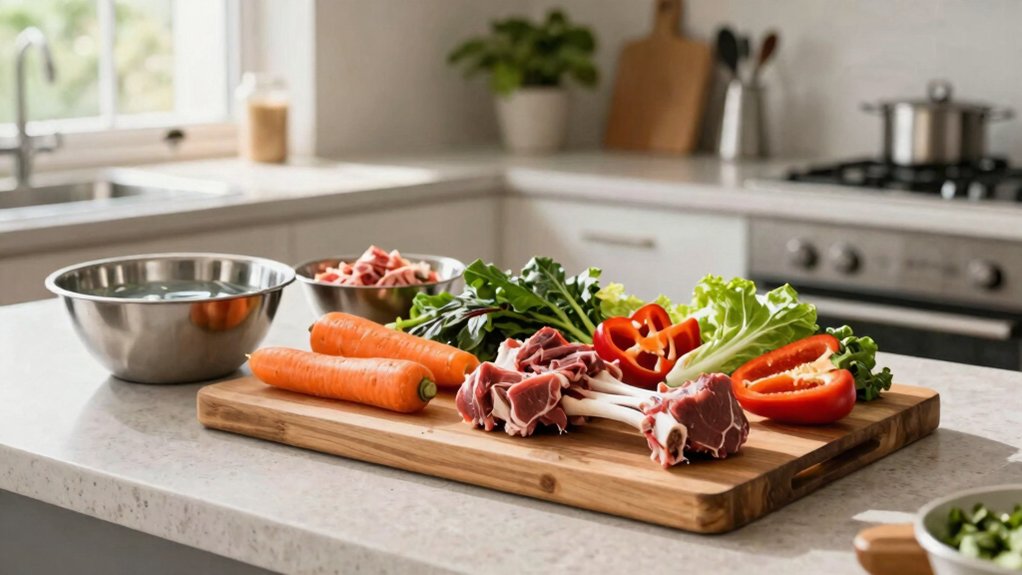
When you feed raw, cross-contamination is the sneaky part, not the raw food itself.
Wash your hands with soap and warm water for at least 20 seconds before and after handling pet food, bowls, or any messy surfaces.
Do it immediately after feeding, cleaning poop, or touching saliva.
Next, wash before you make human food.
Public health calls this the single most important step.
Clean and disinfect counters, sinks, boards, and the fridge contact areas after each use—hot soapy water, then 1 tbsp bleach in 1 quart water.
Use dedicated sponges.
Keep pet items out of human kitchen zones.
Wipe down your German Shepherd’s collar and dog ID tags regularly, since they can pick up raw meat residue during feeding time.
Supervise kids, especially under 5, to wash hands too.
When Should You Avoid Raw Feeding and Choose Alternatives?
Raw feeding can feel empowering, but your household setup really decides whether it’s a good idea. Avoid raw feeding if you have kids under 5, adults over 65, pregnant people, or anyone with a weakened immune system.
Raw meat can carry Salmonella or Listeria, and close contact through saliva, fur, and feces spreads germs.
Also skip it for dogs with suppressed immunity, cancer, chemotherapy, serious heart, kidney, or liver disease, or diabetes.
Puppies and seniors need extra protection, too, since their bodies handle germs and nutrients less well.
If you’re unsure, choose cooked or veterinarian-guided options.
Should You Choose Commercial Raw or Balanced Cooked Options?
Before you pick a raw or cooked plan, start with one key rule: choose a diet that’s complete and balanced for your German Shepherd’s life stage (growth, adult, or senior).
Many commercial raw foods claim AAFCO coverage, but some skip a clear adequacy statement, which can mean nutrient gaps.
Even if a raw brand says it meets AAFCO, confirm a clear adequacy statement—missing wording can signal nutrient gaps.
Balanced cooked options also work if they’re certified complete and balanced, or if you use a board-certified veterinary nutritionist for home meals.
And remember, raw marketed as toppers isn’t complete.
Studies even link commercial raw feeding with higher pathogen shedding and higher odds of respiratory issues.
Serve well: pick certified, not “just raw.”
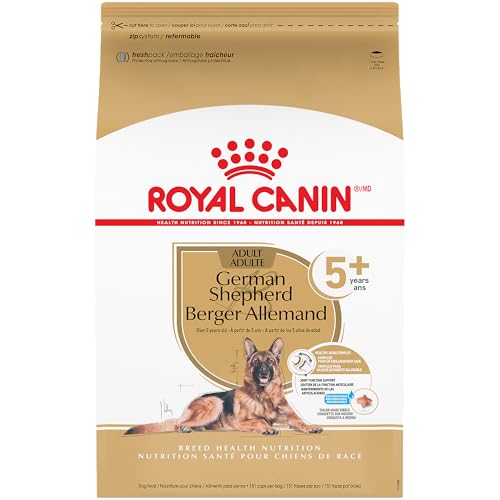
Royal Canin German Shepherd Adult 5+ Dry Dog Food is complete and balanced nutrition designed to meet the specific needs of senior purebred German Shepherds 5 years and older...
Frequently Asked Questions
How Much Raw Meat per Day for a German Shepherd?
How much raw meat per day? Feed 2–3% of your German Shepherd’s body weight daily total raw, split into two meals; for prey-model, use about 80% muscle meat, so that’s ~1,000g for 30kg.
Can Raw Eggs Be Fed Daily, and Are They Safe?
No, you shouldn’t feed raw eggs daily to your German Shepherd. Raw eggs raise salmonella risk for both you and your dog, causing diarrhea, vomiting, and fever. If you use eggs, cook them thoroughly and keep portions small.
Are Raw Bones Safe for Chewing, and Which Types Are Safest?
About 1,000 dogs a year need ER care for bone-related injuries—so don’t assume “raw” makes bones safe. If you choose, supervise closely and offer only appropriately sized, softer options like chicken necks, duck/turkey necks, or rabbit; avoid hard weight-bearing bones.
What Signs Mean My Dog Isn’T Tolerating the Raw Diet?
You’ll see intolerance if your dog gets chronic loose stools or diarrhea, recurring vomiting, lip smacking/licking or belching, excessive gas and bloating, belly pain/rumbling, bloody stool, fever, lethargy, and loss of appetite.
Can I Use Supplements With Raw Food to Correct Deficiencies?
Yes—you can use targeted vitamin-mineral and calcium–phosphorus supplements, but you must base doses on your dog’s age, weight, and the exact raw recipe. Use AAFCO/FEDIAF premixes, then confirm ratios with a vet or vet nutritionist.