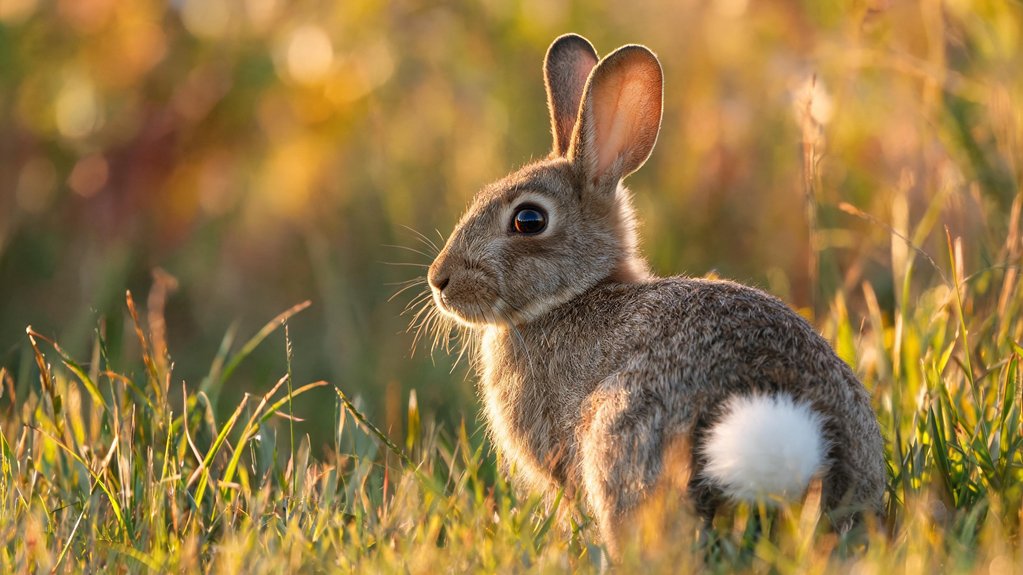
You’ve got three chinchilla rabbit options, and size really drives the choice. Standard is the smallest, about 5.5–7 lb, with dense rollback fur and a gentle, friendly vibe. American runs about 9–11 lb bucks (10–12 lb does) with plush rollback fur, calm and hardy. Giant gets bigger, about 12–15 lb bucks, normal flyback fur, and “gentle giant” temperament. Plan space, lots of hay, and watch dental health, and you’ll be set for success. Keep going to catch more practical tips.
Swift Summary
- Standard Chinchilla is the smallest type, weighing about 5.5–7.5 lb, with dense rollback fur and a gentle temperament.
- American Chinchilla is a heavier line, with bucks about 9–11 lb and does 10–12 lb, known for plush rollback fur and steady hardiness.
- Giant Chinchilla is the largest type, bucks about 12–15 lb and does 13–16 lb, featuring normal flyback fur and a calm “gentle giant” demeanor.
- ARBA recognition/history spans the 1910s–1920s, with American and Giant developments credited from Standard-based breeding.
- All three emphasize chinchilla-style ticking: even salt-and-pepper banding with clean, dark slate-blue depth and no rusty or smutty tones.
Quick Guide to Standard, American, and Giant Chinchilla Rabbits
If you’re looking at a chinchilla rabbit, here’s a quick, practical way to tell the Standard, American, and Giant types apart—starting with size, coat, and personality.
First, compare weight: Standard runs about 5.5–7 lb, American about 9–11 lb bucks, 10–12 lb does, and Giant about 12–15 lb bucks, 13–16 lb does. Adult size around 9–12 pounds is typical for the American Chinchilla Rabbit.
Next, check fur. All share slate-blue, pearly bands, but Standard has dense rollback fur, American plush rollback, and Giant normal flyback fur.
Finally, watch temperament: Standard stays gentle, American is steady and hardy, Giant is a calm “gentle giant.”
Where Standard, American, and Giant Chinchilla Rabbits Originate (and ARBA Status)
When you trace chinchilla rabbit breeds back to the source, you’ll find the Standard Chinchilla first developed in France in the early 1900s, then shown publicly in 1913.
Next, you’ll want to follow the U.S. story: Standard Chinchillas were imported in 1919**, sold to American breeders, and they were later added to ARBA’s standards book in the mid-1920s (often cited around 1924**), so this type became “official” for showing.
From that base, American Chinchilla rose in the U.S., and Giant Chinchilla followed as a larger offshoot—both tied to ARBA-recognized chinchilla-type lines you can find in ARBA’s listings.
Foundational Standard Chinchilla Roots
Standard Chinchilla isn’t just a color name—it’s the original “root” type behind the American Chinchilla and the Giant Chinchilla, and it all starts in France.
Under engineer and breeder M. J. Dybowski, you’ll find early crosses of wild agouti-pattern rabbits with Himalayan and Blue Beveren stock. Then, in April 1913 at Saint-Maur, France, you saw the first public Chinchilla exhibition.
That fixed type became the foundation.
In the U.S., breeders selected from Standard Chinchilla for more size, keeping the chinchilla ticking and roll-back coat, then shaped American and Giant lines.
Between November 1928 and November 1929, 17,328 Chinchillas were registered through the American Rabbit & Cavy Breeders Association.
U.S. Import And ARBA Adoption
After the Chinchilla rabbits hit U.S. shores around 1919, American breeders didn’t just admire the color—they worked the type into distinct lines you can find in ARBA registries today.
A British exhibitor brought them to the New York State Fair in 1919, and exhibitors Edward H. Stahl and Jack Harris bought foundation rabbits.
Next, you’ll see recognition follow purpose.
In 1924, ARBA officially recognized the American Chinchilla.
In 1925, the American Heavyweight Chinchilla standard debuted at the Colorado Convention.
Giant Chinchilla emerged in 1921, then ARBA recognized it in 1928.
American And Giant Offshoots
American and Giant Chinchilla rabbits didn’t just “grow out” of the classic chinchilla look—they were built from early chinchilla-colored foundation rabbits that trace back to France, then developed later in the U.S. into bigger, meat-and-fur-focused strains.
You can thank American breeders for the push toward size and “dress-out,” meaning the yield after processing.
Early on, Standard Chinchilla stock came over, then U.S. breeders crossed in larger breeds like New Zealands, Flemish Giants, and Beverens.
That line became the Heavyweight, later the American Chinchilla.
Giant Chinchilla followed in 1921, ARBA-accepted by 1928.
Standard vs American vs Giant: Which Size Fits You Best
When you’re picking a chinchilla-type rabbit, start with size, because it changes everything.
If you want a compact companion, the Standard Chinchilla fits best—think 5.5–7.5 lb and an easier time with typical indoor setups, since ARBA shows cap at 7.5 lb.
But if you’re set on big, go with Giant Chinchilla—you’ll need more space, sturdier housing, and solid resting areas to help protect feet, so plan your cage and room before you bring one home.
Standard Chinchilla Weight Range
If you’re shopping for a chinchilla rabbit, the size you choose starts with the weight range. As an owner, you’ll want to match your expectations to the mature Standard Chinchilla. ARBA-style standards put adult Standards at about 5–7 lb, with bucks typically around 5–7 lb and does around 5.5–7.5 lb.
That “up to 7.5 lb” maximum matters when you’re comparing listings. And yes, Standard is the smallest Chinchilla type, so it fits households that want manageable size, not big-breed bulk.
Choose well, then plan daily handling accordingly.
Giant Chinchilla Space Needs
Now that you’ve got a feel for the Standard Chinchilla weight range, let’s talk space, because size affects what your rabbit can do day to day.
For a Giant Chinchilla, plan a footprint bigger than the usual large-bunny minimum, since your bigger body needs more room for turning and consecutive hops.
Many owners aim for pens around the 4 x 4 ft (16 sq ft) level, or even whole-room access, so your rabbit can move daily.
You’ll also want extra height, sturdier platforms, ramps, and hides built for heavier loads.
Body Type and Conformation: What to Compare for Show and Meat
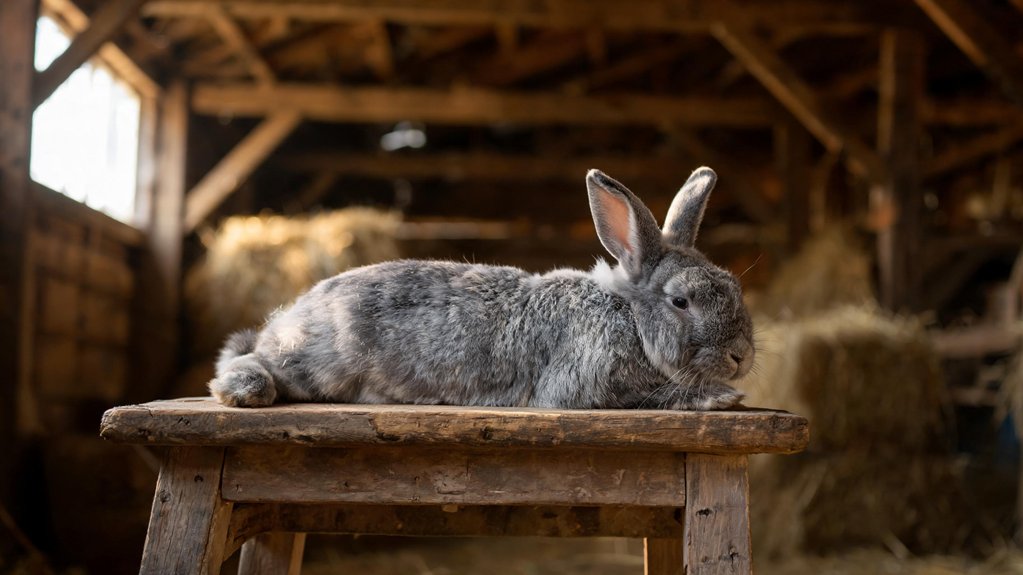
Start by studying body type and conformation, because this is where you’ll see the real difference between a show rabbit and a meat rabbit.
Start by studying body type and conformation—where the true differences between show rabbits and meat rabbits become obvious.
For show, match each breed’s weight band, because being outside it can earn disqualification or penalties.
Standard is compact and cobby, with a rounded outline and medium-size structure.
American is a heavier commercial build, with medium length and a gentle curve from nape to rump.
Giant is very large, moderately long, and smoothly arched—never stretched like Flemish.
For meat, prioritize total live weight, plus chest depth, thick loins, and full hindquarters for prime cuts.
Chinchilla Fur Basics: Rollback Coat and Dense Ticked Pattern
When you handle a Chinchilla rabbit, feel for a rollback coat—fur that slowly returns to position after you stroke it against the growth direction, not one that snaps back right away.
Then look for the dense ticked pattern, which means black-tipped guard hairs create ticking, that sparkling salt-and-pepper look, plus a banded hair structure with slate-blue undercolor and a light pearl ring.
Aim for that fine, very dense feel, and for a standard-type rollback coat you’re usually looking at about 1–1.5 inches of fur length, with the ideal around 1 1/4 inches.
Rollback Coat Explained
If you’ve ever stroked a chinchilla rabbit’s fur from tail toward head and noticed it doesn’t instantly “snap back,” you’ve seen rollback coat in action. You feel a soft, normal fur type with a toplayer of guard hairs and an undercoat.
Now do this simple test again. Stroke against the grain, tail to head. Rollback fur returns more slowly than flyback fur, so it looks a bit draped for a moment.
Along the direction of growth, it usually keeps its shape, which helps you handle your rabbit gently.
Dense Ticked Fur Pattern
Dense ticked fur is what gives chinchilla rabbits that classic, chinchilla-pelt “sparkle,” and it all comes from the way their guard hairs grow.
You’ll notice tightly spaced black-tipped guard hairs, layered over a slate-blue undercolor, with a pearl (light, cream) band under the black tipping.
This banding creates salt-and-pepper surface color, like real chinchilla fur.
For Standard and American Chinchillas, you should see distinct color rings when you part the coat, plus bright, even black ticking across the top grey.
Keep flanks and chest ticked uniformly with pearl, and blend naturally, including lighter neck fur.
Standard Chinchilla Color Standards You Should Recognize
Once you spot a Standard Chinchilla, you’re looking for that chinchilla-like agouti pattern—rich, soft bluish gray with jet-black tipped guard hairs, and a coat that looks “banded” all over (each hair has multiple color bands).
You should see an even, ticked surface, because the fur base gives a dark slate blue depth.
And when you blow the fur back, you’ll notice clear bands: a wider slate base, a pearl or ashy intermediate band, a narrow dark edge, then the agouti-tipped surface.
Check markings too: blue-gray head, black-laced ears, light pearl eye circles, a lighter triangular nape, plus a bluish-white belly.
Avoid brown, rusty, or smutty tints.
American Chinchilla Grey Pattern: Key Judging Highlights
When you’re judging the American Chinchilla, you’ll want to think “rich chinchilla gray,” not flat or washed-out gray. You should look for layered gray fur that matches the chinchilla rodent look. Aim for medium-to-dark, textured tone, not solid slate, and avoid self-black or other shades that break the “Standard” listing.
Next, part the fur. Each hair should show four distinct color bands, making a bullseye effect across the coat. You’ll also check even ticking, a frosted surface, and a clean, compatible belly. Finally, assess band clarity, especially in older classes.
Giant Chinchilla Build: Bigger Pelts and Fast Fryers
When you build toward a Giant Chinchilla, you’re aiming for heavier pelt fur, because this breed’s dense, chinchilla-pattern coat is made to cover more skin surface.
With a big, powerful frame in the giant class, you also get the larger body that helps with market meat yield, since they’re built with full, broad fore and hindquarters.
And if you manage feed and hay well, you can lean on that fast-growing fryer potential—many reach around 5–6 lb by about 8 weeks, then keep moving toward the 7–9 lb range by roughly 12 weeks.
Heavier Pelt Fur Development
If you’re chasing the “bigger pelt” look in a Giant Chinchilla, focus on how long, dense fur actually builds up, not just how the coat looks today.
And remember, this breed was created in the U.S. to put prized chinchilla-pattern fur on a larger pelt.
You aim for rollback, or resilient flyback fur, that springs back smooth.
That look comes from underfur density, where slate-blue undercolor reaches at least halfway down.
In the American Chinchilla, fur is 1 1/8 to 1 3/8 inches, ideal about 1 1/4, and density matters most.
Larger Body For Market Meat
A Giant Chinchilla is built for a purpose, and that purpose is meat: you get a larger body that turns into bigger, saleable carcasses.
If you raise rabbits to serve your table and community, start with body size. You’ll see the progression across Chinchilla types, from Standard, to American, to Giant.
Mature bucks run about 14.5 lb in breed profiles, with Giant bucks often listed around 12–15 lb, does 13–16 lb.
In market programs, Giant Chinchillas earn strong dressing percentages, and their fine-grained, mild meat helps restaurants and butchers portion consistently.
For meat-focused stock, follow the 12–15 lb target.
Fast-Growing Fryer Potential
Boost your fryer game with a Giant Chinchilla, because this rabbit is built to put on weight fast and still give you a big, dense pelt.
Historically, you can reach fryer weight in roughly 8 weeks, and some reports hit about a 7 lb fryer in as little as 2 months. That makes Giant Chinchillas your “bigger-first” choice versus Standard and American Chinchillas, which place in lighter and intermediate fryer classes.
For safe planning, use conservative fryer targets of about 4–5 lb at 8–10 weeks. Then aim your feed, care, and harvest timing to match your goals.
Temperament Differences: Pets, Families, and Handling
When you’re choosing a chinchilla rabbit as a family pet, start by matching their temperament to your household—and the way you’ll handle them day to day.
Standard Chinchillas are sweet, friendly, and curious, so you’ll need steady, gentle attention, plus playtime to keep them engaged.
American Chinchillas are particularly calm and even-tempered, which makes them easier for new handlers and good for older kids, still with adult supervision.
Giant Chinchillas are “gentle giants,” laid-back and passive.
For young children, go slow, and never allow rough handling, because size increases injury risk.
Typical Lifespan for Standard, American, and Giant Chinchilla Rabbits
When you’re planning for a chinchilla rabbit, you should expect a typical lifespan that fits the size and care you provide. Standard Chinchillas usually live about 5–8 years, American Chinchillas often land around roughly 5–11 years, and Giant Chinchillas most often fall in the 5–10-year range—though indoor care and regular vet visits can push outcomes toward the higher end.
Next, you’ll want to look at the factors that affect longevity, like diet basics (timothy hay plus measured pellets), heat stress control, and catching dental or gut problems early.
Average Lifespan Expectations
Most pet owners find that Standard, American, and Giant Chinchilla rabbits tend to fall into a broad 5–10 year lifespan window, with many guides clustering around 5–8 years.
If you’re planning your care calendar, treat 5–8 years as your “default expectation.”
For Standard Chinchillas, you’ll often see 5–8, with some sources extending up to 10–12 in ideal situations.
American Chinchillas commonly land around 5–8, yet strong husbandry can bring them to about 8–11.
Giant Chinchillas usually average 5–7, though some references place them near 7–9.
Plan accordingly.
Factors Affecting Longevity
Even though the name “Chinchilla rabbit” gets people thinking the lifespan is set in stone, your day-to-day care matters more than breed label.
Diet tops the list. Feed mostly grass hay, about 70% of intake, plus measured pellets, and fresh greens daily.
Limit fruits and starchy veggies to prevent weight gain.
Always provide clean water.
Next, housing.
Use large, connected space for full hops and stretch.
Choose soft, dry flooring to protect hocks.
Keep bedding clean to lower respiratory issues.
Then add 1–3 hours of daily exercise, plus weekly brushing.
Preventive vet checks help too.
Breed-Specific Health Considerations
Your rabbit’s day-to-day health still matters most, but the “Chinchilla rabbit” label can hint at what to watch for—especially around typical lifespan. Standard Chinchillas often live about 5–8 years, sometimes up to 8–12, because they’re generally hardy, with no clear breed-only hereditary killers. American Chinchillas also often land around 5–8, and some guides cite 8–11, so focus on common rabbit problems.
Keep an eye on digestion, dental wear, and parasites, not “mystery” genetic issues. But Giant Chinchillas, often 5–10 years, need extra joint-friendly setups to reduce strain and skin concerns like irritations.
Common Health Issues in Chinchilla-Pattern Rabbits
What can go wrong with chinchilla-pattern rabbits, health-wise, and what should you watch for?
First, dental problems. Their teeth keep growing, so you must provide constant hay and safe gnawing items. Watch for drooling, dropping food, weight loss, and fewer droppings. If you see any, call your rabbit vet fast for an oral exam and possible trimming.
Next, gut stasis, a gut slowdown that’s an emergency. Look for no poops, no appetite, hunched posture.
Also, be alert for sore hocks, especially in Giant types on hard or wire floors.
Check ears for mites, and protect outdoor rabbits from flystrike.
Grooming and Shedding Control for Dense Chinchilla Fur
After you’ve learned what to watch for with chinchilla-pattern health issues, grooming is the next skill that helps you prevent trouble before it starts.
For Standard Chinchilla, brush weekly in calm weeks, then move to daily or several times weekly during molts, to cut down loose fur you’ll otherwise swallow.
American Chinchilla needs about weekly brushing, but during heavy molting you’ll brush two to three times weekly, even daily.
Giant Chinchilla benefits from soft-bristle brushing weekly, or every few days when shedding hits.
Use gentle strokes, check the rear, spot-clean stains with a damp cloth.
Use gentle strokes, check the rear, and spot-clean any stains with a damp cloth to keep your chinchilla comfortable.
Skip baths.
Clean enclosures, too.
Housing Chinchilla Rabbits: Space, Bedding, and Safety
When you set up housing for a chinchilla rabbit, you’re really setting up their comfort and safety day after day.
For Standard and American types, aim for at least 24×30 in to 30×36 in floor area.
For Giant chinchillas, plan 30×36 in to 36×48 in, height about 16–18 in.
Use solid flooring, not bare wire, so you prevent sore hocks.
Separate a dry resting space from the toilet area, add heavy crocks, and keep hay off the floor.
Choose dust-free straw, dust-free hay, or shredded paper, plus paper or dust-free underlayers.
Avoid cedar.
Place the home in cool, well-ventilated shade.
Feeding Basics: Hay Ratios and Treats by Age
Start with hay, because it’s the engine that keeps a rabbit’s gut moving and their teeth wearing down.
Start with hay—it powers a rabbit’s gut and keeps teeth worn down, so offer unlimited 80–90% quality grass hay daily.
Aim for 80–90% quality grass hay, like timothy or orchard, and offer it unlimited. Timothy hay is a strong everyday choice because its long, coarse fibers support healthy digestion and help keep teeth worn down.
You’ll also use the “85/10/5” idea: about 85% hay, 10% leafy greens, and 5% pellets.
For kits up to ~6 months, you can start with some alfalfa mixed in, then taper to grass-only.
Juveniles and adults stay mostly grass hay.
Seniors keep free-choice hay, watch body condition, don’t pinch hay.
For treats, skip sugar until about 12 weeks, then keep fruit occasional.
Exercise and Enrichment Needs for Thriving Chinchilla Rabbits
To keep a Chinchilla-type rabbit happy and healthy, plan on several hours a day of safe out-of-enclosure exercise, plus enrichment that really matches what rabbits do naturally—chew, forage, dig, explore, and hide.
Schedule play at dawn and dusk, and keep a connected run for continuous movement, not just quick bursts.
For Standard, American, and Giant Chinchillas, give roomy floor space, long open runways, and non-slip platforms sized to body weight.
You should watch closely and adjust by age and condition.
Add chew items like willow or wicker, cardboard hideouts, and digging boxes with hay or paper.
Rotate tunnels, mats, and tubes.
Breeding Basics: Litters, Mothering, and Growth Rates
Before you even think about breeding a Chinchilla-type rabbit, you need to plan for what litters look like and how fast kits grow, because those details affect everything—from the doe’s comfort to whether you can actually support the babies.
Standard Chinchilla litters often run 5–8 kits, while American Chinchilla averages 6–9, with first litters 7–8.
Giant Chinchilla usually has 6–10, sometimes seven to ten.
Gestation runs about 28–33 days, most commonly 31.
Expect weaning around 4–6 weeks.
American and Giant does often mother well, but huge litters can stress them.
If needed, foster within 2–3 days, and monitor 24–48 hours.
Typical US Price Ranges and What Affects Cost
Next, you’ll see costs change with age, sex, pedigree documentation, and whether it’s pet-quality or show-quality.
Regional supply matters too.
How to Adopt or Buy Responsibly (Breeders vs Rescues)
How should you bring home a chinchilla-type rabbit without creating problems down the road?
Start with rescue first, if you can. You’re helping homeless rabbits, and you often get spay or neuter, vet checks, and documented health.
Good rescues also guide temperament, confirm sex, and may use foster-to-adopt so you can test fit.
If you buy from a breeder, screen hard. Ask for veterinary exams, RHDV2 vaccination for breeding stock, clean housing, and written records.
Choose ethical limits on litters, and look for lifetime take-back clauses.
Apply, interview, commit, and plan care before you say yes.
Who Each Chinchilla Rabbit Breed Suits Best
So you’re thinking about a “chinchilla” rabbit, and the best breed choice depends more on your daily routine and space than on looks.
Choose Standard Chinchilla if you want a medium, gentle, interactive companion, great for first-timers who handle calmly and offer daily out-of-pen time. It fits families, and a mature 5–7.5 lb size suits many homes.
Choose American Chinchilla if you’re new and want a hardy, larger, good-spirited rabbit, especially for small homesteads. But aim for 9–12 lb space and stimulation.
Choose Giant Chinchilla only if you have experience, lots of room, and older kids.
Frequently Asked Questions
What Colors Are Accepted for American Chinchilla Rabbits by ARBA?
ARBA accepts only one color variety for American Chinchilla rabbits: Standard chinchilla gray. You’ll see the ARBA-listed fur pattern that mimics a true chinchilla’s blend of gray tones, plus the breed’s matching eye-circle and tail traits.
How Much Do Standard, American, and Giant Chinchillas Weigh at Maturity?
Standard chinchillas reach about 5–7 lb (bucks) and 5.5–7.5 lb (does). American chinchillas mature around 9–12 lb. Giant chinchillas typically weigh about 12–15 lb (bucks) and 13–16 lb (does).
Do These Breeds Have Rollback Coats, and How Should I Care for Them?
Yes—you’ll find rollback-type coats on both Standard and American, with the Giant often described as flyback, yet dense like chinchilla fur. Brush weekly, keep it clean, and during shedding, brush more to prevent tangles.
Which Chinchilla Breed Is Best for Families Wanting Gentle, Easy Handling?
For families wanting gentle, easy handling, you’ll usually find the Standard Chinchilla best: it’s docile, friendly, and smaller to lift safely. American Chinchillas are also calm, while Giant types need extra careful handling.
What Housing Size and Safety Features Do Chinchilla Rabbits Need?
You might think a small cage works, but you’ll keep your chinchilla safer with generous space: aim for at least ~12ft² floor area (more for giants). Use predator-proof, escape-proof walls, solid non-slip flooring, ventilation, and a raised, covered shelter.