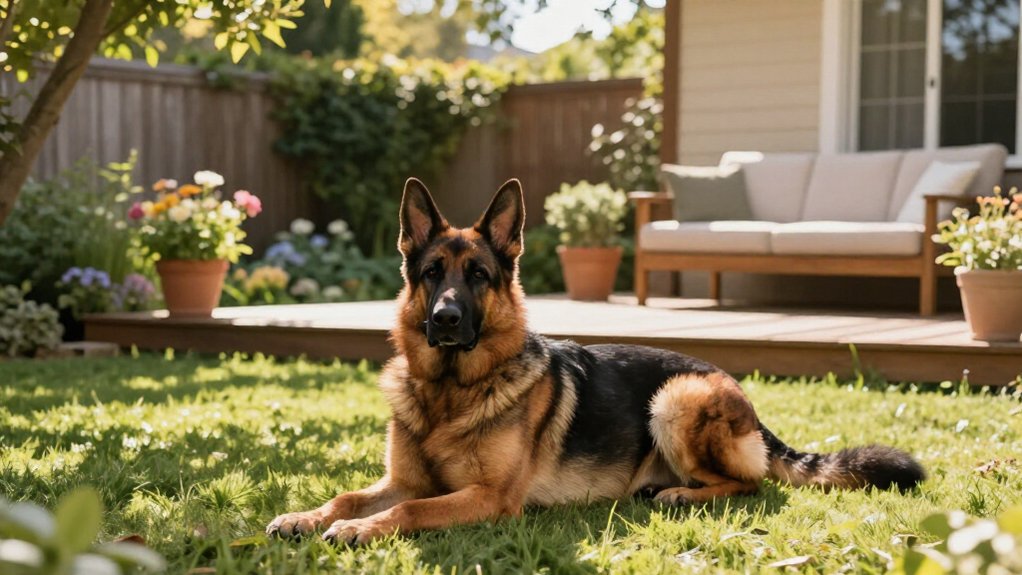
Yes, you can live with a German Shepherd in an apartment, but only if you budget their energy. Aim for 90–120 minutes of active exercise daily, split into 2–4 outings, plus 15–60 minutes of mental games (training, puzzle feeders, sniffing). A yard isn’t required, yet your dog still needs safe off-leash running nearby. First, confirm the lease’s breed/weight limits and pet fees, then set up chew toys, a comfy bed, and hallway/elevator training—keep them calm, and you’ll be ready for more tips.
Swift Summary
- Yes, German Shepherds can live in apartments if you provide 90–120 minutes daily exercise plus 15–60 minutes of mental work.
- Split activity into 2–4 outings to manage joints and prevent restlessness, chewing, digging, or pacing.
- Use apartment-friendly enrichment like puzzle feeders, rotating puzzle toys, and short indoor training jobs.
- Avoid relying on “outside” alone; plan secure off-leash running or regular structured walks, not idle yard time.
- Confirm pet/size/breed rules in your lease, including weight caps and deposit or pet-fee requirements, before moving in.
Can a German Shepherd Live in an Apartment?
Aim for 90–120 minutes, up to 2–3 hours daily, in short sessions, plus off-leash time nearby.
This breed won’t sleep at night if energy builds. Adult German Shepherds also need mental stimulation alongside physical exercise, since training and puzzle games help drain energy that walks alone may not.
You shouldn’t can you leave german shepherd home all day.
Instead, create movement lanes indoors, use gates for stairs, and train calmly for hallway noise.
You can’t just “keep them outside.”
Should german shepherds live outside?
Only if you can provide free-running access.
Check Apartment Rules Before You Sign
Before you sign that lease, check the fine print on dogs first, because “German Shepherd-friendly” on a listing can change fast once you read the pet policy.
Many places cap dogs around 50 lb, and they may also ban German Shepherds by breed, and you should confirm the specific limit listed in the pet policy.
Insurance rules often drive these lists, even if you have a calm, well-trained dog. When you write about the breed in listings or lease questions, capitalize German Shepherd as a proper noun and use GSD only as a recognized abbreviation.
Check pet fees too: expect about $30 monthly per pet, plus non-refundable move-in fees like $300, and a separate pet deposit.
Look for “aggressive breed” wording, and review lease liability clauses.
If you need an assistance animal, request a reasonable accommodation under Fair Housing rules.
Plan Your Daily Exercise Time Budget
When you live in an apartment, you still need to plan your German Shepherd’s energy like clockwork. Start by setting a daily target of 90 minutes for most adults, building up toward 120 if health and age allow. Many owners don’t realize that age-appropriate exercise matters just as much as duration, especially for joint health. Many need 60–120 minutes of structured physical work, plus extra for working-line dogs. Then split it into 2–4 outings, so you don’t overload joints. Puppies of 4–5 months should get short, low-impact play rather than long walks, because their growth plates are still developing. Aim for 2–3 walks of 15–30 minutes, plus one longer 30–60 minute walk. For seniors, cut to 30–45 minutes twice daily, gently. Make morning and evening core sessions, with a short relief trip as needed.
Set Mental Enrichment to Stop Barking and Chewing
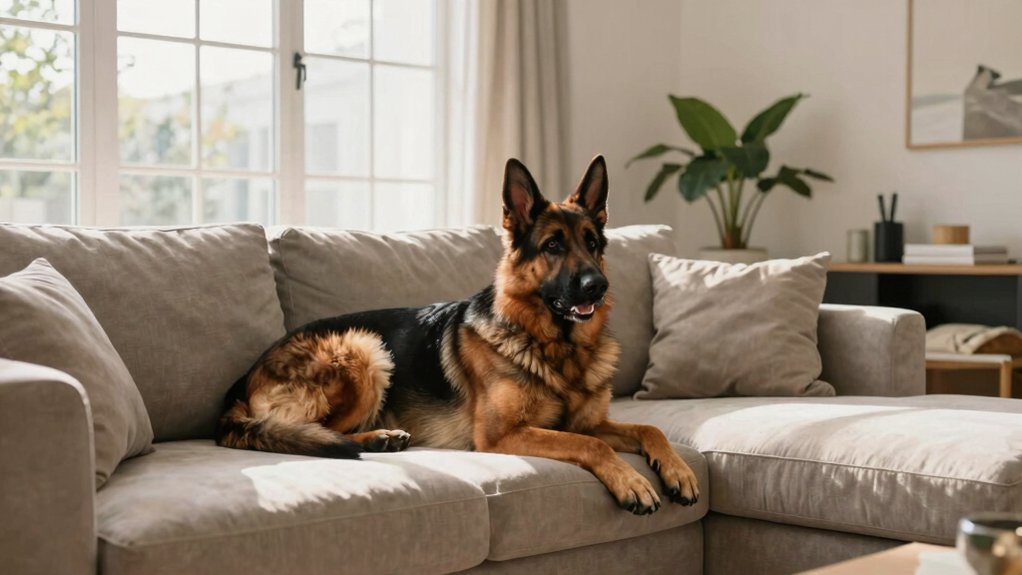
Daily mental enrichment is one of the fastest ways to curb barking and chewing in an apartment—because German Shepherds need a job for their brains, not just their bodies.
Use puzzle feeders and treat-dispensing toys daily, so they “work” for meals, and enjoy longer, calmer eating.
Rotate different puzzles every few days to prevent boredom. Pairing these games with physical and mental activities helps German Shepherds use their energy and stay content.
Then, set up safe chew outlets: durable rubber toys and dental chews, rotated by texture.
Before you leave, do a 10–15 minute sniffing game indoors, or short training “jobs” like targeting.
Finish with a chew in a crate or quiet rest zone, and you’ll reduce separation barking.
Pick Nearby Walks and Safe Off-Leash Spots
Start by scouting nearby walks and off-leash spots that actually fit your German Shepherd’s needs, not just your schedule.
Plan for about two hours total daily activity, with 30–90 minute walks, plus secure off-leash running.
Check local leash laws first, including leash length limits around 1.8 m (6 ft), and use only zones where off-leash is allowed.
Prefer fenced dog runs with clear rule signs, secure four-foot fencing, and double-gate entry.
Go at safe hours, like set opening windows.
Also confirm rabies vaccinations, license tags, and park rules excluding aggressive dogs or dogs in heat.
Increase your dog’s distance and pace gradually, since building physical conditioning slowly helps prevent injury on longer hikes and runs.
Choose Apartment-Safe Floors and Big-Dog Furniture
Choosing the right apartment setup for your German Shepherd is easier than you think—once you match the floor and rest spot to a big, active body.
Pick apartment-safe hard flooring: porcelain or ceramic tile, or luxury vinyl plank.
Tile wins for scratch resistance and water resistance, but it can be loud.
Vinyl is durable, easier to clean, and a bit quieter underfoot.
Use textured or matte finishes for grip.
Then add area rugs plus rug pads for traction and less slipping, which helps you protect neighbors too.
For rest, choose an orthopedic bed, ~40 inches long, with thick high-density foam. Pick a model with a removable, washable cover, since bedding odor builds up quickly in small apartments.
Reduce Joint Strain With Smart Layout Choices
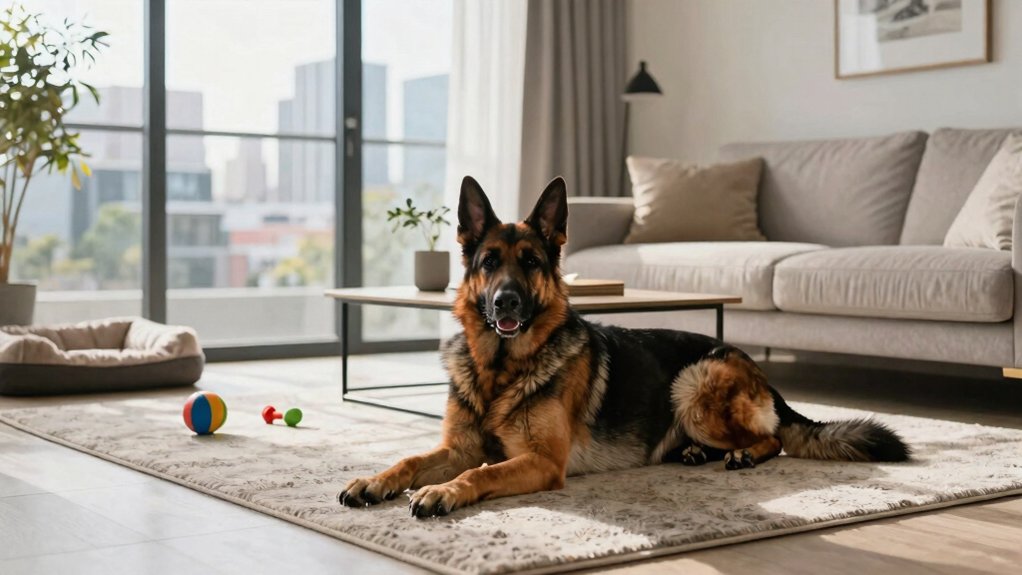
Once your floors and bed are set up, you can cut joint strain even more with smart layout choices.
Keep your sleeping area, food, and outdoor path on one level, so you avoid stairs. Since hip dysplasia is a common concern in German Shepherds, limiting repeated stair climbing can help protect the hip joints during growth and adulthood.
If you must move up, use a ramp with a gentle slope, about ≤20–25°, and non-slip grip.
Aim ramps along your main routes, like bed-to-door and bed-to-food.
Create continuous, high-traction pathways with rugs or foam tiles, especially near doorways.
Place your bed on carpet, keep entry height 2–3 inches or less, and clear tight corners.
You’re setting them up to move kindly, every day.
Manage Shedding So the Apartment Stays Clean
Start a grooming rhythm, 3–4 brush sessions each week, plus a 5‑minute daily brush during spring and fall.
Use an undercoat rake, a slicker or pin brush, and work in sections down to the skin. Choose a deshedding tool designed for double coats, since these remove loose undercoat more effectively than a standard brush.
Brush in the direction of coat growth, so you lift dead undercoat instead of spreading it.
Schedule a groomer visit about every 4 weeks.
Bathe every 4–6 weeks with dog-safe, de-shedding shampoo.
Choose quality food, too.
Handle Deposits, Leash Rules, and Breed Limits
Then check the leash rules in shared areas, especially the common “no longer than six feet” rule in public spaces, so you don’t get slapped with fines or lease violations.
Finally, review the landlord’s breed and size limits for German Shepherds—some policies exclude certain breeds or set weight caps—even though service and assistance animals may qualify for legal exemptions. Having health records and documented size details from a reputable breeder can help you answer a landlord’s breed and weight questions quickly.
Pet Deposit And Registration
When you’re setting up an apartment for your German Shepherd, you’ll usually run into two big topics: pet deposits and pet registration.
First, understand the pet deposit. It’s a one-time, refundable amount to cover pet damage beyond normal wear and tear, not general lease damage.
Some places also use pet rent or nonrefundable pet fees, but laws vary by state.
Deposit caps matter too: in British Columbia it’s up to half a month’s rent, and often only one pet deposit.
Maryland may cap combined deposits at one month’s rent.
Next, register and license your dog.
For service animals, request accommodation.
Breed And Size Limit Rules
Next, check the breed and size rules first, because these policies can quietly decide whether your German Shepherd gets approved or rejected.
Many rentals ban German Shepherds and similar large guardian breeds, due to liability and insurance. Public housing may ban certain breeds outright.
Then look at weight: many apartments cap dogs around 20–25 pounds, which usually excludes German Shepherds. Some allow up to 50–55 pounds, but others restrict above 25–30 pounds.
Assistance and service animals often get exemptions, so ask for proof.
After that, follow leash rules: keep your dog inside, on a leash outside, never chained.
Train Hallway Manners and Quiet Elevator Rides
With a little practice, you can teach your German Shepherd to move politely in apartment hallways and take calm, quiet elevator rides.
Keep a short leash in shared halls, and practice a steady “wait” at each door, so your dog doesn’t rush corners. A no-pull dog harness can also give you better control if your dog tends to lunge or pull during these moments.
Keep a short leash in shared halls, and practice a steady “wait” at each door to prevent rushing around corners.
Walk along the outer wall, creating a buffer from thresholds and foot traffic.
Use a marked glance—quick look at a passerby, then back to you—for rewards.
Park a sit against the hallway wall.
For elevators, stop a few feet out, let riders exit fully, enter on cue, and keep all four paws on the floor.
Train “quiet” with instant treats, plus gradual, short rides.
Know When Apartment Living Is a Bad Fit
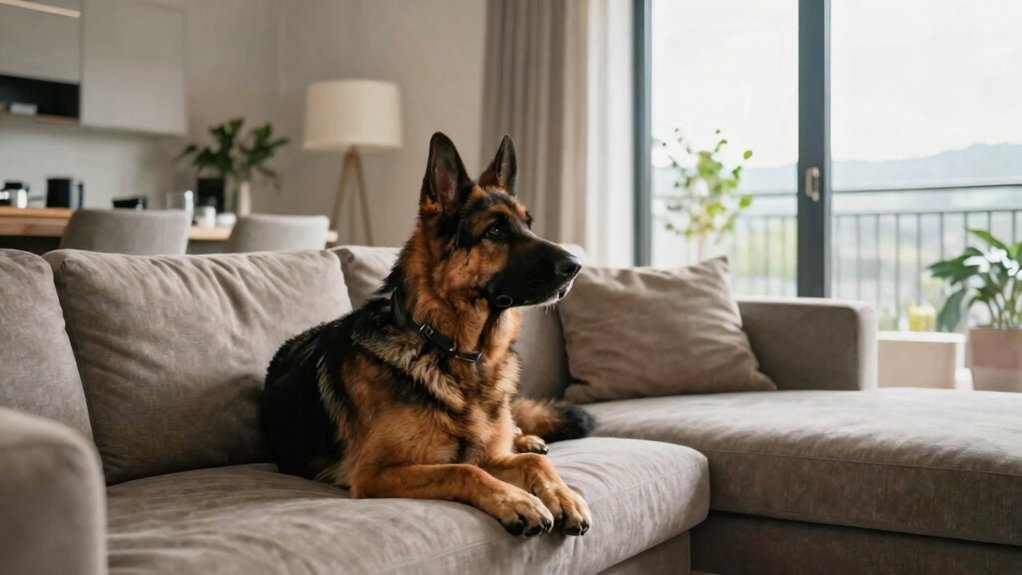
Apartment life can work for some dogs, but German Shepherds often struggle if you can’t meet their needs day after day.
If you can’t provide 90–120 minutes of daily exercise, plus 15–60 minutes of brain games, you’ll see pent-up energy.
That can turn into chewing, digging, pacing, and constant restlessness.
Also, without a fenced yard or safe off-lead trails, you lose key outlets.
In tight layouts, they may feel stuck, especially if there’s little floor space to settle.
You also must manage alert barking, elevator noise, and neighbor worries.
If you can’t commit, choose a home with space and patience.
Frequently Asked Questions
How Many Hours Outside Do German Shepherds Need Daily in Apartments?
You should plan about 1–2 hours outside daily for your adult German Shepherd in an apartment, ideally split into 2–3 outings. Add 30–60 minutes of indoor mental work to keep them calm, healthy, and well-behaved.
Can a German Shepherd Be House-Trained Reliably Without a Private Yard?
Yes—you can house-train a German Shepherd reliably without a private yard. Pair “no yard” with “predictable outings”: take them out often, reward promptly, use a crate, manage time alone, and use nearby spots for consistent elimination.
Are There Training Methods to Prevent Balcony Barking or Hallway Guarding?
Yes—use desensitization and counterconditioning: practice “quiet” with rewards for silence, redirect to a den or mat during hallway triggers, add gated access, use white noise, and reinforce calm after brief alerts.
What Age Is Best to Start Apartment Training for a New German Shepherd?
Start apartment training as soon as you bring your new German Shepherd home—around 8 weeks old. Begin core routines and socialization right away, then expand obedience and settling skills through 4–6 months for best success.
Which Vet Checkups Matter Most for Apartment Life and Exercise Limits?
Hip-hip screening and orthopedic exams matter most; you should schedule hip/orthopedic checks, weight monitoring, joint-load and growth-plate assessments, plus age-based wellness labs—so you can set safe exercise limits and prevent pain.