You’ll stop digging, jumping, chewing, and poop eating fast by treating the real triggers, boredom and stress, not “bad behavior.” Give 30–60 minutes of daily exercise plus puzzles, and then redirect: build a sand dig zone (about 3×6 feet, 8–24 inches deep) away from fences and gardens. For jumping, use “off” and a four-paws-on-floor calm greeting. For chewing, rotate safe long-lasting chews. For poop, leash potty breaks, scoop within 10 seconds, and use “leave it” with high-value treats—then keep going to learn more.
Swift Summary
- Identify root causes: digging/jumping/chewing often come from boredom, anxiety, or impulse, not “bad behavior.”
- For digging, create a dig zone sandbox pit and reward digging only there after structured daily exercise and short redirection sessions.
- For jumping, use calm “four-paws-on-floor” greeting rules, teach “off/all done,” and manage entrances with leashes/tethers or controlled visitor routines.
- For chewing, provide safe, durable chews and increase mental work before alone time; confine or block access to prevent rehearsal.
- For poop eating, prevent access immediately, clean up fast, vet-check for health issues, and use management plus training for appropriate foraging alternatives.
Why German Shepherds Dig When Bored Or Anxious
When your German Shepherd digs, it’s usually not “being bad.” It’s often your dog trying to cope with boredom or anxiety, and those active, working-driven minds hate having nothing to do. And when you’re hearing “why is my German Shepherd eating grass,” or “why does my German Shepherd destroy everything,” think stress outlets too. Keep this in mind: active diggers often dig near doors or fences, especially after you leave. But frantic, repetitive digging points to separation anxiety. Separation anxiety is a stress response to being left alone, and gradual alone-time training can help your dog feel more settled when you go. Digging can be anxiety-driven, you can help by giving 30-60 minutes daily exercise, plus puzzle toys, and short training sessions before alone time. This also supports how to stop a german shepherd from jumping on you.

Soft Natural Play Sand: Finely screened, washed, and dried creme-colored sand that’s silky smooth to touch and feel, with no added chemicals or bleaching for safe, comfortable playtime

Fine, white playsand perfect for sand castles and developmental play

Clean Sand for Safe Play: Made from 100% natural materials, our sand is thoroughly cleaned and washed. Great for delicate hands and imaginative minds, the sand ensures a safe play environment.
Why Jumping Happens With German Shepherds
You’re seeing jumping because your German Shepherd has strong energy and impulse drive, so they spring up fast to reach your face and get that exciting social sniffing contact.
And if every jump earns attention—talking, eye contact, petting, even brief “bad but still attention”—you’ve accidentally trained the habit, so try a calm greeting routine where you give rewards only when all four paws stay down. In this scenario, positive reinforcement is increasing the chance the dog jumps again.
Teach a clear cue like “All done” or “Off,” then practice right at arrival, wait 1–2 seconds for stillness, reward calmly, and repeat until the jump stops working. Keep your dog in a no-pull dog harness during these sessions so you can guide them with better control while they practice staying down.
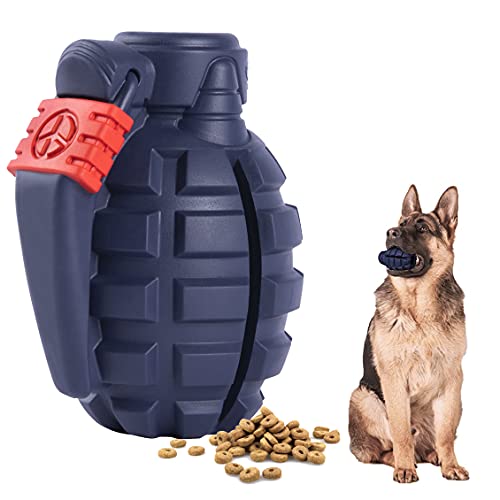
Instinctual Needs: This cool-shaped grenade dog chew toy helps satisfy dogs' instinctual needs and provides mental stimulation; Healthy play is important for dogs' physical and mental development, emotions and behavior; By encouraging healthy play and satisfying instinctual needs, this toy helps solve chewing, separation anxiety, teething, boredom, weight management, crate training, digging, barking, and more

Durable Dog Squeaky Toys: Some dogs like to run, jump, bark, and can't sit still on the dog bed or puppy pads. The squeaky dog ball toy can successfully arouses dog's curiosity and try its best to make the dog ball sound. So that dog chew toys for aggressive chewers are good dog puzzle toys to make dogs smarter. Dog toys for boredom and stimulating can releases excess energy, feels happy and reduces destructive chewing. There is no indestructible dog toy, but this one is probably the closest

A COMPLETE CANINE SUPPLEMENT - A multivitamin (Vitamins A, B, C, D, E, K & other minerals) PLUS Essential Fatty-Acids for Skin & Coat Support, Glucosamine for Hip & Joint Support AND Probiotics to promote the absorbtion of nutrients for Digestion and Gut Health.
Energy And Impulse Drive
Because German Shepherds carry high energy and strong “work drive” (their urge to engage and respond fast), jumping often shows up as an impulsive burst of excitement, not a plan to be bad. If you under-exercise them, their body has extra fuel high energy. Aim for 1–2 hours of vigorous exercise daily, then add 20–30 minutes of hard work right before greetings. Fetch, obedience, or agility channels that drive into a job. And when visitors arrive, you guide them to a calm position first. Their guarding and herding instincts still want to “check in,” so structure thresholds too.
Reinforcement From Attention
Jumping up is often a “reward loop” that starts with attention, not misbehavior. You greet your German Shepherd, and those front paws hit you—now you look, talk, touch, and the dog learns, “Jumping gets me stuff.”
Even “no” or scolding counts, because it’s still attention.
Brief pats after jumping can strengthen the habit through operant conditioning, meaning the behavior repeats.
But you can break the loop.
When you ignore jumping, attention drops.
Remove all social response until four paws stay on the floor.
Be consistent, every family member, every visitor—otherwise rewards come back.
Teach Calm Greeting Cues
Calm greetings work best when you teach your German Shepherd what to do instead of jumping, and then you make that “right behavior” the easiest way to get attention.
First, set a default cue: sit, or four paws on the floor. Practice 10–15 sit-and-reward reps in low-distraction spots, then require the same position before every hello. Mark calm posture with a clicker or a consistent word, then reward right away.
Next, manage the doorway. Use a leash or tether, have visitors pause, and enter only after calm. Start treat delivery before any jump, then toss treats between front paws.
Gradually fade food, and add touch cues like nose-to-hand.
Find The Reason A German Shepherd Chews
Why does your German Shepherd chew so much in the first place? Start by looking for developmental needs. Between 3–6 months, puppies chew to soothe teething gums. Chewing also helps them explore, and adult dogs still gnaw to keep jaw muscles and teeth working well.
Next, check boredom and energy. Under-exercised or understimulated dogs often chew when alone, especially if they lack safe, long-lasting chews.
Then watch stress. Mild anxiety can trigger repetitive chewing near doors, crates, or walls. Stress can also show up as excessive panting in German Shepherds, so noticing other signs alongside chewing can help clarify the cause.
Finally, consider nutrition or medical issues—hunger, diet gaps, or pica (non-food eating) may drive the habit.

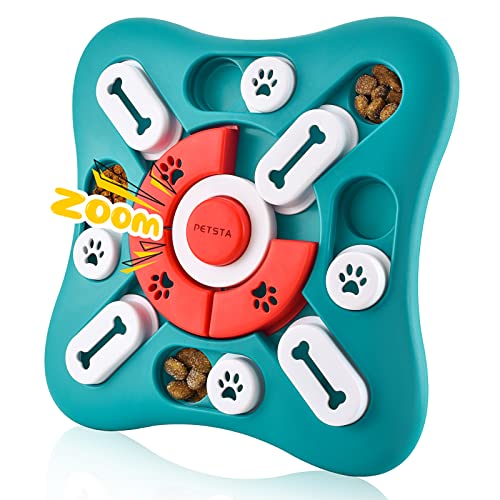
【Upgrade Dog Puzzle】Our dog puzzle toy is moderate level with more challenging ,difficult than level 2, not only easy slide steps, but require your dog's ability to learn sequential steps and combinations to seek hidden treats while keeping mental active .There are easy slide step and harder step in the puzzle box , dogs have to find a right way to move the red round sliders and the center parts for food, higher skills and mind required , great for the smart dogs.

[Treat Distribution] Our food dispenser has differently sized spheres at both ends. As dogs push the toy, it moves within a fixed area, allowing dogs to continuously chase and play with it. During movement, food is dispensed from the food holes on both sides of the toy.

【Size】: L9.44" * W9.44"* H1.14" suitable for cats, puppies and small dogs.
Why German Shepherds Eat Poop (And Health Risks)
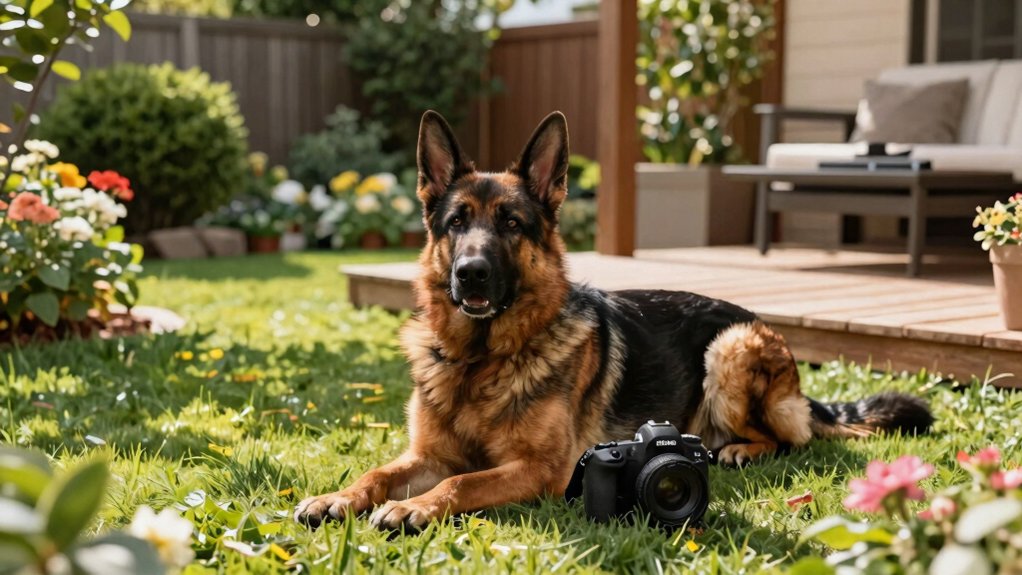
If your German Shepherd is scarfing down poop, don’t just assume it’s “bad manners.” It’s usually about what the stool smells like and what’s going on inside your dog.
You’ll often see it when they’re bored, under-stimulated, or seeking attention. They may also learn it by copying other dogs, or they may simply investigate, especially as puppies.
Poor digestion matters too. Underfeeding, low-quality food, diarrhea, or parasites like Giardia can leave nutrient-rich stool. Chronic digestive upset from food allergies can also contribute to this problem in German Shepherds.
Also, diabetes, Cushing’s, thyroid issues, or steroids can drive extra hunger.
Stool can spread worms, Giardia, and bacteria.

FREEZE DRIED RAW BEEF LIVER DOG TREATS – BITE SIZED FOR TRAINING, 2.1 OZ BAG: High protein dog treats made with beef liver. Perfect as high value dog training treats, puppy training treats, and everyday rewards


Wild-Sourced Protein: Our treats are made from all-wild roaming elk and deer protein, sustainably harvested from the Rocky Mountains, offering your dog a unique and premium nutritional experience Wild-Sourced Protein: Our treats are made from all-wild roaming elk and deer protein, sustainably harvested from the Rocky Mountains, offering your dog a unique and premium nutritional experience
Set A Daily Routine To Reduce Jumping Urges
To stop the jumping urge from taking over, you’ll get faster results with a steady daily routine that burns energy on purpose—not all at once.
Aim for 90–120 minutes of purposeful activity daily for your adult German Shepherd.
Spread it out, too.
Try a 30–45 minute morning brisk walk or jog, a 15–20 minute fetch or tug session midday, then a 30–45 minute evening walk plus training.
Add 5–15 minute obedience drills on walks, like sit, down, and self-control.
Include 10–15 minutes of nose work or puzzle feeding.
Keep timing consistent, so settling gets easier.
Adjust pace for age.
Dogs that lack enough physical and mental stimulation can build up frustration, which in some cases may contribute to sudden aggression toward owners.
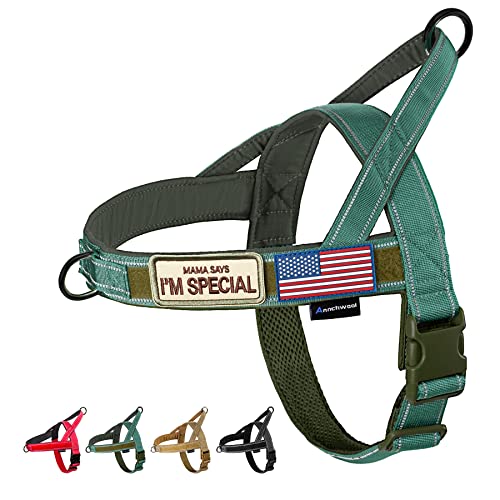
[Premium No Pull Dog Harness] The wider soft padded inner is comfortable and friendly for dog's neck without dog's fur hurting. The back strap and chest strap inner is made of soft and breathable material that is comfortable for the dogs. And the front strap is better to prevent the dog from rushing forward. This design is maintain a long-time comfortable for walking,jogging,running,training,etc.
](https://m.media-amazon.com/images/I/41ji4lsxEIL._SL500_.jpg)
[UPDATED VESION, EASY TO PUT ON & TAKE OFF] This dog harness has 3 buckles( One is on the neck with Lockable, two are on the chest), NO NEED go through dog’s head. This will let your dog loves to wear harness!

Helps Stop Pulling: Patented Martingale loop design puts gradual pressure on your dog’s shoulders to safely and effectively stop pulling; a front leash attachment helps you guide your dog
Stop German Shepherd Jumping With Calm Greetings
When someone comes to the door, you set up a reliable sit first, so your German Shepherd greets with calm posture instead of launching upward.
As they approach, you reward the moment their four paws stay on the floor, using treats placed on the ground between their front feet.
If they jump, you cut off attention instantly, wait until all four paws land, then restart the greeting by rewarding that calm sit.
Teach Reliable Sit Greeting
Reliable sit greetings are your fastest path to stopping jumping, and you can train them right at home with a simple rule: your German Shepherd greets people only when he’s in a calm sit.
First, teach a default sit cue. Do 10–15 short reps, several times daily, after exercise. Keep it easy indoors, then practice in rooms and the yard.
When a person approaches, you stand several feet away, ask “sit,” and only keep the calm approach going while his hindquarters stay down. If he stands, you turn and walk away.
Mark “yes” and reward immediately, before any jump, then slowly add excitement.
Use leash or tether, so he can’t rehearse jumping.
Reinforce Four-Paws-On-Floor Calm
Now you’re going to reinforce “four-paws-on-floor” calm, so your German Shepherd learns that people only get attention when he’s grounded.
Keep your greeting quiet. No touching, talking, or eye contact until his front feet land.
If he jumps, turn back, fold your arms, and stand still—no social reward.
Look straight ahead, tuck your hands to your chest, so jumping doesn’t pay.
When he’s down, immediately resume calm attention.
Deliver petting, treats, and praise every 2–3 seconds for a few seconds.
Drop treats between his front paws.
Toss several on the floor before you reach him.
Then, gradually reduce treats once it’s reliable, across people and places.
Teach A Reliable “Sit” For Every Greeting
Next, require four paws on the floor. Ignore or remove attention when jumping happens, then ask for sit again.
Practice 10–15 reps daily, then add distractions and new greeters. German Shepherds are highly trainable, so mastering essential commands like sit also builds obedience, communication, and mental stimulation.

LIFETIME REPLACEMENT GUARANTEE: No dog toy is truly indestructible—but we believe dog toys should be built to last, and if not, you shouldn’t pay a single penny for them. If your dog wins, get a one-time replacement or refund. No squeaks. No fluff. No BS.

GREAT VALUE 14 PACK DOG TOYS FOR LARGE DOGS AGGRESSIVE CHEWERS - Tough dog toys are the most complete dog chew toys pack, vary in length and shape to meet all needs of chews for aggressive chewers weighted 20-85lbs. Large dog toys include 5 knots rope dog toys for aggressive chewers, rope ball dog toys, multi knots cotton rope dog chews and dog tug toys for medium to large dogs. Durable dog toys for aggressive chewers loved by German Shepherds, Pitbulls, Labrador

Powerful Chewers - Engineered with extra-thick, high-density Nylon, this toy withstands aggressive chewers and aggressive chewing from medium to large breeds (like Labradors, Golden Retrievers) – Hard destroyed Dog toys!
Stop German Shepherd Digging With A Dig Zone
Once your German Shepherd reliably sits for greetings, you can shift your focus to a different “job” your dog wants to do all the time—digging.
Create a dig zone, a single approved spot with a clear, sandbox-style pit.
You redirect natural boredom and comfort digging into one predictable outlet, so your yard stops paying the price.
Place the 3-by-6-foot rectangular pit where your dog already likes to be, and keep it far from gardens, fences, and foundations.
Use a wood frame border.
Dig 8–24 inches deep, mix loosened soil with sand, and reward digging only inside.
Bury smelly toys first, then re-bury weekly. Keep the dig zone away from pools and ponds, since German Shepherds can swim but still need a supervised, gradual introduction to water.

INTERACTIVE TREAT DISPENSER: The Orbee-Tuff Snoop toy will keep your pups engaged as they sniff, paw, and play to retrieve the tasty rewards of a treat!

Super-Value Dog Enrichment Toy Set:The set includes 2 lick mats with Suction Cups, 1 puzzle toy, 3 treat balls, 1 silicone spatula,1 brush and 2 bags. Suitable for various activities, including using treat balls indoors or finding the puzzle toy in the garden
Use Structured Exercise To Cut Digging Drive
Plan your German Shepherd’s day like a routine: aim for 90 minutes of quality exercise (or up to 2 hours if your dog’s a true go-getter), split into at least two structured walks. Because German Shepherd exercise needs shift with age and activity level, puppies, adults, and seniors each require a different balance of physical and mental stimulation.
After each walk, redirect that digging urge to an approved dig zone for a short, timed session—about 5 to 10 minutes—so your pup learns “this is the place” to work off energy.
And when you keep those workouts predictable, you cut boredom, you lower anxiety, and you make digging for fun way less tempting.

Lots of flavor, not fillers: Just three simple, all-natural ingredients mean low calories and high nutritional value, making a tasty but healthy treat that your pup will actually love

ALL NATURAL INGREDIENTS: Real beef is the first ingredient in our bite-sized training treats. Jinx beef & banana tiny treats are low calorie for repeated rewarding. Made with all-natural ingredients you can trust, carefully selected to provide a wholesome and delicious snacking experience.

Highly Palatable with natural pork liver base
Plan Daily Workouts Schedule
Most German Shepherds dig because they’re under-exercised or under-challenged, so you’ll get the best results by scheduling daily “work-style” workouts—not just letting them outside.
Plan 60–90 minutes total for most high-drive adults, up to 90–120 minutes for some, and don’t settle for under 30 minutes.
Start with a 20–30 minute brisk morning leash walk. Then add a 20–30 minute late-afternoon or evening walk.
Include 5–10 minutes of training once or twice, plus 15–20 minutes of fetch or tug.
Right before yard time, do a fast, high-energy session so your dog relaxes, not digs.
Mix in scent games.
Redirect To Approved Dig Zone
After you’ve built your daily workout routine, you can give that digging energy a job instead of letting it hit your flower beds.
Create one approved dig zone with a clear, stable boundary—wood frame or rocks—and use a boxed pit or kiddie sandbox.
Fill it with loose sand about 18 in (45 cm) deep.
Put it in a low-traffic spot, away from sprinklers.
When your dog digs elsewhere, interrupt fast with a neutral cue, then calmly guide them to the pit and encourage digging there.
Right after, reward high-value treats or a short game.
Add rocks or rough mulch to old holes.
Then exercise first, pit time next, every day.
Prevent Fence-Line Digging
To stop fence-line digging, you’ve got to treat it like an escape plan your German Shepherd is trying to carry out.
First, identify escape routes, gaps, loose panels, and soil erosion points.
Then reinforce the fence below ground.
Bury the fence bottom 1–2 feet, or add cement footers for a permanent base.
For high-risk spots, use an L-footer setup, mesh welded or angled outward.
Next, add ground deterrents at the base: hardware cloth or chicken wire, edges rolled away, plus partially buried rocks or anchored chain-link.
Watch closely during yard time, supervise, and interrupt fast. Remember that your German Shepherd’s double coat insulates against both heat and cold, so avoid shaving it to keep them comfortable during long supervised sessions.
If anxiety shows up, consider spay/neuter.
Reapply hot pepper spray every two weeks.

Helps Stop Pulling: Patented Martingale loop design puts gradual pressure on your dog’s shoulders to safely and effectively stop pulling; a front leash attachment helps you guide your dog

Helps Stop Pulling: Patented Martingale loop design puts gradual pressure on your dog’s shoulders to safely and effectively stop pulling; a front leash attachment helps you guide your dog

【No Pull & No Choke Design】: This harness simply goes through the dog's head, snaps on the belly and that's the end of it. Besides, the D-ring on the chest strap is used for no pull dog training and guiding direction, and the O-ring on the back is used for daily dog walking. The triangular design on both sides of this no pull harness helps to distribute the pulling force, so you don't have to worry about the dog choking when suddenly pulling.
Eliminate Boredom With Puzzle Toys And Work-For-Food
Rotate puzzle toys daily, so your German Shepherd stays interested—try swapping them every 24 hours and giving a fresh one during the usual “bored” time.
Use work-for-food feeders and hand out meals through puzzle bowls or treat-dispensing toys, letting them sniff, nudge, and paw for each bite instead of jumping, chewing, or digging.
You’ll notice calmer, more patient behavior faster, because mental “job time” burns energy and helps them self-soothe. Pairing these games with physical and mental activities helps a German Shepherd use its energy and avoid boredom.
Rotate Puzzle Toys Daily
Puzzle toys can work wonders, so use them every day—your German Shepherd doesn’t just need exercise, they need “work-for-food” (mental tasks that earn treats).
Rotate puzzle toys every few days, or weekly, to stop habituation.
Keep only 3–5 toys out at once, store the rest out of reach, then swap.
This keeps the games novel, and you prevent the puzzle from getting “solved” too fast.
Rotate categories too: sniffing-based, licking-based, and dispensing-based.
Mix difficulty, easier when frustration shows, harder when they’re breezing through.
Daily mental work lowers digging, chewing, and attention-jumping.
Use Work-For-Food Feeders
Work-for-food feeders are one of the easiest ways to beat boredom and keep your German Shepherd’s brain busy at mealtime. Use puzzle feeders so your dog “earns” kibble by foraging and solving simple problems.
That work-for-food approach taps their natural instincts, it also exploits contra freeloading, when dogs prefer earning over grabbing free food.
Give 10–15 minutes per meal. Switch between slow feeders and maze-style dishes to extend eating, then calm down stays longer.
Expect fewer digging, chewing, and frantic jumping, because they get a focused outlet.
For anxious dogs, enrichment can steady emotions, lowering stress and even coprophagia risk.
Manage Chewing With Safe Outlets And Confinement
Set your German Shepherd up to chew on purpose, not on your stuff.
Give multiple dog-safe chew toys and inedible chew bones, with different tastes and textures, so you can spot what they love.
Stuff rubber or hollow toys with food for longer, satisfying chew time.
Choose soft, size-right chews that dent with a fingernail, and retire worn toys.
Then, use structured confinement: crate or a dog-proof room, cleared of forbidden items, stocked only with approved chews.
Supervise closely during free time.
When you can’t, confine up to about six hours during work, with water and enrichment.
Use Leash Control And “Leave It” For Poop
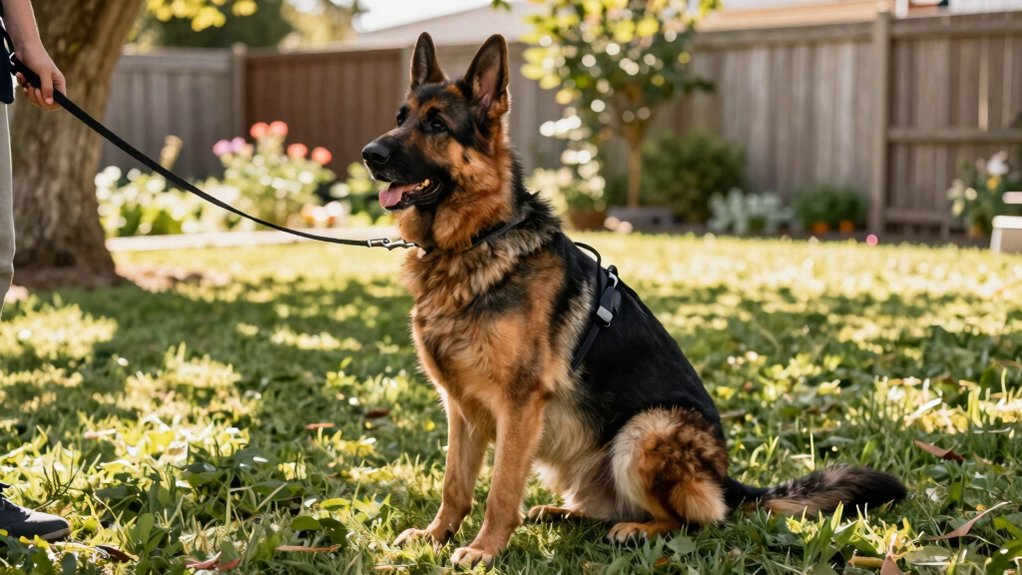
Instead of hoping your German Shepherd “ignores it,” take control with a leash and a clear cue the moment stool appears.
Use a short, non-retractable leash on every potty break.
As soon as you spot the risk, scan ahead, guide them away, and say “leave it,” then reward high-value treats at a distance.
You also keep access blocked, so they can’t rehearse the habit.
Start indoor “leave it” training first, then practice outdoors at a safe distance.
When you cue, they turn away, you mark with clicker, reward, and end the session near that area.
For strong drive, use a long line or tether meanwhile.
Clean Up Feces Fast To Break Poop-Eating
Pick up poop immediately after your dog poops, because fast removal limits access and helps break the “fresh stool” habit.
When you take yard trips, keep your German Shepherd on a leash, supervise the whole time, and aim to scoop within 10 seconds of elimination.
Then teach “leave it” right by the feces, so when you say it, your dog looks away and waits for your treat or toy.
Remove Poop Immediately After Defecation
When your dog finishes pooping, you should clean it up right away, like within seconds to a minute.
This cuts off access to fresh stool, so your German Shepherd can’t turn poop-eating into a self-rewarding habit.
Pick up every time, in yards, kennels, and dog runs.
Quick cleanup also helps protect against parasites—worms and protozoa—because eggs and larvae spread through fecal–oral contact.
And you’re reducing germs too, like Salmonella and E. coli, which can cause diarrhea and vomiting.
Bag it, tie it, and check common spots often.
You’re doing health work for them, and for everyone.
Supervise Yard Trips With Leash
Before you let your German Shepherd roam freely again, supervise every yard trip on a leash and treat it like a short training session, not free play. Keep leash-only access during retraining, no off-leash wandering that could lead to old stool.
Do a quick yard inspection before you go out.
Use a short leash or long line based on yard size, so you maintain direct control. Walk with your dog, wait for defecation, then guide them away immediately.
Use a harness or head halter for fast interruption if they sniff.
Scoop feces at a safe distance while they stay leashed, bagging right away.
Install barriers, set an elimination zone, and repeat daily until it stops.
Teach Leave It Near Feces
Once you can control yard trips with a leash, you can stop poop-eating by teaching “leave it” right at the source—right after cleanup starts.
First, clean up fast. Pick up stool immediately with a scooper or bag, every time, no exceptions.
Next, after defecation, walk your dog on leash near the spot. Say “leave it” as your dog starts to turn toward the feces.
When your dog shifts attention to you, reward with a high-value treat.
Then praise, move away, and reset.
If needed, use a harness and head halter for quick, safe control.
Block Access To Litter Boxes And Other Poop Sources
To stop your German Shepherd from getting into cat litter, you want to block access first, not just “watch and hope.”
Use baby gates or pet gates to create a cat-only litter zone, and choose one with a cat-size opening—so your cat can pass through, but your dog can’t.
Adjust closet door latches to open only enough for cats.
Use stair gates with cat flaps, or place litter in cabinets with partial openings.
Pick dog-proof litter boxes: covered, top-entry, or with small upper openings.
Also scoop after every cat use.
Outside, remove stool fast, and keep your dog leashed when unsupervised.
Train A Default Recall So Feces Aren’t Reinforced
And here’s the key move that stops poop from becoming “rewarding” for your German Shepherd: train a default recall that kicks in right after toileting, before the stool gets a chance to win.
Train a default recall right after toileting—cue “come” before the stool becomes rewarding, then quickly reward for reliable success.
After your dog eliminates, you cue “come” (or your chosen whistle) immediately.
Then you move a few steps away, turn a touch, and meet him.
When he orients to you, reward 2–3 tiny high-value treats, fast.
Repeat this “eliminate, turn, move away, reward” two or three times daily for at least four weeks.
Practice only positive recalls, no scolding.
Choose The Right Muzzle For Severe Cases
Proper safety matters most when your German Shepherd has severe risk—like biting during handling, destructive chewing, or poop eating that you can’t reliably stop yet.
Choose a basket muzzle, not an occlusion muzzle. Basket muzzles keep the mouth open, so your dog can pant, drink, and even take treats, while preventing biting.
For severe cases, pick a heavy-duty hard-plastic or metal basket with strong straps.
Fit matters: measure snout length (below eyes to nose) and circumference, and leave 2–3 cm at the tip.
Straps should allow one finger.
Use anti-scavenge guards too, and supervise every wear.
Call A Vet/Behavior Pro: Red Flags
If your German Shepherd suddenly starts digging, jumping, chewing, or eating poop—especially if it’s new for them—take it seriously, because this can be a red flag for a medical issue or a fast-moving behavior problem.
Call your vet promptly if it starts all of a sudden, or ramps up quickly, or it comes with drooling, pacing, or indoor accidents.
Next, get urgent help if you see aggression over food or resting spots, even if it’s mild.
Also watch for weight loss, diarrhea, vomiting, limping, or disorientation.
If they drink or eat less for 24+ hours, treat it as an emergency.
Frequently Asked Questions
How Long Does It Take to Replace Digging With a Dig-Zone Habit?
You’ll typically replace digging with a dig-zone habit in 4–8 weeks with daily, consistent training. Many dogs improve noticeably in 2–3 weeks, but full, low-relapse reliability often takes 3–6 months of reinforcement and supervision.
Should I Ignore Jumping or Redirect With a Command First?
Ignore jumping first—withdraw all attention until all four paws stay on the floor. Then redirect with a calm “sit” or “off,” and reward immediately for compliance, so your greetings teach what earns praise.
Why Does My German Shepherd Chew Only When Left Alone?
Your German Shepherd chews only when you’re gone because separation anxiety, boredom, or stress builds during solitude. Departure cues trigger arousal, then chewing relieves it—or you inadvertently reinforce the habit—so your dog repeats it.
What’s the Best Way to Stop Poop-Eating Without Using Punishment?
Use strict feces management and supervision, then train “leave it” and rewarding redirection after elimination. Take medical steps to rule out parasites or nutrition issues, and enrich daily with exercise and puzzles so your dog chooses better behaviors.
Which Vet Tests Help Rule Out Medical Causes of Coprophagia?
Think of vet tests like detective flashlights. Start with fecal exam/parasite tests, then CBC/chemistry, urinalysis, and endocrine screening (thyroid, Cushing). Add trypsin-like immunoreactivity for exocrine pancreatic insufficiency when needed.