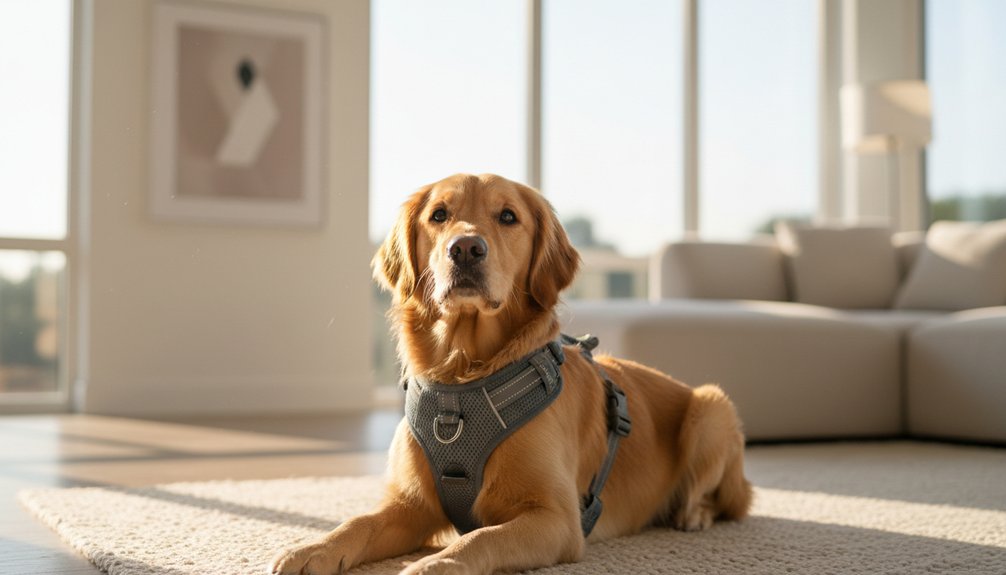
You gain a healthy, wolf-like companion with the American Alsatian, a breed specifically engineered for genetic stability, calm temperament, and a predictable large-bone structure. Originating from the Dire Wolf Project in 1987, this giant breed emphasizes health, longevity, and consistent bloodline refinement. Expect a dense double coat, 24-32 inches at the withers, and a low-energy, emotionally steady demeanor suited for families. Discover detailed health screenings, dietary requirements, and adoption considerations next.
Swift Summary
- Originated from the Dire Wolf Project in 1987 to create a health-focused, wolf-like companion breed.
- Large adults stand 25–32 inches tall with a massive bone structure and broad, rectangular build.
- The dense double coat sheds heavily seasonally, requiring regular grooming and protection from sun exposure.
- Emotionally steady and loyal, they bond closely with families and respond well to early socialization.
- Average lifespan reaches 12–15 years, supported by proper weight management and screening for joint issues.
History of the American Alsatian Breed
While the Dire Wolf Project originated in 1987, the first litter of this companion breed wasn’t produced until February 4, 1988, in Oxnard, California.
You prioritize health and genetic stability when evaluating american alsatian puppies. The program uses multi-generational selective breeding, guaranteeing temperament and structural soundness over wild traits.
As you research american alsatian for sale options, examine lineage records closely. Breeders focus on producing calm, bonded companions through careful bloodline refinement.
You must understand that american alsatian price reflects rigorous health testing and decades of standardized development. This approach ensures your future companion possesses the intended mellow disposition and physical resilience. Like the German Shepherd, a breed admired for its intelligence and loyalty, this companion benefits from consistent training and early socialization.
The breed’s early foundation relied on crossing German Shepherds with purebred Alaskan Malamutes to establish size and temperament.
What Does an American Alsatian Look Like?
Observe how the American Alsatian’s massive bone structure and rectangular build create a wolf-like presence that demands attention for its joint health.
You’ll notice a broad skull with erect, triangular ears that mirror wild canines, requiring regular checks for congenital ear issues.
Assess the double coat’s harsh texture and seasonal density changes, which necessitate grooming routines to prevent skin irritation during shedding cycles. For outings, a travel bag for dog essentials keeps brushes, wipes, and spare towels within reach during shedding season.
The breed’s historical development involved selecting for traits that enhance predictable temperament in family settings.
Large Giant Structure And Size
When evaluating the American Alsatian, you should expect a large-to-giant companion breed engineered for a wolf-like silhouette but optimized for health and longevity.
You’ll observe adults standing over two feet at the withers, typically ranging from 25 to 32 inches in height. Males generally reach 26 to 32 inches, while females usually measure between 24 and 28 inches.
Weighing 90 to 120 pounds, their broad, muscular frames feature heavy bones and dense chests. This substantial mass creates an imposing structure.
They attain full height between 10 and 18 months but continue filling out until approximately three years of age.
Sexual dimorphism yields slightly more compact females, yet both sexes remain firmly within the giant companion classification, prioritizing structural soundness and longevity.
Their wolf-like appearance is further enhanced by a double-layered coat that is long and thick in winter. The preferred coat color is silver sable, featuring silver fur with black tips.
Wolf Like Head And Ears
You’ll notice that beyond the breed’s massive structure, its head and ears are engineered to replicate the dire wolf’s silhouette while maintaining structural soundness.
The broad, deep skull forms a blocky shape, allowing an extended hand between widely set ears. Its rounded top flattens toward almond eyes, which you’ll see range from amber to yellow for that intense, calm gaze. Dark rims contrast with pale irises, reinforcing the wild look without compromising eye health.
The thick muzzle supports powerful jaws from mastiff ancestry, featuring a solid black nose and moderate lips that keep lines clean.
You’ll find ears triangular with rounded tips, carried erect to show alertness. These balanced proportions ensure the dog looks wild yet remains structurally healthy, reducing stress on the head and face for a comfortable companion life.
The skull is longer than the muzzle, with a broad, slightly rounded shape that narrows toward the eyes, supporting a very broad, large head.
Coat Texture Colors And Seasonal Changes
What defines the American Alsatian’s visual and functional profile? You see a thick double coat, moderately coarse and slightly woolly. You prioritize health by understanding seasonal shifts.
Your dog’s winter coat becomes long, thick, and distinctly woolly for insulation. In summer, the undercoat sheds heavily during “blowing,” leaving short guard hairs. You must manage this high-shedding behavior through regular brushing. This shedding cycle typically occurs between May and June.
Silver sable is the preferred color, reflecting the dire-wolf aesthetic. Common patterns include wolf grey, golden sable, and tri sable.
You note the dense neck ruff and bushy tail create a wolf-like silhouette. Proper grooming prevents matting and supports skin health.
Your service requires anticipating these coat changes. You guarantee the dog stays clean and comfortable throughout the year. This coat structure supports the breed’s companion function.
American Alsatian Temperament Traits
Although the American Alsatian was developed as a large companion breed, its temperament reflects a calm, emotionally steady disposition with low reactivity to environmental stressors. You’ll observe this breed exhibits strong family loyalty, thrives on close proximity, and demonstrates intuitive awareness of human health.
Early socialization guarantees excellent interactions with children and other pets, supporting safe cohabitation. The dog remains aloof yet tolerant with strangers, lacking aggressive guarding tendencies.
While generally quiet indoors, you must monitor for separation anxiety after three to four hours of solitude, as destructive behaviors may occur. This predictable, docile demeanor supports potential therapy roles.
Consistent routines and mental stimulation maintain their emotional stability. Avoid assuming high prey drive; manage their low activity levels appropriately.
Their gentle, patient nature makes them ideal companions for those serving others, provided you address their need for constant human connection and prevent isolation-related stress. German Shepherds are known for being highly trainable and intelligent, which makes them well suited to family life when they receive regular exercise and structured interaction.
Size and Weight Expectations
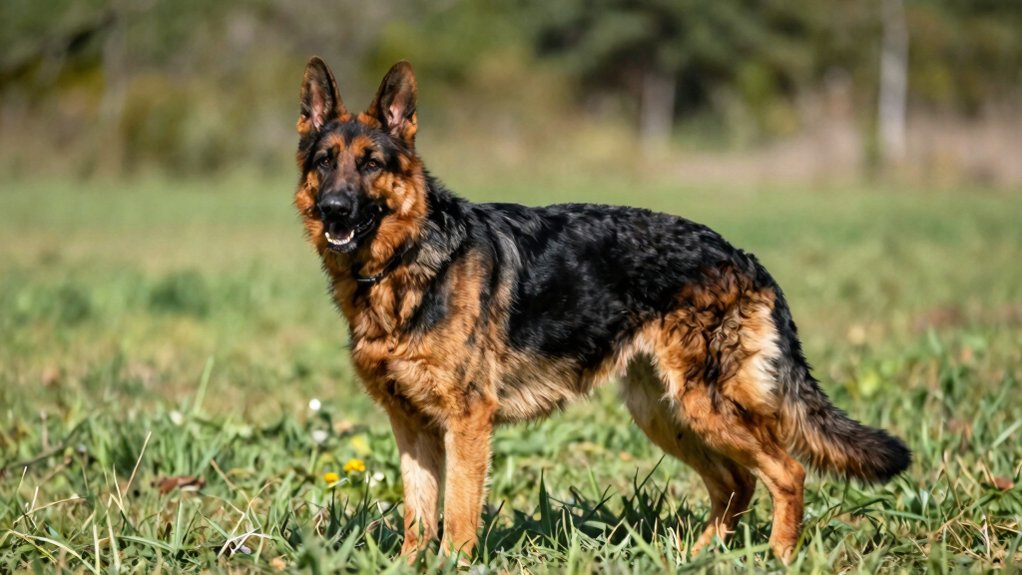
You should note that the American Alsatian typically reaches a height of 24 to 32 inches and weighs between 75 and 120 pounds as a mature adult.
While males tend to be larger and heavier, females generally fall slightly shorter and lighter within these established ranges.
This substantial, broad frame reflects the breed’s deliberate development for a massive bone structure and companion-type health.
When evaluating size, temperament, and guarding ability, owners often compare the American Alsatian with giant dog breeds such as Cane Corsos and Mastiffs.
Height And Weight Ranges
American Alsatians fall into one primary size category: a large-to-giant companion breed. You must expect adults to exceed two feet at the withers, typically ranging between twenty-four and thirty-two inches in height.
Your dog’s weight generally clusters around one hundred pounds, spanning from eighty-five to one hundred twenty pounds for most lines. You’ll notice substantial bone density, resulting in heavy body substance relative to vertical measurements.
While growth in height usually stabilizes by eighteen months, your dog’s mass may continue increasing until reaching full maturity near three years. Understanding these specific benchmarks helps you manage dietary intake and exercise protocols effectively.
You serve the breed best by ensuring their physical development aligns with these established structural standards for *ideal* long-term health and skeletal integrity.
Gender Based Size Differences
While both sexes maintain a dire-wolf appearance, American Alsatian males are consistently larger, heavier, and more heavily boned than females, creating clear gender-based expectations for size and weight. You’ll observe males typically reaching 100 to 115 pounds, whereas females generally fall between 90 and 100 pounds.
This sexual dimorphism reflects distinct skeletal structures; males possess broader frames and more substantial bone mass compared to the refined build of females. As you monitor their development, recognize that males continue filling out through three years of age.
Proper care requires adjusting nutritional plans to support these specific growth patterns. Maintaining ideal body condition ensures joint health and longevity.
You should consult breed standards regularly to validate that your dog meets these specific health benchmarks for their sex.
Large Breed Frame Details
Because the American Alsatian falls within the large to giant breed classification, you can expect adult heights ranging from 24 to 32 inches and weights typically between 85 and 120 pounds.
You must monitor their growth curve carefully, as full height arrives between 10 to 18 months, but frame filling continues until three years. Guarantee nutrition supports skeletal development without excessive rapid gain to prevent orthopedic issues.
Breeding programs emphasize heavy-boned structures to maintain this substantial mass. You’ll notice broad chests and deep shoulders reinforcing their powerful appearance.
Proper weight management ensures they retain companion temperament while supporting their massive structure. Regular assessments of muscle and bone density help maintain health standards.
Understanding these physical parameters allows you to serve their specific care needs effectively.
Common American Alsatian Health Risks
Although the American Alsatian boasts a low overall disease incidence of 5.6%, you must remain vigilant about specific risks. Focus closely on orthopedic concerns like hip and elbow dysplasia, which often lead to chronic arthritis.
Watch for panosteitis in growing puppies, causing painful lameness. Monitor thyroid function carefully since hypothyroidism affects roughly 3.1 to 4.8% of dogs.
Screen for tumors and cancer, noting chondrosarcoma cases. Recognize gastrointestinal dangers like gastric torsion, requiring immediate emergency intervention.
Address urinary issues such as weak bladder or ectopic ureters causing incontinence. Watch for neurological signs including epilepsy or progressive spinal cord weakness. Degenerative myelopathy gradually weakens the hind legs and is another condition owners should recognize early.
Guarantee proper nutrition to manage wheat allergies. Neuter cryptorchid males to reduce cancer risk.
These clinical observations help you serve this breed effectively.
American Alsatian Lifespan and Longevity
You can expect an American Alsatian to live between 12 and 15 years on average.
This lifespan depends heavily on genetics, weight management, and routine veterinary care.
The breed’s design prioritizes robust health to support this longevity. Owners can help protect joint health by watching for hip and elbow dysplasia, a common concern in shepherd-type breeds, through early screening and regular, low-impact exercise.
Expected Lifespan Range
The American Alsatian typically enjoys a lifespan of 12 to 14 years, a figure that reflects careful breed focus on long-term health. You’ll find this range holds across most breed databases, though some sources extend it to 15 years for well-bred individuals. This longevity stands particularly high for large dogs weighing 85 to 120 pounds.
When you consider breeding objectives, the Dire Wolf Project actively selects for even greater lifespan, targeting 15 to 20 years in future generations. While current data supports the 12 to 14-year average, you should plan for up to 15 years with responsible breeding.
This intermediate stage toward extended lifespan already exceeds typical German Shepherd longevity. You can expect your commitment to span roughly one and a quarter decades for most of these companions.
Longevity Influencing Health Factors
While genetics provide the foundation, multiple health factors shape your American Alsatian’s actual lifespan. Your breeding strategy prioritizes health over appearance, utilizing DNA testing for over 250 diseases.
Since giant breeds age faster, monitor your dog’s weight carefully; each extra kilogram reduces life by roughly 25 days. Avoid rapid early growth to prevent orthopedic stress and joint degeneration.
Manage chronic pain effectively to stop secondary weight gain and metabolic strain. Watch for gastrointestinal risks like gastric dilatation-volvulus, a common mortality cause.
You must maintain lean body condition through calorie control and low-impact exercise. Schedule routine vaccinations and veterinary screenings to catch issues early.
Exercise Needs for a Calm American Alsatian
To keep your American Alsatian physically healthy and temperamentally stable, you’ll want to aim for 45–60 minutes of moderate daily activity. This routine supports your giant companion’s joint health and behavioral equilibrium.
Favor sedate strolls over high-intensity runs to prevent hip and elbow strain. Adjust intensity based on age, avoiding vigorous activity until skeletal maturity around two years.
Consistent, moderate movement prevents destructive behaviors and reinforces the breed’s naturally calm demeanor. Aim for roughly seven miles weekly to maintain fitness without overworking.
This approach aligns with your service-oriented goals, ensuring a steady, reliable companion for therapy or family roles.
Prioritize non-slip surfaces and climate-appropriate timing to safeguard physical well-being. Such structured exercise sustains the American Alsatian’s ideal temperament and long-term health. Pairing physical activity with mental stimulation, such as puzzle toys and short training sessions, helps keep this breed engaged and content.
Coat Care and Grooming Tips
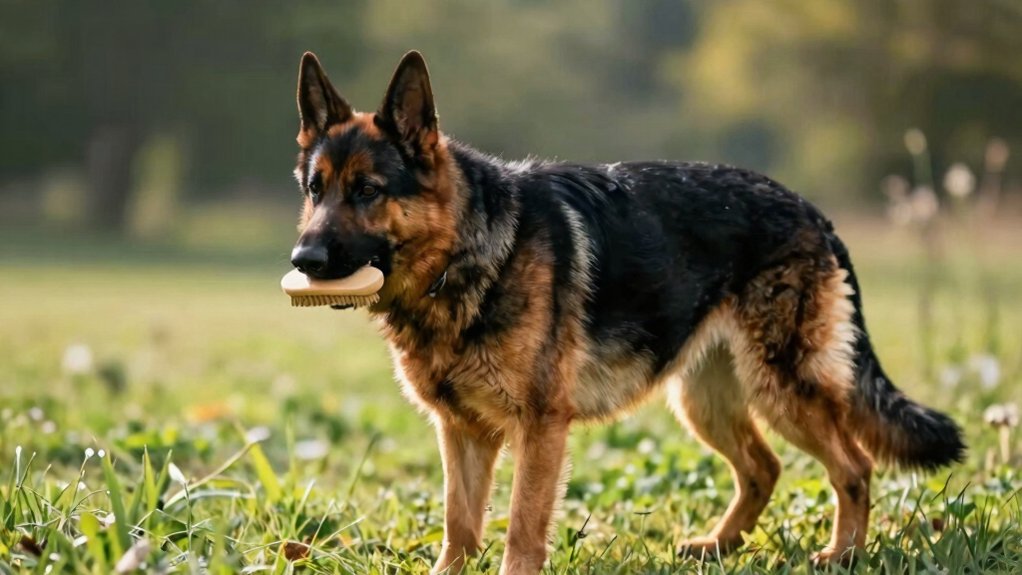
Its double-layered coat features a coarse outer layer and dense undercoat, producing moderate to heavy shedding year-round. Brush every few days using a wide-tooth steel comb or undercoat rake to prevent matting and manage loose hair.
Increase frequency to daily during seasonal blowouts, typically in spring, to mitigate rapid undercoat loss and relieve skin irritation. Avoid stripping natural oils by bathing only when visibly soiled.
Inspect skin, ears, and nails during each session to identify lumps or infection risks early. Trim nails monthly and brush teeth weekly to support overall health.
Protect sensitive skin from sun exposure after summer undercoat removal. Consistent grooming minimizes household debris accumulation while maintaining coat integrity and reducing dermatological issues for your companion. For evening outings, a collar with reflective materials keeps your dog visible during low-light walks.
How to Train an American Alsatian Puppy
You should begin training your American Alsatian puppy early to capitalize on their rapid learning ability and prevent behavioral issues. Because German Shepherds are known for their strong intelligence and drive, they generally respond well to structured training sessions.
Utilize positive reinforcement methods, as their docile temperament responds best to gentle, reward-based techniques that support mental health.
Establish clear boundaries from the start, since consistent household rules reduce anxiety and promote stable adult behavior.
Begin Training Early
Because the American Alsatian’s calm, emotionally steady temperament supports rapid behavioral imprinting, begin training and structured socialization during the first weeks at home.
Introduce supervised meetings with varied people and dogs to build reliable social confidence. Schedule puppy socialization classes for controlled exposure to diverse sights and sounds.
Early interaction with children and household pets supports tolerant, gentle family interactions.
Teach core obedience cues like sit, stay, and recall in short, consistent sessions.
Establish household manners such as polite greeting without jumping and waiting at doors.
Prioritize early housebreaking with routine outdoor access and consistent feeding schedules.
Introduce the crate as a quiet resting space to prevent separation anxiety.
Begin leash training early to manage future adult size and ensure public safety.
Consistent verbal cues and gentle handling reduce stress during veterinary visits.
Use Positive Reinforcement
To foster reliable obedience and behavioral health, apply positive reinforcement by pairing desired actions with high-value rewards like soft, pea-sized treats or preferred play. You must deliver rewards immediately after the behavior to guarantee correct association.
Utilize distinct markers like clickers to signal success precisely. Since your American Alsatian is a large breed, choose nutritionally appropriate treats to prevent excess calorie intake.
Short, frequent sessions match their limited attention spans effectively. Always conclude training while your puppy remains engaged and successful.
Consistency builds long-term behavioral stability and confidence. As behavior strengthens, gradually replace food rewards with praise or life rewards.
This reward-based approach reduces fear and frustration considerably. Avoid physical corrections entirely; they undermine trust and health.
Instead, redirect unwanted actions toward incompatible desired behaviors consistently. This method ensures your sensitive companion develops reliably.
Establish Clear Boundaries
While positive reinforcement builds trust, establishing clear boundaries prevents pushy behavior in this large, powerful breed. Define non-negotiable rules around food, furniture, and doorways early. You’ll reduce territorial issues and door rushing as your puppy matures.
Since this emotionally steady breed responds to subtle cues, use firm-but-gentle enforcement for all infractions. Quiet nature means boundary violations may occur silently, so employ closed doors, gates, and visual markers consistently.
Start obedience commands like sit, stay, and heel immediately. Short, regular training sessions suit the low-energy temperament while preventing boredom-related wandering.
Use baby gates, crates, and defined zones to limit access during development. Structured downtime in a crate prevents clingy habits inherent to this people-pleaser.
Gradually expand allowed spaces to avoid territorial control over the home. Establish greeting rules requiring a sit before contact to prevent heavy leaning on guests and children.
Supervised interactions teach respectful distance and gentle play with other animals.
Behavior With Children and Pets
As you consider how an American Alsatian interacts with children and other pets, understand that breeding programs have selected for a calm, patient, and emotionally steady temperament aimed at family safety. You’ll find the breed docile, gentle, and kind, fostering strong loyalty.
However, their large size presents physical risks. Supervise interactions closely to prevent accidental knockdowns for small children.
While they possess a low prey drive, introductions to cats or small animals require gradual control. You should engage children in structured training to establish clear boundaries and guarantee safe handling.
Their high intelligence allows rapid learning of household rules, but you must enforce impulse control.
Consistent socialization from puppyhood ensures stability with other dogs, though their strength demands supervision during play to avoid injuring smaller canines. When walking your American Alsatian alongside a smaller dog, a leash coupler lets both dogs share a single leash, but you should monitor their pace so the smaller dog isn’t dragged or injured. This approach minimizes injury while maximizing mutual trust.
Ideal Home Requirements
Once you assess the American Alsatian’s stable behavior with children and pets, focus on the environmental conditions that preserve their physical and mental health. You must prioritize a calm atmosphere to match their low-energy temperament.
Guarantee you provide sixty minutes of daily walking to manage their one-hundred-pound frame effectively.
You should avoid extreme heat, as their dense coat causes rapid overheating. Maintain consistent indoor heating during cold months to protect their insulating fur.
Their strong attachment to people requires significant daily human presence to prevent isolation.
You don’t need a large yard if you commit to regular outdoor walks.
Secure indoor spaces prevent intimidation of visitors due to their massive build.
This consistent routine supports their overall health and adaptability across various housing types.
You’ll successfully serve this breed by meeting these specific, documented environmental needs.
Comparing American Alsatian Strains
How do the two American Alsatian strains compare? You recognize the Schwarz family American Alsatian and the Vallecito American Dirus share a core dire-wolf companion concept.
You find published data extensively details size, temperament, and health for the American Alsatian strain. You see American Dirus strain-specific information remains comparatively limited in public sources.
You note both strains maintain a unified visual standard rather than distinct conformation targets.
You observe the American Alsatian strain emphasizes calm temperament, low working drive, and substantial bone structure for companion roles.
You acknowledge the American Dirus strain adheres to the same philosophy but lacks detailed behavioral metrics.
You understand evaluating these strains requires acknowledging data disparities while prioritizing health outcomes.
You see both strains aim for stable family companionship.
You prioritize selecting based on verified health profiles.
Dietary Needs and Nutrition
Having reviewed the breed’s strain differences, you now address dietary needs that support the American Alsatian’s large companion build.
Select meat-forward, complete diets offering roughly 22% protein and ≤8% fat in dry matter for adults.
Puppies require approximately 4.4–5.6 g protein per pound, decreasing by 75% at maturity.
Divide daily portions into two meals, typically totaling 3–3.5 cups of large-breed kibble.
Avoid free feeding to prevent skeletal issues and orthopedic stress.
Use commercial formulas with controlled calcium and phosphorus to support bone health.
Include lean cooked meats or eggs moderately.
Prioritize high-quality ingredients, avoiding wheat and corn fillers.
Feed carefully to reduce gastric dilatation-volvulus risks inherent in deep-chested breeds.
Monitor weight strictly to ensure long-term health.
Avoid raw salmon due to parasite risks.
Provide balanced nutrition to maintain their structural integrity.
Common Behavioral Challenges and Fixes
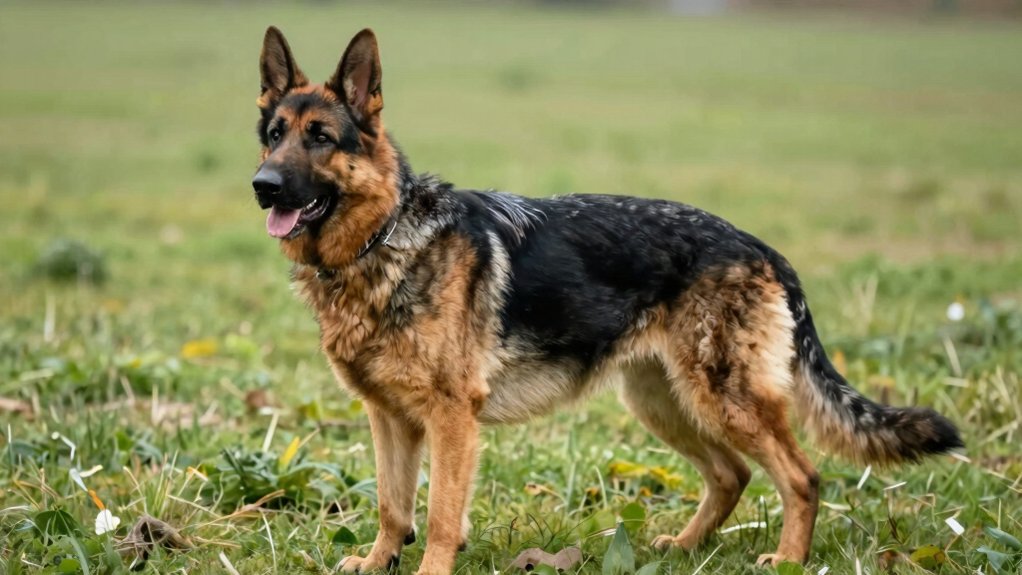
You’ll manage low energy levels with structured physical and mental enrichment to support this breed’s health.
Establish consistent boundaries early to curb territorial tendencies while preserving their calm companion nature.
Prioritize ongoing socialization from puppyhood to guarantee balanced interactions with people and other animals.
Addressing Low Energy Levels
Why does your American Alsatian suddenly seem lethargic? As a companion breed, your dog normally balances enthusiasm for adventure with relaxed downtime. A marked reduction in this baseline energy signals potential health issues.
Watch for infections, endocrine disorders, or cardiac problems that cause chronic fatigue. Environmental factors like heat exhaustion, dehydration, or overexertion also reduce energy. Medications may contribute to drowsiness.
Differentiate normal calmness from clinical lethargy to serve your companion effectively. If lethargy persists over 24–48 hours, seek veterinary examination immediately.
Emergency care becomes essential if your dog collapses, can’t stand, or breathes laboriously. Address underlying medical or lifestyle causes promptly.
Your active observation ensures your American Alsatian maintains the stable, responsive energy profile vital for this breed’s companionship and well-being.
Managing Territorial Behavior Tendencies
While monitoring energy levels is essential, you must also address your American Alsatian’s territorial tendencies to prevent behavioral escalation. This breed displays calm temperament yet exhibits protective watchfulness around entryways.
Monitor separation anxiety and pain signs that may lower tolerance for proximity violations. Implement foundational obedience cues like sit and stay to interrupt territorial arousal immediately. Use reward-based training during visitor approaches to build alternative, calm responses instead of lunging.
Desensitize your dog to delivery workers using low-intensity triggers paired with high-value reinforcement. Establish visual barriers around windows to reduce stimulation from passersby.
Consistent handling routines prevent mixed signals that increase uncertainty. Restrict access to entry points using baby gates during high-risk times. Guarantee muzzle training for high-risk scenarios to maintain safety.
Addressing these factors ensures your companion remains healthy, stable, and socially appropriate.
Ensuring Proper Socialization
How can you guarantee ideal socialization outcomes for your American Alsatian? You must prioritize structured exposure during the critical 8–16 week window. Introduce varied stimuli in calm, brief sessions to prevent overstimulation.
Manage inherent aloofness through controlled meet-and-greets that pair strangers with positive reinforcement. Avoid harsh corrections to preserve their sensitive temperament.
Address separation anxiety by gradually building independence and maintaining consistent daily routines. Supervise all interactions with children and other pets closely to ensure safety and prevent conflict.
These proactive measures mitigate behavioral risks while fostering a stable, healthy companion. Your dedication to this clinical approach ensures the dog develops confidence without fear or reactivity.
This thorough strategy directly supports the breed’s health and your role as a dedicated service provider.
American Alsatian Adoption vs Buying
When evaluating American Alsatian acquisition, prioritize health data and temperament predictability alongside cost and availability. You’ll find structured buying through limited breeders, while adoption relies on specific rescues like Am. Alsatian Rescue.
Purchasers typically pay $1,800–$3,000 for puppies with contractual guarantees. Adopters usually access adult dogs at lower fees, though selection depends on unpredictable surrender patterns.
Both paths incur significant annual costs around $1,500 due to their large size.
You’ll notice breeders offer controlled lineage, whereas rescues provide behavioral assessments. The breed’s calm nature reduces relinquishment rates, limiting rescue inventory.
Consider that adult adoptions provide known temperaments, while puppies offer projected traits. Either way, you commit to a potentially long lifespan.
Focus on matching the dog’s established health profile with your capacity for long-term care.
Finding a Reputable American Alsatian Breeder
Because the American Alsatian originated within the Dire Wolf Project, you must first confirm a breeder’s direct lineage to founding kennels like Schwarz Dogs in White City, Oregon, or certified operations such as Dire Wolf Dogs of Vallecito in Washington. Cross-reference their records with official project databases to verify authentic bloodlines and distinguish them from unrelated wolf-lookalike programs.
Prioritize breeders who conduct thorough genetic screenings for heritable disorders, guaranteeing all breeding stock remains behaviorally stable and physically sound. You should verify that kennels adhere to strict welfare standards, providing quality nutrition, clean housing, and adequate socialization for litters.
Avoid any operation allowing inbreeding, as this markedly increases inherited health risks. Ensure the breeder maintains formal contracts and commits to lifelong accountability for their dogs’ well-being.
American Alsatian Puppy Costs
Why does pricing vary so widely for an American Alsatian puppy? You encounter ranges from $1,500 to $7,000 based on lineage and health screenings. Reputable breeders invest heavily in genetic testing, guaranteeing your future companion remains free from hereditary conditions.
Pet-quality puppies typically fall between $3,500 and $4,800, while breeding prospects command higher fees due to conformation standards. Non-refundable deposits and reservation services add initial costs.
Remember, the upfront price reflects the breeder’s commitment to structural soundness and temperament stability. Lifetime ownership expenses span $20,000 to $45,000, covering veterinary care and specialized nutrition.
Prioritize ethical sellers who document health clearances to serve your community with a resilient, healthy breed. This financial investment ensures the American Alsatian fulfills its role as a stable, wolf-like guardian for families seeking a trustworthy companion animal.
Is the American Alsatian Right for You?
Where does a prospective owner begin when evaluating the American Alsatian? You must first assess alignment between their calm, people-focused temperament and your lifestyle.
This breed thrives in quiet, stable households seeking a large, low-drive companion rather than a high-energy working dog. You need adequate space for their large-bodied, wolf-like frame and sturdy equipment to manage them safely.
Their moderate energy requires daily walks and mental enrichment, not intense athletic work. Because they possess strong people-oriented bonding, you must dedicate time for close physical proximity.
Early socialization ensures friendly tolerance toward strangers. Regular grooming manages their substantial coat.
Health screening remains advisable despite their focus on reducing negative traits. Ultimately, you serve best if you prioritize a gentle, steady temperament for service or family roles over protection duties.
Frequently Asked Questions
What Is the American Alsatian’s Primary Purpose?
You seek a companion breed; your American Alsatian serves you as a calm, steady, loyal, non-working, low-dr-driven family member, bred for companionship, health, stability, emotional support, and reliable, gentle service within your household’s needs.
Is the American Alsatian Considered a Wolf Hybrid?
No, the American Alsatian isn’t a wolf hybrid; you’ll find it’s a domesticated companion breed. Its health and temperament prioritize service-oriented, stable family living without wolf-related behavioral complications.
How Does the American Alsatian Bark or Vocalize?
You’ll rarely hear them bark; their deep, guttural alerts serve health-conscious families best. This quiet, deliberate vocal profile minimizes stress for both dog and owner, ensuring a calm, healthy home environment for all.
What Is the American Alsatian’s Average Lifespan?
The American Alsatian’s average lifespan commonly ranges 12 to 14 years. Breeding programs target 15 to 20 years while minimizing hereditary issues like dysplasia and epilepsy to support their health, longevity, and companionship.
Does the American Alsatian Shed Year-Round?
Yes, your Alsatian sheds year-round with continuous moderate hair turnover. Double-coat structure demands frequent brushing to manage fur on furnishings. Seasonal blow-outs intensify shedding, requiring daily grooming for skin health and household cleanliness.