You recognize the King Shepherd as a engineered large-breed canine derived from American German Shepherd lines, Shiloh Shepherds, Great Pyrenees, and Alaskan Malamutes. These dogs measure 25–32 inches and weigh 75–150 pounds, featuring dense double coats in sable or black saddle patterns. They exhibit stable temperaments but require monitoring for hip dysplasia and GDV. Continue to explore their care and training specifics.
Swift Summary
- King Shepherds are a planned crossbreed developed to surpass German Shepherds in size and reduce hereditary diseases.
- Fully grown adults stand 25–32 inches at the shoulder and weigh up to 150 pounds, significantly larger than standard German Shepherds.
- Despite their massive build, King Shepherds are known for a calmer, more stable temperament suitable for family companionship.
- The breed requires 60–90 minutes of structured daily exercise and mental stimulation to maintain health and prevent behavioral issues.
- Regular veterinary screenings for hip dysplasia and heart health are essential for managing the breed’s specific genetic risks.
What Is a King Shepherd?
How exactly do you define the King Shepherd? You view it as a planned crossbreed, evolving from German Shepherd lines and larger guardians like Shiloh Shepherds and Great Pyrenees. You prioritize structural soundness and reduced hereditary disease over purebred lineage.
As you select king breed for sale or king shepherd puppies for sale, you seek king breeders committed to health. You must assess the difference between german shepherd and king shepherd, noting the giant king shepherd’s robust, muscular phenotype. A German Shepherd typically stands 22 to 26 inches at the shoulder and weighs roughly 50 to 90 pounds, which provides a useful size benchmark for comparison.
You consider king size german shepherd traits, evaluating if king german shepherd puppies offer superior temperament. You review king shepherd price for king shepherd adoption.
While debating german shepherd vs king shepherd, king shepherd vs german shepherd who’d win, or shiloh shepherd vs german shepherd vs king shepherd, you understand king german shepherd vs german shepherd size.
You choose which is better german shepherd or king shepherd for specific service roles. Whether black king shepherd, white king shepherd, long haired german shepherd vs king shepherd, or king german shepherd compared to german shepherd, you guarantee the working dog remains balanced, loyal, and trainable.
You select breeds based on 10-14 year lifespan.
King Shepherd Size and Weight Facts
King Shepherds fall into the large-to-giant canine class, typically standing 25–32 inches at the shoulder and weighing 75–150 pounds as fully mature adults. You must evaluate orthopedic health, as rapid skeletal growth predisposes these herding breeds to dysplasia.
Males usually reach 27–31 inches and 100–150 pounds, while females measure 25–29 inches at 75–110 pounds.
Monitor developmental milestones: expect pups to hit 18–20 inches by four months and nearly adult height by twelve. Many puppies also show gradual changes in ear set as the ear cartilage development progresses, so ears may not stand fully upright until around four to six months of age. Guarantee controlled nutrition to support muscle filling through eighteen months.
Proper management of mass and structure directly impacts longevity, joint integrity, and service capability. You prioritize soundness to maintain their viability as working or companion animals. Breed origins
The breed was created using American-bred German Shepherds, Alaskan Malamutes, Great Pyrenees, and Shiloh Shepherds.
King Shepherd Coat Colors and Patterns
Because the King Shepherd’s dense double coat structure influences pigment expression, you must recognize that accepted colors span sable, black saddle, bi-color, and solid black, with additional tan, cream, gold, brown, and silver shades documented across standards.
You evaluate specific patterns like black saddle, sable, or bi-color distributions across the dense double coat, noting markings like facial masks, white chests, or black heel accents. Sable coats show a lighter base beneath darker tipping, so black-tipped hairs help distinguish sable from solid black coloring.
Confirm minimal white on toes or tail for show standards, as larger white coats indicate non-standard types.
Check for healthy undercoat density and correct hair textures to confirm breed type.
The breed standard specifies that white dogs are disqualified, reinforcing the importance of limiting white markings to maintain proper conformation and type.
These structural and color details assist owners and breeders in selecting healthiest individuals, supporting welfare through accurate identification and responsible breeding practices for service roles and companion service.
King Shepherd vs German Shepherd Temperament
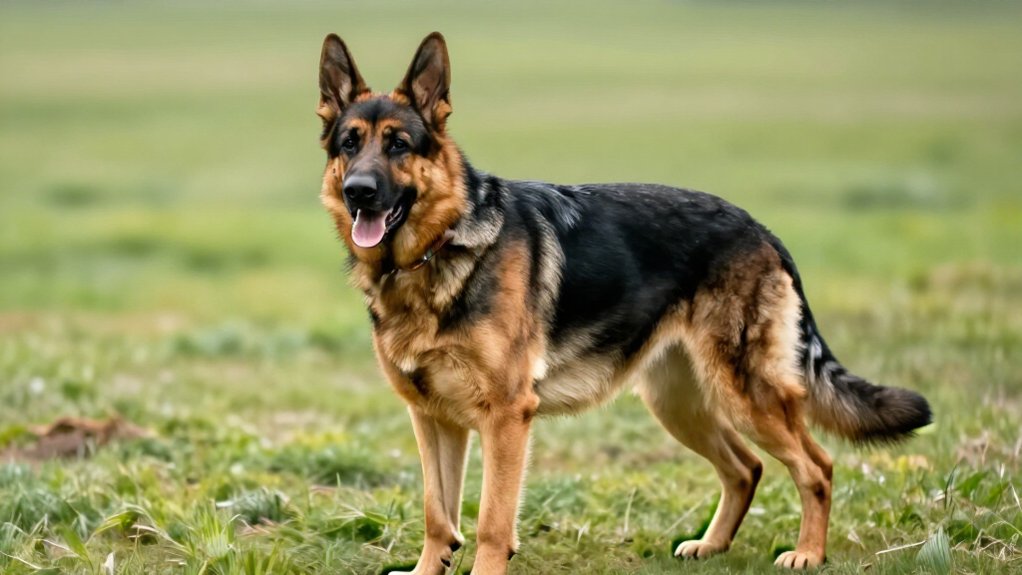
You assess the King Shepherd’s calmer disposition against the German Shepherd’s intense work drive to evaluate family guardian suitability.
Both breeds exhibit high trainability, yet the King Shepherd’s stable temperament may support better behavioral health in high-stress households.
You observe protective instincts in both, with the German Shepherd displaying sharper vigilance while the King Shepherd maintains gentler social engagement. Families considering either breed should expect to provide consistent socialization and structured routines to keep the German Shepherd’s vigilance in check.
You note that the King Shepherd temperament is more relaxed and less intense than the German Shepherd’s drive.
Family Guardian Calmness
While the King Shepherd generally manifests a calmer, more even-tempered physiological profile for family guardianship, the German Shepherd presents a high-drive, task-oriented disposition that often sustains higher arousal states within the domestic environment.
You observe how King Shepherds maintain a relaxed baseline tone during household activity. They demonstrate reduced reactive potential and softer presence around children.
German Shepherds, however, require substantial mental engagement to prevent restlessness. Their vigilance translates into sustained alertness even outside formal work.
When evaluating calmness, consider how King Shepherds offer periodic energy output rather than constant intensity. You’ll find they tolerate energetic play with a composed demeanor. This temperament supports stable intra-family dynamics without demanding continuous stimulation.
The German Shepherd’s physiological architecture favors operational readiness over domestic tranquility, requiring structured exercise to mitigate anxiety-induced pacing. While King Shepherds are bred to address German Shepherds’ aggressive tendencies, resulting in loving and patient dogs.
Ultimately, you select based on whether you need a low-arousal companion or an active working partner capable of high-intensity vigilance.
Trainability And Protective Instincts
Although both breeds exhibit high trainability and pronounced protective instincts, you’ll find the King Shepherd delivers softer, more measured responses while the German Shepherd manifests higher intensity and work-focused guarding behavior.
You observe the King Shepherd’s malleable temperament facilitates structured obedience with reduced reactivity. Conversely, the German Shepherd demonstrates exceptional cognitive acuity and resilience, making it ideal for complex technical tasks like service or police work.
Its pronounced will-to-please supports precise execution under guidance. For protective duties, the King Shepherd offers stable, confident guarding without extreme territorial aggression.
The German Shepherd’s heightened alertness and instinctive drive suit rigorous security roles. You must select based on desired service intensity.
Both require confident handling to channel protective drives effectively. Choosing the appropriate breed guarantees stable performance in roles involving safety, service, and companionship while prioritizing the animal’s behavioral health.
King Shepherd Health Risks and Lifespan
You must expect your King Shepherd to live 10–11 years on average, though some reach up to 14.
Focus on screening for hip dysplasia, gastric dilatation volvulus, and degenerative myelopathy as primary breed-specific risks.
Implement radiographic screening, weight control, and prophylactic gastropexy to mitigate orthopedic and GI mortality factors. Owners should watch for early signs such as a bunny-hopping gait, stiffness after rest, or reluctance to climb stairs, since these can point to hip or back problems that need veterinary evaluation.
Average Lifespan Expectations
Where does the King Shepherd’s average lifespan typically fall within large breed parameters? You’ll find most reports cite 10–11 years as typical for this giant breed class. Some guides suggest up to 14 years, though this reflects optimistic ranges lacking broad population data.
Their mid-point estimate aligns closely with expected longevity for dogs of their massive size. Careful breeding emphasizing balanced structure and health-tested lines aims to reduce orthopedic vulnerabilities, supporting relatively robust lifespans compared to pure German Shepherds.
Regular veterinary assessments and strict weight management remain vital for extending functional years. While large size inherently limits longevity versus smaller breeds, proper care helps these dogs reach their maximum potential lifespan within normal giant breed ranges.
Common Health Concerns
While King Shepherds inherit a complex health profile from their German Shepherd lineage, you must recognize that their substantial orthopedic risks and life-threatening emergencies directly impact their overall lifespan.
You see frequent hip and elbow dysplasia causing chronic osteoarthritis, stiffness, and reduced mobility.
Gastric dilatation-volvulus represents a critical acute emergency due to deep-chested anatomy.
You must also screen for von Willebrand’s disease, a significant inherited bleeding disorder complicating trauma or surgical interventions.
Hypothyroidism frequently contributes to weight gain, lethargy, and dermatological issues.
These hereditary conditions persist across generations, mirroring other large German Shepherd-derived lines.
You address these substantial health burdens directly to support prime canine welfare.
Preventive Care Strategies
To maximize the King Shepherd’s typical 10–14-year lifespan, you must implement a proactive preventive care plan that addresses orthopedic strain and acute gastric risks.
Schedule semi-annual veterinary screenings to monitor hip dysplasia, cardiac function, and thyroid status.
Maintain strict weight control through balanced, large-breed nutrition to reduce joint stress.
Prevent gastric dilation-volvulus by feeding multiple smaller meals and avoiding vigorous exercise around feeding times.
Use slow-feed bowls to minimize aerophagia.
Monitor neurological signs for degenerative myelopathy and implement low-impact conditioning to preserve mobility.
Guarantee consistent parasite prevention and routine vaccination protocols.
Regularly groom to assess skin integrity and body condition score.
Educate yourself on emergency bloat signs for prompt surgical intervention.
These targeted measures substantially enhance longevity and overall quality of life for your King Shepherd companion.
Why King Shepherds Fit Families
Because King Shepherds possess a genetically stable, calm, and protective temperament, they integrate well into households when paired with consistent socialization and early obedience training. You’ll observe their high trainability supports structured routines, ensuring predictable behavior around children.
Their gentle giant profile means patience during clumsy interactions, though supervision remains crucial due to size-related knockdown risks. Their adaptability accommodates active schedules while maintaining calm indoors once exercised adequately.
You’ll appreciate how their loyalty fosters deep bonding with all members. Their stable disposition minimizes fear-based reactions to typical family chaos.
As a breed developed for companionship first, their protective instincts balance with non-aggressive baseline behavior. Their 10–11 year lifespan suits long-term family commitment.
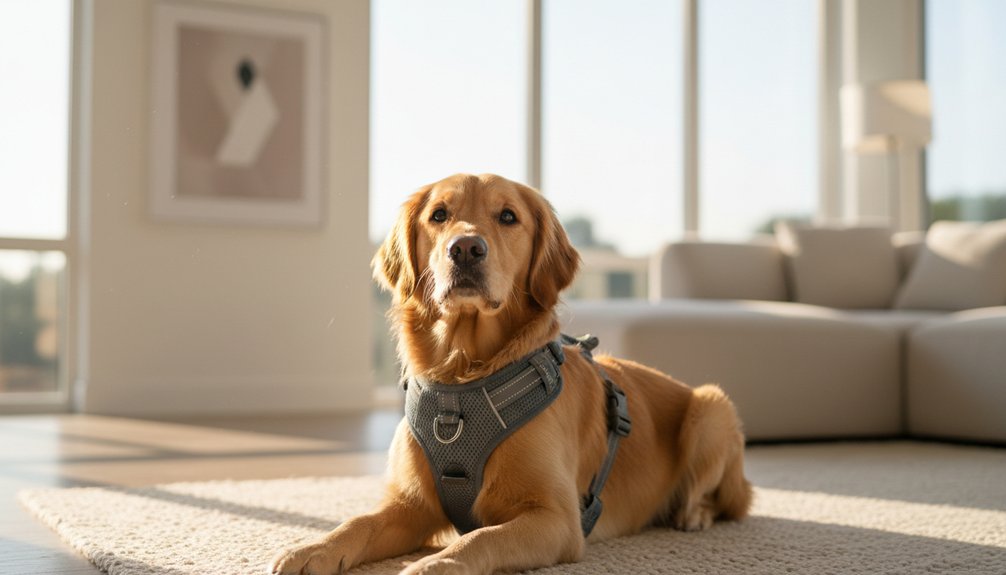
You’ll find their exercise needs match outdoor-loving lifestyles, enhancing stability through shared activities. Because King Shepherds are far too large for a dog booster seat, they need a spacious cargo area or a secure, crash-tested harness for comfortable car travel on family outings. Their health profile supports reliable service as attentive, affectionate household guardians without hyperactive tendencies.
Is a King Shepherd a Good Watchdog?
How do the genetic predispositions for guarding and the breed’s stable temperament converge to make the King Shepherd an effective watchdog? You observe their innate protective drive, rooted in their utilitarian lineage for property defense.
Their stable temperament ensures alertness without hyperactivity or undue aggression. They remain aloof with strangers, providing natural caution. Their imposing stature and deep vocalization serve as potent auditory and visual deterrents.
You benefit from their intelligence, facilitating structured training for controlled protective responses. With consistent socialization, they balance vigilance with predictability.
Their devotion to the household motivates confrontation of genuine threats while maintaining non-hostile behavior toward minor disturbances. This combination of physical presence, sound psychology, and trainability makes them reliable guardians.
Their capacity extends beyond mere alerting to active protection roles, serving those seeking secure, stable companions for safety duties. Owners who take their King Shepherd on trips can keep their guardian fed and hydrated by packing portable dog bowls for meals and water on the road.
King Shepherd Exercise and Activity Needs
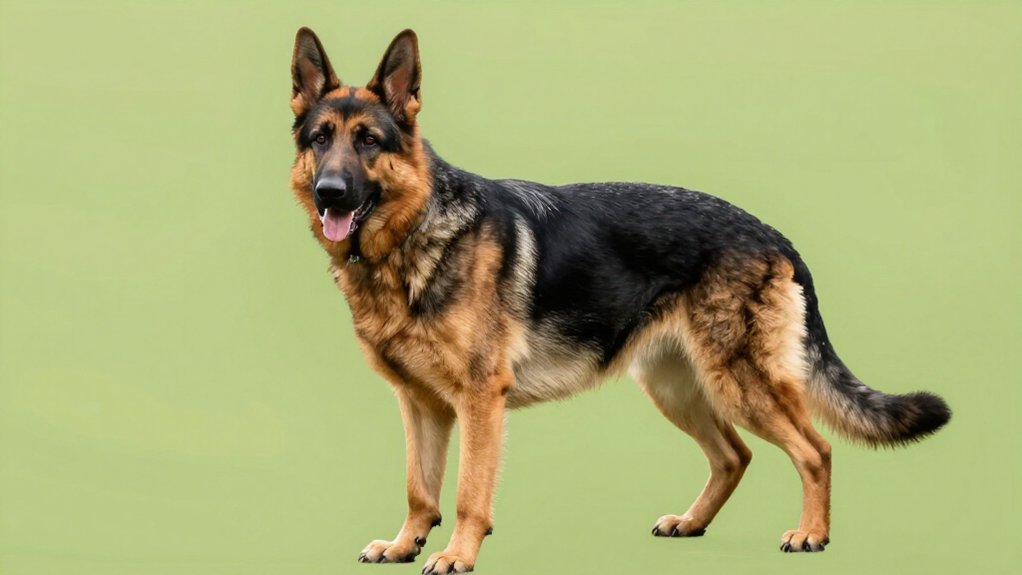
You must provide 60–90 minutes of daily structured aerobic activity to maintain the King Shepherd’s cardiovascular and musculoskeletal health.
Incorporate problem-solving tasks and scent work to address the breed’s high cognitive demands and reduce risk of behavioral pathology.
Pair these with controlled obedience and agility training to build impulse control while safely managing growth-phase joint stress.
Owners should also watch for constant following around the house, which can signal that the dog needs more mental and physical stimulation.
Daily Exercise Requirements
While the King Shepherd’s status as a high-energy working breed demands consistent physical output, you must provide 60–90 minutes of structured, moderate-to-vigorous daily exercise to guarantee musculoskeletal health and behavioral stability. You should schedule brisk leash walks, hiking, jogging, or swimming to meet aerobic demands.
Young dogs under 18 months require low-impact activities to protect developing growth plates, while prime adults tolerate higher-intensity work like agility or tracking. Seniors benefit from joint-friendly routines such as soft-surface walking.
You must avoid excessive jumping or running on hard surfaces before skeletal maturity. Multiple shorter sessions often prevent overexertion better than single long bouts. Adjust intensity for weather conditions, ensuring hydration during extended outdoor activity.
Yard access alone remains insufficient; structured, purposeful movement is essential. Neglecting these physical requirements risks orthopedic complications and behavioral degradation.
Serving this breed demands commitment to their specific physiological needs daily.
Mental Stimulation Needs
Although mental exertion ranks equally with physical activity for maintaining homeostasis in this intelligent working breed, you must integrate consistent cognitive challenges into the daily regimen to prevent behavioral pathology.
You need to recognize that under-stimulated King Shepherds often exhibit restlessness, destructive chewing, and anxiety-related behaviors due to insufficient cognitive engagement. To address this, you should implement structured activities like nose work, puzzle feeders, and agility training.
These tasks leverage their innate problem-solving abilities while promoting calmness. Rotate games weekly to maintain novelty and prevent habituation. Incorporating scent-based searches or herding drills satisfies their working instincts without excessive physical strain.
Training Method Recommendations
To maximize joint health and behavioral stability, you should prioritize positive reinforcement training that pairs obedience drills with physical activity. Structure sixty to ninety-minute daily sessions, splitting them to mitigate orthopedic stress.
Implement brisk walks, hiking, and swimming to develop cardiovascular endurance while sparing joints from high-impact repetitiveness. Avoid vigorous running until skeletal maturity ensures joint development.
Integrate commands like “heel” and “leave it” during exercise to manage the breed’s powerful locomotion effectively. Leash training remains critical due to their significant mass and strength.
Monitor weight closely to prevent obesity-related complications, adjusting intensity based on climate and individual tolerance. This approach channels their high drive into structured tasks, reducing behavioral issues.
Consistent, reward-based guidance fosters a cooperative partnership, ensuring your King Shepherd remains physically fit and mentally content throughout their lifespan.
King Shepherd Training and Socialization Tips
Because the King Shepherd exhibits high intelligence and strong working drive, early obedience and socialization are essential to shape a stable temperament and prevent guarding-related behavioral issues. Implement foundational commands like recall and stay immediately upon acquisition. Structured puppy kindergarten enhances responsiveness in distracting environments.
Continuously reinforce these skills through adolescence as physical strength matures. Expose your dog to varied people, animals, and settings during the critical socialization window to mitigate future fear responses.
Utilize positive reinforcement techniques, rewarding calm behavior with treats and praise rather than harsh corrections. Consistent cue usage across all household members prevents mixed messaging. Owners can also expect that consistency and repetition remain the most important factors in reaching training milestones on a predictable timeline.
Daily mental stimulation via scent games or problem-solving toys supports cognitive health. Establish predictable routines combining exercise and rest to maintain impulse control.
Controlled introductions to delivery workers prevent suspicion. Your structured approach guarantees a bonded, appropriate, and confident guardian.
Can King Shepherds Live in Small Spaces?
Once you establish foundational obedience and socialization, you must evaluate whether your living environment supports the King Shepherd’s large-to-giant frame and working drive. You must assess floor space to prevent musculoskeletal stress from restricted movement or frequent collisions with furniture.
Your routine should incorporate at least 90 minutes of structured physical exertion daily to mitigate obesity and joint pathology risks. You should prioritize clear pathways and designated resting zones to facilitate orthopedic health within compact interiors. When you travel, a portable dog bed can extend that designated resting zone to hotels and outdoor trips, supporting orthopedic comfort on the road.
Since small dwellings limit natural patrolling behaviors, you must provide frequent outdoor enrichment to prevent behavioral stress responses. You need to contemplate how noise amplification in multi-unit structures may impact your dog’s sensitive temperament.
Ultimately, you’ll need to balance your commitment to intensive daily activity against the inherent spatial limitations for your dog’s welfare.
Who Should Not Get a King Shepherd?
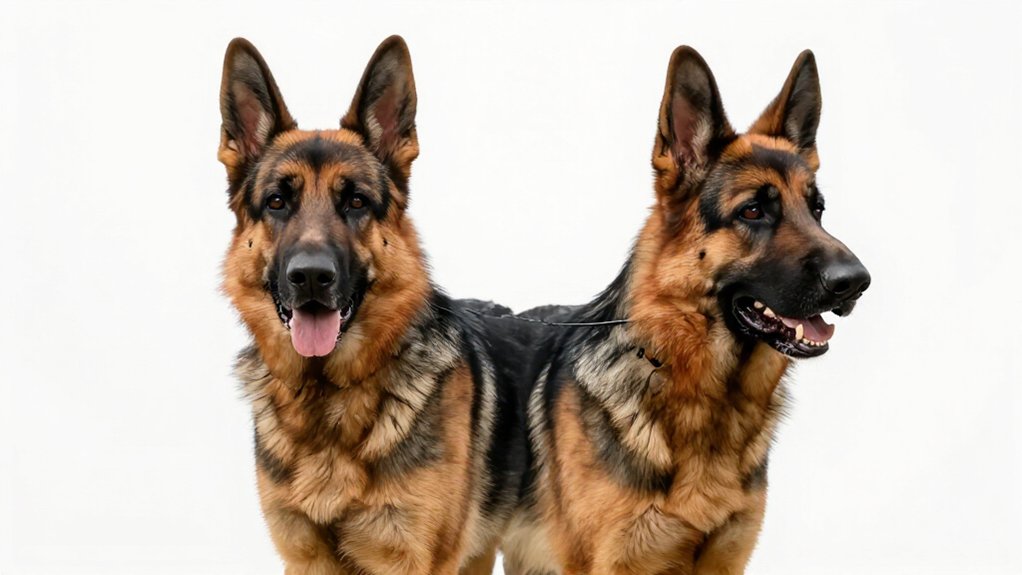
If you lead a limited-activity lifestyle, lack experience with structured training, or can’t manage a large, powerful dog requiring daily physical and mental enrichment, a King Shepherd isn’t suitable.
High-energy working-breed mixes demand substantial exercise to prevent obesity and joint stress. Without ongoing mental enrichment, intelligent dogs develop boredom-driven misbehavior.
Strong protective instincts require early socialization to avoid fearful or reactive behavior. Your household must establish clear leadership; otherwise, routine visitors may trigger overreactions.
This breed’s 25–31 inch height and substantial mass create injury risks around young children. Inadequate strength or confidence prevents effective control of confident, protective temperaments.
Long absences or isolation cause anxiety, excessive barking, and destructive chewing. High-maintenance, clingy behavior demands consistent companionship.
If you prioritize small, low-maintenance dogs or lack experience with dominant breeds, don’t acquire this breed. Your inability to meet their physical, behavioral, and emotional needs compromises welfare.
Consider breeds better aligned with your lifestyle capacity and service goals.
How Much Does a King Shepherd Cost?
How much does a King Shepherd puppy command? Typically, you see prices from $1,500 to $3,000, with averages near $1,880. Breeder reputation and health screening drive costs. Expect higher fees for OFA-tested hips, elbows, and DM clearance.
Champion bloodlines average $2,090 versus $1,830 for non-champions. Registration status notably affects pricing; registered pups average $2,030 against unregistered ones at $900. Vaccination status matters too, with up-to-date puppies costing $2,020 versus $1,640.
Coat color influences value, like black at $2,880 or red at $1,500. Geographic regions vary; California averages $2,470, Texas $1,500. Avoid extremes above $5,000 unless justified by exceptional genetic testing and lineage documentation.
Prioritize health guarantees over low initial costs when selecting your companion.
Finding King Shepherd Breeders and Adoptions
To find a King Shepherd, you must navigate specific registries and follow strict health protocols. Consult the King Shepherd Club of America (KSCOFA) directory, which lists recognized breeding programs like AZ King Shepherds and Cloie Kennels.
These breeders adhere to KSCOFA codes mandating OFA or PennHip evaluations and Embark DNA testing before full breeding status. Verify lineage through single-dog registration, requiring pedigree documentation or DNA evidence from contributing breeds like Shiloh Shepherds.
If adopting, contact shepherd-focused rescues that screen for genetic conditions common to giant breeds. Ensure any dog possesses centralized documentation confirming health screenings and traceable breeding decisions.
You’ll secure a companion with verified physical soundness and genetic stability. This diligence ensures your acquisition supports responsible preservation of the breed’s structural integrity and service readiness.
Your service-oriented approach prioritizes the animal’s welfare and the community’s access to healthy, well-bred partners.
King Shepherd Grooming and Care Guide
You must maintain the King Shepherd’s dense double coat through regular mechanical debridement to prevent matting and dermatological complications.
Your grooming protocol should prioritize removal of the loose undercoat using appropriate tools like slicker brushes and undercoat rakes.
Consistent attention to shedding patterns and skin health guarantees systemic well-being for this specific breed.
Coat Care
King Shepherds possess a dense double coat that mandates proactive, frequent grooming to manage heavy year-round shedding and prevent skin conditions. You must utilize undercoat rakes during biannual seasonal blows to remove dense undercoat tufts effectively. This reduces trapped moisture and improves air circulation to the epidermis.
Avoid infrequent bathing, typically every six to eight weeks, using mild, dog-specific shampoo to preserve natural oils. Ensure thorough rinsing and complete drying of the undercoat to prevent mildew, hot spots, or bacterial overgrowth.
Inspect high-friction zones like behind ears and feathered limbs for early mat formation. Mats impede airflow and increase skin infection risk. Regular coat inspection helps you intervene before tangles tighten against the skin.
Proper coat care maintains the breed’s working functionality and promotes ideal dermatological health for the animal.
Grooming Needs
While this large, heavy-boned breed demands a rigorous maintenance regimen, its grooming needs extend beyond mere aesthetics to support overall dermatological and musculoskeletal health. You must bathe every six to eight weeks, using mild, dog-specific shampoo to preserve natural oils. Pre-bath brushing reduces trapped moisture and drying time. Thorough rinsing prevents irritation. Inspect for redness post-bath to catch early dermatologic issues.
Trim nails monthly to avoid gait alterations and joint strain. Check paw pads for cracks, debris, or interdigital cysts to ensure sound mobility. Clean ears weekly with veterinarian-approved solutions, avoiding deep swabs, and inspect daily for signs of otitis. Gently wipe eye crusts daily. Brush teeth twice weekly with canine-specific toothpaste to reduce periodontal disease.
Annual dental exams help maintain systemic wellness. Consistent, precise care guarantees your dog’s long-term health and comfort.
King Shepherd Diet and Nutritional Needs
Because the King Shepherd is a large, deep-chested working breed, you must prioritize precise caloric intake and nutrient density to support lean muscle mass and prevent orthopedic strain.
Administer 1800–2500 kcal daily via high-protein formulas (18–22% crude protein) with 5–8% fat for joint integrity. Select products listing real meat as the primary ingredient while avoiding heavy corn, wheat, or soy.
Divide rations into two measured meals to mitigate gastric torsion risk, especially around strenuous exercise. Utilize slow-feed bowls if necessary.
Restrict treats to 10% of total caloric intake. Adjust portions for life stage, activity, and body condition scores.
Provide large-breed puppy diets for controlled skeletal growth. Guarantee Omega-3 supplementation supports inflammation management.
Strict portion control prevents obesity-related hip and elbow strain.
King Shepherd vs German Shepherd: Which to Choose?
Once you have optimized your King Shepherd’s caloric intake and nutritional composition, you should weigh breed-specific phenotypic differences to determine suitability for your household.
Consider the King Shepherd’s rugged, giant-frame structure versus the German Shepherd’s medium-large build. The King offers reduced hereditary health risks, particularly orthopedic strain, due to selective breeding for structural soundness.
While both possess high intelligence and trainability, the King displays a more even-keeled temperament, often easier to handle with strangers. The German retains intense work drive and high energy.
If you seek a gentler guardian for active families while prioritizing long-term joint health, the King’s robust physique suits your mission to serve others best.
King Shepherd as a Working Dog Role
Given their robust physique and selective breeding for structural soundness, you can leverage the King Shepherd’s genetic stability for demanding occupational tasks.
Their large, rugged build provides physical presence, with height ranging 25–31 inches and weight 90–150 pounds.
You utilize their notable endurance, strength, and agility for sustained patrol duties.
This breed’s self-confident temperament, featuring a well-balanced nervous system and absence of shyness, supports vigilance and watchfulness required for guardian roles.
You deploy them in sheep-herding, search and rescue, and therapy work due to their stable, trainable nature.
Their malleable behavior under systematic programs enables specialized detection work, including bomb detection.
You find them calmer than many German Shepherd lines yet highly effective for livestock guarding and personal protection.
This structural integrity minimizes health issues, ensuring long-term working capability for service.
Is a King Shepherd Right for You?
To evaluate your exercise needs, you must account for the breed’s high-energy demands and risk of anxiety-driven orthopedic strain if physical activity remains insufficient.
Considering training commitment involves recognizing the necessity for structured reinforcement to manage their powerful build and prevent behavioral issues that could compromise household safety.
Reviewing family compatibility requires considering the giant size’s potential for accidental knockdowns and the genetic predisposition to systemic conditions like hip dysplasia and bloat.
Evaluate Exercise Needs
While you evaluate whether a King Shepherd aligns with your lifestyle, recognize that this breed demands high energy expenditure—typically 60 to 90 minutes of structured, moderate-to-vigorous daily activity—to maintain physiological fitness and behavioral stability.
You must allocate substantial time for consistent outlets addressing their working-drive heritage and stamina requirements. Consider splitting sessions into two blocks like brisk walks, jogging, or swimming. Dog sports like agility, tracking, or herding effectively channel mental acuity alongside physical exertion.
Guarantee environments support these needs, favoring spacious yards over confined apartments. Adjust intensity carefully for life stages; puppies and seniors require controlled, low-impact routines to prevent joint stress.
Monitor weather and surface conditions rigorously to avoid overexertion. Ultimately, you must realistically commit to these demands, assure your schedule and local resources sustain their long-term health and prevent behavioral issues stemming from unmet exercise requirements.
Assess Training Commitment
Every King Shepherd demands consistent training commitment rooted in early obedience and socialization protocols to guarantee safety and behavioral stability.
You must address their high trainability through structured leadership, leveraging their calm, protective temperament to prevent reactive guarding behaviors. Utilize positive reinforcement methods to channel their intelligence and enthusiasm to please into reliable obedience.
Daily practice sessions remain essential to manage their immense 90–150 pound strength and prevent unwanted self-directed behaviors.
You should prioritize impulse-control training and loose-leash manners early on, as these constitute safety requirements rather than optional activities for such a powerful breed.
Consistently reinforce core commands across adolescence and adulthood, given their lifelong guarding drive.
Implement regular, controlled socialization with strangers and other animals to maintain an easy-going disposition.
This ongoing behavioral maintenance ensures their versatile working capacity remains constructive for your service-oriented lifestyle.
Review Family Compatibility
How compatible is a King Shepherd with your household dynamics? Assess your capacity for managing giant-breed physiology. This breed demands 60–90 minutes of daily physical and cognitive enrichment to prevent boredom-induced behaviors.
Their massive stature poses kinematic risks for toddlers; you must enforce constant supervision during interactions. While their temperament remains steady and nurturing, you must provide structured boundaries to ensure safe cohabitation.
Their health depends on your commitment to maintaining optimal weight, preventing joint dysplasia common in this lineage. You require spacious living quarters with secure outdoor access, as urban confinement accelerates physiological stress.
Consider your physical ability to manage a 90–140-pound companion, especially during growth phases. If you prioritize active engagement, consistent routine, and protective socialization, this breed thrives under your dedicated stewardship, offering a loyal, gentle presence.
Frequently Asked Questions
What Is the Legal Status of King Shepherds?
Your King Shepherd stands as a hybrid sentinel, unlisted in major kennel registries. While generally legal, you must navigate local size ordinances, insurance stipulations, and landlord policies governing this large, unregulated canine guardian.
Are King Shepherds Good With Other Pets?
King Shepherds generally exhibit favorable coexistence with other pets when early socialization and controlled introductions occur. You guarantee ideal outcomes through structured training, consistent supervision, and monitoring for prey drive or resource guarding behaviors.
How Do I Travel With a King Shepherd?
Begin with a crate meeting IATA guidelines. Make certain your King Shepherd’s temperament allows cargo travel. Secure them with crash-tested restraints. Obtain a recent health certificate. Monitor temperature regulations closely for their large-coated breed, ensuring stress-free, safe transit across all environments.
What Is the History of the King Shepherd?
You develop the King Shepherd in the 1990s by crossing German Shepherds with Shiloh Shepherds and Alaskan Malamutes to improve skeletal health, reduce hip dysplasia, and enhance temperament for working and companion service roles.
What Are Common King Shepherd Allergies and Food Sensitivities?
King Shepherds commonly develop allergies to beef, chicken, dairy, wheat, corn, and soy, often manifesting as chronic itching, skin inflammation, ear infections, and digestive upset requiring veterinary-guided elimination diets and limited-ingredient formulas.