German Shepherd ears usually start to stand around 8–12 weeks, then hit the “crazy ear” phase at about 8 weeks to 5 months, where they lift, drop, and wobble. Most pups finally settle by 5–7 months, though teething can make them cycle down again at 3–4 months. If your pup’s ears stay floppy past 8–9 months, it may be time to talk to your vet and consider careful taping only around 5–6 months, because timing matters—keep going to learn more.
Swift Summary
- German Shepherd ears are often floppy from birth to about 8 weeks, with cartilage gradually hardening over time.
- “Crazy ear” cycling commonly starts around 8–12 weeks and may continue intermittently through 3–4 months, especially with teething.
- Many puppies settle to more permanent standing between 5–7 months, though genetics and ear size can affect timing.
- If ears remain mostly floppy past 8–9 months, full standing becomes less likely and a vet check is recommended.
- Taping can be tried as a cautious last step around 5–6 months, but it’s not guaranteed and should stop around 7–8 months.
When Do German Shepherd Ears Stand Up? (Timeline by Age)
Newborns to 8 weeks, you see a floppy-ear baseline. Ear cartilage stays soft, ears lie flat, and you may notice twitching around 6–8 weeks. In other words, this early period is when most German Shepherd puppies are still in their floppy-ear stage, regardless of how alert or active they look. During the first four weeks, a puppy’s rapid development depends on its mother for warmth and nutrition. From 8 Weeks to 5 Months (the “crazy ear” phase), you may see ears experiment by lifting briefly, then dropping back down, sometimes in inconsistent patterns. From 8–12 weeks, you enter the “crazy ear” stage. Some puppies briefly lift, then drop, and one ear may be up while the other stays down. A minority fully stand by 8–10 weeks. From 3–4 months, teething can make ears cycle down again.

Package Include: You will receive 4 rolls of dog ear tape, help stick the ear stand up support. The white gives it a clean and professional look, making it an essential part of your doberman ear posting kit

Dog Ear Care Set: Each pack comes with 2 self adhesive ear tape for dogs and a set of cotton swabs for pets to provide you with a simple and safe way to clean, support, and protect your furry friend’s ears without any irritation or discomfort

Veterinarian-formulated solution to be gentle for your dog and provide clean, odor-free ears!
Is Taping Worth Trying for German Shepherd Puppies?
You’re probably wondering if taping is worth the effort for your German Shepherd’s floppy ears, and honestly, it can be—but only as a cautious last step. Taping sometimes helps ears stand, but success is modest and never guaranteed. Taping is usually considered You should consider it only if ears stay down with no clear progress by about 5–6 months. Many people decide around 6–7 months, but after 7–8 months cartilage hardens, so taping rarely works. Ask your vet by 7–9 months. If you tape, use light, breathable support near the base, not duct tape. Check every few days for irritation. Ear carriage can also differ between working lines and show lines, so bloodline may influence whether a puppy’s ears eventually stand on their own.

Package Include: You will receive 6 rolls of dog ear tape, help stick the ear stand up support. The white gives it a clean and professional look, making it an essential part...
Why Your German Shepherd Ears Keep Flopping?
German Shepherd ears often flop because the cartilage and muscles that hold the ear up are still “learning” their job, and sometimes they just don’t end up strong enough.
First, genetics matters. If parents had soft ear carriage, you may see the same. Heavy, larger ears can also outweigh the cartilage support. Heavy, larger ears can also outweigh the cartilage support.
Next, remember normal timing. Between 8 weeks and 5–7 months, you’ll watch “crazy ears,” then they usually settle by 5–7 months. If ears stay floppy past 8–9 months, it’s less likely they’ll fully stand.
Nutrition gaps, like low calcium or vitamin D, illness, infections, or rough play can also keep them down. Illness or infections can also trigger hair loss in German Shepherds, so a veterinarian should evaluate a dog that is losing hair along with its ear development.

A COMPLETE CANINE SUPPLEMENT - A multivitamin (Vitamins A, B, C, D, E, K & other minerals) PLUS Essential Fatty-Acids for Skin & Coat Support, Glucosamine for Hip & Joint Support AND Probiotics to promote the absorbtion of nutrients for Digestion and Gut Health.

A COMPLETE CANINE SUPPLEMENT - A multivitamin (Vitamins A, B, C, D, E, K & other minerals) PLUS Essential Fatty-Acids for Skin & Coat Support, Glucosamine for Hip & Joint Support AND Probiotics to promote the absorbtion of nutrients for Digestion and Gut Health.

Perfect tasty blend of Glucosamine, Chondroitin, Perna Canaliculus, and Omega-3 Fatty Acids. Dogs love the taste. They think it is treat time!
How Do I Tape German Shepherd Ears Safely?
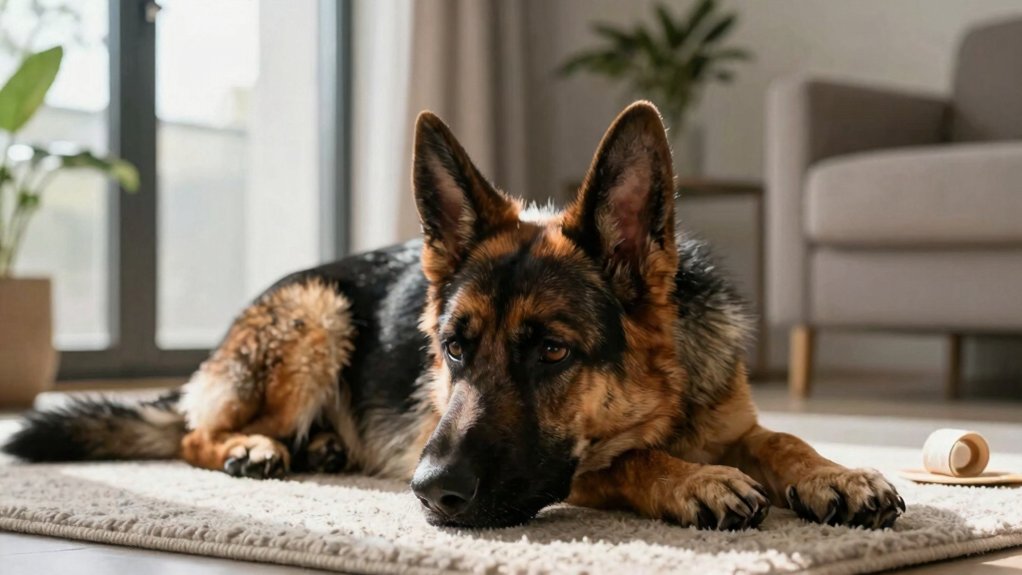
First, tape only when natural development stalls, usually around 5–6 months, and only under breeder or vet guidance.
You’ll need breathable white surgical tape (like 2-inch Micropore), soft foam rollers for inside support, and a light “bridge” (like a craft stick).
Avoid duct tape or anything non-breathable.
Insert the foam deep in the ear flap, leaving a small gap above the head and never blocking the canal opening.
Wrap the leather snugly, then tape about one-third from the tip.
Check daily for heat, redness, smell, or sores.
Dogs with taped ears during cold months should stay sheltered, since winter risks like frostbite can affect exposed ear tips.
Stop and remove fast if pain, shaking, or rubbing starts.
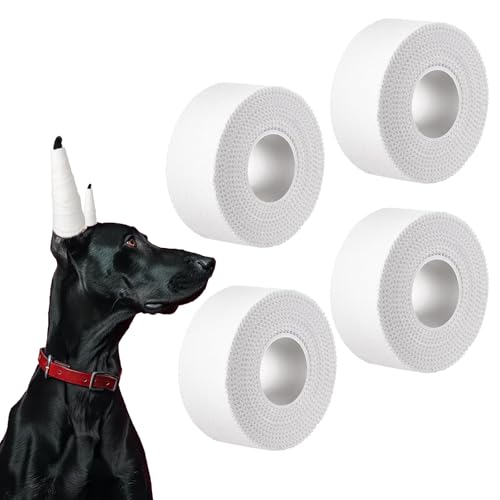
You will receive: A pack of 4 rolls of dog ear-stand tape, which can also be shared with your little dog friend. Size: 1 inch × 11 yards. This size is suitable for most...
When Should You Stop Taping and Recheck With a Vet?
Plan to stop posting when your puppy hits the point where the ears aren’t responding, and then switch to a vet-guided plan for what comes next.
Aim to recheck if ears stay down around 7–8 months. If there’s no clear lift after several weekly tape cycles, stop.
Taping often lasts 5–7 days, then you remove it, air the ears 24 hours, and test again.
If you reach about 9 months with persistent floppy ears, book a vet visit.
Stop immediately if you see swelling, sores, redness, bad smell, discharge, or pain—head shaking, pawing, or tenderness.
Ears can look different during growth spurts at four to five months, so avoid judging results from a single week during these periods.
Frequently Asked Questions
Can Teething Timing Affect How Quickly My Puppy’s Ears Stand?
Yes—teething timing can nudge ear standing speed like a clockwork forge. If your puppy finishes teething earlier, cartilage hardens sooner and ears stand steadier; prolonged teething can keep ears floppy longer, because minerals get diverted.
Do Male and Female German Shepherds Have Different Ear-Standing Timelines?
Yes, there’s a tendency: females often stand earlier and stabilize around 4–5 months, while males may take a bit longer, often 4–6 months. You should still expect wide variation and watch beyond 5–6 months.
What Home Signs Suggest My Puppy’s Ears Are Developing Properly?
You’ll see healthy ear development when your puppy’s ears move intermittently, firm up over weeks, prick toward sounds, hold alert positions during play, and show no pain, redness, odor, or persistent floppiness.
Can Ear Infections or Allergies Delay Erect Ear Posture?
Yes—when you see “ear discomfort,” infections or allergies can delay erect posture. Inflammation shrinks ear mobility, causes swelling and thickening, and makes your pup hold the pinna low. Treat triggers promptly so cartilage can mature.
Will Genetics Guarantee Floppy Ears, Even With Perfect Nutrition and Care?
No, genetics won’t always guarantee floppy ears, but it heavily raises the odds. If cartilage is genetically weaker, perfect nutrition and care can only offer marginal help; many puppies still keep soft, unstable ear posture.