You prize DDR German Shepherds for their durable, straight-backed structure and stable, pressure-resistant temperaments. Bred under strict East German state control, they possess heavy bone, strong joints, and reliable drives ideal for law enforcement and search-and-rescue work. Their genetic isolation guarantees consistent functional traits and endurance unmatched by show lines. Continue further to understand how their unique history and structure define their modern role in utility work.
Swift Summary
- DDR GSDs are bred for intense guarding drives, stable nerves, and high focus under pressure.
- Their heavy bone structure, deep chests, and straight backs support long-duration physical endurance.
- These dogs exhibit extreme loyalty and reliable task focus in high-stress working environments.
- Selective breeding prioritizes functional resilience and structural soundness over aesthetic show traits.
- Their genetic isolation and specialized service history create a rare, utility-focused lineage.
What Makes East German DDR German Shepherds Unique?
While East German DDR German Shepherds share common ancestry with other German Shepherds, their distinct working-line structure, temperament, and health profiles set them apart. You see a blocky head, heavy bone, and straight back in every east german ddr German Shepherd.
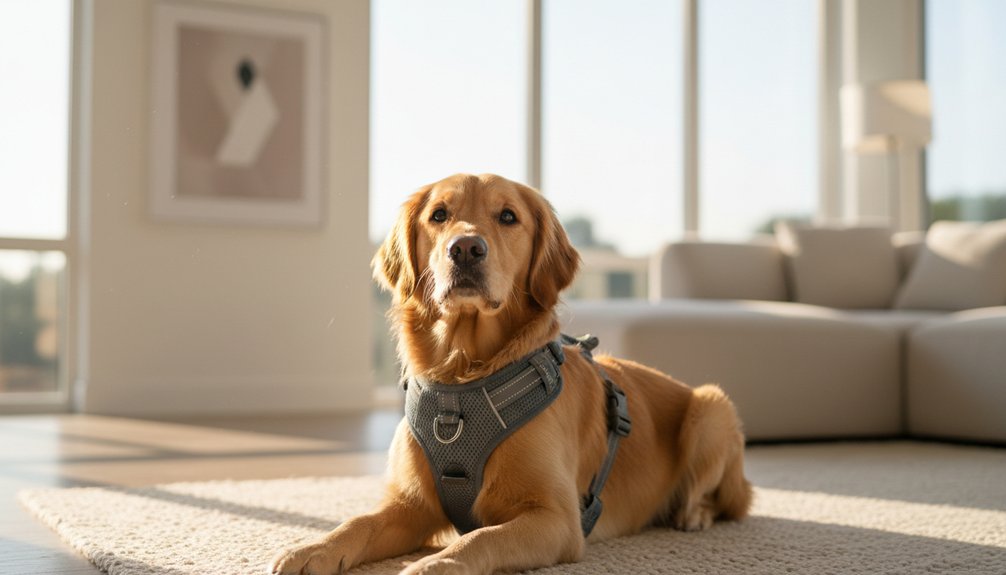
This east german shepherd offers calm stability and high defensive drive, making it ideal for service roles. Eastern German Shepherd breeders prioritize orthopedic soundness, making DDR German Shepherds for sale robust. Owners of these dogs often equip them with durable harnesses and vests for daily work.
When comparing east European shepherd vs German shepherd, note the east German working line German Shepherd’s endurance. West German Shepherd vs east German shepherd differences highlight the latter’s utility focus. DDR lines emphasize functional breeding over appearance, contributing to fewer structural problems.
Seek DDR German Shepherd puppies for sale from reputable sources. Eastern European German Shepherd traits support demanding work.
Distinguish DDR German Shepherd vs German Shepherd clearly. Eastern German Shepherd vs Western German Shepherd contrasts show structure.
Ddr German Shepherd vs Belgian Malinois favors stamina. Consider DDR German Shepherd vs West German Shepherd carefully.
The History and Breeding Goals of DDR German Shepherds
Following German reunification in 1990, you observe that East German state officials established a centralized breeding program in 1949 to produce reliable military and border patrol canines. You note the program operated under strict state control for forty years, prioritizing service utility over aesthetics.
Breeding wardens applied the Wertmessziffer scoring system to evaluate physical traits and working ability. You see how they excluded dogs with health issues or weak temperaments to maintain a robust population.
The goals emphasized uniform type, strong pigmentation, correct anatomy, and high endurance. You understand that selection focused on producing mentally clear, stable dogs suited for demanding service. Today, owners seeking similar control during daily walks often use a retractable dog leash that provides adjustable walking distance and freedom.
Mandatory health testing aimed to reduce hereditary defects. The program prioritized dogs capable of long patrols in harsh conditions, ensuring they possessed strong nerves and resilience under stress for state security duties. The 1969 formation of the SDG solidified the state control of breeding.
Physical Structure and Work Advantages of DDR German Shepherds
As you examine the DDR German Shepherd’s physical structure, you observe a strong, solid, lean, and muscular body built on heavy bone construction within an almost straight square frame.
You note the straighter topline and powerful hindquarters, which provide efficient, stable propulsion under load. This deep-chested physique grants the lung capacity needed for prolonged physical tasks. Handlers typically fit these dogs with a durable dog collar that offers daily comfort and control during long patrols.
The blocky head offers substantial jaw leverage for secure protection work, while dark pigmentation aids concealment in harsh environments.
This rigorous selection process prioritized sound hips to ensure the dogs could handle the demands of border patrol without injury.
You appreciate the sound hips and robust thoracic structure, ensuring durability during extended patrols.
These features collectively support gear-carrying, obstacle scaling, and high-mileage endurance.
You find the athletic proportions and good limb parallelism enhance maneuverability in built-up areas.
Ultimately, this phenotype delivers the reliability and sustained performance required for demanding service duties in border and protection scenarios.
Temperament and Working Drives of DDR German Shepherds
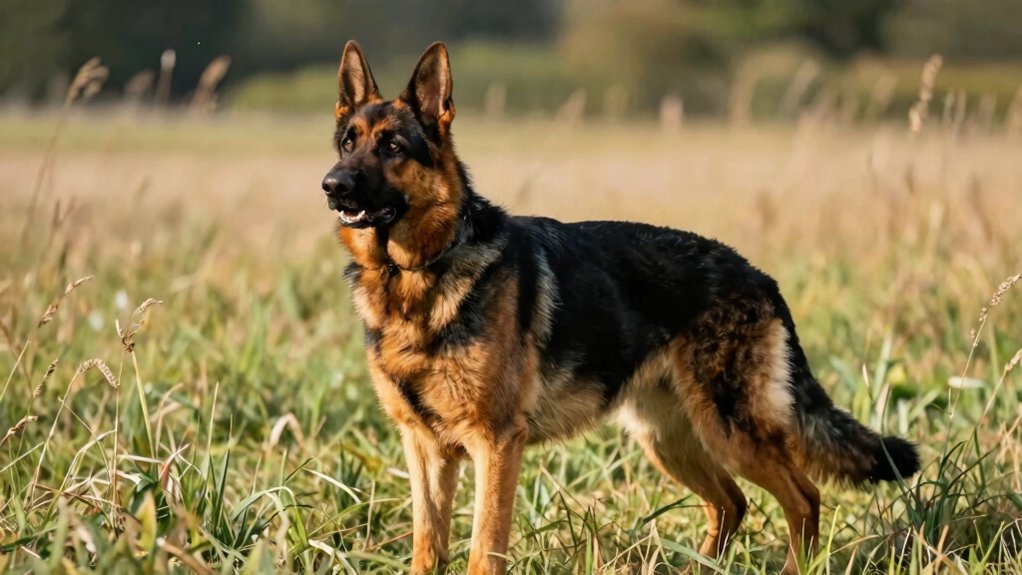
Beyond their structural advantages, the DDR German Shepherd exhibits a temperament profile defined by serious intensity, confidence, and resilience. You observe stable nerves under pressure, favoring composure before reaction. Their historical selection prioritized reliability, resulting in dogs that remain mentally clear during demanding duties.
You find pronounced guarding and defensive drives supporting sustained patrol work. While protective of home and family, these dogs often display balanced behavior in domestic settings. Their intense loyalty to family members keeps them attentive to the household even when no threat is present. You must provide daily mental and physical structure to prevent behavioral issues.
Their high intelligence and focus make them highly trainable for complex tasks. Strong bonds with primary handlers optimize control in critical operations. This line suits owners seeking serious working partners rather than casual companions.
For police, military, or search-and-rescue deployments, their temperament delivers consistent, dependable performance in high-stress environments. Strict breeding criteria eliminated dogs with flaws in temperament or health issues like hip dysplasia.
How DDR German Shepherds Compare to Show Lines
While show lines prioritize aesthetic ideals, DDR German Shepherds emphasize functional resilience. You observe straight, level backs and conservative angulation in DDR dogs, contrasting with the sloped toplines and exaggerated gait of show lines.
DDR structure prioritizes strong joints, solid feet, and heavy bone for endurance work, whereas show lines focus on balanced silhouettes and eye-catching ring movement. You note the DDR’s thick, barrel-chested, compact build versus taller, leaner show-line outlines.
DDR heads appear larger and blockier compared to the sculpted show-line head type. DDR physical robustness supports high-load tasks like patrol and tactical deployment, while show-line structure optimizes stylish movement for conformation showing. Working-line dogs also tend to display stronger drive and trainability, traits that show-line breeding has historically deemphasized in favor of ring presentation.
You recognize the DDR’s coarse, low-maintenance coat and dark coloration chosen for practical camouflage, unlike the fuller, plush coats and red-and-black saddles favored for visual elegance in show standards. The selection pressure for practical utility rather than ring appeal means DDR lines retain working traits that are often diluted in show-bred populations.
Health Testing and Soundness in DDR German Shepherds
You recognize that DDR German Shepherds prioritize functional longevity alongside physical form. Historically, state-controlled breeding eliminated dogs with hip dysplasia, creating a closed pool selected for orthopedic soundness. You see how mandatory screenings and ZTP inspections verified structural correctness.
Modern breeders maintain these protocols via OFA, SV, or PennHIP certifications. You observe that PennHIP’s distraction index quantifies laxity early, while final grades confirm stability around twenty-four months.
You notice how litter evaluations covered teeth, bone structure, and temperament to remove faults. Continuous oversight ensured dogs remained healthy for demanding work.
You understand that genetic robustness prevents disease burden. These rigorous standards guarantee dogs reach advanced age with minimal issues, enabling you to serve others effectively through reliable, sound working partners. For active owners who run or hike with these dogs, a hands-free dog leash keeps both hands free while still providing secure control during demanding outings.
Where to Find Purebred East German DDR German Shepherds
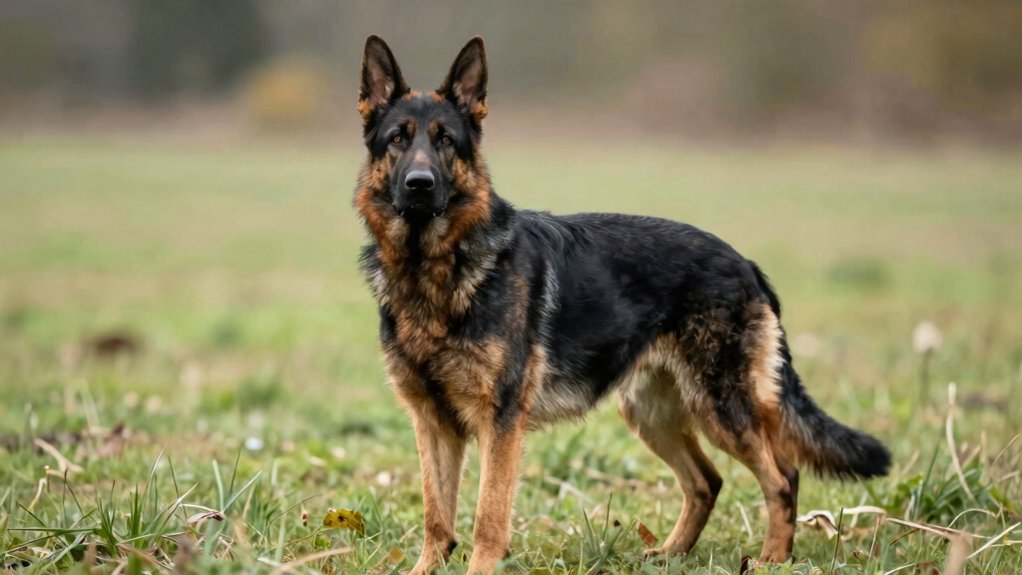
Although DDR German Shepherds are a closed breed, several US kennels preserve them. You locate these through reputable preservation breeders like MK Haus DDR, Vom Banach K9, or Wunderhaus DDR, which maintain authentic East German lines and structure.
You consider specialized working lines such as Inman’s Black German Shepherds in Indiana or Gigante Line in Arizona, both offering DDR genetics for demanding work.
Additional US sources include Triple S DDR in Alabama, NordOsten Kennel in Massachusetts, and Froschwald in Kentucky.
For international options, St Michael Working Dogs provides Czech, DDR, and European lines with shipping to North America.
Prices typically range from $1,500 to $3,000, though imported purpose-bred dogs may cost $3,500–$5,500.
Expect limited availability and waiting lists. Long-distance pickup trips call for packing dog travel bags with food, water, and waste supplies so essentials stay organized on the road.
You verify lineage directly through kennel contacts to guarantee pure DDR bloodlines.
DDR German Shepherds in Modern Working Roles
DDR German Shepherds continue to serve in diverse modern working roles, including law enforcement, search-and-rescue, service tasks, protection sports, and specialized detection work. You’ll observe their selection for police K9 units due to breeding emphasizing courage, resilience, and operational reliability. Their historical border patrol specialization translates into modern suitability for patrol and base protection.
You’ll find strong, muscular structures enabling sustained physical performance during long shifts and full-contact engagements. Agencies integrate these bloodlines to reduce orthopedic risks in duty animals.
In search-and-rescue, their border origins support wilderness deployment for missing-person location. You benefit from excellent scenting ability and methodical tracking styles across varied terrain. Stable temperaments facilitate work in chaotic disaster scenes with loud noise.
You see them operating in avalanche response and multi-day searches requiring sustained effort.
Their strong hunt drive enables widespread use in narcotics, explosives, and contraband detection. You’ll find them tracking fugitives and supporting manhunt operations. Many combine patrol and detection skill sets for dual-purpose assignments.
You also observe their application in industrial security and critical infrastructure protection. Handlers often set up kennel areas with retractable dog gates that extend across openings and roll away when not needed, giving them controlled access between kennel runs and training spaces.
Key Traits Valued by Working Owners of DDR German Shepherds
When evaluating DDR German Shepherds, working owners prioritize structural robustness, stable temperament, high working drive, exceptional endurance, and health reliability. You value their heavy bone structure and blocky heads for power-oriented physique. Straighter, level backs support sustained, functional movement without excessive angulation. Strong joints and thick paws ensure durability on uneven terrain. Lean, muscular bodies reflect strength selection over cosmetic refinement. Dark, coarse coats contribute to a rugged, imposing working appearance.
You require serious, confident, resilient temperaments suited to demanding environments. Calm, stable responses under pressure and firm nerves are prioritized over reactive behavior. Strong defensive instincts balance with controlled aggression for reliable protection. You need balanced, mentally clear character. Low tolerance for weakness and consistent behavior contribute to mental toughness.
High drive combined with intense focus and persistence supports sustained work. Remarkable intelligence and supreme problem-solving ability are core selection goals. Advanced tracking aptitude and strong natural instincts are foundational. You observe energetic, highly motivated working behavior. Strong capacity across tracking, climbing, and athletic exertion reflects intensive performance-focused selection.
Engineered for exceptional endurance, raw power, and unwavering reliability over long periods, you select these dogs. Robust, resistant, muscular, compact bodies enable effective performance under extreme physical demands. Hardiness allows them to withstand harsh weather and extreme conditions. Great stamina and physical resilience support long patrols without rapid fatigue.
Thick, weather-resistant double coats and strong overall constitution contribute to reliable outdoor performance in challenging climates. Historical breeding emphasized health and utility, reducing structural issues like hip dysplasia. Strong, well-proportioned bodies with moderate, functional angulation are mandated for service. Because German Shepherds generally require substantial daily exercise and mental stimulation, owners should plan for consistent training and activity.
Care, Exercise, and Training Needs for DDR German Shepherds
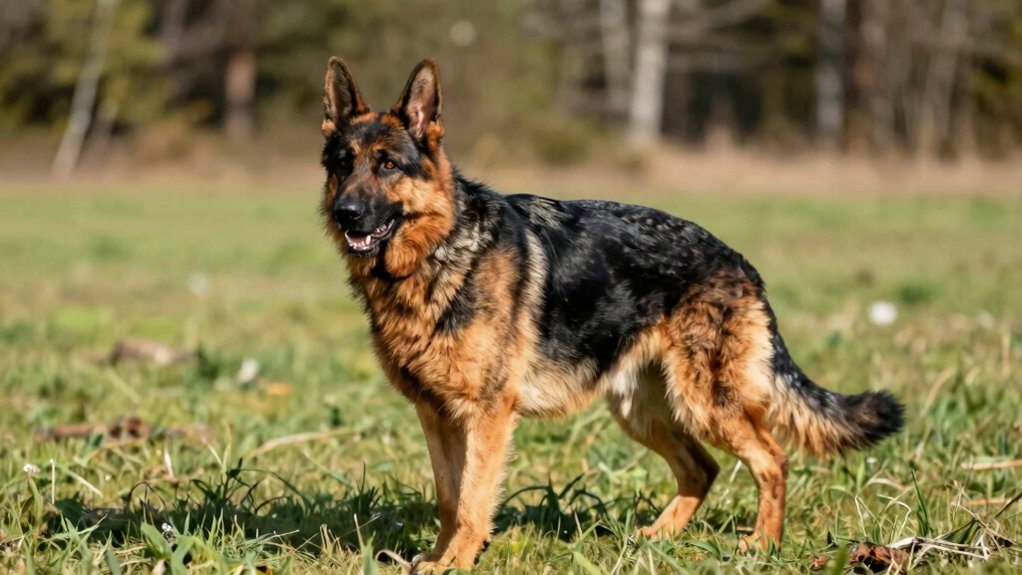
Because these dogs possess intense drive and robust physical capabilities, meeting their specific care, exercise, and training requirements becomes a primary responsibility for owners.
Provide 90 to 120 minutes of structured exercise daily, including hikes or protection sports.
For puppies under 18 months, limit walking to five minutes per month of age.
Exercise needs shift with a dog’s age and activity level, so owners should pair physical work with mental stimulation to keep these dogs balanced.
Allocate 30 to 60 minutes for mental stimulation through scentwork or advanced obedience.
Use consistent, reward-based training with clear criteria to establish reliability by 12 to 18 months.
Prioritize heavy socialization between eight and 16 weeks to ensure stable responses.
Avoid harsh corrections; maintain calm, steady handling.
Monitor joint health with supplements and annual orthopedic evaluations.
Adjust intensity based on age and condition to prevent injury while supporting their athletic demands effectively.
Why DDR German Shepherds Are Gaining Global Appeal
You observe that DDR German Shepherds deliver measurable working-dog reliability through controlled breeding, functional conformation, and stable temperament.
Their relatively scarce bloodline, born from isolated East German programs, creates targeted global demand among handlers prioritizing performance.
This combination of proven utility and limited availability positions DDR lines as a distinct asset in the international utility and protection market.
Working Dog Reliability
While DDR German Shepherds emerged from East German border patrol and military programs, you see their global appeal stem from decades of selection for nerve strength, stable temperament, and functional structure.
You benefit from dogs bred for consistent emotional responses under pressure, guaranteeing predictable behavior during chaotic operations. Their straighter backs and moderate angulation reduce locomotor stress, supporting long-term mobility for demanding service tasks.
You observe reliable task focus as handlers reinforce mission reliability across varied environments. These dogs maintain high drive for protection and tracking without losing biddability in structured training.
Screening protocols exclude orthopedic deficits, improving hip scores compared to show lines. You deploy them for search, rescue, and police work because their physical endurance prevents rapid fatigue.
Their functional build ensures they remain dependable partners in any role requiring sustained, controlled performance for public safety and protection.
Global Breed Scarcity
Despite their proven reliability in high-pressure tasks, DDR German Shepherds remain exceptionally rare on the global market. Their genetic isolation behind the Berlin Wall limited foundational breeding stock.
Post-reunification, state demand collapsed, causing population crashes and bloodline dilution through crossbreeding with West German lines.
Today, preservation-oriented breeders maintain small regional pockets in North America and Europe. You’ll find no mass-market availability; instead, secure dogs directly from specialized kennels.
This scarcity drives prices markedly higher than standard German Shepherds, often ranging from $1,500 to $3,000. If you seek an undiluted working line for service, you face limited options.
The fragmented gene pool means consistent phenotypes are hard to locate. Your commitment to these dogs demands patience and direct international contact.
Frequently Asked Questions
Are DDR German Shepherds Suitable for First-Time Owners?
No, DDR German Shepherds aren’t suitable for first-time owners. You need extensive experience managing high-drive dogs. Without rigorous daily exercise, structured training, and skilled handling, you’ll face behavioral issues that demand professional intervention and significant commitment to manage effectively.
What Is the Average Lifespan of a DDR German Shepherd?
How long do they live? You’ll find DDR German Shepherds average ten to twelve years. Their working-line health and straighter structure typically support this range, allowing you to serve reliably through their prime working decade before age-related decline sets in.
How Do DDR German Shepherds Behave With Children and Other Pets?
You’ll find DDR German Shepherds protective yet stable with children when socialized early, but their high prey drive demands careful management around other pets, especially small animals requiring supervised interactions and consistent training for safety.
What Is the Typical Cost of a Purebred DDR Puppy?
You typically pay $1,500 to $3,500 for a purebred DDR puppy, much like investing in certified equipment. You cover extra vet and training costs, ensuring you serve the working dog community with a proven, healthy asset.
Do DDR German Shepherds Require Specialized Grooming or Coat Care?
No, DDR German Shepherds do not require specialized grooming beyond standard working-line protocols. You manage their dense double coats with frequent brushing and occasional baths, avoiding shaving to preserve their protective insulation.