Yes—German Shepherds can be great for seniors and older adults, if you match their needs with your life. You’ll still need about 1.5–2 hours total daily activity, split into two to four walks plus mental games. With calm, steady training and early gentle socializing, they can be dependable, loyal companions. But plan for risks: pain, falls, uneven ground, and later joint issues or balance problems. Budget roughly $15,000–$30,000 over 10–12 years, so keep planning, and you’ll figure out the best next steps.
Swift Summary
- German Shepherds can provide loyal companionship and alertness, supporting emotional well-being and home security for many seniors.
- They can be a good match when temperament is steady and training is consistent, with early socialization for calm behavior.
- Seniors should plan for real daily activity—about 1.5–2 hours total exercise plus mental enrichment, not just short walks.
- Manage risks like falls, leash pulling, uneven terrain, and pain or stress signs that could affect behavior.
- Budget for long-term care and vet needs, often totaling $15,000–$30,000 over 10–12 years including mobility-related issues.
Are German Shepherds A Good Fit for Seniors and Older Adults?
Yes, German Shepherds can be a great fit for many seniors, especially if you choose a good match and plan ahead.
If you’re asking, “are german shepherds good for older adults?”, the answer can be yes.
You’ll gain loyal companionship, home security, and emotional support, because they bond strongly and stay alert.
In 1990, guide dog Orient helped Bill Irwin complete the Appalachian Trail—showing their ability to support seniors beyond the home.
A well-bred, well-trained german shepherd for seniors can also feel calmer in quieter homes. German Shepherds are generally considered a demanding choice for first-time dog owners, so prior dog experience can make the early training period much smoother.
But you’ll need realistic handling, since their size makes leash work harder.
Keep energy matched to you, train early and consistently for polite visitors, and plan for shedding, joint care, and safe, gentle play.
German Shepherd Exercise: What’s Realistic Day to Day?
German Shepherds need real activity every day, not just a quick potty break, so let’s talk about what’s realistic day to day.
German Shepherds need real daily activity—not just a quick potty break—so here’s what’s realistic day to day.
Aim for about 1.5–2 hours total, combining movement and mental work.
Split it into several short sessions so it feels doable, not exhausting.
You’ll usually do two to four walks, plus enrichment.
Many walks run 30 minutes and about 1.1 miles per outing.
Try a 30–60 minute morning walk, then a 20–30 minute evening outing.
Add 15–40 minutes of training and “scent work” (nose games) daily.
They’re naturally protective and can become vocal or anxious if they don’t get enough consistent exercise.
Adjust for age, fitness, and drive. Puppies, senior dogs, and high-energy adults each need a different balance of physical and mental stimulation.
German Shepherd Training and Temperament for Older Adults?
With the right training and a steady temperament, German Shepherds can make wonderful, dependable companions for older adults. You’ll start with early, gentle socialization, so the dog learns calm greetings with visitors and kids. Then you’ll build obedience using clear cues, short sessions, and a few repetitions, since they’re highly trainable. Many rank 5/5 for trainability and obedience. Because they are generally responsive to training, German Shepherds tend to learn new cues with patience and positive reinforcement. Highly intelligent and driven to work, they thrive with clear structure and consistent expectations. You’ll enjoy their loyalty, they stay close and you feel supported. Their protective instinct adds security, but only when you guide it. With consistent leadership, boundaries, and routine, you get confidence, reliability, and calm daily life.
What Risks Must Seniors Plan for With German Shepherds?
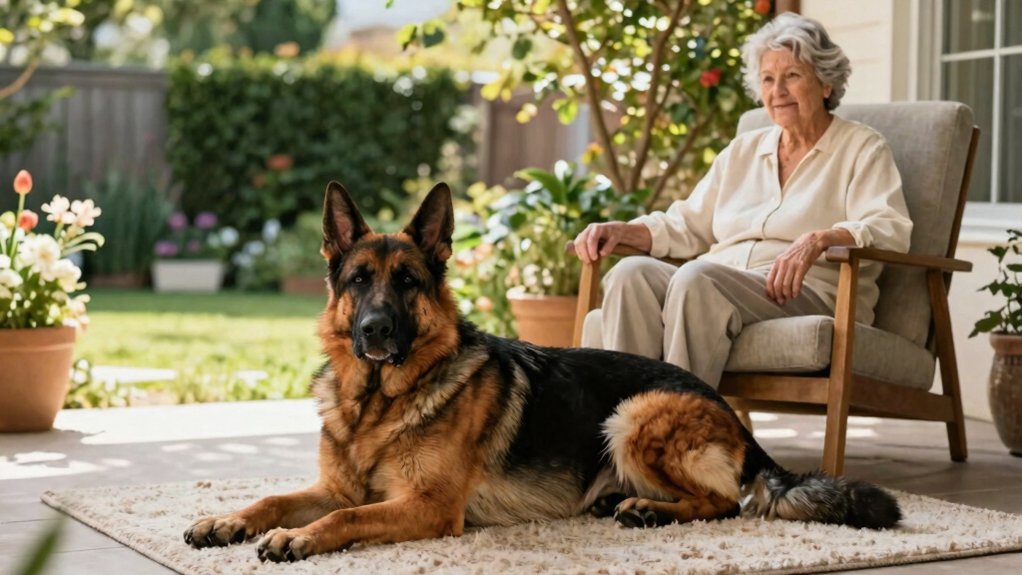
Even if your German Shepherd is loving and well-trained, you still need to plan for some real, practical risks as you age. A dog in pain or under stress may show sudden aggression toward owners, so watch for growling, stiffening, or snapping.
First, plan around falls. Trip hazards indoors, plus leash pulling and sudden turns outdoors, can knock you off balance. Uneven ground, steps, or icy walks raise the odds of hip fractures or head injury. Watch for neurologic issues too.
Degenerative myelopathy (spinal cord disease) can make paws drag and dogs fall at corners. Next, plan for orthopedic strain.
Hip and elbow dysplasia can lead to arthritis, pain, and stiff, careful mobility. Finally, consider care workload: incontinence, lifting limits, ramps, and nonstop cleaning.
Budget, Schedule Care, and Plan for the Long Haul?
Before you fall in love with the idea of a German Shepherd, map out the money and the time you’ll actually need—because the “long haul” part starts well before old age. Budget roughly $15,000–$30,000 over 10–12 years, and plan for upper-range, especially as senior care rises.
Your first year can cost more, from $800–$3,500 purchase plus gear and early vet work.
Then plan your weekly rhythm: 1.5–2+ hours daily, split into morning and evening walks, play, and training. Brush every couple days, sometimes more.
Around age 7, set aside $2,500–$6,000+ per year for checkups, tests, and meds.
Feeding a life-stage appropriate diet, from puppy formulas to senior formulas, helps support growth, joint health, and healthy weight as your German Shepherd moves through each stage of life.
Frequently Asked Questions
Can a German Shepherd Safely Live With Mobility-Limited Seniors?
Yes, you can keep a German Shepherd with mobility-limited seniors if you manage safety: use non-slip floors, ramps, and support harnesses, train loose-leash control, and provide daily structure. Avoid if you can’t safely handle sudden strength or jumping.
How Much Mental Stimulation Does an Older Senior Realistically Provide Daily?
You can realistically provide 20–30 minutes of daily mental stimulation by directing leash cues, monitoring surroundings, and traveling routes; repeat short sessions several times per day, which keeps attention engaged and supports rewarding routines.
Are German Shepherds Suitable for Seniors With Allergies or Asthma?
No—you’ll likely struggle if you have allergies or asthma. German Shepherds shed heavily and spread allergen dander indoors, which can trigger rhinitis and worsen wheezing. If you want one, you’ll need strict cleaning, HEPA filtration, and medical support.
What Age Should Seniors Avoid Adopting a High-Energy German Shepherd?
You should avoid adopting a high-energy German Shepherd once you’re frail or have balance limits, typically around 65+. If you struggle with stairs, long walks, or daily exercise, choose a calmer lower-energy dog instead.
Do German Shepherds Require Professional Training Help for First-Time Owners?
Yes—you’ll benefit from professional training if you’re a first-time owner. German Shepherds need consistent, reward-based structure to channel their drive and instincts, prevent reactivity or guarding, and teach cues like recall and loose-leash walking.