And when you look at your German Shepherd’s tail, treat it like a quick “dashboard.” A normal tail is bushy, hanging in a gentle sabre curve, never curled forward past the base’s vertical line or above your back. Docking can mean disqualification in show rules, so don’t confuse it with injury. If you notice a limp, kink, swelling, pain, or a sudden droop, get a vet check within 24 hours—tip fractures can ease in 1–2 weeks, but recovery may take months. Keep going and you’ll learn more.
Swift Summary
- Explain normal German Shepherd tail conformation: bushy sabre curve at rest, never tightly curled or carried above the base’s vertical line.
- Clarify serious faults: completely rolled, tightly curled, or stumpy tails from birth may be disqualifying under breed rules.
- Cover docking rules and eligibility: unlawfully docked tails can trigger automatic disqualification; laws and exceptions vary by country and registry.
- Describe broken-tail expectations: falls or trauma can cause droop, kink, pain; tip fractures may start improving in 1–2 weeks, with months for recovery.
- Provide red flags and next steps: sudden limp or deformity needs prompt veterinary evaluation, especially with swelling, warmth, bruising, or non-healing skin.
German Shepherd Curly Tail: What’s Normal vs Faulty
When you’re checking a German Shepherd’s tail, you’ll want to look at both shape and position—because “curly” can mean anything from a minor quirk to a clear breed-standard problem. Do german shepherd have curly tails? Slight hook or small deviation can fault only if the whole look is marred. Normal tails hang bushy, in a gentle sabre curve at rest, and rise slightly with excitement, but never curl forward past the base’s vertical line, and never go above back level. Completely rolled, tightly curled, or stumpy tails from birth are serious faults. If you see a broken tail german shepherd or rigid scorpion curl, check with a vet. When excited, the tail may be raised and the curve accentuated, but it still should not be carried above the vertical line from its base. And why don’t german shepherds wag their tail? Sometimes it’s pain. Pain from spinal problems like disc disease can cause a German Shepherd to hold its tail still. Also, avoid “german shepherd without tail” fixes.

German Shepherd Docked Tail: Show Rules and Work Exceptions
When you’re dealing with a German Shepherd docked tail, you need to know how conformation shows treat it, because docking can trigger automatic disqualification under breed rules, and work titles won’t “erase” that. But don’t mix up docking with tail injuries. If you see stiffness or a short, clumpy end from an ankylosis or past damage, some faults are handled differently, since those aren’t the same as amputating the tail. Next, check the exact show law you’re entering, because Germany’s rules ban unlawfully docked tails from exhibiting, while any work or hunting exceptions only fit very specific, medically justified cases. Like a gate that needs permanent installation to stay secure, a docked tail is a fixed condition, so exhibitors should verify eligibility before entering any show. breeding rules

ENHANCED SUPPORT: The OrthoVet Standard Rear Leg Splint provides the necessary leg support your dog needs to recover from injuries and mobility-limiting conditions. It ensures stability and comfort, allowing your dog to stay active while healing.

The Balto Carpal Brace is designed for dogs with carpal/tarsal injuries, such as fractures and sprains, in their front legs. The brace provides stability and support, helping your dog heal properly. The brace is made with high-quality materials, including an aluminum splint, to provide maximum support and durability. The splint ensures that your dog's wrist support to an affected front leg allowing painless mobility.

Offers Support for Your Furry Friend - You can use NeoAlly’s dog leg brace in 3 ways – insert the rigid metal strips for pet mobility; add the semi-rigid spring strips for stability; or use it as pet compression wrap on your pet’s front legs for protection.
Conformation Show Disqualifications
If you show a German Shepherd, you’ll want to treat the tail like a big deal—because many conformation rules don’t just “score” a docked tail, they can outright disqualify it. In AKC conformation, a docked tail is listed as a disqualification, not merely a fault. Judges must disqualify any dog when the breed standard says a docked or missing tail is disqualifying. German Shepherd standards require judges to follow the disqualification rules exactly, meaning there’s no “allowance” even if the dog is otherwise excellent. That record can follow you. After three separate AKC judge disqualifications for breed-standard reasons, your dog becomes ineligible for future AKC conformation entries. For FCI/SV-linked standards too, docking or surgical alteration stays forbidden.
Work Injury Non-Penalization Rules
A docked tail can get a German Shepherd disqualified in the conformation ring, so it helps to know when the rules make room for injuries.
If your dog’s docked or altered tail came from a real work injury, UKC says you don’t penalize it during evaluation.
UKC separates “work-altered” tails from cosmetic docking.
You’ll still want the natural saber-like tail goal in mind.
In England, docking bans usually apply, with narrow work exemptions for specific certified breeds.
German Shepherds usually miss that list, so follow vet treatment first, and keep good records.
Broken German Shepherd Tail: Signs, Causes, and Recovery
If you suspect a broken German Shepherd tail, watch for a limp tail that hangs lower, a visible bend or kink, and pain when you touch the area.
You’ll often see swelling or bruising, flinching, and even whimpering or guarding, and the likely causes are falls, crushing injuries (like a door), rough play impacts, or—if it’s near the tail base—possible nerve involvement.
After a vet confirms it with an exam and X‑rays, tip fractures may start feeling better in 1–2 weeks and often recover over several months, but you must keep activity very limited and check daily for infection signs like foul odor, non-healing skin, or swelling that won’t calm down.

IVDD BACK SUPPORT: Designed to provide reliable back support for dogs suffering from IVDD, herniated discs, slipped discs, arthritis, and other spinal conditions. Helps stabilize the back during daily activities and recovery after injury or surgery.

IVDD BACK SUPPORT: Designed to provide reliable back support for dogs suffering from IVDD, herniated discs, slipped discs, arthritis, and other spinal conditions. Helps stabilize the back during daily activities and recovery after injury or surgery.

IVDD BACK SUPPORT: Designed to provide reliable back support for dogs suffering from IVDD, herniated discs, slipped discs, arthritis, and other spinal conditions. Helps stabilize the back during daily activities and recovery after injury or surgery.
Common Causes Of Tail Breaks
Traumatic tail injuries happen fairly often in German Shepherds, and broken tails usually come from sudden, high-force events that hurt the tail bone and soft tissue fast.
You’ll most often see car impacts, where the tail vertebrae fracture or dislocate.
You’ll also notice door slams, or a chair or equipment strike that crushes and breaks tissue.
Falls matter too, especially from beds or porches, or when you step on the tail—quick pressure can snap bones.
Repeated bumps against hard floors can add up.
Active dogs face more risk, about 0.29% yearly.
Severe pulling or entrapment may even require partial amputation.
Signs Of Fracture Or Injury
When you suspect your German Shepherd’s tail broke, start by looking for a few clear signs, because catching the problem early helps recovery.
Watch the tail position. Is it consistently low, drooping, or off to one side?
Note movement too. You may see reduced wagging, no wagging during fun moments, or a “dead tail” that won’t lift.
Next, check the tail itself for a new bend or kink, swelling, warmth, bruising, or skin abrasions.
Your dog may yelp, guard, snap, or lick the area.
Also notice weaker hind legs, trouble rising, or changes in peeing or pooping.
Recovery Time And Aftercare
After you spot the signs of a fracture or injury, your next job is planning recovery—because healing doesn’t happen overnight, and your dog needs you to help it along. Most tail fractures take weeks to months. Minor soft-tissue sprains may heal in 7–14 days, while simple breaks in younger dogs often resolve in 4–8 weeks with immobilization. Tip fractures usually do better than base fractures, especially if nerves get involved.
You’ll keep strict rest, no running, no rough play. Use tiny 5-minute leash walks, 2–3 times daily at first. Manage the bandage, give meds for pain and infection, and follow up closely to prevent complications.
How to Read German Shepherd Tail Carriage and Height
In your German Shepherd’s body language, the tail tells you a lot fast—so start by watching its carriage and height at rest. A neutral, relaxed tail hangs in a gentle saber-like curve, set low as a natural extension of the slightly sloping croup. You’ll often see it near, or a bit below, the spinal line, forming a smooth back continuation. And the swing feels loose, broad, and comfortable. Middle and parallel-to-ground carriage usually means calm, friendly mood.
But a high, upright tail can mean alertness, arousal, or tension. Understanding the German Shepherd temperament helps families fit the breed successfully into daily life, since tail signals are only one part of the dog’s overall behavior.

Itch & Allergy Relief with Omega-3 for Dogs - with 500mg of Omega (EPA+DHA) per serving, our chewable supplement helps with hot spots, dry itchy skin, ease itching, irritated skin, stops shedding.

Mobility Boost: Support your pet's health with our joint supplement for dogs and horses, packed with natural, advanced ingredients to enhance their active lifestyle and promote smooth, joyful movements every day.

Supports Hip & Joint Health: This dog joint supplement helps maintain flexibility, ease discomfort, and promote mobility by supporting cartilage and joint lubrication for dogs of all breeds and ages
What German Shepherd Wagging Direction Can Reveal
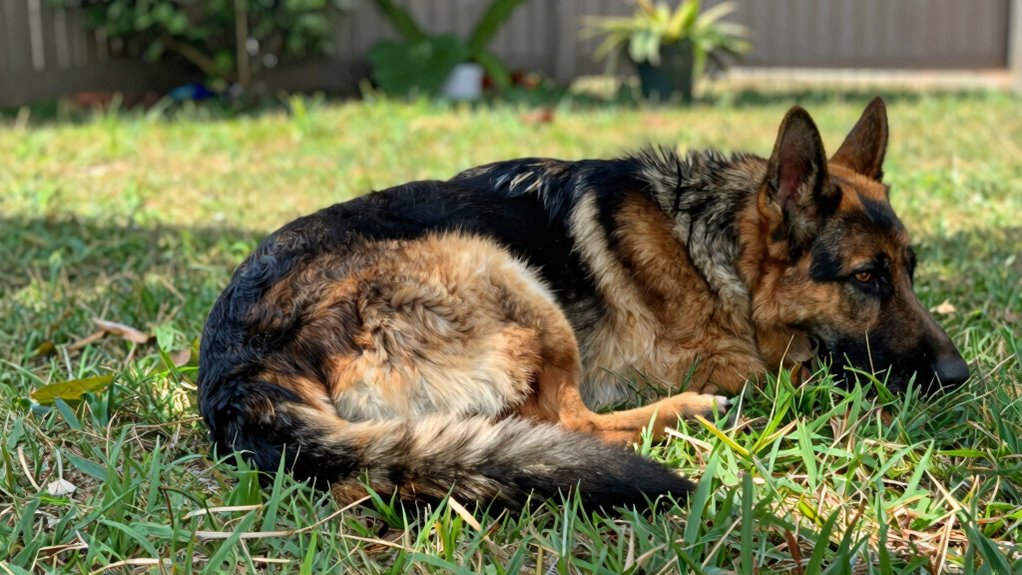
Once you’ve checked tail height and carriage at rest, you can zoom in on wagging direction for extra clues about your German Shepherd’s mindset.
When your dog wags to the right, you often see more approach energy, like greeting familiar people or friendly dogs. You can treat that as hopeful, happy, and confident.
When the wag leans left, your dog may feel stress, worry, or the need to keep distance, especially near unfamiliar, dominant, or aggressive-looking dogs.
Still, use wag direction with facial tension, stance, and movement—direction alone can’t tell the whole story. If your dog also shows excessive barking, howling, or whining in those same moments, that vocal pattern can help you identify whether stress or another underlying cause is driving the behavior.
When to Vet a Tail Injury or Deformity in Your German Shepherd
If you suspect a tail injury or deformity, don’t wait around. Get your German Shepherd checked based on what you see and how fast it changed.
After major trauma, like a vehicle hit or big fall, schedule a prompt full exam to rule out fractures and spinal injury.
If a limp or droop shows up suddenly, or wagging drops right after injury, seek same-day care.
A visible bend, kink, or odd angle means fracture or dislocation, so go within 24 hours.
Watch for swelling, warmth, bruising, pain, or restlessness. Dogs suffering from separation anxiety may chew, thrash, or wag against hard surfaces while alone, so check your German Shepherd’s tail for new injuries when you return home.
Emergency: open wound or bone showing, loss of tail sensation, incontinence, hind-leg weakness, profuse bleeding, or foul odor.

ADAPTABLE C-CURVE PRINCIPLE: SAM Splint leverages the revolutionary C-Curve Principle to mold its foam and aluminum layers into structural arcs, strong enough for pre- or post-cast care, while remaining lighter and more transportable than traditional splints that rely on heavy, rigid materials. Bend it back into its original form to stow away or remold for a separate injury.

Hip Pain Relief: This dog hip brace helps reduce strain during daily activities, relieve joint pain, and improve overall mobility. By providing stable support, it helps your dog move more comfortably and with greater ease.

Targeted Pain Relief for Joint Issues: This CCL brace for dogs rear leg provides targeted support to relieve pain from ACL tears, luxating patella, osteoarthritis, and hip dysplasia. As a versatile dog knee brace for luxating patella and dog hip brace, it restores your dog’s comfort, stability, and confidence in daily movement
Frequently Asked Questions

GETTING THE BEST FIT: Please DO NOT use if your dog is Over 30lbs or does not fit BOTH back and chest measurements, this brace will NOT fit. If your dog is in between sizes, try the Haute L’il Back Bracer or contact our customer care team for support. Fit 1: Back 10.5-12.5, Chest 12.25-14.75 IN. Fit 2: Back 12.5-14.5, Chest 14.5-17.5 IN. Fit 3: Back 15.125-17.125 IN, Chest 18-21 IN.

GETTING THE BEST FIT: Please DO NOT use if your dog is Over 30lbs or does not fit BOTH back and chest measurements, this brace will NOT fit. If your dog is in between sizes, try the Haute L’il Back Bracer or contact our customer care team for support. Fit 1: Back 10.5-12.5, Chest 12.25-14.75 IN. Fit 2: Back 12.5-14.5, Chest 14.5-17.5 IN. Fit 3: Back 15.125-17.125 IN, Chest 18-21 IN.

Real Support for Your Dog - Our unique mechanism uses 5 hidden metal springs aligned along the spine to help your dog support its weight and stay comfortable, mobile, and happy
Can Genetics Cause Curly or Rolled German Shepherd Tails?
Yes—genetics can cause curly or rolled German Shepherd tails. You inherit vertebrae-shaping variants that alter tail carriage from birth, often through dominant curl alleles. Training or behavior won’t usually create this conformation.
Are Curled Tails Always Disqualifying in Conformation Shows?
No—curled tails aren’t always disqualifying, because shows love “correct” carriage, not chaos. You’ll still face penalties if it curls too high or forward, so train your eye and ask judges how they score.
What Should a Normal German Shepherd Tail Height Look Like at Rest?
At rest, you should see a low-set German Shepherd tail hanging below the back in a slight saber curve; its length reaches at least to the hock, with the tip near mid–rear pastern, never level with the topline.
How Can I Tell Fear/Tension From Excitement Using Tail Position?
About 70% of dogs communicate emotion with body language; you can too. Watch tail height and stiffness: low, tucked or rigid often signals fear; loose wagging at spine level-to-high with relaxed wiggles signals excitement.
When Is a Broken Tail Likely to Need Imaging or Surgery?
You’ll likely need imaging for a broken tail when pain, swelling, deformity, limited motion, nerve signs, or unstable/proximal sacrococcygeal fractures appear. Surgery’s more likely if fractures are displaced, open/crushed, neurologically damaged, or won’t heal conservatively.