You’re looking at a high-energy German Aussie Mix that blends intense loyalty with sharp smarts. This athletic hybrid needs 90+ minutes of daily exercise, consistent training, and regular grooming for its double coat. They’re intelligent herders that shadow owners closely, thriving best with active, experienced guardians in spacious homes. Explore the full guide next to discover essential health insights, cost breakdowns, and adoption resources for this demanding companion.
Swift Summary
- This hybrid combines intelligence and herding drive, typically standing 20–25 inches tall and weighing 45–80 pounds.
- Owners must manage year-round shedding with regular brushing using tools like undercoat rakes and slicker brushes.
- These highly loyal dogs require early socialization and consistent leadership to prevent reactivity and nuisance barking.
- Daily physical activity needs range from 90 to 120 minutes including aerobic exercises and mental stimulation tasks.
- Lifespan averages 10 to 15 years but owners should watch for hip dysplasia, epilepsy, and eye disorders.
What Is a German Shepherd Australian Shepherd Mix?
When you mix a purebred German Shepherd with a purebred Australian Shepherd, you get a hybrid designer dog that blends two highly intelligent, high-drive herding breeds. This aussie german shepherd serves as a dedicated companion for those enthusiastic to assist others through structured work or family support.
You’ll find the australian shepherd x german shepherd offers versatility, combining courage with agility to meet diverse service needs. As you consider an australian german shepherd puppy, recognize their strong herding instincts and loyalty make them ideal partners in caregiving roles.
Their double coat demands regular grooming, while their high energy ensures they thrive when actively engaged in meaningful tasks. Because these dogs need room to roam, a long training leash lets them explore safely while owners practice recall. These dogs excel in sports, protection, and ranch assistance, making them perfect for individuals committed to serving communities while nurturing a deep bond with a responsive, trainable animal.
Both parent breeds originated in the late 1800s for demanding farm and ranch work developed for farm work.
Common Names for the German Aussie Mix
As you explore German shepherd Australian shepherd mixes, you’ll quickly notice they go by many names across guides and forums. You’ll find the full descriptive term “German Shepherd Australian Shepherd Mix” used often.
Many guides reverse the order, calling it “Australian Shepherd German Shepherd Mix.” You’ll see compact versions like “German Australian Shepherd” in adoption resources.
When you talk with breeders, you might hear “Aussie German Shepherd” or the informal “German Aussie.” These labels help you find care guides quickly. If you visit breeders or adoption events, consider packing food, leashes, and water in sturdy travel bags so your essentials stay organized on the go.
Sometimes you’ll spot “German Aussie Shepherd” in marketing summaries. If you search breed lists, you’ll discover over thirty mixes, with this one ranking twelfth.
These names reflect the hybrid status of the breed, known as a Herding Hybrid.
You can choose the name that fits your audience best. Using consistent terms helps others find reliable information.
Physical Appearance and Size Traits
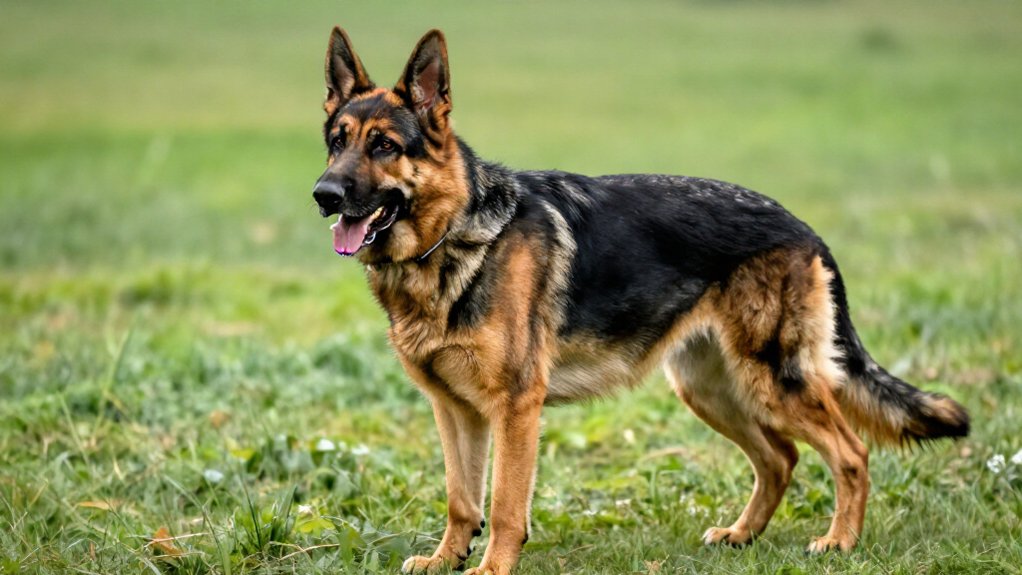
You’ll find your German Aussie mix stands 20–25 inches tall and weighs between 45–80 pounds. Though some lines reach nearly 90 pounds. Because a German Shepherd parent’s healthy weight varies by age and gender, body condition checks offer a more reliable gauge of your mix’s fitness than the numbers alone.
Look for a dense double coat that ranges from straight to slightly wavy, often with feathering on the legs and tail.
Expect to see a wide variety of color patterns, including black, tan, merle, and red, reflecting the diverse heritage of both parent breeds. Your dog may be a large or small dog.
The adult size of your Aussie Shepherd is difficult to predict.
Stature And Weight Range
What size should you expect from a German Shepherd Australian Shepherd mix? You’ll find these dogs typically stand 20 to 25 inches tall and weigh between 45 and 80 pounds. Males often reach the upper ends, while females stay slightly smaller.
Most settle around 55 to 75 pounds with a balanced, athletic build. Since size depends on lineage, consider your home and activity needs carefully.
A sturdy dog fits many service roles but requires adequate space and support. Plan accordingly so you can offer the best care and training environment.
Understanding their stature helps you prepare for daily routines and physical demands. Keep their height in mind when selecting gear or designing living spaces.
This breed’s size ranges from 20–23 inches tall and 46–65 lbs, reflecting its athletic build.
Proper preparation guarantees they thrive while you serve effectively.
Coat Type And Texture
Since most German Shepherd Australian Shepherd mixes inherit a full double coat, you’ll find a soft undercoat paired with a longer, stiffer outer layer. This protective barrier stands straight to slightly wavy, offering natural resistance against moisture and dirt.
You’ll notice the surface feels smooth while the dense undercoat remains woolly and thick for insulation.
Expect moderate year-round shedding that intensifies during spring and fall coat blows. You’ll need to brush multiple times weekly, increasing to daily during heavy shed seasons to prevent matting.
Avoid shaving this coat entirely, as it disrupts natural climate regulation. Many mixes display feathering along legs and tails, adding to their distinctive look.
Their thick, straight hair works well with undercoat rakes, making grooming straightforward. Grooming Tools
You’ll want to limit baths to preserve natural oils and keep your companion comfortable in every season.
Color Variations And Patterns
Beyond coat texture, color variations and patterns define the German Shepherd Australian Shepherd mix’s striking look. You’ll see black, tan, brown, sable, red, silver, and grey tones. Parents contribute these hues, creating earth tones mixed with high-contrast shades.
You might notice merle patterns like blue or red with white and tan markings. Solid coats occur but appear less often than patterned ones.
The classic black saddle over a tan body shows frequently. Tri-color coats with black, tan, and white create distinct three-tone looks.
Sable patterns, where hairs band in multiple tones, happen less often. White or tan markings commonly land on muzzles, chests, paws, and eyes. Dark masks combine with lighter cheeks.
Saddle regions stay darkest on the back. Markings range from crisp edges to blended gradations. This diversity helps you serve others by understanding their unique appearances.
Coat Colors and Grooming Needs
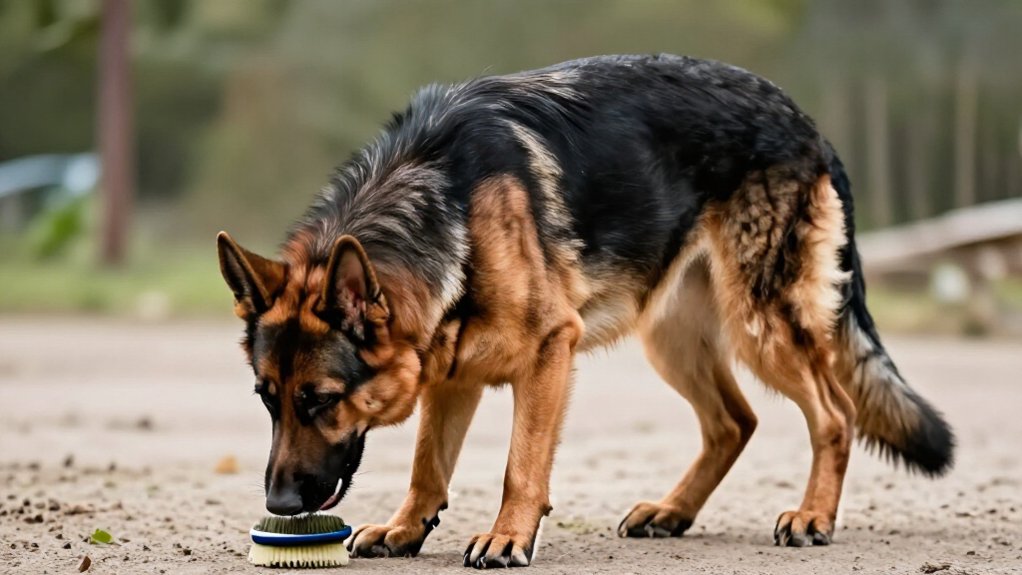
You’ll spot a vibrant mix of colors, from classic black-and-tan to striking merles and tri-colors, on your dog’s coat.
Since you’re dealing with a dense double coat, expect heavy shedding year-round and extra fur loss during seasonal blows.
You’ll need to brush your pup at least three times a week to keep their coat healthy and manage all that loose hair.
During the seasonal coat blow, the dense undercoat releases large amounts of fur, so you may notice much more hair around the house for several weeks.
Coat Colors Variety
As you explore the coat colors variety of a German Shepherd Australian Shepherd mix, you’ll find a wide spectrum ranging from classic black-and-tan saddle patterns to striking merle variants. You’ll see black, tan, brown, white, blue, red, silver, cream, sable, and gray shades. Tri-color combinations frequently express, while solid coats occur less often.
Merle patterns depend on Australian Shepherd genetics, often bringing blue eyes or white facial markings. These diverse coats need regular care to support their health. You should brush them three to four times weekly, focusing on feathered areas.
Dark coats show debris easily, so you’ll clean them often. Light areas stain quickly, so you’ll scrub paws and bellies. Professional grooming keeps their appearance neat and healthy. This routine helps you serve your dog well through proper coat care.
Double Coat Shedding
How do you handle the shedding of a German Shepherd Australian Shepherd mix? You must expect a double coat that sheds moderately year-round with intense seasonal blows in spring and fall. This fur volume comes from a dense, soft undercoat and a weather-resistant outer layer inherited from both parents.
Since they aren’t hypoallergenic, you’ll find loose fur accumulating close to the skin, raising matting risks without consistent care. To serve your dog well, use tools like undercoat rakes and slicker brushes to reach both layers effectively. Brush gently in the natural direction of hair growth to prevent discomfort.
Plan for several weeks of heavy loss during coat-blowing periods, as you might fill multiple garbage bags. Regular baths support skin health but avoid over-bathing to preserve natural oils.
Grooming Brush Frequency
Unless you’re in spring or fall, you should brush your German Shepherd Australian Shepherd mix 2–4 times a week using a slicker brush and undercoat rake. Dedicate 15–20 minutes per session to serve your dog’s coat health effectively.
During shedding seasons, increase grooming to daily sessions for two to three weeks to manage heavy hair loss. Use de-shedding tools carefully, limiting intensive work to short bursts to protect skin.
Pay special attention to feathered areas on ears, legs, and tail where mats form easily. Regular care keeps your companion comfortable and reduces loose fur around your home.
You maintain their coat condition by brushing high-friction zones like the rump thoroughly. Always check for tangles after activity.
Consistent grooming strengthens your bond while ensuring your dog looks and feels their best every day.
Temperament Traits and Personality Highlights
If you’re bringing home a German Shepherd Australian Shepherd mix, you’ll find a partner defined by quick-working intelligence and a deep, almost constant, loyalty to you. You’ll notice they shadow your every move, reading your cues with intense focus.
Their natural herding instinct means they’ll often try to gather your family, especially kids, using gentle nips or circling. To guide this work drive, you must channel it into structured tasks like agility or obedience training.
Without clear leadership, their protective nature might turn into reactivity or nuisance barking. You’ll thrive by offering consistent rules and mental challenges.
They want to serve you well, so provide a job, and they’ll become your most devoted, reliable helper in daily life. German Shepherds are known for a steady family temperament, so this mix can fit well into household life when it receives early socialization and consistent training.
Energy Levels and Exercise Requirements
You’ll need to meet high daily activity needs with at least two hours of physical exercise each day.
Beyond physical movement, you’ll want to give your mix mental stimulation jobs like training drills or puzzle toys.
Keeping up with both of these requirements helps prevent boredom and unwanted behaviors.
Exercise needs also shift with age and activity level, so adjust your mix’s routine as it matures.
Daily Activity Needs
As you consider the Daily Activity Needs of a German Shepherd Australian Shepherd mix, remember that this high-energy working dog typically requires 90 to 120 minutes of structured physical exercise daily. You should split this into two or three sessions to balance fatigue and focus.
Include aerobic blocks like running, biking, or swimming for forty-five to sixty minutes. Add structured play sessions with fetch or agility for twenty to thirty minutes daily.
If possible, offer off-leash hiking or running three to five days weekly. Guarantee you adjust intensity based on age; puppies need low-impact play while seniors require shorter bouts.
These physical efforts prevent boredom and behavioral issues. By meeting these needs consistently, you serve your dog’s health and your community’s safety.
Mental Stimulation Jobs
Since your German Shepherd Australian Shepherd mix is a high-energy working crossbreed with a strong drive, you need to pair its physical exercise with substantial mental work to keep it balanced.
You should channel its intelligence into herding simulations, agility courses, or advanced obedience drills. These structured jobs satisfy its working instinct while preventing destructive behaviors like chewing or excessive barking.
Dedicate time to scent work, puzzle toys, and interactive games that require problem-solving. Rotate these activities frequently to maintain engagement and prevent boredom.
By integrating training into walks and play, you serve your dog’s need for purpose. This approach reduces restlessness and helps your companion settle indoors.
Ultimately, fulfilling its mental requirements fortifies your bond and ensures a happy, well-behaved service partner.
Training Tips and Mental Stimulation
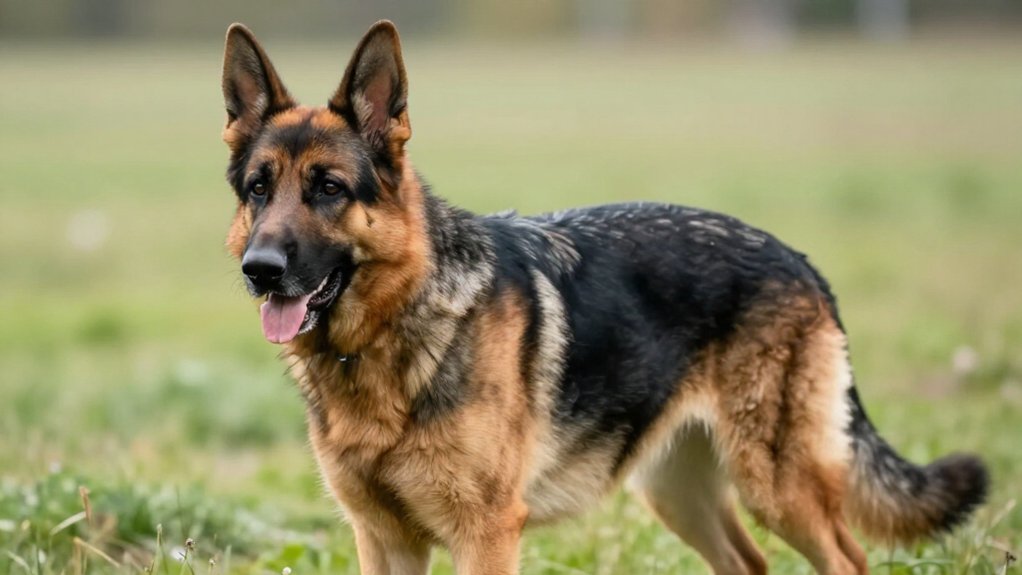
Because this German Shepherd Australian Shepherd mix inherits high energy and intelligence from both parent breeds, you’ll need to commit to substantial daily activity and structured training.
You should provide 60–90 minutes of physical exercise alongside 30–60 minutes of mental work. Use puzzle feeders, scent games, and structured sessions to serve your dog’s needs effectively. Because boredom and pent-up energy often lead to excessive barking or whining, watch for these signs as a cue that your dog needs more activity or mental stimulation.
Train frequently in 5–10 minute bursts, two to three times daily, keeping them engaged. Focus on obedience and trick-training blocks of 15–20 minutes to build reliable skills.
Always use positive reinforcement with rewards, praise, and play to avoid stress. Establish clear boundaries and rules to support impulse control.
Begin formal training around three months with basic obedience. Rotate toys and introduce new challenges like hide-and-seek to keep their mind sharp and prevent destructive behaviors.
Socialization Needs and Safety
While your German Shepherd Australian Shepherd mix inherits protective and herding instincts from both breeds, you must prioritize intensive early socialization and careful management to guarantee safe, stable behavior around children, strangers, and other animals. Many people in the UK still call the German Shepherd an Alsatian, a name adopted during World War I that links the breed to the Alsace region.
Expose your pup to 100 people by 16 weeks to reduce fear and aggression. Build resilience with structured visits to sidewalks, parks, and clinics. Introduce vaccinated friends in puppy classes for better canine communication.
Handle paws and ears early to ease grooming later. Supervise interactions with toddlers constantly to prevent knock-overs or accidental nips. Involve older kids in rule-based play to strengthen your bond.
Neutralize territorial behavior by welcoming delivery workers early. Regular public time helps your dog stay calm and serve confidently, creating a safer home for everyone.
Health Issues and Lifespan
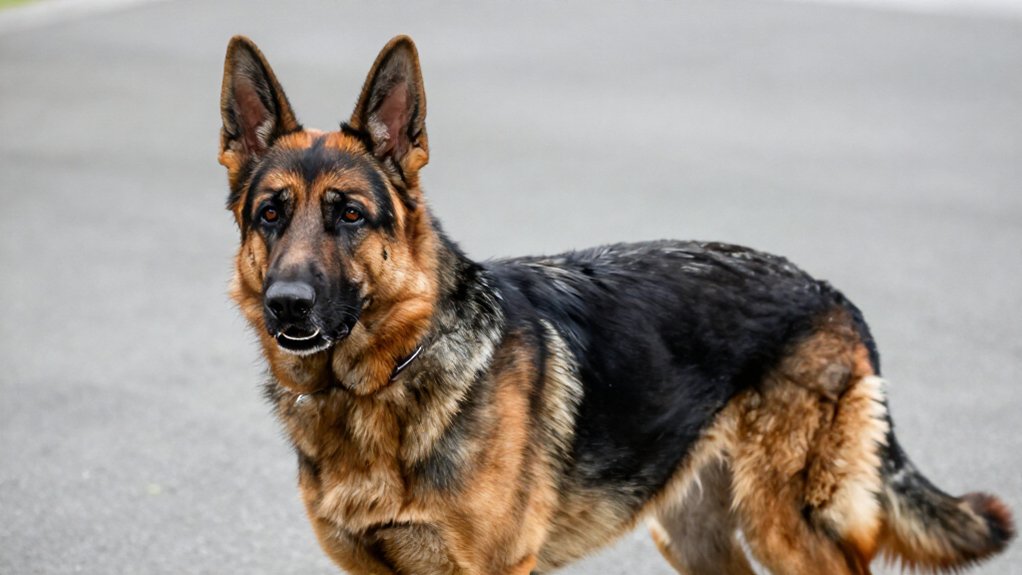
To guarantee your German Shepherd Australian Shepherd mix lives a long, healthy life, you’ll need to stay on top of their unique health risks and prioritize preventive care.
You should monitor for hip and elbow dysplasia, common in both parent breeds, which can lead to arthritis. Watch for neurologic issues like degenerative myelopathy and epilepsy. Regular eye exams help catch inherited vision problems early.
Keep ears clean to prevent infections. Maintain a lean weight to reduce joint stress. Provide balanced nutrition and consistent exercise.
Schedule regular veterinary visits to catch conditions early. These steps support their typical 10 to 15-year lifespan. Because these mixes have heavy shedding and produce dander, they are generally not a suitable choice for people with allergies or asthma.
Cost and Pricing Expectations
You’ll find adoption costs ranging from $100 to $450, depending on whether you choose a local shelter or a breed-specific rescue.
If you’re looking to buy from a breeder, prices typically fall between $300 and $2,000 based on health testing and lineage.
Understanding these pricing tiers helps you budget for the upfront expenses that shape your total first-year investment. Beyond the purchase price, owners should also budget for ongoing expenses such as food, routine veterinary care, and grooming.
Adoption Cost Factors
When you adopt a German Shepherd Australian Shepherd mix, you’ll find that costs typically run $100 to $500 depending on the rescue, the dog’s age, and your region. You’ll often see urban shelters charge more than rural ones to cover higher overhead.
If you want a puppy rather than an adult, expect a larger fee. You should check what the fee includes, like spay, vaccinations, and microchipping. These bundled services save you significant money upfront.
Also, consider that breed-specific rescues often charge more but provide better behavioral assessments. For those serving dogs with special needs, look for sponsored adoptions that reduce immediate costs.
Always budget beyond adoption, as first-year care for large breeds spikes due to supplies and essential medical onboarding.
Breeder Pricing Tiers
While adoption fees range from $100 to $500, buying a German Shepherd Australian Shepherd mix puppy directly from a breeder involves distinct pricing tiers based on health testing and breeder reputation.
Ethical breeders charge $800 to $2,000, providing health certificates and guarantees. You’ll pay $500 to $1,000 for midrange breeders offering basic screening.
Backyard breeders list puppies for $300 to $800, often lacking documentation. Discount sellers might price below $300, risking hidden health costs.
These prices reflect parental testing, socialization efforts, and support packages. When you seek to serve others well, investing in a responsibly bred puppy ensures better long-term health and temperament.
You save money later by avoiding genetic disorders common in cheaper litters. Choose a tier matching your budget but prioritize health documentation.
Your future companion’s well-being depends on these initial choices.
Ideal Owners for the German Aussie Mix
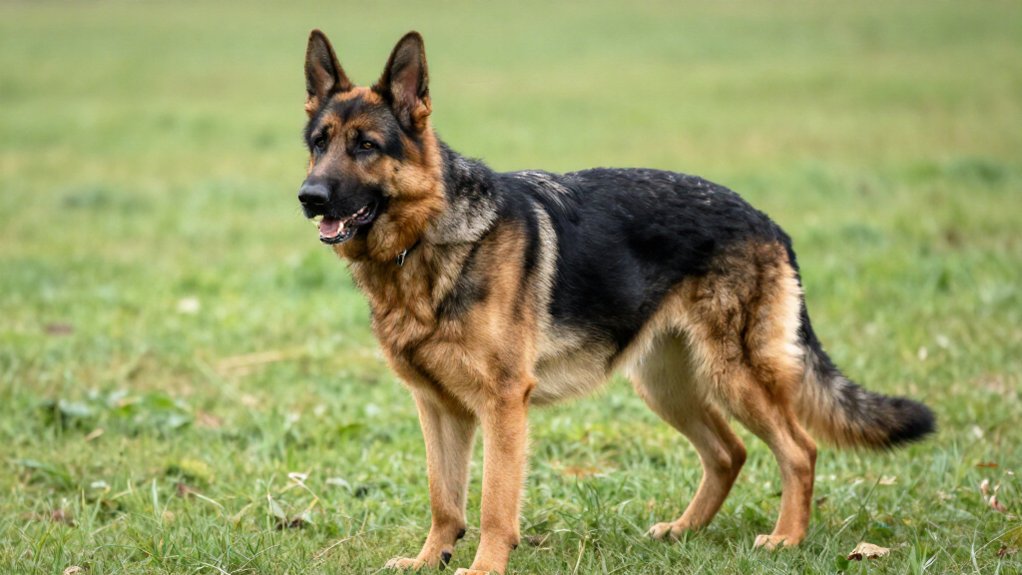
To thrive with a German Aussie mix, you’ll need to be an active, experienced guardian who can commit several hours daily to exercise and training.
You should offer 90 to 120 minutes of vigorous physical activity like hikes and agility sessions most days.
Your residence should include a large, securely fenced yard instead of a small urban apartment.
You must handle high-energy herding breeds and possess strong positive reinforcement training skills.
Flexibility for multiple walks and mental games throughout the day remains essential.
Since leaving them alone for extended periods risks separation anxiety, guarantee your schedule supports consistent interaction.
You’ll also need to manage long-term costs for grooming, healthcare, and ongoing activity-related expenses.
This breed requires a home filled with physical outlets, structured routines, and dedicated service.
Puppy Selection and Reputable Breeders
Unless you prioritize effective puppy selection through reputable breeders, your German Aussie mix may face avoidable health and behavioral challenges. Seek breeders with recognized club memberships, documented health testing, and strong early socialisation practices.
Look for hip and elbow evaluations, eye exams, MDR1 DNA testing, and genetic panels. Insist on written proof of clearances, including test dates and registry numbers.
Visit facilities to observe clean, safe environments where puppies develop confidence and curiosity. Meet at least one parent to assess temperament and behavior.
Review veterinary records for vaccinations and any chronic issues. Expect detailed contracts outlining ownership, return policies, and health guarantees covering hereditary diseases.
Avoid sellers refusing visits or documentation. These steps ensure you bring home a well-prepared dog capable of serving others faithfully and safely for years to come.
Adoption Options and Rescue Resources
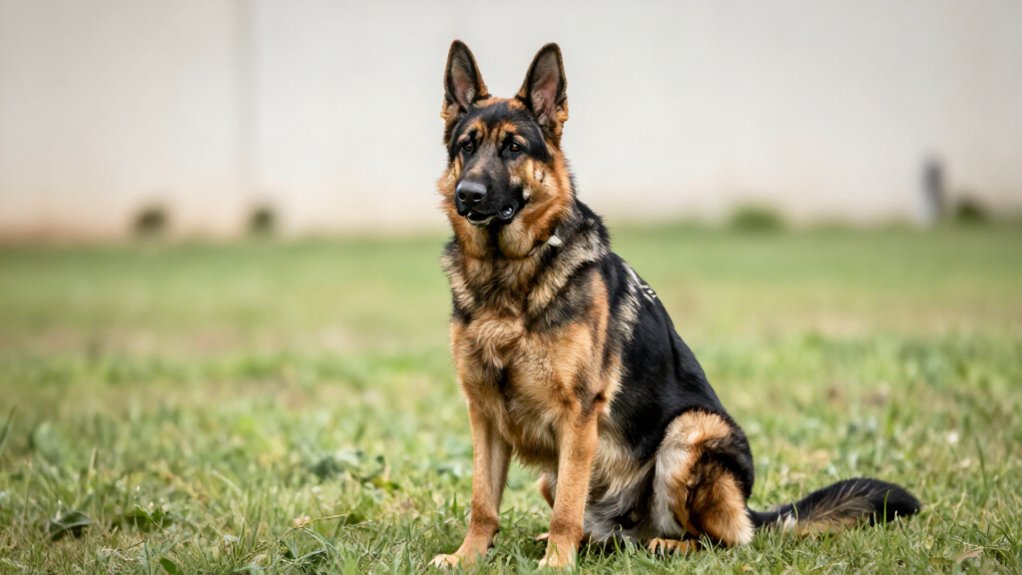
If you prefer adopting over buying, shelters and rescues offer German Aussie mixes ready for homes. You’ll find these herding crosses at municipal shelters or all-breed rescues pulling puppies from multiple facilities.
Search online platforms using filters for mixed breeds, noting listings often include age, coat traits, and behavioral energy levels.
Expect adoption fees around $400 covering vaccinations and care, helping nonprofit rescues sustain their mission.
Review profiles for compatibility with other animals since these dogs thrive when actively engaged.
Consider breed-specific rescues like AussieRescue in Pennsylvania or German Shepherd charities serving regional areas.
Many operate as no-kill facilities focusing on young puppies needing loving homes.
You can search state-specific pages to target locations near you, planning travel distance accordingly.
Pros and Cons of the Mix
As you weigh the pros and cons of the German Shepherd Australian Shepherd mix, you’ll find it offers unmatched intelligence and loyalty but demands serious commitment. You’ll gain a protective family companion that thrives on serving alongside you.
However, you must channel its high energy into structured tasks to prevent destructive behaviors. This mix needs extensive daily exercise and mental challenges to stay balanced.
You should plan for rigorous training sessions early to manage strong herding instincts. Socialization remains critical to ensure your dog feels safe around strangers.
You may face health issues like joint dysplasia requiring ongoing veterinary care. If you’re ready to invest time and resources, this breed becomes a devoted partner.
Otherwise, the intense needs might overwhelm even experienced handlers seeking a working companion.
Frequently Asked Questions
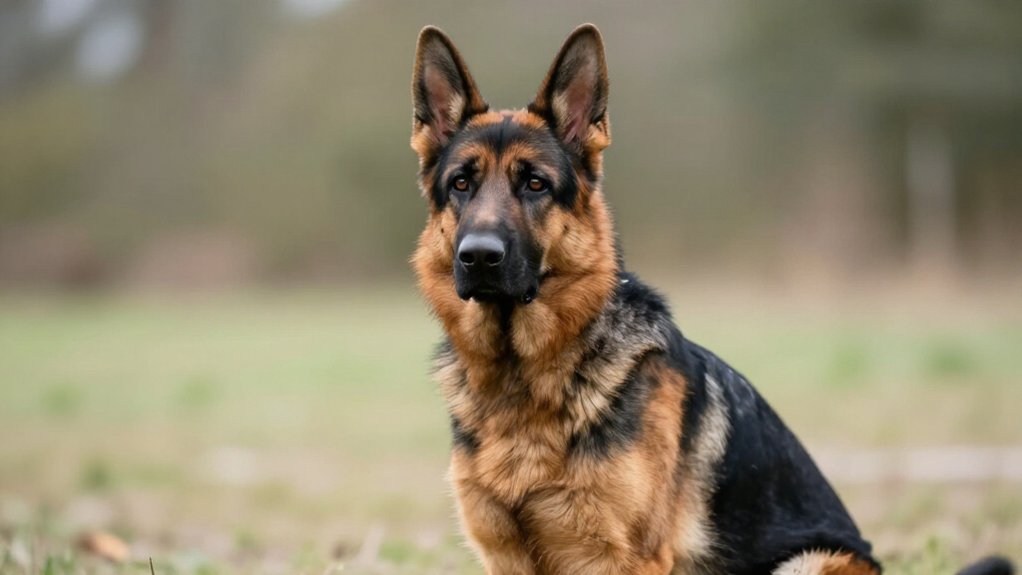
Now that you’ve considered the pros and cons, you’ll likely have specific questions about this breed. How much exercise does your future companion need? You’ll want to commit to 60–90 minutes daily, splitting it between physical runs and mental puzzles.
Since this mix thrives on serving, channel their high intelligence into obedience or agility work.
What about health concerns? Expect to screen for hip dysplasia and MDR1 drug sensitivity early. Regular vet checkups help you manage potential issues like bloat or eye disorders.
How big will they get? Expect a medium-to-large dog weighing 45–85 pounds.
Remember, shedding will be heavy year-round.
With proper training and socialization starting early, you’ll raise a loyal, active partner ready to support your lifestyle and serve your community needs effectively.
Frequently Asked Questions
Can a German Aussie Live Comfortably in an Apartment?
Yes, your German Aussie can live comfortably in an apartment. You must provide 60–120 minutes of daily exercise, mental enrichment, and structured training to meet their high energy and working breed needs successfully.
Do German Aussies Tend to Be Aggressive Toward Strangers?
German Aussies aren’t inherently aggressive. Only 20% show stranger aggression when properly socialized. You can guarantee your dog stays friendly by exposing them early to diverse people and using consistent, positive training to manage their protective instincts.
Are German Aussie Puppies Hypoallergenic for Allergy Sufferers?
No, German Aussie puppies aren’t hypoallergenic for allergy sufferers. You’ll face heavy shedding and dander. Instead, choose low-shedding breeds like Poodle mixes, and always test exposure before committing to guarantee your guests stay comfortable and healthy.
How Much Does a German Aussie Mix Weigh as an Adult?
Picture a sturdy, medium-large companion. Expect your German Aussie mix to weigh between 45 and 80 pounds as an adult. This range helps you prepare properly for feeding, housing, and exercising your loyal dog effectively.
Can Children of Any Age Safely Interact With a German Aussie?
You should avoid leaving young children unsupervised with a German Aussie mix. You must train both dog and kids early. You need constant oversight around toddlers to prevent herding nips and accidental knocks during play.