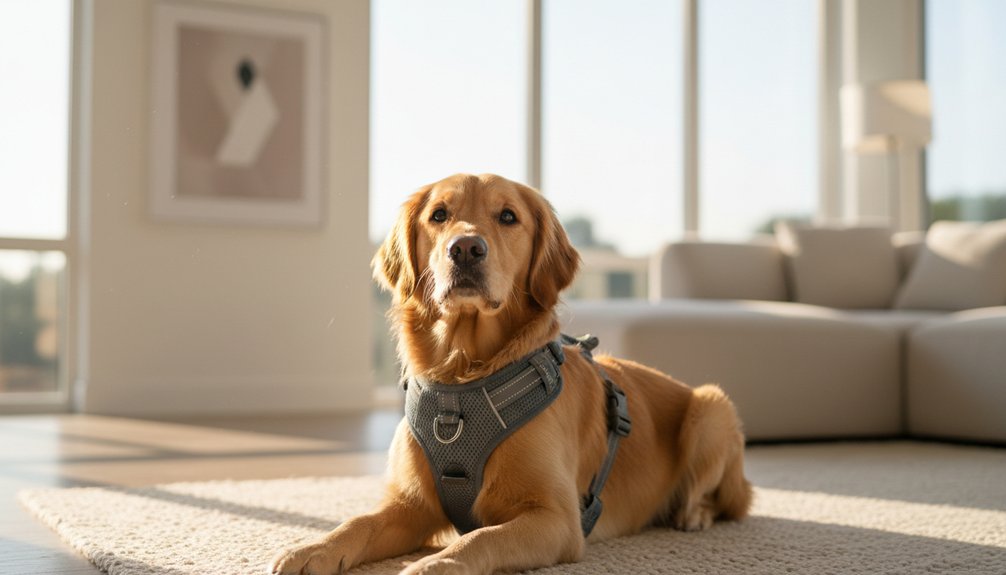
Choose a European German Shepherd if you need high drive and structural soundness for protection work, prioritizing strict mandatory health screenings. Select an American line if you prefer a calmer temperament and moderate energy for family life, accepting voluntary health testing. Your decision hinges on matching conformation, drive, and genetic risk to your specific functional goals. Continuing further reveals the detailed breed standards and health protocols that define each lineage.
Swift Summary
- Working lines offer high drive for police or military roles, while show lines suit calm family companionship.
- European males have angular heads with broad skulls; American lines tend toward softer, rounder head shapes.
- Over-angulated show lines risk hip dysplasia, whereas European lines emphasize mandatory screening for structural soundness.
- White coats are disqualified in European shows but permitted for registration by the AKC in the U.S.
- Match the dog to your lifestyle, as high-drive working breeds require extensive daily physical and mental activity.
What Defines American vs European German Shepherds
While both varieties fall under the official breed name “German Shepherd Dog,” distinct kennel club standards define their differences. When you evaluate german german shepherd vs american german shepherd, note AKC prioritizes conformation while SV/FCI demands working ability. Before committing, review the ongoing expenses that come with owning either variety, since purchase prices alone do not reflect the full cost.
You see European german shepherd vs American differences in topline; Americans show a slope, Europeans a straighter back. If you seek European german shepherd puppies for sale, verify the imported german shepherd’s credentials.
Polish german shepherd breeders often produce high-drive dogs. A polish german shepherd puppy offers distinct traits compared to a polish hound german shepherd mix.
You find german bred german shepherd vs American bred contrasts in health testing. A polish line german shepherd or black polish german shepherd provides specific phenotypes.
When considering polish import german shepherd options, understand the European german shepherd vs german shepherd nuances. This real german shepherd vs American german shepherd comparison ensures you serve your clients accurately. European German Shepherds tend to be healthier with fewer issues due to regulated breeding practices.
Why Choose a Working Line German Shepherd
If you prioritize functional performance, a working line German Shepherd delivers the high prey and defense drive, nerve strength, and structural soundness essential for demanding police, military, or protection roles.
You’ll find they maintain clarity under stress like sirens or gunfire, staying focused on commands. These dogs possess high biddability, meaning they enthusiastically partner with you.
Their straighter backs and compact builds support agility and long-term health. You value their intense loyalty and protective instincts, which serve others by ensuring safety.
They require serious commitment to structured physical and mental work daily. Starting basic commands and socialization early in puppyhood helps build the structured habits these dogs need. Without proper outlets, their energy becomes problematic.
Working line German Shepherds often originate from parents with titles in sports or operational roles like titled parents.
Choose this lineage if your goal is operational reliability. They excel in detection, tracking, and controlled bite work under strict handler direction, offering unmatched endurance for extended missions without rapid fatigue.
Why Choose a Show Line German Shepherd
Their socially confident nature supports safe participation in public settings and modern community life. Because these dogs often travel to shows and events, a properly sized travel crate with good ventilation helps keep them safe and comfortable during transport. These dogs typically exhibit less separation-anxiety reactivity, contributing to quieter household behavior and better tolerance of routine downtime.
How German Shepherd Back Structure Affects Health
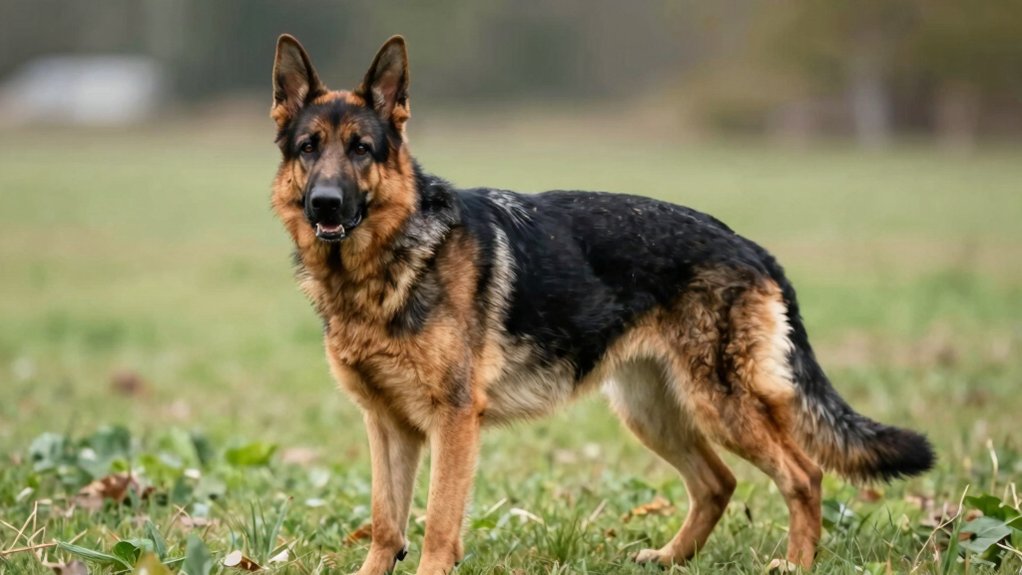
Because the breed standard describes a firm, well-muscled back flowing from the withers to a slightly sloping croup, you should know that deviations like sagging or instability disrupt force transfer along the spine.
You must recognize that excessive slope or curvature increases mechanical stress at the lumbar and sacroiliac joints. This structural compromise predisposes dogs to locomotor disorders, particularly degenerative lumbosacral stenosis.
You’ll find that sloped backs alter weight distribution, placing more load on forelimbs while increasing hip dysplasia susceptibility. While visible slope alone doesn’t cause dysplasia, it combines with extreme angulation to elevate orthopedic risks. Avoid having your dog carry supplies in a saddle pack on outings, since added weight on the back compounds spinal stress, and instead carry essentials in a dog travel bag.
You should prioritize breeders who screen for spinal integrity alongside hips, ensuring your future companion avoids chronic pain, weakness, or mobility issues requiring surgical intervention later in life.
The sloping croup described in the breed standard is a key structural feature influencing these spinal dynamics.
How German Shepherd Gait Differs by Region
Understanding how German Shepherd gait differs by region requires you to examine the specific standards that define movement for the breed.
You’ll see AKC emphasizes an outreaching, elastic trot with minimal wasted motion, while FCI prioritizes hindquarter thrust to the body midpoint with a firm backline.
American show lines often feature extreme rear angulation and sloped toplines creating a dramatic flying trot, whereas European standards demand balanced limb coordination and absolute soundness. Working-line dogs, by contrast, are bred for drive and trainability rather than show-ring appearance, which often shapes how their movement is judged.
Structural faults like steep shoulders or insufficient angulation compromise that ground-covering efficiency you seek.
You must verify that any dog maintains a firm, level back during movement, avoiding sway or whip.
Your evaluation should focus on single-tracking stability at moderate speeds, ensuring front and rear legs function in straight lines.
The breed’s structural conformation directly influences its ability to perform efficient movement across all gaits.
German Shepherd Head Shape Differences Explained
You observe distinct head profiles where European lines display masculine, angular outlines while American lines show softer, rounder shapes.
Note how European standards favor broader skulls with thicker bone, whereas American breeds often exhibit shorter muzzles relative to cranial length.
These structural variations align with specific breed guidelines that prioritize functional planes and proportional balance. Within the German Shepherd’s wide range of bloodlines, the head shape of working lines often differs noticeably from that of show lines.
Distinct Head Profiles
While breed standards define a shared template, distinct head profiles emerge across European and American German Shepherd lines. You’ll observe that European heads generally appear larger and more angular compared with American types.
American show-line dogs often possess smaller, rounder skulls with smoother contours. In contrast, European lines maintain sharper cranial planes and stronger outlines.
Working-line German Shepherds frequently show broader skulls and robust structures, whereas show-line dogs favor longer, narrower muzzles. You might notice American-bred companions from mixed bloodlines sometimes display shorter heads than European counterparts.
East German working lines often exhibit blocky shapes paired with heavier bone. Both types share straight nasal bridges and strong jaws, yet European working dogs carry more mass in the foreface.
Consider how these differences affect your service goals, as structural variations influence endurance and functional capabilities considerably.
European Masculine Features
European masculine features reflect distinct structural emphases in German Shepherd head shapes. You observe larger, angular heads with a moderately broad skull between the ears.
Males possess skulls slightly wider than long, creating a blockier cranium. Pronounced zygomatic arches define cheekbones, while a strong, well-developed jaw supports a square-cut muzzle.
You see a drier head type with tighter lip lines and sharply defined musculature. The forehead appears only slightly arched, producing a firm cranial dome.
A gradual stop maintains the continuous wedge. Cranial region to facial region ratio remains near 50:50.
Total head length reaches about 40% of height at the withers. These elements combine to guarantee unmistakably masculine expression without coarseness or excessive refinement.
American Shorter Muzzles
When you examine American German Shepherds, you often encounter muzzles that deviate from the long, wedge-shaped ideal mandated by major breed standards. You notice AKC, UKC, and FCI guidelines demand equal skull-to-muzzle ratios with parallel planes.
Yet many American show lines exhibit shorter, rounder muzzles. You observe fuller cheeks and pronounced stops creating visual shortening, reducing apparent angularity. These deviations often include weak jaws or blunt profiles, flagged as non-standard in purebred guides.
You must recognize such structural faults compromise gripping mechanics and biting efficiency essential for service work. Shorter muzzles limit jaw robustness and respiratory balance compared to European working lines.
When selecting dogs for demanding roles, prioritize individuals maintaining elongated, chiseled muzzle structures aligning with original functional breed purposes ensuring reliable performance.
German Shepherd Coat Color Standards by Registry
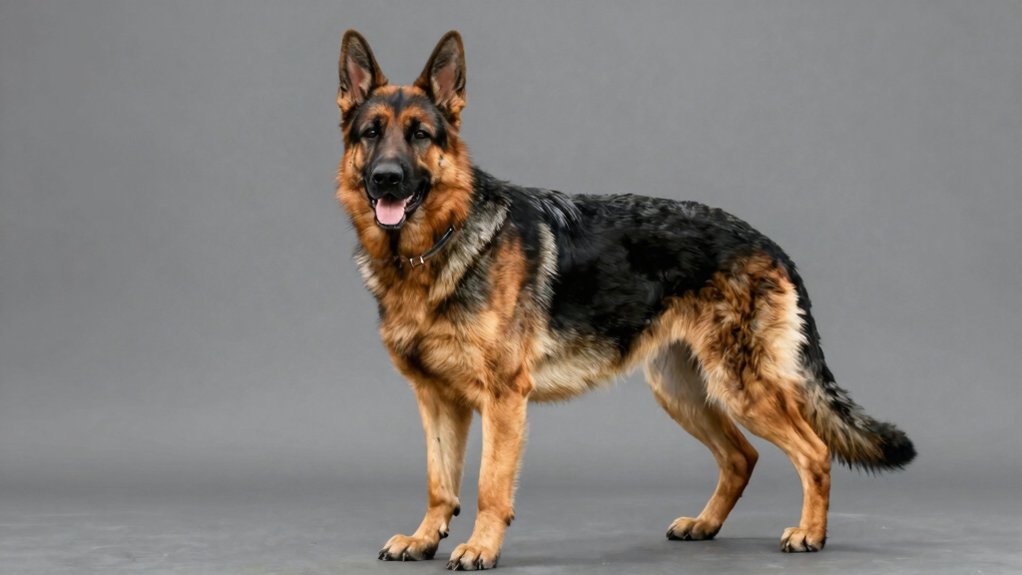
Major German Shepherd registries broadly accept black-and-tan, sable, and solid black coats but diverge sharply on how they treat white, diluted, and unusual patterned colors.
You’ll find that FCI/SV standards prohibit white coats entirely, while AKC permits registration of several non-standard colors but classifies white, blue, liver, and panda patterns as serious faults or disqualifications in conformation shows.
When choosing breeding stock, note that AKC requires strong, rich pigmentation and disqualifies white-coated dogs from the ring.
The FCI/SV standard also demands a black nose and warns against light eyes or red tail tips as signs of insufficient pigment.
Since the 2011 classification, FCI recognizes the White Swiss Shepherd as a separate breed, ensuring pure white coats remain excluded from German Shepherd Dog breeding programs.
Owners raising a German Shepherd puppy often use an indoor dog playpen to keep it safely contained, but a puppy’s coat color should not be judged until it matures, since registries evaluate color on adult dogs.
European vs American German Shepherd Temperament
Although European and American German Shepherd registries share core breed standards emphasizing confidence, loyalty, and controlled protectiveness, distinct breeding priorities have shaped divergent temperament profiles.
European lines prioritize working temperament through mandatory testing, resulting in higher drive and structured energy suited for active service. You’ll find these dogs thrive with regular tasks or sports, displaying greater nerve strength and stability.
American breeding emphasizes conformation, producing calmer, softer dispositions ideal for household companionship. These dogs generally possess lower prey drives and an easier “off switch,” making them more adaptable to typical family rhythms.
While both types remain loyal, you should select European stock if you seek job-oriented utility, or American lines if you prefer moderate intensity and family-focused affection. Consider your capacity for structured activity when evaluating temperament needs. Whichever line you choose, be sure to weigh each dog’s exercise needs against your daily schedule before committing to a puppy.
Matching German Shepherd Drive to Your Lifestyle
You must match the dog’s drive level to your available daily activity time.
High-drive lines require 2–3 hours of combined physical and mental work, while lower-drive dogs suit relaxed households with limited outdoor access. Show-line German Shepherds are typically bred for conformation and calmer temperaments, while working-line German Shepherds are bred for higher drive and task performance.
Choose a line whose exercise needs align with your home environment and scheduling capacity.
Drive Levels Match Lifestyle
Matching a German Shepherd’s drive intensity to your lifestyle guarantees behavioral stability and welfare. High-drive working lines demand daily structured training and firm boundaries. If you serve others professionally, their intense work ethic suits task-focused routines. Without adequate outlets, they risk anxiety and reactive defense. You must commit to sport or protection work daily.
Show-line dogs offer calmer dispositions with moderate prey and defense drives. They suit families prioritizing companionship over performance. You’ll find their lower arousal easier to manage during downtime. Softer temperaments respond best to gentle handling and positive reinforcement.
If you seek an entry point for first-time ownership, choose American lines. Their balanced needs align with busy households lacking training time. Always assess your capacity before selecting drive levels. Matching expectations prevents behavioral issues in your home.
Activity Needs Suit Home
While German Shepherds require roughly 90–120 minutes of daily physical exercise plus substantial mental work, your home environment must align with these demands to maintain welfare and manageable behavior.
You must guarantee your schedule supports at least two daily walks and structured training sessions.
Apartments demand rigorous off-lead running and consistent mental enrichment to prevent restlessness, whereas yards supplement but never replace active engagement.
If you work eight hours alone, a high-drive dog will likely develop destructive behaviors regardless of living space.
Tailor activity levels to their age, reducing exercise for seniors and managing puppy limits.
Choose environments where you can consistently provide varied, vigorous physical outlets and problem-solving tasks.
Your commitment to matching these specific needs ensures a stable, well-adjusted companion within your home structure.
German Shepherd Working Roles by Line Type
German Shepherd working roles diverge considerably by line type, so you’ll find that functional emphasis shapes selection across breeding programs.
West German and East German lines dominate police, military, and search-and-rescue fields due to their high drives, stamina, and environmental stability.
You’ll also see Czech lines excel in explosive sport performance requiring rapid stress recovery.
European show lines sometimes serve in police or protection roles if breeders prioritize working ability alongside conformation.
Conversely, American show and companion lines primarily occupy family roles with moderate energy, rarely entering high-stress professional environments.
These dogs often participate in therapy or basic obedience work emphasizing sociability over extreme drive.
Finally, specialized scent and detection units heavily rely on European working-line Shepherds for narcotics and explosives work. Working-line Shepherds kept in kennels or vehicles for long periods may develop noticeable odor, so routine grooming and frequent bedding washes help keep both the dog and home fresh.
Calmer German Shepherds for Home Life
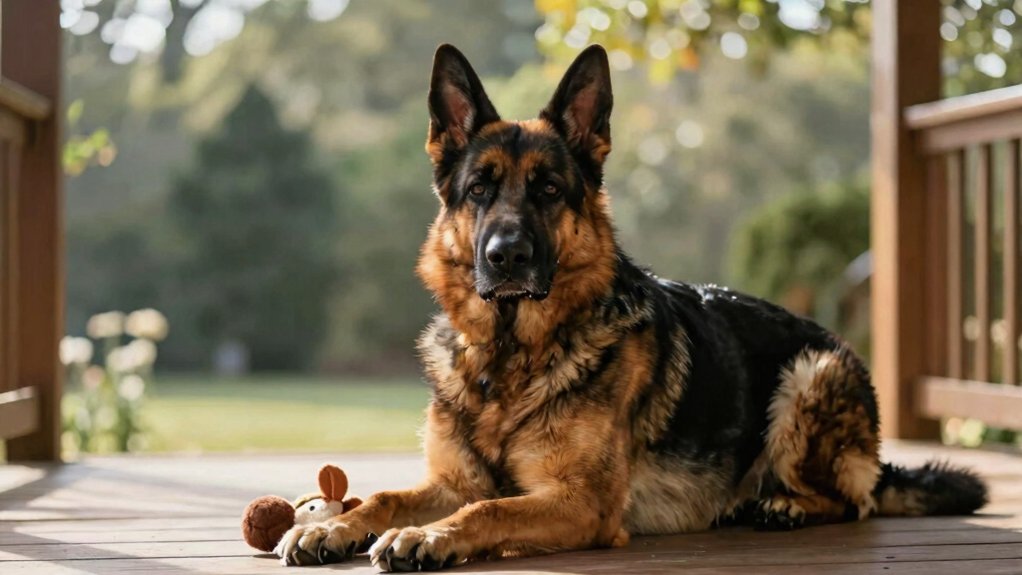
Given that working lines prioritize high-drive tasks, families seeking a calmer companion should consider show lines, which emphasize balanced temperaments over extreme utility.
You’ll find European show lines maintain moderate drive, enabling calm settlement indoors while retaining protective instincts. American show lines may vary more due to looser breeding standards, so you must verify temperament history carefully.
Both types form deep bonds with primary handlers and thrive when you provide structured daily exercise. Without adequate activity, you risk separation anxiety, excessive barking, or destructive behaviors regardless of lineage.
European standards explicitly prioritize stable nerves alongside conformation, whereas some American breeders prioritize aesthetics.
Choose lines from breeders who test for sound temperament and socialization. These dogs serve families well when you commit to consistent training and exercise routines matching their energy needs.
German Shepherd Hip Dysplasia Rates by Region
You’ll notice that regional screening standards directly shape the 18–30% prevalence rates you see in North America versus the historic 40%+ peaks in some European breeds.
When you account for stricter mandatory policies in places like Sweden and Switzerland, you’ll find these measures have driven down dysplasia scores considerably over time.
Ultimately, these differences in screening intensity mean your German Shepherd’s hip health outcomes depend heavily on where the dog was bred and evaluated.
Regional Screening Standards
When you examine how regional screening protocols shape reported German Shepherd hip dysplasia rates, the differences become stark across North America and Europe.
In the U.S. and Canada, OFA screening remains voluntary, so breeders often wait until dogs reach 24 months to submit radiographs. This flexibility creates selection bias, as owners may withhold poor results.
Conversely, European programs enforce mandatory protocols. Germany’s SV program requires screening at 12 months and bars animals with moderate or severe dysplasia from breeding. The FCI and BVA frameworks similarly mandate evaluations around one year of age for licensing.
You see that voluntary systems reflect self-selected data, while obligatory European standards enforce stricter health thresholds across the entire breeding population.
Prevalence Differences
Why do reported hip dysplasia rates for German Shepherds vary so dramatically by region?
You’ll find North American data hovers near 20% due to voluntary OFA submissions. In contrast, Scandinavian registries report 25–37% prevalence with mandatory screening.
Central European cohorts show 18–32% rates, reflecting stricter breeding standards. Closed working lines historically hit 55% before selection programs reduced figures.
These regional differences stem from mandatory versus voluntary screening protocols and distinct breeding goals.
You see that European populations often undergo exhaustive radiographic grading, while North American stats rely on selective reporting.
Consequently, you encounter higher published dysplasia percentages abroad, revealing true disease burdens across different national datasets and breeding practices.
Understanding these variations helps you make informed decisions about regional breeding standards.
Health Outcomes
How do regional health outcomes truly compare for German Shepherds? You see distinct differences in hip dysplasia reporting systems. North America relies on voluntary OFA submissions using a seven-grade scale, while Europe mandates FCI five-grade evaluations through national kennel clubs.
European breeding regulations strictly prohibit dogs with moderate or severe dysplasia from reproducing, effectively removing high-risk genotypes from pedigrees. Conversely, American programs often lack uniform national breeding prohibitions, creating variable selection pressure on joint health.
Sweden’s detailed submission requirements yield more complete population data compared to owner-selected OFA reports.
You observe that European protocols typically enforce minimum breeding ages ensuring evaluations complete before mating decisions. These systematic variations in screening, mandatory reporting, and breeding standards directly influence long-term hip health outcomes across regional German Shepherd populations.
How German Shepherd Structure Impacts Long Term Health
Because modern German Shepherd show lines prioritize extreme rear angulation and a sloping topline, you face considerably increased risks for long-term joint and spinal issues.
Exaggerated croup angles overload hip joints, accelerating dysplasia and lumbosacral stenosis. This structural imbalance disrupts gait efficiency, causing uneven load distribution across knees and hocks.
You’ll observe altered biomechanics even in clinically sound dogs, where excessive rear angulation compromises stability and reduces working stamina.
Breed standards caution against these extremes, noting they diminish functional longevity. Over-angulated hocks lead to loose joints and inefficient movement patterns.
For those dedicated to serving others through working dogs, prioritize moderate conformation. Opt for straighter toplines and balanced fronts to guarantee sustainable spinal health and joint durability over the animal’s lifespan.
US vs European German Shepherd Health Testing
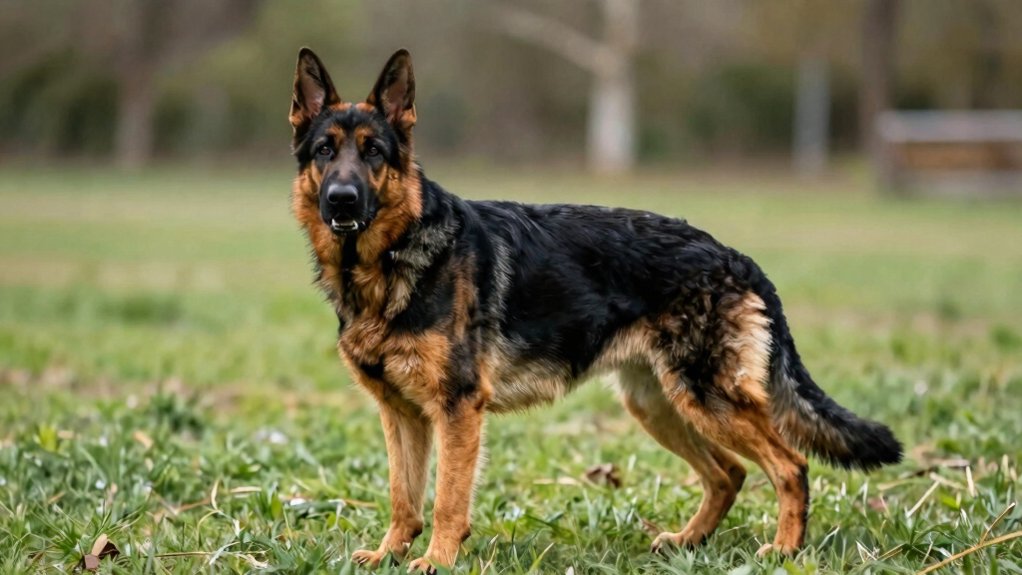
You’ll notice that European registries mandate orthopedic and genetic screenings before breeding certification, while U.S. programs rely on voluntary club standards.
You observe a clear priority on mandatory SV hip and elbow grades alongside genetic testing in Europe, whereas the U.S. emphasizes optional CHIC or GSDCA Health Award compliance.
This structural difference directly impacts the baseline health data available for prospective breeders in each region.
Comparative Health Standards
While the United States and European German shepherd health standards each aim to curb inherited disorders, they enforce distinct regulatory pathways. You’ll see the US relies on voluntary CHIC requirements mandating OFA hip and elbow evaluations plus a temperament test.
Europe’s SV system enforces mandatory breeding surveys with stricter grading thresholds for orthopedic health. In the US, you can opt for voluntary heart and thyroid exams to earn the Health Award of Merit.
Conversely, European breeders must pass working evaluations alongside HD/ED testing to obtain breeding approval. You’ll find European registry data often reflects stricter submission rules, resulting in different prevalence statistics.
Choose a breeder who prioritizes these rigorous, region-specific protocols to guarantee your future dog’s long-term health and structural soundness effectively.
Screening Priority by Region
Building on the distinct regulatory frameworks, you’ll find that screening priorities diverge sharply between the two regions. In the U.S., OFA radiographs for hip and elbow dysplasia form the primary recommended orthopedic tests, while DNA panels remain advisory.
European SV programs enforce mandatory radiographic grading, excluding dogs with moderate or severe dysplasia from breeding certification. You’ll see that Degenerative Myelopathy testing is voluntary under CHIC guidelines but mandatory for European breeding approval.
While U.S. breeders often pursue optional cardiac, thyroid, and eye exams through GSDCA awards, European protocols systematically integrate these ancillary screenings into baseline requirements.
You observe that European systems structurally prioritize enforced genetic and orthopedic compliance, whereas U.S. standards rely heavily on breeder initiative and voluntary participation within national recommendations.
What to Expect From a German Shepherd Import
Importing a German Shepherd involves higher costs, stricter health and temperament controls, and more complex logistics than purchasing a domestically bred American-line dog. You’ll budget markedly more, as private imports often reach $12,000 including travel, customs, and insurance.
Expect rigorous documentation: verified SV pedigrees, hip/elbow certifications, and performance titles like IPO. European lines typically offer straighter backs and stable temperaments due to stringent breeder requirements.
Be cautious of dogs from regions with lax health screening. Your imported companion arrives with superior working drive and physical soundness, demanding structured socialization and training.
You must secure appropriate housing, veterinary care, and professional guidance to support their high drive. The investment ensures a capable service dog, though preparation costs exceed domestic options considerably.
How to Find a German Shepherd Breeder
You verify breeder credentials by checking club memberships and accreditation schemes.
You insist on documented health screenings for hips, elbows, and genetic conditions.
You select litters whose temperament aligns with your specific goals and lifestyle.
Verify Breeder Credentials
To verify breeder credentials, you must confirm their registries and breed club involvement. Check that their kennel name is registered with major clubs like the AKC or FCI.
Verify their membership in national German Shepherd clubs through public directories. Make certain they participate in documented conformation shows, working events, or trial results.
Look for additional credentials like AKC Breeder of Merit or Bred with H.E.A.R.T. Confirm they adhere to legal breeding limits and licensing requirements.
Review written sales contracts for clear terms on returns and responsibilities. Seek referrals from veterinarians, trainers, or experienced Shepherd owners.
Read online reviews for consistent reports on temperament and support. Ensure they allow facility visits to observe the dam and litters.
Verify pedigree documentation and registration papers for the parents.
Check Health Screenings
Beyond verifying breeder credentials, you must examine their commitment to evidence-based health screening. Require radiographic evaluations for hip and elbow dysplasia performed after 24 months by certified registries like OFA or SV.
Confirm breeding stock meets specific scoring thresholds, such as HD grade C or better. Demand DNA testing for degenerative myelelopathy via the SOD1 gene, ensuring results are publicly documented.
Review annual cardiac, thyroid, and eye examinations conducted by accredited professionals to detect heritable conditions. Prioritize breeders publishing thorough health data through GSDCA CHIC programs.
This rigorous approach minimizes hereditary risks and promotes long-term canine welfare. Serve future owners by selecting only those breeders adhering to these clinical standards.
Your due diligence ensures healthy litters and maintains breed integrity against prevalent genetic disorders.
Match Litter Temperament
While selecting a German Shepherd puppy demands attention to physical health, matching litter temperament is equally critical for long-term compatibility. Request explanations of planned matings targeting nerve strength, drive, and social stability.
Confirm breeding stock prioritizes sound temperament over appearance. Observe parents in public settings to assess stability and reactivity. Inquire about their daily activity needs and ability to relax indoors.
Verify completion of work or temperament titles demonstrating reliable environmental confidence. Ask for temperament outcomes from previous litters regarding confidence and biddability.
Guarantee the breeder uses standardized puppy aptitude tests at seven weeks. Review how scores interpret traits like dominance level and stress resilience.
Observe puppies interacting to identify even-tempered, fearless individuals. Prioritize those showing self-confidence without excessive aggression or bullying.
Match specific line traits to your intended role as a working or family companion.
German Shepherd Price and Availability by Region
Although pricing for German Shepherd puppies varies considerably by region, you’ll typically encounter a broader spread in the United States, where advertised prices range from under $500 to over $5,500 based on pedigree and location. You’ll find budget listings under $500 in states like Pennsylvania, while premium working lines command $997 to $4,500+.
In contrast, German pricing remains narrow, typically €1,200 to €1,700 per puppy. You should note that entry-level U.S. prices fall below German ranges, whereas mid-range U.S. puppies align with German medians around $1,000.
Regional differences considerably impact ownership budgets, as German costs include higher initial investment but offer consistent availability and predictable ongoing expenses for dedicated breeders and owners.
German Shepherd Red Flags When Buying
When you consider purchasing a German Shepherd, you must treat several breeder, health, and genetic markers as absolute red flags that signal elevated risk for congenital disease, temperament defects, and financial loss.
Avoid breeders refusing facility visits or demanding parking lot meetings, as these indicate poor conditions.
Steer clear of sellers offering constant puppy availability without health clearances, especially for hips, elbows, and degenerative myelopathy.
Insist on verifiable OFA or PennHIP documentation for both parents.
Reject puppies appearing lethargic, underweight, or lacking vaccination records.
Never accept puppies under eight weeks old.
Demand written contracts with health guarantees.
Scrutinize pedigrees for excessive inbreeding or missing health clearances across generations.
These precautions protect your future service dog’s physical soundness, behavioral stability, and long-term viability for working roles.
Frequently Asked Questions
Does Coat Length Affect Health or Working Ability?
Coat length doesn’t affect health or working ability directly, but longer coats trap moisture, demanding more grooming to prevent skin issues. You’ll need consistent brushing to maintain their condition and avoid mat-related problems that could interfere with their performance.
How Do European and American Lines Differ in Lifespan?
European lines average 10–12 years; American show lines average 7–10. You’ll find working lines outlive show lines. Choose health-tested parents to maximize your dog’s lifespan.
Are European German Shepherds Suitable for Families With Children?
Imagine a whirlwind of steel muscles. Yes, European lines suit families only if you supply structured leadership, two hours of daily exertion, and rigid supervision to channel their high-drive instincts safely around vulnerable children.
What Are the Legal Import Requirements for European Dogs?
You must secure CDC entry clearance, including microchip, rabies vaccination, and health certificates. USDA APHIS permits apply for commercial imports. Expect state-level rules too. Always verify official docs before shipping any European dog to the U.S.
Do American Lines Require Less Veterinary Care Than European Lines?
You should know American lines often require more veterinary care due to structural issues, so choose European working lines for better joint health and reduced long-term medical needs for your future service dog.