First, get a rabbit-savvy exotics vet’s OK before syringe-feeding Critical Care. Mix it with warm water into a smooth, thin “tomato-sauce” slurry, usually 1 part powder to 2 parts water, with no clumps, and let it sit for 1 minute.
Wrap your rabbit upright on a non-slip towel, keeping its head level. Use small syringes, 0.2–0.5 mL at a time, pushing slowly between swallows. Stop instantly if you see coughing, gagging, or nose bubbling. Then call your vet and keep going to learn more.
Swift Summary
- Get a rabbit-savvy exotic vet’s clearance before syringe-feeding Critical Care, and ask when to stop based on your rabbit’s condition.
- Mix Critical Care to a smooth slurry (commonly 1 part powder to 2 parts warm water) with no lumps or bubbles, like thick baby food.
- Use a catheter-tipped or wide-bore syringe, keep the rabbit upright, and deliver small amounts slowly with gentle pauses.
- Stop immediately if coughing, gagging, nose bubbling, slurry near the nose, or any breathing changes occur, as this may indicate aspiration.
- Watch for GI stasis signs (reduced/no droppings, hard abdomen); pause feeding and contact a veterinarian urgently if stool doesn’t pass 12–24 hours.
Confirm a Vet OK Before You Syringe Feed
Before administering Critical Care or similar recovery formulas through syringe feeding, always obtain approval from a rabbit-savvy exotic veterinarian. Ensuring your veterinarian’s clearance is crucial because improper feeding plans can exacerbate intestinal blockage or other underlying health issues. Your vet must rule out any serious medical conditions before you proceed, to prevent further health complications. gut motility can vary significantly between rabbits, so your vet should confirm the safest feeding plan for your individual patient. Consulting with a specialized exotic vet allows for a tailored feeding schedule based on your rabbit’s specific gut motility, overall condition, and the cause of low appetite. If your rabbit refuses to swallow the Critical Care solution, immediately stop feeding and contact your veterinarian. This situation requires professional medical guidance, as improper feeding can be harmful.
When reaching out to your vet, be prepared to describe your rabbit’s eating behavior, bowel movements, and any signs of pain or discomfort to help facilitate effective treatment.
Don’t Syringe Feed: Watch for Stop Signs Fast
Stop feeding immediately if you hear coughing, gagging, or see formula coming out of your rabbit’s nose, as this indicates aspiration—when food enters the airway instead of the stomach. Recognizing these stop signs early is crucial for preventing respiratory distress and ensuring your pet’s safety during syringe feeding. Additionally, GI stasis is a medical emergency, and you should not delay contacting an exotic veterinarian if your rabbit is not eating normally. If you notice your rabbit’s breathing becoming noisy, labored, or exhibiting a “rattly” sound, or if there are blue-tinged gums, treat it as a veterinary emergency. Contact an exotic veterinarian immediately for expert assessment and intervention to prevent further complications.
Additionally, if your rabbit shows signs of inability to chew or swallow despite gentle attempts, don’t continue force-feeding. Instead, pause the process, gently warm your rabbit to promote comfort, and seek urgent veterinary care within hours. Prompt action is vital to avoid serious health issues and improve outcomes for your beloved pet.
Stop Feeding Immediately Signs
If your rabbit exhibits any of these critical “stop signs” during syringe feeding, it’s crucial to cease the procedure immediately. Don’t continue if your rabbit collapses, can’t sit up, is unable to hold up its head, or appears unresponsive. These symptoms indicate severe distress or potential emergency that requires swift intervention.
Additionally, pay close attention to physical signs such as cold ears or a cold body, which signal hypothermia. In such cases, obtain warming assistance promptly and contact a rabbit-savvy exotic veterinarian for expert guidance. Early intervention can significantly improve your rabbit’s chances of recovery.
Monitor for sudden onset of bloat symptoms, which include absence of droppings, a hard, drum-tight abdomen, tooth grinding, hunching, or pressing the abdomen to the floor. GI stasis can progress quickly and becomes dangerous when food movement slows and the gut begins producing harmful gas and toxins.
If your rabbit stops passing stool for 12 to 24 hours, or if droppings become increasingly abnormal and diarrhea develops, you must halt syringe feeding immediately. Persistent or worsening signs of discomfort and abnormal gastrointestinal activity can lead to life-threatening complications, so escalating care without delay is essential.
In any situation where you’re uncertain about your rabbit’s condition, it’s safest to pause syringe feeding and escalate quickly by contacting a qualified, rabbit-experienced veterinarian. Prompt action and expert guidance are vital to ensuring your rabbit’s health and safety during critical care.
Watch For Aspiration Coughing Fast
Even though you’re trying to help, you must stay vigilant for aspiration, which occurs when the Critical Care slurry unintentionally enters the airway instead of the esophagus. aspiration can lead to choking, respiratory distress, and other serious health complications in your rabbit. If your rabbit coughs, gags, or produces choking sounds during feeding, stop immediately to prevent further issues.
Be attentive to signs such as repeated swallowing attempts, sudden head jerks, bubbles, sneezing, or slurry found near the nose. After feeding, monitor your rabbit’s breathing closely. Look for open-mouth breathing, noisy wheezing, gurgling sounds, crackling noises, an increased breathing effort, or signs of blue gums, indicating distress.
Additionally, check the fur around the nares and upper lip for any slurry or mucus. Prompt recognition of these symptoms is crucial for ensuring quick intervention.
If your rabbit exhibits any breathing difficulty—including labored or rapid breathing—within hours of feeding, contact a rabbit-savvy, exotics veterinarian immediately. Early intervention with specialized veterinary support helps prevent severe respiratory complications and ensures your rabbit’s safe, healthy recovery.
Gather Syringes, Towel, and Mixing Supplies

Before you start syringe-feeding your rabbit, ensure you gather all necessary supplies to streamline the process and minimize stress for both you and your pet.
Set up a stable, well-lit workspace with a non-slip towel or mat underneath to prevent slipping and ensure safety during feeding.
Use high-quality, catheter-tipped or wide-bore feeding syringes, typically 3, 6, or 12 ml sizes suitable for adult rabbits weighing over 2 pounds (0.9 kg), to prevent clogging when administering thick, fibrous Critical Care formulas. Because Critical Care recovery formulas are designed to support rabbits that are unwell or not eating normally, they should be used alongside, not instead of, veterinary care.
Having multiple pre-filled syringes ready—if recommended by your veterinarian—can save time and reduce handling during critical feeding moments.
Always discard leftover formula after each session to maintain sterility and prevent contamination.
Additionally, keep a soft, absorbent towel handy for gentle wrapping of your rabbit, providing comfort and security, and place a separate towel under your hands for slip-free control and quick cleanup.
Keep disinfectant wipes or damp cloths nearby for immediate wiping and sanitation, ensuring a smooth, efficient, and stress-free syringe-feeding experience that promotes optimal recovery.
Mix Critical Care Into a Smooth Slurry
Critical Care is one of several formulas designed for rabbits that are sick, refusing to eat, or experiencing GI stasis.
Measure your warm water and Critical Care powder using a simple ratio—start with 1 part powder to 2 parts water, then adjust if it comes out too thick.
But blend it until it’s smooth and lump-free, resembling a thin tomato sauce consistency.
Stir well to ensure the fibers hydrate evenly, and if you see bubbles, tap the mixture or let it sit briefly to eliminate them.
Re-blend thoroughly before filling your syringe to guarantee consistent administration.
Finally, test the flow by pushing a small amount through the syringe tip; if resistance is encountered, add a splash of water, mix again, and prepare for feeding.
This precise preparation process ensures optimal formula delivery, enhancing patient comfort and recovery.
Use this reliable technique with Critical Care to provide accurate, smooth nutrition that meets your clinical needs and supports optimal health outcomes.
Measure Correct Water Ratio
To syringe-feed Critical Care effectively in a critical care environment, achieving the correct water-to-powder ratio is essential for optimal administration and patient safety. The formulation’s viscosity directly impacts whether the mixture flows smoothly through the syringe or risks clogging the tip, making precision in preparation crucial.
Begin with the manufacturer’s recommended mixing ratio: one part Critical Care powder to two parts warm water. This standard mixture ensures a balanced, syringeable consistency suitable for most critical care scenarios. For a slightly thicker mixture that still allows smooth syringe delivery, adjust to one part powder to 1.5 parts water. If your kit instructions or emergency guidelines specify an alternative, such as the double-water emergency ratio—three tablespoons of powder to six tablespoons of warm water—adhere to those parameters carefully.
Using lukewarm water enhances solubility, ensuring thorough mixing.
Stir the mixture well after combining the ingredients and allow it to rest briefly, about a minute, to achieve uniform consistency.
Adjust the mixture gradually by adding a few drops of water at a time, testing its flow before administering. This slow, controlled adjustment minimizes the risk of clogging and ensures a smooth, safe syringe-feeding experience tailored for critical care contexts.
Implementing these precise water ratios can streamline feedings, improve patient comfort, and enhance overall nutritional delivery efficiency.
Blend To Smooth Thin Slurry
For most rabbits, Critical Care blended into a smooth, thin slurry is essential for effective feeding. Aim for a consistency similar to baby food rather than a thick paste, ensuring it flows easily through the syringe without clogging. Use clean, dedicated utensils and warm or lukewarm water to prepare the mixture, maintaining a sanitary environment to prevent contamination.
Begin by combining the powder and water in a separate mixing bowl, stirring thoroughly until no dry clumps remain. Carefully check the slurry’s texture; it should resemble tomato sauce or thick pudding—flowing smoothly and free of heaviness. If the mixture is too thick, gradually add small amounts of water, mixing well after each addition until the desired consistency is achieved.
The final product should feed effortlessly from the syringe, requiring minimal plunger force for administration.
For premixed solutions stored in the refrigerator, always warm the slurry to room temperature before use to ensure proper viscosity.
This preparation method ensures a reliable, safe, and comfortable feeding experience, maximizing nutrient delivery for your rabbit’s health recovery and well-being. Using this tailored blending approach guarantees optimal feeding efficiency and reduces the risk of blockages, making it a crucial component of your rabbit care protocol.
Remove Bubbles Before Feeding
Once your Critical Care slurry is smooth, uniform, and free of lumps, take an extra minute to eliminate air bubbles before administering the feed. Air bubbles can compromise accurate dosage delivery and increase the risk of swallowed air, which may cause painful gas and gastrointestinal discomfort in your rabbit.
To ensure precise and safe feeding, mix the slurry with warm water—avoiding hot or cold temperatures—and let it sit briefly to stabilize.
When drawing the mixture into the syringe, do so slowly, keeping the tip submerged in the liquid at all times. Next, gently tap the syringe barrel to dislodge any remaining air bubbles, then point the syringe tip upward and carefully push out the trapped air before offering the feed to your rabbit.
It’s crucial to monitor closely during administration; watch for signs such as nose bubbling, coughing, or breathing irregularities. If any of these indicators appear, immediately stop the feeding process and contact your veterinarian specializing in exotic small mammals or rabbit care urgently.
Proper preparation and thorough air removal are essential steps to ensure safe, effective nutrition and minimize the risk of adverse reactions during critical care feeding.
Thin or Thicken the Mix for Syringe Flow
When syringe-feeding Critical Care dietary supplement, achieving the correct mixture viscosity is crucial for optimal delivery and safety. Start by carefully reviewing the mixing instructions provided on the product label to ensure proper starting parameters. Then, fine-tune the consistency based on your specific application needs.
For a home-thick, smoothie-like texture that allows smooth syringe flow, use approximately 1 part powder to 1.5 parts warm water. If a thinner, “thin gravy” consistency is required, mix 1 part powder with 2 parts warm water.
The goal is to achieve a mixture that’s draw-in, draw-out like thick pudding without being stiff. This ensures effortless syringe administration without clogging, reducing the risk of blockages during feeding.
It’s essential to gradually add warm water while stirring continuously until the mixture flows smoothly with minimal pressure. A properly prepared mixture not only facilitates easier delivery but also minimizes the potential for aspiration risks due to overly thin mixtures that pour too quickly.
Always remember, if a rabbit remains anorexic or doesn’t produce stool for more than 12 hours, immediate veterinary consultation is necessary. Proper preparation and timely intervention are vital for maintaining your pet’s health and ensuring effective syringe feeding.
Choose the Right Syringe Size for Rabbits
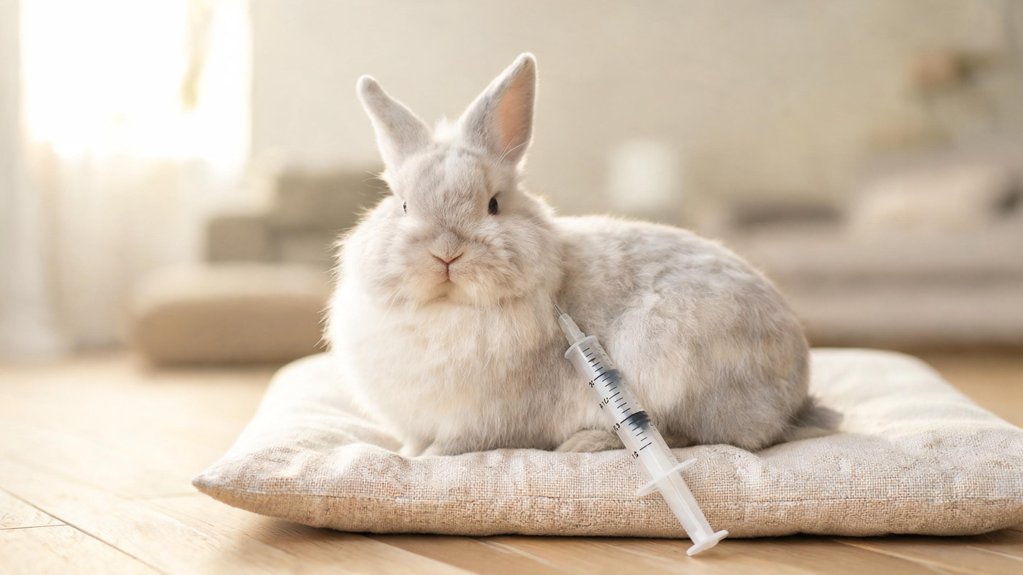
Choose a syringe size that precisely matches your rabbit’s size and the tubing specifications, as an incorrect catheter-tip width—whether too wide or too narrow—can complicate feeding and increase the risk of squirting or injury. Selecting the right syringe not only ensures smoother administration but also enhances your control during feeding sessions.
For most small and young rabbits, typically weighing less than 2 pounds, a 1 mL or 3 mL syringe is ideal. These smaller, more manageable sizes allow for accurate, gentle feeding and minimize discomfort.
In contrast, larger rabbits over about 2 pounds benefit from using 6 mL or 12 mL regular-tip or catheter-tip syringes, which enable you to deliver larger liquid volumes efficiently and with greater ease.
To maximize feeding effectiveness and safety, consider performing multiple smaller fills instead of one large push, even when a larger syringe might seem more convenient. This approach offers better control, reduces the risk of aspiration, and promotes a stress-free experience for your rabbit.
Investing in the right syringe size that aligns with your rabbit’s specific needs ensures precise, comfortable, and safe nutritional support.
Match Catheter Tip Width
Selecting a wider, cone-shaped catheter tip is essential when your critical care formula is thick, paste-like, or contains long fiber strands, which are common in recovery mixes. Using standard, narrow tips can lead to frequent clogging, resulting in prolonged feeding times and increased stress for your pet.
Match the catheter tip width precisely to the viscosity and fiber content of your formula to ensure consistent flow and maintain steady plunger pressure during administration.
An appropriately sized, wider tip promotes smoother delivery, reduces feeding time, and minimizes discomfort.
Because a rabbit’s gut motility can slow during illness, a smooth, steady flow of formula helps reduce strain on the digestive tract during recovery.
However, it must also fit the rabbit’s diastema—the safe gap behind the incisors—to prevent leakage and ensure secure attachment.
For tube feedings, verify that the catheter tip fits snugly into the designated area to prevent leaks and ensure optimal nutritional delivery.
If your rabbit hasn’t eaten or defecated for 12 hours, seek prompt veterinary assistance to prevent dehydration and further health complications.
Choosing the right catheter tip width is a critical step in ensuring efficient, stress-free syringe feeding and supporting your rabbit’s recovery.
Pick Correct Syringe Volume
Choose your syringe size based on the total food volume required for each feeding session, rather than solely relying on what syringe you have available. Begin by considering your rabbit’s weight; a typical feeding plan involves approximately 50 mL of critical nutrients per kilogram of body weight per day, divided into 4 to 6 manageable feedings.
Select a syringe barrel that can accommodate the volume needed for a single feeding to ensure precise and safe administration.
For example, a rabbit weighing between 4 to 6 pounds (about 1.8 to 2.7 kilograms) generally requires around 15 to 25 mL of feed per sitting. If your rabbit is smaller, underweight, or recovering from illness or surgery, your exotic animal veterinarian—specifically one experienced with rabbit nutrition—may recommend smaller per-feed volumes.
In these cases, opt for a smaller syringe to facilitate accurate, gentle delivery of the food.
Additionally, match the syringe’s measurement markings to your preferred mouthful size, which typically ranges from 0.2 to 0.5 mL initially, gradually increasing up to 1 mL per press as tolerated. This ensures controlled, safe feeding that minimizes discomfort and promotes optimal recovery.
Investing in the correct syringe size and calibration enhances feeding efficacy and supports your rabbit’s health restoration efforts.
Use Multiple Smaller Fills
Rather than trying to push a large volume all at once, adopt a safer, gentler feeding approach by using multiple smaller fills—think “tiny bites” instead of “one big pour.” This method significantly reduces the risk of paste slipping into the wrong area and allows you to closely monitor your rabbit’s swallowing response before proceeding with additional feeds.
Start with approximately 0.1 to 0.2 ml, and then offer 0.2 to 0.5 ml during each pause by depressing the syringe plunger slowly, giving the rabbit time to swallow openly and instinctively. Ensure that each bolus remains at one milliliter or less, ideally, to prevent overfeeding or choking.
Consistently divide your rabbit’s Critical Care into small, manageable meals throughout the day, prioritizing safety and comfort. This targeted feeding strategy not only maximizes nutrient intake but also minimizes discomfort and feeding-related complications.
If your rabbit refuses to eat or have a bowel movement within 12 hours of initiating this feeding protocol, it’s crucial to immediately contact a veterinarian specializing in exotic or rabbit-health care. Engaging a rabbit-savvy exotic veterinarian ensures prompt assessment and intervention, optimizing recovery chances for your pet.
Set Up a Calm Spot and Plan for Help
Before beginning syringe feeding, set up a calm, quiet environment and designate a trusted helper to assist you. Select a secluded room away from distracting elements such as televisions, children, and other household pets. Close all doors, silence phones, and turn off ambient household noise for the crucial 5–10 minute feeding window to ensure your rabbit remains relaxed and cooperative.
Next, arrange a stable, non-slip surface at a comfortable height—whether on your lap, a table, or the floor—using a towel or specialized grip mat for added stability. Position your rabbit upright with all feet securely supported, keeping its head level to facilitate safe and effective feeding.
Finally, proactively assign a designated assistant, clearly plan their roles in the feeding process, and have a backup helper on standby to ensure continuous support. Remember, if your rabbit exhibits no interest in eating or pooping for a period extending beyond 12 hours, treat this as a medical emergency requiring immediate veterinary intervention. Employing these safety and setup strategies will optimize the success of syringe feeding and promote your rabbit’s health and recovery.
Wrap Your Rabbit in a Safe Towel Burrito
Once your calm, secure feeding station is prepared, the next crucial step is to set up a safe “towel burrito” wrap, which ensures your small mammal, specifically your rabbit, remains secure during feeding sessions.
Use a high-quality, soft cotton or fleece towel that measures approximately three times your rabbit’s body width and twice its length.
Choosing a flat, non-slippery surface such as a countertop or sturdy table enhances safety and stability during the wrapping process.
Spread the towel smoothly on the chosen surface, then carefully place your rabbit in the center.
Begin by folding over the rump area, then cover your rabbit’s back with the towel.
Tuck the towel’s edge under the abdomen to create a snug, secure wrap.
Cross the opposite side for additional stability, leaving your rabbit’s head and ears exposed for comfort and awareness.
It’s vital to monitor steady breathing throughout this process to ensure your rabbit’s comfort and safety.
Remember, this technique is essential for safe, stress-free feeding, especially with fragile or recovering rabbits.
Don’t leave your rabbit unattended once wrapped.
If signs of distress or discomfort emerge, unwrap immediately to prevent panic.
Perform feeding sessions swiftly—preferably within a few minutes—to minimize stress and promote positive association with the process.
Incorporating this solution into your routine ensures a secure environment that prioritizes your rabbit’s safety and well-being during feeding, delivering peace of mind and optimal care.
Hold Your Rabbit in Neutral Spine Position
Hold your rabbit in a neutral spine position, ensuring its delicate vertebral column remains straight, level, and properly aligned—like a perfectly “stacked” structure. It’s crucial to prevent any bending or twisting while restraining the rabbit, as maintaining spinal integrity is essential for safe handling and minimizing injury risk.
Support the chest securely with one hand, providing firm yet gentle contact, and use your other hand to support the hips and hindquarters, keeping the back end fully supported at all times.
To ensure robust support and avoid injury, keep the rabbit’s hind legs stable underneath, holding them vertically or tucked closely against your body. This control prevents sudden kicking, twisting, or struggling that could lead to fractures or spinal injuries.
Support Neutral Spine Alignment
To ensure the safety and comfort of your rabbit during syringe feeding, it’s essential to maintain a neutral spine alignment. This means keeping the rabbit’s back in a natural, straight position with the head aligned in line with the body, promoting proper posture and ease of swallowing.
Position your rabbit on a stable surface, such as a sturdy table or your lap, facing away from you. Place the rabbit either on all four feet or in a calm, upright stance, ensuring the body remains horizontal while the head is slightly elevated.
Supporting your rabbit’s back against your torso or an appropriate object helps prevent unnecessary bending or twisting that could cause discomfort or injury. This positioning minimizes stress and helps facilitate safe, effective feeding.
Avoid placing your rabbit in supine, twisted, overbent, or overextended positions, as these can compromise safety and comfort during syringe feeding.
To enhance stability, especially for anxious or delicate rabbits, you can use a specialized “bunny burrito” towel wrap to secure the shoulders and hips gently. This method fosters a secure, comfortable environment, enabling precise, safe administration of fluids or nutrition while reducing movement.
Prioritizing proper positioning not only safeguards your rabbit’s well-being but also optimizes the effectiveness of your care routine, ensuring your pet receives the necessary support with confidence.
Keep All Feet Stable
When syringe feeding your pet rabbit, it’s essential to maintain all four feet firmly grounded and still. Wiggling or slipping during the process can cause your rabbit to lunge or kick unexpectedly, increasing the risk of injury or stress.
To ensure optimal safety, place your rabbit on a non-slip surface such as a absorbent towel or rubber mat, and perform the procedure at floor level if your rabbit exhibits jumpy behavior.
Secure your rabbit’s thorax with one hand behind the front legs, effectively keeping their front paws close to the body. Support the rump with your other hand to prevent sudden, powerful hind-leg kicks that could cause injury or make feeding difficult.
For added restraint, gently burrito-wrap your rabbit in a loose towel, tucking all legs in securely, which promotes a calm and controlled environment. Maintaining gentle, steady control throughout the feeding process will help ensure safety and comfort.
If your rabbit refuses to eat or defecate within 12 hours of this intervention, it’s crucial to contact an exotic pet veterinarian immediately. Prompt professional advice and treatment can prevent severe complications such as gastrointestinal stasis or dehydration, safeguarding your rabbit’s health and well-being.
Put the Syringe Tip at the Diastema
Once you’ve got the rabbit calm and your syringe ready, aim the syringe tip at the diastema, the natural toothless space located between the front incisors and the first cheek teeth. This specific gap resides in the upper jaw, allowing for safe placement of the syringe tip without risking contact with or scraping the cutting surfaces of the teeth.
From the side, gently slide the tip into the diastema, positioning it just behind the front incisors until it smoothly slips into the space. It’s essential to keep the syringe tip parallel to the rabbit’s tongue, with only a slight backward tilt, avoiding an upward angle toward the palate. This precise placement ensures effective administration while minimizing discomfort or injury.
Gently slide the syringe into the upper diastema behind the incisors, keeping it parallel to the tongue and avoiding the palate.
Administer a small volume of medication—typically 0.5 to 1 milliliter—slowly into the diastema, pausing briefly to allow your rabbit to swallow comfortably. Carefully remove the syringe after each dose.
If your rabbit refuses to eat or show signs of distress during or after the procedure, contact your exotic pet veterinarian promptly to prevent further complications. Using this targeted method optimizes medication delivery, promoting quicker recovery and ensuring the health and well-being of your rabbit.
Aim the Stream Into the Middle of the Mouth
Now aim the syringe stream into the middle of your rabbit’s mouth, not straight back toward the throat.
Approach from the side, behind the incisors, then carefully angle the syringe tip toward the center over the tongue. Keep the syringe shallow, steady, and forward-facing so the flow pools in the oral cavity, allowing chewing and swallowing reflexes to effectively control the intake.
When you tilt slightly toward the opposite cheek, the food bolus smoothly sweeps across the tongue instead of blasting toward the soft palate. This precise technique minimizes the risk of gagging, aspiration, and choking during feeding.
Always monitor your rabbit closely; if choking or coughing occurs, immediately stop and contact your rabbit-savvy exotic veterinarian for expert guidance.
Using this controlled, solution-focused approach ensures safe administration and optimal hydration and nutrition for your pet rabbit.
Give 1 mL at a Time, Pause Between Squirts
Give about 1 mL of critical care per mouthful, then pause—keep the volume small so your rabbit can handle it safely. Pull the syringe tip out after each squirt and wait a few moments to allow your rabbit to chew and swallow comfortably.
Aim for the next “squirt” only after you don’t see food pooling in the rabbit’s mouth, ensuring safe and effective feeding.
If your rabbit fights, vocalizes, or appears to struggle with swallowing, slow down the feeding process even further. Promptly consult a rabbit-savvy exotic veterinarian for personalized assistance to prevent aspiration or discomfort.
Using a carefully controlled, incremental feeding approach can significantly improve recovery outcomes and ensure your pet’s well-being during critical care.
Give Small 1 mL Portions
After you’ve loaded your syringe and correctly positioned your rabbit, administer small 1 mL portions intentionally. Using such small, controlled doses significantly reduces the risks of choking and aspiration, ensuring a safer feeding process for your pet.
Maintain each mouthful at about 1 mL, avoiding larger, hurried squirts, as excessive volume can inadvertently enter the airway, causing potential distress or respiratory issues.
Begin with even smaller volumes—around 0.2 to 0.5 mL—to confirm active chewing and swallowing reflexes before progressing. This cautious approach helps verify your rabbit’s readiness for larger boluses and minimizes risks during feeding.
Continue by administering repeated 1 mL boluses slowly, using a precise, appropriately sized syringe—preferably a 1–3 mL syringe for fine control or a 3–5 mL syringe for adult rabbits—to ensure comfort and accuracy.
Closely monitor your rabbit throughout the feeding process, watching for smooth swallowing and signs of discomfort such as coughing or distress. If any issues arise, halt the procedure immediately and reassess your approach.
Pause Between Syringe Spritzes
Pause between each syringe “spritz,” because this break provides your rabbit with essential time to chew and swallow before the next mouthful, ensuring safe and effective feeding. Begin by administering 0.2 to 0.5 mL of formula or medication at a time, then pause to observe.
Carefully lift the syringe tip out of your rabbit’s mouth, paying close attention to their jaw as they chew and swallow, and wait until these actions slow down and cease before proceeding. Deliver the next small push after waiting several seconds, adjusting the pause duration if your rabbit’s chewing appears slow to prevent choking or aspiration.
Never maintain constant pressure or rush the stream while administering the syringe, as this can increase the risk of aspiration and choking.
Also, avoid dispensing paste during vocalizations or if your rabbit shows signs such as nostril paste, head-throwing, or labored breathing. If any of these signs occur, immediately stop the feeding process and contact a rabbit-savvy exotic veterinarian for prompt assistance.
Implementing this controlled, gentle feeding technique maximizes safety and ensures your rabbit receives the correct dosage of vital fluids or medications efficiently and comfortably.
Use the Daily Critical Care Amount Your Vet Set
Now that you’re ready to syringe feed, it’s essential to use the exact Daily Critical Care amount prescribed by your exotic veterinarian for your bunny’s specific needs. This critical daily total is meticulously calculated based on your rabbit’s weight, often expressed in milliliters of reconstituted Critical Care per kilogram per day. Following your vet’s precise instructions ensures your rabbit receives the correct nutrition without risking overfeeding or underfeeding.
Adhering strictly to the veterinarian’s recommended dosage is crucial for your rabbit’s recovery. Too little Critical Care can lead to inadequate gut stimulation and nutritional deficiency, while too much can overload a weakened digestive system and cause excess fluid buildup.
If your rabbit begins eating hay and leafy greens, consult your vet about possible adjustments to the Critical Care volume to prevent overfeeding.
Furthermore, if your rabbit refuses to eat or defecate for more than 12 hours, treat this as a medical emergency. Contact your veterinarian immediately for guidance to prevent serious complications.
Feed Every 4–6 Hours and Track Intake
Feed your rabbit Critical Care every 4, 5, or 6 hours, and diligently track each feeding session. Set customizable reminders to ensure your rabbit receives consistent, timely support, as maintaining a precise feeding schedule is essential for promoting optimal gut motility—the vital wave-like movement responsible for proper digestion.
If your veterinarian recommends more urgent intervention, they may advise administering feedings at 3 or 4-hour intervals initially to stabilize your rabbit’s digestive function.
For each critical Care feeding, offer smaller, manageable amounts to prevent choking and allow your rabbit to swallow safely.
It’s crucial to document every feeding, including the exact time, the volume given, the product or dilution used, and whether any leaked out during the process.
Additionally, check your rabbit’s poop every 4 to 6 hours; the absence of fecal output or refusal to eat for 12 hours constitutes an emergency.
If such symptoms occur, contact a rabbit-savvy exotic veterinarian immediately to ensure prompt diagnostic and supportive care.
Prioritize consistent monitoring, detailed record-keeping, and rapid veterinary response to support your rabbit’s recovery effectively.
Offer Water Only If Your Vet Says So
Because Critical Care already mixes powder with warm water at a ratio of approximately 1 part powder to 2 parts water, there’s typically no need to add extra syringe-delivered water to your rabbit’s diet. Ensure that fresh, clean drinking water is always available; only supplement with additional fluids under the direct instruction of your veterinarian, especially if your rabbit has specific health conditions.
Your veterinarian may recommend a tailored fluid plan if your rabbit has kidney issues, heart problems, or is recovering from surgery. Adding extra water via syringe without veterinary guidance can risk choking or aspiration, dilute essential electrolytes, and potentially worsen gastrointestinal stasis or cause pain.
It can also mask dehydration symptoms that require more serious intervention such as subcutaneous or intravenous fluids.
If your rabbit refuses to eat or poop for more than 12 hours, treat this as an immediate medical emergency. Acting quickly with professional veterinary care is crucial to prevent severe dehydration and further health complications.
Monitor Breathing, Drool, and Poop After Feeds
After you syringe-feed your rabbit, it’s crucial to carefully monitor their breathing, drool, and stool over the next several hours. Pay close attention to breathing patterns; count breaths if possible. Watch for signs of panting, rapid or labored breathing, which can indicate distress or underlying health issues. Also, observe your rabbit’s posture— a quiet, hunched stance with limited movement often signals discomfort, gastrointestinal stasis, or other serious conditions that require prompt attention.
Next, inspect the chin and fur area for signs of excessive saliva, wetness, or persistent drooling. Saliva-soaked fur combined with decreased food intake or a significant drop in stool output can be an emergency, needing same-day veterinary intervention.
Additionally, monitor your rabbit’s stool pellets diligently. A decrease in number, smaller size, dryness, or absence of pellets over 6 to 12 hours is a warning sign of gastrointestinal stasis. If your rabbit shows no fecal output for 8 to 12 hours, treat this situation as a veterinary emergency to prevent serious health deterioration. Ensuring timely observation and intervention can significantly improve recovery outcomes.
Stop Immediately If You Suspect Choking or Aspiration
If you notice any signs of choking or aspiration while syringe-feeding your rabbit, stop right then. Don’t try to “push through” the issue. Your careful observation of your rabbit’s breathing, drool, and poop after feeds is essential.
During the dosing process, continue to monitor closely, because rabbits can’t afford to have formula enter their airway, which can cause serious respiratory complications.
Coughing, gagging, or noisy wheezy breathing indicates that material has gone down the wrong way, and you should stop feeding immediately.
Sputtering or encountering strong resistance suggests that swallow control is off.
Any food or foam coming from the nostrils is a critical stop signal and requires immediate action.
Blue or purple gums are signs of oxygen deprivation which constitutes a medical emergency—call your emergency exotic vet right away.
Also, stop if the syringe points toward the back of your rabbit’s throat, if you’re pushing too fast, or if your rabbit struggles in an unsafe position.
Prompt intervention is vital to prevent choking or aspiration complications.
Keep an emergency contact with your trusted exotics veterinarian readily accessible to ensure rapid response when needed, and always prioritize a safe and controlled feeding environment to protect your rabbit’s respiratory health.
Unclog and Remix Quickly If Texture Gets Chunky
When your Critical Care formula begins to become lumpy or chunky, it’s essential to act quickly to maintain a smooth, consistent flow, which is critical for the health and comfort of your rabbit. First, closely monitor the syringe. If you notice increased resistance, such as the syringe feeling harder to press or a decreased flow rate from the tip, immediately stop the feeding process and check for thickening or clogs within the syringe or feeding tube. Look for uneven spurts, the formation of thicker plugs, or complete stoppages even when pressure is applied. If any of these symptoms occur, remove the syringe from your rabbit’s mouth without delay to prevent discomfort or feeding inefficiencies.
Next, it’s important to remix the Critical Care supplement properly to ensure optimal absorption and digestibility. Use warm, not hot, water to avoid denaturing the protein content. Maintain a ratio of approximately one part powder to 1.5–2 parts water, stirring or shaking thoroughly before each refill to prevent settling or clumping. If the mixture turns pasty or becomes too thick during feeding, add a small amount of warm water, then stir well and reload the syringe. Always prepare fresh mixtures prior to each feeding session to ensure maximum freshness and efficacy, and discard any leftovers after 24 hours to prevent bacterial growth and maintain safety standards. Before adding any all-in-one multivitamin to the mixture, consult your veterinarian, since these products are designed to fill nutritional gaps in the diet. Proper mixing and timely preparation optimize nutrient delivery and promote your rabbit’s overall health and recovery.
Avoid Common Syringe-Feeding Mistakes and Risks
Avoid the common “oops” moments that can make syringe feeding unsafe for your rabbit. First, ensure each mouthful is small, approximately 1–2 ml, to prevent choking and aspiration. Avoid squirting the feed too quickly, as a fast flow increases the risk of airway blockage. When administering the syringe, angle the tip toward the cheek or side of the mouth, not straight down the throat, to facilitate safer ingestion.
Use a thicker, controlled slurry rather than a watery paste, which reduces slipping and gagging during feeding. Position your rabbit standing or in a sternal position on a stable, non-slip surface, keeping their head neutral and level. Never feed your rabbit while they’re on their back or if they’re vocalizing, as this can cause distress and increase the likelihood of aspiration.
If your rabbit can’t eat or poops for 12 hours, it’s crucial to contact a rabbit-savvy exotics veterinarian immediately. Proper syringe-feeding techniques—focusing on small, controlled feedings, correct positioning, and appropriate slurry consistency—are essential to ensure safe and effective nutrition support for your rabbit’s recovery or ongoing health needs.
Frequently Asked Questions
If My Rabbit Stops Eating, How Fast Should I Start Critical Care?
Start Critical Care immediately if your rabbit stops eating, especially if it is unable to eat on its own. Ideally, initiate critical care within a few hours of appetite loss to prevent serious health complications. Prompt action is crucial for promoting recovery and preventing potential life-threatening issues such as gastrointestinal stasis or dehydration.
Contact an experienced, rabbit-savvy exotics veterinarian without delay to ensure proper diagnosis and tailored treatment. If your rabbit refuses to eat or pass stool for 12 hours, treat the situation as an urgent emergency. Rapid implementation of critical care techniques can significantly improve the prognosis for your rabbit’s health and well-being.
What if My Rabbit Won’T Accept the Syringe—Should I Force It?
Don’t force the syringe into your rabbit’s mouth. If your rabbit refuses to accept the medication, stop immediately and carefully check for signs of gagging, bloating, or the absence of bowel movements. These are critical indicators of distress that require prompt attention.
Immediately contact a rabbit-savvy, exotic veterinarian specializing in small mammals to ensure your pet receives appropriate care. Remember, refusal to take medication combined with over 12 hours without eating or pooping can escalate into a serious emergency. As a responsible pet owner, investing in professional guidance and using specialized syringe-feeding techniques can effectively ensure your rabbit’s health and recovery.
How Do I Calculate Daily Critical Care Volume for My Rabbit’s Weight?
Calculate the daily Critical Care volume for your rabbit based on its precise weight, using the formula: rabbit’s weight in kilograms multiplied by 50 to 80 milliliters per kilogram per day (or, if using pounds, multiply by 22.5 milliliters per pound per day). This calculation ensures you provide the appropriate volume needed for optimal recovery and health support.
Divide the total daily volume into 4 to 6 manageable feedings to promote proper digestion and comfort for your rabbit. Consistent and accurate feeding is crucial, especially if your rabbit is under medical care or experiencing health issues.
If your rabbit refuses to eat or shows signs of distress, it is essential to immediately contact a veterinarian who specializes in rabbit care. Seeking professional guidance ensures your pet receives tailored, effective treatment and nutritional management, which can be vital for their recovery and well-being.
When Should I Call the Vet After Syringe Feeding if Poop Stops?
Call a rabbit-savvy exotic veterinarian immediately if your rabbit produces no bowel movements for at least 12 hours or if it has not eaten anything for over 8 hours. Prompt professional attention is essential to prevent gastrointestinal stasis and ensure your rabbit’s health.
If you notice a significant decrease in pellet output within 6 to 12 hours or if the output stops abruptly, contact your veterinarian without delay. Rapid intervention can be crucial to addressing underlying health issues and maintaining your rabbit’s digestive health, especially after syringe feeding or other supportive care measures.
Can I Store Mixed Critical Care, and for How Long?
You can refrigerate mixed Critical Care formula for up to 24 hours, ensuring optimal safety and nutritional integrity. After this period, it is essential to discard the formula to prevent the risk of bacterial growth or spoilage. For best results, prepare small batches immediately before each feeding session, which helps maintain freshness and minimizes waste.
Always inspect the stored product before use—if it exhibits an unusual smell, appears moldy, or shows signs of condensation, it should be discarded promptly. Proper storage practices not only preserve the quality of the nutritional formulation but also ensure the safety of your patient, making it a critical component of effective nutritional management in your care setting. Rely on these guidelines to maintain high standards and promote the health and safety of those who depend on Critical Care nutrition.