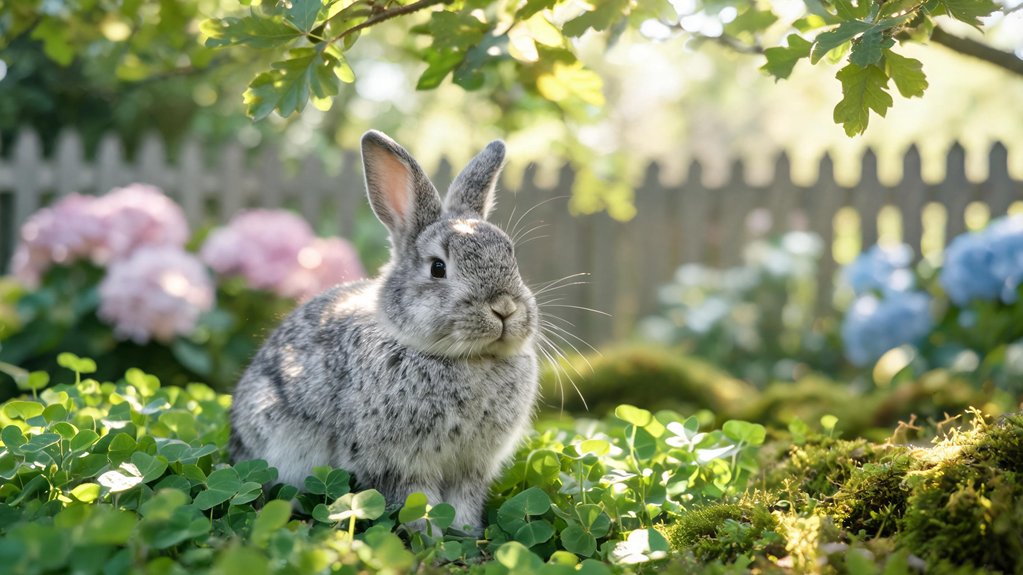
You’ll spot a Silver Fox fast: it’s a big, heritage rabbit with that “stand-up” silver coat and a calm, beginner-friendly attitude. ARBA recognized the breed in 1925, and adults usually land around 9–12 lb, with a dense 1.5–2 inch “no-fly-back” fur that stays erect when you stroke tail to head. Silvering starts around 4 weeks, finishes in 4–6 months. Feed unlimited hay, 1/4 cup pellets per 5 lb, and greens daily. Want setup, care, and costs? Keep going.
Swift Summary
- Learn the Silver Fox origins, ARBA history, and standard traits, including “American Heavyweight Silver” recognition in 1925.
- Focus on the signature dense “no-fly-back” silvered coat and silvering timeline from about 4 weeks to 4–6 months.
- Know typical mature size: bucks ~9–11 lb and does ~10–12 lb, with ARBA senior weight cap at 12 lb.
- Expect a calm, laid-back, beginner-friendly temperament suited to respectful handling and family environments.
- Follow care guidance: hay-first diet, routine dental/GI/ear checks, and emergency vet action if not eating/pooping.
Quick Facts: Silver Fox Rabbit Profile at a Glance
Silver Fox rabbits are a large, heritage-type breed with a thick, “stand-up” silvered coat and a calm, friendly temperament.
If you’re choosing a silver fox rabbit, here’s your at-a-glance profile.
Expect a sturdy, commercial-type body, with senior bucks around 9–11 lb and senior does 10–12 lb.
You’ll love the dense 1.5–2 inch, “no-fly-back” fur that stays erect when you pet tail to head.
And their temperament stays laid-back, beginner-friendly, and family-smooth with respectful handling.
Status: Graduate 2026 Silver Fox rabbits have now graduated from The Livestock Conservancy’s priority list in 2026.
Where Silver Fox Rabbits Came From and ARBA Status
You can trace Silver Fox rabbits back to Ohio in the 1920s, where Walter B. Garland in North Canton built this breed as a practical dual-purpose rabbit for meat and fur. ARBA status The American Rabbit Breeders Association (ARBA) recognized it in 1925 and set a six-class standard with recognized colors that include black and chocolate. You’ll also want to know its ARBA status, because the American Rabbit Breeders Association (ARBA) recognized it in 1925 and set a six-class standard with recognized colors that include black and chocolate. And if you ever compare varieties, remember blue was once part of the standard but later got removed, while chocolate was added to ARBA in 2021.
American Origins In Ohio
If you’re tracking where the silver fox rabbit story starts, set your compass for North Canton, Ohio, in the 1910s–1920s.
You can thank breeder Walter B. Garland, who ran Vema Rose Rabbit Farm there, and used careful crossings of existing silver and meat rabbits.
He aimed for a big, dual-purpose rabbit, good for meat and fur, and he worked for about 14 years with intensive culling.
Then the line stabilized, breeding true to the silver-tipped look.
And yes, you’ll still find ancestry debates, but Ohio stays the origin.
ARBA recognized the breed in 1925 as American Heavyweight Silver.
ARBA He recognized it as the Silver Fox rabbit breed.
ARBA Standards And Varieties
Now that you’ve got the Ohio backstory, let’s line up what the American Rabbit Breeders Association (ARBA) officially says about Silver Fox—where the breed fits, how it looks on the table, and which colors you can actually show.
You’ll see Silver Fox in Class 6, a commercial meat-type, built for production, with a heavy muscled body and a topline that rises smoothly from shoulder to thick loin.
ARBA caps senior weight at 12 lb (5.44 kg).
Fur matters too: you want standing fur with silver-tipped white hairs.
Show Black and Chocolate for top awards; Blue is working-only.
How Big Do Silver Fox Rabbits Get? Weight Included

Adult Silver Fox rabbits typically grow into the large breed category, reaching about 9–12 pounds at maturity. That’s the American Silver Fox range, and you’ll see it often listed as about 4–5.5 kg.
If you’re caring for a pet, this helps you plan space, food, and vet expectations.
Bucks (males) usually land around 9–11 lb, while does (females) commonly run 10–12 lb, sometimes a touch closer to 10.5–12 lb.
Kits grow fast, and by 12 weeks some can reach 5–7 lb, then keep filling out.
Body Type and Build You’ll See in Show-Ready Adults
When you look at a show-ready Silver Fox, you’ll notice the body works like a “meat-type” toolbox—solid, substantial, and built for strength without looking overly fine-boned.
And you should feel that as you lift gently. Aim for a medium-length body with balanced proportions, not too long or too narrow.
The topline rises smoothly from short shoulders into a thick loin, peaking over the center of the hip.
Depth matters, with a blocky near-rectangular shape, where body width matches hindquarter depth.
Next, check hindquarters, round and wide, well-filled with strong muscling over hips and thighs.
Finally, confirm small head, upright ears, and overall harmony.
Silver Fox Coat and Colors: Silvering, Fur, Markings
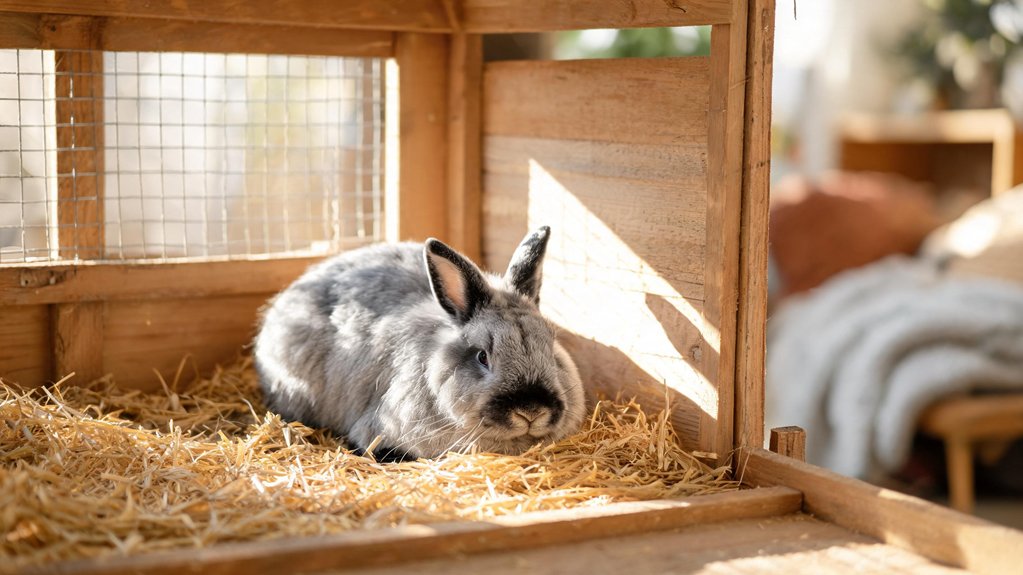
You’ll notice silvering start when your kits hit about 4 weeks old, with silver-tipped guard hairs gradually spreading until it finishes around 4–6 months, sometimes closer to 6–7 months in full show-level development.
Look for a dark base color under those even silver (or white) guard hairs, and remember the fur should stand up and stay upright when you stroke it the wrong way—this “stand-up” look is the big deal.
Also, aim for no heavy white patches or brindling, because the best markings come as an even, frosted silver coat across the body, head, ears, feet, flanks, and tail.
Silvering Timeline And Milestones
Silvering doesn’t happen all at once, it comes in stages—so it helps to know what “normal” looks like at each age.
From birth to 4 weeks, you’ll see solid black or blue, with zero silvering.
Around 4–6 weeks, silver begins, often first on the nose, feet, and belly.
By about 7–8 weeks, those white-tipped guard hairs (the longer “top” hairs) start frosting through the base color.
Between 7 weeks and 3 months, the coat looks darker than adults, because tipping isn’t complete yet.
Then, at 4–6 months, silvering usually finishes evenly.
Some reach prime at 6–7 months too.
Dark Base With Silver Guard
With a Silver Fox, the magic starts under the shine, because the coat should sit on a deep, dark base—jet-black for the classic black variety, with a dark blue undercolor under that surface.
You want silver guard hairs scattered all over, not just in one spot. Look for silver or white-tipped hairs evenly dispersed, creating a frosted “Arctic” shimmer over the dark ground.
For blue, aim for a slate or slate-gray undercolor as far down the hair shaft as possible.
For show, skip pale undercolor, rusty tones, and big white patches.
No-Fly-Back Fur Markings
When you look at a Silver Fox, pay attention to the coat behavior first, because the “no-fly-back” fur sets up everything else about the look.
Stroke from tail to head, and the stand-up fur should stay upright until you smooth it down.
Next, watch the markings.
You want evenly distributed silver-tipped guard hairs, well and sharply ticked on chest, flanks, feet.
As silvering arrives gradually after about 4 weeks, full frosted balance may take 4–6 months, often nearer 6–7.
Aim for bright, even frost, not blotchy white patches.
What Temperament to Expect From a Silver Fox Rabbit
Generally, you can expect a Silver Fox rabbit to feel calm, gentle, and pretty laid-back with you—people often describe them as friendly, tolerant, and “easy to handle” in home life.
You’ll likely notice a docile, approachable temperament, a “teddy bear” vibe, and real interest in regular petting and attention. And when you hold them, they often accept it as long as you support their body well.
But remember, each rabbit varies. Health, hormones, early socializing, housing, and how you handle them shape mood.
For best results, use predictable routines, daily interaction, and positive reinforcement.
Typical Lifespan of the Silver Fox Rabbit Breed
Most Silver Fox rabbits live about 7–10 years, and some references even note the high end can reach around 12 years with great care. As a US owner, you’ll want to plan like they’re a long-term companion.
Many large-breed summaries put Silver Fox life at roughly 5–10 years, but most guides cluster around 7–10 when you manage basics well.
Aim for a balanced hay-based diet, keep pellets limited, and protect them from extreme heat or cold. Schedule regular vet checkups, and treat problems early.
With that steady routine, you help them reach the top of their range.
Common Health Issues in Silver Fox Rabbits to Watch
And when your Silver Fox rabbit slows down, you should treat it like an emergency. Watch for GI stasis (gut stasis, meaning gut movement slows or stops): fewer or no droppings, decreased appetite, hunched posture, or lethargy—then call a rabbit-savvy vet right away.
But don’t stop there, do quick daily checks for dental issues and ear problems too: if you notice drooling, swelling, tooth overgrowth, or changes in chewing, get them assessed fast so they can keep eating hay.
Gastrointestinal Stasis Symptoms
If your Silver Fox rabbit suddenly eats less, don’t wait and “see what happens.” GI stasis (gut motility slowing down) is a potentially life-threatening emergency because the gut stops moving food and gas the way it should.
Watch for appetite drops over 2–7 days, then refusal of hay and greens.
If no eating and no pooping for 12 hours or more, get help fast.
You may see smaller, darker, drier pellets, or none at all.
Also notice lethargy, hunched posture, bloating, a hard “doughy” belly, and fewer gut sounds.
Teeth grinding and guarding mean pain.
Call your rabbit-savvy vet now.
Dental And Ear Health Checks
After you’ve checked for gut stasis warning signs, shift your attention to your Silver Fox’s mouth and ears, because dental and ear problems can also sneak up fast.
Do a weekly look.
Check incisors for overgrowth, misalignment, fractures, and odd color.
Watch how your rabbit eats.
If you see dropped food, slow chewing, or preference for soft pellets over hay, act fast.
Gently feel the jaw and cheeks for bumpy spots, swelling, or pain.
Also monitor weight and tiny, dry droppings.
Next, inspect ears weekly for redness, smell, or head shaking.
Any discharge, go to a rabbit-savvy vet promptly.
Grooming and Coat Care for Dense “No-Fly-Back” Fur
Caring for a Silver Fox’s dense “no-fly-back” coat starts with understanding what makes it different.
When you brush forward, the fur rolls back slowly, it stays standing when you stroke tail to head.
To care for it, you’ll do simple, steady sessions.
In normal months, brush weekly to lift loose hair and spread natural oils.
Check fur, ears, eyes, nails, and the underside often, so grooming stays short.
During heavy spring and fall molts, brush daily, or several times weekly.
Use a slicker brush, comb, or rubber curry, mostly following coat direction.
Choosing the right rabbit brush for a dense coat helps lift loose hair without causing discomfort during each session.
Focus on flanks, hindquarters, and underside.
Housing Setup: Space, Safety, and Predator-Proofing
Next, set up housing that gives your Silver Fox rabbit room to move, plus real protection from danger.
For a pair, aim for at least 3m x 2m x 1m (or an outdoor 3m x 2m x 1m run attached to shelter).
Provide a sleeping hutch about 6ft x 2ft x 2ft, bigger if needed.
Indoors, use a rabbit-safe, well-ventilated room around 3m x 2m, with steady temps.
Use solid flooring or safe slats, add absorbent bedding, and separate sleep from potty.
For predators, choose strong fencing, secure roofing, and bury mesh at least 50cm.
Mount a dependable water source inside the enclosure, such as a rabbit waterer, so fresh water is always within reach.
Diet and Feeding Guide for Silver Fox Rabbit Growth
Feeding your Silver Fox right sets you up for steady growth and strong bones, and it’s mostly about one simple routine: plenty of hay, a little pellet food, and a daily serving of fresh greens.
Give unlimited grass hay, aiming for 80–90% of what they eat. Use timothy, orchardgrass, brome, or ryegrass, and rotate types. This fiber keeps digestion moving and supports tooth wear.
Then measure timothy-based pellets for about 5–10% of diet, roughly 1/4 cup per 5 pounds.
For greens, offer 1 cup per 2 pounds body weight daily, mixed. Avoid seed/candy pellets. Limit calcium-heavy greens.
Training and Handling Tips for a Calm Family Rabbit
From day one, you handle your Silver Fox gently and often, so it learns people are safe—start with short sessions right after it’s eating, about 5 minutes at a time.
Keep it calm by supporting its back and bottom fully, and never lift by ears, scruff, or legs, because that can hurt and stress it.
Then use simple, reward-based training: teach one cue at a time with small treat rewards, and pair the cue with the treat every single time so it cooperates faster.
Gentle Handling From Day One
To help your Silver Fox feel safe and steady around your family, you’ll want to start gentle handling early—around 10 days of age, if the breeder already allows it.
Do short, daily sessions of just a few minutes.
Keep your voice low, move slowly, and let the kit choose to stop.
Next, lift safely: approach from the side, then place one hand under the chest just behind the front legs, and the other under the hindquarters.
Hold close to your torso, support all four feet, and never lift by ears or legs.
Squat to lower, and release only after paws land stable.
Calm Training With Treats
So, let’s make treat training feel safe and calming for your Silver Fox, not like a food scramble. Use tiny reward pieces, like a sliver of regular pellets or a bit of rabbit-safe greens, so you can feed often without overdoing calories.
Keep sessions short, about 3–10 minutes, and aim for 10–30 rewards per session. Serve treats fast, and only sweet or new foods in minimal amounts to protect digestion.
Work at floor level, use a calm voice, and ignore unwanted rushes. Clicker training works best: click, then treat.
For “breakthrough” calm, offer a small high-value fruit “jackpot.”
How Much Does a Silver Fox Rabbit Cost in the US
Wondering what a Silver Fox rabbit costs in the US? Typically, you’ll see about $20–$350, depending on where you look.
If you adopt, plan roughly $50–$150. Shelters usually run about $20–$100, so adoption can be the kinder budget choice.
From reputable breeders, expect around $100–$250 for purpose-bred stock, though general pet rabbit prices can range about $30 to several hundred.
Online listings often cluster near $30–$65 for younger purebreds. Pedigree (family-line records) and rare colors like blue or lilac can push higher.
Where To Adopt Or Buy Responsibly and What To Check
Now that you’ve got a ballpark for what a Silver Fox rabbit might cost, it’s time to focus on how to get one responsibly, because the right source can save you money and heartbreak later.
Now that you’ve got a cost estimate, choose a responsible source—right now—to avoid heartbreak later.
Start with rescues: House Rabbit Society affiliates, regional rabbit rescues, and SPCA shelters often rehome indoor companions. Expect an application, usually 30–45 minutes, plus an education class.
If you rent, get landlord permission in writing.
Online directories may hide foster addresses until approval—good for safety.
For breeders, choose limited litters, ask for pedigree and written health history, check ARBA Standard traits, and review contracts, spay/neuter, RHDV2 shots, plus a vet check about two weeks later.
Frequently Asked Questions
Are Silver Fox Rabbits Allowed in ARBA Show With Black as the Standard Color?
Yes—if your Silver Fox is black, you can enter ARBA-sanctioned shows. ARBA recognizes black as the standard showroom color, so judges can score it for awards. If it’s blue or other colors, you’ll face exhibition-only limits.
What Age Do Silver Fox Kits Usually Reach “Full” Silvering Quality?
Like a slow sunrise, Silver Fox kits usually reach “full” silvering quality between 4 and 7 months. You’ll often see completion near 4 months, but the most even, mature look usually hits around 6–7 months.
How Much Exercise Space Do Silver Fox Rabbits Need Each Day?
You should give your Silver Fox rabbit at least 4 hours of daily supervised exercise, ideally 2 sessions (morning and evening), in a secure pen. Aim for 24+ sq ft of extra space, plus roaming time.
Do Silver Fox Does Tend to Make Good Mothers for Beginners?
Yes—Silver Fox does often make excellent mothers for beginners; many keep calm during nesting checks, which helps you catch problems early. Their strong maternal instincts and steady nursing let them reliably raise large litters with minimal intervention.
What Should I Check Before Adopting a Silver Fox Rabbit From a Breeder?
Before you adopt, verify the breeder’s rabbit-org ties, view clean housing, confirm solid weaning dates and records, review health/genetics documentation, ask about quarantine, and assess coat, eyes, teeth, droppings, and overall condition.