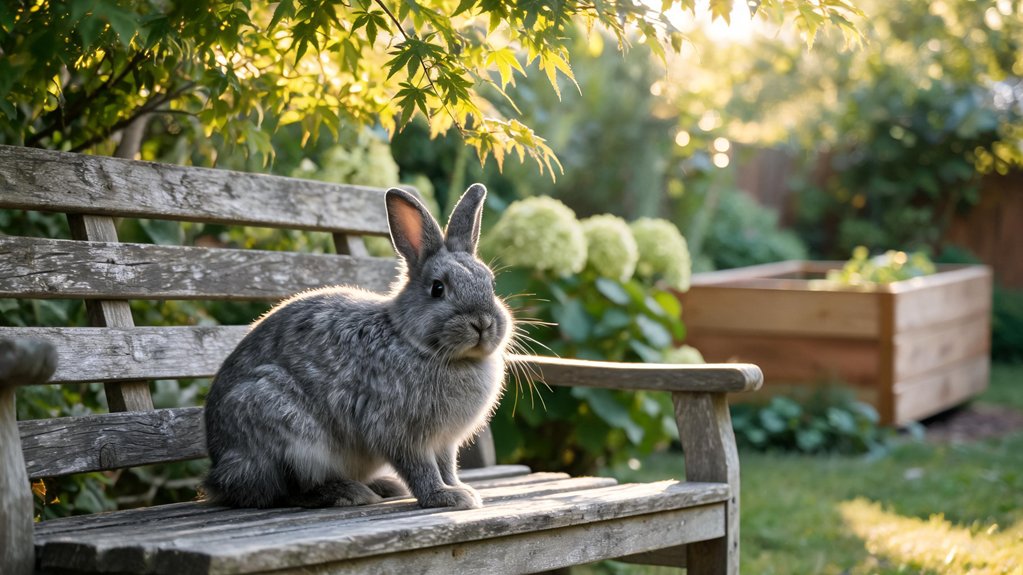
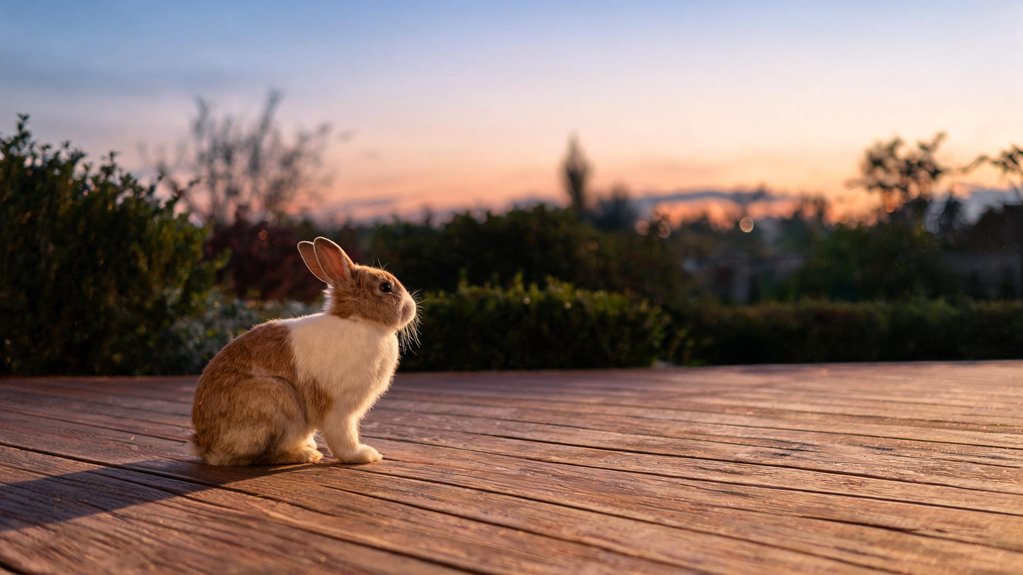
Polish rabbits stay small at about 2.5–3.5 lb (0.9–1.6 kg), with show goals near 2.5 lb. You’ll see colors like black, blue, chocolate, lilac, plus REW and BEW ruby-eyed whites, and some broken patterns. They have a compact body, bold eyes, and short erect ears, close together. Feed mostly grass hay (75–85%), plus small timothy pellets (5–10%). Brush weekly, daily in molts, using “flyback” fur that snaps flat fast. Use solid, non-slip flooring to prevent sore hocks—keep going for more setup tips.
Swift Summary
- Polish rabbits are small and compact, typically weighing about 2.5–3.5 lb (0.9–1.6 kg).
- Common recognized colors include black, blue, chocolate, lilac, and white types (REW/BEW), plus some broken/spotted patterns.
- Polish coat is short, dense “flyback” fur; brush weekly, and daily during heavy molts to prevent fur buildup.
- Provide a hay-based diet: unlimited grass hay, small measured timothy pellets (about 5–10%), and modest leafy greens.
- Prioritize health and housing: watch for dental/GI signs, keep clean/dry to reduce respiratory issues, and use non-slip flooring to prevent sore hocks.
Quick Facts: Polish Rabbit Size, Colors, and Lifespan
If you’re looking for a Polish rabbit, start with the basics, because size, coat type, and lifespan help you set up the right care from day one.
For polish rabbit size, expect adults around 2.5–3.5 lb, with many show goals near 2.5 lb. ARBA maximum senior Polish rabbits weigh no more than 3.5 lb.
Next, enjoy polish rabbit colors: common shades include black, blue, chocolate, lilac, plus white types like REW and BEW, and broken patterns with spots.
For polish rabbit lifespan, plan on about 5–8 years for pets, sometimes longer with neutering/spaying, good diet, and attentive handling.
Polish Rabbit Origin and ARBA Recognition Status
When you hear “Polish” in Polish rabbit, don’t assume it literally started in Poland, because its early show history points to Britain and other parts of Western Europe. England You’ll often find it described as a small white, ruby-eyed foundation type, then refined in England, with “Polish” possibly referring to a polished look rather than a place. In the U.S., ARBA recognizes the breed (including the ruby-eyed white variety first), and its standards focus on tight show type and recognized colors more than any meat-rabbit past.
English Nineteenth-Century Development
By the 1860s, English rabbit books and show notes already described “Polish” rabbits in Britain as a distinct small domestic type, not as a mystery from far away.
You’ll find key polish rabbit facts there, plus early breeders shaping a compact, elegant form.
They often aimed for neat type for exhibition, not just table use, even though utility breeding for meat and fur came first in England and Belgium.
And as English fancy clubs formed, the polish rabbit breed gained a clear niche.
For polish rabbit weight, trust ARBA’s non-dwarf small guidance.
But note the type tightened over time, guided by show goals.
Polish Breed Lineage Explained
Polish rabbits have a reputation for being “mysterious” in origin, but the story is mostly paperwork, not magic.
When you search for a polish rabbit, you’ll quickly notice the name misleads people. ARBA and club histories reject a Polish national origin.
Most modern guides trace the breed’s development to Western Europe, especially England, with possible German or Belgian threads.
Old English rabbit literature describes ruby-eyed white rabbits by 1860.
In the U.S., imports often date to 1912, and breeders refined type toward compact fancy rabbits.
If you’re shopping, polish rabbits for sale reflect this Western lineage, not Poland.
ARBA Standards And Recognition
ARBA recognizes the Polish rabbit as a *compact fancy* breed, not a dwarf, so the standards focus on size, balance, and finish—not “tiny-only” features. You’ll see that in the max senior weight of 3.5 lb, with an ideal show weight often cited around 2.5 lb.
And you’ll notice the body type, too: fine-boned, neat, sprightly.
ARBA also judges closely set, short erect ears, bright bold eyes, and a short full head.
For colors, ARBA accepts ruby-eyed white, blue-eyed white, black, blue, chocolate, lilac, and broken.
Otter stays workable for showing, but doesn’t chase top awards.
How Big Do Polish Rabbits Get in Weight?
Most people don’t realize just how tiny Polish rabbits are, until they see the weight range in real life.
As an owner, you’ll usually expect about 2–3.5 lb for most adults, roughly 0.9–1.6 kg.
That small number matters.
ARBA senior standards cap them at 3.5 lb, with an ideal show weight around 2.5 lb.
So if your rabbit feels heavier than 3.5 lb when fully grown, it’s outside the standard.
Juniors under six months have a lighter class too, topping out at 2.5 lb.
Polish Rabbit Body Type and Recognized Markings
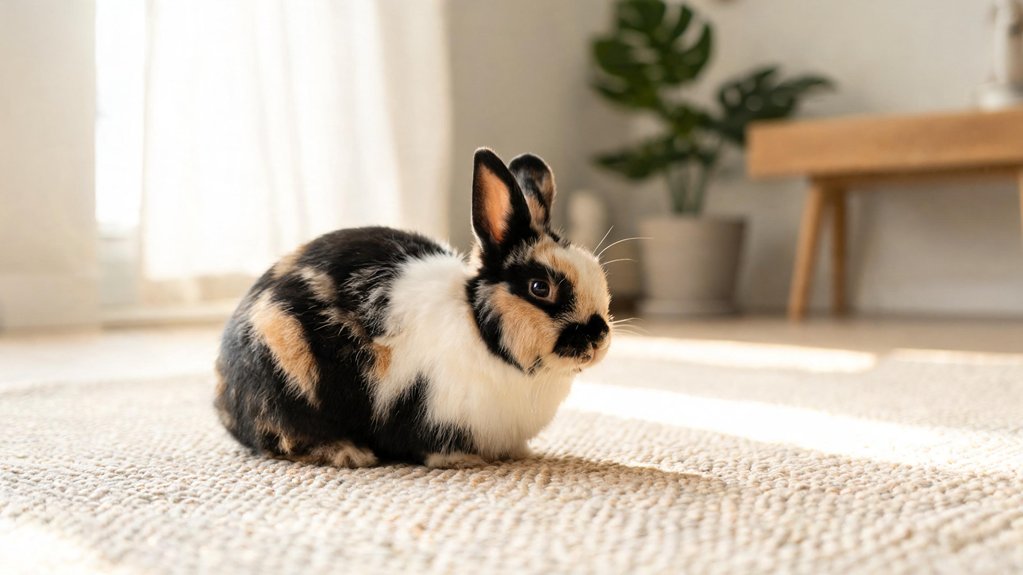
When you’re looking at a Polish rabbit, focus first on the overall shape—because the body type drives everything else you’ll see. You want a small, compact, close-coupled body with a smooth, rounded profile. Look for a short back, full rounded hindquarters a touch wider than the shoulders, and fine-boned but firm, muscular build.
Faults include excessive length, flaring or rough hips, and pinched hindquarters. Next, check the bold eye. Then note short, erect, well-furred ears set close together, with edges touching at the base to tip.
Recognized colors include self black, blue, chocolate, plus REW, BEW, and broken patterns (colored-and-white).
Coat Texture and What “Flyback” Grooming Means
Now that you know what to look for in a Polish rabbit’s body and markings, let’s talk coat texture, because it’s the “signature” part of the breed.
You want short, dense “flyback” fur. Flyback means you stroke from tail to head, and the hair snaps back flat fast, it doesn’t roll. That texture stays close to the body, with a glossy, rich look.
For routine care, brush weekly with a soft slicker or grooming mitt.
During heavy molts, brush daily or near-daily, to lift loose hairs, keep skin healthy, and lower fur buildup risks.
Polish Rabbit Colors: Ruby, Blue, Black, Chocolate, and Broken
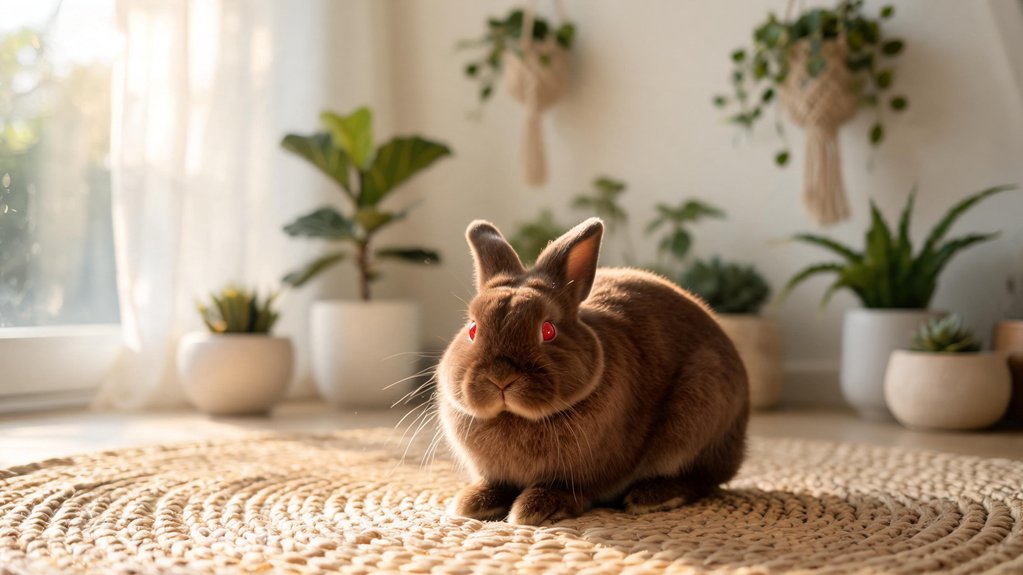
If you’re choosing a Polish rabbit, you’ll get the best results when you start with color, because the breed’s look depends on it—Ruby-eyed White, Blue, Black, Chocolate, and Broken all have their own “rules of the game.”
In show terms, “top color” means the main coat color on the outside, and it should stay dense, uniform, and glossy and carry well down toward the skin; you also want an eye color that matches the variety.
Ruby-eyed White has bright ruby-red eyes with a pink iris, and white must stay clean.
Blue needs deep blue top color and blue-gray eyes.
Black needs jet black, glossy, with brown eyes.
Chocolate calls for dark chocolate-brown, with brown eyes allowed ruby.
Broken must show both ears colored, plus eye and nose color, with white.
Temperament: Why Polish Rabbits Are Calm Yet Energetic
Polish rabbits can look “tiny and delicate,” but their personality hits big—calm, friendly, and then suddenly curious and lively.
You’ll often find them docile and good-natured, which makes them great companions for gentle, interactive homes, including beginner setups.
And yet, expect energy.
They move quickly for their size, they investigate everything, and they may come up to you, bold and “peppery.”
But remember, they’re also skittish with loud sounds and sudden moves.
Serve them quiet, steady routines, handle them gently every day, and give secure floor-level space.
Typical Lifespan: What Affects 5–8 Years?
A Polish rabbit’s life span is often reported as 5–8 years, with many sources placing the “around 6 years” mark in the middle, but you can absolutely influence where your rabbit lands on that range. With great care, some Polish pets reach 8–10 years or more. But breeding stock often averages closer to 5–6 years, so plan for longevity.
Polish rabbits often live 5–8 years; with excellent care, many reach around 6 and some even 8–10.
Spay or neuter helps. Unspayed females face high uterine risk by about age 5, so early spaying at 4–6 months matters.
Feed unlimited high-fiber hay, at least 70% of food, plus measured pellets.
Keep your rabbit indoor, draft-free, 60–70°F, exercise daily, and maintain ideal body weight.
Common Health Issues to Watch in Polish Rabbits
Common health issues can sneak up on Polish rabbits, but you can catch many of them early with a quick daily routine. Check teeth, poop, breathing, ears, and the rear area. Look for drooling, dropped food, less eating, weight loss, or overlong incisors.
Those signs can mean dental disease or malocclusion, and untreated pain can lead to ulcers and gut problems.
Next, watch for GI stasis, a gut slowdown. Fewer pellets, hunched posture, or no eating for 12 hours is an emergency.
Also note runny noses or sneezing, especially in damp, dusty cages.
Finally, inspect for mites and flystrike.
Preventing Sore Hocks and Foot Problems in Housing
After you’ve been checking for early health warning signs like poop changes and trouble eating, you’ll also want to protect your rabbit’s feet every single day—because sore hocks (pododermatitis), are often a housing problem.
Pick solid flooring, not bare wire. If wire must be used, cover at least half with solid boards or mats.
Use fleece, faux sheepskin, padded mats, or cotton with rubber backing.
Give deep bedding of hay or straw, about 4+ inches, for cushioning.
Keep resting areas dry, change soiled bedding every 1–2 days, and clean litter spots daily.
Fix drips fast.
Best Diet for Polish Rabbits: Hay, Pellets, and Greens
To keep your Polish rabbit feeling great, build every day around the “big three”: unlimited grass hay, a small measured amount of pellets, and a modest serving of fresh leafy greens.
Give hay as the base, about 75–85% of an adult’s intake, like timothy or orchard grass, always fresh, green, and dust-free. For everyday feeding, timothy hay provides the long, fibrous texture that supports healthy digestion and keeps teeth worn down.
Give hay as the base—75–85% of your adult rabbit’s intake—with fresh, green, dust-free timothy or orchard grass daily.
Offer pellets as a small extra, roughly 5–10% total—plain, timothy-based, no seeds or colorful bits. Measure: about 1/4 cup per 5 lb body weight daily, and even less for tiny Polish rabbits, often 1–2 tablespoons.
Finally, add greens 10–15%, rotating high-oxalate options.
How to Groom a Polish Rabbit’s Short Fur Properly
Start by choosing a soft slicker or rubber grooming mitt for day-to-day brushing, and add a fine-toothed comb when your Polish rabbit is really shedding (that’s the molt). Pick brushes designed for loose-fur removal, since they lift dead hair from the coat without irritating the skin.
Keep handling gentle, with full body support on a low, non-slip surface, because their fine-boned, compact body needs extra care, and brush in the direction the fur grows, short and steady.
During the week, aim for once-a-week grooming in low-shed months, switch to 2–3 times per week in spring and fall molts, and spot-clean any dirty spots with a damp cloth instead of bathing.
Choosing The Right Brush
When it comes to grooming a Polish rabbit, picking the right brush matters as much as the schedule. Go for a small brush head, so you can reach shoulders, flanks, and hindquarters without overreaching. Use soft bristles or a paddle brush to lift loose surface hair gently.
A rubber grooming mitt works too, it lifts shed fur while giving light “skin massage.” During normal weeks, brush once to twice weekly. During spring and fall molts, switch to two to four quick sessions, or near-daily.
Avoid large slicker brushes with stiff pins, they can scrape skin. Use a soft glove brush to finish.
Never clip the coat.
Gentle Flyback Coat Handling
Gentle handling makes a big difference with a Polish rabbit’s short flyback coat, because their skin is thin and their fur is delicate.
Put your Polish on a non-slip surface, lap or floor, with a towel nearby.
Support them under the chest and hindquarters so their spine stays gently C-shaped.
Groom while they’re grounded, and reposition slowly.
Stroke in the direction of hair growth, start at the head, then go toward the tail, using light pressure.
Part fur so tools reach the skin without scraping.
Finger-tease small mats.
During molt, use gentle mitts or damp hands to lift loose undercoat.
Skip baths, never shave, and avoid scissors.
Watch for skin irritation.
Spot Cleaning And Brushing Schedule
Because a Polish rabbit’s short flyback coat hides nothing for long, you’ll want a simple grooming rhythm: quick spot cleaning as soon as you see trouble, plus regular brushing to catch loose fur before your rabbit swallows it.
Check hindquarters, underside, and feet daily for urine, feces, or debris, and clean those spots fast.
Weekly, plan one to two calm brushing sessions, using a soft-bristled brush or fine flea comb.
During heavy molting, brush 3–4 times weekly, and inspect the rear even more.
Spot clean with a lightly moistened, lukewarm cloth.
Avoid full baths.
Polish Rabbit Housing Setup: Indoor Space and Flooring
To keep a Polish rabbit comfortable and safe indoors, set up your space around two essentials: enough room to move, and flooring that grips their feet.
Start with a small-breed enclosure, about 18in x 24in for a starter setup, plus height around 16–18in.
Add a retreat about four times their body length, then connect it to a continuous exercise area at least 3m x 2m x 1m, bunny-proofed and open 24/7.
Use solid, non-wire flooring, like textured mats, fleece over a firm base, or linoleum sheets, to prevent slipping and sore feet.
Avoid drafts, heat, and traffic.
Bedding, Toys, and Cleaning Routine That Works
When you set up bedding, toys, and a cleaning routine, you’re basically setting your Polish rabbit up for comfy feet, easy breathing, and fewer “mystery smells.” Start with absorbent, dust-free bedding that won’t irritate their skin—paper-based bedding or dust-free straw are great choices, and any bedding your rabbit can reach should be safe to nibble. Aim for about 1–2 inches of paper bedding on solid flooring.
Add extra straw in winter. Offer chew and hide toys, like cardboard boxes, hay tubes, and tunnels. Rotate weekly. Spot-clean daily.
Replace soiled hay-litter each day, and refresh bedding as needed.
How Much Do Polish Rabbits Cost in the U.S.?
Figuring out the cost of a Polish rabbit in the U.S. is easier than you might think, because the price mostly depends on whether you’re buying pet-quality or show/breeding quality.
For pet-quality Polish rabbits, you’ll usually see about $20–$75 from breeders or rescues, with many guides citing around $50.
Pet-quality Polish rabbits typically cost $20–$75 from breeders or rescues, with many guides citing around $50.
Local listings often land near $20–$50.
Adoption fees commonly run $20–$100, and they may bundle spay/neuter or a first vet visit.
If you buy show or breeding quality, expect about $125–$250 for juniors and up to several hundred for proven lines.
Even after purchase, plan for setup and ongoing care.
Who Should Adopt a Polish Rabbit: and Who Shouldn’t?
So, who should adopt a Polish rabbit—and who really shouldn’t?
If you want a calm, people-friendly companion, Polish rabbits fit best with quiet, adult homes that offer gentle handling, daily interaction, and supervised indoor exercise in a rabbit‑proofed space.
You should also consider an experienced rabbit keeper who understands stress signs, a prey-animal mindset, and delicate small breeds.
If you have older, gentle children, who can sit during handling and follow slow, quiet rules, you’re a great match.
But skip adoption if you have very young kids, you’re rough or noisy, or you want a low‑maintenance “starter” pet.
Frequently Asked Questions
What ARBA Weight Limit Applies to Polish Rabbits in Show?
In ARBA shows, you must keep your Polish rabbit at or under 3½ lb to qualify for breed show eligibility. If it weighs more, you risk it being counted overweight or disqualified from the Polish classes.
How Can I Tell Ruby-Eyed White From Blue-Eyed White?
You can tell ruby-eyed white from blue-eyed white by their eye color: ruby whites show bright pink-to-red “glow” from the iris, while blue-eyed whites show clear blue or blue-gray eyes without any red cast.
Are Polish Rabbits Prone to Dental or Digestive Issues?
Yes—Polish rabbits are prone to dental issues like overgrown teeth and mouth pain, which can trigger GI stasis. Watch hay intake, chew behavior, and droppings closely; call a rabbit-savvy vet fast if appetite drops.
Do Polish Rabbits Need Toys to Prevent Boredom and Stress?
Yes—polish rabbits can get bored and stressed fast, so you should give toys daily. Test this by watching for chewing or digging out of frustration. Offer tunnels, chew items, foraging boxes, and rotate them to keep them busy.
Should I Neuter My Polish Rabbit, and When Is Best?
Yes—neuter your Polish rabbit. If your male’s testicles have dropped, schedule surgery around 3–4 months (often 14–16 weeks). For females, plan spaying after 4–6 months and sexual maturity. Ask your rabbit-savvy vet.