You’ll learn rabbit anatomy fast when you map body parts to jobs. Start with the nose and obligate nasal breathing, then spot those 28 teeth that keep growing for months, so constant chewing matters.
Big ears act like radar, swiveling up to approximately 180 degrees for sound, and they help dump heat via blood flow. The rib cage protects the lungs, while the cecum ferments fiber for around 2 to 12 hours, making cecotropes you should never discard. Want the rest? Keep going for more.
Swift Summary
- Rabbits have forequarter and hindquarter body regions (neck, shoulders, ribs, belly, loin, hip, rump) used for targeted health assessments.
- Highly mobile ears act as radar for hearing and thermoregulation via ear blood-vessel dilation and constriction.
- The thorax cage of ribs and sternum protects heart and lungs while supporting breathing through coordinated rib and diaphragmatic movement.
- A flexible spine with intervertebral discs and a segmented tail enables shock absorption, balance, and rapid directional changes.
- Digestion relies on stomach acidity, small-intestine enzyme absorption, and cecum fermentation producing nutrient-rich cecotropes.
Rabbit Body Map: Regions and Landmarks
When you’re learning rabbit anatomy, a detailed “body map” becomes an invaluable tool to enhance your understanding of vital regions and landmarks, ensuring optimal daily care and swift identification of health issues.
Start with the forequarter regions: the neck and nape, shoulder, foreflank, and ribs. Recognizing these key anatomical features helps you assess movement, detect discomfort, and perform targeted grooming or veterinary care. Skeletal structure matters here because it supports posture and efficient limb mechanics while you check those areas for tenderness. Find the chest or breast area, positioned between the forelegs and the neck, which is critical for monitoring respiratory health and overall wellbeing.
Focus on the shoulder area above the foreleg, which allows for easier inspection of joint health and muscle condition. Next, scan the foreflank—this is the region between the last rib and the foreleg—where you can observe softness and elasticity that may indicate underlying health or nutritional issues.
Moving to the hindquarter regions, identify the hind flank, belly, loin, hip, leg, and rump behind the last rib. These areas are essential for detecting signs of pain, swelling, or injury, supporting proactive health management.
Finally, pay close attention to the dorsal (back) and ventral (belly underside) landmarks, including the flanks between the ribs and thighs. Recognizing these vital points allows for comprehensive health assessments and ensures proper grooming and hygiene.
Incorporating this detailed rabbit body map into your daily routine provides a proactive, solution-focused approach to rabbit care, helping you maintain the health, comfort, and well-being of your pet with confidence.

DELICIOUS, NUTRITIOUS RABBIT TREATS FOR BONDING: Crunchy, flavorful rabbit treats for bunnies made with real strawberries to support healthy enrichment; perfect treats for rabbits, guinea pig treats, and even hamster treats to build trust & interaction


【52 PCS CHEW STICKS】This set of rabbit chewing toys includes 52 green Timothy grass sticks.They are packaged in crystal jars for easy access and storage, and effectively prevent spoilage. The grass stick set is very beneficial for small animals.
Head Anatomy: Teeth, Mouth, Eyes, Nose
Your rabbit’s head is equipped with an intricate “food and safety system,” and understanding its vital parts enables proactive health monitoring. Start by examining the mouth, where you’ll find 28 continuously erupting teeth—sharp incisors positioned at the front for cutting, and complex cheek teeth towards the back for grinding.
Why can’t rabbits vomit? It’s because they lack precise control over their airway and stomach, unlike predators that possess more flexible digestive control. Their survival depends heavily on constant, steady chewing, which is why their teeth—erupting approximately 0.5 to 1 centimeter each month—must be regularly worn down through proper diet and dental care to prevent painful overgrowth and related health issues.
Rabbits can’t vomit; they rely on steady chewing, and their teeth grow 0.5–1 cm monthly, requiring proper wear.
Chewing produces a “circular” motion. Additionally, why are rabbits particularly fragile? Attention to their eyes and nose is crucial, as blockages or infections in these areas can lead to rapid stress responses, potentially jeopardizing their health. Their large, side-set eyes provide a wide field of vision, enhanced by a protective nictitating membrane that shields the eye from debris and injury.
Observe their nasal passages carefully, as nasal health directly impacts breathing and overall well-being. Their tongues, characterized by a rough surface, play an essential role in efficient feeding and grooming. Recognizing and maintaining these key head features ensures your pet stays healthy, stress-free, and responsive.
Investing in regular veterinary checks, proper diet, and environmental management empowered by this detailed head anatomy knowledge will help prevent issues before they escalate, ensuring your rabbit’s safety, comfort, and longevity.

🌿【Natural & Safe Ingredients】 Made of premium natural timothy hay, no additives, no preservatives. Safe and healthy chew treats for rabbits, bunnies, chinchillas, guinea pigs, hamsters and other small rodents


【500 G CHEW STICKS】This set of rabbit chewing toys includes 52 green Timothy grass sticks.They are packaged in crystal jars for easy access and storage, and effectively prevent spoilage. The grass stick set is very beneficial for small animals.
Rabbit Ears: Hearing and Heat Control

Your rabbit’s long, highly mobile ears function as advanced built-in radar systems, enabling quick and precise detection of sounds. Their ability to rotate and track auditory signals allows you to respond rapidly to potential threats or environments. This keen hearing capability is essential for efficient vigilance and immediate reaction, ensuring your rabbit remains alert and secure in any setting. hearing problems can also occur in some domesticated rabbits due to selective breeding for appearance, so it’s important to watch for signs like reduced responsiveness to sound.
Simultaneously, the intricate blood vessel network within their ears actively participates in thermoregulation. When temperatures rise, these vessels expand, moving warm blood toward the surface of the ears to facilitate heat dissipation and prevent overheating.
Conversely, as temperatures drop, the vessels contract, conserving body heat and maintaining optimal core temperature. This dual-function ear system makes your rabbit exceptionally adaptable to changing environmental conditions, supporting their health and comfort.
Investing in high-quality cooling accessories, like cooling mats or targeted airflow solutions, enhances this natural heat regulation, ensuring your rabbit stays cool during hot weather.
Similarly, accessories designed to amplify their auditory awareness—such as enhanced sound-detection devices or environment-monitoring systems—can further improve their safety and quality of life. These solutions help you maintain an optimal living environment, reinforcing your commitment to your rabbit’s overall well-being and safety.
【Professional Cat Hair Brush】Perfect gift for pet owners, vets, and pet groomers. Using this cat brush for long haired cats on a regular basis can gently and effectively remove loose hair, tangles, knots, dander and trapped dirt. Suitable for short, medium or long, thick, thin or curly haired dogs/cats/rabbits, making your pets shiny and healthy.

WORLD’S #1 CAT HAIR BRUSH: Our cat grooming brush / cat shedding brush is the world's best patented pet grooming brush for cats, small dogs, and rabbits. It is the perfect cat deshedding brush, short hair cat brush, & cat brush for long haired cats.

7-in-1 Rabbit Grooming Kit: Not only gentle and safe for small animals, such as rabbit, hamster, guinea pig, and chinchilla; but also work great for larger animals like cats and dogs. Soft silicone small animal massage comb can help you protect your pet's skin and effectively keep their fur clean, healthly.
Long Ears For Sound Localization
Long ears for precise sound localization are a key advantage in rabbit sensory systems and can be effectively leveraged in advanced audio and surveillance technologies. These highly mobile, large, and thin auditory appendages, known as pinnae, serve as sophisticated “direction finders” by capturing faint, rapid sounds, especially in the high-frequency range that humans often can’t detect.
Their design maximizes surface area, with minimal fur exposure, to optimize sound wave collection—making your auditory monitoring systems significantly more sensitive and accurate.
Rabbits also benefit from independent, near 180° ear rotation, allowing each pinna to independently aim at multiple sound sources simultaneously. In some instances, their ears can swivel nearly 360°, providing a comprehensive sound scanning capability without the need for head movement.
This dynamic feature enables rapid detection and precise localization of potential dangers, enhancing survival likelihood. Integrating similar adjustable, surface-optimized sensor designs into security and communication systems can dramatically improve sound source identification and threat detection, ensuring your operations remain a step ahead.
Understanding and mimicking the advanced ear mechanics of rabbits can revolutionize the effectiveness of your high-tech audio solutions, making them more responsive, adaptable, and accurate in detecting high-pitched signals and movements in complex environments.
Ear Vasculature For Thermoregulation
Rabbit ears serve a crucial role beyond their ability to detect subtle sounds. The ear pinna, a highly specialized external structure, is a key component in thermoregulation and heat exchange. It features an extensive vascular network, including the central ear artery and marginal ear veins, supported by three distinct vascular layers. This complex architecture allows for precise regulation of blood flow, which is essential for maintaining optimal body temperature in varying environmental conditions.
In warm environments, vasodilation occurs, where blood vessels in the ear surface expand, allowing increased blood flow. This results in the ears appearing warmer and pinker, facilitating efficient heat dissipation to the surrounding air and light.
Conversely, in colder conditions, the vessels narrow through vasoconstriction, reducing blood flow to conserve heat and maintain core body temperature.
Understanding this sophisticated vascular system enables industries such as veterinary care, animal husbandry, and pet product development to design solutions that optimize thermoregulation in rabbits. Whether creating climate-controlled habitats or developing temperature-sensitive accessories, leveraging knowledge of ear vasculature can improve rabbit health, comfort, and overall well-being.
If you’re interested in enhancing animal health or creating innovative solutions for temperature regulation in small mammals, exploring the vascular mechanisms of rabbit ears offers a vital, science-backed strategy for achieving optimal results.
Rapid Head Movement Vigilance
When you observe a rabbit suddenly lift its head from foraging, it’s typically not just “looking around”—it’s performing rapid vigilance checks essential for safety. These quick movements are strategic, transitioning the rabbit from a relaxed, head-down grazing position to an alert, upright stance optimized for detecting potential threats. By swiftly rocking its head left and right, the rabbit enhances its environmental awareness, allowing it to quickly identify approaching predators or other dangers.
Simultaneously, the rabbit may sniff at twigs or nearby objects while scanning its surroundings, utilizing its keen sense of smell to supplement visual vigilance.
Each ear swivels independently up to about 180 degrees, creating a triangulation system that significantly improves sound localization—even in noisy, busy yard environments. These rapid head and ear movements not only heighten auditory clarity, making subtle rustles and footsteps more noticeable, but also serve as a vital safety mechanism.
In warm weather, you might notice the rabbit’s ears angling sideways to catch breezes, a behavior that helps regulate body temperature while maintaining heightened environmental awareness.
For pet owners, understanding these swift, precise movements underscores the importance of providing a secure, distraction-free habitat that facilitates natural vigilance behaviors. Properly supporting these innate safety checks ensures your rabbit remains alert and healthy, preventing accidents and fostering a more enriched, stress-free environment.
Thorax Anatomy: Breathing and Protection
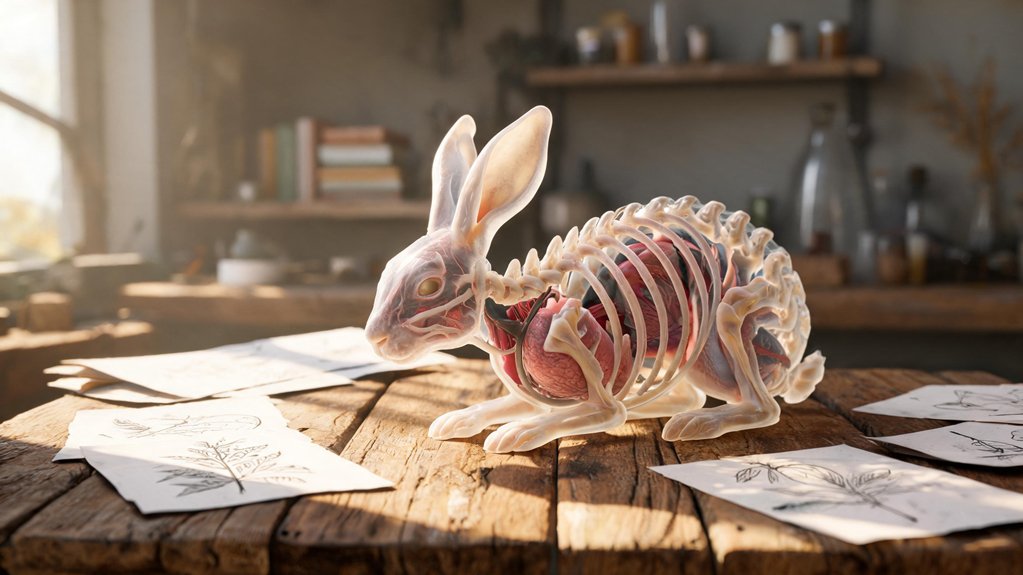
Inside your rabbit’s thorax, a compact yet resilient “cage” of bones forms an essential protective enclosure for the heart and lungs. This bony structure, comprising the ribs and sternum, safeguards these vital organs from external shocks while maintaining the necessary mobility for effective respiration. The ribs, with their sturdy and flexible design, work in conjunction with the firm sternum positioned at the front to shield the heart and cranial portions of the lungs, minimizing injury risk due to bumps or impacts.
Moreover, the back ribs exhibit a subtle flexion, facilitating the natural process of breathing. Your rabbit primarily relies on a diaphragmatic push—driven by the diaphragm muscle—to generate the necessary respiratory movements.
Each lung is encased within its own pleural sac, creating a slippery, lubricated environment that prevents space from connecting between the two sides. This anatomical configuration significantly reduces the risk of lung collapse and simplifies the management of respiratory health issues.

【Large & Comfortable】 Are you looking for a modern and cozy rabbit house and hideout for your furry friend? TiereCare large bunny bed meets all your needs. This quality bunny house and hideout provide a private, warm, and comfortable space for your pets and are large enough to accommodate 1 adult dwarf rabbit or 2 guinea pigs.

【Warm Guinea Pig Bedding】This fluff guinea pig or hamster bedding and hideout comes with a detachable cotton pee pad inside, make your furry little friends to feel comfortable and warm inside their little house

【Warm & Cozy】 The small animal bed or hideout comes with a removable pee pad inside, and the non-slip bottom ensures it stays in place. With the super soft plush fabrics, your little furry friends will feel cozy and warm inside their little house. Suitable for small animals such as Rats, Chinchillas, Ferrets, Guinea Pigs, and Dwarf Rabbits etc.
Belly Region: Digestion Organs Explained
Next, let’s examine your rabbit’s belly and understand how the vital digestion organs work together to optimize health. The rabbit’s stomach is a thin-walled, pouch-like organ designed for efficient digestion, but it can’t stretch much and isn’t well-suited for vomiting due to its structural limitations. The strong acid environment within the stomach, with a pH of about 1–2, is essential for breaking down tough food particles and ensuring proper nutrient extraction.
Explore how a rabbit’s stomach—limited stretch and strong acid—breaks down tough food for proper nutrient extraction.
Following digestion in the stomach, food passes into the small intestine, which comprises the duodenum, jejunum, and ileum. This section of the digestive tract plays a crucial role by adding digestive enzymes and absorbing vital nutrients to support your rabbit’s vitality.
After approximately 1.5 hours, remaining ingesta move into the cecum, the largest and most active fermentation chamber. This essential organ holds about 40% of the ingested material and ferments fibers, transforming them into nutrients that supply sustained energy and promote long-term health.
To optimize your rabbit’s digestive efficiency and overall well-being, consider investing in high-quality, fiber-rich feed and supplements tailored to support these organs’ function. Properly maintaining and monitoring these digestive organs ensures your pet receives the maximum health benefits, fostering vitality and reducing the risk of digestive disturbances.

Delicious, teddy bear shaped treats with hint of vanilla
FREEZE DRIED RABBIT CAT TREATS – CRUNCHY, BITE-SIZED, EASY TO EAT REWARDS, 0.9 OZ BAG: High protein, grain free cat treats made with single protein rabbit in a light, crunchy format designed for cats of all ages

Spine and Tail Anatomy: What They Do
Your rabbit’s spine is a highly specialized, built-for-hopping backbone, composed of approximately 45 to 46 precisely aligned vertebrae that function like durable, stacked building blocks. Each vertebra situates within a specific region—neck, chest, lower back, or tail—and is separated by resilient discs of fibrous cartilage. These discs act as essential shock absorbers, ensuring proper spinal alignment, reducing impact stress, and maintaining the flexibility needed for vigorous movement.
The tail of your rabbit contains around 15 to 16 small coccygeal vertebrae, forming a strong bony core that plays a crucial role in communication, balance, and rapid directional changes. As your rabbit hops, its spine not only bears body weight and sustains posture but also facilitates the transmission of force from the powerful hind legs, enabling swift and agile movements. Proper spinal health is vital, especially near the lumbosacral junction, where twisting or excessive stress can lead to discomfort or injury.

PROUDLY GROWN IN THE USA: Harvested fresh from Oxbow?s family of farms by our expert hay growers˜

PREMIUM QUALITY OXBOW TIMOTHY HAY FOR SMALL PETS: High-fiber Oxbow timothy hay supports digestive & dental health for rabbits, guinea pigs; the perfect choice for pet parents seeking trusted rabbit hay, guinea pig hay, and nutritious daily bunny food

MORE STICKS PER PACK: 50pieces — every GREMBEB pack gives you 6 bonus sticks. More chewing hours, fewer refills. The extra quantity suits multi-pet households where two or more small animals share enrichment toys. You save money per stick without sacrificing quality, making daily dental support more affordable for every pet owner.
Ribs and Sternum: The Rigid Chest Cage
After we examine your rabbit’s spine and tail to assess balance and springy movement, it’s essential to turn our attention to the ribs and sternum—the durable, protective “chest cage.”
This expertly designed structure consists of a bony and cartilage rib cage that forms a semi-rigid cup, meticulously crafted to safeguard vital organs such as the lungs and heart.
The ribs curve inward, neatly meeting the long, narrow sternum located on the belly midline, ensuring optimal protection and support.
For proper health and functionality, understanding the anatomy is crucial.
Ribs 1 through 7 are classified as true ribs because they attach directly to the sternum, providing sturdy protection.
Ribs 8 through 10 are considered false ribs, as they connect indirectly via cartilage, offering some flexibility.
The last ribs, often referred to as floating ribs, remain freer and aren’t connected directly to the sternum, allowing your rabbit to breathe more freely and with ease.
Recognizing these structural details can help you identify issues early and ensure your rabbit maintains a healthy, well-supported respiratory system.
Investing in regular health assessments and understanding the intricacies of the rabbit’s rib cage is key to providing a safe environment.
Preventive veterinary care, coupled with proper nutrition, maintains the integrity of this essential protective structure.
Maximizing your rabbit’s well-being involves recognizing the importance of this semi-rigid cage and ensuring its bones and cartilage remain strong and healthy for a longer, more comfortable life.

Clean Pets, Clean House: Depets cat & dog brush for shedding can easily remove loose hair, shedding mats, dander and dirt of your pet, which not only keep your pet clean, but also provide you with a clean and hygienic home environment

【Professional Pet Grooming Kit 】3 Pet grooming tools selected by pet lovers, which can meet daily all the grooming needs of pets. Let you, as the groomer, personally give your furry friend a shiny and healthy coat. This is a must-have beauty product set for pet lovers! The Best Dog Gifts - Merry Christmas

Controls Shedding: Easily and quickly takes care of shedding, molting and everyday grooming needs. The HairBuster is an excellent remover of any thick, matted fur as well as quick combings in thin, short fur in need of a touch up. Tines gently massage skin to evenly distribute oils through hair for a shiny coat while preventing hairball issues.
Hind Legs: Where Jumping Power Comes From
The hind legs are where most of your rabbit’s exceptional jumping power truly originates. These long, robust back limbs are specifically designed for quick, explosive push-off and impressive leaps, making them essential for high-performance hopping and agility.
Notice how the hind limbs are roughly twice the length of the front legs, functioning like sturdy, elastic springs that maximize jump height and distance.
The femur and tibia are elongated bones that provide a strong structural foundation, featuring prominent muscle attachment sites that support powerful movements. The tibia’s design ensures stable landings even under significant force, reducing injury risk and maintaining mobility.
Quadriceps muscles generate force for strong knee extension, essential for propelling the rabbit upward, while hamstrings facilitate rapid hip flexion and release, allowing swift movement during each leap.
Layered deep muscles add an extra layer of power and control, enabling precise, dynamic movements necessary for both jumping and landing.
During hopping sequences, both hind legs work in perfect synchronization—pushing off together to generate maximum force, then swinging forward in rapid succession for the next jump.
This efficient, solution-driven muscle architecture and skeletal design make rabbit hind legs not just critical for effortless jumping but also vital for their survival and agility in natural environments.
For those seeking to improve their own athletic performance through training similar to a rabbit’s powerful hind limb mechanics, understanding this optimized muscular and skeletal integration offers valuable insights into enhancing strength, speed, and explosive movement.

【Warm Guinea Pig Bedding】This fluff guinea pig or hamster bedding and hideout comes with a detachable cotton pee pad inside, make your furry little friends to feel comfortable and warm inside their little house

Hideout: Guinea pigs are naturally timid, and this dark hideout provides a cozy and sheltered space for them to rest

【Soft and Comfortable】This guinea pig bed can provide a comfortable and safe resting environment for your small pet. The interior is lined with wool and the surface is matched with plush fabric, providing an ideal resting environment for your pet.
Forelegs: Landing Impact and Braking
When you observe your rabbit during a landing, you’re witnessing the remarkable action of its foreleg muscles, which function as natural impact absorbers. These muscles, including those that extend and flex the wrist and elbow joints, actively engage to slow down the body’s descent, providing crucial shock absorption. Their ability to control the landing angle while absorbing braking forces ensures a smooth and safe descent, minimizing stress on the delicate skeletal structure.
Furthermore, these powerful foreleg muscles also play a vital role in stabilizing your rabbit’s stance during turns and quick maneuvers. This stabilization capability allows your rabbit to efficiently check its speed before the hind legs take over for the next push, ensuring agility and safety. Recognizing the importance of strong, well-maintained foreleg muscles can enhance your rabbit’s overall health and performance. Investing in targeted exercises and supportive supplements designed to strengthen these critical muscles offers a proactive approach to maintaining your rabbit’s jumping comfort, safety, and athletic longevity, making it an essential aspect of optimal rabbit care.

DELICIOUS RABBIT TREATS MADE WITH REAL BANANA: Wholesome, crunchy rabbit treats for bunnies made from freeze-dried bananas; a healthy, flavorful reward that encourages bonding & supports enrichment for rabbits, guinea pigs, hamsters, and other small pets

Sealed Snack Packaging: Bunny chew sticks are sourced from their natural growing environment. The production process includes felling → trimming → washing → drying → sorting → packaging. For packaging, high-quality, thoroughly dried papaya sticks of suitable size are selected and sealed in bags to ensure long-term storage without spoilage

Lots of flavor, not fillers: Just two simple, all-natural ingredients mean low calories and high nutritional value, making a tasty but healthy treat that your pup will actually love
Foreleg Muscles Absorb Landing
Sure, when your rabbit lands from a hop, their forelegs don’t just make contact with the ground—they play a crucial role in absorbing impact. These forelimb muscles actively assist in braking motion, ensuring a controlled deceleration that protects delicate structures. Their powerful triceps muscles straighten the elbow joint, effectively dissipating landing shock and reducing strain on the spine and other vital tissues.
Additionally, the coordinated action of flexor and extensor muscles in the forelimbs keeps the joints sufficiently stiff to slow down movement smoothly without causing jerks or sudden stops. This intricate muscle interplay helps maintain stability and prevents injuries during rapid deceleration.
Notably, the rabbit’s flexible shoulder “muscle sling” spreads the force across soft tissue, dispersing impact away from the spine and minimizing injury risk.
Braking And Turning Control
Stepping and stopping isn’t random for your rabbit. Its forelegs play a crucial role in controlling landings and steering at high speeds, ensuring quick and precise maneuverability.
When observing a rabbit’s hop, the touchdown initiates braking forces immediately as the forefeet make contact with the ground.
The rabbit’s plantigrade landing, where the full sole of the forefoot contacts the surface, provides steady support for optimal stability and control.
Once the forelegs plant firmly, the hindquarters rotate and push, contributing to propulsion and directional adjustments.
The forelegs work dynamically to modulate speed and guide the rabbit’s movement, making precise adjustments possible.
For effective turning, the rabbit loads its left and right forelegs unevenly, creating a twisting or yaw moment that facilitates rapid directional changes.
Furthermore, forefeet land sequentially rather than simultaneously, allowing the rabbit to fine-tune its path before the subsequent push from the hind legs.
This sophisticated control mechanism ensures your rabbit can navigate complex terrains and sharp turns swiftly and safely.
For pet owners and animal enthusiasts seeking enhanced agility and safety, investing in specialized, supportive footwear or training programs can optimize this natural braking and turning ability, providing your rabbit with superior mobility and injury prevention.
Jumping Cycle: Crouch, Push, and Glide
Think of a rabbit jump like a three-part “spring and launch” routine: crouch, push, and glide. First, you lower your trunk, flex your powerful hind legs, and shift your center of mass backward so your back feet land directly beneath you. This position allows your tendons and elastic tissues—rich in energy-storing properties—to load up like high-performance springs, preparing for maximum rebound efficiency. Then, your spine aligns to extend, creating a strong foundation for the explosive push phase.
Next comes the push phase, where your hip extensors—large, powerful muscle groups—take on a significant load, generating force. But it’s your ankles that do about 80% of the work by rapidly extending, converting stored elastic energy into forward momentum. This precise coordination ensures maximum propulsion with minimal effort, optimizing your jump distance and height.
Finally, you glide ballistically, utilizing a takeoff angle near 45° to achieve optimal distance and height, while preparing to reset your body position and land smoothly—ready for your next jump.
This efficient, multi-phase movement is essential for athletes, fitness enthusiasts, or professionals seeking to improve explosive power and agility. By understanding and applying these principles—crouching, pushing, and gliding—you can enhance your jumping performance, reduce injury risk, and achieve superior results in sports, training, or recreational activities.
Maximize your jump potential today by integrating these targeted, high-performance strategies into your training regimen.

ALL-NATURAL TIMOTHY HAY MAT: Hand-woven from 100% premium timothy hay, this edible rabbit mat and guinea pig mat supports chewing, hiding, and exploring instincts while elevating small pet habitats and cages with a safe and enriching place to rest.

100% Natural Ingredients: Rabbit toys made of 100% natural Timothy hay and apple branches, rich in vitamins, easy for small animals to chew and digest, promote intestinal peristalsis, and improve pet appetite

Natural Timothy Chew Sticks: Timothy grass hay sticks are made of 100% natural organic timothy hay bringing more fibre for your pets and shaped by high temperature ensuring the hardness of sticks to play a better role in teeth grinding
Digestion and Cecotropes, Explained
Rabbits digest food in a remarkably efficient way, with cecotropes playing a critical role in their digestive process. Their large cecum acts as a specialized fermentation chamber—an essential “soaking room” for fibrous plant material.
Rabbits rely on cecotropes: their cecum is a specialized fermentation “soaking room” that breaks down fibrous plant material efficiently.
Microbial symbiosis within the cecum enables the breakdown of cellulose, providing vital nutrients that are otherwise inaccessible. The cecum holds digesta for approximately 2 to 12 hours, during which fermentation occurs, resulting in the formation of nutrient-rich cecotropes.
These soft, nutrient-dense cecotropes are produced through a fascinating process: at least once every 24 hours, the rabbit’s digestive system initiates antiperistaltic movements that recycle fine material back into the cecum.
During this process, the cecotropes are coated with a layer of mucus, transforming them into soft, clustered night feces.
It’s important for rabbit owners and caretakers to understand that these cecotropes are a vital part of the rabbit’s nutritional intake. They should never be separated or discarded, as they serve as a second pass of digestion—reintroducing beneficial microorganisms, absorbing essential vitamins like B-complex and vitamin K, and maximizing energy extraction from high-fiber diets.
Incorporating an understanding of rabbit cecotrope production into your care routine ensures optimal health and longevity for your pet. Providing a diet rich in high-quality hay and fresh greens supports natural fermentation processes, fostering the gut microbiome that’s crucial for efficient nutrient absorption.
Liver & Gall Bladder: Fat Digestion Basics
Your rabbit’s liver, a large lobed organ, and gall bladder, a pear-shaped pouch, operate as a highly coordinated fat-digestion team, beginning their essential functions as food enters the small intestine. The liver continuously produces bile—an imperative substance rich in bile salts that play a crucial role in fat digestion. The gall bladder stores this bile until the moment it’s needed, ensuring efficient digestion and absorption.
Bile, which contains vital bile salts but not digestive enzymes, acts like powerful detergents. These salts effectively break down oily fats into tiny micelles, significantly enhancing the gut’s ability to absorb fats and fat-soluble vitamins A, D, E, and K. Proper fat digestion is essential for maintaining overall health in rabbits. Rabbits depend on steady gut motility to keep food moving, so digestive upset can also interfere with how well fats are processed and absorbed.
When this process is disrupted, rabbits risk developing liver fat buildup, which can impair vital functions.
To optimize your rabbit’s digestive health and prevent such issues, consider implementing specialized diets or supplements designed to support liver and gall bladder function. Investing in solutions that enhance fat digestion can improve nutrient absorption and overall well-being, leading to a healthier and more vibrant rabbit.
Airways, Lungs, and Heart: Fast Oxygen Delivery
After your rabbit’s liver and gall bladder assist in breaking down dietary fats within the small intestine, the next critical step is efficient oxygen delivery to tissues that generate energy. Visualize a precise and rapid airflow pathway, starting with nose-first breathing—an obligate nasal pattern that ensures every breath is optimized for maximum efficiency.
From nose-first breathing, your rabbit channels warm, filtered air efficiently, maximizing oxygen delivery for energetic, healthy metabolism.
The nose’s mucus-lined passages serve as natural filters, warming and humidifying incoming air while trapping particles, which safeguards lung tissues and promotes overall respiratory health.
The narrow anatomical structures, including the small glottis and limited oropharynx, regulate airflow, ensuring smooth, controlled breathing even under physical stress.
While these features are vital for maintaining respiratory stability, they also pose potential risks of blockage, emphasizing the importance of unobstructed airways for your rabbit’s optimal oxygen intake.
Subsequently, air progresses from the trachea into the bronchi, then into the bronchioles, culminating in the alveoli—the microscopic sacs where oxygen diffuses directly into the bloodstream.
Ensuring these pathways are unobstructed is essential for enhanced oxygen exchange, directly impacting the energy levels and overall vitality of your pet.
Your rabbit’s heart plays a pivotal role in this oxygen delivery system, with thick-walled ventricles that effectively pump oxygen-rich blood through the pulmonary arteries into the lungs for oxygenation.
This efficient circulatory loop guarantees that every cell receives the necessary oxygen to sustain activity, metabolic functions, and health.
For pet owners seeking optimal wellness, investing in high-quality respiratory and circulatory support products can significantly enhance your rabbit’s well-being, ensuring a robust and energetic life.
Nervous System: Reflexes and Posture Control
A rabbit’s nervous system is always active, seamlessly connecting what your rabbit senses to what its body does next—particularly in areas of reflex responses and posture control. This real-time communication is essential for maintaining agility, balance, and quick reactions, which are critical for your rabbit’s safety and overall well-being.
You depend on three integrated components: the central nervous system comprising the brain and spinal cord, the peripheral nerves acting as the sensory-to-motor communication network, and the autonomic nervous system, which precisely regulates vital functions such as heart rate, breathing, and blood flow. When your rabbit experiences a touch, rapid spinal reflex circuits activate instantaneously to produce protective responses.
For example, a quick tendon tap should trigger the patellar reflex, causing the hind limb to kick—a clear demonstration of the nerves and lumbar segments working in perfect coordination.
If reflex responses diminish or disappear altogether, it can indicate deficits in posture and gait stability, potentially leading to issues like wobbling or unsteady movement. Monitoring these reflexes offers valuable insights for early detection of nervous system health concerns, enabling timely intervention.
For pet owners and breeders, investing in diagnostics that assess nerve and reflex integrity ensures your rabbit remains healthy, active, and thriving. Prioritize a solution-oriented approach by regularly evaluating reflex responses and posture control, and consult veterinary professionals to maintain optimal nervous system function and improve your rabbit’s quality of life.
Common Rabbit Anatomy Mix-Ups to Avoid
It’s easy to mix up rabbit anatomy, especially when comparing what you’ve seen online to what’s actually on your own bunny. First, don’t call rabbits rodents, as they belong to the order Lagomorpha, which is a distinct classification. Additionally, rabbits have unique dental features, including peg teeth located directly behind their prominent, large upper incisors. Understanding these details is crucial for proper care and handling.
Next, remember that rabbits aren’t built like hares — they’ve shorter, more robust legs and a more compact body structure, which impacts their movement and overall health. Properly identifying and labeling their body parts is essential: the front feet contain four toes plus a dewclaw, while the hind feet have four toes only.
Furthermore, avoid confusing a dewlap, the skin fold located beneath the rabbit’s throat, with a dewclaw, which is an inner toe often overlooked. Recognizing these anatomical features ensures accurate health assessments and optimal grooming techniques. For pet owners and breeders committed to providing the best care, understanding these common anatomy mix-ups can significantly improve your rabbit’s wellbeing.
Investing in educational resources or consultation from veterinary professionals can help you master rabbit anatomy, making your caregiving more precise and effective. Proper knowledge not only supports your rabbit’s health but also enhances your confidence in handling and caring for these delicate, affectionate companions.
Frequently Asked Questions
Why Can’T Rabbits Vomit Like Many Other Animals?
You can’t see rabbits vomit because their anatomically specialized, strong one-way valve at the esophagus effectively blocks backward flow, preventing regurgitation. This unique physiological feature is essential for maintaining their delicate digestive balance and protecting their sensitive stomach tissues from potential harm.
Furthermore, the anatomical structure of their stomach, including an optimal angle of the stomach exit, combined with comparatively weaker stomach contractions, renders forceful reverse emptying impossible. As a result, their gastrointestinal system is designed to keep food moving forward, ensuring efficient digestion and nutrient absorption. This specialized mechanism highlights the importance of understanding rabbit anatomy for effective health management, feeding strategies, and providing the best care for these active, herbivorous animals.
Why Are Rabbits so Fragile, and What Body Parts Matter Most?
Fragile like a blown-glass figurine, rabbits have delicate, lightweight bones that make them highly vulnerable to injury. Their powerful rear-limb kicking ability and delicate spinal structure, especially in the lumbosacral area, increase the risk of serious harm if mishandled. Protecting these critical body parts is essential for their well-being and longevity.
To ensure your rabbit stays healthy and safe, invest in proper handling techniques, including gentle lifting and secure restraint methods. Carefully support their back and avoid sudden movements or falls that can cause spinal injuries. By emphasizing the importance of safeguarding their lumbosacral area and preventing rough handling, you can significantly reduce injury risks, providing a healthier, happier life for your pet.
Are Rabbit Tongues Rough, and Do They Help With Eating Hay?
Yes, rabbit tongues feel mostly soft and smooth, not rough. They are composed of flexible, moist tissue covered with tiny papillae, which are small, finger-like projections that help in shaping and moving hay efficiently. This specialized structure is essential for proper grazing, allowing your rabbit to handle various textures with ease.
Their tongues play a crucial role in guiding long strands of hay between their cheek teeth, ensuring optimal chewing and swallowing. This natural adaptation enhances digestive health and promotes efficient nutrient intake. For pet owners and rabbit breeders, understanding the importance of a rabbit’s tongue can inform better feeding practices with high-quality hay, supporting overall well-being. Invest in premium hay and ensure your rabbit’s mouth health by recognizing how their tongue’s unique features facilitate comfortable and effective eating.
What’s the Difference Between a Rabbit’s Cecum and Large Intestine?
You’ve got a cecum and a large intestine in rabbits, each with distinct functions essential for optimal digestive health and nutrient absorption. The cecum acts as a large fermentation “soup vat,” where beneficial microbes break down complex fibers and plant materials before they proceed further along the digestive tract. This fermentation process is crucial for extracting maximum nutrients, including volatile fatty acids that support energy needs.
On the other hand, the colon and rectum primarily absorb water from the remaining indigestible material, transforming it into dry, well-formed pellets ready for safe elimination. Understanding these differences enables pet owners and breeders to choose the right high-fiber diets and specialized supplements that support healthy cecal fermentation and proper waste formation. Prioritizing this knowledge ensures your rabbit maintains digestive harmony, preventing common issues like impaction or diarrhea and promoting overall well-being through targeted nutritional strategies.
Do Rabbits Have a Collarbone, and Where Do Shoulders Connect?
Yes, rabbits have a collarbone, which is a small and slender clavicle bone. This crucial structure sits between your rabbit’s breastbone, also known as the sternum, and the shoulder area, providing essential support and mobility.
Understanding the anatomy of a rabbit’s shoulder is vital for maintaining their overall health and mobility. The shoulder movement primarily relies on the scapula, or shoulder blade, along with a fused coraco-scapula. This complex connection links to the humerus, the upper arm bone, at the shoulder joint. Proper knowledge of these bones can guide pet owners and veterinary professionals in diagnosing and treating musculoskeletal issues, ensuring your rabbit remains active and comfortable.
Investing in high-quality veterinary care and targeted supplements can help maintain the integrity of these bones and joints, preventing discomfort and promoting optimal movement. Whether you’re a pet owner wanting to improve your rabbit’s quality of life or a professional seeking to provide precise care, understanding these anatomical details enables better health management and tailored solutions for your rabbit’s needs.