No, rabbits aren’t truly nocturnal. They’re usually crepuscular, meaning they’re most active at twilight—right around dawn and dusk. You may see “night behavior” because those peak bursts can spill into the evening after sunset and quieter movement can continue overnight between naps. Expect the first big push around 4–8 a.m., then another late afternoon into dusk. At those times they graze, explore, and sometimes binky. If anything seems off, keep going.
Swift Summary
- Rabbits are not strictly nocturnal; most are crepuscular with peak activity around dawn and dusk.
- “Crepuscular” means busy at twilight hours, explaining “night” sightings despite resting through deeper night.
- Daily peaks often occur from about 4–8 a.m. and again late afternoon into dusk, sometimes continuing about an hour after sunset.
- Rabbits sleep polyphasically, taking many short naps; they may eat and groom between rest bouts.
- Activity can shift with light and feeding schedules, and nonstop agitation at night can indicate stress or illness.
Are Rabbits Nocturnal or Crepuscular?
Most people think rabbits are nocturnal, but you’ll get a better answer if you think crepuscular—meaning they’re most active around twilight, not deep in the night.
That directly answers are rabbits nocturnal? No, most vets and pet-care guides say they’re not.
Crepuscular behaviour helps rabbits take advantage of the low light at dawn and dusk, which reduces the chance of being spotted by predators.
So why do rabbits come out at night? It’s usually because evening and early morning match their natural peaks, and they also sneak small bursts of activity between.
You’ll see more play, munching, and zooming near sunrise and sunset.
Aim feedings, litter care, and gentle handling around those times, and you’ll help them thrive.
Crepuscular Peaks: Dawn and Dusk
You don’t need to wait until midnight to see your rabbit at their best—most of their action clusters around dawn and dusk, the “twilight” hours.
At dawn, you’ll often catch foraging and grazing as they warm up and start moving, then at dusk they ramp up play and zoomies, like running, leaping, and binkies. Rabbits are crepuscular so they’re typically most active around those times.
And even when the lights drop, many rabbits keep feeding into the night, so offer hay, water, and enrichment just after sunset and again before you go to bed.
Dawn Foraging And Grazing
Rabbits are active early in the morning, and that dawn window is a big reason they can feel “nocturnal” to people who only notice them after dark.
From about 4:00 to 8:00, you’ll often see them graze.
They forage—eat grass and plants—mainly at dawn and dusk, when light is low and heat is gentler.
At first, they grab grass fast, then they get more picky once their early hunger eases.
You’ll also notice they spend much of the day feeding overall, but their strongest push happens in morning, so be ready to offer fresh greens then.
Main factual point added: Because a rabbit’s digestive system depends on constant fibre, you should ensure unlimited hay/grass is available before and after their morning foraging.
Dusk Activity And Play
As evening twilight arrives, you’ll usually see a big jump in your rabbit’s energy—before deep night settles in.
If you want to answer “why do rabbits come out at night?”, think “dusk,” not midnight.
Start around 4:00 p.m. to 7:00 p.m., when play and exploration peak.
You’ll notice binkying (joy jumps), quick sprints, and rapid checking of new spots.
You can help by offering safe chew toys, fresh hay, and a short interactive session during dusk, then letting them wind down.
This is also a strong bonding time, so follow their lead gently.
Night Feeding Extension
That burst of dusk energy doesn’t always shut off when it gets fully dark. If you wonder why your rabbit feeds “at night,” it’s normal.
Rabbits are crepuscular, meaning they’re most active at dawn and dusk. But wild rabbits often leave burrows at dusk, keep grazing through much of the night, then head back early morning.
Domestic rabbits also show extra evening feeding, sometimes from about 9 p.m. to 3 a.m. so you’ll see more bites after sunset than at midday.
Offer fresh hay and dry food late evening, and top up around dawn.
Dawn to Mid-Morning: Feeding and Zoomies
Catch your rabbit at its most “about to move” time from dawn through mid-morning.
This is your window for feeding and calm handling, because activity stays elevated from sunrise until mid-morning, then drops.
Offer pellets and fresh greens in the early morning, ideally within 5–8 a.m., since domestic rabbits often hit a first energy peak then.
You may also spot caecotrophy—eating soft night feces—usually early morning, so intake can dip from about 4:00–12:00.
And yes, zoomies often pop up at dawn.
Give safe floor time and enrichment then, to burn off rest energy, before the nap phase.
Late Afternoon to Dusk: Second Activity Peak
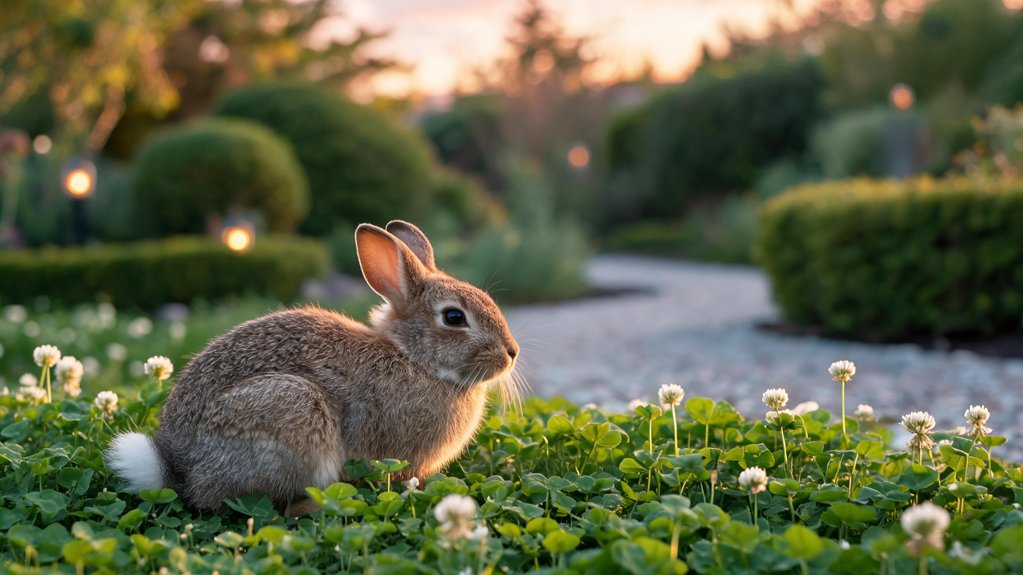
Once the afternoon starts to slide toward evening, your rabbit often kicks into its second daily activity peak—most pets begin ramping up in late afternoon and stay “busy” for about an hour after sunset.
Late afternoon signals your rabbit’s second activity peak—eating, grazing, and exploring for about an hour after sunset.
In this crepuscular window, twilight hours, your rabbit eats more, grazes longer, and explores with extra energy.
You’ll likely see stronger evening movement than in the morning, with alert hopping, chewing, and play.
Aim to check water, then offer fresh hay and treats right as dusk arrives, and keep enrichment ready.
Add tunnels or a new toy early evening, so you can safely support those binkies.
Do Rabbits Really Rest All Night?
Yes, you can expect your rabbit to rest at night, but not in one long, unbroken stretch.
You’ll usually notice a quiet mid-night nap period, with lots of dozing and short wake-ups for grooming or a little eating around 8–9 PM to 4–5 AM, even when it’s “dark and calm.”
Yes, They Do Nap
Rabbits don’t rest in one long block all night. Instead, you’ll see polyphasic sleep, which means many short naps spread through day and night.
Each bout may last a few minutes, up to about 30, and your rabbit cycles through drowsy states, slow-wave sleep, and REM-like sleep, all within those repeated rests.
And overnight isn’t silent. They still eat, groom, and hop in between naps.
But late evening through late night stays an active window, especially for feeding.
Even in deep hours, rabbits stay somewhat vigilant, because they’re prey animals.
You’ll still get 8–12 hours total sleep daily.
Quiet Midday Rest Period
But your rabbit usually doesn’t just “shut down” for the whole night. Instead, you’ll see a quiet, extended rest period right in the middle of the day.
After active time from dawn to mid-morning, your rabbit slows down, settling into deeper naps between late morning and early afternoon.
You might notice alert loafing first, then side-lying rest that still looks like “awake” to you.
This midday break helps them recover from morning activity, and it prepares them for fresh grazing and movement again in late afternoon.
Also, rabbits are crepuscular, so low-light hours drive most foraging.
Nocturnal vs Crepuscular: What ‘Night’ Means
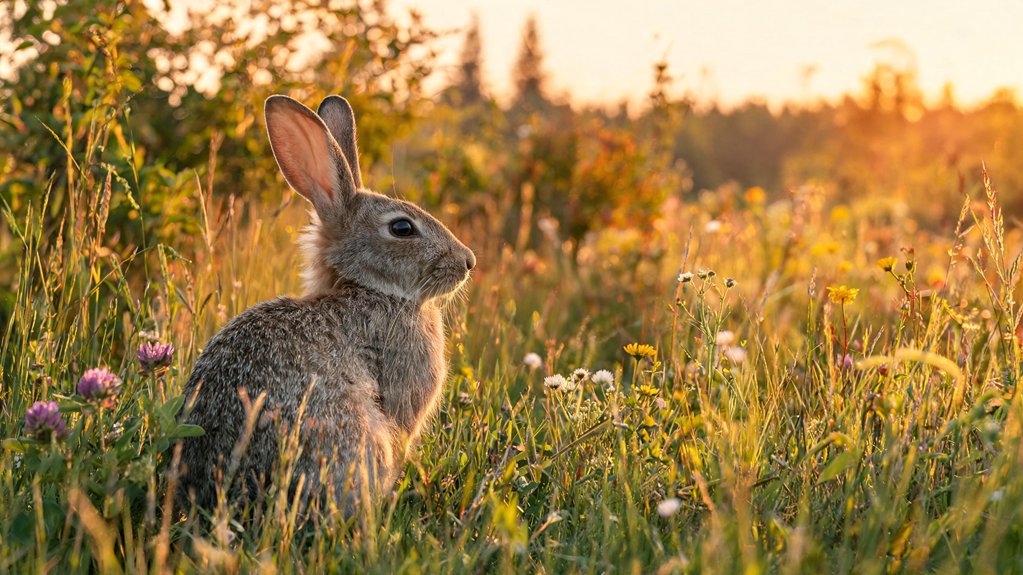
When you hear “nocturnal,” it helps to know what “night” really means. Nocturnal animals stay most active during the dark hours, then rest by day.
Crepuscular animals, like most rabbits, peak at dawn and dusk. Twilight matters. It’s the low-light time around sunrise and sunset, not the deepest night.
For you, that means your rabbit may start its busy routine late afternoon, then keep eating through much of the night, and return to hiding soon after dawn. Some rabbits even act more at night, so the line can blur.
When ‘Night’ Behavior Is Actually Normal
If your rabbit seems “up all night,” don’t panic—many rabbits peak at dawn into mid-morning, then they’re active again from early evening through late night.
You might also notice short bursts of running, exploring, or chewing right after the evening peak, then longer rest intervals in between, and that’s totally normal because rabbits are polyphasic sleepers (they nap in many short breaks, not one big block).
After dawn, it’s common for them to rest longer until mid-afternoon, so check for normal cues—alert listening, chewing, and calm posture—before you assume anything’s wrong.
True Twilight Activity Patterns
Rabbits aren’t truly nocturnal, so “night behavior” usually just means you’re seeing their normal twilight rhythm—those low-light hours right around dusk and dawn.
You’ll often notice them start moving in late afternoon or early evening.
Then they hit a second activity peak as afternoon fades, and it carries through dusk into early evening before easing off.
In the wild, rabbits show the most movement near sunset and around early night, like 19:00–21:00.
They do this because low light helps them forage and explore, while bright midday light pushes them to hide.
Early Morning Movement Is Normal
Often, you’ll see your rabbit get restless and start moving before sunrise, and that’s completely normal. Rabbits aren’t truly nocturnal. They’re crepuscular, meaning they peak in low light, especially near dawn and dusk.
You may notice running, binkies (happy jumps), and curious exploring as the room brightens. This dawn window often starts just before sunrise and lasts 1–3 hours.
You might hear hay rattling, see quick food searches, and then calmer resting again by midmorning. Give gentle interaction and fresh hay then, so their “night” behavior stays healthy.
Night Rest Intervals Occur
During the “night” hours, you’ll still see rest show up in intervals, and that’s completely normal for rabbits. Even though they’re not truly nocturnal, they cycle through nap, then light activity, then nap again.
Think polyphasic sleep, meaning many short sleep bouts instead of one long block. Between naps, your rabbit may pause to snack on hay, do a quick litter stop, or groom lightly, then settle into loaf position.
As midnight passes, deeper sleep often comes more often, yet they stay a bit alert, with occasional ear and nose movement.
When ‘Nocturnal’ Behavior Signals Stress
If you’re noticing “nocturnal” behavior in your rabbit, don’t assume it’s just their schedule—watch the *pattern*, not the clock.
Healthy rabbits are crepuscular, meaning they’re most active at dusk and dawn, and they rest overnight.
But if you see nonstop, agitated movement, or the usual dawn/dusk bursts vanish, treat it as stress.
Look for signs: frequent leg-thumping at night, repetitive bar-gnawing, pushing feeders, pacing, frantic digging, over-grooming, or hair loss.
Also note anxiety like lunging, biting, grunting, or refusing handling.
And if agitation comes with reduced appetite, fewer droppings, loud teeth grinding, hunched posture, or not eating, call your vet the same day.
When Pet Rabbits Move Indoors
When you bring your rabbit indoors, think “slow and safe,” not “all at once.” Start with a rabbit-proofed base area like a pen or a room they can’t get into trouble in, then let them spend longer and longer inside each day.
In summer and autumn, schedule staged visits before permanent moving, so they settle and explore at a manageable pace.
Give a home base for a pair at least 10 ft x 6 ft x 3 ft, or more.
Keep the room near 60–70 °F, well-ventilated, with non-slip flooring.
Remove plants, cover wires, and confine them when unsupervised.
Can House Lights Push Rabbits Toward Daytime?
Yes, house lights can push your rabbit toward daytime more than you’d think. When you keep lights on on a steady cycle, you shift their “circadian rhythm” (their internal sleep-wake clock), so feeding and busy moments start lining up with that bright part of the day.
But if you want those natural dawn-and-dusk peaks, give at least 8 hours of real darkness, and avoid bright light blasting straight through the room all night.
Light Cycles Alter Activity
You might wonder, “If I keep the lights on in the evening, will my rabbit finally act daytime?”
Most rabbits don’t work that way, because they’re crepuscular—they’re most active at dawn and dusk, not strictly at night.
Still, light cycles can nudge timing.
Your rabbit’s internal “clock,” guided by light and dark, uses eye sensors to shift activity a bit.
In longer, brighter days, activity windows stretch, even into more daytime hours.
But constant light messes up normal rhythm, raises stress, and can disrupt hormones.
Feeding Times Guide Timing
Feeding times can nudge your rabbit’s routine more than you might expect, and house lights can’t reliably “turn” that instinct off.
Rabbits are mainly crepuscular, so they eat most at dusk, dawn, and through the night.
And when you feed on cue, you help their digestion stay steady.
For most companion rabbits, offer grass hay in the morning, then pellets and hay again at night, about 12 hours apart.
Aim for late afternoon or evening for the night meal.
Keep pellets measured, veggies small, and grass hay unlimited, so fiber runs all day.
Feeding Schedules That Match Natural Rhythms
To match how rabbits naturally work, plan their meals around dawn and dusk, not the middle of the day. Wild rabbits stay mostly aboveground early morning and evening, then rest during daylight.
So set you up for success: refresh hay and give about half the daily pellets and greens at breakfast, then do the biggest serving at evening.
Offer unlimited grass hay and fresh water all day.
For adult care, aim for roughly 1/8–1/4 cup pellets and about 1 cup vegetables per day, split into 2–3 small servings.
Keep times steady, especially evening feedings.
Best Play and Bonding Times for Pet Rabbits
You’ll get the best play and bonding when you match your rabbit’s natural crepuscular rhythm, so plan sessions at dawn and dusk, when they’re most ready to move.
Aim for up to 4 hours total of supervised out-of-enclosure time, split into small 10–20 minute chunks across the morning (about 6–8 a.m.) and evening through dusk, so you don’t hit the slower midday rest phase.
And during those peak times, keep it fun and rabbit-like—tunnels, tossing toys, and foraging games—while you sit nearby for calm, steady interaction that builds trust.
Dawn And Dusk Play Sessions
Because rabbits are crepuscular, meaning they’re most active at dawn and dusk, you’ll usually get your best play (and bonding) when the light starts to change.
Aim for one session 30–60 minutes after first light, and another in late afternoon before full darkness.
At dawn, expect 1–3 hours of energetic running, binkying, exploring, and light nibbling.
At dusk, your rabbit often shows an even stronger social burst, with lively toy play and eager eating.
Keep the space safe, quiet, and well-supervised, and set up tunnels, hides, and open sprint areas.
Bonding During Peak Activity
And once your rabbit’s energy starts to spike, bonding gets much easier.
You’ll usually see the best chances at dawn, roughly 6–8 a.m., and again in the evening, about 7–10 p.m.
Rabbits are crepuscular, meaning they’re most active in twilight.
Plan gentle “together” time during those windows.
Let them explore near each other, share favorite hay, and try short foraging games.
Keep sessions 10–15 minutes at first.
During the deep rest hours, around 11 a.m.–4 p.m., switch to calm grooming or quiet proximity.
You’ll build trust faster, with less pushing.
Evening Enrichment And Exercise
Once your rabbit’s energy starts to rise after the late-afternoon lull, evening is your best window for play, exercise, and easy bonding. Aim for 6–10 p.m., with peaks around 7–10 p.m.
Set up a safe, attached run so they can graze, forage, and socialize while they move. Use non-slip flooring, keep lighting soft near sunset, and add tunnels, platforms, and hiding spots for quick retreats.
Then try running circuits for binky-friendly laps, or hay piles and puzzle feeders for foraging.
Rotate toys weekly, offer fresh hay before play, and skip huge meals right before exercise.
How Exercise Needs Change After Dark
As the light fades, your rabbit’s body shifts into its “let’s move” mode, and that means your exercise plan shouldn’t stay stuck on daytime hours.
Aim for at least 3–4 hours daily, with a big block after dusk and into early night, since evening activity often runs higher than morning.
And because activity comes in bursts, you’ll do better with 2–3 shorter play periods than one long forced session in the quiet midday rest.
Give a permanently attached, safe run so they can hop and jump overnight.
Give your rabbit a permanently attached, safe run to hop and jump overnight with tunnels, platforms, and stress-free play.
Aim for about 6’x3’ space, plus tunnels, platforms, and safe toys.
Why Some Rabbits Move at All Hours
Some rabbits move at all hours because their daily clock isn’t stuck on just “night.”
Rabbits use a light-driven circadian rhythm (a 24-hour body schedule that follows day vs. night), but they also respond to food timing and household conditions, too.
And that’s why you might see your rabbit pacing at midday, or late at night.
Light pulses can shift when they’re active.
Food timing can too, because they also run a separate feeding clock.
If you change lighting, like turning lights on later, you’ll “train” new activity times.
Give space, quiet, and meals at consistent times, so movement feels safer and more natural.
Why Do Rabbits Forage at Twilight Instead of Midday?
Because rabbits are crepuscular animals, you’ll usually see them forage—meaning “graze and nibble for food”—at dawn and dusk instead of out in the open at midday.
Twilight light stays dim and gentle, so rabbits don’t feel as exposed.
Plus, predators often hunt more in brighter stretches, so grazing at twilight cuts your rabbit’s risk.
You also get cooler air, and fresher plants.
Dew-covered grasses and weeds are often more juicy, helping your rabbit hydrate while it eats.
If you’re watching, look early morning and evening, not when the sun is high.
Why Does Dense Cover Change When Rabbits Move?
Dense cover—thick places like hedges, scrub, brush piles, and burrows—doesn’t stay the same right when your rabbit starts moving.
As your rabbit grazes, it plans escapes.
When danger pops up, it freezes, then bolts only a short distance into the nearest thick shelter.
If the cover gets farther, your rabbit runs more directly toward it.
That’s why edges matter: you’ll often see paths between open grass for food and scrub for safety.
Thickets even shape the land, so rabbits form runways through repeated routes.
Seasonal changes in food and shelter can shift these patterns too.
Do Open Habitats Make Rabbits More Night-Skewed?
Open, grass-filled areas often nudge rabbits to be more “night-skewed,” meaning they feel safest grazing and moving after dark. In open grasslands, you’ll see rabbits hide less by day, because there’s little cover to run to.
They still prefer twilight, and they feed much more during the night, then rest soon after dawn.
But when you add plenty of cover, rabbits spread their activity through day and night.
In mixed places, they use cover at daylight, then group up and forage in open ground after sunset. Even baseline night drive fits this openness link.
European Rabbits: Crepuscular With Night Moves
European rabbits aren’t strictly nocturnal. You’ll usually see them most active at dusk and dawn, that is, crepuscular, between full daylight hours.
Still, when you wonder why rabbits come out at night, it comes down to safety and steady food. They often forage from evening through early morning, sometimes with neighbors, even hundreds of meters from where they rest.
At night, they’ll also move farther from cover, about 7.25 m instead of 2.70 m, so they can graze. But keep in mind their schedule can shift in warm seasons or with less risk.
Pygmy Rabbits and Other Twin-Peak Species
If you’re wondering about “nocturnal” rabbits beyond the usual house-pet clues, pygmy rabbits are a great example—because they don’t fit neatly into one label.
You’ll see a twin-peak rhythm. They stay active through the day, but they concentrate at dawn and dusk. And, between those twilight hours, activity can jump—up to about 72% more.
In spring, summer, and fall, morning peaks usually beat evening peaks. But in winter, evening can take over.
You’ll also notice stronger night foraging in new and partial moons. They rest near burrows midday, then move again fast.
When to Call a Vet About Unusual Night Behavior
When your rabbit’s “night life” suddenly looks wrong, don’t just watch and wait.
If they stop moving, seem very tired, refuse favorite foods, or hide and withdraw, call an emergency vet.
If you notice a limp body tone, trouble standing, or they act disoriented, get help within 24 hours.
For stomach problems, treat it as urgent if they eat nothing for 6–12 hours overnight, or you see no droppings for 8–12 hours.
Watch for diarrhea, hunched pain, bloating, fast noisy breathing, open-mouth breathing, blue lips, grinding teeth, or straining.
After any fall, trauma, or suspected poisoning, call right away.
Frequently Asked Questions
Are Rabbits Truly Nocturnal, or Just Active at Night Sometimes?
You should know rabbits aren’t truly nocturnal; they’re mostly crepuscular, meaning they peak at dawn and dusk. You’ll still see plenty of night activity, often just more hidden or in short bursts.
Why Do Rabbits Come Out at Night Even if They’Re Not Nocturnal?
Rabbits come out at night like cautious dancers, even though they’re mostly crepuscular, because twilight feels safer. Low light hides them from predators, cooler temps feel comfy, and dim evenings let them graze in peace.
What Does It Mean When My Rabbit Is Awake All Night?
When your rabbit stays awake all night, it usually means it feels alert or uncomfortable. Check for stress, noise, light changes, poor hiding spots, or missed evening feeding. Offer calm, secure cover and a steady routine, then monitor closely.
How Can I Tell Normal Nighttime Activity From Stress Behaviors?
When your rabbit pauses mid-foraging after a sudden noise, then resumes grazing, that’s normal. If you see flattened ears, tense hunched hiding, repeated nonstop thumping, or bar chewing, treat it as stress and call a vet.
Should I Adjust Feeding and Play Times to Match My Rabbit’s Schedule?
Yes—adjust feeding and play toward dawn and dusk. Offer hay and pellets consistently twice daily, then schedule short, calm play around those peaks. Keep times steady to support digestion and reduce stress; avoid big sudden shifts.