Yes, you can give your rabbit banana, but only as a tiny treat. Offer fresh banana only, and keep it small: about 1 teaspoon per 2 lb of body weight, or 1–2 teaspoons total for most adults. Give it just 1–2 times per week, never on back-to-back days, and don’t pair it with other sweet fruit. Always keep unlimited grass hay and daily leafy greens as the main diet. Banana’s sugar can upset digestion, so watch their poops—keep going to learn the safest way.
Swift Summary
- Yes, rabbits can have banana, but only as an occasional treat in very small amounts, not a diet staple.
- Use a portion rule of about 1 teaspoon fresh banana per 2 lb of body weight per treat.
- Feed banana at most 1–2 times per week, and avoid other sweet fruits the same day.
- Keep fruit treats under ~5% of daily intake; the diet base should be unlimited grass hay plus daily leafy greens and a little pellets.
- Serve thin slices or small cubes and remove leftovers quickly; dried/freeze-dried banana is more sugary and needs even smaller portions.
Yes: Rabbits Can Have Banana (Small Amounts)
Yes—your rabbit *can* have banana, but only in very small amounts as an occasional treat.
Yes—your rabbit can have banana, but only in very small amounts as an occasional treat.
If you’re asking can rabbits have bananas, the kind answer is yes, but don’t treat it like a meal.
Keep banana as a little reward for variety, enrichment, and training.
It’s high in sugar and starch, so when you offer it, you protect their main diet: unlimited grass hay, daily leafy greens, and a small amount of pellets. Bananas are naturally high in sugar.
Avoid banana for young rabbits, and skip it if your rabbit has obesity or stomach issues.
Treat it like dessert, not nutrition.
How Much Banana Is Safe for Your Rabbit?
For most adult rabbits, keep banana to a tiny treat, about 1 teaspoon per 2 lb of body weight, or up to 1–2 teaspoons per serving, then stop there.
Banana is non-toxic to rabbits, but too much or too often can still upset their gut. Give it just 1–2 times per week, and don’t pair it with any other sweet fruit that same day, since fruit should stay under about 5% of their total daily food. If your rabbit is under 6 months, overweight, or has gut issues, ask your vet first and use an even smaller amount, or skip it.
Recommended Tiny Treat Portions
A tiny banana treat goes a long way. Because banana is high in sugar, you’ll keep portions very small. Use a simple rule of thumb: give about 1 teaspoon of banana per 2 pounds of your rabbit’s body weight, as a single serving. For a 4–5 pound adult, that’s roughly one thin slice, about 0.25–0.5 inches thick. Think “coin-sized,” not “snack-sized.” banana is one of the sweetest fruits commonly given Offer it after your rabbit’s grass hay and leafy greens, so fruit stays a small fraction of the diet. Keep an eye on soft stools. If you see changes, stop.
Limit Once Or Twice Weekly
Bananas should stay a rare treat, so limit them to once or twice a week for healthy adult rabbits. Offer only a thumbnail-sized sliver, about 1–2 teaspoons of banana flesh, and don’t serve it on back-to-back days.
If you also give other fruit, count banana within that weekly fruit allowance, so treats don’t stack up.
Why so strict? Too much sugar can upset digestion, leading to diarrhea, bloating, or soft cecotropes, and it can also raise obesity risk, plus dental strain.
Stick to hay, leafy greens daily, pellets in small amounts, and use banana as your special “sometimes” reward.
How Often Can You Feed Banana to Rabbits?
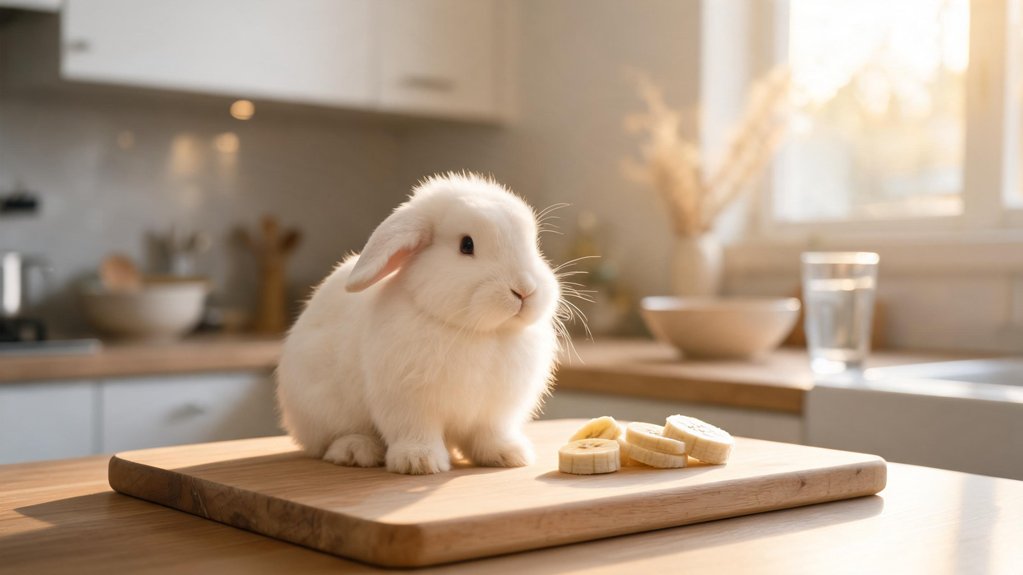
Most importantly, feed banana only occasionally, not as a daily snack.
For a healthy adult rabbit, offer banana just 1–2 times per week, and keep it small, like 1–2 teaspoons or a thin slice.
And since fruit can upset sensitive bellies, don’t do banana on back-to-back days.
If your rabbit is under 6 months, overweight, or has GI (gastrointestinal) stasis or other digestion issues, ask your vet first, or skip banana entirely.
Treat planning helps, too—count banana as your full fruit treat slot that day.
Bananas Are Treats, Not a Hay Replacement
Keep hay as your rabbit’s top priority, because it’s the fiber-rich food they need every day.
Bananas are treats, and their higher sugar means they can’t replace hay—if you swap hay for bananas, you risk softer stools and dental trouble.
Offer a tiny piece of banana only occasionally, and always make sure unlimited grass hay stays in front of them first.
Keep Hay As Priority
Instead, treat hay like the main event, because it should make up the bulk of your rabbit’s day—about 80–90% of their diet.
You should provide unlimited, high-quality grass hay first thing each morning, and keep it topped off all day, since it supplies indigestible fiber for gut health and helps wear down teeth.
Bananas belong way behind the hay. They’re sweet treats, so give only a tiny piece—about 1–2 teaspoons at most—rarely, no more than once or twice a week.
If you offer banana, cut back pellets or veggies, and watch stools closely.
Bananas Cannot Replace Fiber
Bananas can seem like a quick “extra fiber” snack, but they can’t replace hay.
You should keep unlimited grass hay as your rabbit’s main fiber source, because hay supports normal gut motion.
Bananas do have some fiber, but it’s limited, softer, and mostly soluble.
“Soluble” means it dissolves, and it doesn’t provide the same indigestible, long-fiber framework.
Plus, bananas bring a sugar-and-starch load.
If you rely on banana for fiber, you can reduce long-stem chewing, and you may trigger soft cecotropes, tummy upset, or weight gain.
Offer banana only as an occasional treat.
What Makes Bananas Risky for Rabbit Digestion?
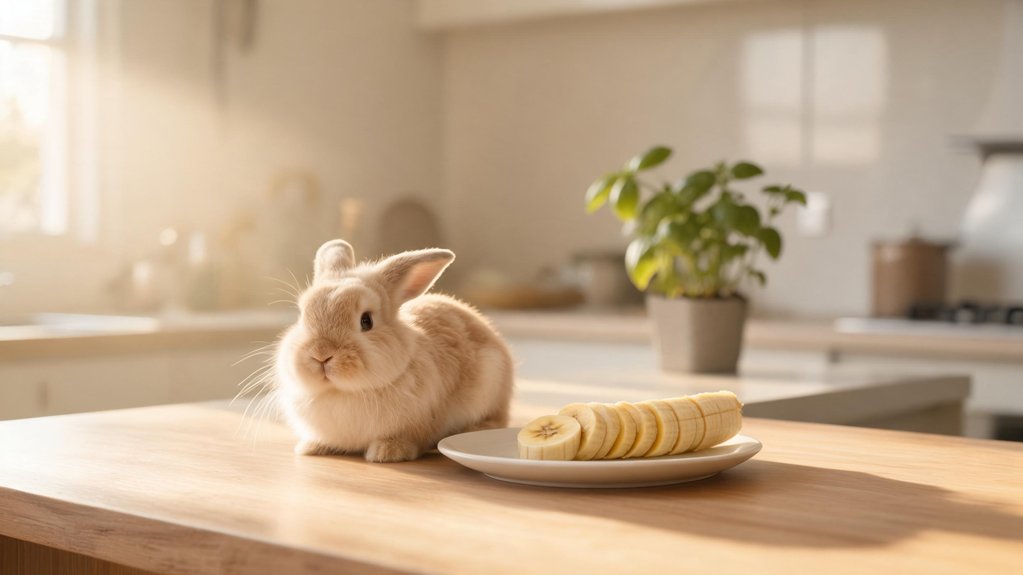
Bananas can be risky for your rabbit’s digestion mainly because they’re high in simple sugars and low in the kind of fiber rabbits rely on.
Those sugars, including fructose, ferment quickly in the caecum, the pouch where your rabbit breaks down fiber.
If you offer banana too often, you shift the “food” in this gut area away from fiber, toward rapidly fermenting carbs.
That can upset the normal cecal microflora, the helpful microbes, and may encourage toxin-producing bacteria.
You also dilute overall fiber density, which can mean weaker gut motion.
Keep banana as a tiny, occasional treat.
Can Bananas Cause Obesity or Tooth Problems?
When you treat your rabbit, you’re not just adding a snack—you’re also shaping their whole routine, and that’s where banana can get tricky. Bananas carry a sugary, calorie-heavy load, so frequent treats can push extra energy into body fat, leading to obesity.
That extra weight makes grooming harder, can raise fly-strike risk, and stresses joints, too.
For teeth, banana’s sweetness and softness give little chewing “grind,” so teeth don’t wear down like they should.
Keep banana to about a 1/4–1/2 inch slice, once or twice weekly.
Avoid it for overweight rabbits.
How Can Banana Lead to Gut Stasis?
When you give your rabbit banana, the sugar can mess with gut motility, which is the normal “push” that moves food through.
If the treat is starchy and you skimp on hay, you also reduce fiber that keeps the colon and cecum running, and that sets the stage for cecal dysbiosis (an imbalance in helpful gut microbes) and more abnormal fermentation.
And if gas builds up, your rabbit can feel pain and eat less, which can quickly snowball into gut stasis, so keep banana to a tiny piece about once or twice a week.
Sugar Disrupts Gut Motility
But sugar from banana can mess with your rabbit’s gut in a way that’s easy to miss—especially when treats start adding up.
You want their hindgut moving, and it needs fiber.
When fruit sugar rises, it can displace hay intake, so the gut wall gets less “mechanical” push for normal peristalsis. (Peristalsis is the wave-like motion that moves food.)
Extra sugar also boosts fast, digestible carbs, which can suppress motilin, a gut-motility hormone.
As transit slows, fermentation shifts, gas builds, and soft stools or gut stasis can follow.
Offer 1–2 teaspoons, once or twice weekly.
Starchy Treat Overloads Colon
Because bananas are a more starchy, sweet treat, they can push extra fermentable carbs into your rabbit’s cecum and colon, and that can slow everything down.
When starch escapes earlier digestion, it piles up in the hindgut, forcing fermentation to work overtime.
And high-carbohydrate diets can crowd out rough hay, the fiber that supports normal gut muscle movement.
So transit time drops, your rabbit makes fewer fecal pellets, and gas and pH shifts can follow.
Keep banana truly small, like a tiny treat, and don’t use it to replace daily hay and leafy greens.
Causes Cecal Dysbiosis, Stasis
Bananas can tip your rabbit’s gut off balance, and that can lead to cecal dysbiosis and gut stasis. The cecum is where good bacteria ferment fiber. But bananas have lots of sugar, and not much fiber.
When you overfeed, you replace hay and reduce cecal motility, meaning slower gut contractions. That imbalance lets troublemaking germs multiply, causing gas, diarrhea, or soft caecotrophs.
And if your rabbit already seems “stuck,” don’t add more sweet treat. Stick to 1–2 teaspoons per 2 lbs body weight, about 1/2-inch slice, no more than 1–2 times weekly.
Banana Sugar and Cecum Balance Concerns
Banana sugar can throw off your rabbit’s cecum balance if you give too much, too often. The cecum is where “good” gut microbes ferment fiber, making energy.
When you add lots of simple sugar and starch from bananas, fermentation can spike, and the microbial mix shifts away from fiber-friendly bacteria.
That imbalance can slow gut movement, and you may see gas, soft stools, or diarrhea.
But you can still be kind—keep bananas strictly occasional, like a tiny treat, while hay and leafy greens stay the daily base.
If you notice loose stools, skip fruit and stick to hay.
Safe Banana Portion by Rabbit Body Weight
When you’re deciding how much banana to give, use your rabbit’s weight as your guide, and keep it firmly in “treat” territory. For most adult rabbits, start with a ceiling of about 1 teaspoon of banana per 2 lb (0.9 kg) per treat serving.
Offer it once or twice weekly, not daily.
A 2 lb rabbit usually gets about 1 teaspoon, a 4 lb rabbit about 2 teaspoons, and a 5–6 lb rabbit about 3 teaspoons (1 tablespoon).
For younger than 6 months, skip banana. Always count banana inside the total fruit limit.
Fresh Banana vs Frozen, Dried, or Flavored
Fresh banana can work as your baseline “true fruit” treat for adult rabbits, but only in tiny amounts, because natural sugar is still sugar. Peel it, then cut plain, ripe banana flesh into very small pieces, and offer it occasionally, after hay and leafy greens are covered.
Now compare the others. Fresh has more water, so sugar is less concentrated per bite.
Dried banana and banana chips remove water, so they concentrate sugar fast.
Freeze-dried banana also concentrates sugar, even if it’s 100% banana, so keep portions very small.
Flavored treats often use flavoring on hay bases, not real fruit—so treat them as extra, not a food.
Which Banana Parts Are Safe for Rabbits?
For most rabbits, the only “go-to” banana part is the plain flesh, and you’ll want to treat it like a tiny dessert, not a snack they can graze on all day. Aim for about 1–2 teaspoons of banana flesh per 0.9 kg (2 lb) body weight, no more than twice weekly.
Use fresh, plain flesh only, with no added sugar or coatings.
But peel is a different story. It’s technically non-toxic, yet it’s tougher, less digestible, and can carry pesticide residue.
If you’re tempted, skip it or offer only tiny washed bits. Banana leaves are safer in small, infrequent washed amounts.
Best Ripeness Level for Lower Sugar
Choose bananas that are moderately ripe, ideally with a firm feel and maybe just a slight green tinge, because that keeps more carbs in a “starch” form instead of extra free sugar.
But avoid overripe bananas with lots of brown spots or browning, since the sugars rise and can raise the risk of gas, loose stools, or even GI stasis.
When you do offer a treat, keep it to a tiny piece once in a while, and save the softer, fully yellow or spotted fruit for people, not rabbits.
Choose Moderately Ripe Bananas
When you pick a banana for your rabbit, go for moderately ripe fruit—bright yellow peel, firm (not mushy), with few or no brown spots, since overripe bananas convert more of their starch into free sugars and can be harder on your rabbit’s digestion.
Choose segments with no mold, no bruises, and a more even color, not dark patches. Those checks help lower the “free sugar” load.
Then serve only a tiny piece, about 0.25 inch, once or twice a week.
Keep hay and leafy greens as the main meals, always.
Prefer Less-Ripe, Firmer Texture
Go for less-ripe, firmer bananas, because they tend to have a lower “free sugar” hit than soft, overripe fruit—and that matters for your rabbit’s digestion.
Resistant starch in firmer bananas ferments more slowly, so you avoid a quick sugar surge that can raise gas and stasis risk.
But don’t treat firm bananas like “low sugar.” You still offer only a teaspoon-sized treat, once in a while.
Choose bananas with solid structure, no mushy spots, slice into thin coins, and remove leftovers within a few hours.
Your rabbit gets a safer bite, and you get peace of mind.
Avoid Overripe, Brown Bananas
Aim to skip the super-ripe, brown, mushy bananas. As you prepare treats for your rabbit, choose firmer, fresher fruit, because ripening turns resistant starch into free sugars, like glucose and fructose.
Brown spots mean mostly free sugars, and very ripe banana is “very high in sugar,” which can upset digestion. That sugar and mushiness can throw off your rabbit’s gut flora, leading to soft stool, diarrhea, and gas.
Also, mushy fruit may be part-fermenting, increasing bloating and painful loose caecotrophs. Serve banana only as a tiny, occasional treat. If it’s brown, don’t offer it.
How to Introduce Banana Without Upsetting Stools?
To introduce banana without upsetting your rabbit’s stomach, start small, slow down the switch, and watch the poop like a detective. Keep unlimited grass hay, and feed your usual pellets and leafy greens, unchanged.
Offer banana as a tiny treat at first, then wait. Add only one new food type at a time. Do this over 10–14 days, not all at once.
During those days, check droppings at least twice daily, for fewer or softer pellets. If you see wet sticky stools, diarrhea, or uneaten caecotrophs, stop.
Check droppings at least twice daily; if you notice softer or wet stools or uneaten caecotrophs, stop immediately.
Also, keep fresh water available.
Step-by-Step: Serving Size and Cutting Tips
Start with a tiny portion, about 1–2 teaspoons of banana per 2 lbs of your rabbit’s body weight, and treat it like an occasional “sweet” rather than a daily snack.
Cut the banana into thin, coin-sized pieces—aim for roughly a 1 cm slice for a typical 5 lb adult—so each bite is easy to control.
And if you’re feeding it once or twice a week, you’ll stay within the treat limit and help prevent upset tummies.
Tiny Portion Per Serving
A tiny portion makes banana work as a treat instead of a food—so for a typical adult rabbit, keep it around 1–2 teaspoons per serving, and treat that as an upper limit.
You’re aiming to protect their main diet: unlimited grass hay, daily leafy greens, and a small amount of pellets.
Start with about 1/2 teaspoon or a very small piece, then watch for normal droppings for at least 24 hours.
If all looks good, you can offer up to 1–2 teaspoons.
Serve banana once or twice per week, never daily.
Count it within your overall fruit limit.
Cut Into Safe Pieces
Before you offer banana, cut it into tiny, uniform pieces so your rabbit can chew, not gulp.
Rinse a ripe banana, peel it fully, then strip off any stringy bits and trim away tough ends or brown mush.
Now slice the soft flesh into thin coins or small cubes, about dime to quarter size per bite, roughly 0.25–0.5 inch thick.
For smaller rabbits, break each coin in half or quarters.
Medium or large rabbits still get thin pieces, never bulky chunks.
Offer a single prepared portion, then toss any leftovers within a short time.
Signs of Upset After Banana (Poops & Appetite)
If you give your rabbit a banana, keep a close eye on their poop and appetite for the next 24 hours, because sugary fruit can throw their gut off balance fast.
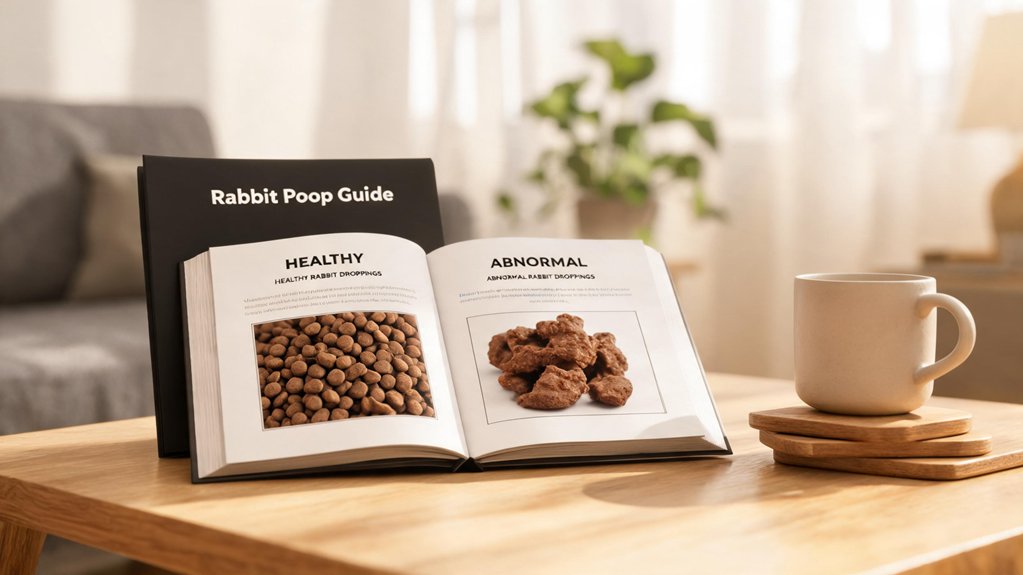
Start by checking stool shape and texture. Softer-than-normal pellets, misshapen droppings, or wet, smeary stool, mean trouble. You may also spot extra cecotropes—soft “night droppings”—stuck to fur instead of eaten.
Next, watch the amount. Fewer pellets, small, dry pellets, or no droppings can signal early stasis, “slow gut movement.”
Then check appetite. Reduced hay, skipped greens, selective nibbling, or lethargy after banana all deserve attention.
If You See Diarrhea After Banana, What Next?
When your rabbit gets diarrhea after a banana, start a quick “diet reset” right away, because their gut needs help settling down.
Give unlimited grass hay and keep fresh water available, so the gut can move normally again.
Remove sugary fruit, grains, bread, and commercial treats.
Avoid new greens for the first day.
Check droppings and appetite closely each morning and evening.
If stools stay only slightly soft for one bout, continue hay-only for several days, then reintroduce pellets and greens slowly.
But if watery diarrhea repeats, no droppings for 12 hours, or blood appears, call a rabbit-savvy vet today.
Stop bananas in the future.
Who Should Skip Bananas and Ask a Vet?
After you’ve seen diarrhea from a banana, it’s smart to think beyond “more hay” and figure out whether bananas are a good idea for your rabbit at all.
If your rabbit is overweight, skip bananas and ask a vet, because sugar can push more weight gain and crowd out high-fiber hay.
If your rabbit has a sensitive gut, chronic soft stool, or past GI stasis, avoid fruit and get guidance first, since banana sugar can trigger bloating or watery stools.
And if chewing is painful, or your rabbit has dental disease, don’t offer bananas.
Call your rabbit-savvy vet for a safer treat plan today.
Can Babies, Seniors, or Dwarf Rabbits Eat Banana?
Babies, seniors, and dwarf rabbits can all handle treats very differently, so banana needs extra caution across the board.
For babies under 12 weeks, you skip banana entirely. Their gut flora (helpful bacteria in the cecum) stays fragile, even tiny bites can trigger enteritis and severe diarrhea.
Around 6 months, and only if your rabbit is thriving, you can ask your vet first about any fruit.
For seniors, keep banana rare and minimal, since sugar can lead to weight gain and softer cecotropes.
For dwarf rabbits under 3 lb, cap banana at 1/2 to 1 teaspoon, watch closely.
Does Banana Count Toward Total Fruit Limits?
Yes—banana counts toward your rabbit’s total fruit (and treat) limit, not as a “bonus” treat on top of everything else.
Since banana is a sweet fruit treat, you must include it in the same daily cap: about one teaspoon fresh fruit per 2 lb body weight, or within the “fruit + other non-leafy veg” total guideline (like a leveled tablespoon per 2 lb).
That means no extra fruit that day. Aim for small, measured pieces, often once or twice weekly, so the rest of their diet stays hay, leafy greens, and a little pellets.
Keep it consistent.
Quick FAQ: Safest Way to Feed Banana to Rabbits?
When you introduce banana, do it with a little care, because it’s a high-sugar fruit treat for adult rabbits only.
First, pick a ripe banana, skip any moldy or bruised bits, and remove the peel.
Serve only the flesh, cut into thin slices.
Start with about half a teaspoon, like a thumbnail, and offer it alone.
Wait 24–48 hours.
Check droppings for normal size and shape, and confirm steady hay and appetite.
If stools get soft, stop right away.
If all looks good, increase gradually over 1–2 weeks, then keep it once or twice weekly.
Frequently Asked Questions
Can Rabbits Have Banana Peels Too?
You can give rabbits banana peels, but treat them like rare treasure. Offer tiny, well-washed pieces no more than 1x weekly; skip daily use. Watch closely for soft stool or bloating, and keep peel out if risk signs appear.
What if My Rabbit Refuses Hay After Banana?
If your rabbit refuses hay after banana, stop the fruit treat immediately, offer unlimited grass hay and leafy greens, and monitor droppings. If they eat little or stop pooping, contact an experienced rabbit vet right away.
Can I Give Banana to a Pregnant or Nursing Rabbit?
Yes—you can give banana to a pregnant or nursing rabbit, but only as a tiny treat. For example, offer one thin slice of plain banana flesh (no peel) once or twice weekly, keeping hay, greens, and pellets as the main diet.
Is Banana Okay for Rabbits With Diabetes or Metabolic Issues?
Banana isn’t okay for rabbits with diabetes or metabolic issues; you should avoid it or keep it as an absolute rare, tiny treat only if your rabbit’s vet approves. Stick to unlimited hay, daily leafy greens, and small pellets.
Can I Use Banana to Tempt Picky Eaters Safely?
Like a tiny sweet whistle, yes—you can use banana to tempt picky eaters, but treat it as a rare reward: offer 1–2 teaspoons (per 2 lbs) no more than once or twice weekly, after hay and greens.