You’ll find German Shepherds need 60–120 minutes of high‑intensity exercise daily, shed heavily year‑round, and thrive on structured tasks, while Huskies require 90–120 minutes of vigorous endurance activity, shed moderately, and perform best in cooler climates. Both demand secure yards and mental stimulation to prevent anxiety‑driven chewing or howling. Their bite‑risk differs slightly, with Shepherds showing a marginally higher pediatric incidence. If you explore further, you’ll see which breed truly matches your lifestyle in daily life overall.
Swift Summary
- German Shepherds need 60‑120 min of high‑intensity exercise daily; Huskies thrive on 60‑90 min of vigorous, endurance‑focused activity.
- Both shed heavily year‑round, but German Shepherds shed continuously, while Huskies have massive seasonal “blowout” periods in spring and fall.
- German Shepherds are task‑oriented, obedient, and family‑friendly; Huskies are independent, motion‑driven, and better for experienced, active owners.
- Secure, fenced yards (minimum 30×30 ft, 6‑foot fence) are essential for both breeds to prevent escapes and provide safe play space.
- Choose a German Shepherd if you want structured training and loyalty; pick a Husky if you prefer high endurance and a more autonomous companion.
Quick Comparison: Which Breed Suits an Active Lifestyle?
How does an active lifestyle map onto the two most popular working breeds? Staying on top of grooming also matters, since a German Shepherd bathing routine should be planned around how often the dog gets dirty from outdoor play.
You compare siberian husky vs german shepherd and husky vs german shepherd who’d win today clearly.
Husky bite force vs german shepherd, white german shepherd vs white husky.
German shepherd versus husky, difference between german shepherd and husky.
German shepherd compared to husky; husky vs german shepherd intelligence.
German shepherd vs husky for family dog leans toward shepherd.
Husky vs german shepherd vs golden retriever, vs wolf, vs labrador expand.
Do german shepherd and husky mix shed?
Is husky and german shepherd the same?
Husky and german shepherd similarities.
Is german shepherd stronger than husky?
What’s better german shepherd or husky?
Is german shepherd and husky a good mix?
German Shepherds need at least two hours of daily exercise to stay healthy and prevent boredom.

【Professional Pet Grooming Kit 】3 Pet grooming tools selected by pet lovers, which can meet daily all the grooming needs of pets. Let you, as the groomer, personally give your furry friend a shiny and healthy coat. This is a must-have beauty product set for pet lovers! The Best Dog Gifts - Merry Christmas

Dual-Sided Design: Start with 9 teeth side for stubborn mats and tangles and finish with 17 teeth side for thinning and deshedding. Achieve faster and more professional dematting and grooming results
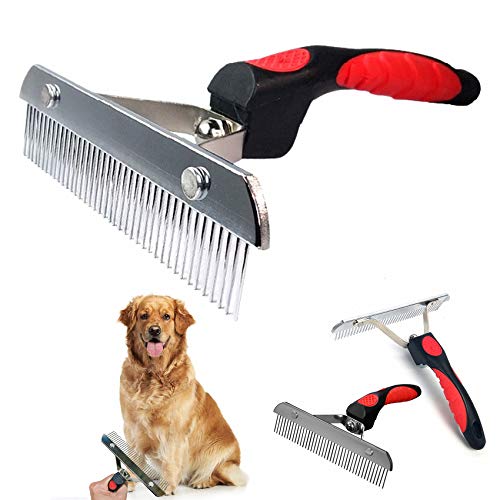
ROUNDED PIN : The long tooth undercoat rake brush has smooth rounded pins that make it easier for pets to accept grooming. The 0.94 foot long steel teeth of the rake penetrate deep into the dog's hair to remove loose fur and remove all mats, tangles and knots. Long tooth undercoat dog rake brush Not suitable for cats, puppies or short-haired pets.
Energy Levels: German Shepherd vs Husky – What’s the Difference?
You’re likely to notice that German Shepherds channel their stamina into a task‑oriented drive, whereas Huskies exhibit a continuous endurance burst suited for prolonged activity.
Current breed guidelines indicate German Shepherds need 60–120 minutes of structured, high‑intensity exercise daily, while Huskies require at least 60–90 minutes of vigorous activity, often split into multiple sessions. German Shepherd exercise needs by age also change across the lifespan, so routines should be adjusted for puppies and seniors.
If either breed receives less than these thresholds, studies show an increase in compulsive pacing, vocalization, and destructive behaviors due to unmet physical and mental needs.
Because they are a high‑energy working breed, they also need plenty of mental stimulation to stay balanced.

SAVE MONEY: Reduce expensive trips to the groomer. Our dog shedding brush works great as a dog brush for short haired dogs & dog brush for long haired dogs. It is an absolute essential for pet supplies, dog supplies, and a dog grooming kit.

【⚠️ DESIGNED FOR LONG-HAIRED PETS ONLY】This deshedding rake is engineered for long-haired, fluffy, double-coated cats and dogs (Golden Retriever, Husky, Persian, etc.). NOT recommended for short-haired or smooth-coated breeds — the long teeth won't reach the undercoat effectively. For best results, pet should have visible undercoat or matting issues.

USA OWNED AND OPERATED: From our home in Florida, we’ve proudly sold over 1 million grooming rakes to pet parents nationwide. We’re deeply committed to creating products that not only care for your pets but also help strengthen the special bond you share with them.
Stamina and Drive Comparison
While the German Shepherd channels its high‑to‑very‑high energy into focused work such as tracking, agility, and protection, the Siberian Husky expresses an equally intense but more indiscriminate drive, manifesting as restless running and a strong urge to explore.
You’ll notice that the Shepherd’s stamina supports structured tasks; studies rate its endurance as strong enough for hour‑long runs beside a handler, yet its drive remains goal‑directed. The Husky, bred for sled work, maintains steady‑pace output over 100‑mile days, demonstrating superior distance stamina.
However, its motivation centers on motion rather than obedience, so it often self‑initiates activity. When selecting a service or rescue partner, match the Shepherd’s task‑focused drive with mission requirements, and reserve the Husky for roles demanding relentless, autonomous endurance in demanding field operations today.
Because Huskies need vigorous exercise, they thrive when given regular, high‑intensity outlets.
Daily Exercise Requirements
Because both breeds rank among the highest‑energy working dogs, you’ll need to schedule at least 90–120 minutes of purposeful activity each day for a German Shepherd and roughly two hours for a Siberian Husky.
Research indicates German Shepherds benefit from divided sessions: two 30‑to 45‑minute walks or jogs combined with short obedience or tracking drills. Incorporating fetch, agility, or off‑lead trail work fulfills both physical and mental demands while preserving focus.
Huskies require sustained aerobic output; three to four outings totaling 90‑120 minutes—such as brisk hikes, bike‑runs, or controlled sprints—match their sled‑dog heritage.
Both breeds demand secure, fenced environments to prevent escape. Tracking daily minutes and varying terrain mitigates monotony and supports ideal musculoskeletal health, ensuring the dogs remain reliable partners in service roles for the broader community.
Impact of Under‑Exercise
If your German Shepherd gets less than the recommended 90 minutes of purposeful activity each day, you’ll quickly see anxiety-driven signs—excessive barking, fence-line pacing, and destructive chewing or digging.
Research shows insufficient exercise redirects high drive energy into anxiety, reactivity, and patterned destruction. German Shepherds often develop hyperactivity—jumping, pulling, and demand behaviors—when mental tasks are absent. They also amplify alert barking into vocalization.
In contrast, under-stimulated Huskies show extreme restlessness, escape attempts, and intensified howling. Their indoor expression includes carpet digging, door-staring, and sudden bursts upon owner arrival.
These behaviors increase caretaker stress, compromise household safety, and highlight the need for adequate daily outlets. Both breeds show higher problem rates under-exercise.
Providing physical outlets mitigates anxiety, preserves welfare, and supports your capacity to serve responsibly.
Required Daily Exercise: 60 Min Vs 120 Min – How Much Is Enough?
You’ll find that healthy adult German Shepherds usually thrive on 60–90 minutes of combined physical and mental activity, with many experts recommending up to 120 minutes when joint health permits.
By contrast, Siberian Huskies consistently need at least 120 minutes of vigorous exercise daily to satisfy their innate stamina and prevent behavioral issues.
Match these benchmarks to your schedule—if you can reliably provide two hours of high‑intensity work, both breeds stay fit; otherwise, a German Shepherd can meet its needs with a shorter, purpose‑driven routine, while a Husky will likely remain under‑stimulated. Because a German Shepherd’s nutritional needs shift across the puppy, adult, and senior stages, its diet should be adjusted as its activity level changes.

【Upgrade Dog Puzzle】Our dog puzzle toy is moderate level with more challenging ,difficult than level 2, not only easy slide steps, but require your dog's ability to learn sequential steps and combinations to seek hidden treats while keeping mental active .There are easy slide step and harder step in the puzzle box , dogs have to find a right way to move the red round sliders and the center parts for food, higher skills and mind required , great for the smart dogs.


Four Challenges & Levels 1-3: Multiple games with a flip game and a linear track sliding game, all requiring dogs to learn steps and find treats. This puzzle is designed to be more fun and difficult, with more unique ways to play. It can enhance your dog's IQ and train their sense of smell
German Shepherd Exercise Needs
While most adult German Shepherds thrive on 90–120 minutes of combined physical and mental activity each day, a minimum of 60 minutes is widely cited as the baseline needed to keep them behaviorally stable. To meet the baseline, plan two to three outings daily, each 20–30 minutes, and insert 10–15 minutes of obedience or scent tasks.
Working‑line adults should reach at least 120 minutes of activity—running, fetch, agility—and 15–30 minutes of mental work.
Apartment dwellers must also achieve 90–120 minutes, otherwise boredom and destructiveness increase.
Puppies need five minutes of play per month of age, twice daily, and must avoid endurance sessions until growth plates close.
Seniors require 30–60 minutes of daily low‑impact walks, with intensity adjusted to joint health. Obtain veterinary clearance before raising daily totals in dogs with orthopedic concerns.
Husky’s Energy Demand
German Shepherds usually stay balanced with 60–120 minutes of mixed activity, but Huskies push the envelope toward far higher stamina demands. As a high‑energy, long‑distance working breed, an adult Husky requires at least 120 minutes of daily aerobic and mental stimulation to maintain physiological health and behavioral stability.
Sixty minutes satisfies basic movement but falls below breed‑specific guidelines; it must include vigorous running or hiking plus enrichment to prevent boredom, and still leaves a higher risk of destructive chewing and escape attempts.
Splitting two hours into a 30–45‑minute morning run and a 45–60‑minute evening hike or pulling session aligns with the breed’s original sled‑hauling workload. Consistently meeting this threshold supports calmer home behavior and reduces stress for both dog and caretaker while enhancing your own wellbeing.
Matching Exercise to Lifestyle
If you’re deciding between a 60‑minute and a 120‑minute daily routine, the evidence shows that healthy adult German Shepherds and comparable working breeds thrive on 60–120 minutes of mixed physical and mental activity.
You should distribute that time across the day; two brisk 30‑to 60‑minute walks plus 15–30 minutes of structured training meets the minimum and reduces orthopedic strain.
A 60‑minute benchmark accommodates moderate‑activity households, urban apartments, and senior dogs, provided you include varied terrain and short scent games.
A 120‑minute schedule aligns with high‑drive owners who hike, jog, or run agility, preventing boredom‑related anxiety.
Consistency within the 60–120 minute window sustains weight control, cardiovascular health, and musculoskeletal resilience.
Monitoring heart rate and gait after each session lets you adjust intensity, ensuring long‑term joint protection and peak performance.
How to Channel a German Shepherd’s or Husky’s Energy Indoors
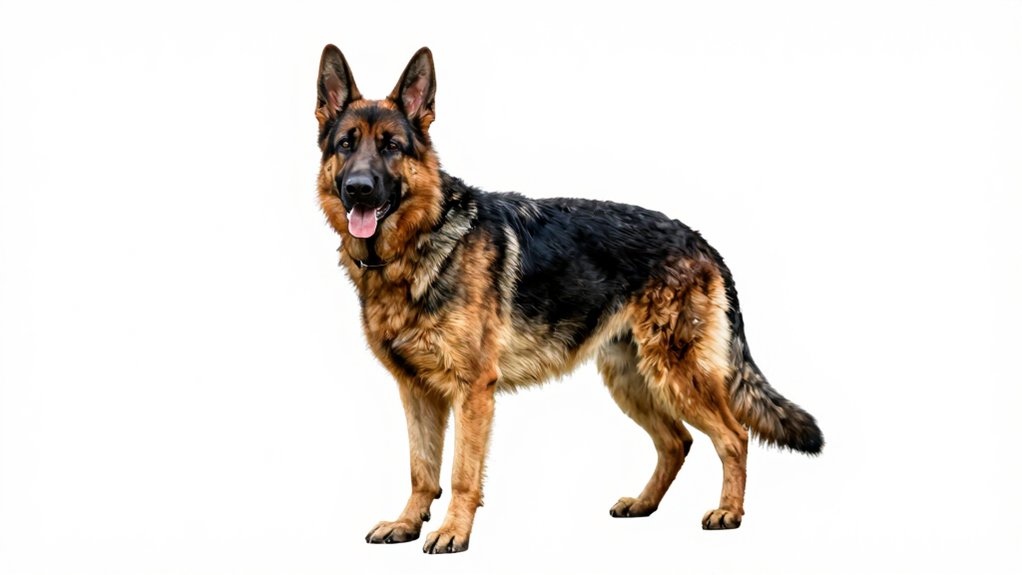
Because high‑energy breeds such as German Shepherds and Huskies require roughly 90–120 minutes of daily activity, you’ll need to integrate structured indoor exercises to curb restlessness when outdoor time is limited.
Begin with three 15‑minute training blocks per day, alternating obedience cues (sit, down, stay, heel) and short trick sequences such as spin or platform work to engage working drive without joint fatigue.
In between blocks, schedule a 10‑minute hallway fetch with a soft toy, a 5‑minute tug‑of‑war using a designated rope, and a brief stair‑run set of five steps up and down. Between sessions, close off the staircase with a stairway dog gate so your dog cannot climb or descend unsupervised.
If weather permits, supervise a treadmill trot for 5 minutes, gradually increasing speed while rewarding consistent gait; follow with a 15‑minute scent‑hunt using hidden kibble to stimulate olfactory focus and calm anxiety.

Long Lasting Dog Chews: Designed to be durable & long lasting, providing a satisfying chew that can help reduce destructive chewing. Keep your dog entertained & mentally stimulated, providing a healthy outlet for their natural chewing instincts.

Bitter Taste Stops Chewing: One spritz of Chew-Off leaves a bitter taste dogs would rather avoid, helping stop puppies and adult dogs from chewing and gnawing on your belongings. The bitter taste interrupts the habit right when it happens, so your dog learns to leave the item alone.
Year‑Round Shedding: What to Expect From Both Breeds?
You’ve just built an indoor activity plan, so now it’s time to account for the shedding demands each breed places on your home. Both German Shepherds and Siberian Huskies possess double coats that generate hair turnover, producing fur on floors, furniture, and clothing daily.
Baseline shedding for German Shepherds is classified as heavy, while Huskies exhibit moderate‑to‑heavy loss. Seasonal undercoat blows amplify this load: Shepherds release up to half their coat during spring and fall, Huskies blows last four to six weeks and generate dense clumps.
Indoor residency equalizes distribution, eliminating sharp peaks but maintaining a influx of guard hairs and undercoat fibers. Climate, humidity, and artificial lighting modulate photoperiod cues, shifting shedding intensity.
Expect persistent cleaning demands and dander levels for either breed. Regular daily brushing with an undercoat rake can noticeably reduce the loose fur that settles around the home.

Size Instruction: This medium dog harness fits chest girth: 24-28 in, neck girth: 17-19 in. Perfect for Corgis, Bulldogs, Shiba Inu, and Pitbulls for hiking, walking, or daily outdoor adventures. Breed suggestions are for reference; please measure your dog's chest, neck, and weight for the best fit.

No Pull, 2 Clips - With 2 sturdy metal hook loops for leash attachment. Use the front clip to create gentle redirection force, to reduce tugging during walks and training. While back clip is great for casual walks, jogging for well-behaved dogs
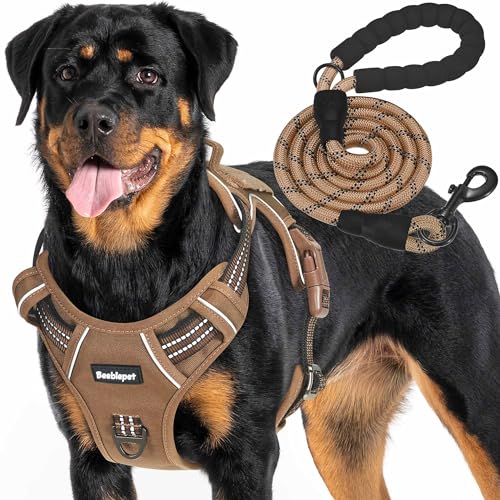
【Heavy-duty Dog Harness】 Specially designed for powerful robust dog. The heavy-duty harness is crafted from durable nylon, reinforced with sturdy stitching and equipped with two sturdy triangular rings
Grooming Strategies to Tackle Year‑Round Shedding
You’ll brush your German Shepherd or Husky daily with a pin or slicker brush to remove loose hair and maintain coat health.
During spring and autumn, you supplement the routine with targeted de‑shedding sessions using an undercoat rake or Furminator‑style tool to penetrate dense undercoat layers.
These combined practices, supported by grooming studies, reduce indoor fur accumulation and preserve skin integrity.
Pairing this grooming routine with a protective car cover also keeps dog hair from settling into your vehicle seats during trips.
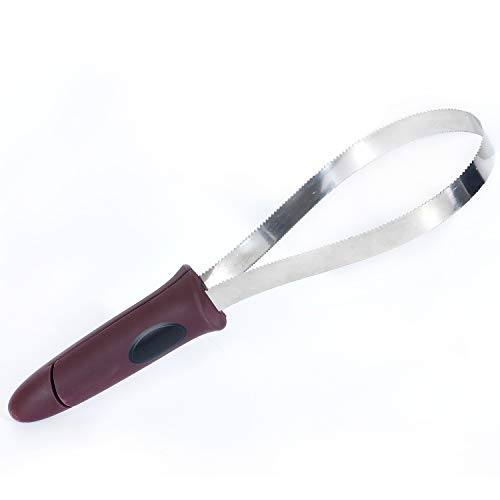
SOFT ERGONOMICALLY DESIGNED HANDLE-Which comfortably forms to your hand. It's a non-slip handle grip. No matter which way you hold, it dramatically maximizes your control while grooming.

Professional Design Exclusively for German Shepherd: This premium German Shepherd brush is engineered for German Shepherds’ thick double coats. It deeply penetrates the dense undercoat and long topcoat, efficiently removing loose hair, tangles, and mats while keeping the coat neat and healthy

【Easy Desheding】: Swihauk self cleaning dog brush for long haired dogs with release bottom helps effortlessly reduce shedding. A must have dog brush for short haired dogs, cat brush for indoor cats, cat brush for shedding, slicker brush for dogs.
Daily Brushing Routine
While a German Shepherd’s dense double coat sheds year‑round, a Husky’s similarly thick fur needs a slightly lower baseline brushing frequency, so customizing the daily routine to each breed’s shedding pattern maximizes hair removal and coat health.
For a German Shepherd you’ve brushed with a pin brush every day for at least fifteen minutes, using slow strokes that follow the hair’s natural direction and paying extra attention to the neck ruff, tail, thighs, and armpits. After the primary pass, apply a shedding rake or Furminator‑type tool two to three times weekly to reach the undercoat without over‑scraping, then finish with a rubber grooming mitt to lift residual hairs.
For a Husky, brush with a slicker and metal comb daily during shedding, fifteen minutes regularly.
Seasonal De‑Shedding Sessions
When spring arrives, the double coats of German Shepherds and Huskies don’t stay static; they enter a high‑shedding phase that you can control with a structured seasonal de‑shedding session.
Begin with a 10‑minute undercoat rake on rear, tail, flanks, and shoulders; hold at a slight angle, use short strokes, and limit to three passes per area.
Follow with a warm (100–102°F) bath, apply mild deshedding shampoo along hair growth, then rinse thoroughly, especially over rear and dense ruff.
Add a rinse‑out conditioner to separate undercoat from guard hairs.
Dry with a high‑velocity dryer on moderate, nozzle 45° 4–6 inches from skin; start rear‑first, then forward, pausing to brush loose fur.
Conclude with a post‑dry rake and comb to smooth the coat and reduce shedding.
Managing Seasonal Coat Blow for German Shepherds & Huskies
Because double‑coated breeds shed heavily in spring and fall, managing the seasonal coat blow demands a structured grooming routine. You should brush your German Shepherd or Husky daily during peak blow, using at least ten minutes of section‑by‑section, line‑brushing that follows hair growth.
Employ an undercoat rake to reach deep fibers, then finish with a slicker brush to smooth guard hairs. Pay extra attention to the ruff, haunches, and tail to prevent matting.
Warm baths with conditioner at the onset loosen dead undercoat; follow with a brief high‑velocity dryer to reduce residual hair. Steel combs or de‑matting combs can clear tangles in the neck and hind‑leg “pants.”
Consistent daily grooming limits indoor hair accumulation and supports coat health. It also improves your dog’s comfort. Shed hair also clings to car upholstery on trips, and a dog car hammock helps protect rear seats while keeping loose fur contained.

All-in-One Grooming Solution: This upgraded brush combines a dematting comb, undercoat rake, slicker comb, and deshedding blade in one tool. Effortlessly switch between removing stubborn mats, reducing shedding, and daily coat smoothing without needing multiple brushes;

A Better Dog deShedding Tool: FUR4's patented design is made specifically for Long Hair Dogs to remove loose fur and reduce shedding.

Soft Extended Pins For Gentle Brushing: Our dog brush for husky features soft, gentle pins that allow for deeper brushing without scratching your dog‘s skin. Each pin is bent and tilted at about 45 degrees to avoid discomfort during grooming sessions
What Kind of Yard Do You Need for a German Shepherd or Husky?
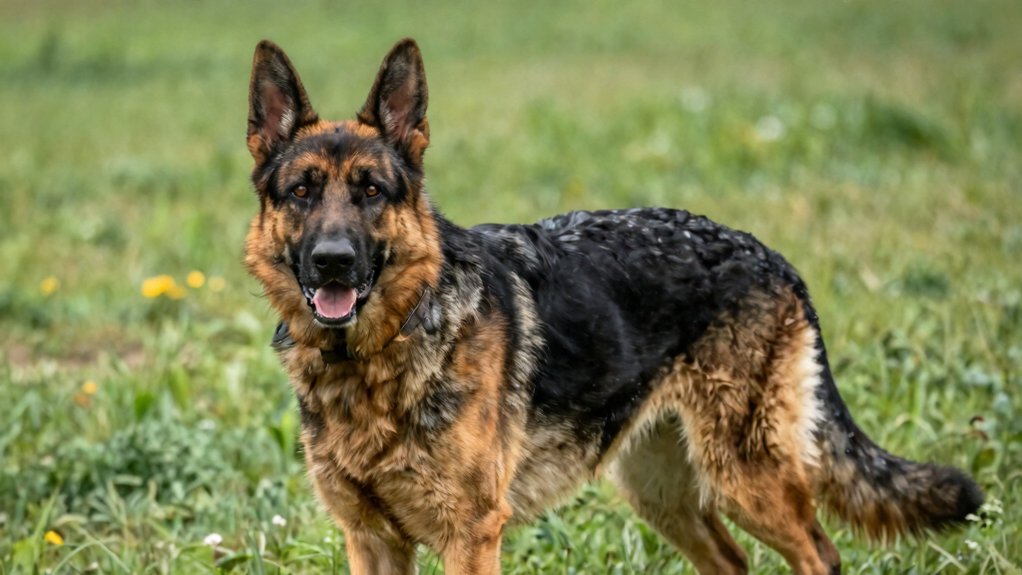
If you have a moderate‑to‑large, securely fenced yard, you can meet the exercise and safety needs of both German Shepherds and Siberian Huskies; however, the specific dimensions and containment features differ.
For German Shepherds, a fenced area of at least 30 × 30 feet allows 60–120 minutes of sprinting, retrieving, and agility work. The fence should be a minimum of 6 feet high with reinforced corners and double‑latching gates. Because repetitive jumping and hard turns can stress developing joints, owners should watch for signs of hip dysplasia, such as stiffness or reluctance to run.
Huskies require a larger, open space—ideally 50 × 50 feet or more—to accommodate 90–120 minutes of high‑speed running. The fence height should be 6–8 feet, with inward‑angled tops, and underground dig guards 12–18 inches deep are essential.
Inspect perimeters daily and provide supervised play to maximize safety and training outcomes. By maintaining these standards, you guarantee the dogs’ physical health, reduce escape risk, and support responsible community pet ownership.

【Note】Product Dimensions: 7.56 x 2.95 x 2.95 inches. Not intended for large dog breeds with aggressive chewing habits.This treat dispensing dog toy is made of food-grade Ultra-Rigid Nylon—sturdy (a type of food-safe plastic), meeting pet safety standards, ideal as dog enrichment toys.

【Size】: L9.44" * W9.44"* H1.14" suitable for cats, puppies and small dogs.

【Size】: L9.44" * W9.44"* H1.14" suitable for cats, puppies and small dogs.
Climate Fit and Heat Tolerance: Suitability in Warm Regions
Huskies stem from Arctic regions; their thick double coat retains heat, making temperatures above 23 °C uncomfortable and triggering overheating near 27 °C.
In warm zones you’ve got to supply air‑conditioned indoor space, restrict outdoor activity to dawn or dusk, and watch for excessive panting, drooling, or collapse.
German Shepherds, developed for temperate European work, handle moderate heat better, remaining safe up to roughly 28 °C with shade, water, and rest. Risks increase sharply above 35 °C, especially with high humidity.
Provide shaded rest areas, schedule walks during cooler periods, ensure hydration, and obtain veterinary guidance for breed‑specific heat‑management plans carefully. When traveling to warm destinations, pack a dog essentials travel bag with portable water bowls, cooling towels, and extra water so hydration stays within reach.
How Safe Are German Shepherds and Huskies Around Kids?
Although both breeds can coexist safely with children when properly socialized, German Shepherds present a statistically higher bite risk, accounting for roughly 4 % of pediatric dog‑bite cases versus 1.9 % for Huskies in recent trauma‑center data.
You should evaluate your child’s age, activity level, and your ability to supervise constantly. German Shepherds are large, strong dogs; they may knock over toddlers during excited play even when they intend to be gentle.
Huskies are medium, athletic, and love games, but their jumping and chasing can unbalance young walkers.
Both breeds show wide individual variation; temperament depends on socialization, consistent training, and adult oversight.
Vet guidelines advise families with preschoolers to prioritize interactions, enforce boundaries, and always use reinforcement to mitigate the elevated bite risk of German Shepherds. During walks, an adult can use a dual-clip harness to switch between the front leash attachment for steering and the back attachment for everyday walking.

DUAL LEASH ATTACHMENT POINTS. Features an aluminum V-ring on the back and reinforced webbing at the chest. Gives you options for everyday walks or redirecting dogs that tend to pull, so you can enjoy more controlled and pleasant outings.

OneTigris MAMMOTH Dog Pack: Durable 1000D nylon with mesh lining for breathability to maximize function and comfort on lengthier outings
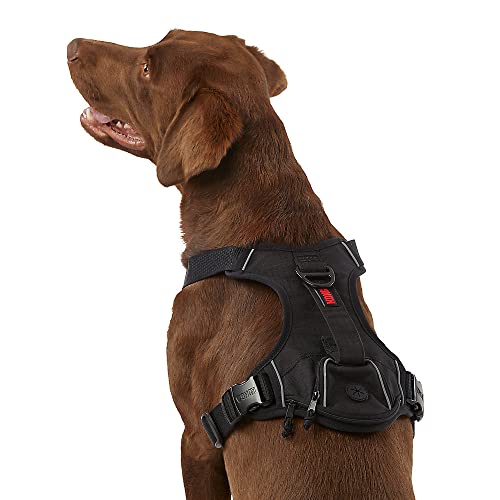
KONG Ultra Durable Waste Bag Harness provides control while the two of you are out on walks together, this harness comes with a waste dispenser and is great for active dogs.
Training Challenges: Which Breed Is Harder for New Owners?
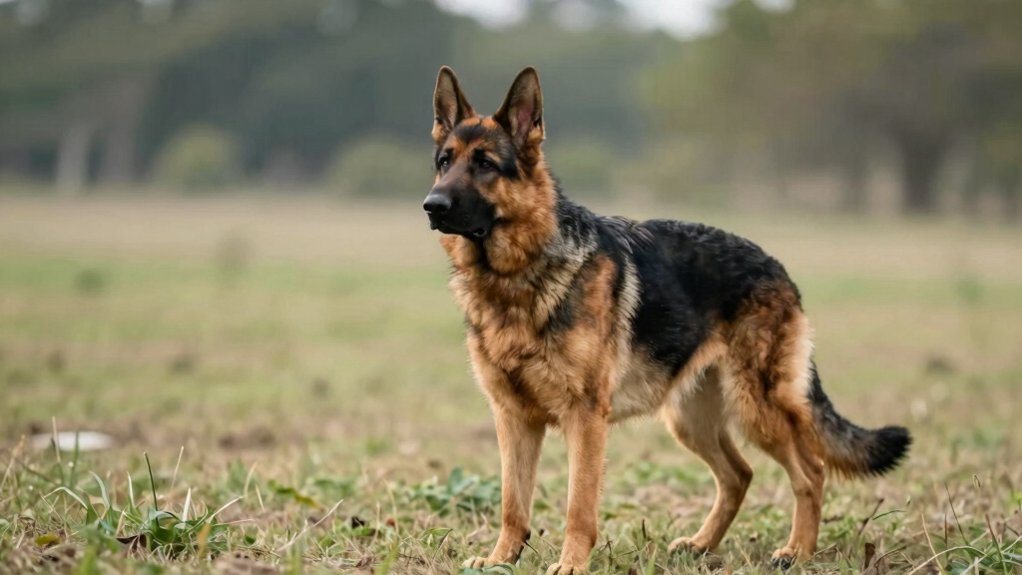
Because German Shepherds consistently score at the top of trainability scales (5/5 or 10/10), they’re generally easier for novice owners than Siberian Huskies, which experts rank among the most difficult breeds to train. You’ll find German Shepherds enthusiastic to please, displaying high intelligence and a strong work ethic that translates into rapid obedience when you apply consistent, positive reinforcement.
In contrast, Huskies exhibit fierce independence, low handler focus, and boundary‑testing behavior; they require experienced owners, creative high‑value rewards, and unwavering leadership to achieve basic commands. Neglecting structure with a Shepherd can foster overprotective reactivity, while insufficient training with a Husky often results in persistent disobedience and self‑directed activity.
Common Problems When Either Breed Is Under‑Exercised
When you fall short of the daily 1.5–2 hours of vigorous activity that German Shepherds and Siberian Huskies require, a cascade of behavioral, emotional, and physical problems typically emerges.
Under‑exercised German Shepherds often chew furniture, walls, and shoes; huskies may dismantle doors or dig under fences. Both breeds increase barking, howling, and counter‑surfing when bored.
Restless pacing, circling, and stare‑at‑the‑door behaviors indicate chronic arousal, while demand barking and object‑stealing reflect attention‑seeking.
Exercise deprivation triggers anxiety, reactivity, and stress‑related licking or panting in shepherds and depressive‑like lethargy in huskies.
Orthopedically, insufficient activity predisposes weight gain, obesity, and joint strain in these high‑energy working breeds.
Providing structured physical and mental outlets mitigates these risks and supports overall welfare.
Consistent daily workouts preserve health and community harmony everywhere.
Final Checklist: Choose Between a German Shepherd and a Husky
Seeing the fallout of under‑exercise – chewed furniture, excess barking, weight gain – makes the decision between a German Shepherd and a Husky more than a matter of taste; it hinges on how your home, schedule, and climate align with each breed’s documented requirements.
Use this checklist: match activity—German Shepherds need high, structured work plus mental tasks; Huskies require 90–120 minutes of vigorous exercise.
Assess environment—German Shepherds adapt to varied climates with a cool resting spot; Huskies need cool weather and a large yard.
Grooming—both shed heavily; German Shepherds need 2–3 weekly brushes, Huskies weekly to daily during coat blows.
Temperament—German Shepherds provide loyalty and excel in service; Huskies are sociable but less obedient.
Align these factors with your ability to serve family or community.
Frequently Asked Questions
Do German Shepherds and Huskies Have Different Common Health Problems?
You’ll find they differ: German Shepherds often face hip dysplasia, degenerative myelopathy, and anal furunculosis, while Huskies commonly develop juvenile cataracts, epilepsy, and hypothyroidism, each requiring breed‑specific preventive care via routine check‑ups and diet management.
Which Breed Is More Prone to Hip Dysplasia?
Consider the data: German Shepherds are far more prone to hip dysplasia than Siberian Huskies, with roughly 20‑30% prevalence versus about 2% in Huskies, guiding your breed selection responsibly; you’ll help guarantee healthier, happier lives.
How Much Does Feeding a German Shepherd Versus a Husky Cost Monthly?
You’ll spend roughly $75–$150 each month feeding a German Shepherd, while a Husky typically costs $45–$90. These ranges reflect standard kibble; premium or raw diets can increase both budgets substantially for your family’s health well‑being.
Can German Shepherds and Huskies Live Peacefully With Other Dog Breeds?
Yes, you’ll find German Shepherds and Huskies can coexist peacefully with other breeds when you provide early socialization, consistent positive training, and supervised introductions, and ongoing monitoring; matching sizes and genders overall considerably reduces conflict.
What Are the Average Lifespans of German Shepherds Compared to Huskies?
You’ll find German Shepherds usually live nine to thirteen years (average ten to eleven), whereas Huskies typically reach twelve to fourteen years (average around thirteen), indicating Huskies outlive Shepherds by roughly two to four years.