You’ll see your German Shepherd’s heat last about 14–21 days, with four phases: Proestrus, Estrus, fertile days, then Diestrus. To time breeding, start progesterone tests around heat day 7–9, and mark “day 0” when it first rises above 2 ng/mL; when it hits 5–10 ng/mL, ovulation is ~24–60 hours away. For safety, breed after health testing and about 20–24 months, then confirm pregnancy at day 21–28 with ultrasound or relaxin. Next, prepare for whelping stages and puppy survival.
Swift Summary
- Track the cycle phases: Proestrus (7–10 days), Estrus (5–9), fertile stage (5–9), then Diestrus.
- Use progesterone testing from heat day ~7–9, marking day 0 when it first rises above 2 ng/mL and watching for ovulation near 5–10 ng/mL.
- Breed only when timing and health are right: avoid first heat, target 20–24 months, and complete genetic, hip, and elbow testing.
- Confirm pregnancy with ultrasound after day 21–25 (more reliable after day 28), relaxin tests around day 21–30, or radiographs after day 40–45.
- Plan whelping by recognizing pre-labor signs and temperature drop, and respond urgently if labor stalls or no puppy follows strong straining.
German Shepherd Heat Cycle Phases and Timing
Getting familiar with the German Shepherd heat cycle phases helps you plan breeding—or prevent unwanted matings—with way more confidence. Do you wonder, “how long does a german shepherd stay in heat” and “how long german shepherd in heat”? Typically, the german shepherd in heat lasts 14–21 days, with four phases. Proestrus runs 7–10 days, with swelling and bloody discharge, but she’s usually not ready. Estrus follows, often 5–9 days, when she may flag her tail and accept mating. Fertile stage then lasts 5–9 days and is when pregnancy is most likely. Diestrus then lasts 60–90 days. In anestrus, she rests 4–5 months. This helps you time when can a german shepherd get pregnant. Good nutrition supports her through every phase, so review options for German Shepherd dog food that suit her life stage.
How to Track Ovulation Days 9–15 for Breeding Success
You’ll start by testing progesterone, using a lab number called ng/mL. Aim for daily or every-other-day tests, and begin around heat day 7–9. When progesterone first rises above 2 ng/mL, mark that as day 0 for your schedule. Then keep testing until it climbs to 5–10 ng/mL, which usually means ovulation 24–60 hours away. Watch for tail flagging and straw/pink discharge too. Hormonal shifts during this window can also make a German Shepherd eat less, but a sudden refusal of food may point to illness or stomach problems that need veterinary attention.
You can also use serial progesterone testing with or without LH testing to sharpen when the fertile window begins.

High quality portable canine progesterone analyzer. The test result value is relatively small. Because it is different from the reference value of the local American testing machine. We have proven that the test results of this machine range from 15 to 25, which is suitable for animal breeding.

BREED IDENTIFICATION: Embark screens for over 400 dog breeds. Using a research-grade genotyping platform developed in partnership with Cornell University College of Veterinary Medicine, Embark offers the most accurate breed breakdown on the market

Scope of application:Over 40 kg(88lb):Tibetan Mastiff, Caucasus, Dadan, Alaska, Central Asia, Kangao, etc.20-40 kg(44-88lb):German Shepherd, Husky, Golden Retriever, Labrador, British Bull, Bit, etc.10-20 kg(22-44lb):French cow, Pug, Corgi, Akita, Shiba Inu. 1.5-10 kg(3.3-22lb):Teddy, Pomeranian, Chihuahua, Poodle, Schnauzer.
Best Age and Litter Interval for German Shepherds
First, don’t breed your female at her first heat.
You should wait until about 20–24 months, after hip, elbow, and genetic tests. OFA testing should be finalized at 24 months for hips (or at 12 months for SV a-Stamp), because preliminary scores can change.
Then aim for a first litter around 2–3 years, when growth and temperament feel stable. Working-line and show-line German Shepherds differ in drive, temperament, and build, which is worth considering when planning a breeding program.
Next, space litters at least 12–18 months apart.
That helps her body recover between cycles.
Many ethical programs retire dams by 7–8 years, and avoid breeding after about 8.
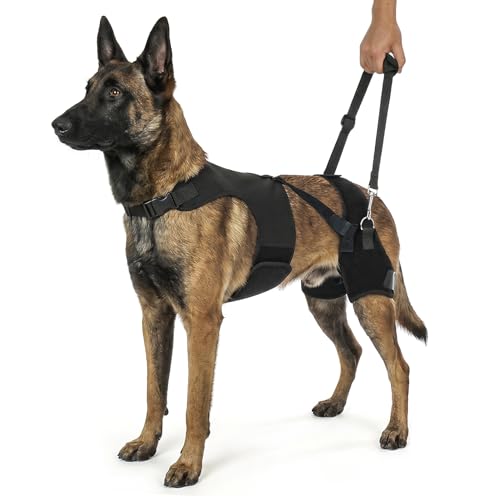
Targeted Hip Stabilization for Enhanced Mobility: Our dog hip dysplasia brace provides focused support to the hip joint, directly addressing instability and discomfort. This hip support for dogs is designed to aid in the treatment of hip dysplasia and degenerative conditions, helping your canine companion move with greater ease

SIZE XL: Measure your dog before ordering. Fits neck circumference 19.3–24.8 in (49–63 cm), chest circumference 22.2–29.1 in (56.5–74 cm), with a back length of 14.0 in (35.5 cm). Compare all three measurements with the size chart; do not choose by weight or breed alone.

Sizing Info: Size S - Neck Girth 19”, Chest Girth 20”-27”, Back Length 11”-14”,Weight Range:18 - 32lb, Leg Strap Maximum Length 19” Size M - Neck Girth 21”, Chest Girth 24”-32”, Back Length 14”-17”,Weight Range:30 - 60lb, Leg Strap Maximum Length 22” Size L - Neck Girth 23”, Chest Girth 27”-36”, Back Length 17”-20”,Weight Range:60 - 90lb, Leg Strap Maximum Length 25” Size XL - Neck Girth 25”, Chest Girth 31”-40”, Back Length 19”-24”,Weight Range:85 - 140lb, Leg Strap Maximum Length 29”
Confirming Pregnancy and Planning Week-By-Week Care
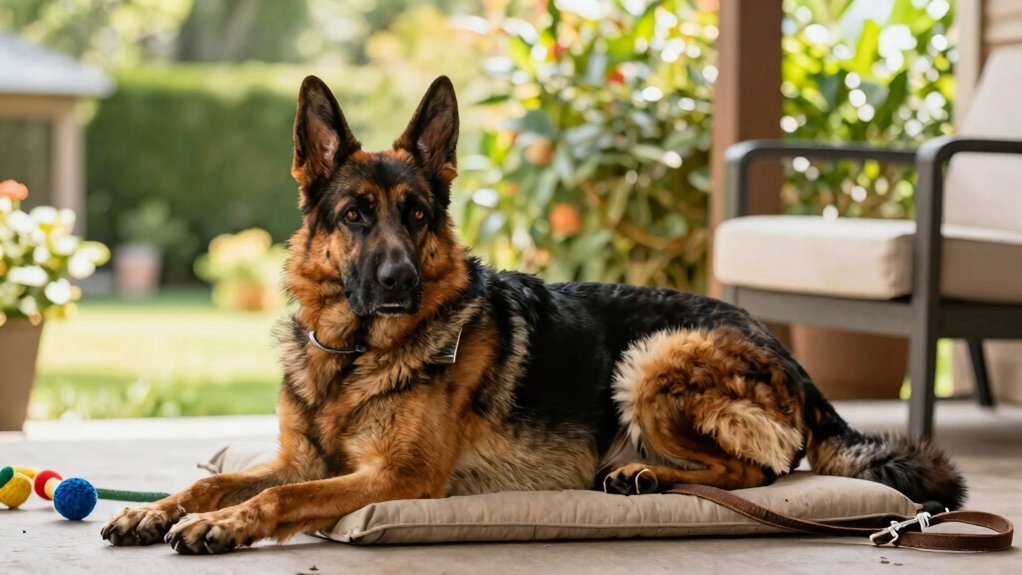
Confirming your German Shepherd’s pregnancy early—and planning care by the week—sets you up for an easier, safer whelping.
Confirm your German Shepherd’s pregnancy early and plan weekly care to support an easier, safer whelping experience.
To serve her best, mark your mating date, then book a vet visit.
Around days 21–25, trans-abdominal ultrasound can confirm, with reliable results after day 28.
Relaxin blood tests also work roughly days 21–30.
Palpation may help days 20–35, but accuracy varies, so let an expert handle it.
Radiographs work after day 40–45, but day 50+ gives more accurate litter counts.
Then plan: keep weight near ideal early, aim under 10% gain for six weeks, and switch to puppy food near week 6. Because puppies gain height and weight rapidly, following a German Shepherd growth chart from puppyhood through adulthood helps you judge whether the litter is developing on track.

BREED HEALTH DOG FOOD: Royal Canin Breed Health Nutrition German Shepherd Puppy Dog Food Dry Formula for purebred German Shepherds 8 weeks to 15 months old

Diamond Naturals Large Breed Puppy Lamb and Rice dry dog food; REAL PASTURE-RAISED LAMB is the #1 ingredient; specially formulated with carefully determined protein and mineral content to support the needs of LARGE BREED PUPPIES
BREED HEALTH DOG FOOD: Royal Canin Breed Health Nutrition German Shepherd Puppy Dog Food Dry Formula for purebred German Shepherds 8 weeks to 15 months old
What to Expect During Whelping, Labor, and Puppy Survival
During whelping, you’ll watch for a clear, multi-stage process—and knowing what comes next helps you act fast if something feels off.
First, pre-labor brings nesting, restlessness, panting, shivering, reduced appetite, maybe vomiting. Within 24 hours, her rectal temperature drops below about 99°F (37.2°C).
Stage I lasts 6–12 hours, sometimes 10–24. Stage II begins with visible straining. Water breaks, contractions build, and the first puppy arrives in 1–2 hours.
Stage III delivers placentas within ~45 minutes after each pup. But if stage I drags over 24 hours, or strong straining brings no puppy, call your vet.
Intervals over two hours are urgent.

Extra Includes Puppy Whelping Supplies - Pig Rail *1, 50*50in washable puppy mat *1, puppy collars *12 and growth charts *3.

1.Pet Health Records: You’ll get 12 dog vaccination record books, 6 record keeping charts, 12 adjustable breakaway puppy collars in various colors, and ID stickers matching the collars’ hues. Ample in quantity, it’s the perfect set for meeting newborn puppy birthing needs.

【Complete Newborn Puppy Care Kit】 This all-in-one puppy whelping kit includes 12 dog vaccination record books (5×3.5 inches), 6 record keeping charts (6.6×5 inches), 12 adjustable newborn puppy collars in 12 colors (size S, 7.9 inches long), 2 sticker sheets with 12 colors totaling 48 stickers (4.9×5.4 inches each), and 1 portable blue storage bag (9.8×6.3 inches). Perfectly designed for newborn puppies, litters, and breeders, this whelping kit meets all your birthing and tracking needs.
Frequently Asked Questions
Can a German Shepherd Get Pregnant During Proestrus Without Visible “standing” Behavior?
Yes—you can get pregnant during proestrus even without clear standing. Proestrus can overlap early fertile hormones. If you mate, sperm can survive until ovulation in estrus. For safety, ask your vet or track progesterone and cytology.
How Can I Tell the Heat Phase Using Behavior Versus Physical Signs Only?
Use behavior first: watch male interest vs your dog’s receptivity. If she avoids males, marks more, and licks often, she’s in proestrus. If she flags/tails aside and stands, she’s in estrus. Track discharge and vulva swelling.
What Tests Should I Run Before Breeding to Reduce Genetic and Health Risks?
Run OFA/PennHIP or BVA/KC hips and elbows, x-ray for LTV and CVCM screening, test SOD1 (DM) and MDR1, complete a full breed DNA panel, add cardiac ultrasound when indicated, annual eye exams, thyroid labs.
Are Progesterone and Ultrasound Timing Enough, or Should I Test Relaxin Too?
Progesterone and ultrasound timing often suffice, but you can add relaxin to strengthen confirmation. Test progesterone for ovulation, scan ~21 days post-breeding, then consider relaxin ~day 28+ for high specificity.
What Causes Stillbirths, and How Can I Prevent Them at Home?
Stillbirths often come from oxygen deprivation during hard, prolonged labor, placental or cord problems, infections, or congenital defects. At home, monitor whelping closely, keep the area clean/warm, note timings, and get vet help immediately for stalled labor or weak puppies.