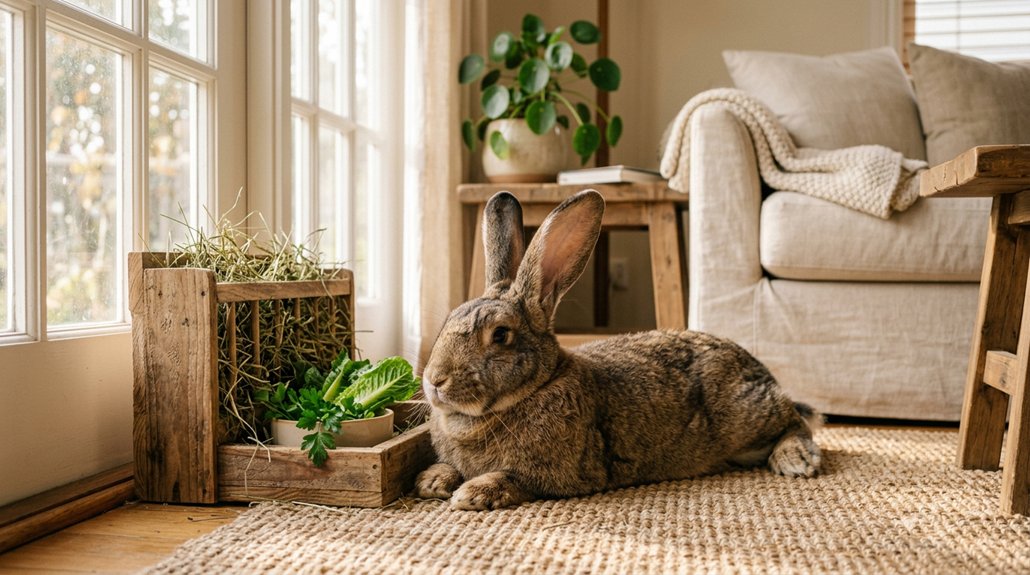
Rabbits live where food and cover overlap, so you’ll find cottontails at field edges and in landscaped backyards, near thick shrubs, fence lines, and briers. If you’re watching for “forms,” think shallow grass shelters lined with leaves. European rabbits go deeper, living in large warren systems with many entrances and tunnels about 3 m down. In wetlands, swamp and marsh rabbits stick close to water, using dense riparian brush. They don’t hibernate, they survive winter with thick bedding and sheltered hides. Keep going—you’ll spot the patterns faster.
Swift Summary
- Rabbits live in habitat edges where open areas meet dense cover, including landscaped backyards and fence-line thickets.
- Swamp and marsh rabbits prefer wetlands, riverbanks, and thick vegetation near permanent water and muddy lowlands.
- Western brush rabbits inhabit chaparral and oak woodlands, sometimes using suburban areas with suitable cover.
- European rabbits often live in extensive warrens with multi-entrance burrows and branching tunnel systems near grasslands or dry edges.
- Cottontails rely on shallow “forms” and dense shrubs, using brush piles and protected winter bedding for shelter without deep burrows.
Where Do Rabbits Live? Habitats by Region and Season
In the U.S., you’ll most often find cottontail rabbits at the edges, where open areas meet denser cover—think grassy yards with shrubs nearby.
They also use landscaped backyards.
Some types, like swamp and marsh rabbits, prefer wetlands, along riverbanks and thick vegetation.
In the west, brush rabbits live in chaparral and oak woodlands, and sometimes in suburban areas.
They may travel up to a mile from summer feeding spots to winter sites with more food and shelter. Rabbit habitats also range from deserts to tropical forests and wetlands.
For wild rabbits, offer habitat respect, not capture.
What Cover Keeps Rabbits Safe in Grass and Brush?
When rabbits feel safe in grass and brush, it’s usually because you’ve got the right kind of “cover” nearby—places where they can hide fast and move without being seen.
If you’re wondering where do rabbits live, look for thick grasses at least 8 inches tall, with stiff clumps that form overhead shelter.
In brushy areas, briers and shrub thickets add thorny protection, and they block predators’ easy access.
You can also notice forms and scrapes, shallow nests lined with leaves.
Add brush piles about 10–15 feet wide, up to 3–4 feet high, near edges.
Because rabbits are edge species, they’re often most secure where dense cover borders open areas they use for feeding.
Please help responsibly; don’t keep wild rabbits.
How European Rabbits Use Warrens, Tunnels, and Chambers

If you’ve ever wondered where rabbits live, European rabbits give you a real clue: they rarely “just hide” in one hole.
You’ll find them in extensive warrens, multi-entrance burrow systems, with up to dozens of openings, often near grasslands or dry edges.
And inside, tunnels branch into chambers, sometimes reaching about 45 m total, and around 3 m deep.
You can picture how do rabbits survive in the winter, by staying underground, staying warmer, and using insulated nesting spots lined with grass and fur. In fact, stay underground helps them avoid much colder surface temperatures.
But they also use vertical escape shafts, so predators can’t wait forever.
Remember: help wildlife by contacting a licensed rehabber.
Where Do Cottontail Rabbits Hide Without Deep Burrows?
You’ll usually find cottontail rabbits hiding in dense shrub and fence thickets, and you’ll notice they’ll stay close to cover—often within about 16 feet—when they’re heading to nibble.
Look for shallow depressions, “forms” (scraped grass shelters), tucked under low plants, and even fur-lined spots where they rest or conceal young.
And if you’re in a suburban area, don’t forget the refuges: hollow logs, stone walls, culverts, and spaces under porches or sheds can act like quick, safer cover.
Never pick up wild rabbits, and if one’s injured, contact a licensed wildlife rehabilitator since keeping wild rabbits is illegal in many US states.
Shrub And Fence Thickets
In areas with no deep burrows, cottontail rabbits often hide in shrub and fence thickets, using them like nature’s quick “escape rooms.”
These cover spots are made of briars, overgrown fencerows, hedgerows, brushy gullies, and tangled low woody vines—anything dense enough to block sightlines and give them something to duck into fast.
When you’re asking where do rabbits go in the winter, look to hedgerows and evergreen shrubs, usually 3–6 feet tall, plus brush piles and old foundations.
Rabbits stay close, forage nearby, then retreat fast if a predator comes.
For pet rabbits, mimic safe cover.
Don’t keep wild ones—contact a wildlife rehabilitator.
Shallow Depressions Under Vegetation
Cottontail rabbits often hide in shallow ground depressions called forms—think of them as simple “scrapes” lined with grass and fur, right at the surface under dense cover.
When you wonder where do rabbits go during the day, picture them resting there, not deep underground, usually in clumps of tall grass.
A typical form is about 5 inches across and 4–6 inches deep.
They cup the depression, then line it with fur and dry grass for warmth.
In winter, if it’s bitter, they may use below-frost dens like old burrows.
In spring, fall, and summer, forms lead.
Human Structures As Refuges
Often, rabbits don’t need deep underground burrows to stay safe.
If you’re wondering where are rabbits kept, look around people’s spaces.
Check under slightly raised sheds and building edges, where the gap is about 2–12 inches.
Rabbits use the shade and cover, and they slip to nearby grass fast.
And in winter, brush piles help a lot.
Build or keep piles near fence lines, hedgerows, and field edges, about 3–7 feet tall and 10–20 feet wide.
But remove extra piles if you must reduce rabbits.
For any wild rabbits you find, contact a licensed wildlife rehabilitator.
How Wetlands, Dunes, and Riparian Zones Shape Rabbit Habitat
When you look at wetlands and riparian zones, you’ll see why swamp rabbits stick close to water—think floodplains, swamps, and stream edges where there’s both wet ground and thick cover.
If you’re trying to understand where they go, focus on marshes and muddy lowlands with brushy thickets, because rabbits can graze nearby and still have places to hide, rest, and slip to higher ground during flooding.
But if you ever find a wild rabbit that seems stuck or injured, contact a licensed wildlife rehabilitator right away, since keeping wild rabbits is illegal in many US states.
Swamp Rabbits In Marshes
Swamp rabbits love staying close to water, so if you’re wondering where they live, look to marshes, wetlands, and riparian zones in the south-central U.S. and along the Gulf Coast.
And if you’re asking where do rabbits get water, note they rely on wetland hydrology—permanent water, sloughs, and floodplains—where damp soil and shallow water stay year-round.
You’ll find them in cypress swamps, beaver ponds, and marshy bottoms, using dense canebrakes, thickets, stumps, and fallen logs for escape cover.
In winter, they still forage, shifting to twigs, seedlings, and blackberry stems when grasses fade.
Riparian Cover Along Streams
Along streams, creeks, and river edges, riparian cover works like your rabbits’ “safe neighborhood” all rolled into one place. You’ll see dense brush, grasses, and vines that protect rabbits from their worst enemy, predators, and also from winter dampness.
Rabbits tuck under low vines and shrubs, then tunnel through thick vegetation for quick escape routes.
And because floodwaters can devastate river-margin populations, they need refuge mounds and berms with elevated cover.
Near wetlands and even dunes, dense plants hold moisture and food.
You help wildlife by providing safe, natural cover nearby, not capture. Keep wild rabbits wild; contact a licensed rehabber.
Can Rabbits Survive Winter Without Hibernating?
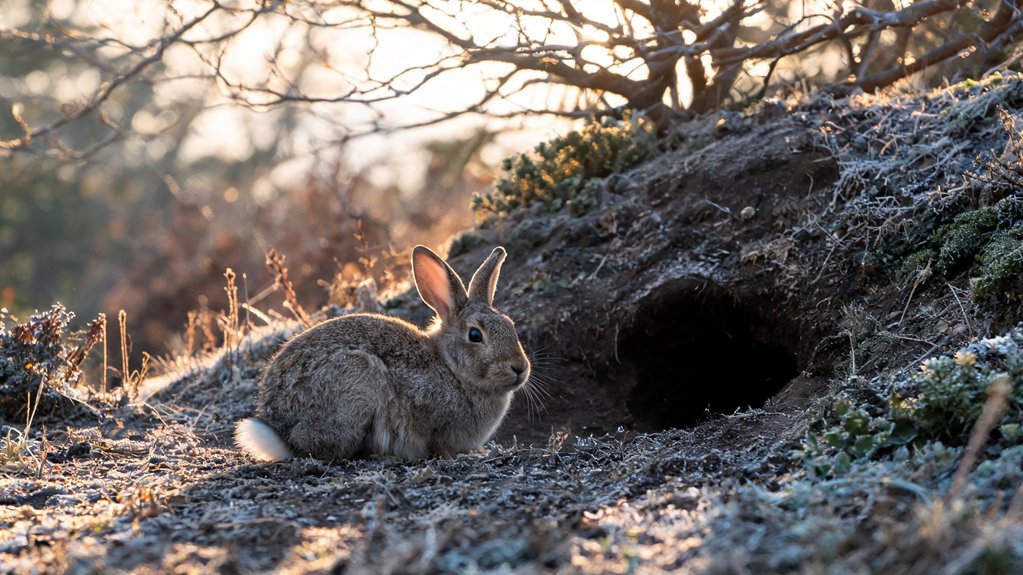
Rabbits don’t hibernate, so yes—most rabbits can survive winter without “sleeping through” it.
Even if you’ve wondered, how did rabbits get to north america, they’re built for cold.
You’ll help them by offering thick winter bedding and a sheltered hide, because rabbits keep active and must eat often.
Their winter fur grows in layers, and shelter reduces wind and wet.
If it’s extreme cold, they may get extra still, but true hibernation doesn’t happen.
For wild cottontails, dense brush and root cavities matter, and for water, keep fresh bottles or bowls available.
Frequently Asked Questions
Do Rabbits Live in Yards, or Only in Wild Fields?
You can find rabbits in both yards and wild fields. In many US neighborhoods, they live in the yard’s brush, shrubs, and fence rows, using burrows or sheltered spots. They also feed and travel from nearby open fields.
Do Rabbits Choose Spots With Water Nearby, and How Close?
Yes—you’ll find many rabbits choose cover near moisture. Cottontails drink dew and wet plants, so they don’t need open water. Swamp and marsh rabbits stay much closer, usually within a couple miles of wetlands.
Where Do Rabbits Hide From Predators During the Day?
You’ll see rabbits hide during the day in thick brush, briar patches, and brush piles, plus forms under overhanging limbs and abandoned burrows. They stay motionless, using cover edges and tangled vegetation to dodge predators.
Can Wild Rabbits Use Garages, Sheds, or Porches as Shelters?
Yes—wild rabbits often use garages, sheds, and porches as shelter. They slip into gaps at the base or crawl spaces under decks for protection from wind and predators, especially in winter. If you can, secure openings with wire mesh.
What Do Rabbits Eat in Winter if Snow Covers Grass?
When snow hides grass, you’ll see rabbits switch to woody forage like bark, twigs, buds, and evergreen needles. They also nibble raspberry or blackberry canes, low shrubs, accessible roots and bulbs, plus leftover grain from fields.