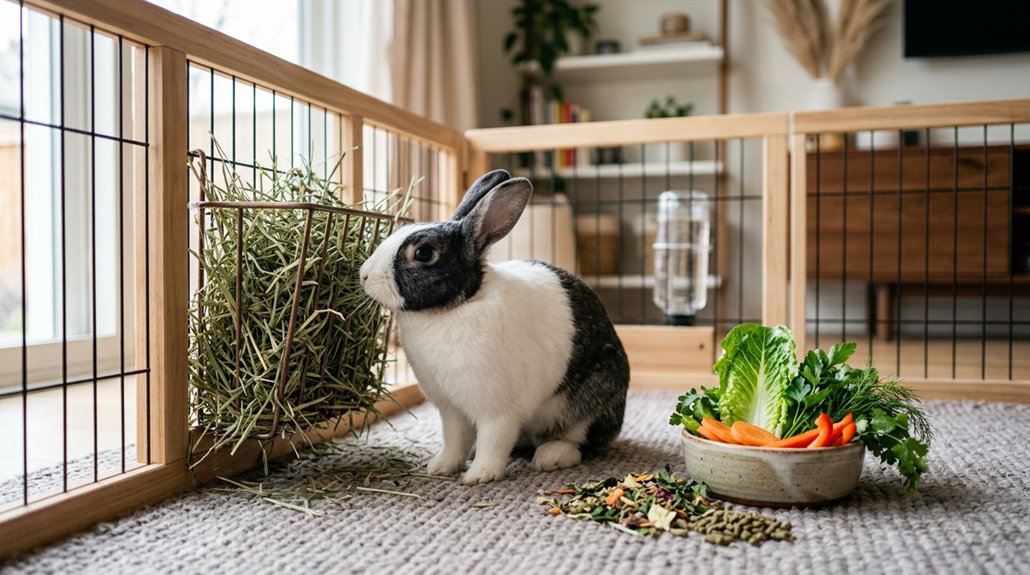
Giant rabbit breeds are the big pet rabbits, usually over about 5 kg (11 lb). If you want the calmest giant, pick a Flemish Giant, often described as gentle. For size and care, Flemish Giants need tighter portion control and more grooming, while Continentals focus on managing extra growth with joint-safe exercise. Plan real space, roughly 24 in deep x 36–48 in wide, plus 4+ hours daily. Feed hay-first, Timothy hay, and check feet for sore hocks daily—keep going to learn the rest.
Swift Summary
- Giant rabbit breeds are typically those exceeding 5 kg (11 lb) adult weight, including major “giant-type” breeds recognized in the U.S.
- Flemish Giants are often the calmest choice, described as gentle and easygoing, with typical weights around 15–22 lb.
- Flemish Giants and Continental Giants are both large and require hay-first feeding, grooming, and careful monitoring during growth.
- Provide at least a 24×36–48 inch footprint for 11+ lb rabbits, plus 4+ hours of daily supervised space and exercise.
- Watch closely for sore hocks, obesity-related joint pain, and injuries; daily health checks and hay-forward diets help prevent problems.
What Counts as a Giant Rabbit Breed?
So, what counts as a giant rabbit breed? You’ll usually see “giant” used for massive breeds that, as adults, typically weigh over 5 kg—about 11 lb.
That leads to the question, how big can a rabbit get, in real, everyday terms: depending on sex and strain, some recognized giant-type rabbit breeds land roughly from 5.5 up to 10 kg or more.
The American Rabbit Breeders Association lists giant-type breeds like Flemish Giant, Checkered Giant, Giant Angora, and Giant Chinchilla.
And welfare guides treat rabbits over about 5 kg as giants needing extra care.
Choose the Calmest Giant Rabbit for a Pet
If you’re looking for the calmest giant rabbit, start by considering the Flemish Giant—they’re often described as gentle, easygoing “gentle giants.”
And because giant breeds usually feel calmer and less skittish than many smaller rabbits, you’ll still get that patient vibe, especially once they’re handled kindly and consistently.
A Flemish Giant is considered the largest type of rabbit, with typical weights in the 15 to 22 pounds range, which many owners find makes them seem especially sturdy and unflustered.
A Flemish Giant rabbit makes a top choice for a giant rabbit pet, thanks to widely reported docile, placid, friendly temperament traits.
Next, socialize early, use quiet voices, and offer a big enriched space.
Next, socialize early, use quiet voices, and offer a big enriched space for comfort, trust, and calmer behavior.
Finally, keep kids supervised during ground-level time, because rough handling can still cause defensive bites.

STURDY & CHEW-RESISTANT: This rabbit hutch is built with solid wood and reinforced aluminum alloy framing—tough enough to stand up to chewing (perfect for active rabbits, guinea pigs, and small pets), weather damage, and daily wear. It won’t warp, crack, or break easily, ensuring long-lasting protection and a safe space for your furry friends, indoors or outdoors

Protective Liner – This guinea pig cage is designed with a waterproof liner placed outside the frame, effectively preventing pets from chewing and ensuring long-lasting use.

3 DEEP removable tray can pull out from back or front, Better plastic quality, easy to clean !
Flemish Giant vs Continental Giant: Size & Care
Choose the flemish giant rabbit if you want similar length, with tight portion control and frequent grooming.
Choose the continental giant rabbit if you can manage extra weight, gentle joint-safe exercise during growth, and careful hay-first feeding, since both need lots of hay, measured pellets, and daily health checks. In particular, pay close attention to sore hocks because heavier body weight can lead to pressure sores/ulcerations on the back feet in large breeds.

ODOR CONTROL for long-lasting freshness, Kaytee Clean & Cozy can be used with any type of habitat for a fresh animal home

NATURALLY SCENTED with real, pet-safe lavender buds

Natural Odor Control – Effectively eliminates odors without chemicals or artificial fragrances, keeping your pet’s space fresh.
How Much Space Do Giant Rabbits Need at Home?
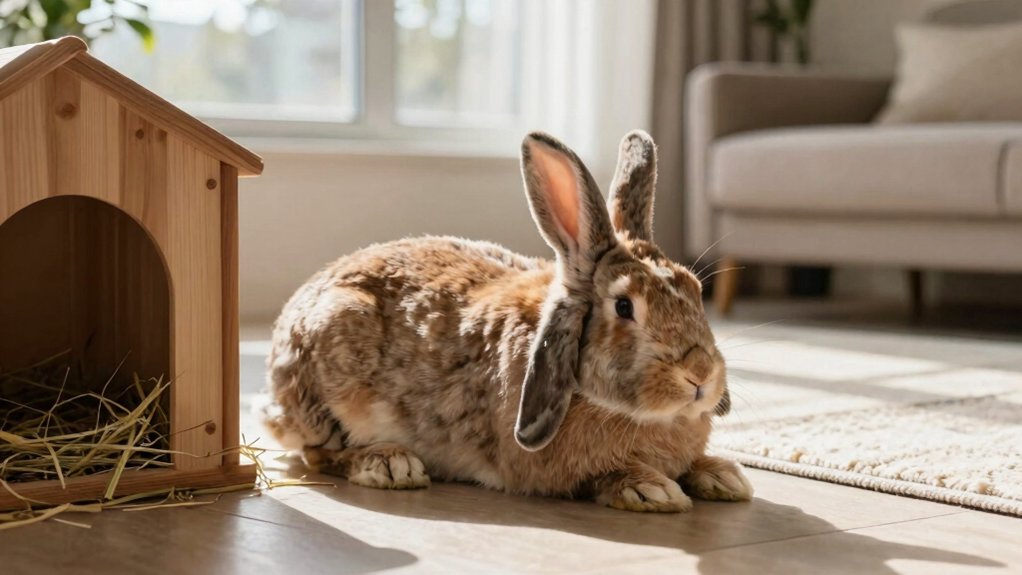
How much space do giant rabbits really need at home? If you’re shopping for a giant rabbit pet or looking at giant rabbits for sale, plan big from day one.
For rabbits ≥11 lb, start with a minimum footprint of 24 in deep x 36–48 in wide x 18 in high, or use a larger 30 x 36 to 36 x 48 floor area. For comfort, aim for a secure indoor run about 6 ft x 2.5 ft x 2.5 ft high.
Next, give 4+ hours daily exercise, using a space 3–4x your rabbit’s full stretched length, plus 24+ sq ft if possible.

3 DEEP removable tray can pull out from back or front, Better plastic quality, easy to clean !

Spacious & Well‑Ventilated Small Pet Enclosure: Measuring 62"L x 22.6"W x 33.5"H with 10.93 square feet living space, this large rabbit hutch accommodates rabbits, guinea pigs, chinchillas and ferrets. Durable wire mesh ensures safety and steady airflow, creating a cozy ventilated habitat for small pets all year round

【10.4ft² Activity Space】Expendable Rabbit cage with 2 sleeping house and run,provide roomy space for your pets.
Feed Giant Rabbits: Hay-First Diet to Prevent Weight
A hay-first diet keeps giant rabbits lean, happy, and easier to manage at home.
For your giant rabbit or big rabbit pet, give unlimited grass hay—about 85–90% of daily intake for adults.
Timothy hay is especially helpful, since timothy averages around 30–35% fiber.
Fiber keeps gut “moving” and supports healthy cecal fermentation, so weight stays safer.
Let your rabbit chew continuously too, because chewing wears teeth and boosts natural foraging energy.
Avoid pellet-heavy meals.
Treat pellets like “supplement” food, generally about 1/8 cup per 5 lb body weight.
Choose fresh, fragrant, dust-free grass hay. For everyday feeding, timothy hay is a suitable choice that meets your rabbit’s daily fiber needs.
Offer greens daily, roughly head-sized, and limit fruit to weekly treats.

HAND-SELECTED TIMOTHY HAY FOR RABBITS, GUINEA PIGS, CHINCHILLAS, & SMALL ANIMALS to ensure long fiber strands and proper leaf to stem ratio

Small Animal Staple: Timothy hay compressed bales are widely used as a primary grass feed for rabbits, guinea pigs, chinchillas and tortoises; supports daily fiber intake

PROUDLY GROWN IN THE USA: Harvested fresh from Oxbow?s family of farms by our expert hay growers˜
Groom Giant Rabbits: Stop Mats Before They Start
After you’ve set up a hay-first diet to keep your giant rabbit lean, switch gears to coat care, because mats don’t just look bad—they trap moisture and can turn into skin problems fast.
Do Daily coat checks & brushing frequency on your giant angora rabbit, especially in warm weather.
For long-haired giants, groom every day.
Comb the entire coat, armpits, groin, tummy, and feet.
Then check the underside and rear at least once daily, preferably twice.
If you spot tangles, use fingers and a mat rake, not scissors.
Brush at least weekly for short coats, more during shedding.
Keep fur clean and dry, too.
Giant Rabbit Health Risks: Fractures, Obesity & Sores
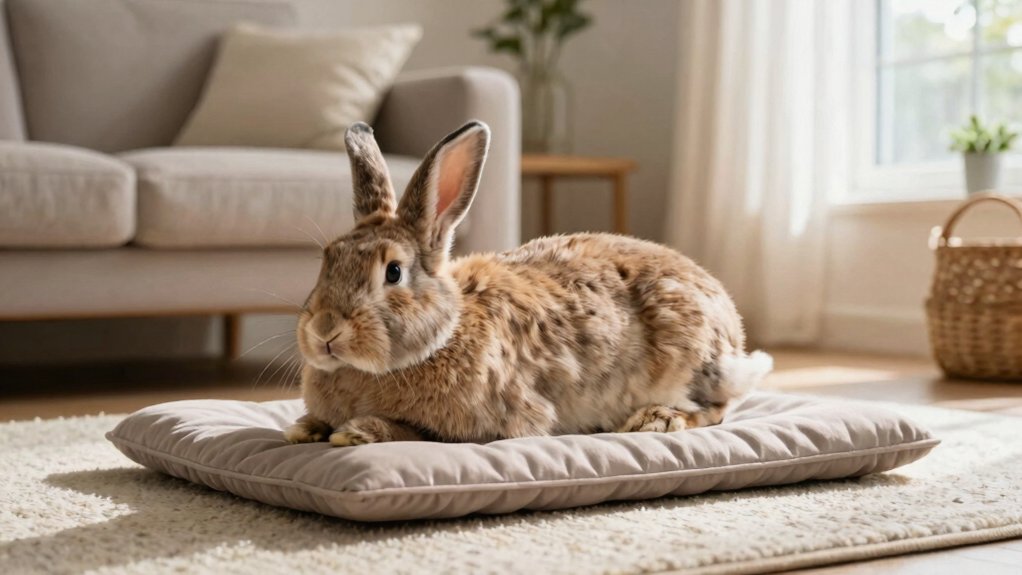
Because giant rabbit bodies are built with extra weight and leverage, they face a few health risks more often than smaller breeds—fractures, obesity-related joint pain, and sore hocks (pododermatitis), which is pressure on the foot pads that can turn into painful skin ulcers.
When you keep giant rabbit breeds, handle calmly at floor level, support the full body, and stop limbs getting caught in wire.
Keep weight steady with a controlled diet, because osteoarthritis can start earlier.
Check feet daily, and use soft, absorbent flooring and clean, dry bedding.
A giant chinchilla rabbit needs extra attention too.
Other Giant Rabbit Breeds to Consider
If you’re looking beyond the usual name on the “biggest” list, you’ve got several other giant rabbit breeds that can fit real homes, too. And you’ll want space, because giants need room to move.
Consider the Continental Giant Rabbit, calm and sociable, with heavier body length near 3 feet and weights roughly 16–20 lb. The British giant rabbit is friendly and laid-back, often 13–15 lb, with medium-length dense fur in colors like blue and black.
You can also look at the French Lop, a gentle, easygoing giant with large hanging ears, plus the Giant Chinchilla for a steady, calmer middle option.

Perfect XXL Rabbit Cage Starter Kit for 1-2 Rabbits | Rabbit cage includes 2 large water bottles, 2 hay feeders, feeding bowl & elevated feeding area ideal for up to 2 rabbits or 3 guinea pigs!

【Deluxe Rabbit Cage】Modern look, easy to assemble. This high quality small animal cage made of bold wire, strong and durable, great for rabbit, guinea pig, Chinchilla, Hedgehog ect. This rabbit cage come with raised platforms for your pet to rest and play on. (Decorations are Not INCLUDED!)

【Spacious Indoor Bunny Cage】37”L x 22”W x 30”H rabbit cage with upgraded 1.1” narrow wire spacing for a safer and more comfortable space for rabbits and small animals.
Record Size: How Big Do Giant Rabbits Really Get?
Wondering how big a “giant” rabbit really gets?
Start with ARBA-style reality: Flemish Giants and Continental Giants typically weigh about 15–25 lb, and stretch roughly 2.5–4 ft long. That’s already close to the biggest rabbit most families will meet at home.
And if you want the largest rabbit in the world, look at documented extremes: a Continental Giant reached about 4 ft 3 in, and record weights are roughly 42–53 lb for these breeds.
As you admire size, remember comfort comes first, so choose a calm rabbit with room to stretch.
Use This Checklist to Pick the Right Giant Rabbit
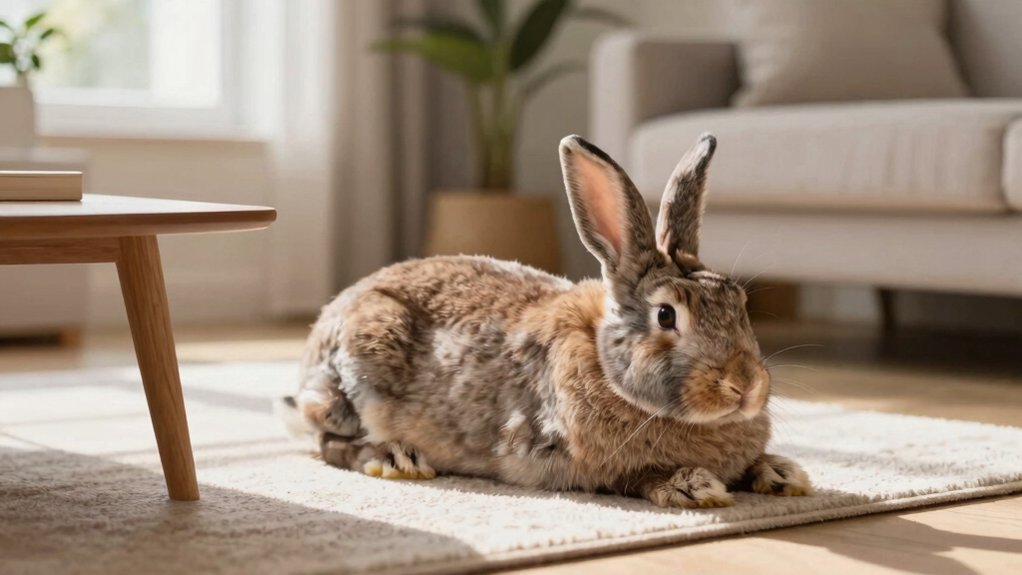
Picking the right giant rabbit starts with a simple, honest checklist—so you don’t end up with a sweet animal who can’t fully stretch out, or a household that can’t keep up with his needs.
First, confirm space. Plan a sturdy, solid-bottom enclosure, about 3×4 feet minimum, and expand play space for a huge bunny.
Next, match temperament. Look for gentle, sociable big rabbit species like Flemish Giant or Continental Giant, especially with older kids.
Then, be ready for daily care: several hours of supervised exercise, frequent brushing, and deep cleaning.
Finally, plan hay-first diet and a vet plan for health. Choose commitment, not hype.
Frequently Asked Questions
How Big Can a Pet Rabbit Get in the US Giant Category?
In the US giant category, you can expect about 15–20 lb for a standard Flemish Giant, with typical healthy range around 13–20 lb. Some exceptional individuals run higher, but you shouldn’t plan for extremes.
What Rabbits Are Considered Big Under ARBA Recognized Standards?
You’ll find big rabbits under ARBA standards in these giant breeds: Flemish Giant, Checkered Giant, Giant Chinchilla, Giant Angora, plus English and French Lops—each requires larger space and heavier care.
Which Giant Rabbit Is the Biggest Pet Breed Overall?
You want the biggest pet breed overall? The Flemish Giant—an absolute titan—stands out. ARBA standards list typical adult weights around 7.5–8 kg, and Guinness notes it as the largest.
Do Giant Rabbits Need Special Housing for Their Joints and Feet?
Yes—giant rabbits need special housing for joints and feet. You should use cushioned non-slip flooring, avoid wire bottoms, provide roomy, low-impact layouts, and keep ramps instead of jumps to prevent sore hocks and joint strain.
What Are the Most Common Health Problems in Giant Rabbits?
The most common health problems in giant rabbits? You’ll see sore hocks/pododermatitis from heavy weight, painful arthritis, overheating and obesity stress, plus gut stasis, dental trouble, and infectious or parasitic issues. Feed wisely, preventively.