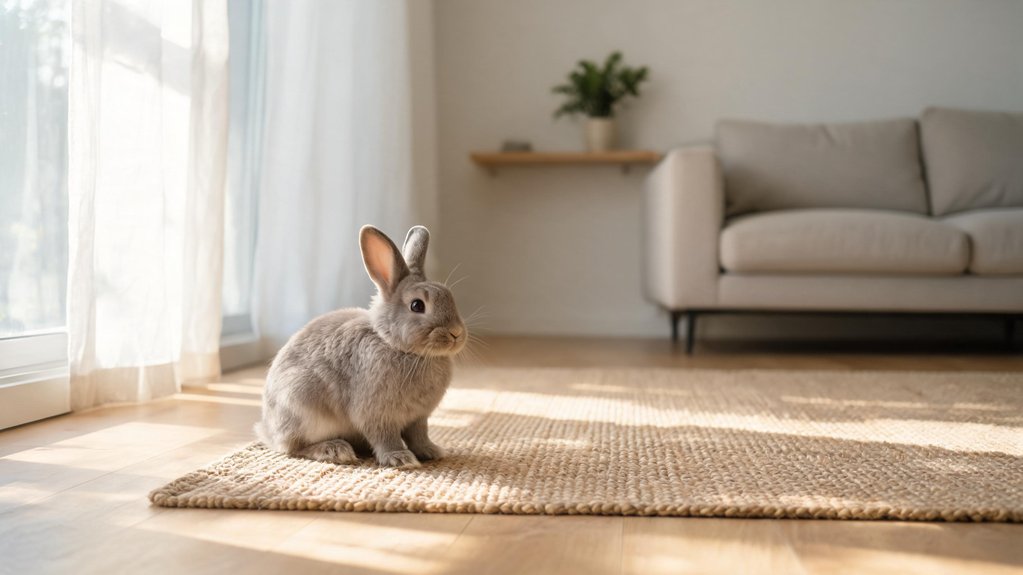
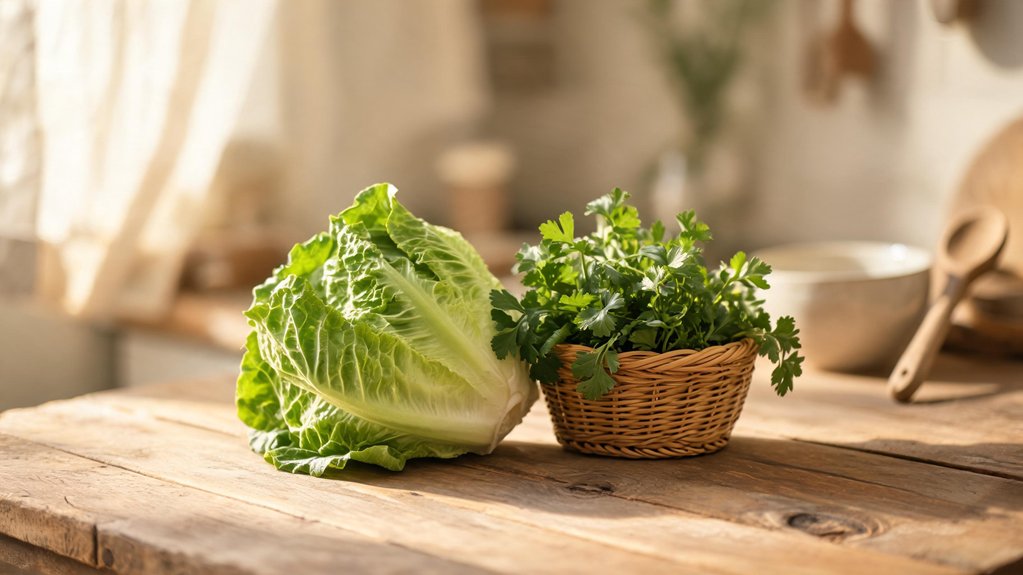
Start with leafy greens, your rabbit’s main veggie—about 1 cup washed greens per 2 lb body weight daily, plus unlimited grass hay. Good leafy options: romaine, green leaf, endive, escarole, arugula, dandelion greens, and small amounts of carrot or turnip tops. Add herbs and “variety greens” in small portions: basil, cilantro, dill, parsley, thyme, rosemary, oregano, sage. Limit non-leafy veg to ~1 Tbsp total per 2 lb/day (include fruit) like tiny cucumber or tomato. But skip alliums, brassicas, and unsafe plants.
Swift Summary
- Base a rabbit’s diet on unlimited grass hay plus daily leafy greens, aiming for about 1 cup per 2 lb body weight.
- Leafy greens are the safest “vegetable” choice: romaine, green leaf, endive, escarole, arugula, and dandelion greens.
- Offer small, limited sides: about 1 tablespoon total non-leafy veg (including any fruit) per 2 lb body weight per day.
- Introduce new veggies slowly over 2–4 weeks, one at a time, and watch for soft stool or diarrhea.
- Avoid high-gas/loose-stool foods (large amounts of brassicas like broccoli/cabbage/cauliflower) and never feed onions/garlic or toxic foods.
Start With Daily Leafy Greens for Rabbits
Start with daily leafy greens, because they form the core fresh food in a rabbit’s diet. When someone asks what vegetables rabbits can eat, you can confidently say leafy greens first, plus unlimited grass hay.
Aim for a big handful, or about 1 cup of washed leafy greens per 2 lb of body weight each day. Feed once daily, or split into smaller meals morning and evening.
Choose at least three rabbits favorite vegetables, like romaine, green leaf, endive, escarole, arugula, and dandelion greens.
Also try safe tops like carrot or turnip tops.
Keep icebergs and starchy veggies out.
Add More Rabbit-Safe Greens and Herbs
Once you’ve got leafy greens on board every day, you can level up your rabbit’s veggie bowl by adding more rabbit-safe herbs and “variety greens” alongside them.
Aim for a small handful from herbs plus greens, keeping veggies about 10% of the day.
Try basil, cilantro/coriander, dill, mint, parsley, thyme, rosemary, oregano, and sage. Get plants that aren’t toxic to rabbits They often make the mix more tempting, especially basil, mint, rosemary, and sage.
Rotate higher-calcium choices like flat-leaf parsley and cilantro, don’t make them daily staples.
For variety, offer carrot tops, beet greens, radish tops, turnip greens, dandelion, chicory, endive, escarole, frisée, watercress, arugula, and spring greens.
Which Rabbit Vegetables Cause Gas or Loose Stools
Even with “safe” vegetables, some can cause gas or loose stools in rabbits—usually because they’re higher in gas-forming compounds, more watery, or richer in sugar/starch than leafy greens. Stick to daily leafy greens, and keep other veggies cautious.
You should watch brassicas like broccoli, Brussels sprouts, cabbage, and cauliflower leaves. They often cause wind, bloating, and mushy poop, so use only tiny amounts.
Also go easy on soft, watery salad—especially iceberg lettuce, cucumber, and tomatoes. Too much can dilute fiber and upset caecal fermentation. Carrot and sweetcorn can trigger soft stools, too. If one veggie causes issues, remove it for your rabbit.
Because diet changes should be made slowly over 2–4 weeks, avoid sudden swaps that could upset the gut (diet changes should be made slowly).
Feed Non-Leafy Veg in Small Portions
Keep non-leafy vegetables as a side dish, not a main food.
You can offer about 1 tablespoon total non-leafy veg per 2 lb body weight each day, mixed with your rabbit’s leafy greens. That tablespoon covers all non-leafy items plus any fruit, so don’t treat it like a separate allowance.
Serve small portions once or twice daily, split into two meals.
And remember, hay stays unlimited, since it keeps digestion moving.
Start new non-leafy veg slowly, one type at a time, and watch poop, appetite, and hay intake—soft stools mean you should cut back.
Treat Veggies and Starchy Options: Keep Occasional
When you offer treat veggies, keep starchy and sweet options truly occasional, not daily, because extra sugar and starch can upset your rabbit’s gut.
Stick to tiny servings—think 1 to 2 teaspoons at most—of starchy squash or fruit-type treats only once or twice a week, or even just monthly if your vet recommends it.
Choose “gas-friendly” veggies like small amounts of leafy, low-starch options sparingly, and skip high-starch foods like potatoes, corn, peas, and beans entirely.
Limit Starchy Squash Servings
Starchy squash—like pumpkin, butternut, summer squash, and zucchini—can be rabbit-safe, but you should treat it like a sometimes food, not a daily leafy green.
Keep servings small, because it tends to run higher in sugar and energy than fibrous greens.
As a rule for helping out your rabbit, offer non-leafy veggies at about 1 tablespoon per 2 pounds of body weight per day, and remember that starchy squash is only a slice of that total.
For pumpkin, start with 1–2 teaspoons once, then only up to 1 tablespoon once or twice weekly if tolerated.
Choose Gas-Friendly Veggies Sparingly
Because some veggies can trigger gas and soft stools, you’ll want to treat the “gas-prone” and sweeter, starchy options like occasional snacks, not daily salad.
In your rabbit’s bowl, keep most volume as leafy greens.
Then go sparingly with brassicas like broccoli, Brussels sprouts, cabbage, kale, and collards.
If you offer broccoli or cabbage, start with a few small bites, once or 1–2 times weekly at most.
Brussels sprouts are extra gassy, so use only tiny pieces, very infrequently.
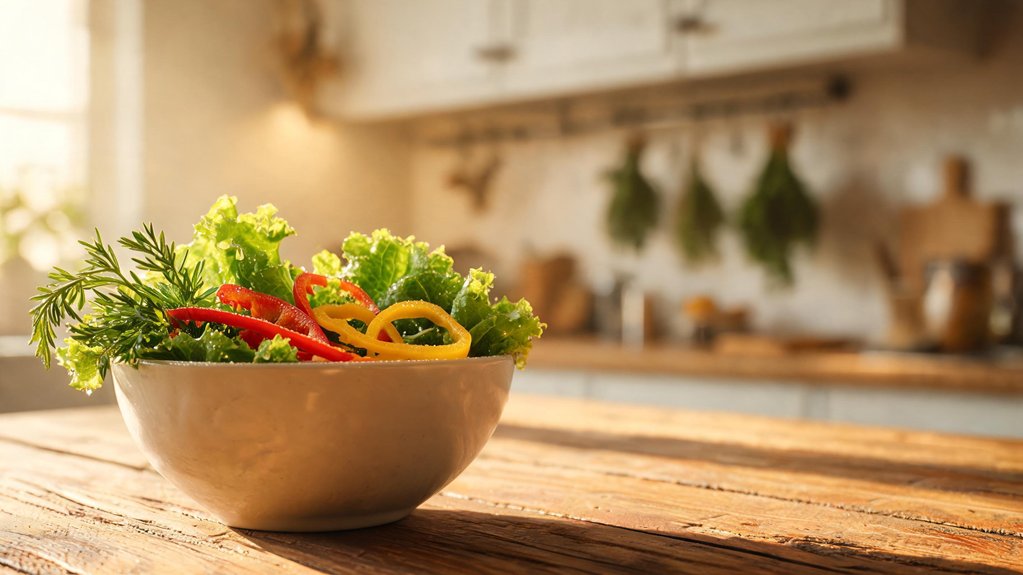
For sweet veg like carrots, beetroot, peppers, and root veg, limit to small treats a few times per week.
Rotate Greens to Keep Digestion Steady
Rotate your leafy greens every day to keep your rabbit’s digestion steady and their menu more interesting. You’ll want 3–6 different leafy greens and herbs each day, not the same few repeats.
Mix romaine and leaf lettuces with spring greens and leafy tops, then swap in brassicas in small, occasional amounts.
This rotation helps fiber types, keeps nutrients from missing, and supports steady gut movement.
Aim for leafy greens at about 10–15% of the overall diet, with hay as the main part.
Keep one high-oxalate green, like spinach or parsley, to about three varieties total.
Introduce New Foods One at a Time
When you introduce a new vegetable, don’t toss a whole salad at your rabbit at once—offer just one new leafy green or veggie first.
Start with a small piece, like a 5 cm × 5 cm leaf square, or a short baton.
Then wait 24–48 hours. Watch appetite, energy, and droppings, especially for soft stool or diarrhea.
If you see loose poop, stop that vegetable, and go back to greens your rabbit already tolerates.
Add the next new food only after things look steady.
For young rabbits, begin around 12 weeks, and keep portions under about ½ oz.
When in doubt, ask your vet.
Wash, Cut, and Store Vegetables Safely
Start with clean veggies—really clean—before you put anything in your rabbit’s bowl.
Wash every fresh vegetable under cold running water for at least 30 seconds, rubbing the surfaces.
If you prefer, soak for about two minutes, then change the water a couple times to lower contamination risk, including RHDV2.
Even “pre-washed” packages deserve a rinse.
Scrub carrots and other roots, and cut away damaged spots.
Cut pieces small enough for your rabbit’s mouth, and remove seeds, thick stems, and tough fibers.
Feed raw, not cooked, and pat items dry.
Use clean bowls away from litter.
Refrigerate leafy greens in vented bags.
Serve within 2–4 hours.
Avoid These Unsafe Plants and Human Foods
When you’re picking veggies, keep rabbits away from unsafe ornamentals and wild plants, like lilies, tulips, foxglove, and any nightshade vines, because these can be toxic and make them seriously sick.
Also avoid common human foods and seasonings—especially chocolate, candy, bread, pasta, and anything with xylitol—since they’re high in sugar or starch and can disrupt digestion.
But the big rule is this: don’t feed alliums like onion or garlic in any form, and skip “leftover” scraps that are starchy, salty, or sweet.
Unsafe Ornamentals And Wild Plants
Before you let your rabbit “sniff and nibble,” don’t treat every pretty yard plant or roadside weed as rabbit-safe—many ornamentals and wild plants can be fatally toxic, even in small amounts.
Avoid foxglove, monkshood/aconite, deadly nightshade, rhododendron/azalea, and lily of the valley. Their toxins can cause severe heart rhythm problems, nervous system signs, vomiting, or respiratory collapse.
Skip yew, privet, holly, boxwood, and ivy too.
Daffodils, tulips, hyacinths, snowdrops, bluebells, lilies, and amaryllis bulbs and leaves are also unsafe.
If you’re not sure, remove it, and offer only approved rabbit greens and hay.
Toxic Human Foods And Seasonings
After you’ve checked the yard plants your rabbit might nibble, it’s time to look at the foods people eat—because quite a few “common” human items can make bunnies seriously sick fast.
And when you’re serving others, skip these entirely.
Avoid avocado, which contains persin.
Never offer chocolate.
Keep sweets and desserts off-limits, and don’t share heavily salted snack foods.
Steer clear of artificial sweeteners, especially xylitol.
Also, don’t feed raw potatoes, sweet potatoes, or corn.
Skip bread, pasta, cereals, and muesli mixes.
Don’t give iceberg lettuce.
Avoid raw beans, peas, seeds, pits, nuts, mushrooms, or spicy seasonings.
Avoid Alliums Like Onion
Skip the alliums, like onions and garlic, because they can seriously harm your rabbit. That means no onion, garlic, leeks, chives, or any “allium” herb or plant, even ornamental ones.
Cooking won’t fix it, and onion powder or dehydrated onion still counts, so avoid soups, sauces, and savory snacks with onion flavoring.
These foods can trigger systemic poisoning, including hemolytic anemia, which means red blood cells break down, and oxygen delivery drops.
Don’t wait it out—if you suspect any bite, call your rabbit-savvy vet right away.
Keep it simple, feed safe greens daily.
Frequently Asked Questions
Can Rabbits Eat Iceberg Lettuce or Salad Mix Daily?
One pet keeps feeding iceberg daily, then gets runny stools. You should skip iceberg and don’t do salad mixes daily; instead, offer 3–6 leafy greens each day. Keep lettuce small, and always pair it with unlimited hay.
Are Carrots and Bell Peppers Safe for Rabbits Every Day?
No—carrots aren’t safe every day; feed only as an occasional treat (thin slices once or twice weekly). Bell peppers usually are safe in moderation; serve small chopped portions daily mixed with leafy greens.
Which Vegetables Most Often Cause Gas or Diarrhea?
You’ll notice it fast: after a new green, a rabbit can bloat like a balloon. Most often, brassicas (broccoli, Brussels, cabbage, cauliflower) and very watery lettuces/too much volume trigger gas or diarrhea.
Can I Feed Rabbit Spinach, and How Much Is Too Much?
Yes, you can feed spinach, but keep it occasional. Offer a small handful 1–2x weekly within daily leafy greens variety. Avoid big daily servings; if stools get soft or watery, cut it back and switch greens.
Are Parsley, Cilantro, and Basil Safe as Daily Greens?
Yes—parsley, cilantro, and basil are safe as daily greens. You can rotate them with other leafy options, but feed only a small portion each day and watch for loose stool; remove parsley if that happens.