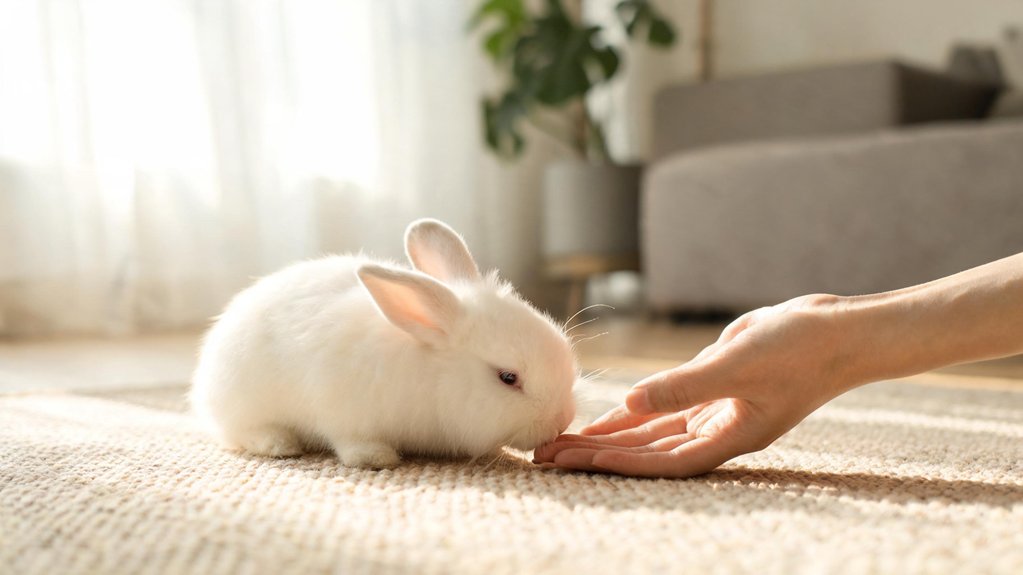
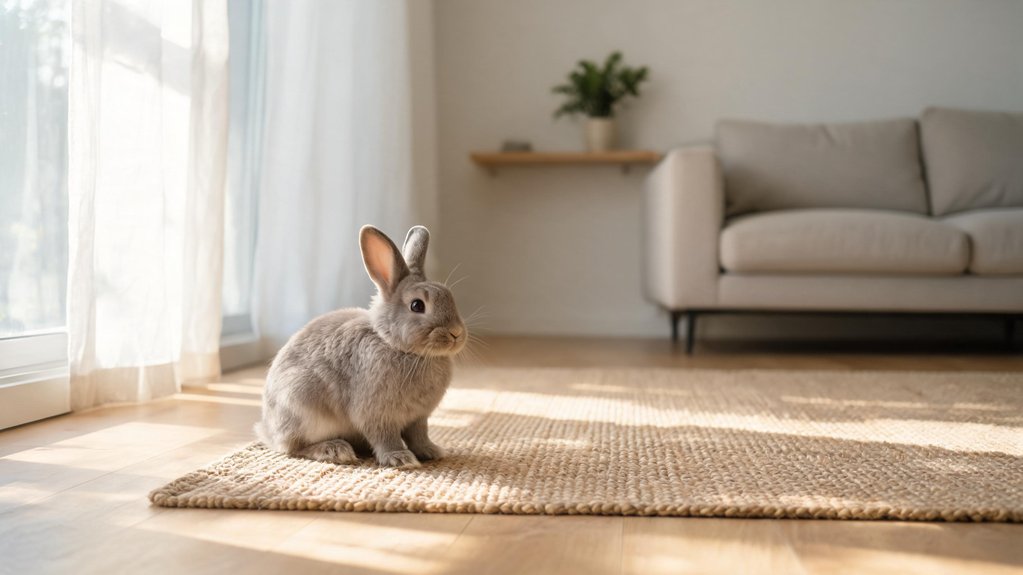
You’ll get the fastest “yes” by petting calm spots first. Start with 1–2 second forehead strokes between the eyes, then pause. Next, gently rub between the ears or behind the ears, and do light sweeps along the upper back with the fur (not against it). Sit on the floor, keep your hand visible, and offer a treat in your open palm. Watch for tensing or pinned ears—stop then. For timid rabbits, use 2–5 minute reward sessions, and keep going to learn more.
Swift Summary
- Pet rabbits on the forehead between the eyes with brief, gentle strokes, then pause to see if they stay relaxed.
- Rub behind the ears and the top of the head with light, slow contact, following fur direction.
- Gently stroke the nose bridge and space between the eyes with short touches, watching for flinching or stress.
- Keep sessions 2–5 minutes in a quiet, private room, letting the rabbit choose by keeping the cage door open.
- Avoid belly, feet, tail, and under-chin; stop immediately for tensing, pinned ears, lunging, or sudden attempts to escape.
Where to Pet Your Rabbit Safely First
Start by petting your rabbit in their safest “yes” zones, because that’s how you help them feel calm right away. First, answer where do rabbits like to be pet: begin with the forehead, then gently rub between the ears. If you’re wondering where should I pet a rabbit first safe, touch the nose bridge and the space between the eyes with short strokes, slowly moving from forehead toward nose. To learn how to approach a rabbit without scaring it, stay low, let them see your hand, and move slowly. Always pet on a rabbit when seated on the floor. Avoid belly, feet, tail, and under-chin at first.
How to Start Petting Without Stressing Them
Now that you’ve picked your rabbit’s safest “yes” spots, you’ll want to make the first contact feel easy and unscary.
Start in a quiet, private room, with no other pets.
Keep the cage door open, and let your rabbit choose the timing.
Sit on the floor, angle your body sideways, and speak softly.
Hands stay still, so you can see how to make a rabbit come to you.
Offer a small treat in an open palm, then try one brief forehead scritch, pause, and watch.
Watch for signs of stress, like flattened ears or a tense, down posture that suggests your rabbit is feeling unsafe.
If they freeze or move away, stop.
Why don’t rabbits like their feet touched?
You should also consider, can you pet rabbits while they eat?
Gentle Petting Technique: Slow, Directional Strokes
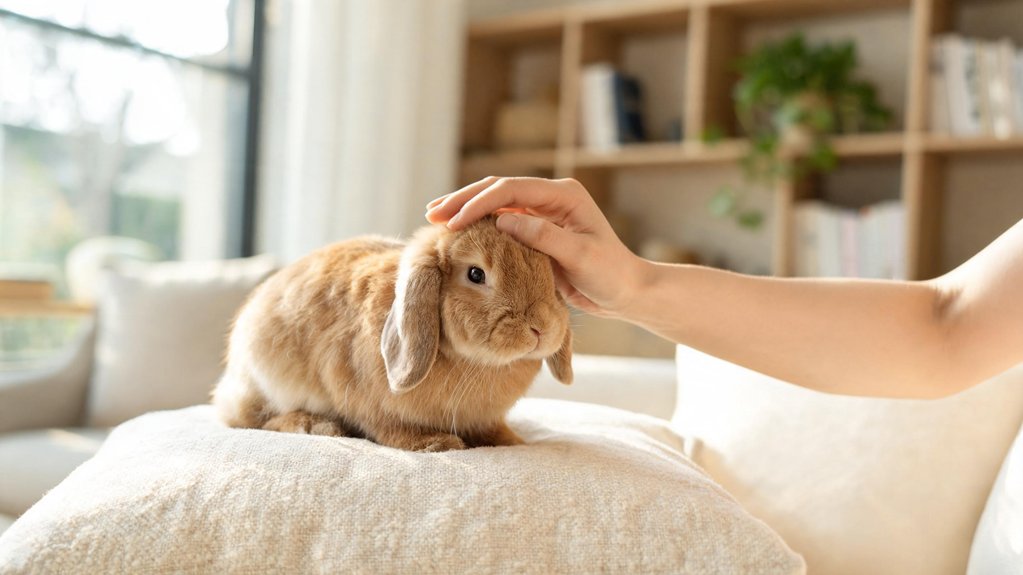
When you pet your rabbit, use slow, directional strokes, and keep your hand moving with the fur—not against it.
Start at the shoulders, then move down the back and along the sides, one gentle sweep at a time.
Keep it short, like 1–2 seconds per stroke.
Don’t press hard, and don’t grip.
Use a relaxed palm or light fingertip scritches, so pressure stays gentle and comfortable.
Use a soft-spoken, relaxed approach while petting so your rabbit stays calm.
If your rabbit tenses, flinches, or looks away, pause and try again more softly.
Watch for calm signs, like relaxed posture and soft tooth grinding.
Then repeat the same route.
The Head, Cheeks, and Nose Sweet Spots
Start with the forehead between their eyes, using gentle contact for 1–2 seconds, then slow down and pause.
When they seem relaxed, add tiny cheek circular strokes, but keep it light and stop if they flinch or stop nose twitching; soft tooth grinding (bruxing) is a good sign.
For the real sweet spot, stroke the bridge of the nose slowly—aim from between the eyes toward the tip—so they can sink into that comfy, “pancaked” posture.
Forehead Between Eyes Touch
Gently stroke the forehead between your rabbit’s eyes—this is one of the easiest, most welcome “hello” petting spots.
Use slow, short strokes, always in the direction of the fur. Start with one or two passes, then pause for a breath.
Many rabbits relax right away, you may even hear “tooth purring” (soft, rhythmic tooth sounds).
If your rabbit lowers their head, presses chin or nose toward you, or flops, that’s a yes.
Approach from the side, stay light, and stop instantly if they tense or move away.
Gentle Cheek Circular Strokes
Once your rabbit trusts your hand, try gentle cheek circular strokes—the sweet spot is usually the area under the eye, along the side of the face.
Use one or two fingertips. Keep pressure light, slow, and small, like tiny “scrubbing” circles with the fur.
Start with 2–3 seconds, then pause to check his signals.
If you see a relaxed “pancake” body, eye half-closed stillness, or even a soft hand-lick, you can continue.
But if he flinches, hops away, or thumps, stop and switch to easier touch.
Bridge Of Nose Slow Strokes
When your rabbit looks calm and stays put, you can move to slow bridge-of-the-nose strokes—the “sweet spot” many rabbits love.
Start with very light pressure at the forehead, then stroke down along the bridge toward the nose, following the fur.
Keep strokes short, like 1–2 inches, and repeat gently.
Use just a fingertip or a few fingertips for small rabbits.
Watch their face.
Closed or half-closed eyes, soft muscles, and relaxed “pancaking” mean yes.
If they recoil or turn away, stop immediately, and return to cheeks or forehead.
Behind the Ears and Neck Rubs That Calm
As you pet your rabbit, aim for the areas that most often feel safest and most “worth it,” especially behind the ears and right at the neck base.
Start with a calm hand, then do short forehead strokes for a second or two.
When your rabbit stays relaxed, add gentle, small circular scritches behind the ears.
Next, use four fingers to massage the neck muscles directly behind the ears, light to moderate pressure.
Watch for signs: half-closed eyes, soft tooth clicking, and ears neutral or forward.
If ears pin back, ease up and give space.
Upper Back and Shoulder Petting Without Tail
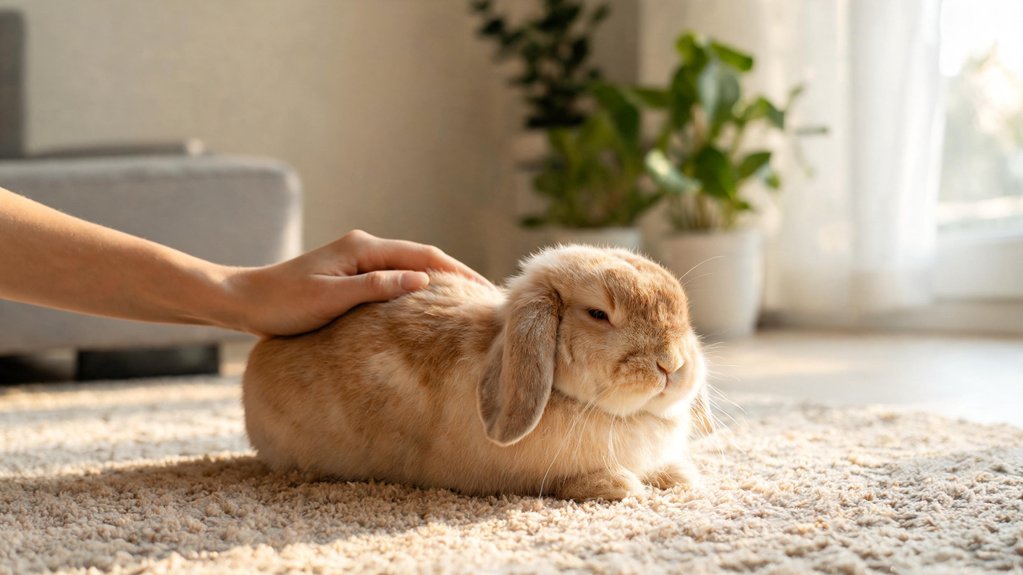
Start with gentle strokes on the shoulders and upper back, right behind the ears, moving slowly down toward mid-back, and keep the pressure light.
Skip the tail and the rump completely, because that area can feel sensitive and rabbits may spook if you touch near their “blind spot.”
Watch for relaxed “pancaking” posture and half-closed eyes, and if your rabbit tenses or scoots away, stop right there and try again later.
Gentle Strokes Along Shoulders
For many rabbits, the upper back and shoulders are one of the best “yes” spots to pet—right up there with the forehead and behind the ears. Start at floor level, so your rabbit can come to you first.
Approach from the side or slightly behind. Then use gentle strokes, 2–3 inches long, from the nape of the neck across the shoulder blades, and down the upper spine.
Move with fur growth, not against it, and use light pressure. If you see ear flattening or your rabbit tenses, pause and try head petting again.
Skip Tail And Rump
Most rabbits love petting along the upper back and shoulders, and you’ll usually have the best luck skipping the tail and rump completely.
Keep your hand low and gentle, start at the base of the ears, and stroke along the spine.
Move slowly, about 2–3 inches at a time, and stop before you reach the butt.
Why? Tail and rear areas are very sensitive, so light touch there can trigger flinching, fast backing away, or clear displeasure.
Stay on the shoulder area, give calm pressure, and you’ll help your rabbit relax while bonding.
Watch Relaxed Upper Posture
When your rabbit is relaxed, you can usually build trust with gentle petting on the upper back and shoulders—skip the tail and rump for now.
Watch posture first. Look for a body that’s comfortably extended, front paws pointing forward, rear legs stretched back.
If the head is up or your rabbit sploots (stretches out flat), you’re in the green zone.
Ears laid back or to the sides, closed eyes, soft tooth grinding, or a purring-like sound mean “yes.”
Pet at ground level, slow strokes from shoulders toward mid-spine.
If tense, stop.
If they pull away fast, give space.
What to Avoid When Petting Your Rabbit
Before you start petting, take a quick look at what to avoid, because rabbits are sensitive to certain touches and handling. Skip belly, chest, under the chin, and the rear end or tail zone.
Keep your strokes short and slow, and don’t press, squeeze, or rub against fur growth.
Don’t lift by ears, scruff, or back legs, and never force your rabbit onto its back.
Avoid sudden reaching or chasing, and don’t handle them on high, slippery surfaces.
If they wriggle or struggle, pause.
Also, don’t let kids grab or carry unsupervised.
How to Read Rabbit Body Language Mid-Petting
As you pet your rabbit, watch the moment-to-moment signs in its body, because mid-petting “yes” looks very different from “no.” Look for relaxed postures like loaf (legs tucked, ears resting), pancake (body flattened comfortably), stretch or flop (side-on relaxation), and soft, steady breathing—these mean your rabbit feels safe and trusts the touch.
And check facial and head cues. If its eyes partly close, or it “purrs” with gentle tooth grinding, you’re doing it right. Ears held close and calm means low-alert comfort. If it leans into your hand, nudges you, or even licks your hand, it’s asking for more. Keep contact gentle, steady, and timed to its calm.
When to Stop: Signs Your Rabbit Is Done
Watch your rabbit’s body language closely, because “still” can mean “stop.”
If you see tensing, flinching, ears pinned back, or a quick move to get away, stop petting right then—give them 10–20 seconds to settle.
But if your rabbit lunges, growls, boxes with front paws, or even starts heavy breathing, you’re done, back off calmly and let them choose the next contact.
Watch Body Language Cues
If you notice any “stop signals” while you’re petting, end the session right away and give your rabbit space.
Watch ears first. Ears pinned flat, ears held wide with head low, or a tense, intense stare can mean worry.
Stop, stay quiet, and let your rabbit decide next.
If your rabbit thumps, lunges, boxes, growls, grunts, snorts, or nips, you’re crossing a boundary—pause immediately and back off.
Also, notice avoidance: turning away, “cold shoulder” posture, hiding, or freezing with heavy or rapid breathing.
Afterward, offer calm time, and try again later—short and gentle.
Stop On Tensing Or Flinching
Stop the moment you see your rabbit tense up, crouch down, or flinch away. That freeze, flattening, or hunched “all small” posture means “too much, please.”
If you notice ears pinned back, wide staring eyes, dilated pupils, or no normal nose twitching, pause right then.
Also stop if your rabbit thumps, struggles, pants, whimpers, squeals, or grinds teeth. Those are stress or pain signs.
Then give space, sit still, and let your rabbit choose to return.
When they calm down, you can try gentle pets again later, shorter and softer.
Cease On Lunging Or Growling
When your rabbit lunges or growls during petting, treat it as a clear “not right now” signal, and end the interaction right away.
Lunging is a quick forward move, often with ears back, tail up, and chin thrust. That says, “back off,” and it can tip into nipping or biting if you ignore it.
Growling is a loud, vocal warning. Stop when you hear it, even if it’s just one growl, followed by stiffening or retreat.
After you stop, step back, lower your hand, and try later, on their terms.
How to Pet a Shy Rabbit Step by Step
To help a shy rabbit feel safe, you’re going to set things up first—before you even try to touch. Choose a quiet, private room, no loud activity, no other pets.
Sit or lie on the floor near your rabbit, then use a soft, calm voice and slow movements. Try a steady daily schedule, so coming time feels predictable.
Next, read body language. If they crouch tense, head flat, pupils big, or ears pinned back, pause.
Let them approach your still hand, low to the floor. Approach from the side, never chase, never corner.
Start with gentle forehead strokes between the eyes, then behind ears.
If they thump, dart, tense, or lean away, stop.
Train Petting With Rewards and Short Sessions
Every day, do petting training for just a few minutes, not long sessions. Keep it 2–5 minutes, because rabbits get bored fast, and stress builds quickly.
Use rewards right after gentle touch, so your rabbit clearly connects calm petting with a good outcome. Start with a cue–behavior–reward pattern.
Add a clicker, or a distinct sound, to mark the exact moment your rabbit stays relaxed, then deliver a treat immediately.
For the first days, click leads to food every time, until the sound predicts the reward.
Use small, high-value treats only, and repeat several short sessions daily. Keep your rabbit’s litter box clean on training days too, since paper pellet rabbit litter is highly absorbent and helps control moisture and odor.
Troubleshooting Common Petting Problems and Bites
You’re training petting with rewards in short bursts, and that’s great—but sometimes your rabbit still gets tense, nips, or even bites.
First, read body language. Flattened ears, head flat, dilated pupils, or boxing and growling mean pause.
Nipping often says, “More space,” or “Change how you’re touching.”
Start again with quiet, slow, floor-level contact, gentle strokes on the top of the head and along the back.
If a bite happens, immediately stop and give space.
Don’t grab suddenly.
For lifting, support under chest and hind legs, never by ears.
Check for pain.
Frequently Asked Questions
How Do I Make My Rabbit Come to Me for Petting?
Rabbits are prey animals, so trust matters most. Sit on the floor, stay still, offer tiny treats near your hand, and let your rabbit choose. Watch for gentle nudges and pancake posture, then pet sweet spots between ears.
How Should I Approach a Rabbit Without Scaring It?
Approach your rabbit slowly and quietly, get down low, and keep some distance. Come from the side, avoid staring, and let your rabbit choose closeness. If it freezes or thumps, pause and give it space.
Why Don’T Rabbits Usually Like Having Their Feet Touched?
Rabbits usually don’t like foot touching because their feet trigger escape mode—every touch feels like a threat. Since they rely on sure footing, you risk kicks and stress. Go gently, stick to safer head or back strokes, always.
Can I Pet My Rabbit While They’Re Eating—Yes or No?
No—only pet your rabbit while they’re eating if they’re fully relaxed, bonded, and show no food-guarding signs. Watch their body language; if they tense, thump, growl, or lunge, stop immediately and pet later.
What’s the Safest Way to Pet a Rabbit’s Chin and Mouth Area?
For safest chin and mouth petting, you should keep contact brief and gentle, using flat fingers under the chin. Approach from the side, let your rabbit initiate, and stop at growls, tooth grinds, or sudden nipping.