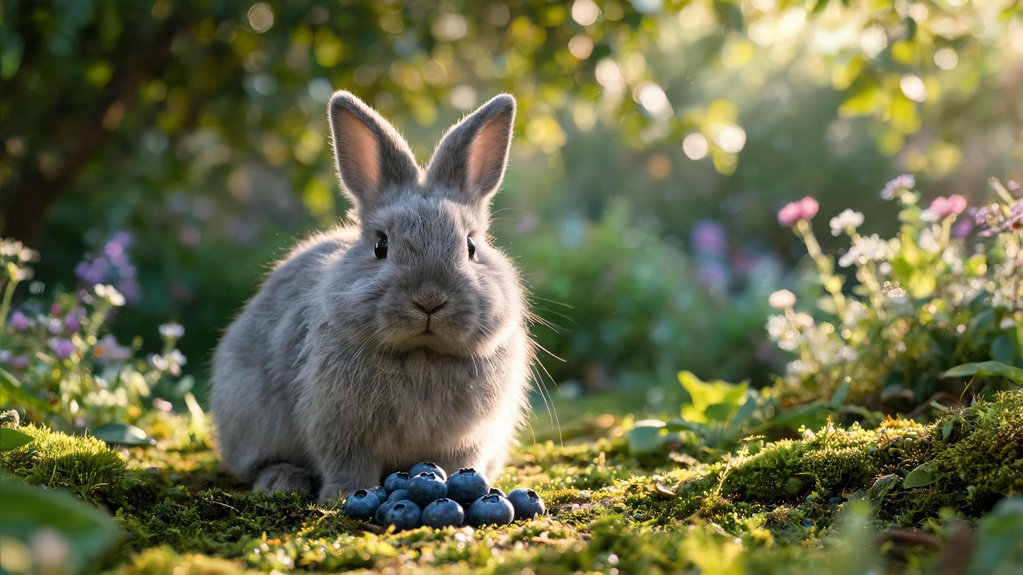
If you want small rabbit breeds that stay small, aim for compact types in the 2–6 lb range. Start with a Netherland Dwarf, usually about 0.5–1.1 kg, for a true mini with short ears and a cobby body. For a friendly, cuddly lop, choose a Holland Lop, often 1.4–2 kg. For “plush” vibes, pick a Mini Rex, about 3–4.5 lb, and plan for 8–12 years of gentle grooming and safe handling so you don’t miss key tips.
Swift Summary
- Focus on breeds typically maturing around 2–6 lb, since “mini” and “dwarf” can overlap in marketing.
- Choose compact “small” breeds like Mini Rex (about 3–4.5 lb) for staying small in many homes.
- Consider Netherland Dwarf (around 0.5–1.1 kg), but expect an energetic temperament and careful, gentle handling.
- Match temperament to your lifestyle: docile options include Holland Lop, Jersey Wooly, and Havana for easier everyday companionship.
- Plan for 8–12 years of care and maintain grooming needs, especially for woolier “plush” breeds.
Define Small vs Dwarf Rabbit Sizes (In Pounds)
When you’re shopping for a “mini rabbit,” you’ll see two words that get mixed up a lot: dwarf and small.
Here’s a helpful breakdown in pounds, so you can serve your future rabbit well.
Here’s a helpful breakdown in pounds to choose the right size rabbit—and make sure your future companion fits your home.
True dwarf rabbits usually mature between about 1.1–2.5 lb, often staying under ~4 lb. Many of the smallest options come from Small (2–6 pounds) rabbit breeds.
“Small” (non-dwarf) rabbits typically land around 2–6 lb, sometimes narrowed to ~3–6 lb.
Many compact pet types—like some compact rabbit breeds—fall in the “small/dwarf” marketing overlap.
If you’re asking, what rabbit breed is the smallest, you’ll usually mean true dwarfs.
Pick the Smallest: Netherland Dwarf Basics
If you want a “mini rabbit” that truly stays small, the Netherland Dwarf is one of the best places to start. This small bunny has Netherland Dwarf basics you can feel right away, it’s a compact rabbit with a short, cobby body, round large head, and short upright ears. Expect ARBA-style adult weight roughly between about 0.5–1.1 kg, and handle gently. Because their spine is delicate, don’t lift or restrain tightly. These rabbits are very intelligent—they can learn basic routines and may even be easier to train than other bunnies. Provide indoor housing with about 1.5 m² usable space, soft bedding, hides, and a toilet spot. Feed hay first, then veggies and pellets, and watch for stress.
Choose a Friendly Small Rabbit: Holland Lop
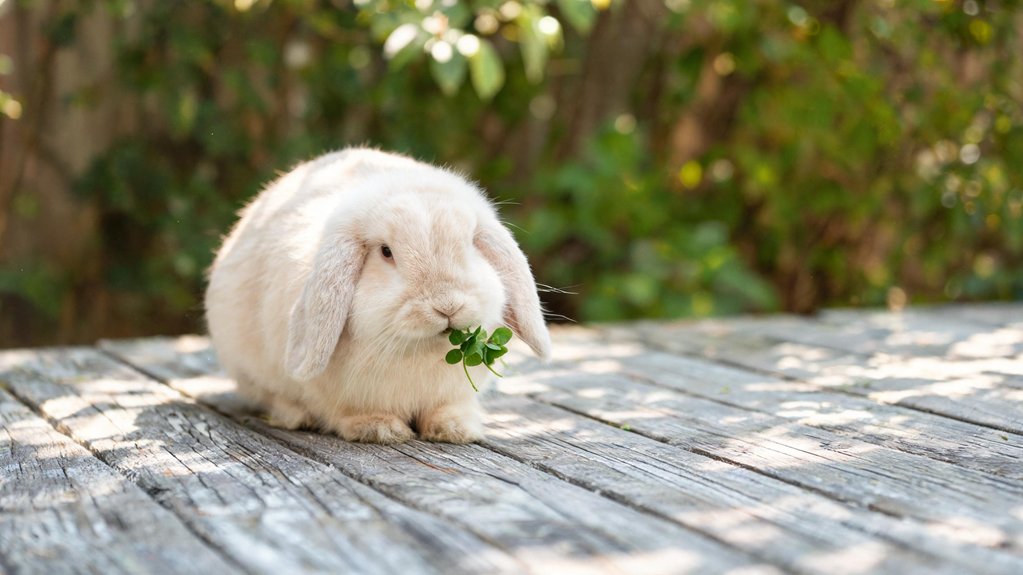
Meet the Holland Lop, one of the friendliest small lop-eared breeds you can keep as a “mini rabbit” in the US. If you’re asking what’re bunnies that stay small, start here.
The Holland Lop has a compact rabbit body type, and it’s known for a calm, affectionate personality once you socialize it well. At adulthood, you’ll typically plan for about 1.4–2 kg, with the show standard capped at 4 lb.
Keep your home quiet. Handle gently. Provide hiding spots, hay (80–90%), and daily supervised play—so you help them feel safe and loved. Holland Lops do best in a quiet, low-stress household with adults or older children (gentle handling).
Go Calm and Plush: Mini Rex for Small Homes
Mini Rex rabbits are “mini” in the best way for small homes, because they stay compact and plush without needing a huge setup.
Mini Rex rabbits stay compact and plush, making them ideal for small homes without requiring a huge setup.
You’ll find they typically top out around 3–4.5 lb, with a short, close-coupled body, so they fit where floor space is tight.
Next, enjoy their velvet-like coat.
The rex gene gives short fur that springs back when you pet them, and many act calm, pleasant, and easy to handle.
Just keep grooming gentle, once a week, then daily during heavy molts.
Also, use soft solid flooring, because short feet can get sore on wire.
Try Lionhead for a Bold, Playful Look
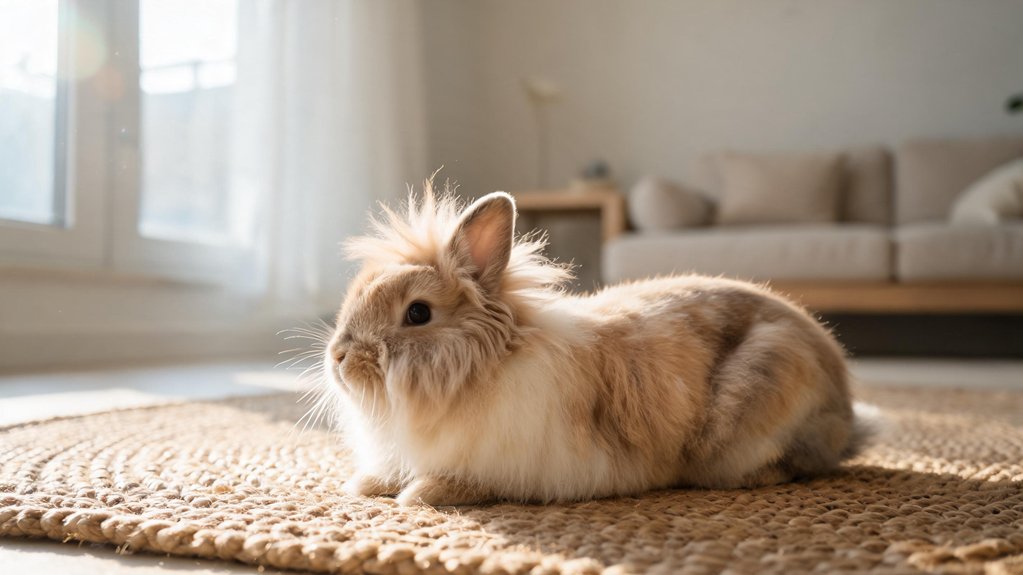
Try a Lionhead if you want a rabbit that looks bold the moment you walk in the room—those signature wool “manes” around the head (and sometimes a skirt of wool on the flanks) make them look like tiny, fluffy lions.
As a small, compact breed, you’ll find adults often around 2.5–3.75 lb, with a short, upright body and ears about 2–3.5 inches.
They’re usually friendly and playful, curious about toys, and easy to bond with.
But plan grooming: mane wool mats fast, so brush at least 2–3 times weekly, and daily during heavy shedding.
Meet Jersey Wooly: Gentle but Needs Grooming
Jersey Wooly is a gentle dwarf rabbit that usually lands around 3 lb as an adult, so it’s a great “mini rabbit” option if you want something compact and calm.
You’ll get a friendly, affectionate companion, and many owners find them good for lap time, with early, steady handling.
But you must plan for grooming.
This dense wool coat tangles and mats, so brush at least weekly, and often daily during spring and fall shedding.
Use a brush that reaches the undercoat.
Neglect can cause painful mats, skin irritation, and hair buildup from shedding.
Compare Compact Dutch, Polish, and Fuzzy Lop
When you compare compact Dutch, Polish, and American Fuzzy Lop rabbits, start with temperament, because it shapes your daily routine fast. Dutch rabbits are calm and friendly, Polish rabbits are alert and bold, and Fuzzy Lops are playful and social—so pick the personality you’ll enjoy handling every day.
But if you want the “small” advantage, remember Polish is the true dwarf (light, fine-boned), while Fuzzy Lops stay compact yet come with woolly coat care, so plan on several brushing sessions each week (and near-daily during heavy molt).
Dutch Vs Polish Temperament
If you’re shopping for a “mini rabbit,” temperament matters as much as size. Compact Dutch rabbits usually stay calm, gentle, and people-focused. With patient, respectful handling, you’ll see trust grow, then they often learn names, litter habits, and simple tricks. They’re also moderately to highly active, so you’ll plan daily floor time, tunnels, and play.
Polish rabbits, by contrast, run bold and showy. They’re curious, energetic, and opinionated. Expect intense investigation and quick reactions to changes. They may be less naturally laid-back, and they often prefer brief, focused affection over long lap cuddles.
Fuzzy Lop Size And Care
With your “mini rabbit” shopping list in mind, you can compare how small, compact breeds fit together in real life—especially the American Fuzzy Lop, since it stays small like Dutch and Polish, but asks for more coat work. Aim for an adult Fuzzy Lop max around 4 lb.
Dutch can run about 3.3–5.5 lb, Polish about 2–3.5 lb.
But care is the real difference.
You’ll brush Fuzzy Lops several times weekly, every 2–3 days, to stop mats, and groom 15–20 minutes with comb and slicker.
Dutch and Polish have short coats, so weekly touch-ups usually suffice.
Provide space around 24×36 inches minimum.
Consider Mini Lop if You Want a Bigger Small
If you want a rabbit that’s truly “small,” but not quite a tiny dwarf, consider the Mini Lop—think “bigger small.” Adult Mini Lops usually land around 4.5 to 6.5 lb, so you get a compact, sturdy rabbit instead of the super-dwarf types.
And compared with French or English Lops, you stay on the smaller side, but you’ll still feel more “substantial” than most Holland Lops. Mini Lops have a short, thick, heavily muscled body, with broad shoulders and lop ears that hang down about 3–4 in.
You’ll also find docile, sociable behavior. Plan for a bit more floor time, though.
Plan for Lifespan: Typical Small Rabbit Years
Most small rabbit breeds will live about 8–12 years, and that means you should plan like you’re signing on for a decade-long buddy. For many mini rabbits, life can even reach early teenage years if you care well.
Build your schedule around daily basics, fresh hay, and clean, sanitary housing.
Spay or neuter, when your vet recommends it, can support healthier, longer life by lowering reproductive disease risk.
Choose an indoor setup that avoids predators and extreme heat or cold.
And if medical issues pop up, get quick vet care, don’t wait.
Match Temperament: Energetic vs Calm vs Docile
Now that you’ve planned for a small rabbit’s long-ish lifespan, let’s match temperament to your everyday life—because “mini” doesn’t mean “low needs.”
Now that you’ve planned for a small rabbit’s long-ish lifespan, match its temperament to your daily life—because “mini” isn’t low-needs.
Think of personality in three buckets: energetic (always moving, curious), calm (easygoing, likes gentle attention), and docile (very tolerant, steady with handling).
Netherland Dwarf rabbits fit energetic, but they can get shy, nippy, or flighty in new spots—go slow with socialization, and keep floor-level time.
Mini Rex often feels calm and friendly, great for quiet homes needing regular, gentle petting.
For the most “easy to handle” vibe, choose docile types like Holland Lop, Jersey Wooly, or Havana, especially if families want cuddly companionship.
Groom Wooly Coats: Tools and How Often
To keep your mini rabbit’s wool coat neat, grab a slicker brush for daily surface grooming, a wide-toothed metal comb for deeper mats (especially belly, armpits, behind ears, and hindquarters), and blunt-tip scissors for tiny trims around the eyes, nose, mouth, and vent. Choosing a brush designed for loose-fur removal lets you pull out shed wool before it tangles into mats.
For most woolies, you’ll check every day or every other day to catch tangles early, then do a full-body session once or twice a week, and inspect the eye/ear/vent areas several times per week since they mat fastest.
If your rabbit’s an Angora-type or it’s shedding hard, bump to more frequent combing and use a pet blower on a cool setting to loosen packed wool, because preventing mats is way easier than removing them.
Recommended Grooming Tools
1 great way to keep a mini, wooly-coated rabbit comfortable is by using the right grooming tools for their coat. Start with a slicker brush with fine wire bristles to reach the dense undercoat, like Angora, Lionhead, and Jersey Wooly. Follow with a soft bristle or paddle brush, then use wide-toothed combs to detangle in layers.
Finish with a fine-toothed comb for last loose fuzz. For heavy shedding, choose an undercoat rake or Hairbuster-style comb. For small mats, use a mat splitter.
Keep a flea comb for checks, rounded-tip scissors for tiny spots, and styptic powder if nails nip.
Grooming Frequency By Coat
Matching the right grooming tools with the right schedule keeps your wooly rabbit comfy and mat-free.
For long, thick wool coats, brush several times per week, since tangles and mats happen fast.
Many Angora rabbits need at least weekly grooming in normal times, then daily combing during active molt, especially spring and fall.
Jersey Wooly usually stays good with once-per-week brushing, but during heavy shedding, move to daily to prevent wool ingestion.
Satin Angora often needs daily combing because fine dense wool mats easily.
Giant Angora may require grooming every two to three days.
Quick daily belly, bottom, and feet checks catch trouble early.
Handle Safely: Support the Body, Avoid Falls
When you pick up a small rabbit, your job is simple but serious: support the whole body, and keep it from ever going “out of your control.”
Start at ground level on a non-slippery floor, because that one choice cuts the risk of a scary slip or a bad fall.
Start at ground level on a non-slippery floor—one smart choice helps prevent slips and bad falls while handling a rabbit.
Put one hand under the chest and front legs, and the other under the bottom and hindquarters.
Lift smoothly, keep the rabbit’s weight even, and expect strong hind-leg kicks.
Never grab the scruff or ears.
Hold the rabbit close to your body, keep all feet near you, and release only when you’re ready.
Use towels for grip.
Frequently Asked Questions
What’s the Smallest Arba-Recognized Rabbit Breed by Adult Weight?
The smallest ARBA-recognized rabbit by adult weight is the Netherland Dwarf and the Britannia Petite, tied with a maximum mature weight of 2.5 lb each, so you can choose either and still keep things delightfully small.
Do Dwarf Rabbits Live as Long as Small Pet Breeds?
Yes—dwarf rabbits often live as long as, and sometimes longer than, small pet breeds; many Netherland Dwarfs are commonly listed around 10–12 years. If you care well indoors, you’ll support that lifespan.
Which Small Breed Is Best for Beginners: Holland Lop or Mini Rex?
For beginners, you’ll usually find the Mini Rex easiest: it’s calm, even-tempered, and handles gently. Choose a Holland Lop only if you’re ready for occasional skittishness and extra ear and grooming checks.
What Grooming Schedule Does Jersey Wooly or Fuzzy Lop Usually Require?
You’ll groom a Jersey Wooly or Fuzzy Lop like clockwork—matting is a ticking time bomb. Brush weekly minimum, then during molts several times weekly, even daily. Check back end and ears often, comb out tangles, and spot-clean.
How Can I Tell Netherland Dwarf Versus Polish Size and Build?
You can tell them by shape: Netherland Dwarfs look rounder, cobby, with a larger “baby-face,” very high head carriage, and short ears that don’t require touching tip-to-base. Polish rabbits look slightly sleeker, finer, with tighter ear set.